Georgia sits at the seam of Europe and Asia, south of Russia, in the Caucasus. It has its own alphabet, a language related to nothing nearby, an 8,000-year wine tradition that UNESCO recognises among the world's oldest, and a national habit of feeding visitors until they surrender. It also remains one of the best-value destinations in the region — money goes roughly three times as far as in Western Europe — and it pairs a genuinely characterful capital with serious mountains a half-day away.
The country does not polish itself for tourists. That is either the point or the deal-breaker. Roads can be rough, driving alarming, English thin outside Tbilisi, and infrastructure patchy. If that reads as adventure, go. If you need everything smooth and predictable, it will fray your nerves.
Tbilisi: a city that doesn't match itself
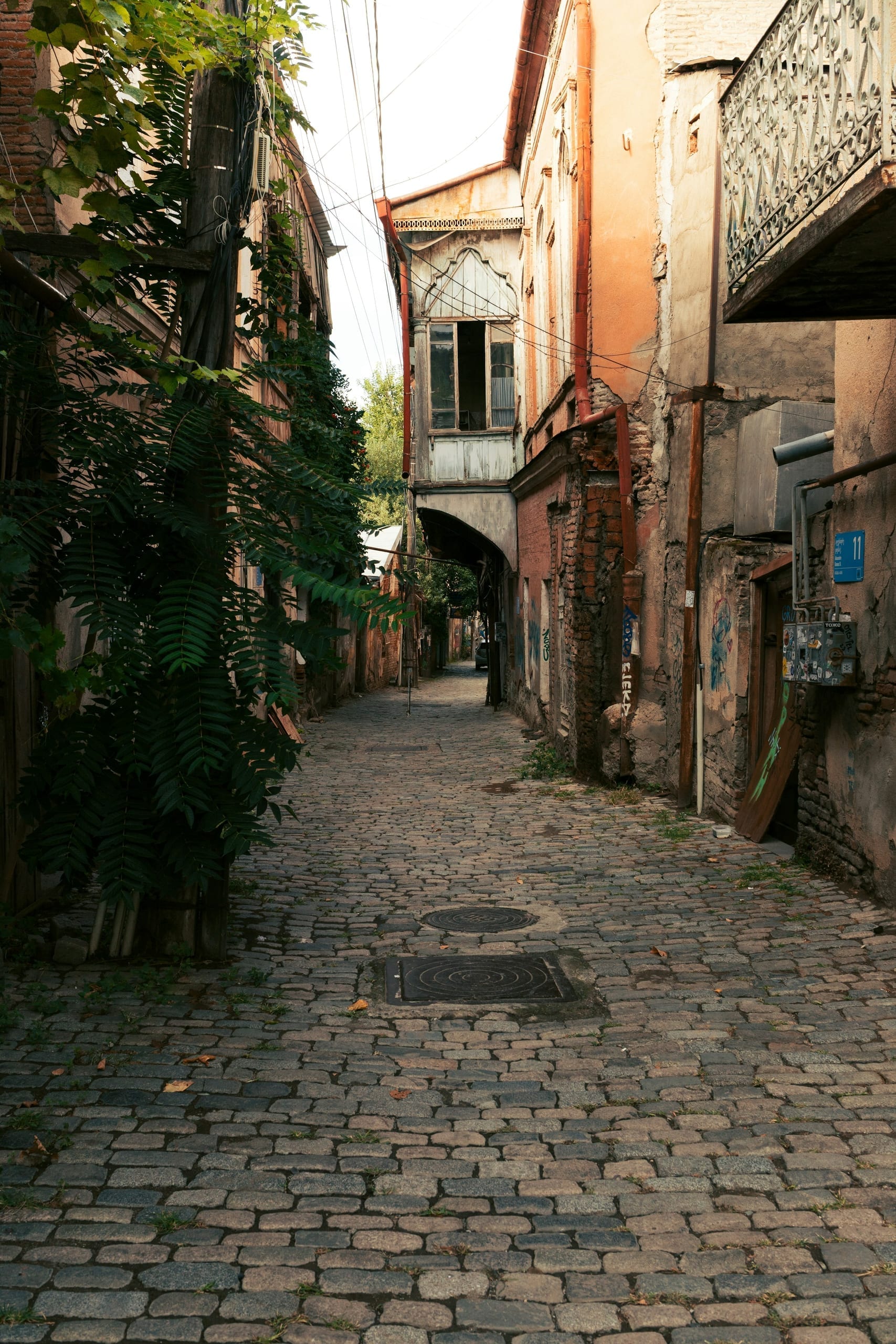
Nothing in Tbilisi agrees with anything else, and that is the pleasure. The Old Town is carved wooden balconies sagging over cobbled lanes, half of them held up by optimism. Around the corner: a Persian-style bathhouse district, then a Soviet concrete slab, then a swooping glass bridge some architect was clearly pleased with. It should not work as a city. Somehow it does.
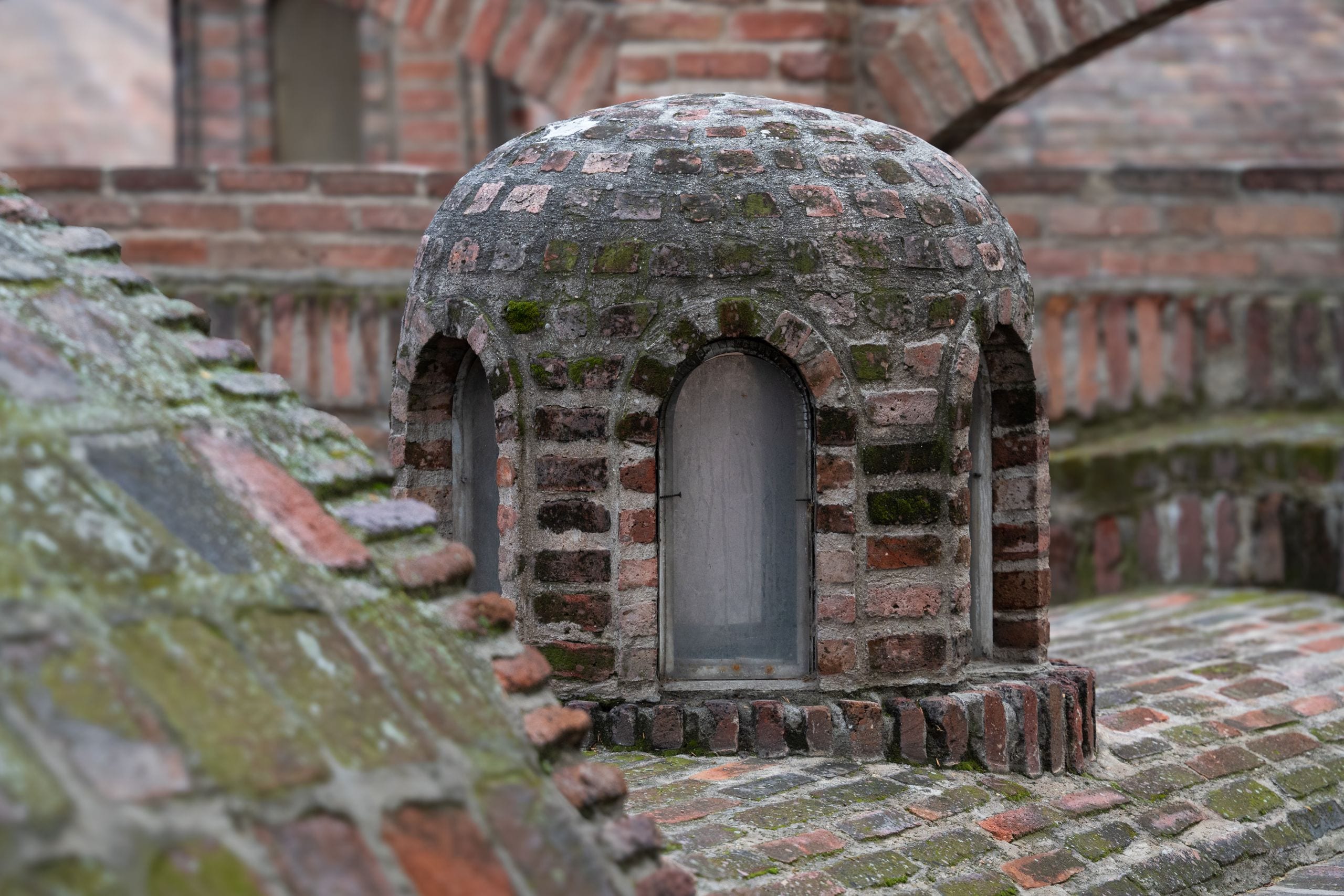
Abanotubani, the sulfur baths. Domed brick bathhouses sit over natural hot springs that smell faintly of eggs and feel wonderful after a dusty day. Pay for a private room and a kisi scrub from an attendant who will exfoliate you within an inch of your life. Private rooms often run roughly $40–80 depending on size and bathhouse; public options are cheaper. It is a local ritual, not a tourist invention — though tourists have found it.
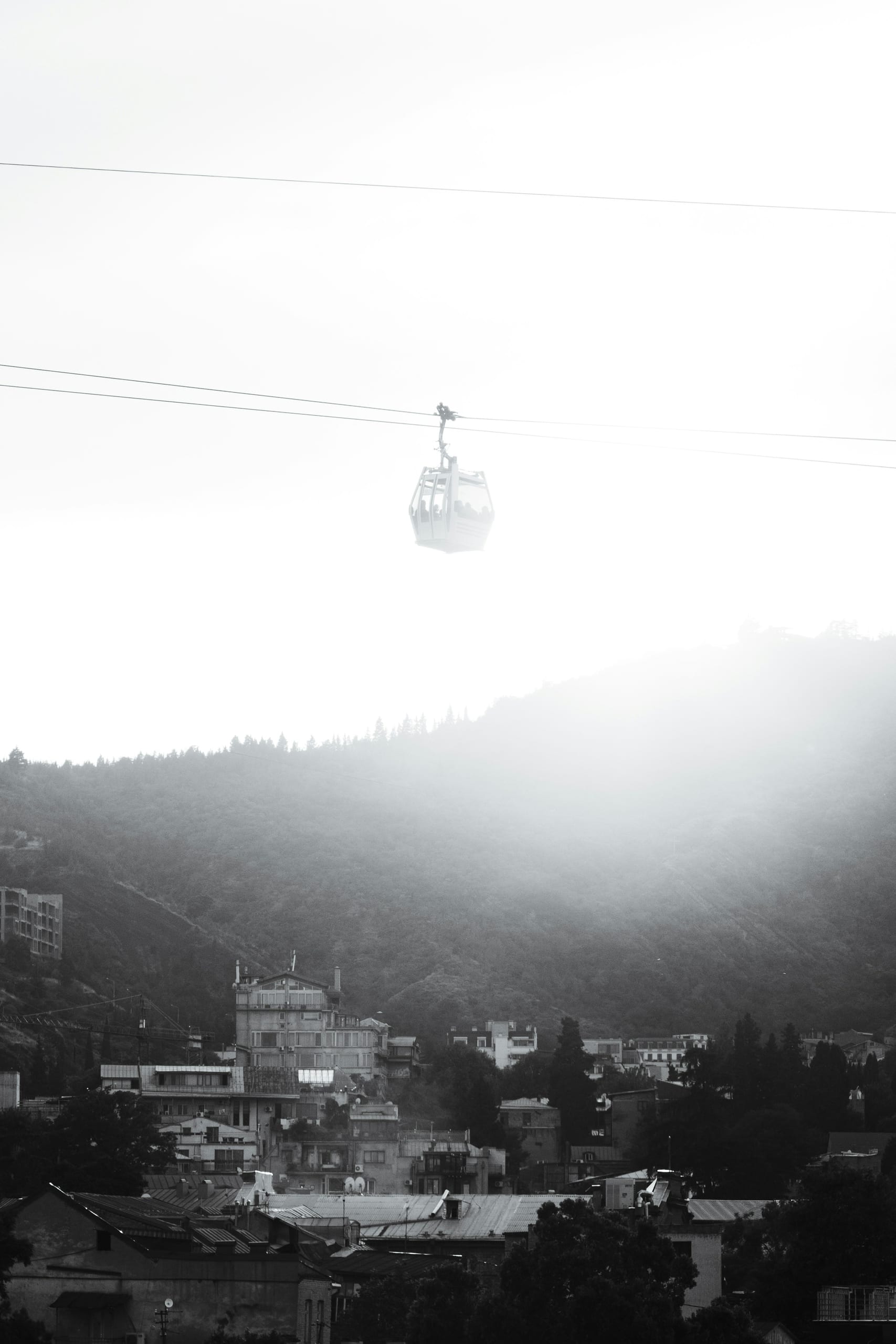
Narikala fortress and the ridge above it. Walk up or take the cable car for the view over the tin roofs of the old town. Keep walking the ridge and the crowds thin instantly. The fortress itself is more viewpoint than museum; the walk is the point.
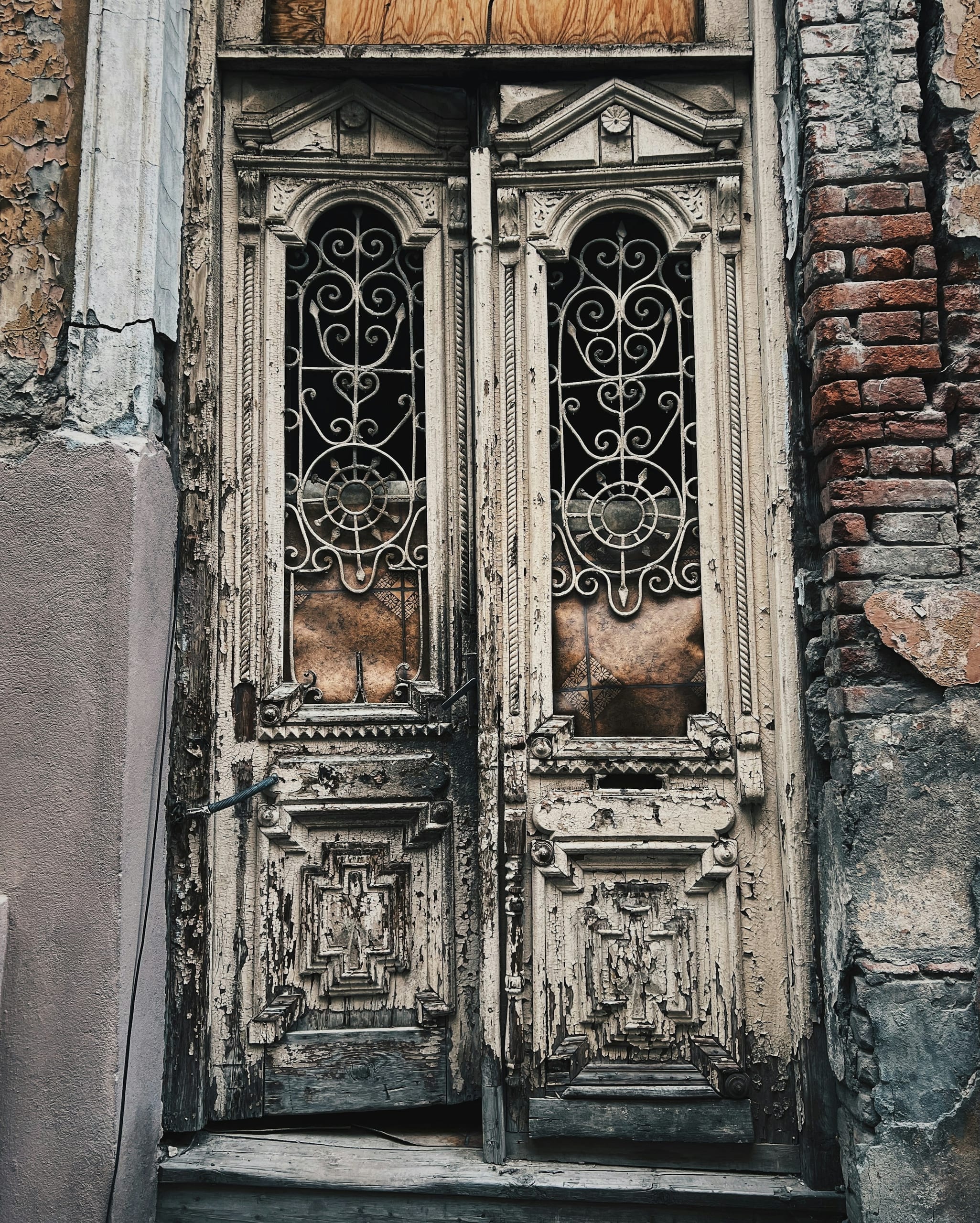
Just walking the Old Town and Sololaki. Push on the door of any old apartment block — many aren't locked — and find tiled Art Nouveau entryways and spiral staircases that have seen better centuries. Sololaki's steep streets reward aimless wandering more than a checklist.
Eat and drink like it matters. A supra, the Georgian feast, is the centre of the culture: khinkali (soup dumplings you eat by hand — never the knotted top), khachapuri (order the Adjarian boat of bread, cheese, and runny egg once), grilled meats, walnut sauces, and amber wine from buried clay qvevri. A full meal with wine often lands $15–30 a person in a good neighbourhood place. Learn gaumarjos (cheers, roughly: victory). Refuse the third glass only if you mean it.
Wine country, if you have an extra day. Kakheti, east of Tbilisi, is the main wine region — family cellars, qvevri buried in courtyards, tastings that turn into lunch. A driver day or a organised tasting run costs more than a marshrutka but less than a Western European wine tour. Even one evening at a Tbilisi wine bar that pours amber rkatsiteli or saperavi beats treating Georgian wine as a novelty pour in a tourist restaurant.
Practical city notes. Ride apps work in Tbilisi; the metro is limited but useful for longer hops. The old town is walkable and steep. Tap water is generally fine to drink in the capital; mountain villages are a different story. Dress codes at working churches mean covered shoulders and, for women, often a headscarf or wrap at the door — keep a light scarf in the daypack.
The wine is the colour of weak tea and tastes like nothing in a supermarket. Drink it where it was made, with people who made it.
Kazbegi: the mountains three hours north
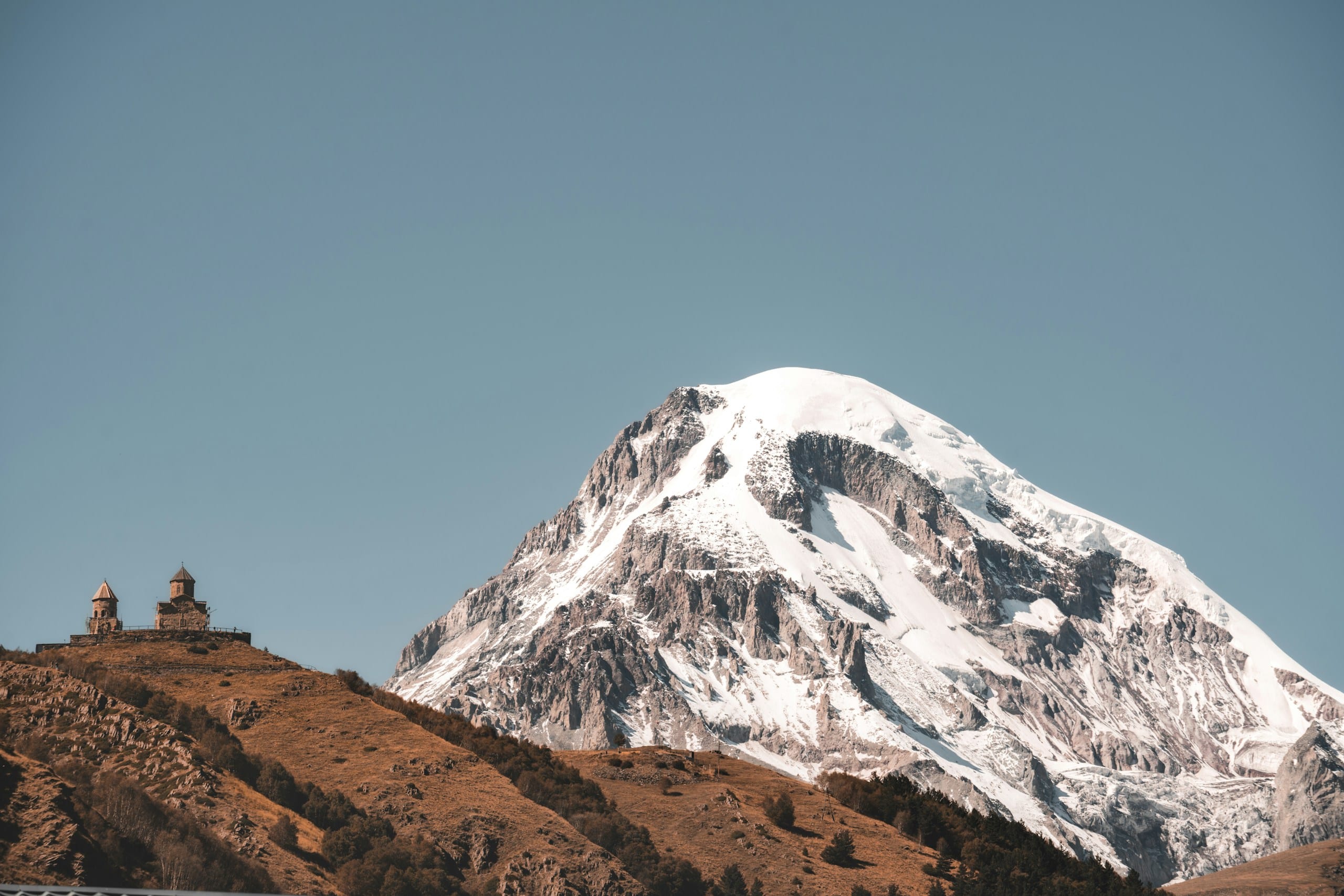
North of Tbilisi, up the Georgian Military Highway, sits the village of Stepantsminda — most people still call it Kazbegi. You go for one view, and it earns the trip: the small medieval Gergeti Trinity Church standing alone on a green (or snow-edged) hill, with the glaciated cone of Mount Kazbek (5,047 m) rising behind it. It is the image of Georgia, and unlike a lot of famous views, it is better in person.
Walk up to the church from the village in about an hour, or take a battered 4x4 if knees object. From there, walkers can push toward the Gergeti glacier and high meadows. This is real mountain terrain — layers, trekking poles for loose descents, and respect for how fast weather turns at altitude.
Getting there is half the experience. The standard way is a marshrutka (shared minibus) from Tbilisi's Didube station. It leaves when full, costs a few dollars, and is driven with a commitment to overtaking you will remember. Hire a car and driver for the day ($80–150 depending on season and stops) if you want roadside monasteries, the Ananuri fortress, and the surreal Soviet–Georgian friendship mosaic along the highway without the white knuckles.
Georgia's mountains are stitched with monasteries, many still working. Further west — Svaneti, Tusheti — the trekking is harder and the guesthouses simpler. Kazbegi is the accessible introduction; those ranges are the deeper cut.
What Kazbegi is not. It is not a ski resort town with polished après-ski, and it is not empty wilderness. Stepantsminda has guesthouses, a few restaurants, and a growing number of tour vans. Gergeti itself can feel crowded at midday in August. Walk up early, or stay late. The mountain behind the church does the rest of the work.
Altitude and kit. The church sits around 2,170 m. Even in summer, wind and cloud move in fast. Layers, a shell, and decent shoes beat fashion sneakers. If you push toward the glacier, treat it as a proper mountain day — not a photo stroll. Hire a local guide if you want glacier approaches; the church walk alone does not require one.
When to go
- Tbilisi: April–June and September–October are ideal — warm but not the furnace July and August can be in the lowlands. Winter is grey and damp; still workable for city days and baths.
- The mountains: roughly mid-June to late September. The Kazbegi road can close with snow outside that window, and high trails aren't safe until summer.
- Autumn bonus: rtveli, the grape harvest, when the whole country is making wine and you may get pulled into it.
A week splits cleanly: three or four nights in Tbilisi, two in Kazbegi (or a long day trip if time is tight — overnight is better). Add Svaneti only if you have another week.
Safety and friction. Petty crime exists as in any capital; the bigger friction is driving culture and patchy sidewalks. Mountain weather and altitude deserve respect. Political context with Russia is part of living memory — Georgians will talk about it if you ask; do not treat the country as a theme park bolted onto Europe.
What it costs
Georgia still feels underpriced by European standards:
- Hostel bunk or cheap private room in Tbilisi: $15–40
- Mid-range hotel or guesthouse: $50–90
- Kazbegi guesthouse with dinner: often $40–70 per person half-board
- Marshrutka Tbilisi–Kazbegi: a few dollars; return day driver: $80–150
- Restaurant meal with wine: $15–30
- Sulfur bath private room: $40–80
A careful traveler can live well on $60–100 a day. Spend more on wine tastings, a driver day, and a nicer old-town hotel and you still undercut most of Europe.
Bring some cash (lari). Cards work in Tbilisi restaurants and hotels; they thin out fast in mountain villages.
Sample week. Nights 1–3: Tbilisi (baths, old town, one Kakheti day or long supra night). Night 4–5: Kazbegi (Gergeti walk, maybe a second mountain day). Night 6: back in Tbilisi for a buffer before the flight — mountain roads and marshrutkas do not respect tight connections.
Visa rules change; check current entry requirements for your passport. Many nationalities get visa-free stays, but do not assume.
SIM cards and eSIMs are easy to buy in Tbilisi; coverage is fine in the capital and thinner in the mountains. Download offline maps before the Military Highway day. Learn a few Georgian letters if you like puzzles — street signs often use the local script first. Tipping is modest; rounding up or leaving small change is enough in most restaurants. Carry some cash in lari for baths, marshrutkas, and mountain guesthouses.
Is it worth it?
Very — if you want a real, unpolished capital, mountains that rival the Alps in drama, food worth flying for, and prices that feel like a clerical error. The catch is exactly that lack of polish. Go hungry, learn to toast, and say yes to the third glass.
For a harder, cheaper mountain walk further west in the Balkans, the Theth to Valbona crossing in Albania is the natural next comparison. More countries and regions live on the destinations page. If you want cold salt-and-granite mountains instead of Caucasus limestone, the Lofoten islands in Norway sit at the opposite end of the price list.