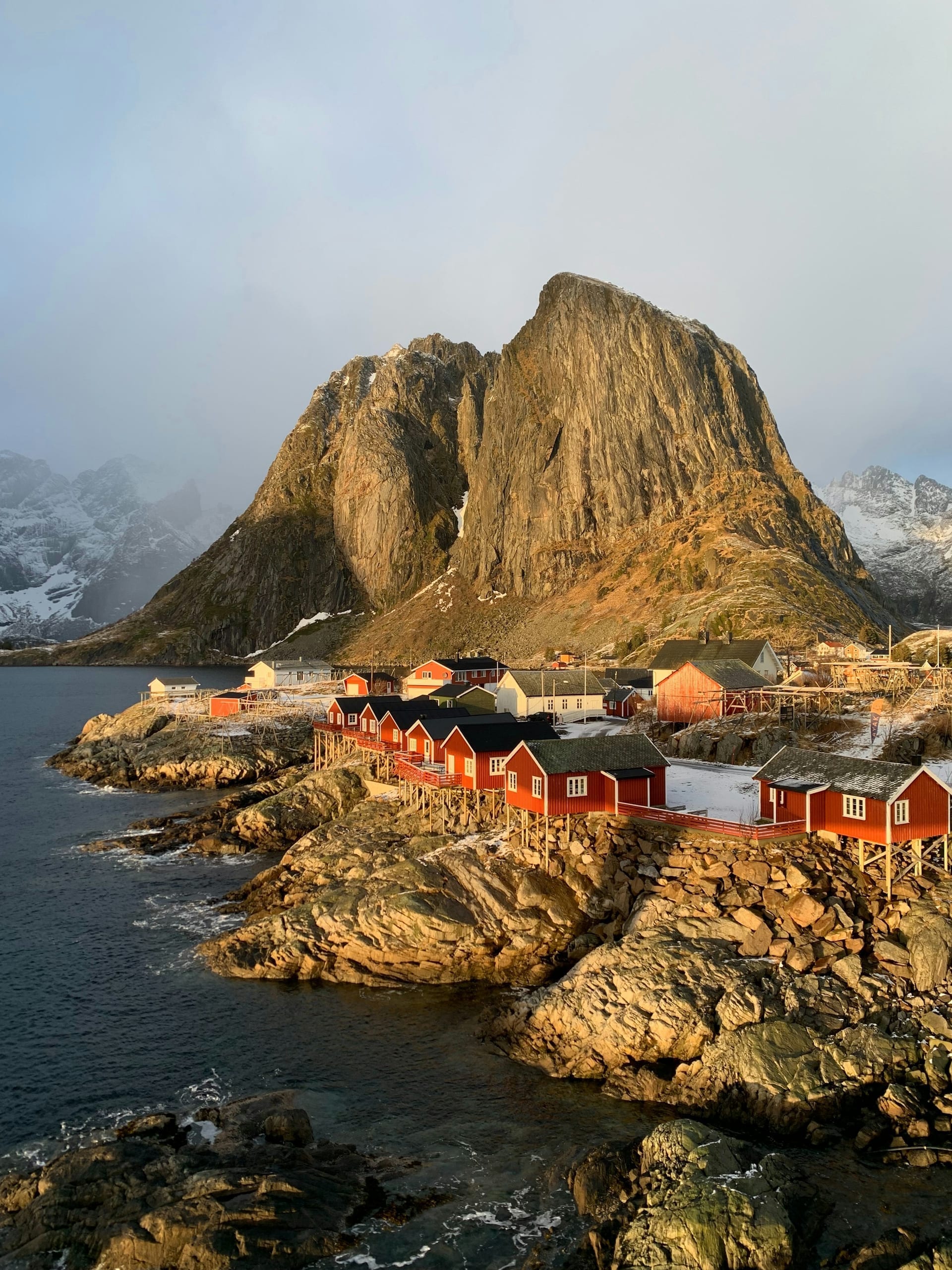
The red fishing cabin with the snow-streaked peak behind it — the one on every Norway screensaver — sits in Reine, and in July there is a line of people waiting to photograph it from the same bend in the road. The postcard is honest. The summer crush is also honest. Most visitors treat Lofoten like a drive-through: E10 in one direction, ten viewpoints, a cinnamon bun, out. The islands reward the opposite.
Lofoten is an archipelago off northern Norway, well above the Arctic Circle. Granite walls rise 1,200 metres straight out of the sea. Fishing villages tuck into every sheltered cove. Bridges and tunnels join the chain, so the E10 spine can be driven in a day. That is how most people see it — in a campervan, in July, in a hurry. You do not have to.
What Lofoten actually is
Cod built this place. Stockfish still hangs on wooden racks in the wind; that smell is the region’s whole economy in one hit. Tourism arrived later and now brings roughly a million visitors a year to about 24,000 residents, mostly in a short summer window. The midnight sun — late May through mid-July — is the draw. It is also why parking lots fill by mid-morning and why the famous photo spots feel like shared property.
The geography does the rest. Sharp peaks, white-sand beaches that have no business this far north, and weather that arrives sideways off the Norwegian Sea. The mild ocean keeps winters absurdly warm for the latitude. It also means the forecast is a rumour, not a promise. Pack merino layers and a real shell. Stop refreshing the app.
The inhabited chain most visitors mean when they say “Lofoten” runs roughly from Austvågøy through Vestvågøy and Flakstadøy to Moskenesøy, with Svolvær as the practical hub and Reine as the postcard end. Ferries and bridges stitch it together. You can sleep in a rorbu one night and be on a beach trail the next morning without changing islands by boat — that convenience is both the gift and the reason the E10 gets clogged.
The islands do not change between July and September. The number of people standing on the good rock does.
When to go (and why July loses)
Late May and early June still give near-endless light and green hillsides before the campervan tide fully arrives. September brings the first real darkness — northern lights become possible again — plus autumn colour on the lower slopes and cheaper rooms. Both shoulders are calmer. You can park at a trailhead without circling.
July and August deliver the postcard light and the queue for it. Midnight sun sounds magical for about two nights, until you are awake at 1 a.m. under a sky the colour of a swimming pool. Winter is a different trip: dark, cold, beautiful, and not for people who need twelve hours of hiking light.
The cost of going off-peak is weather. One May afternoon the cloud can sit on the water all day and hide everything above 200 metres. Accept that, or book July and share the ledge.
Hikes and beaches worth the effort
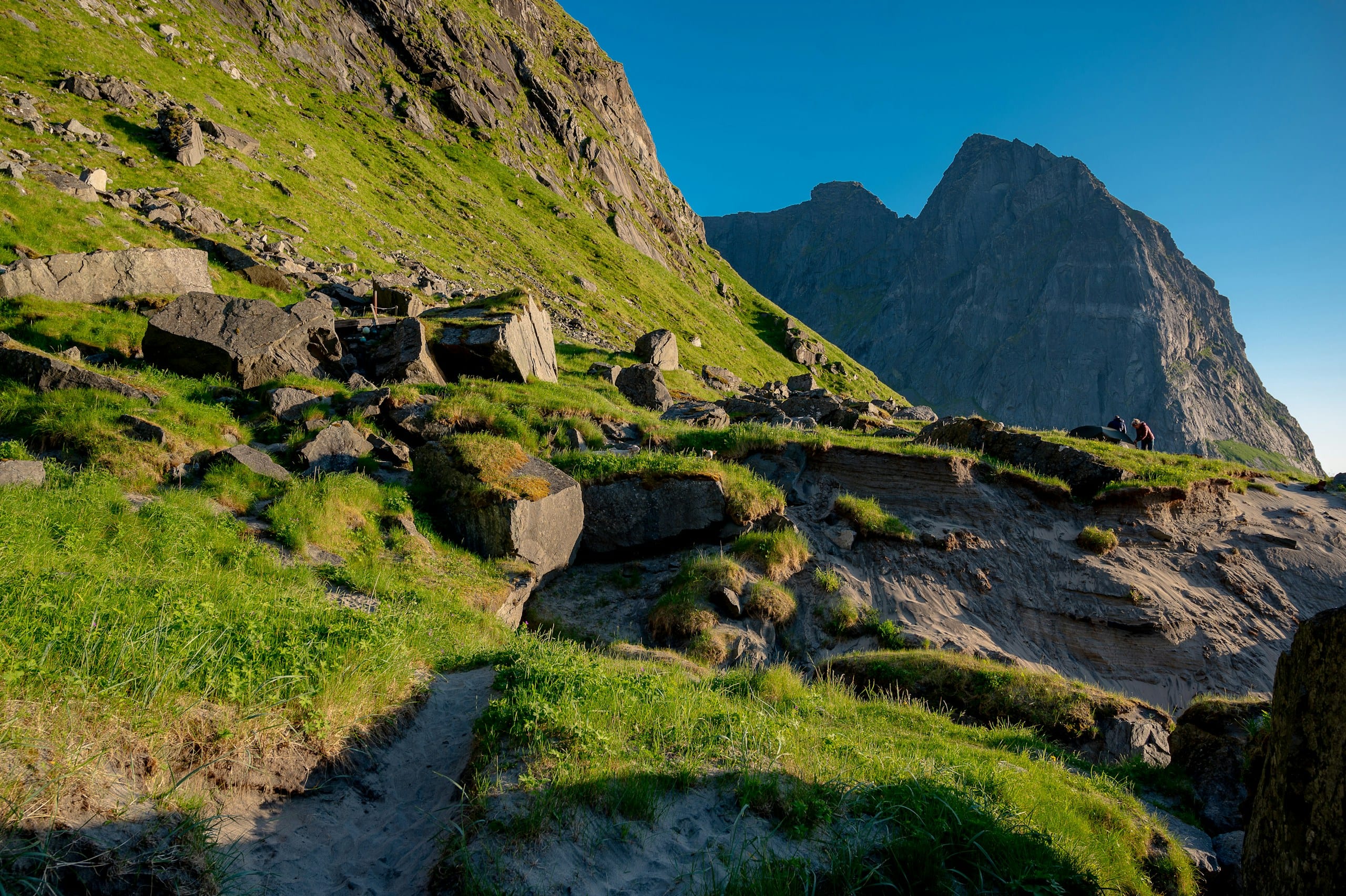
Reinebringen is the famous one — roughly 1,500 Sherpa-built stone steps to a ridge above Reine. The view over the fjord and islets matches the photos. It is also short, steep, and busy. Go early, before day-trippers, or late when the light goes long and most people have gone to dinner.
Å (yes, that is the whole name — the last letter of the Norwegian alphabet) sits at the literal end of the road. Stockfish museum, a bakery that has been making cinnamon buns in the same oven for decades, harbour racks of drying cod. Flat, unfashionable, and a better introduction to how the islands actually work than another summit selfie.
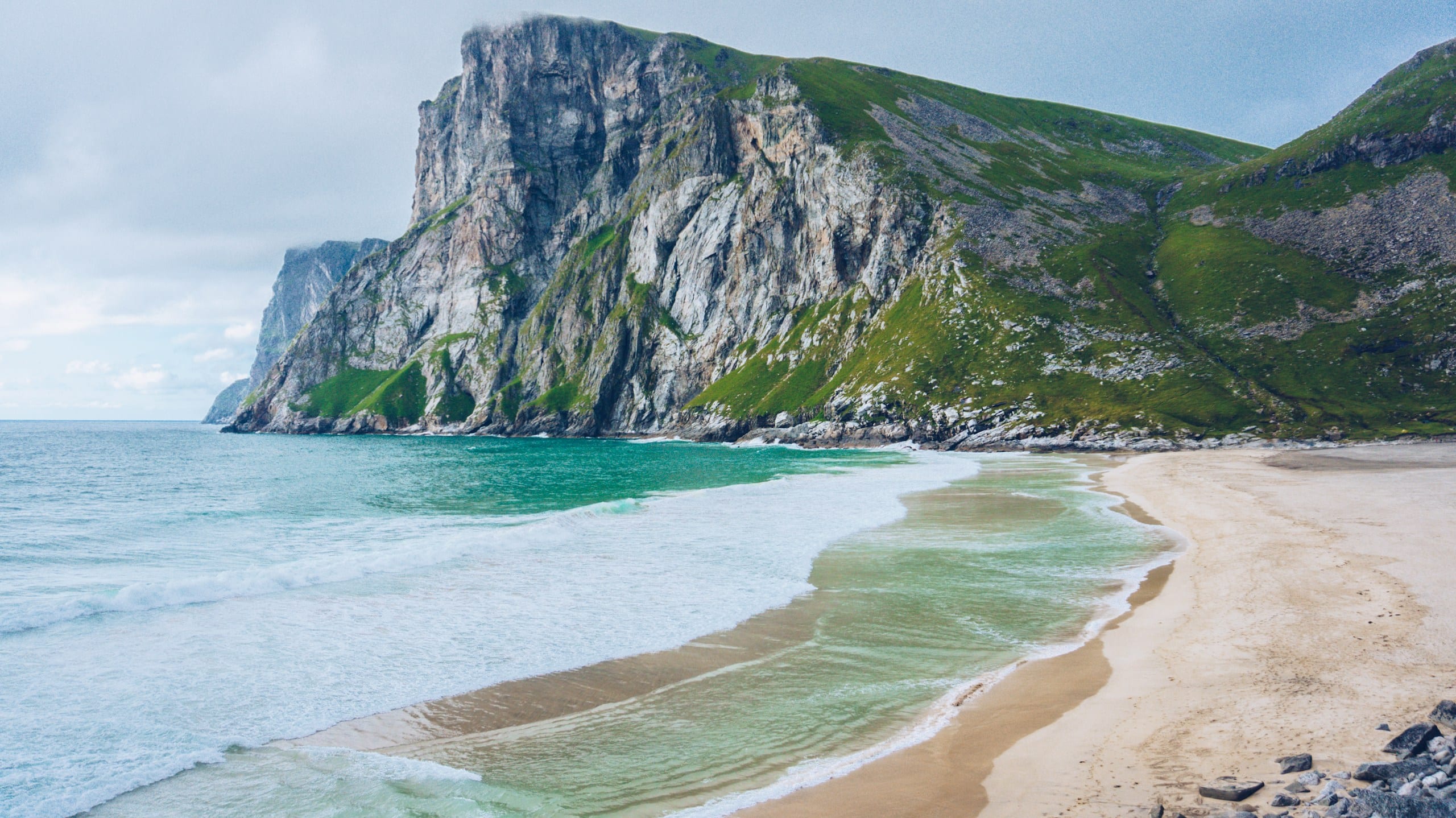
Bunes and Kvalvika beaches sort casual visitors from the rest. White sand, turquoise water, reachable only on foot. The walk in keeps numbers down. Bring water; there is none out there. A packable daypack is the difference between doing these walks and talking yourself out of them.
Villages along the E10
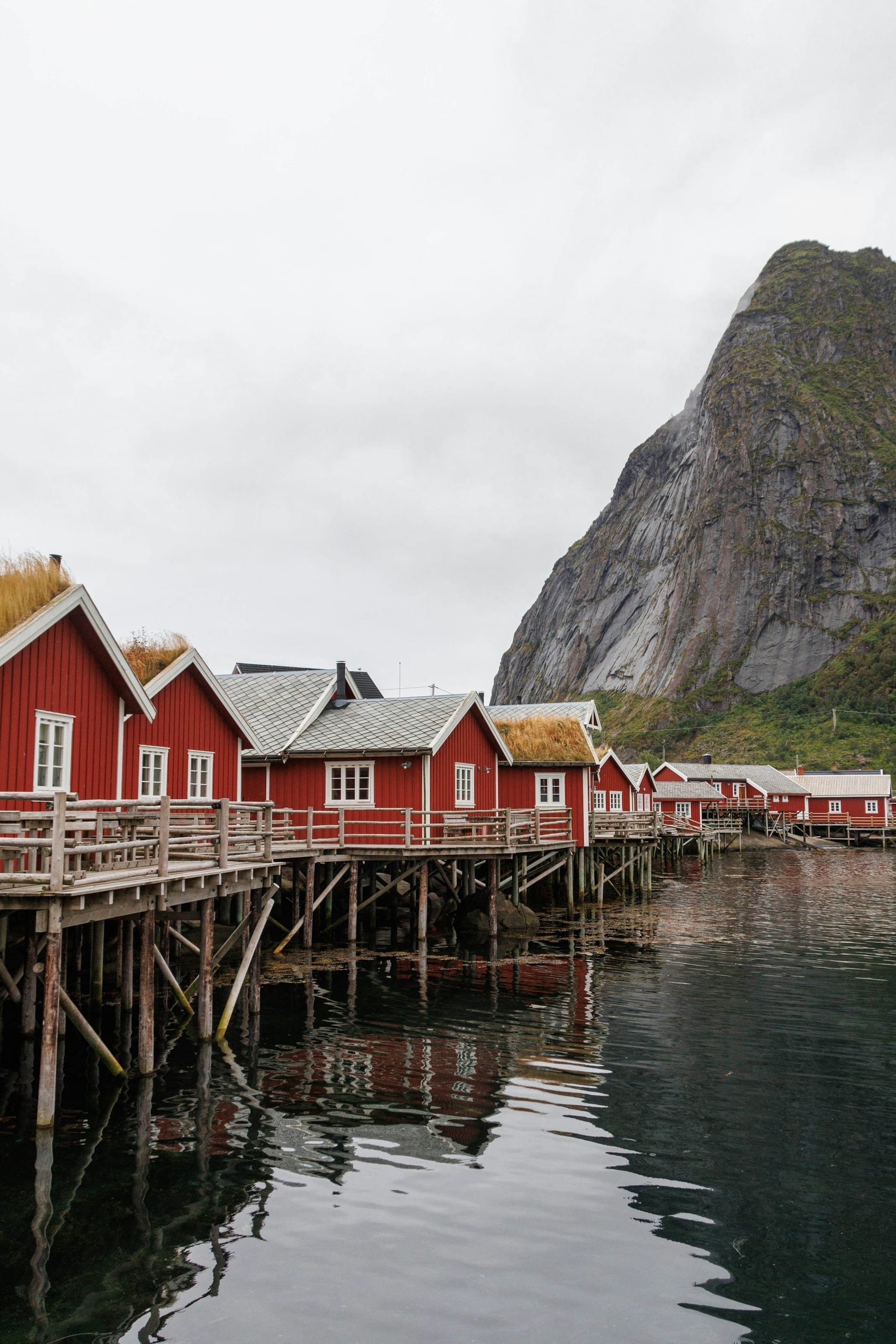
Hamnøy and Reine are the postcard villages — red rorbuer on stilts, peaks behind, water like glass when the wind cooperates. Go at dawn or in September. Midday in July is a parking lot with mountains.
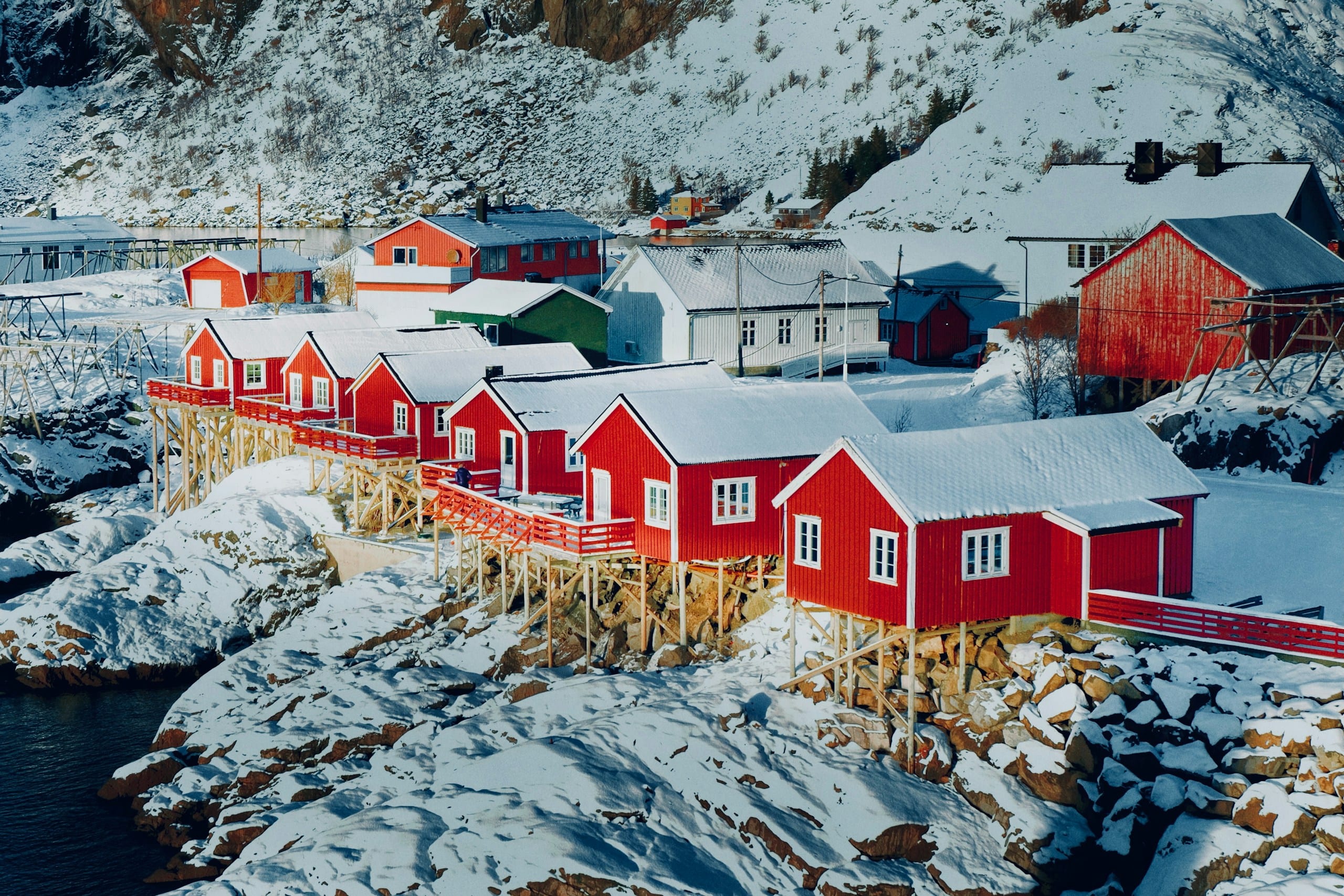
Nusfjord and smaller fishing settlements along the chain are quieter if you leave the main pullouts. The E10 itself is the spine — bridges, tunnels, sudden drops to the sea. Driving it in two days as a checklist wastes the place. Protect at least one full day with no plan near the end of the road.
What it costs
Norway is expensive and Lofoten does not discount itself.
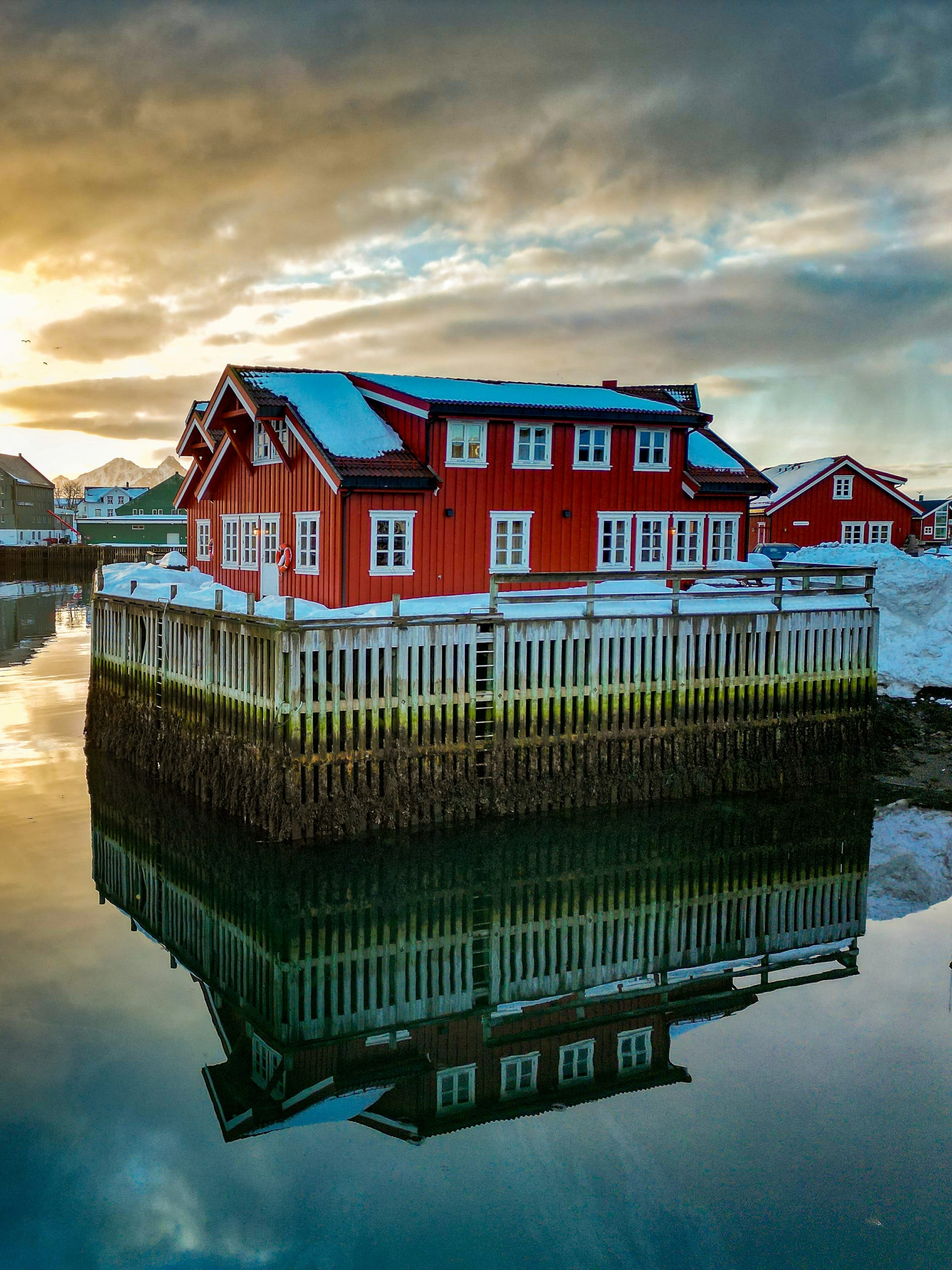
- Rorbu (converted fishermen’s cabin on stilts): roughly $165–275 a night in season, less in the shoulders. Worth it once — water under the floorboards is the point.
- Camping / wild camping: the cheap end. Allemannsretten (right to roam) makes wild camping legal on uncultivated land with rules — keep clear of houses, leave no trace.
- Food: a simple café meal $20–35; supermarket lunch from Rema 1000 or Kiwi keeps the day under control. Fish soup and cinnamon buns are the honest local calories.
- Car rental: nearly essential unless you stick to bus routes and accept thin schedules. Fuel, ferries (if you add loops), and tolls add up.
Book the good rorbuer in Reine and Hamnøy months ahead for summer. In the shoulder season you can be casual.
Getting around without wasting the light
Fly into Evenes (EVE) or Bodø (BOO) and connect by bus, ferry, or rental car. Oslo to Bodø is a flight, not a cute drive — see what to know before visiting Norway for distance reality. Public buses exist along the E10; they will not match a car for trailheads, early starts, or weather pivots.
A rental is the default for a hiking-focused trip. Book early for July. Narrow roads, campervan traffic, and sudden stops for photo pullouts are normal. Drive slower than you think you need to. Parking at Reinebringen and popular beaches fills; shoulder season is the easy fix, or arrive before 8 a.m.
Stay four to seven nights if hiking is the point. Two nights is enough to collect photos and leave wondering why everyone else stays longer. Pairing Lofoten with Bergen only makes sense if the flights are already in the budget — this is Arctic Norway, not a side trip from the fjords.
What most people get wrong
Treating Lofoten like a scenic drive. The E10 is a tool, not the experience. If every stop is a roadside pullout with the engine running, you will remember asphalt more than islands.
Chasing guaranteed light. The midnight sun is real. So is fog at sea level. Build one flexible day into every itinerary so a washed-out morning does not wreck the mood.
Skipping the fishing economy. The racks of drying cod, the harbours at low tide, the smell after rain — that is why the villages exist. Treat them as scenery only and the place turns into a theme park.
Under-packing for wind. Temperature can look mild on a phone. Wind off the Norwegian Sea cuts through fashion jackets. Merino + shell beats cotton every time.
Trying to see “all of it” in a weekend. Moskenesøy alone can fill three days of walking. The chain from Svolvær toward Å looks short on a map and long in the weather. Pick a base — Reine/Hamnøy for the postcard end of the road, or further northeast if you want slightly easier logistics — and radiate from there.
Food beyond the bun: stockfish (tørrfisk) shows up as snacks and stews; Arctic char and cod dominate menus when kitchens are serious; brown cheese on waffle is the tourist cliché that locals actually eat. Sit-down fish dinners climb fast — $40–60 is normal once you leave the supermarket aisle. Budget for one proper meal and keep the rest simple.
If the budget or calendar will not stretch this far north, the west-coast cities still deliver a different Norway: wetter, more urban, easier to reach. Lofoten remains the sharpest version of granite-meets-sea in the country.
Is it worth it?
Yes, if you come for walking, weather-watching, and slow villages — and accept that you might lose a day to cloud. No, if you need a guaranteed sunny screensaver or ten viewpoints between meals. Plenty of people do the rush. The islands give nothing back to it.
What to skip: driving the whole chain as a two-day checklist. What to protect: one full day near Å or a foot-access beach with no itinerary.
If you like the sound of granite and sea but want something warmer and cheaper, the Albanian Alps on the Theth-to-Valbona trail scratch a similar itch for a third of the price. Lofoten has a colder, salt-edged quality that is hard to find elsewhere. Go in the quiet months. Stand on the good rock alone.