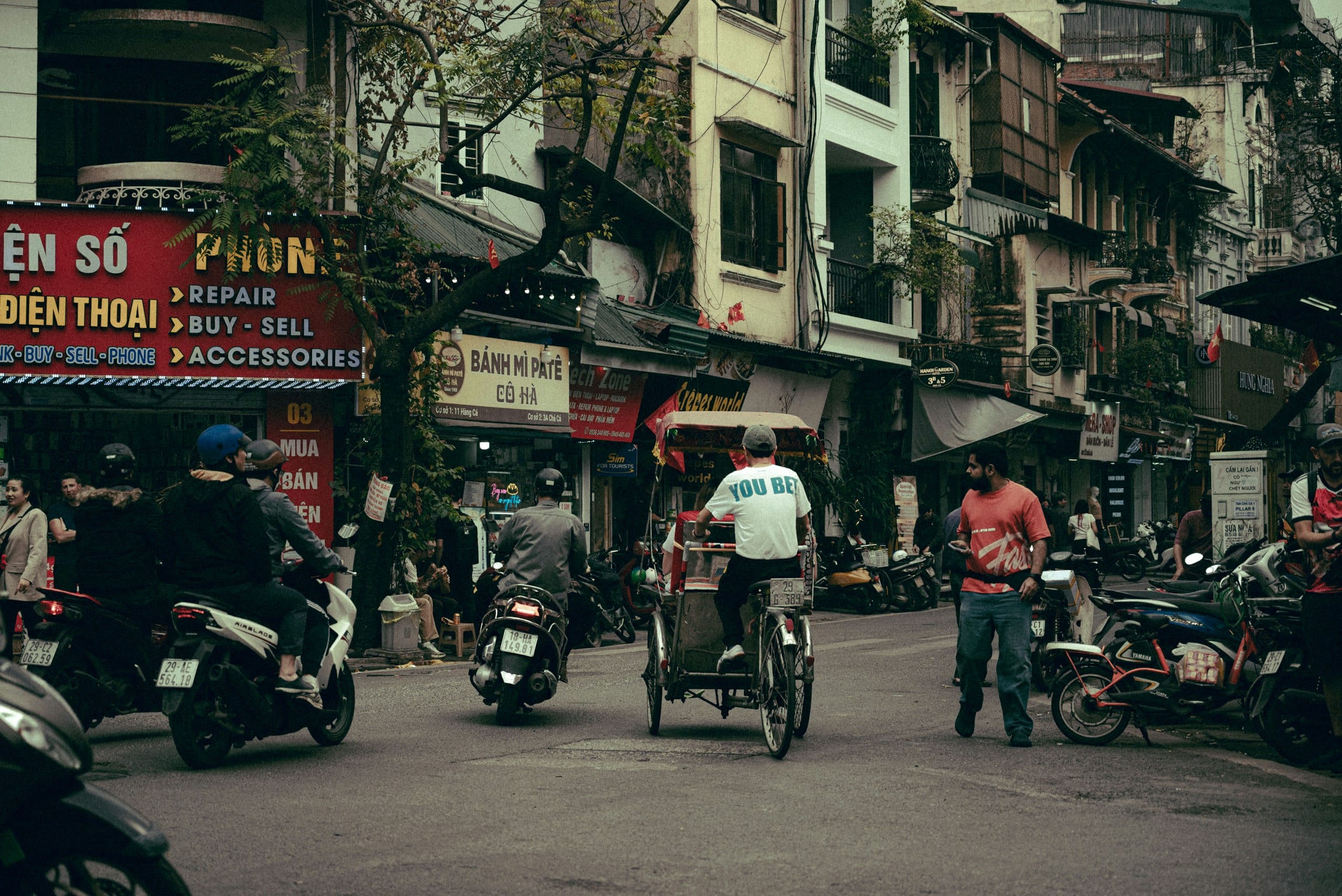
Hang Bac Street at six in the morning smells like star anise and wet concrete. Plastic stools appear on the curb. Broth steams off pots that have been simmering since someone else's dawn. Motorbikes cough awake one by one. By eight the same lane is a crawl of delivery carts and tourists with wheeled bags. That swing — from edible quiet to gridlock — is Hanoi in miniature. The northern capital is not a city you "do" between Ha Long and a southbound flight. It is a city that runs on a schedule, and most of the good food closes before the tour buses finish breakfast.
Hanoi sits in northern Vietnam, roughly 1,760 km from Ho Chi Minh City, and it feels like a different country on the same passport. About eight million people live in the metro area. Winter is real. French boulevards sit over guild streets that still work as markets before mid-morning. If Saigon is heat and sprawl, Hanoi is density, memory, and soup.
What Hanoi actually is
Vietnam's political and cultural capital since Ly dynasty times, Hanoi stacks eras without smoothing the seams. The tourist core is compact: Hoan Kiem Lake and the Old Quarter (Phố Cổ), the French Quarter to the south, and Ba Dinh district west of the lake where Ho Chi Minh's mausoleum occupies a plaza that feels imported from a different ideology.
The Old Quarter is what most people mean when they say Hanoi. Thirty-six streets, historically named for trades — silver on Hang Bac, silk on Hang Gai, tin on Hang Thiec. The trades are mostly memory. The geometry is not: narrow tube houses, balconies that almost touch, power lines thick enough to walk on if you were reckless. You get lost in ten minutes. That is the design, not a failure.
South of the lake, the French Quarter opens into wider boulevards, opera-house stone, and hotels that cost more and sleep quieter. West toward Ba Dinh, the streets straighten and the political symbolism thickens. Most visitors bounce between Old Quarter mornings and a Ba Dinh half-day. That works. Staying only in the loudest alley and never crossing the lake is how Hanoi shrinks to a souvenir circuit.
Compared with Saigon, Hanoi is cooler, smaller on foot, and less interested in glass towers. Compared with Hoi An, it is the anti-postcard: no car-free core, no lantern glow after dark. Function and flavor over atmosphere.
Morning pho and afternoon egg coffee
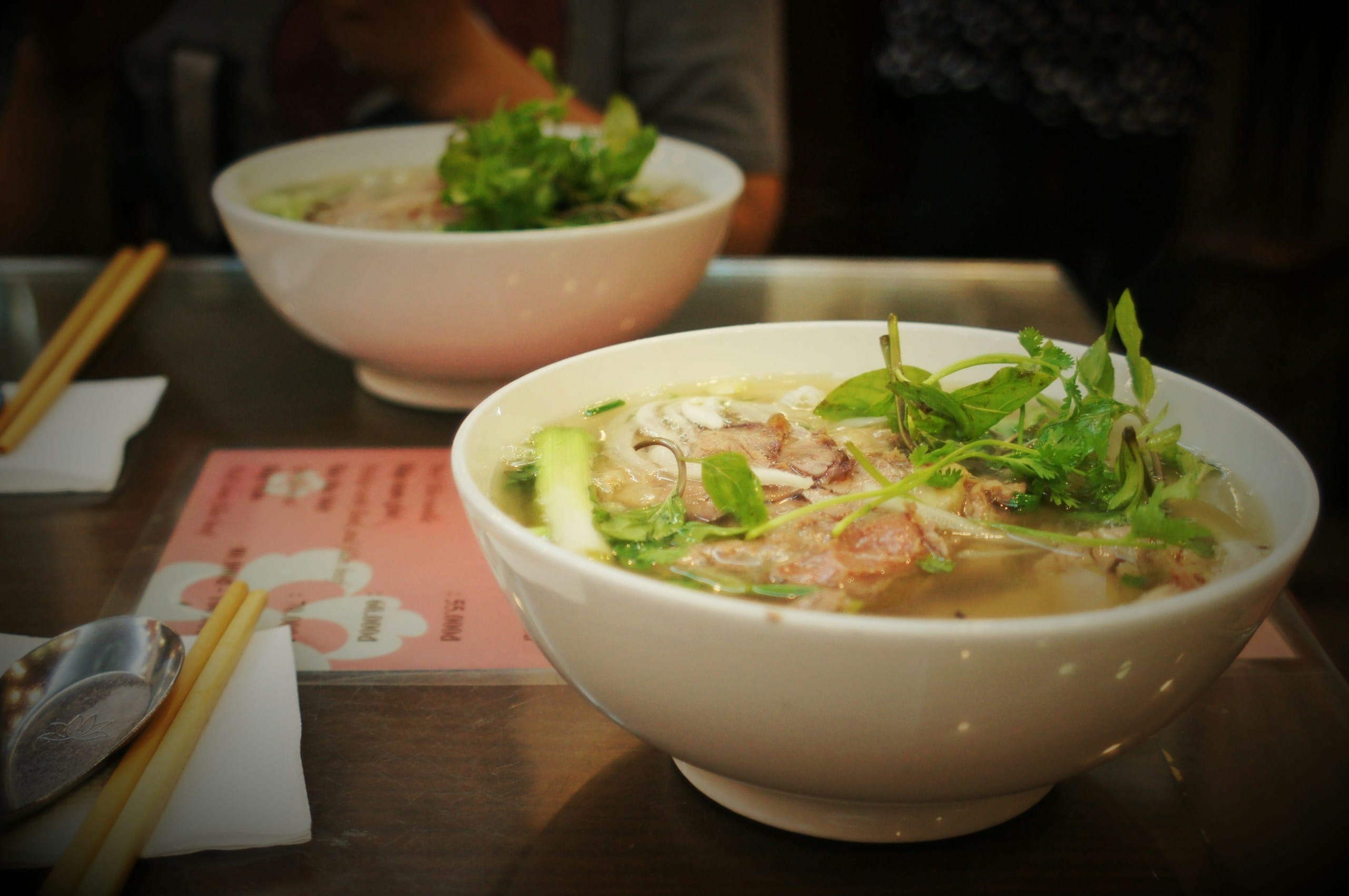
Northern pho is not southern pho with a different postcard. The broth runs clearer. Star anise stays quieter. Noodles run wider. A street bowl costs 40,000–55,000 VND ($1.60–2.20). Add a quẩy — the fried dough stick for dunking — for another 5,000 VND. The best shops open early and close by mid-morning once the broth runs out. Arrive late and you eat leftovers or nothing.
The ritual is the same at any busy stall: sit low, squeeze lime, load herbs, slurp without apology. In November, dawn sits around 18°C (64°F). The steam is not decoration.
Then cà phê trứng — egg coffee. Invented in Hanoi in the 1940s when milk was scarce: whipped egg yolk and sugar folded into strong Robusta, served in a small cup you drink like dessert. Giang Cafe on Nguyen Huu Huan Street claims the original recipe. A cup runs 35,000–45,000 VND ($1.40–1.80). It tastes like tiramisu decided to become a morning habit. Most people drink it in the afternoon as a counterweight to all that soup.
Hanoi runs on a food clock. Pho before nine. Egg coffee after two. Ignore the clock and you eat worse.
Hoan Kiem Lake: the pause that only half works
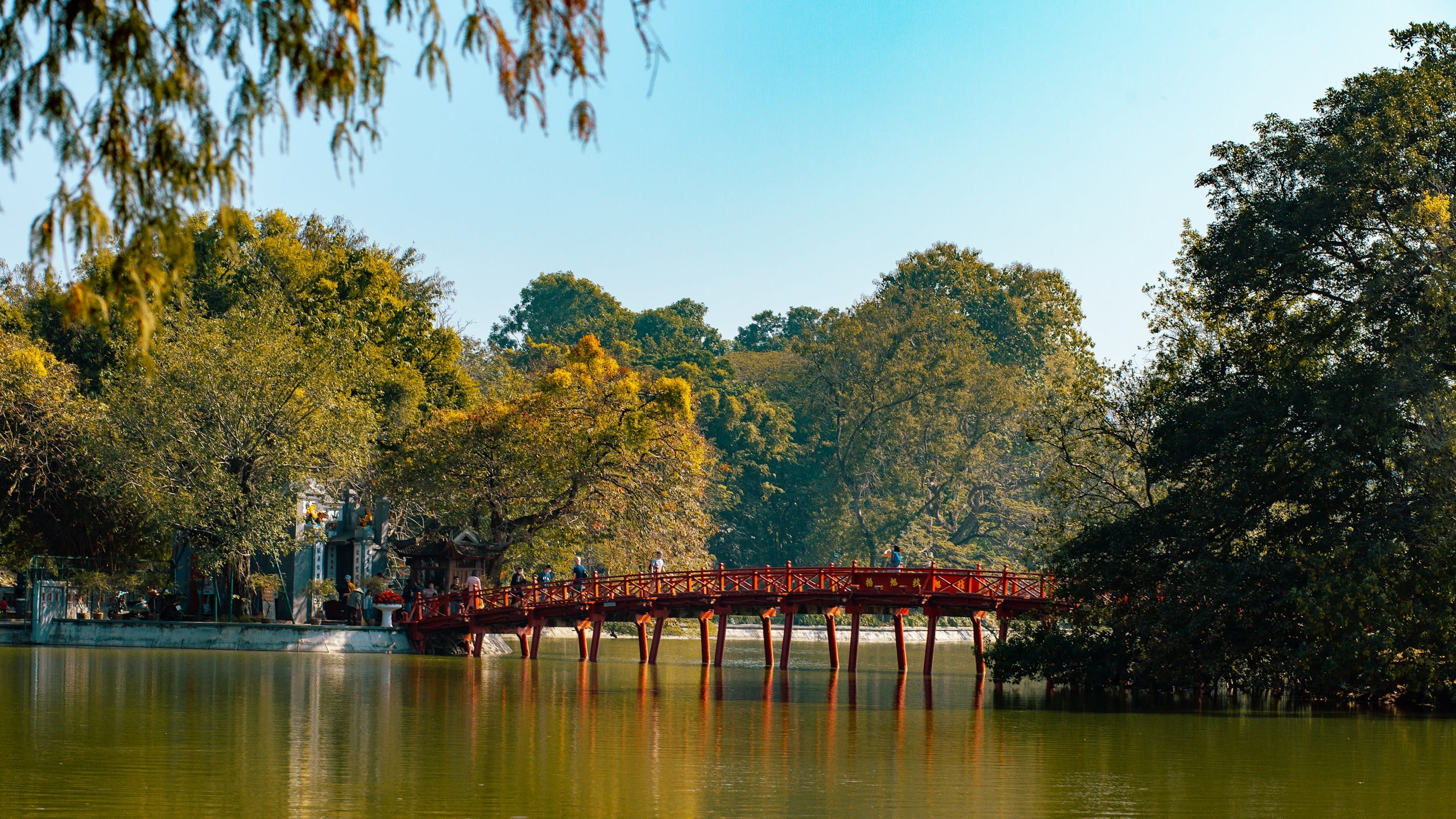
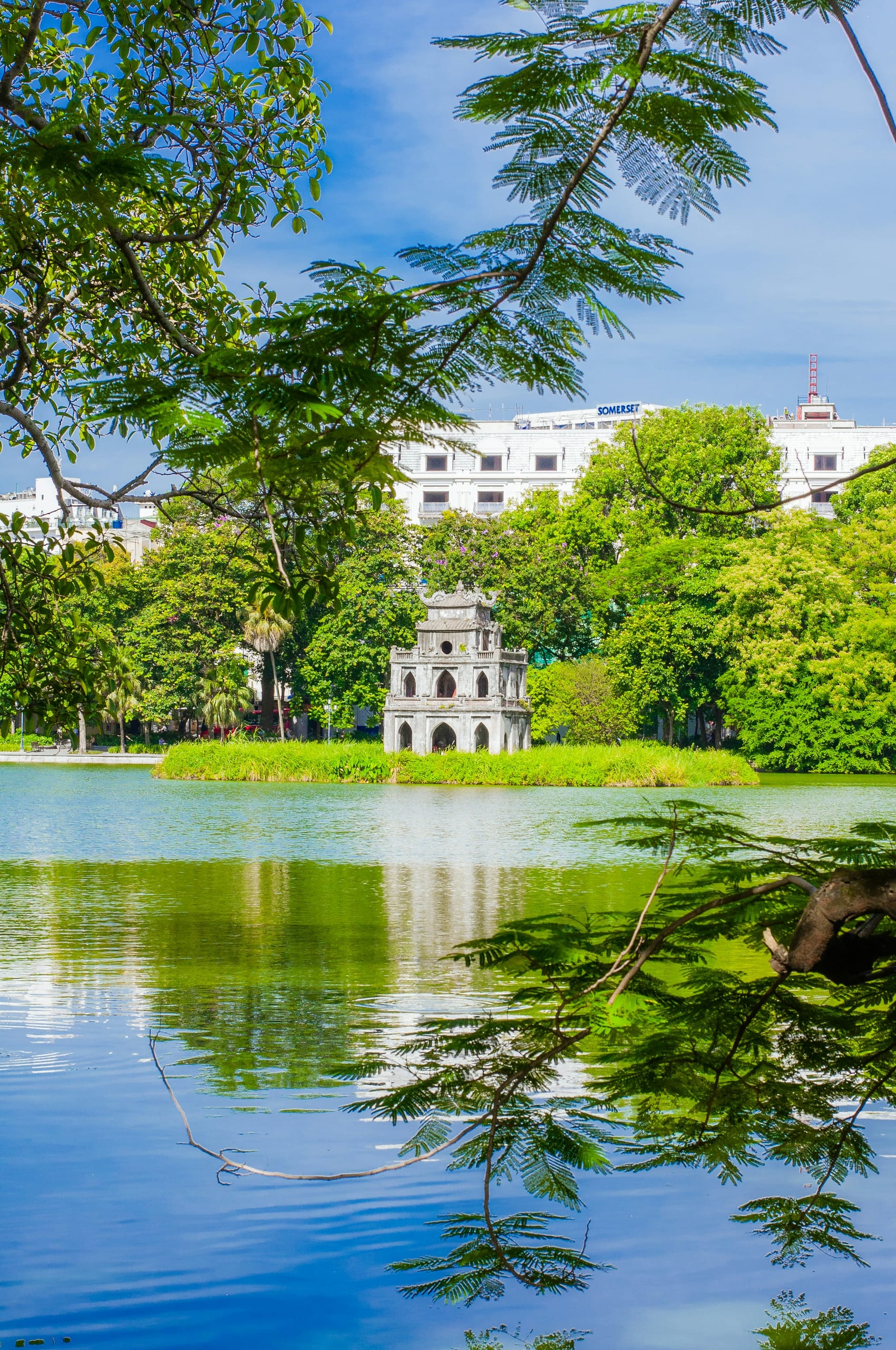
Hoan Kiem — Lake of the Returned Sword — sits at the bottom of the Old Quarter like a pause button with a queue. The Turtle Tower on its small island is the postcard. The red Huc Bridge leads to Ngoc Son Temple on the north shore ($1–2 entry). At 6 a.m., tai chi groups spread along the banks. By 9 a.m., matching tour hats occupy the same space. The lake is never empty. Early morning still feels like the city breathing before the day gets away from it.
A full loop takes about 45 minutes at an easy pace — useful when the alley grid stops making sense. The legend is better than most: an emperor returned a magic sword to a turtle god here and named the lake. The real turtle that lived in the water died in 2016 and sits preserved near the bridge. Mythology, then a dead turtle in a glass case, then a scooter parking lot. That sequence is Hanoi.
What is worth your time in Hanoi
The Old Quarter on foot before 9 a.m. Streets still function as markets. Dong Xuan Market on the northern edge is the wholesale heart — fabric, produce, live poultry if luck runs against you. Haggling is expected on goods, not on pho. A rain jacket can land around 180,000 VND ($7) after a short walk-away. Mid-morning Hang Bac already sits past comfortable volume.
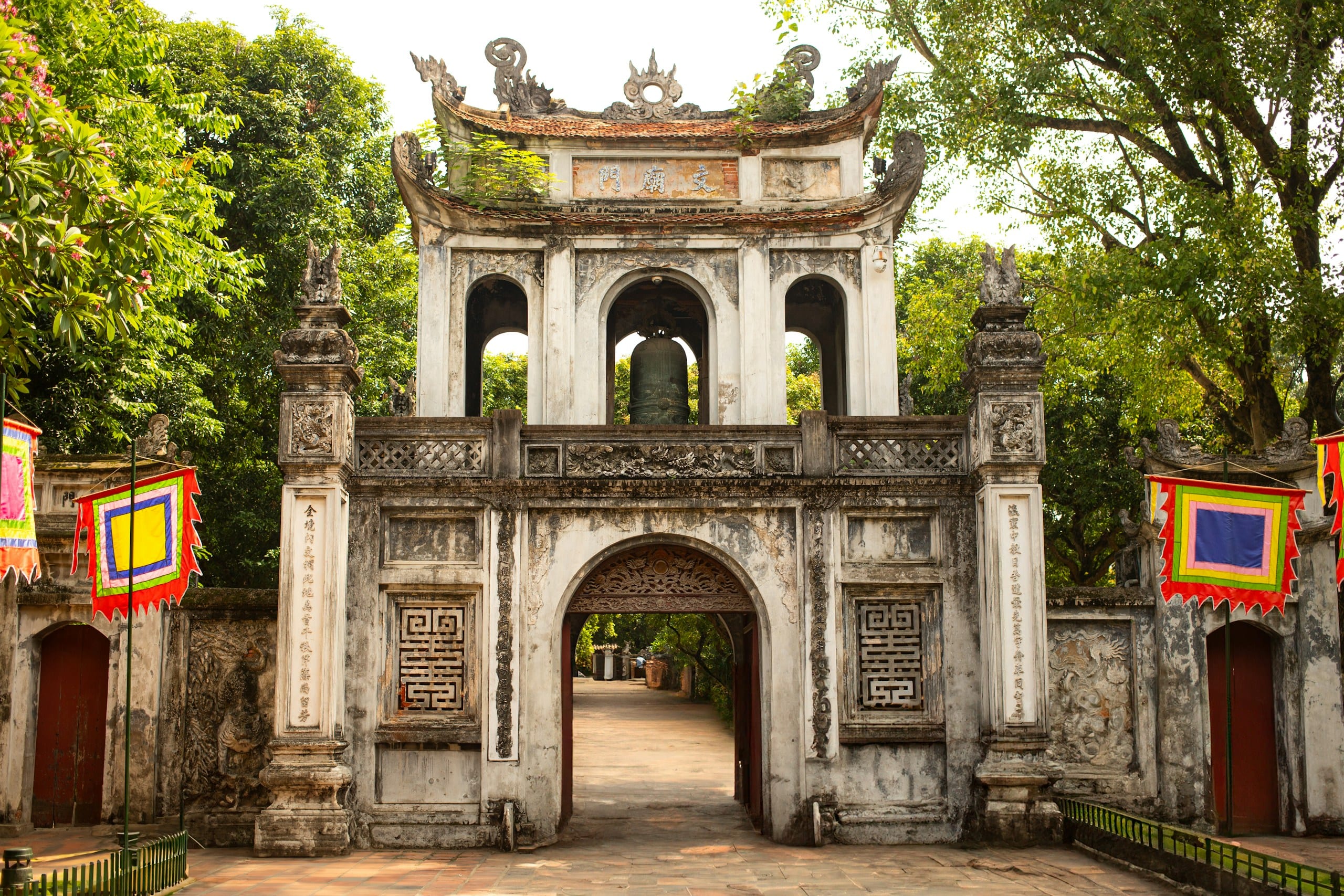
Temple of Literature (Van Mieu). Vietnam's first university, founded in 1070, dedicated to Confucius and scholars who passed imperial exams carved on stone stelae. Courtyards stay quieter than the Old Quarter. Banyan trees outlast most countries. Entry is 30,000 VND ($1.20). Allow ninety minutes. The Temple of Literature official site lists current hours; cover shoulders and knees.
Ho Chi Minh Mausoleum and One Pillar Pagoda. The mausoleum in Ba Dinh Square is free and strict: no shorts, no cameras inside, long weekend queues. One Pillar Pagoda nearby takes fifteen minutes. Weekday mornings cut the security theater.
Train Street — check status before you go. The alley where trains pass inches from cafe tables became an Instagram fixture, then a safety headache. Authorities have closed and reopened access repeatedly. If it is open, treat it as a quick look, not a sit-down. Stay off the tracks.
Street food beyond pho. Bún chả — grilled pork in dipping broth with noodles and herbs — is Hanoi's lunch engine. A full set at a busy Hang Manh shop runs about 50,000 VND ($2). Bánh cuốn, rice rolls with pork and mushrooms: around 35,000 VND ($1.40). Chả cá Lã Vọng, the turmeric fish dish from Cha Ca Street, costs 150,000–200,000 VND ($6–8) per person and earns the splurge if you like fish that fights back. Beer on a plastic stool after dark is part of the same economy: cheap, loud, and better when the next table is office workers, not a tour group with matching hats.
West Lake (Hồ Tây) if you need air. A short Grab from the Old Quarter puts you on a larger, less theatrical lake loop with cafes and residential streets. It is not a must. It is useful on a hot afternoon when Hoan Kiem feels like a roundabout with better branding.
What to skip (or do differently)
Ha Long Bay as a rushed day trip from Hanoi. The bay is extraordinary. The standard one-day bus package is not: four hours on the road each way, two hours on a boat with fifty strangers, a cave, a buffet, traffic home. Stay overnight on the bay if the landscape matters; otherwise keep the day for Hanoi. More on that trade-off in things to know before visiting Vietnam.
Water Puppet Theatre. Fine for twenty minutes. Tourist-priced at 100,000–200,000 VND ($4–8). Optional unless kids are along.
When to go, and what Hanoi costs
Autumn (September–November) and spring (March–April) are the windows: 20–28°C (68–82°F), less rain, manageable humidity. Mid-November brings cool mornings, warm afternoons, and the occasional downpour that turns side streets into wading pools. Winter (December–February) can drop to 10°C (50°F) with drizzle that seeps into everything — pack a real layer; this is not Saigon. Summer (May–August) is hot and wet. Tet (Lunar New Year, usually late January or February) closes many businesses for a week. Book ahead or stay away.
Daily mid-range budget: $30–55 covers an Old Quarter hotel, Grab rides, street-food meals, and one or two paid sites. Clean rooms near Hang Be often land around $30–35 a night — small, no elevator, breakfast included. Noi Bai International Airport sits 35 km north; a Grab car to the Old Quarter costs 250,000–350,000 VND ($10–14).
Getting around: walk when you can. Grab for longer hops. The metro exists; coverage is still thin for most tourist routes. Crossing the street uses the same steady-walk rule as Saigon — do not stop, do not run, let the swarm part around you. Full country logistics live in the Vietnam things-to-know piece.
The friction
Air quality in winter can be grim. Scams exist but run smaller-scale than Saigon's tourist strips: shoe-shine "accidents," inflated cyclo prices. A firm không (no) ends most of it. The Old Quarter is loud from dawn until midnight. If you need silence, stay near the French Quarter.
Hanoi is not a landscape destination. It will not give you fjords or empty ridgelines. It gives you a bowl of soup that costs less than a coffee at home, a lake that still works as a horizon inside eight million people, and mornings that belong to whoever got out of bed hungry.
How long to stay
Four full days is the minimum that makes sense: mornings for pho and the lake, a half-day for the Temple of Literature and Ba Dinh, evenings for bún chả and getting lost on purpose. A fifth day covers West Lake, a museum you actually wanted, or recovery from Ha Long without racing to the airport.
Stack Ha Long as an overnight if the bay matters. Do not treat Hanoi as a layover for the south, and do not try to "fix" the Old Quarter in two rushed evenings between flights. The city teaches itself in the hours before nine and after the day-trippers leave — everything in between is optional noise.
More cities and regions live on the destinations page.