Tan Son Nhat dumps you into wet heat before you clear the curb. Motorbikes peel around the terminal. A woman on a bicycle rolls past with stacked lunch boxes strapped behind the seat. Officially this is Ho Chi Minh City - what the visa form says. Locals still call it Saigon when they mean the place that feels like home. You will not offend anyone either way.
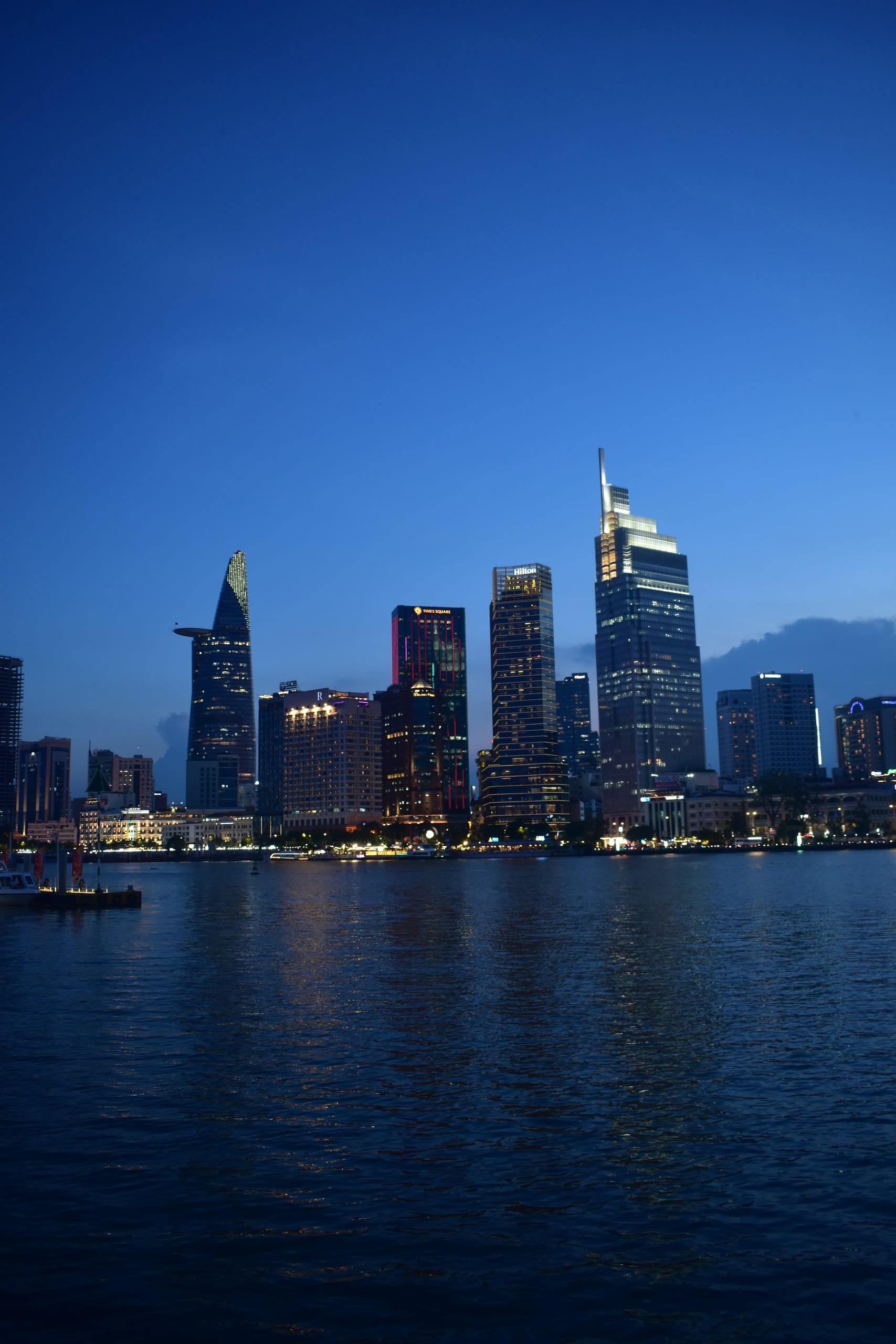
Saigon sits on the upper edge of the Mekong Delta in southern Vietnam, about 1,100 km south of Hanoi and a different climate entirely. Roughly nine million people. Glass towers along the river. Container barges under Landmark 81 at dusk. It is the country's economic engine and the usual landing pad for flights from Bangkok or Singapore - hotter, flatter, and more practical than the northern capital.
If Hoi An is lanterns and tailor shops that close at reasonable hours, Saigon is the opposite: sidewalks claimed by parked scooters, coffee sweet enough to count as dessert, and meals that cost less than a subway swipe in New York.
District 1 is orientation, not the whole city
The tourist map compresses into a few square kilometres of District 1: Ben Thanh Market, the Reunification Palace, Notre-Dame (often under scaffolding), the Central Post Office, the Opera House, and the War Remnants Museum. Half a day covers the checklist. That is useful for finding your feet. It is not enough to call the trip done.
The better hours are in District 3's tree-lined streets, coffee shops where locals sit on plastic stools at 7 a.m., and alleyways - hẻm - that open into courtyards with a pho pot at the back. From late morning the air turns thick. Walk early and late; save midday for shade and museums.
Crossing the street (and why Grab exists)
Traffic does not stop for pedestrians. It flows around them the way water flows around a rock. Walk at a steady pace. Do not stop, do not run, do not negotiate with eye contact. The swarm adjusts.
Grab is cheap - most rides within central districts run 25,000-45,000 VND ($1-2). Walk when the hop is under twenty minutes and the sun is off its peak; Grab the rest. Country-wide tips live in things to know before visiting Vietnam.
District 1: landmarks that earn a morning
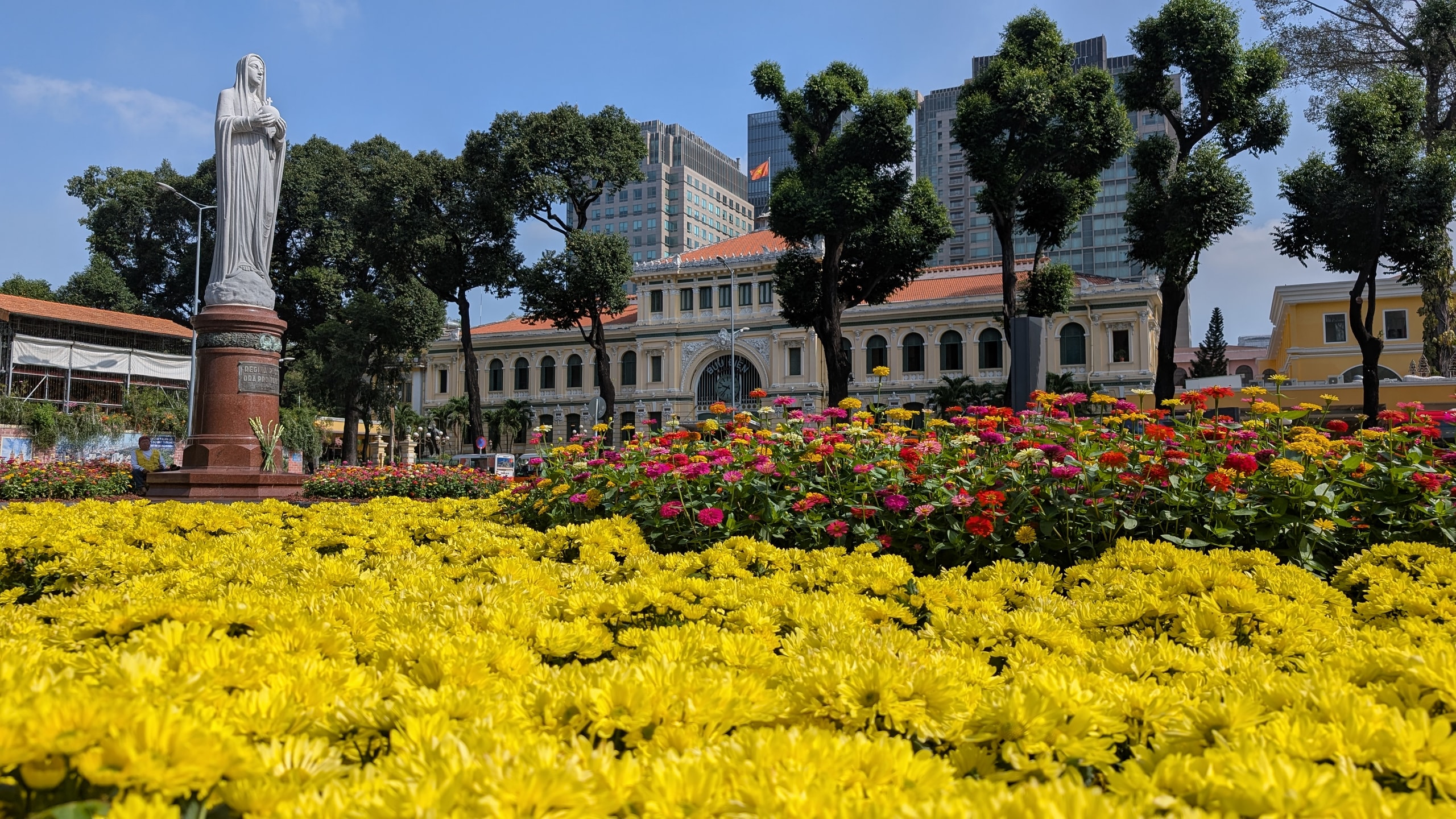
Start at the square between Notre-Dame and the Central Post Office. On a clear morning the facade is yellow and green against modern towers, with chrysanthemums and the white Virgin Mary statue out front. The building is free - vaulted ceiling, old phone booths, a portrait of Ho Chi Minh at the far end. Fifteen minutes is enough.
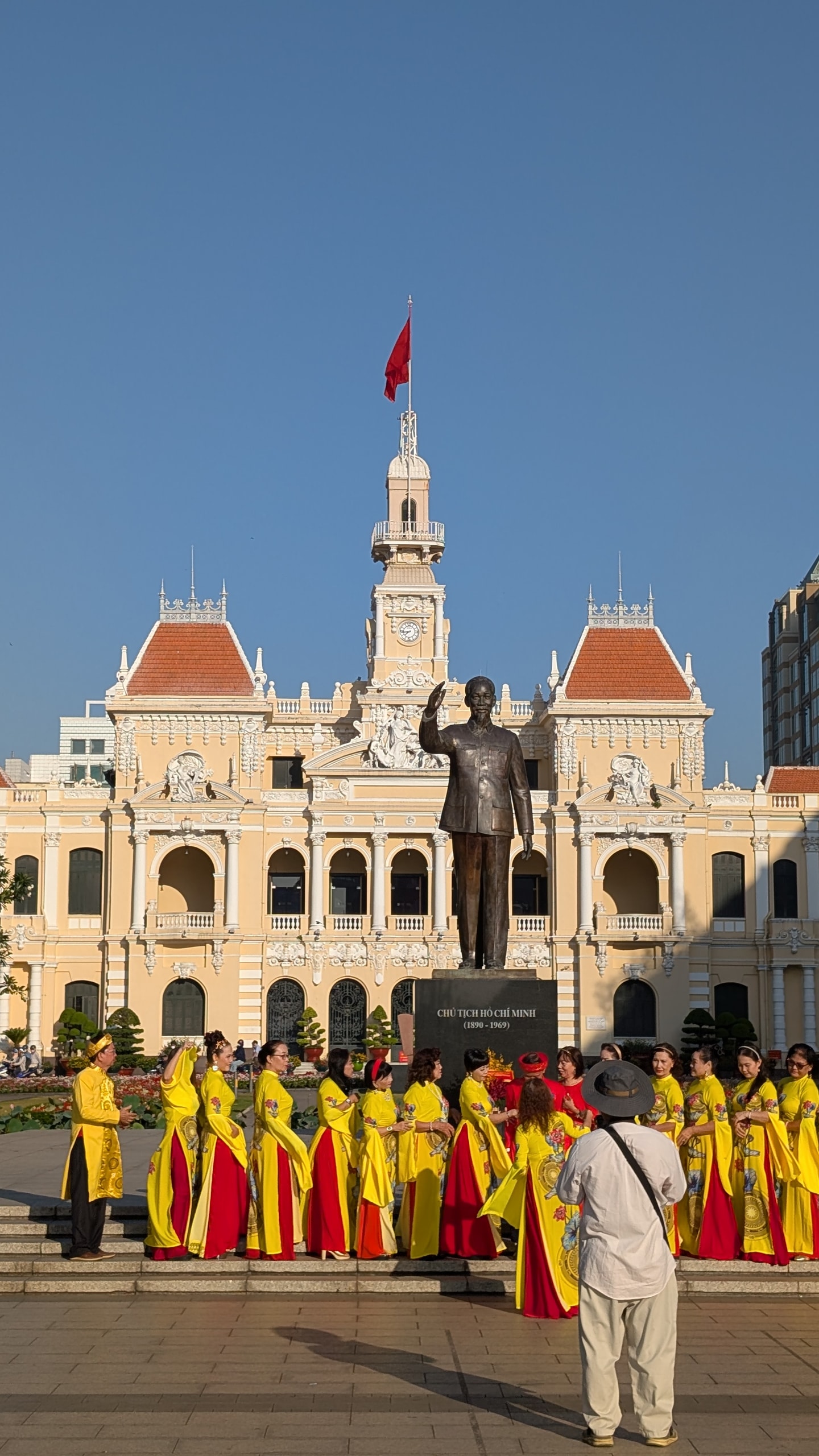
Walk five minutes to Nguyen Hue - the pedestrian boulevard from the People's Committee Building to the river. French colonial City Hall sits at the north end. The bronze Ho Chi Minh statue draws wedding parties, school groups, and people in áo dài posing for photos. Midday is harsh; late afternoon is when the plaza softens.
One slow walk down Nguyen Hue beats another museum ticket if you only have an hour before dinner.
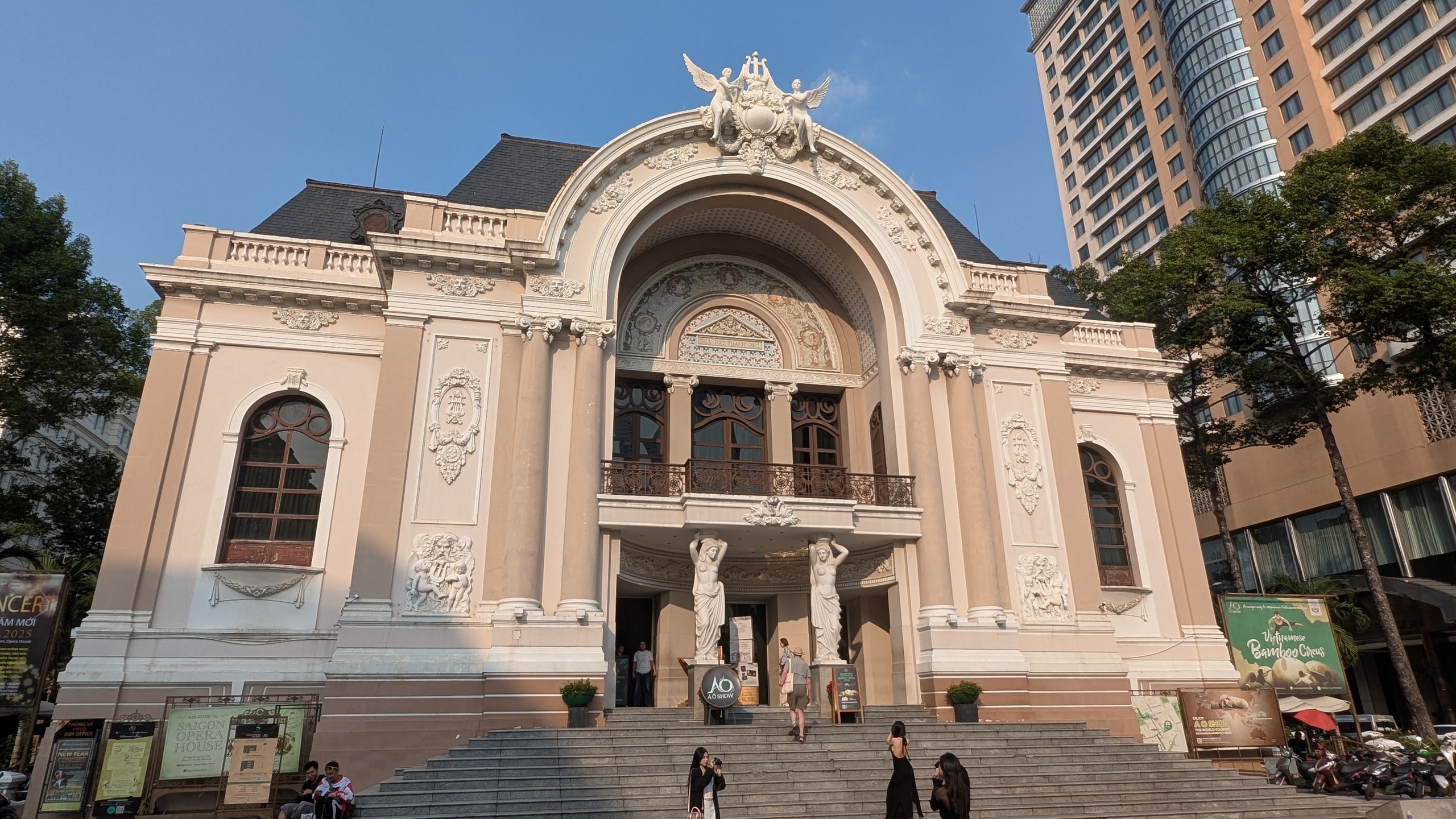
The Saigon Opera House sits a short walk east - pink-beige French theater, a modern tower rising hard against one side, A O Show posters on the steps. The facade is free. Seats, if you want a show, run roughly 600,000-1,500,000 VND ($24-60).
Ben Thanh Market opens around 6 a.m. for locals buying produce; by 9 a.m. tourist stalls dominate. Go early for the working market. A linen shirt can land around 280,000 VND ($11) after starting at half the asking price - standard practice, not rudeness.
Reunification Palace ($4-5 entry) preserves 1975 time-capsule style - the basement war room beats the banquet hall upstairs. Pair it with the War Remnants Museum the same morning if you are already in the heat.
War Remnants Museum - go once, then see the rest of the city
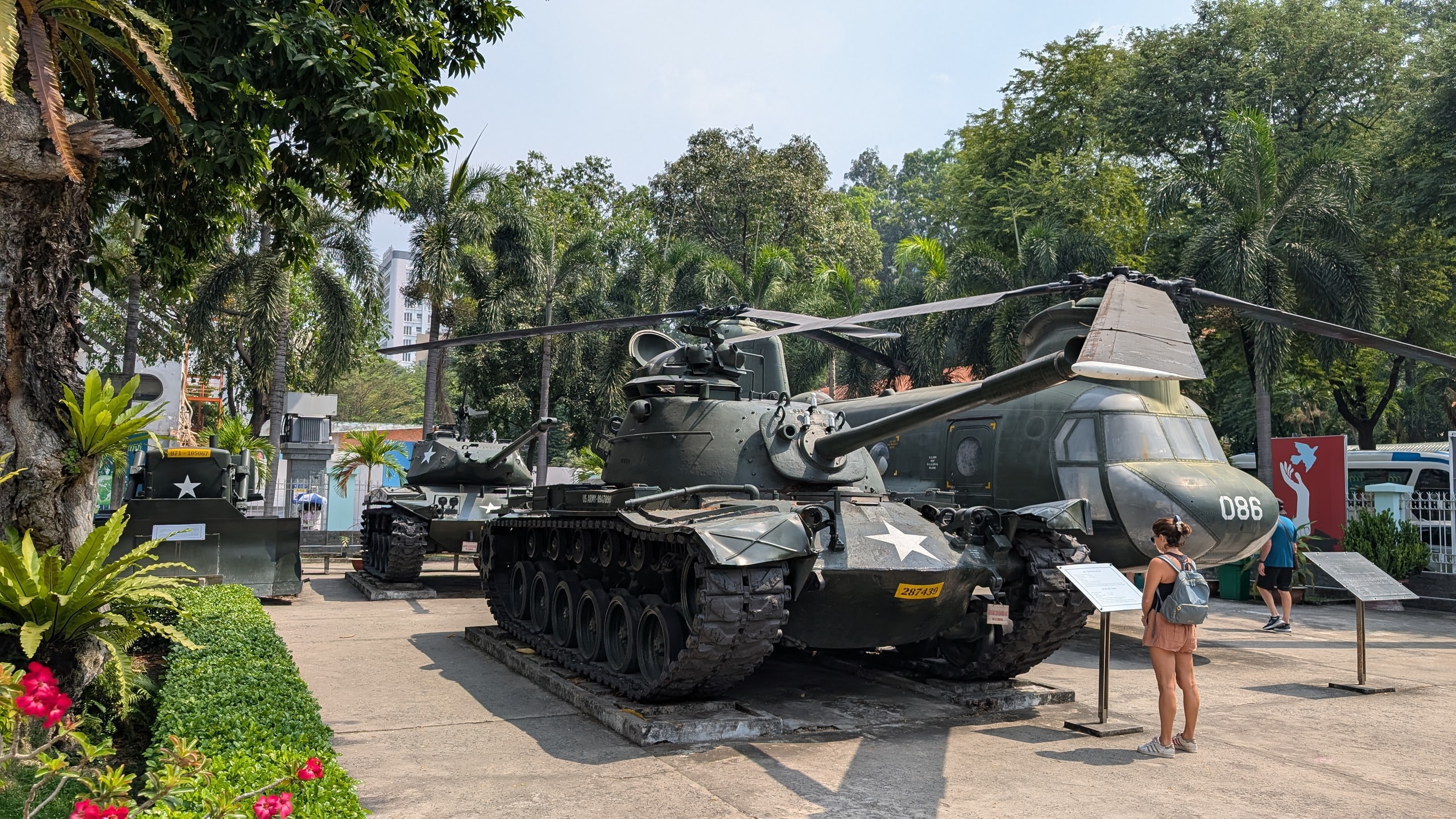
Easy to skip if you do not want conflict tourism as your whole trip. Worth going anyway. The museum on Vo Van Tan Street ($2-3 entry) is sober and does not soft-pedal what happened. Outside, tanks and a Chinook sit under tropical trees. Inside, the Agent Orange gallery is hard. Allow two hours. Details at warremnantsmuseum.com. One honest war morning is enough; the city has more to offer after that.
Coffee, coconuts, and the river at dusk
Vietnamese coffee is everyday stuff, not a cafe scene. Cà phê sữa đá - dark roast through a metal phin over condensed milk and ice - costs 25,000-40,000 VND ($1-1.60) and tastes strong, sweet, and a little burnt, in a good way. Sit on a low stool. Wait for the drip. Order đen đá if condensed milk is too sweet, or bạc xỉu for more milk than coffee.
The phin filter is slow. Sit for fifteen minutes on a low stool. That beats rushing to another museum.
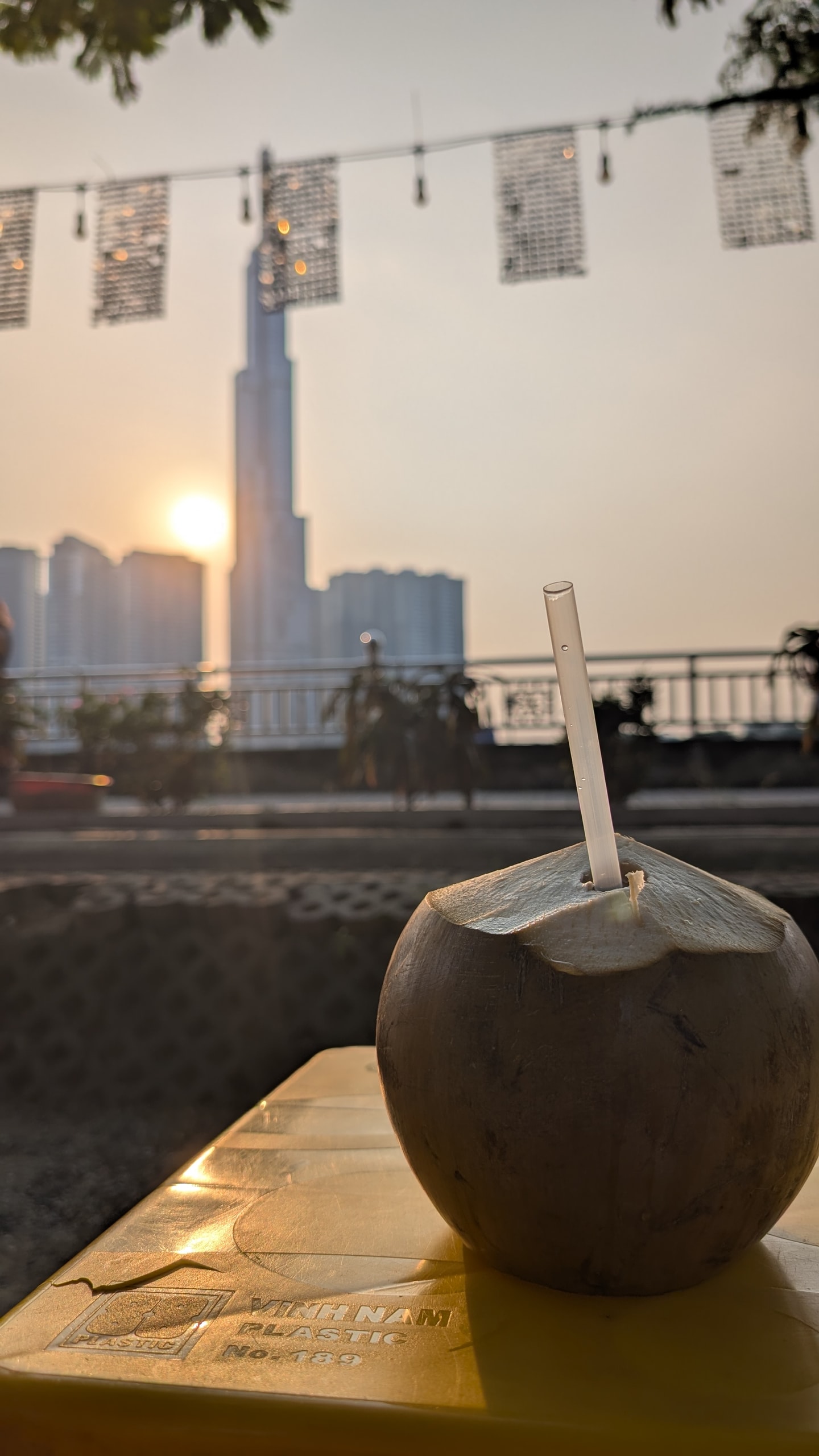
When the sun drops, the river is the easiest place to sit. Landmark 81 - Vietnam's tallest tower - rises over barge traffic below. A fresh coconut on a yellow plastic table runs about 20,000-30,000 VND ($0.80-1.20). Drink it while the haze turns orange.
You do not need a skydeck. A riverside stool and a straw do most of the work for under a dollar.
Street food. Bánh mì from a cart: 25,000-35,000 VND ($1-1.40). Bún thịt nướng: 45,000-60,000 VND ($1.80-2.40). Cơm tấm - broken rice with grilled pork and fish sauce - about 50,000 VND ($2). Point at what the next table has. Look for smoke, a queue of locals, and seats that turn over. Empty carts facing a landmark with laminated English menus are usually charging for geography.
Cho Lon if you have a spare half-day. West of the tourist core: denser, older, less translated. Temples, wholesale markets, Chinese-Vietnamese food. A Grab there and back is cheap; walking the whole way in midday heat is not.
Cu Chi - only on your own terms
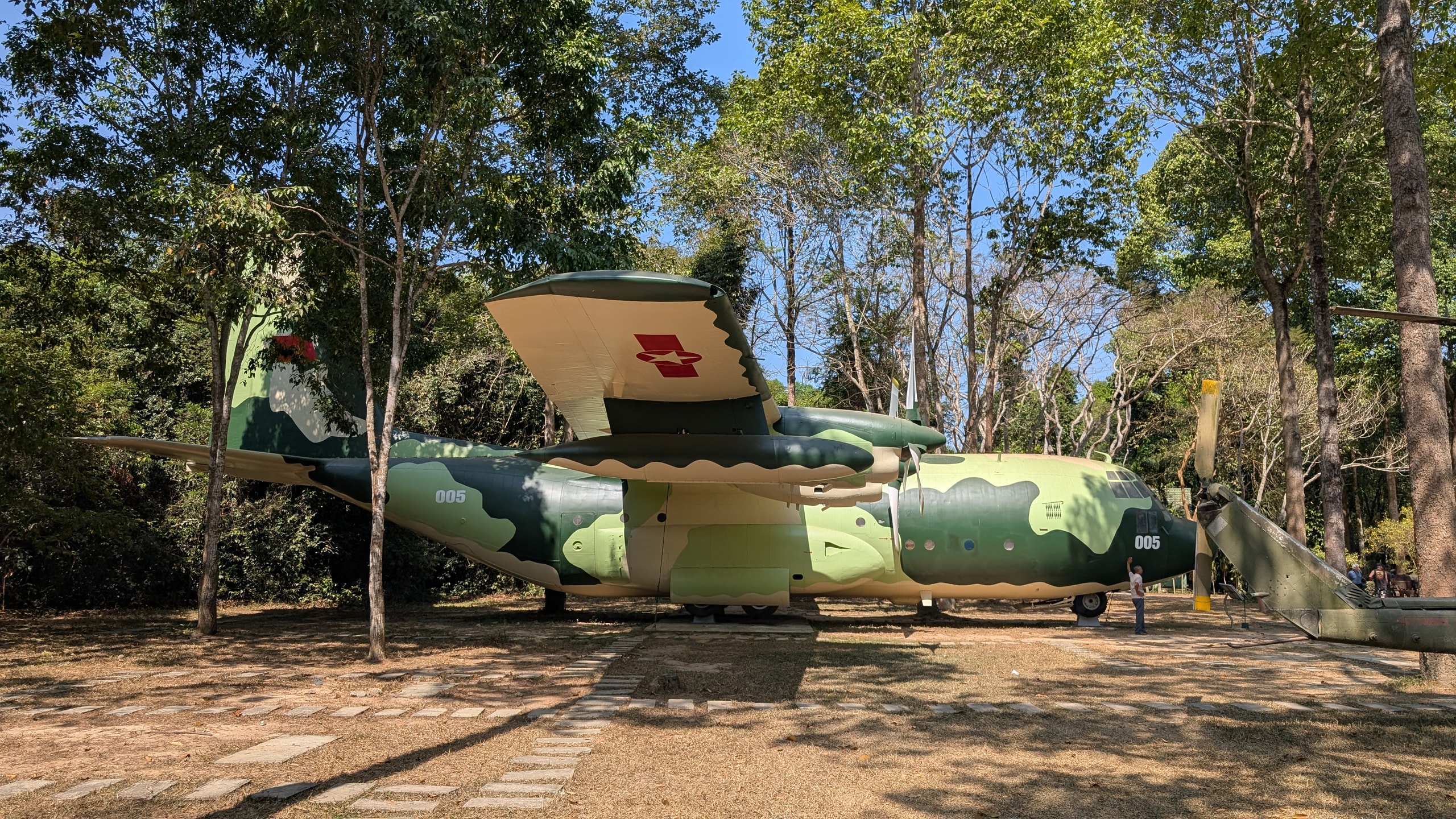
The Cu Chi Tunnels sit roughly 70 km northwest. Hostel packages compress four hours of driving into a rushed visit with a gift shop and a firing-range gimmick. Skip that version. If war history is why you came, go independently - Ben Dinh is the usual stop; Ben Duoc is farther and quieter. Outside, decommissioned aircraft sit in clearings under the trees. Entry runs about 110,000-140,000 VND ($4.50-5.50). Budget a full morning.
If war history is not the point, spend the free day in the city. The Mekong Delta has the same trap: floating markets on an industrial schedule. The Delta needs overnight room - Can Tho is the version that makes sense.
What to skip
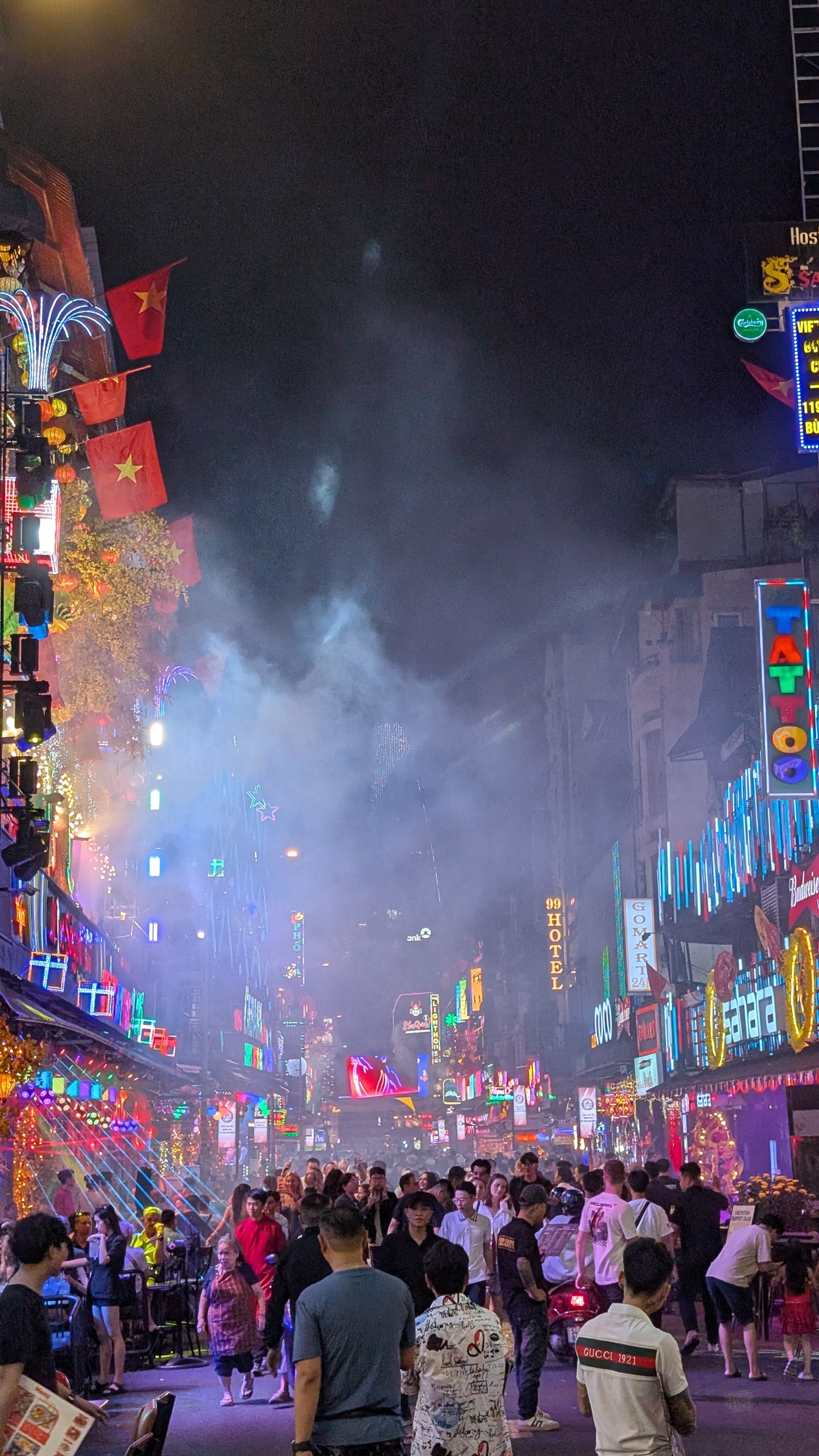
Bui Vien. Neon, fog machines, tattoo signs, cheap beer under Vietnamese flags. One curious walk-through is enough. Stay for a drink if you want the scene; do not plan your nights around it.
Notre-Dame as an afternoon centerpiece. Scaffolding has been up for years at stretches. Verify first.
Unmetered taxis from the airport or Ben Thanh. Use Grab.
When to go, and what it costs
Dry season: December through April. March often sits around 32°C (90°F) and humid, with storms that flood side streets in twenty minutes. Wet season: May through November brings heavier rain. Tet (usually January or February) shuts many businesses; book ahead or avoid.
Daily mid-range budget: $35-60 covers a hotel in District 1 or 3, Grab, street food, and one paid attraction. District 3 hotels often land around $35-40 a night. District 1 central runs $50-80 for similar quality.
Tan Son Nhat is 7 km from District 1. A Grab car costs 80,000-120,000 VND ($3-5). Check current e-visa rules before booking. Pack light - a daypack beats a roller bag on cracked pavements.
What wears you down
Heat hits hard after 11 a.m. Motorbike exhaust accumulates after a few days. Shoe-shine "accidents" and the coconut-photo hustle happen in tourist zones; a firm không (no) works. Compared with Hanoi, Saigon is hotter and louder. Compared with Hoi An, it is less pretty and more honest about being a working city.
If you need stillness and tidy sidewalks, two nights may be enough and you will be glad to leave. If you like noise, cheap coffee, and a city that keeps moving, three or four nights start to feel short.
How long to stay
Three full days minimum. Four if neighborhoods matter more than District 1 alone. A workable shape: one early morning for Ben Thanh, the post office square, and Nguyen Hue; one block for the War Remnants Museum and Reunification Palace; one dusk for the river and street food; and one loose day for District 3 coffee, Cho Lon, or Cu Chi on your own terms. Other cities and regions live on the destinations page.
Eat street food until you trust the busy stalls. Cross one busy intersection. Sit with a phin coffee and watch the scooters. Give Saigon three or four nights. It is a real city, and it is better if you stay long enough to walk it.