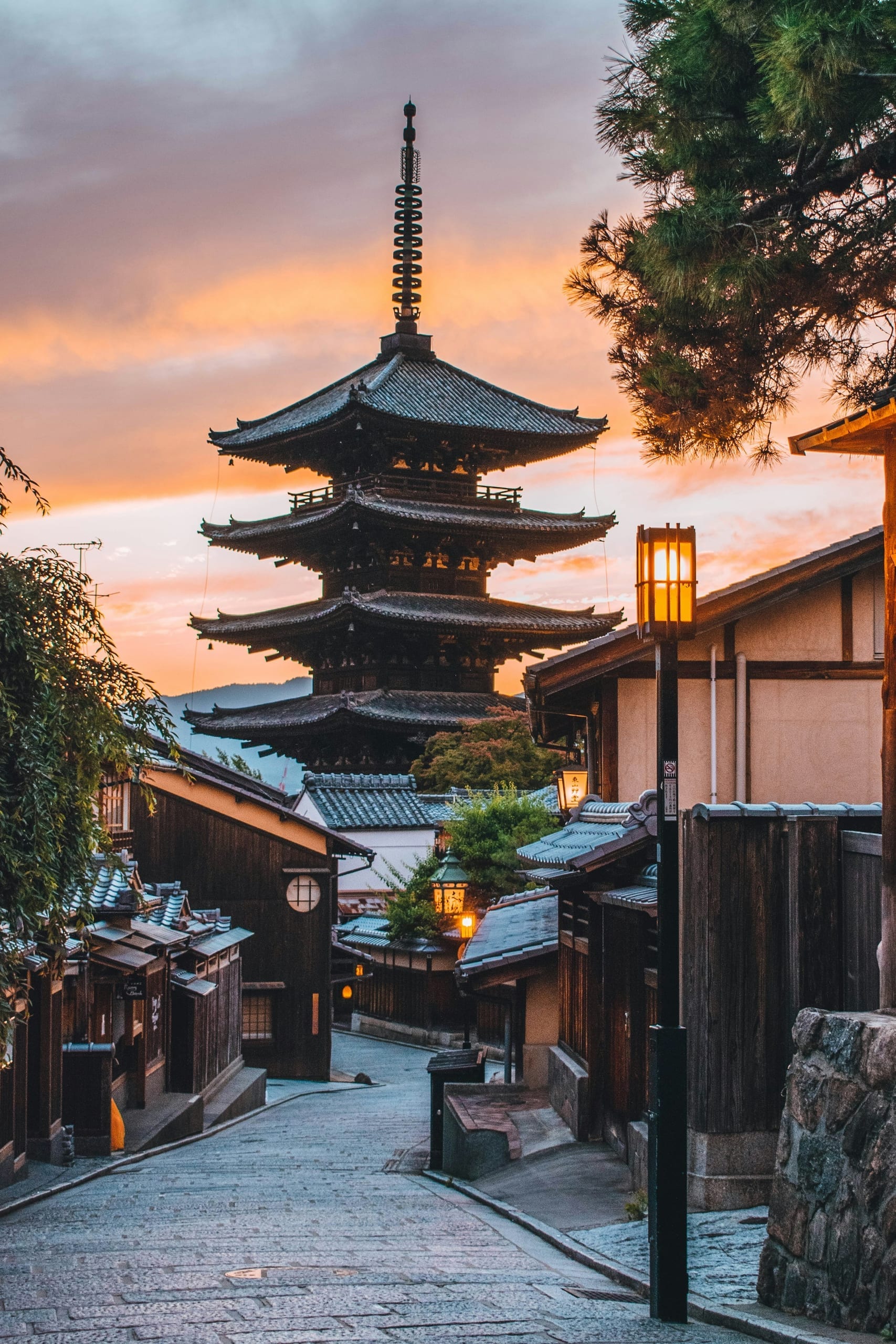
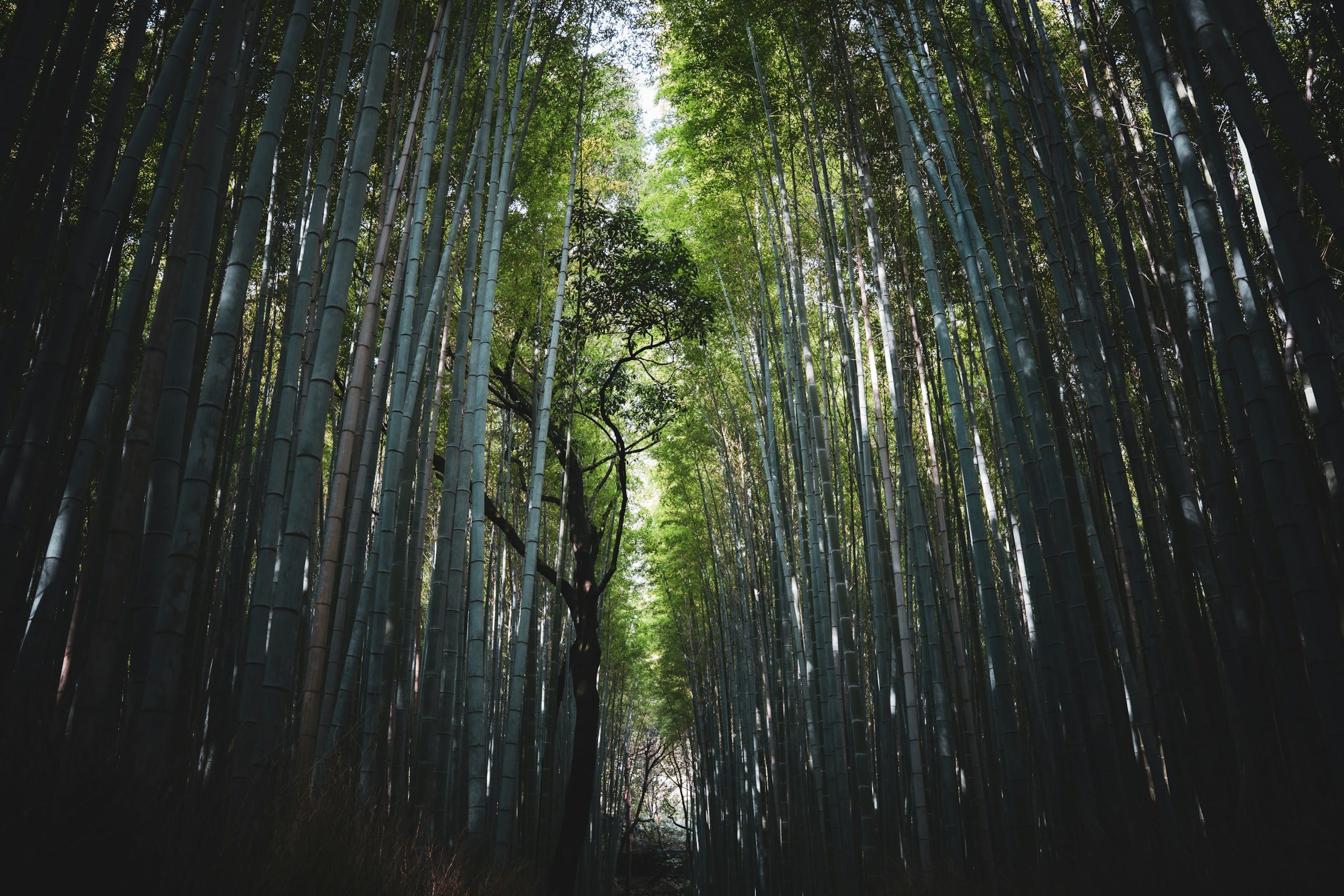
The famous bamboo grove at Arashiyama is a disappointment for the reason nobody puts on the postcard: by mid-morning you shuffle through it shoulder to shoulder, phones up, hunting a frame with nobody else in it, and failing. Ten minutes uphill into older bamboo behind the main path, the crowds thin and the city drops away. That gap — between the place the itinerary lists and the place that still works — is the skill of visiting Kyoto.
Kyoto was Japan's capital for more than a thousand years. It kept the temples, gardens, and wooden townhouses that Tokyo mostly burned or rebuilt away. Roughly 1,600 Buddhist temples and a few hundred Shinto shrines sit in a flat basin ringed by forested hills. It is one of the great walking cities in Asia. It is also a victim of its own postcard. How good a trip is depends almost entirely on when you go and what time you get up.
When to go (and when to stay away)
Two peak windows own the calendar: cherry blossom (late March to early April) and autumn colour (mid to late November). Both are beautiful. Both are madness. Hotel rates roughly double, temple gardens turn into slow-moving queues, and the day becomes logistics instead of looking. Planning a first visit around those two weeks is the classic mistake.
Go in the gaps instead. May and early June, after blossom and before rainy season fully settles, give green maples, mild days, and room to breathe. Late September and early October are similarly kind — warm, quieter, colour not yet turned. You lose the headline photograph. You gain the actual city.
Summer (July–August) is hot, humid, and sticky; temple courtyards feel like ovens by noon. Winter is cold and clear, with occasional snow on the hills and far fewer tour groups — fine if you dress for it and accept shorter daylight.
In peak season you photograph Kyoto. In the quiet weeks you get to be in it.
The deeper trick, in any season, is the early morning. Many temples open around 6 a.m.; tour buses rarely move before nine or ten. Those few hours are a different city — mist in the gardens, monks sweeping, gravel still unmarked.
What is actually worth your time
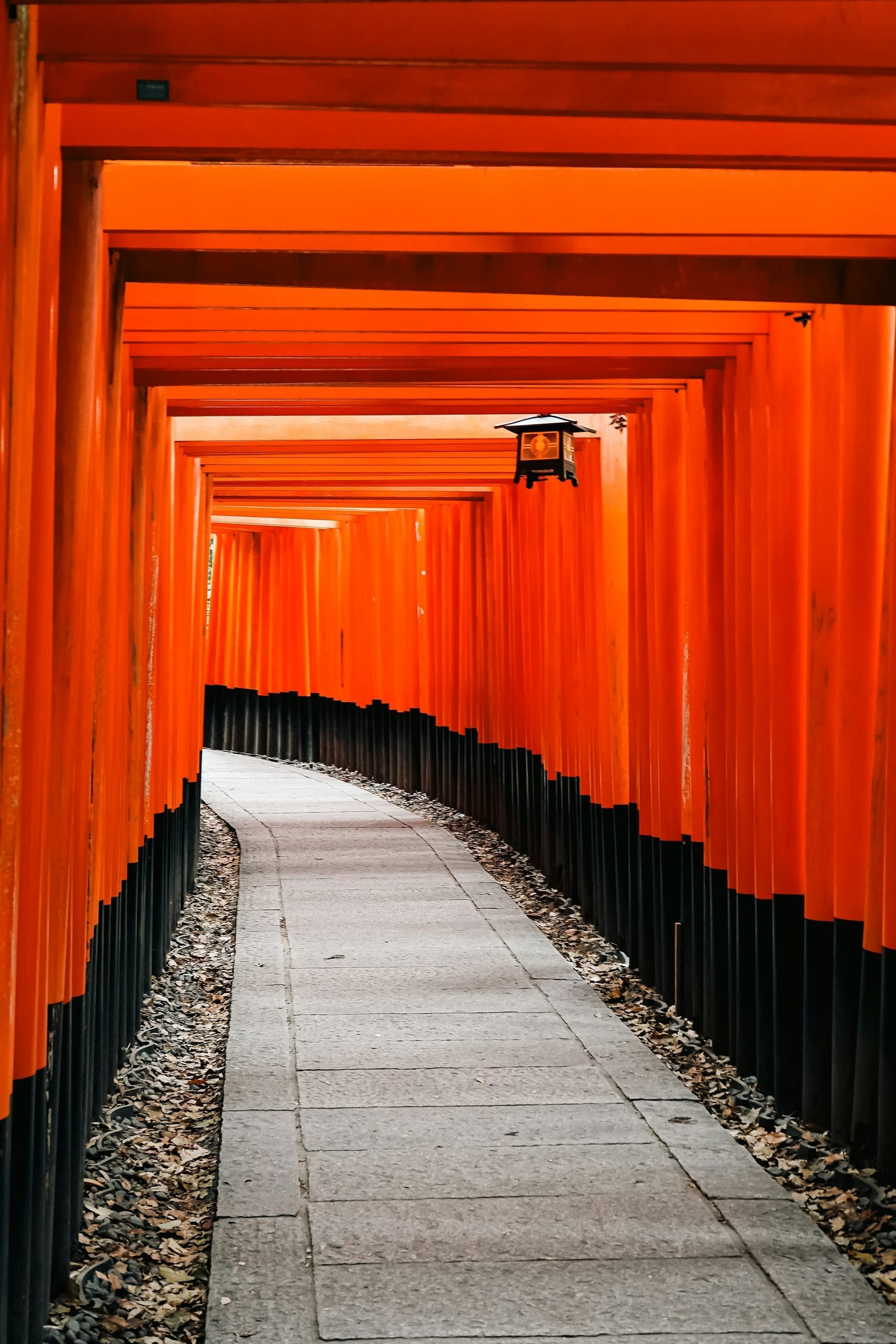
Fushimi Inari at dawn. Thousands of vermilion torii climb the mountain in stacked tunnels. By mid-morning it is a crush. At 6:30 it is quiet, often foggy, and one of the few postcard sites that still feels like a shrine rather than a queue. Go straight there on the first morning, before jet lag resets your sleep.
The Philosopher's Path, slowly. A canal-side walk between temples on the eastern hills (Higashiyama). The point is not a finish line; it is the small temples, quiet cafés, and side lanes you find if you refuse to rush. Budget a half day, not an hour.
Nishiki Market, hungry. A narrow covered street of food stalls, pickle shops, and knife-makers. It gets busy, but it is where you eat well without a reservation — grilled fish, tofu snacks, things you cannot identify and should try anyway. Go before the lunch wave if you hate elbows.
One serious garden. Ryōan-ji's raked-gravel rock garden, or a quieter moss-and-pond temple away from the golden-pavilion circuit. Sit. Do not photograph it for five minutes. These places were designed to be looked at, not collected.
Arashiyama — beyond the bamboo. The main grove is free and crowded. Walk through once if you must, then keep going: the hills behind, the riverside paths, Tenryū-ji's garden if you want a paid temple with actual space. The bamboo alone is not a morning well spent.
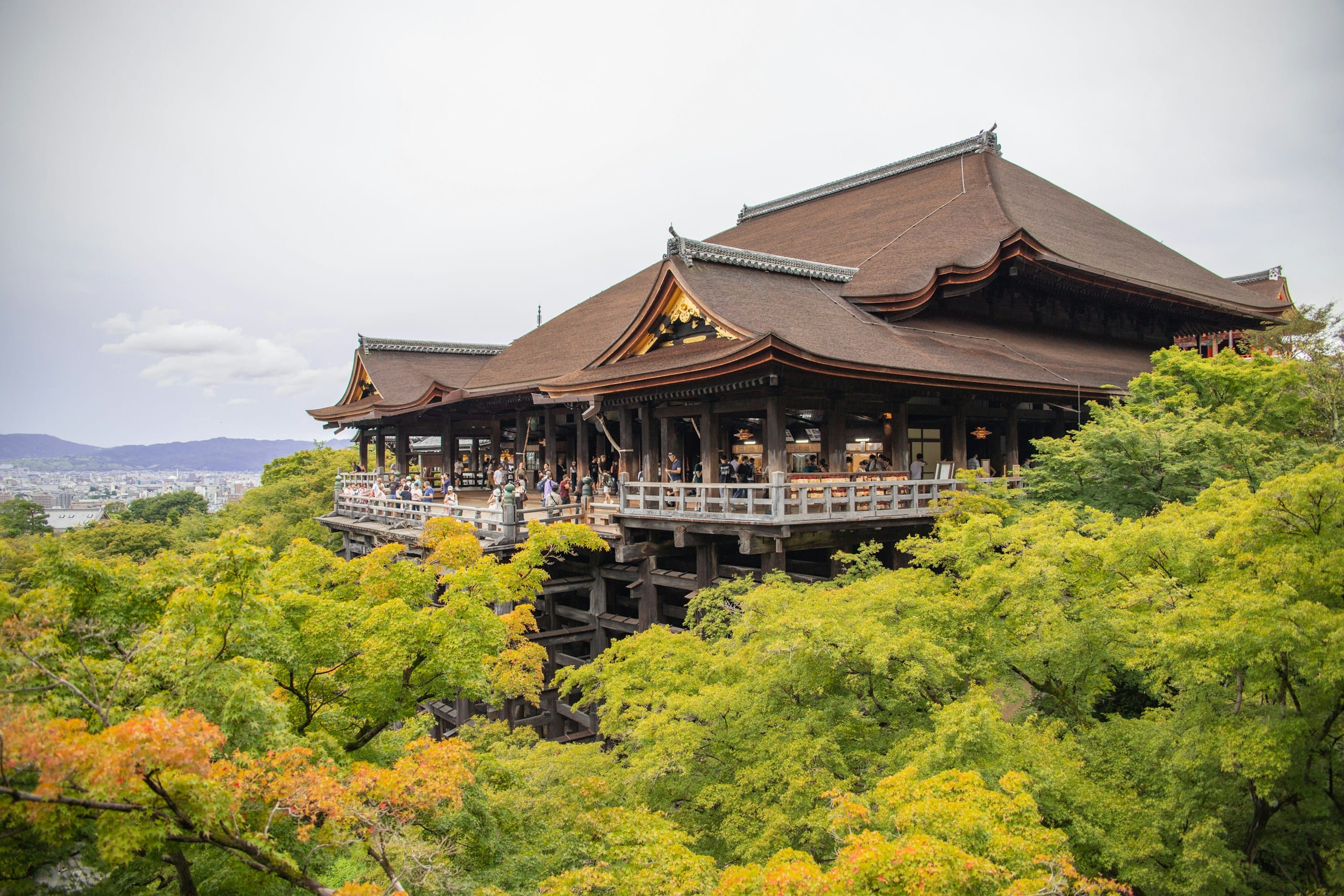
Kiyomizu-dera. The wooden stage and hillside views pull heavy crowds, especially in autumn. Go at opening, or accept the crush and focus on the approaches through Higashiyama's lanes rather than the selfie spot on the platform. Entry is typically a few dollars.
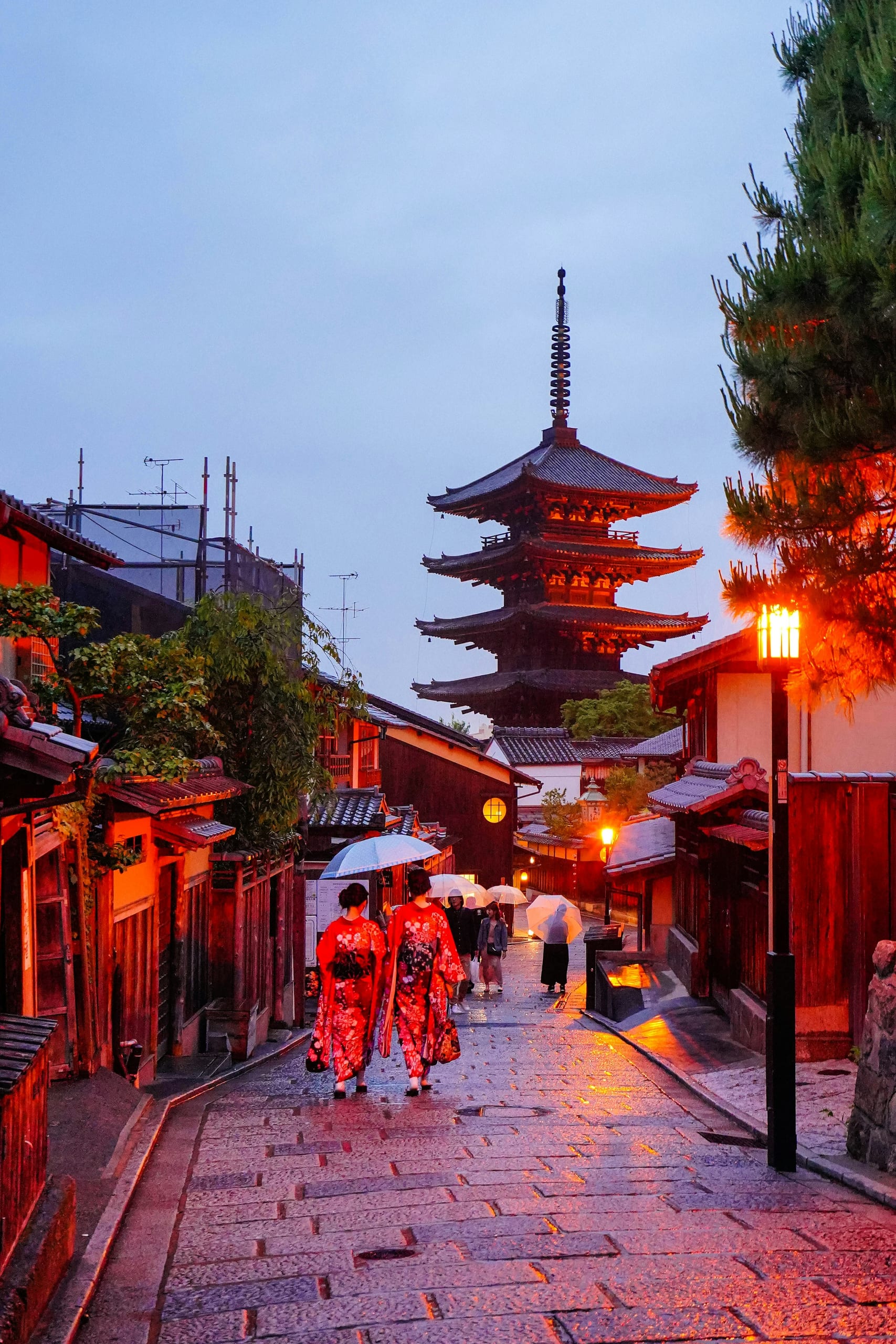
What to deprioritise. Kinkaku-ji (the golden pavilion) is lovely for the short stretch you are allowed near it, then funnels you out through a gift shop. Fine if you have time; not worth a half day in peak season. Gion at peak hours has turned ugly in places — streets where people chase geisha for photos, some now with photography bans. If you want Gion, go at dusk and walk quietly. Treat it as a neighbourhood, not a photo hunt.
How long to stay, and how to move
Three full days is a workable minimum if you pick neighbourhoods instead of ticking fifteen temples. Four or five is better: one dawn shrine day, one east-hills / Philosopher's Path day, one west (Arashiyama) or south (Fushimi) day, plus a slow morning for a garden and Nishiki.
Getting around. Kyoto's buses are the classic headache — slow, crowded, and confusing if you treat them as a subway. The two subway lines plus walking cover the centre well. Rent a bike if your lodging offers one; the basin is flat and built for it. Taxis are clean and metered but add up. From Kansai Airport (KIX), the limited express and local trains into Kyoto take roughly 75–90 minutes; budget transfers if you fly into Osaka Itami or arrive via Tokyo on the shinkansen.
Cash. Still useful at small food stalls and some temples, though cards are now widely accepted. Temple entry fees are usually a few dollars each; an excellent bowl of noodles runs about $8–12. The expensive choices are lodging and kaiseki, and only if you pick them.
Neighbourhoods, not a temple bingo card
Kyoto rewards treating the map like a set of villages glued together, not a scavenger hunt.
Southern Higashiyama (Kiyomizu, Sannenzaka, Ninenzaka, toward Yasaka) is the classic postcard corridor — beautiful at dawn, exhausting at noon. Walk it once properly, then leave.
Northern Higashiyama and the Philosopher's Path feel quieter even in shoulder season if you start early and duck into side temples. Ginkaku-ji (the silver pavilion) anchors the north end; it is busy but less of a funnel than Kinkaku-ji.
Central Kyoto around the Imperial Palace park and Nishiki is for biking, everyday food, and catching your breath between shrine days. The palace grounds themselves are free to walk and useful as a green shortcut.
Arashiyama and Sagano on the west side want a dedicated half day or full day. Combine bamboo, river, and one paid temple garden; do not try to bolt them onto a Fushimi morning.
If you only have two days, pick east hills + Fushimi dawn, and skip the west — or reverse that if bamboo and river matter more to you than torii tunnels. Three days lets you stop choosing.
Where to sleep (and the one ritual splurge)
Business hotels are clean, tiny, and cheap by Japanese-city standards — roughly $65–110 a night. Restored machiya (wooden townhouses) give you a small house and courtyard in the mid-range. A proper ryokan — tatami, futon, multi-course kaiseki brought to the room — runs $220–550+ per person and is worth doing once for the ritual, not every night.
Nearby Mount Kōya offers shukubo (temple stays) with morning prayers and vegetarian monk's food — a short trip from Kyoto if you want the monastic version of the same idea.
Book early for any shoulder-season weekend near a public holiday. Peak blossom and autumn weeks sell out months ahead at prices that punish the indecisive.
Food beyond the market
Nishiki is the easy win, but Kyoto's food story is wider. Look for:
- Nishin soba and other noodle bowls in small shops near the temples — cheap, fast, filling.
- Kaiseki if you are doing one ryokan night; otherwise a single good kaiseki restaurant dinner can run $100–250+ per person. Worth it once if you care about the ritual; skip it if you would rather eat three excellent casual meals.
- Vegetarian temple cuisine (shōjin ryōri) on Mount Kōya or at a few Kyoto temples by reservation.
- Convenience-store onigiri and coffee for dawn starts — not romantic, extremely useful when Fushimi opens at six and nothing else does.
Tap water is fine. Vending machines are everywhere. English menus are common in tourist zones and rarer in neighbourhood spots; pointing works.
What it costs, honestly
Outside peak blossom and autumn leaf weeks, a careful traveler can land around $100–160 a day excluding big ryokan nights: modest hotel, transit, temple fees, noodles and market food. Add $50–100+ a day if you want nicer dinners and taxis. Peak season lodging alone can erase that math.
Japan rewards packing light. A folding daypack is enough for dawn-to-dusk temple days; you will change layers as the morning warms. Comfortable walking shoes matter more than a packing cube for seven outfits. Temple gravel and hill paths punish fashion footwear.
Crowds vs. emptiness, in practice. Even in May you will share Fushimi with early birds by 7:30. The win is relative: dozens of people instead of hundreds, and space to hear your own footsteps in the higher torii tunnels. In November leaf week, that relative win mostly disappears at the famous gardens — which is why the calendar advice above is not optional colour, it is the trip.
Is Kyoto worth it?
Yes — on the right terms. Kyoto rewards the early riser and the slow walker. It punishes the person trying to see fifteen temples in two days in April. Treat it like a slow city: one neighbourhood at a time, a long lunch, a garden you sit in rather than tick off. Treat it like a checklist in peak season and you come home tired, wondering what the fuss was about.
Go in the gap between the famous weeks. Get up before the crowds. The old capital is still there; you just have to be a little contrary to meet it. More cities and regions live on the destinations page. If stone towns with heavy tourism pressure are your next problem, Matera in southern Italy has a similar lesson about timing. For a Mediterranean version of "skip the loud strip," see Mallorca beyond Magaluf.