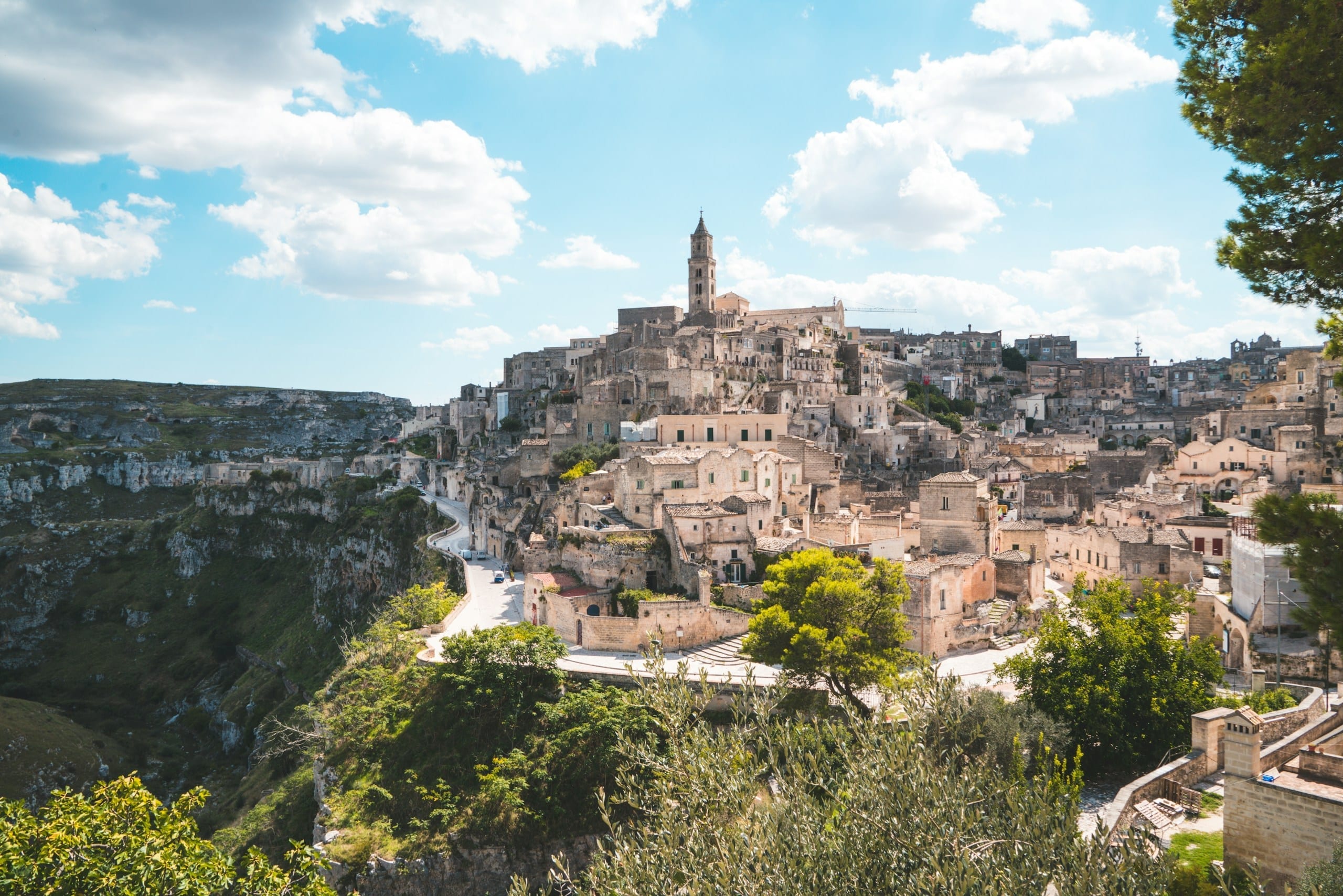
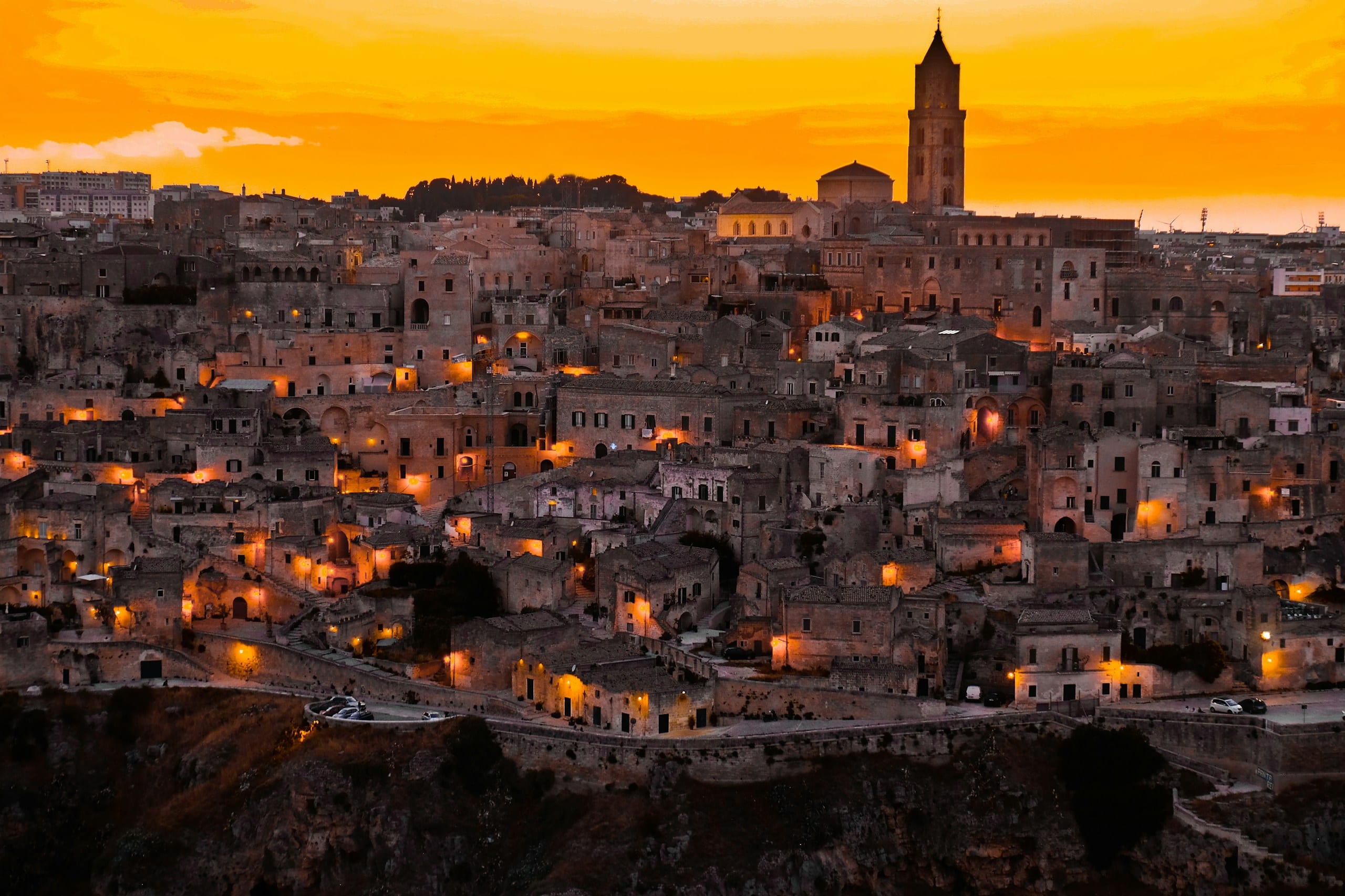
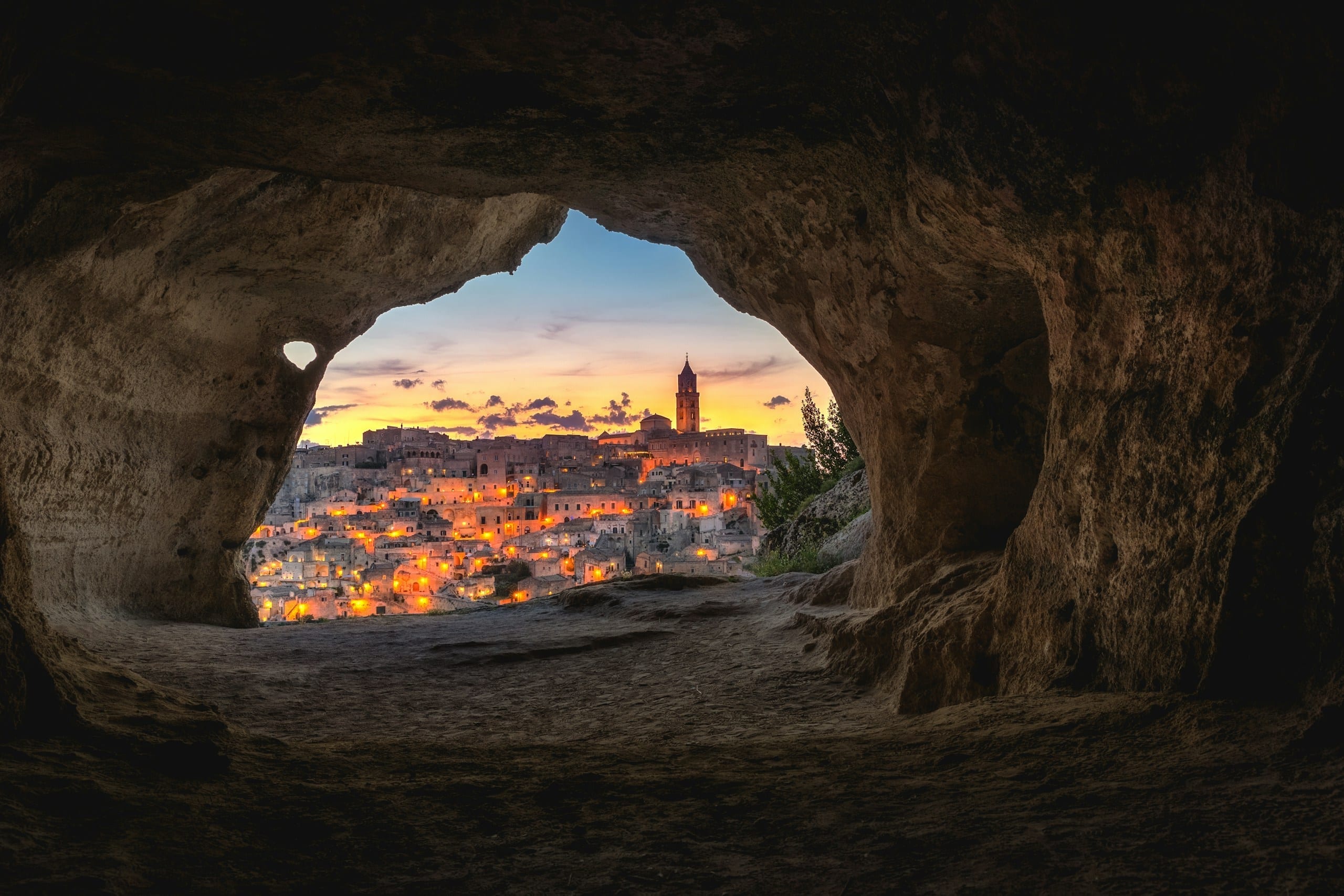
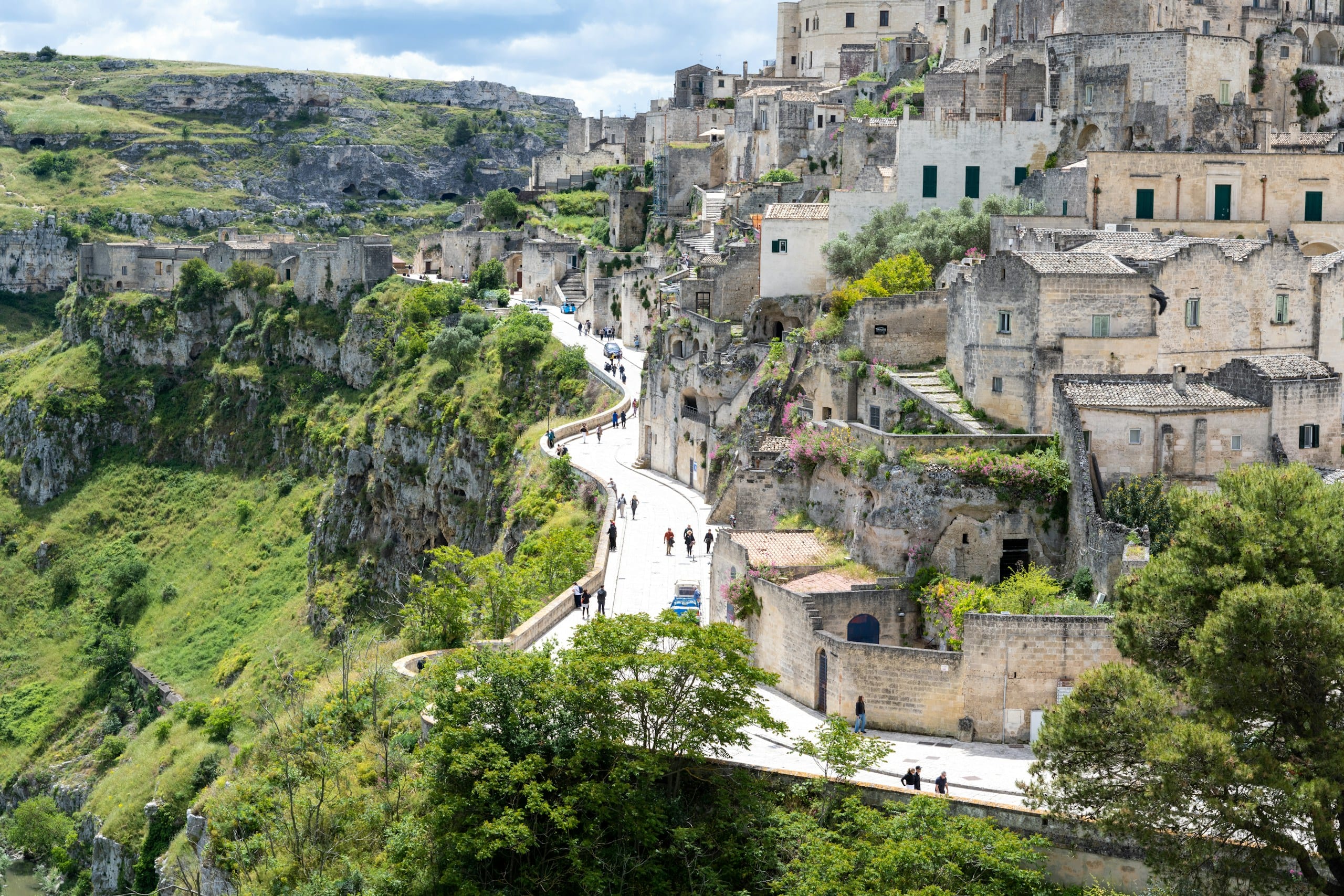
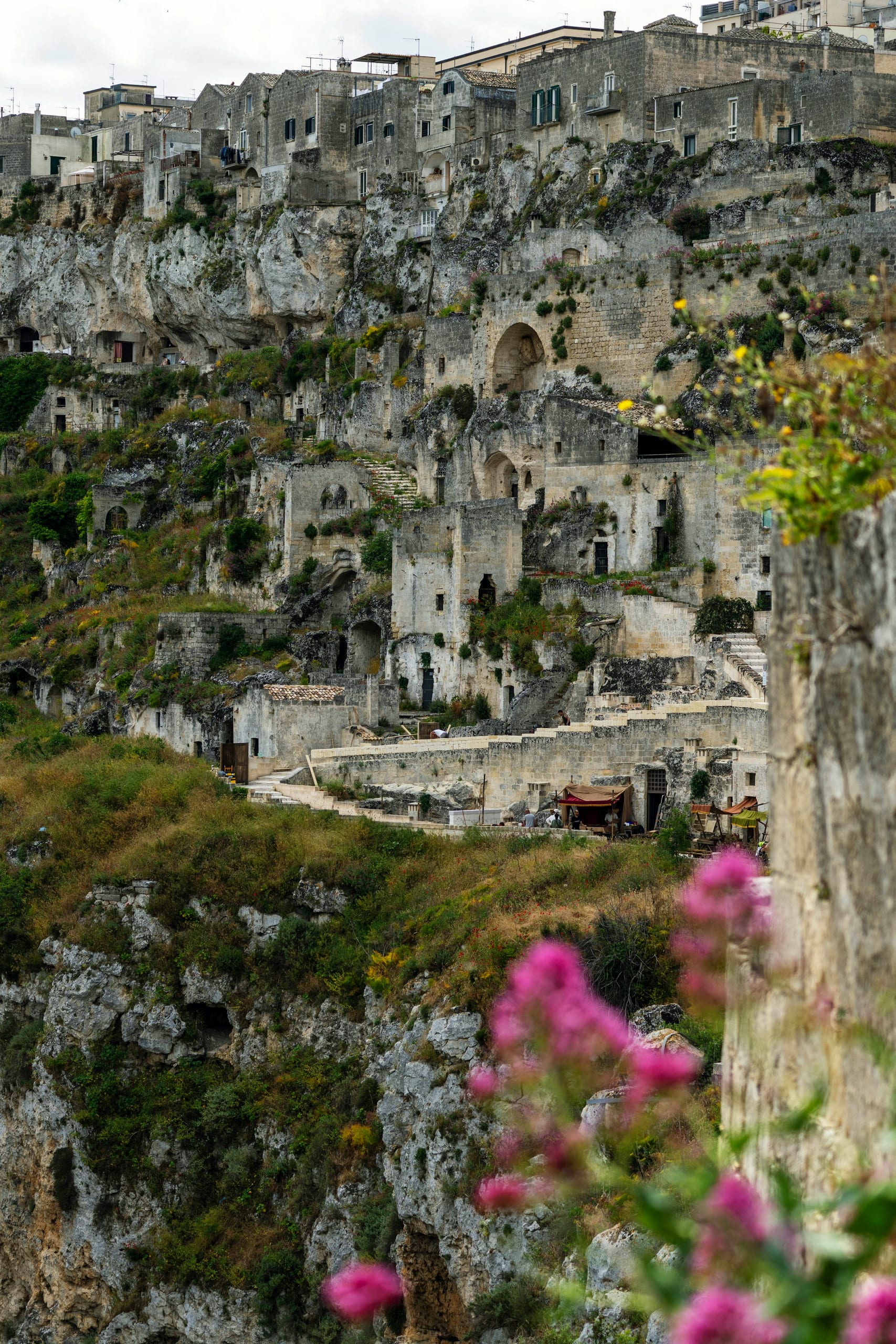
Stand on the edge of the Gravina canyon at dusk and Matera looks like a single pale rock someone has been carving into houses for nine thousand years — which is more or less exactly what happened. Lights come on one by one in caves stacked up the gorge. A church bell goes. It is the kind of view that makes people quiet, and it sits in a region most Italians themselves cannot tell you much about.
Matera is in Basilicata, the instep of Italy's boot. The old town — the Sassi — is two districts of dwellings cut directly into soft limestone, lived in continuously since the Stone Age. That is not a marketing line. People were living in these caves, with their animals, with no running water, into the 1950s.
From "the shame of Italy" to a film set
In 1945 the writer Carlo Levi described the Sassi in a book that landed like a bomb: families of ten in a single windowless cave, malaria, infant mortality that read like the Middle Ages. The government called it la vergogna nazionale — the national shame — and in the 1950s forcibly emptied the Sassi, moving about 15,000 people into new housing on the plateau above. For decades the caves sat abandoned.
Then it turned. UNESCO listed the Sassi in 1993. Artists and hoteliers moved back in and restored caves into homes, workshops, and hotels. Filmmakers noticed the place looked two thousand years old because it is, and Matera has stood in for Jerusalem more than once — Pasolini, Mel Gibson, and a Bond film all shot here. Capital of Culture status in 2019 finished the transformation from secret to itinerary.
Two generations ago the government was ashamed of these caves. Now you pay to sleep in one. Hold both facts at the same time.
You travel better here if you carry that history rather than only the prettiness. The same cave that is now a design hotel with underfloor heating was, within living memory, a place the state declared unfit for human life. That tension is what makes Matera more than a backdrop.
What to actually do
Walk both Sassi. Sasso Caveoso is the rawer, more cave-like half; Sasso Barisano is more restored and busier with hotels and restaurants. Get lost on the stepped alleys on purpose — there is no efficient route and you should not want one. Wear shoes with grip; the stone is polished by centuries of feet and turns slick after rain.
Go into a casa grotta. These are cave homes preserved as they were, furnished for a family and their mule. Cheap to enter (usually a few dollars), and the single best antidote to treating the town as scenery.
See a rupestrian church. Dozens of churches were carved into the rock and frescoed. The Crypt of Original Sin, a little out of town, is sometimes called the "Sistine Chapel of cave painting" — book ahead. Closer in, several rock churches sit inside the Sassi themselves if you want something without the logistics.
Cross into the canyon. A path drops from the Sassi down to the Gravina stream and up the far side into the Murgia Materana park, where you look back at the whole town from caves where the earliest inhabitants lived. Budget one to two hours. It is the best walk in the area and the one day-trippers most often skip.
Eat the bread. Pane di Matera is a protected, tall, dense, golden loaf made from local durum wheat, traditionally baked to last a week — peasant food engineered for a hard life, and genuinely good. Pair it with crapiata (a humble bean-and-grain stew) and a glass of Aglianico and you have eaten Basilicata rather than generic Italian tourist pasta.
Belvederes and blue hour. Several overlooks along the rim of the Sassi give the classic stacked-cave view without requiring the canyon hike. They fill with phones at sunset — go thirty minutes earlier, or stay for blue hour when the day buses have left and the cave windows light up one by one. That evening shift is when Matera stops performing and starts looking like a town again.
How long the alleys take. A "quick loop" of the central Sassi is an illusion. Stairs double back, dead ends open onto rooftops, and GPS goes fuzzy between limestone walls. Budget half a day just to wander without an agenda, plus separate time for a casa grotta, a rock church, and the canyon if you do it. Trying to crush all four before a 4 p.m. coach back to Bari is how people leave saying Matera was "pretty but touristy." It is touristy at midday. It is quieter when you sleep here.
When to go, and the honest warning
Spring (April–June) and autumn (September–October) are the sweet spots: warm, walkable, the stone glowing in low light. Summer in Basilicata is brutal — limestone holds heat and the canyon turns into an oven by early afternoon. Winter is quiet and atmospheric, occasionally cold enough that cave-damp gets into your bones; some restaurants shorten hours.
The warning: Matera was a secret ten years ago and is not anymore. Film cameos and Capital of Culture put it firmly on the map. The central Sassi get busy at midday with day-trippers bussed in from the coast and Bari. The fix is the usual southern Italian one — sleep in town, be out early and at dusk, and let the middle of the day be lunch and a nap.
Two nights beats a day trip. One night is better than nothing; three lets you walk the canyon without rushing the casa grotta and a long dinner.
Reading before you go. Carlo Levi's Christ Stopped at Eboli is the book that made the Sassi politically impossible to ignore. You do not need to finish it on the plane, but even a chapter reframes the cave hotels. The UNESCO listing and the film locations are easier to enjoy when you know what emptied these streets in the 1950s.
Where to stay, and what it costs
The signature stay is a cave hotel inside the restored Sassi — often a vaulted stone room with few or no windows, surprisingly comfortable once you adjust. Modest guesthouses run about $75–110 a night (€70–100); serious design hotels push $220+. If a buried stone room sounds claustrophobic, ask for one with a terrace or an opening onto the gorge. The plateau above has ordinary hotels if you want modern rooms and a short walk down each morning.
Farm stays in the surrounding countryside put you among olive groves and family cooking — a different flavour of the same region if the Sassi feel too staged at night.
Rough daily budget (shoulder season, two people sharing a mid-range cave room): lodging $90–160, meals $40–70, entries and coffee another $15–25. Matera is cheaper than Florence or Rome for equivalent comfort, but the cave hotels charge a premium for the novelty — and the novelty is the point.
Getting here: Bari is the usual flight hub (about 60–75 minutes by car or bus). Trains exist but are slower; a rental car helps for the Crypt of Original Sin and countryside, though you will not want to drive deep into the Sassi themselves.
What not to expect
Matera is not a food capital on the level of Bologna, and it is not a beach town with a cave backdrop. Nightlife is modest. English is common in hotels and thinner in older family restaurants. Some cave hotels have quirks — humidity, odd layouts, stairs that would fail a modern building code — because they are caves first and hotels second. Ask about accessibility before booking if stairs or enclosed rooms are a problem.
Day-trippers from cruise ports and Puglia beach towns compress into the same three streets between 11 a.m. and 3 p.m. That crush is real. It is also avoidable if you sleep here and treat midday as siesta culture intends.
Bring comfortable shoes with grip. The Sassi polish stone into ice after rain. A light layer for evening canyon wind helps even in June. You will walk more vertical metres than the map suggests. Carry water in summer; shade is scarce on the canyon path.
Is it worth it?
Yes — and more so if you give it two nights rather than the day trip most people make. Matera is not a long list of sights. It is a place to absorb at walking pace, with a heavy, strange history sitting just under the beauty. Come in shoulder season, sleep in the stone, walk the canyon at dawn or dusk, and read a bit of Carlo Levi before you go.
If you like towns with layered, slightly uncomfortable pasts, you will likely also get on with Kyoto in the shoulder season — another place ruined by peak timing and rescued by early mornings. For Mediterranean stone villages with swimming attached, Mallorca's Tramuntana is a lighter cousin. More places live in the destinations archive.