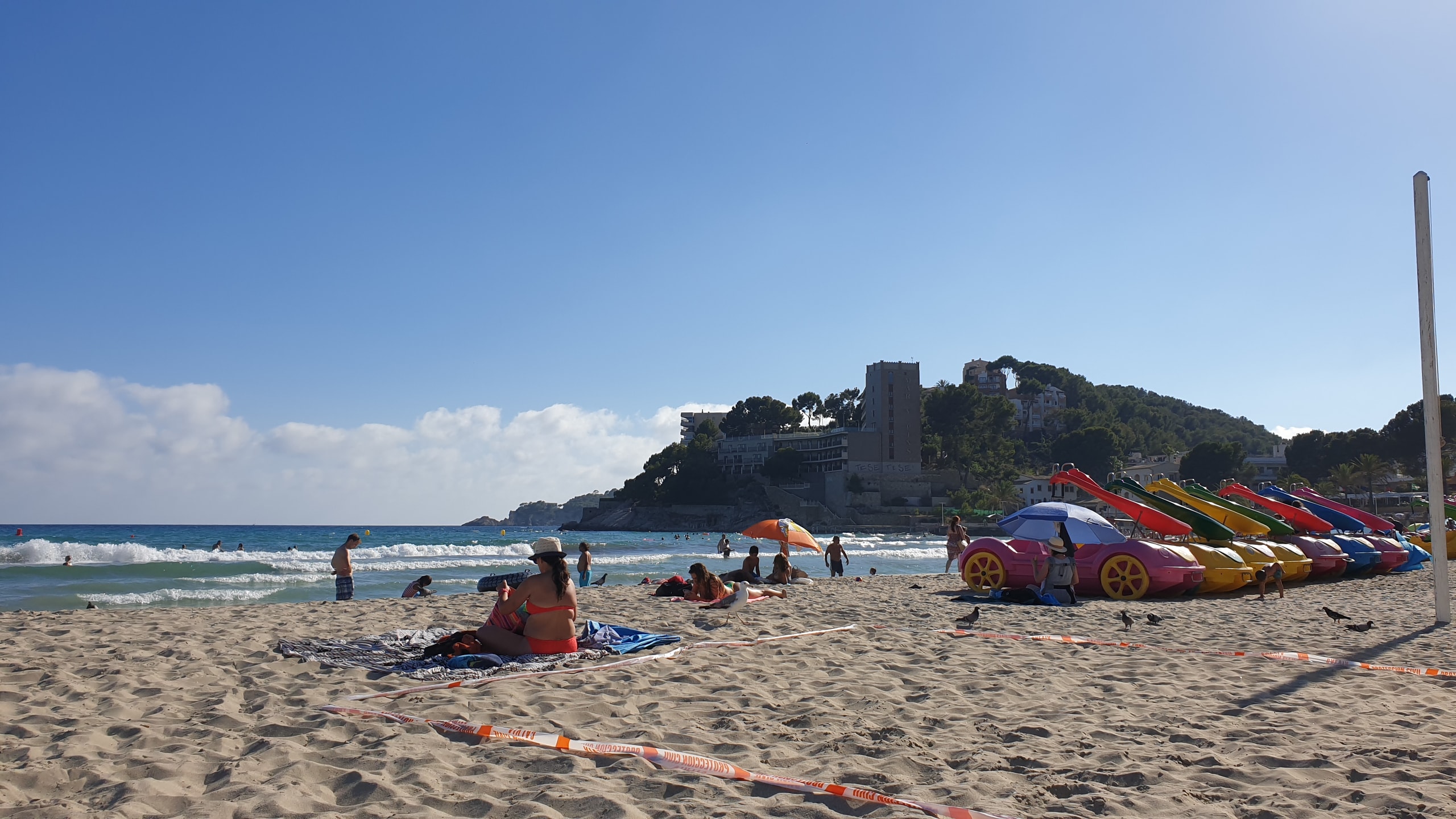
Magaluf beach on a July afternoon is not a myth invented by people who dislike package holidays. The sand is busy, apartment blocks rise directly behind it, and pedal boats shaped like sports cars wait in a bright plastic row. If that is the Mallorca you want, the island has made it easy.
It is also a narrow piece of a much bigger place. Drive an hour north and the road reaches Valldemossa under the Serra de Tramuntana. Continue to Formentor and limestone cliffs fall into water so dark blue it looks almost solid. Head east instead and footpaths drop to calas with no sunbeds, no bar, and no room left for a towel by lunchtime.
Mallorca is touristy. Decide which version you want, how early you will get there, and how much driving you can stand - those three choices matter more than any packing list.
How many days you need in Mallorca
Six or seven nights is enough for a first trip without turning every day into a lap of the island. Mallorca is roughly 100 kilometres across, which sounds manageable until a mountain road, a full beach car park, and one missed turning consume the afternoon. Other island and coast guides live in the destinations archive.
A balanced first visit looks like this:
- Two days in Palma and the southwest
- Two days in the Tramuntana and around Valldemossa or Sóller
- One day around Pollença and Formentor
- One or two days for east- or southeast-coast calas
That plan still involves a rental car. Buses connect Palma with the larger towns and seasonal services reach Formentor, but the smaller coves and mountain stops are awkward to combine on public transport. If you do not want to drive, base yourself in Palma or Sóller and accept a smaller radius. That is better than spending the week studying timetables at the roadside.
Valldemossa is worth the coach traffic
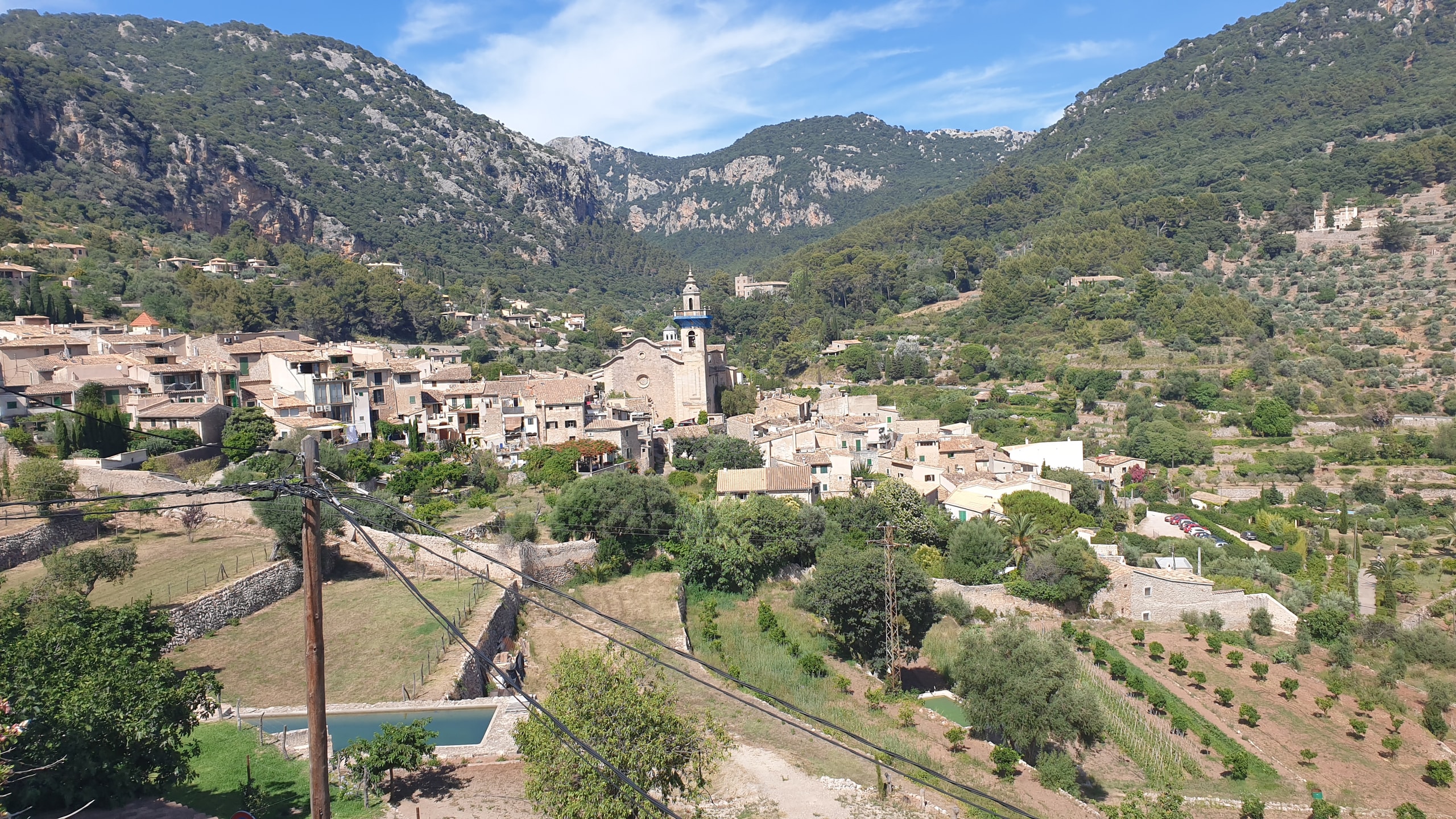
Valldemossa sits in a green bowl on the western side of the Tramuntana, its church tower rising above stone houses and garden terraces. It is one of the easiest mountain villages to reach from Palma and therefore one of the busiest. Both facts matter.
Arrive before 10 a.m. in summer. The paid car parks fill, coaches unload near the centre, and the lanes around the Royal Carthusian Monastery become a slow procession before lunch. The famous winter stay of Frédéric Chopin and George Sand is part of the sales pitch, though Sand's account of Mallorca was not exactly a thank-you note.
The village improves when you leave the monastery square. Residential lanes step downhill between stone walls, potted plants sit outside doorways, and the view opens across orchards toward the mountains. A coca de patata, the local soft potato bun dusted with sugar, is a better use of ten minutes than joining another souvenir queue.
Valldemossa works as a half-day. Continue north on the Ma-10 toward Deià and Sóller if you are comfortable with bends and narrow shoulders. Deià is smaller, more expensive, and prettier from a distance than it is practical at noon. Sóller makes the stronger base, with more rooms and restaurants, a proper town centre, and access to both the mountains and Port de Sóller.
The Serra de Tramuntana UNESCO listing describes a cultural landscape, not empty wilderness. Dry-stone walls, olive terraces, water channels, and footpaths were built for farming. Close gates, stay off private terraces, and do not assume every stone track is a public hiking route.
Formentor has the view and the worst timing problem
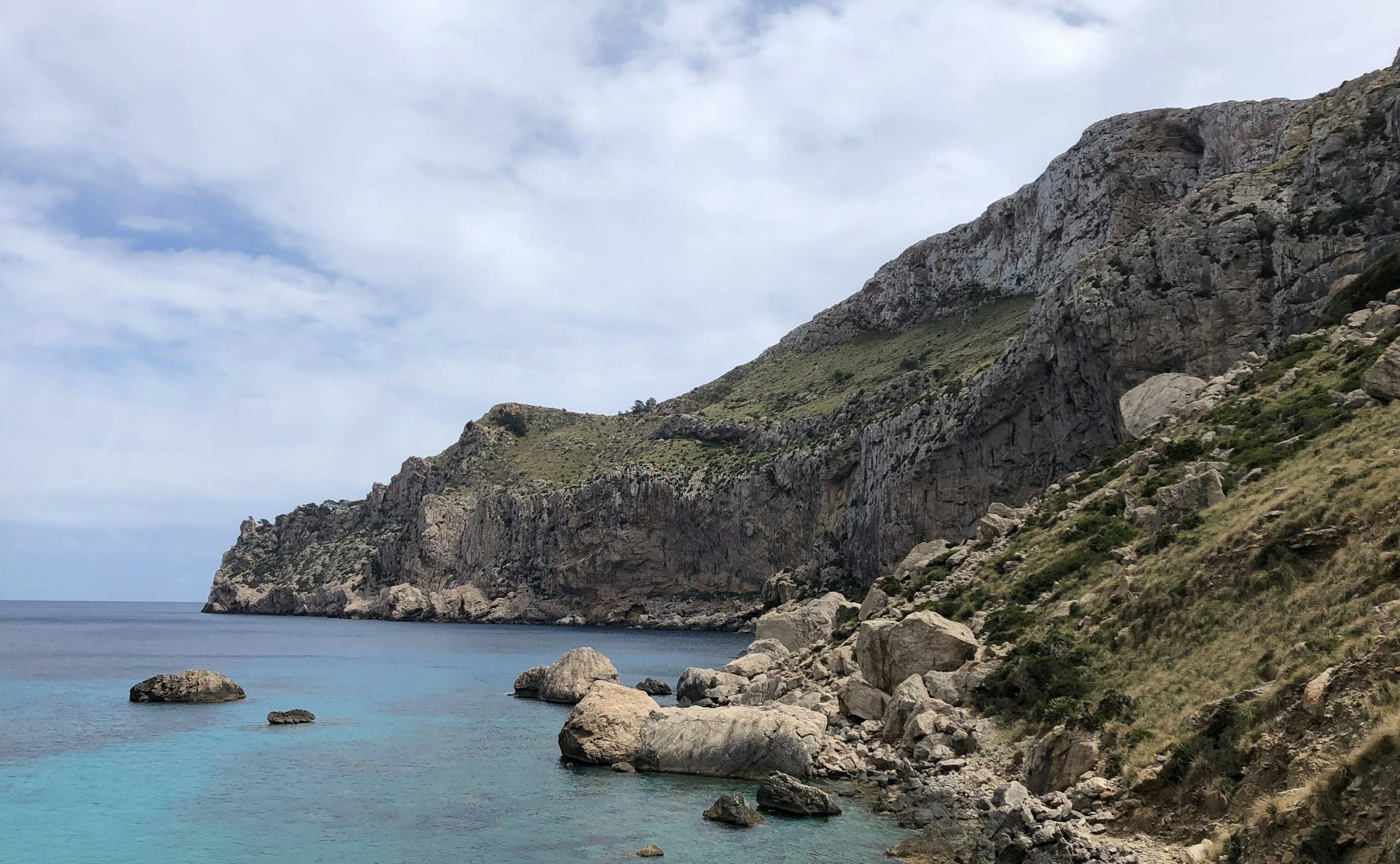
The Mirador des Colomer view on the Formentor peninsula earns its reputation. The ridge pushes into the sea in a chain of pale cliffs and pine-covered slopes, with the rock of Es Colomer standing offshore. It is the image at the top of this article, and it looks no less improbable in person.
The practical problem is access. The road from Port de Pollença is narrow, parking at the viewpoints is limited, and summer traffic rules now restrict private vehicles. For 2026, the Spanish traffic authority's Formentor rules apply from 15 May to 18 October, 10 a.m. to 10 p.m. Bus 334 connects Alcúdia and Port de Pollença with Mirador des Colomer, Formentor beach, Cala Figuera and the lighthouse.
Use the bus during regulated hours. Cameras enforce the restricted sections, and parking with one wheel outside a marked bay can be enough for a fine. Driving through before 10 a.m. is possible under the published rules, but the timing requirements are strict and do not leave much room for a lazy breakfast.
Formentor needs at least half a day. Pair the viewpoint with Pollença or Port de Pollença rather than attempting to add Valldemossa on the same loop. The map makes those places look close because they share a mountain range. The drive between them is longer than it looks.
Palma deserves more than an airport night
Palma is not merely the administrative bit before the beaches. It has a dense old centre, a working waterfront, neighbourhood bars, and a cathedral large enough to reset the scale after a week of coves. For another city that gets dismissed on reputation and improves once you start climbing, Marseille beyond the Old Port is the French version.
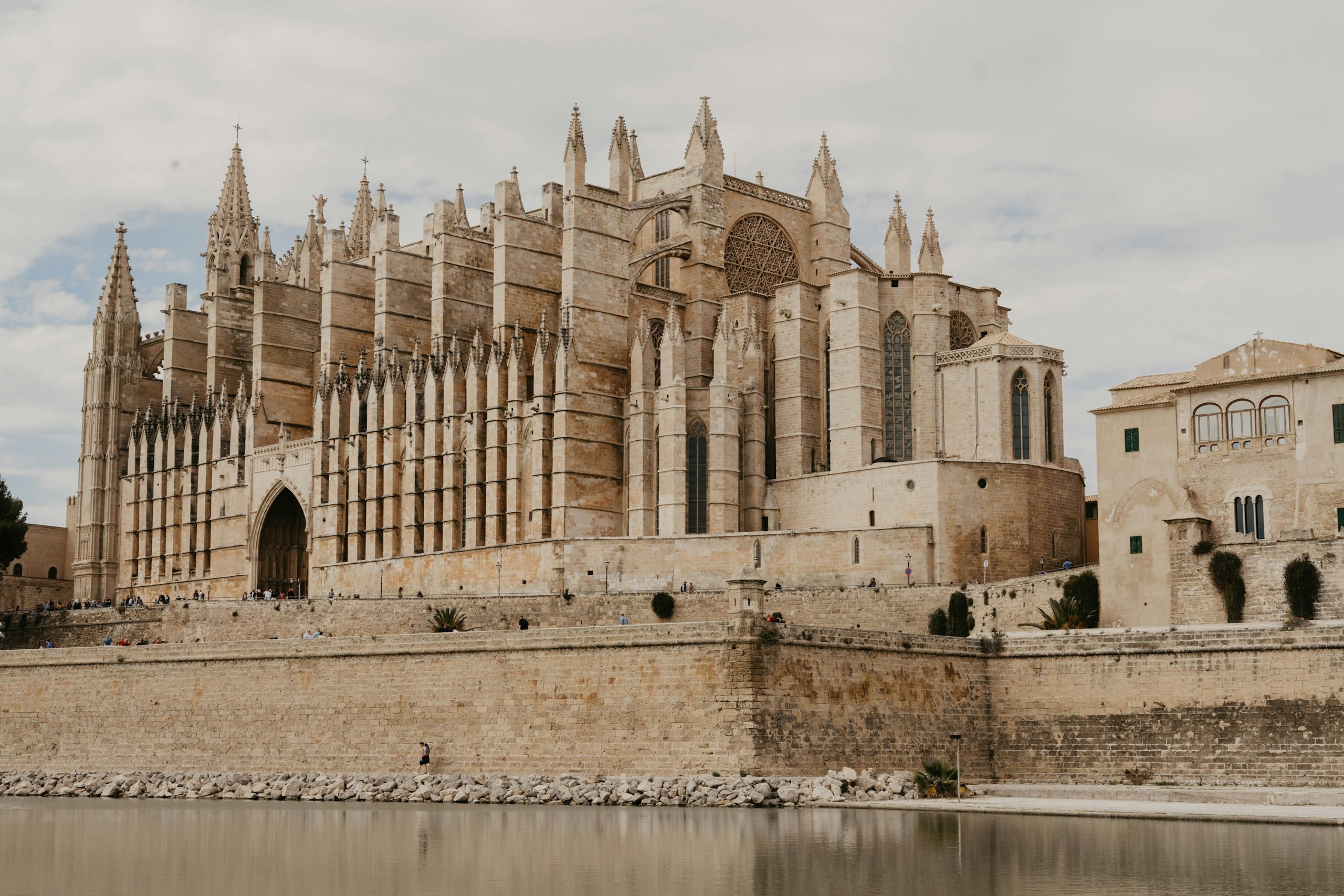
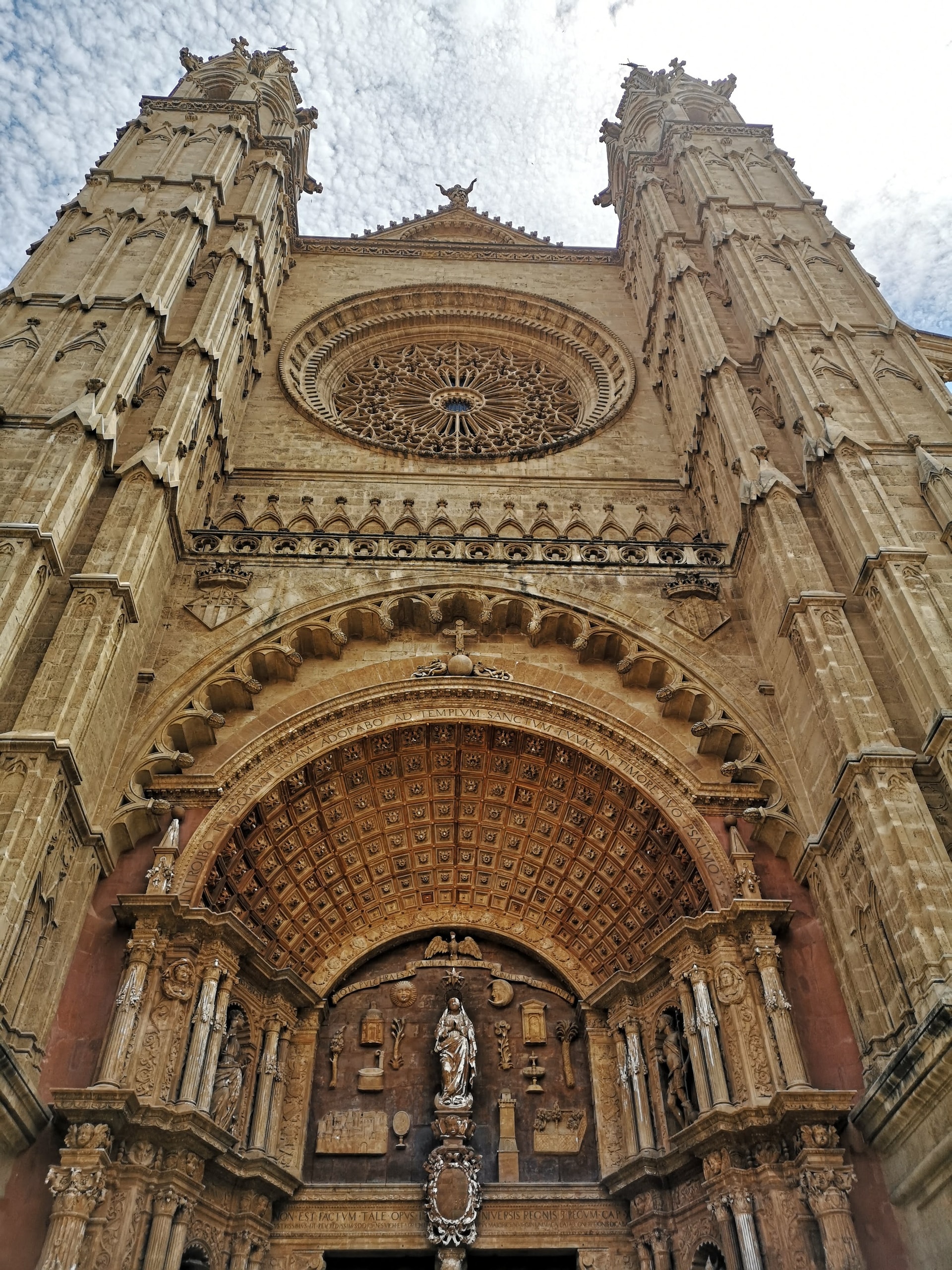
La Seu, the Cathedral of Mallorca, rises above the old sea wall in flying buttresses and pale sandstone. Walk around the outside first. The southern façade shows the building's length; the west front gives you the rose window and deeply carved portal. Inside, the nave is unusually tall and the coloured light from the rose window moves across bare stone. Antoni Gaudí's early twentieth-century changes and Miquel Barceló's ceramic chapel stop it from feeling sealed in the Middle Ages.
The cathedral's official website has current hours and tickets. Standard entry is roughly $11, while terrace visits cost more and run seasonally. Tourist visits are normally closed on Sundays, so do not leave this for the last morning without checking.
Palma is best on foot once the car is parked. Continue from the cathedral into the lanes around the Arab Baths and Plaça de Cort, then stop for an ensaimada. The pastry's spiral shape is tidy; the powdered sugar on your shirt will not be.
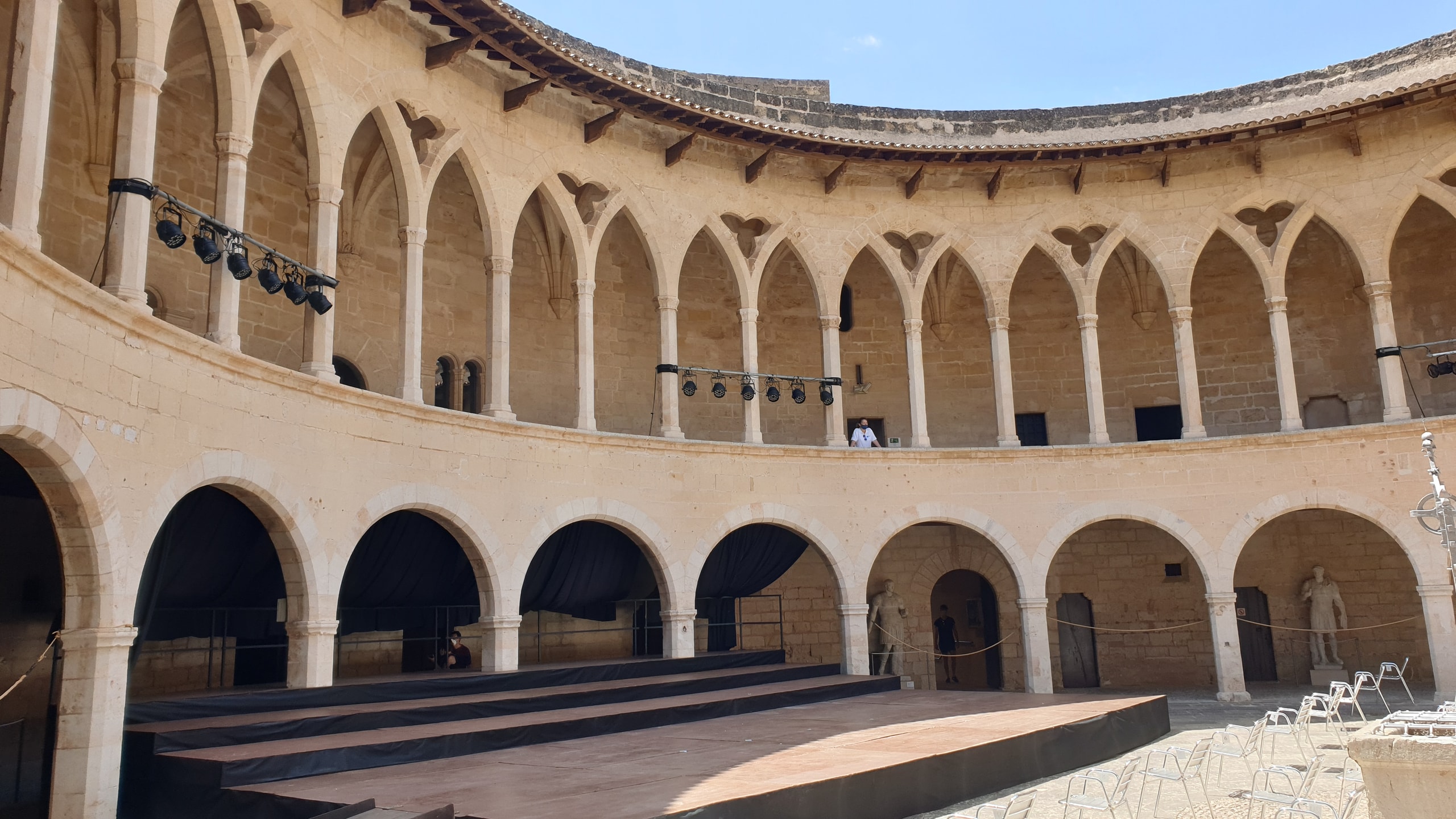
Across the bay, Bellver Castle is the useful counterpoint. The fourteenth-century fortress is circular, including its two-storey courtyard, and the roof gives a broad view over Palma and the harbour. It is far enough uphill that walking there in July feels like a decision. Take a bus or taxi unless the climb is part of your plan.
Check the official Bellver Castle visitor information before going. It closes on Mondays; general admission is about $4.50, and Sundays are free. One full day covers La Seu, the old town, and Bellver without rushing. Stay a second night for a proper dinner and a slower morning, not because Palma needs a week.
Caló des Moro is beautiful and badly overcrowded
Caló des Moro on the southeast coast is a tiny cut in the limestone with pale sand and water that shifts from milky turquoise to dark blue. It is also one of the island's most circulated beach images. By noon in July, almost every usable rock holds a bag or towel, and swimmers outnumber people who can actually sit on the beach.
The approach involves a walk from the streets above Cala Llombards followed by a rough descent. There are no toilets, showers, lifeguards, or reliable places to buy water. Wear shoes rather than flip-flops and keep your hands free for the steeper section. This is not a good choice for limited mobility or for carrying the equipment required by small children.
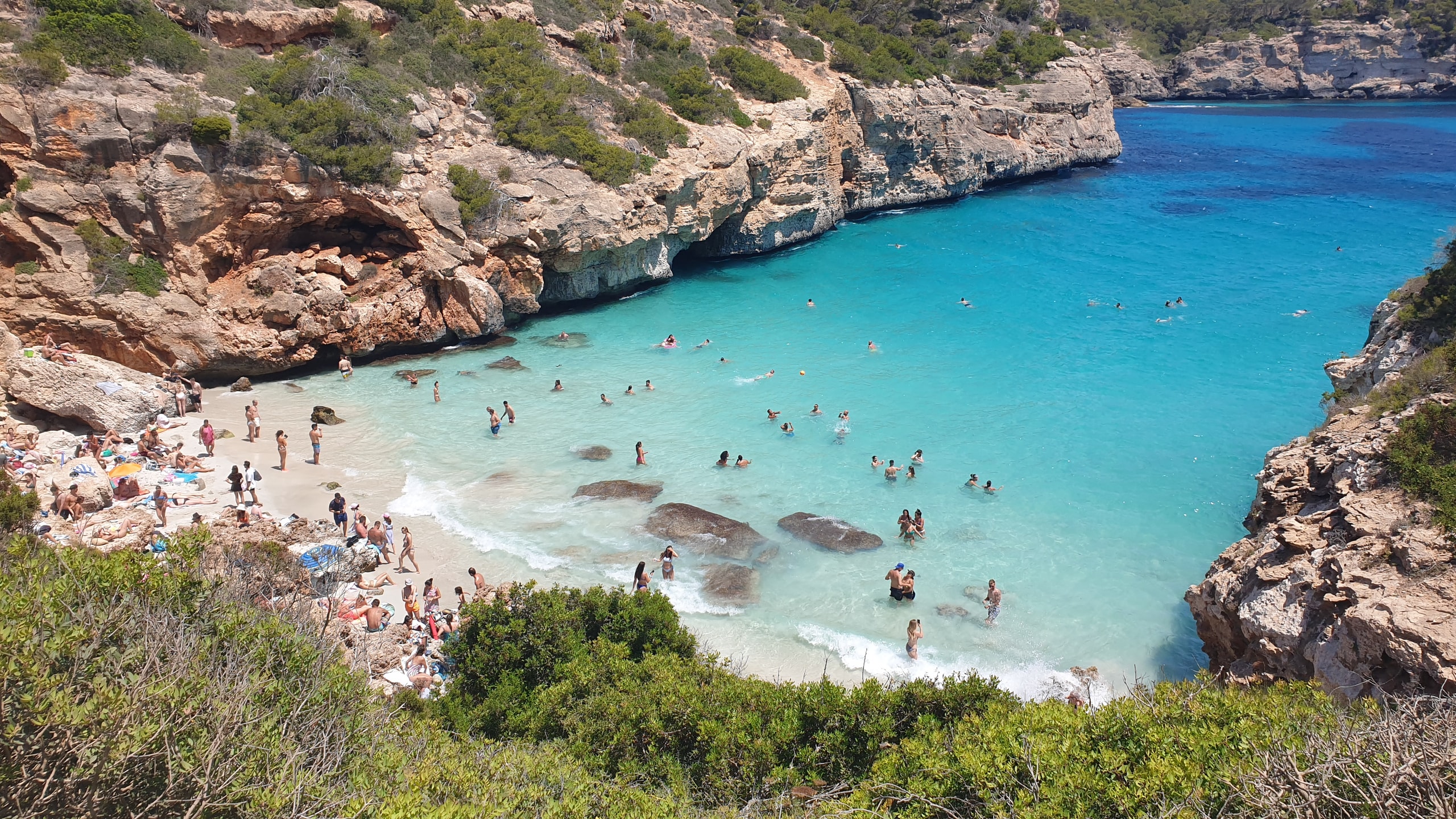
Go before 9 a.m. if swimming there matters to you. Otherwise, look at the crowd from above and continue elsewhere. A famous cove is not automatically a good beach day. Cala Llombards has easier access and more room, while the coast around Santanyí offers other places to get in the same clear water without balancing a backpack on somebody else's rock.
Mallorca's best-looking cove and its best beach day are often two different places.
Cala Varques makes you carry everything in
Cala Varques, on the east coast south of Porto Cristo, is a better fit for anyone who wants the walk to remove some of the crowd. A dirt path crosses scrub and pine before reaching a low cliff above the bay. The beach has no formal services. Bring water, lunch, shade, and a bag that can carry all of it back out.
The walk is not technically difficult, but access and parking arrangements have changed over time because roadside parking and private land created persistent problems. Check current local signs rather than following an old pin or a line of badly parked rental cars. If the legal parking option adds distance, that is still cheaper than towing.
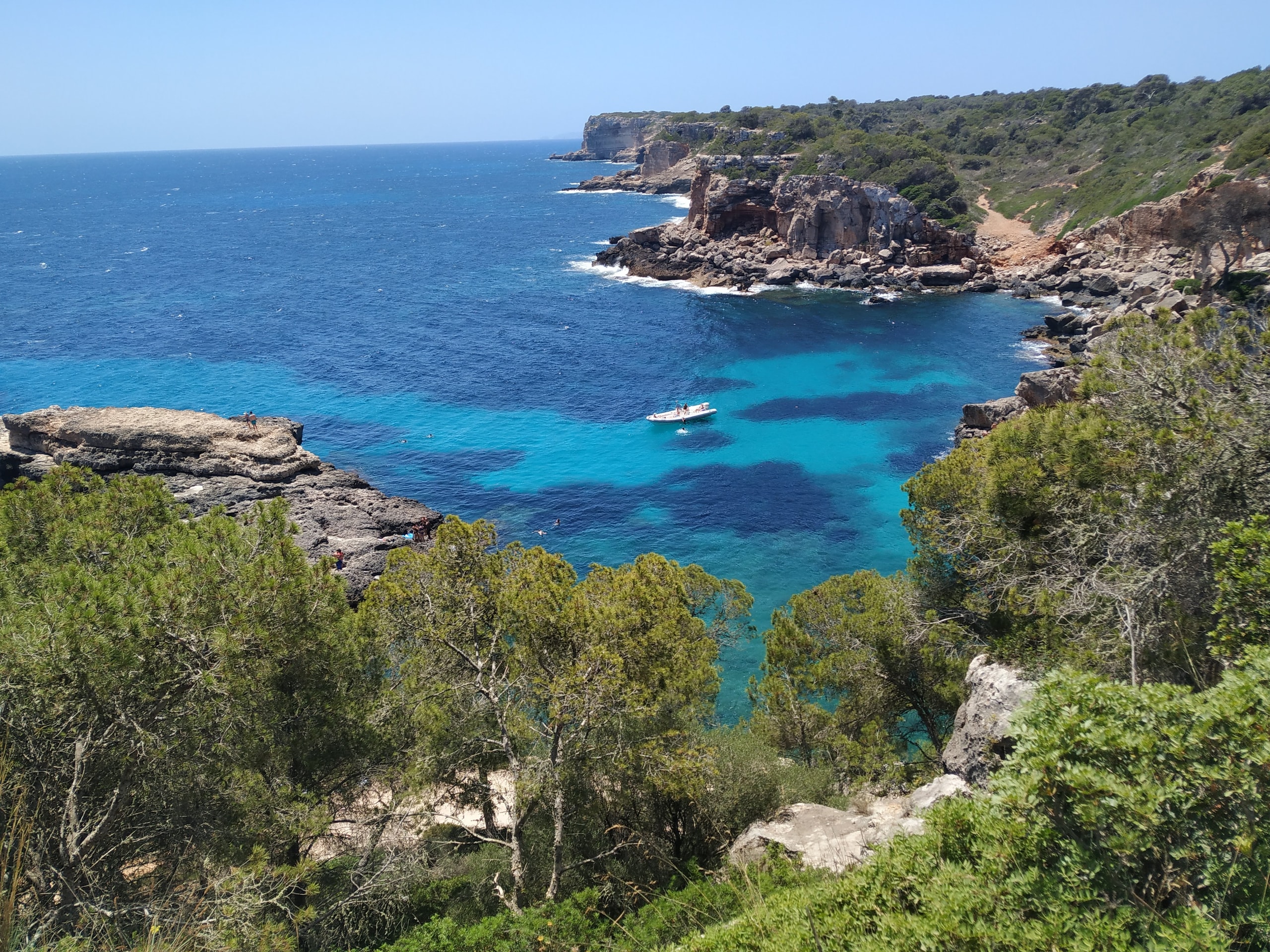
The cove itself is wide enough to feel usable even with other visitors around. Boats anchor in the deeper blue beyond the swimmers, and low paths continue along the cliffs. Stay back from exposed edges. Cliff jumping and deep-water soloing are popular here, but watching somebody else do it does not make the landing safe.
Caló des Moro and Cala Varques answer different questions. Go to Caló des Moro for the famous view, very early. Go to Cala Varques for a longer, self-contained beach day and accept the walk. Neither has the facilities of a resort beach, which is the attraction until you need a toilet. For granite coves and a Catalan old town on another Mediterranean island, see north Sardinia.
Driving is useful, not relaxing
A small rental car is the most practical way to connect the Tramuntana, Palma, and the east coast. Small matters. Village spaces are tight, mountain roads have blind bends, and the person coming the other way may be driving a delivery van rather than the compact car you hoped for.
Take the Ma-10 slowly and use marked pull-offs only. Do not stop in the road because the sea appeared between two trees. Around Valldemossa, Deià, and popular calas, the best parking strategy is an early arrival rather than another lap with increasing optimism.
Fuel stations and supermarkets are easy to find around the larger towns. The gaps appear at the exact moment you reach a cove carrying half a bottle of warm water. Keep a basic day kit in the car: two litres of water per person, shoes with grip, a hat, and something dry for the mountain drive home.
When to go and what it costs
May, June, late September, and early October offer the best balance. The sea is warmer in autumn, while late spring gives longer walking days before the hardest heat. July and August are workable if you start early and treat noon as a time for lunch or driving, not a heroic cliff walk.
Winter is quieter and greener. It is good for Palma and walking, less reliable for a swimming trip, and some coastal businesses close. The Tramuntana can be wet, windy, and much colder than the beach forecast suggests.
For two people sharing a room, a realistic mid-range budget is:
- Hotel or guesthouse: about $130-220 a night in shoulder season; $180-320 is common in peak summer
- Small rental car: roughly $35-75 a day, before insurance and fuel
- Lunch: $15-25 per person for a simple set menu away from the waterfront
- Dinner: $30-50 per person with drinks in Palma or a popular coastal town
- Beach day: nearly free if you bring supplies; expensive when parking, chairs, and lunch come from a resort strip
Sóller or the Pollença area makes sense for the mountains and Formentor. Palma works if restaurants and bus connections matter more than waking up near a trail. Santanyí, Portocolom, or the Porto Cristo area cuts the drive to eastern calas. Splitting the stay between two bases saves time; changing hotels every night does not. A smaller French navy port with cheaper rooms lives in Toulon.
Leave these for another trip - or never
Skip Magaluf unless nightlife or an easy resort beach is the actual goal. There is no prize for visiting simply to confirm that you dislike it.
Skip Caló des Moro at noon. The cove does not become more authentic because you endured the crowd. Skip any four-day itinerary that includes Palma, Sóller, Formentor, Alcúdia, and three east-coast beaches. It will look efficient in a spreadsheet and feel like a tour of roundabouts.
Also skip the scooter if you have little experience on one. Mallorca sells the fantasy well, but gravel at a mountain hairpin is a poor place to learn braking technique.
Is Mallorca worth it beyond the resorts?
Yes. Few Mediterranean islands make it this easy to combine a Gothic city, a serious mountain range, and clear-water swimming in one week. The cost is traffic, advance planning, and accepting that several famous places are famous enough to be unpleasant at the wrong hour.
The best first trip is not a hunt for an empty Mallorca. Choose two bases, start before the coaches, and let one cove be too crowded without treating it as a failed day.