Norway in a Nutshell sells the efficient Norway: train to Myrdal, Flåm Railway, bus to Gudvangen, ferry through Nærøyfjord, back to Bergen by midnight - about $220, lunch not included, weather optional. It is scenic. It is also twelve hours on someone else’s schedule, packed with people who all want the same ferry window. Bergen gets treated as the pickup point. That is the wrong way around.
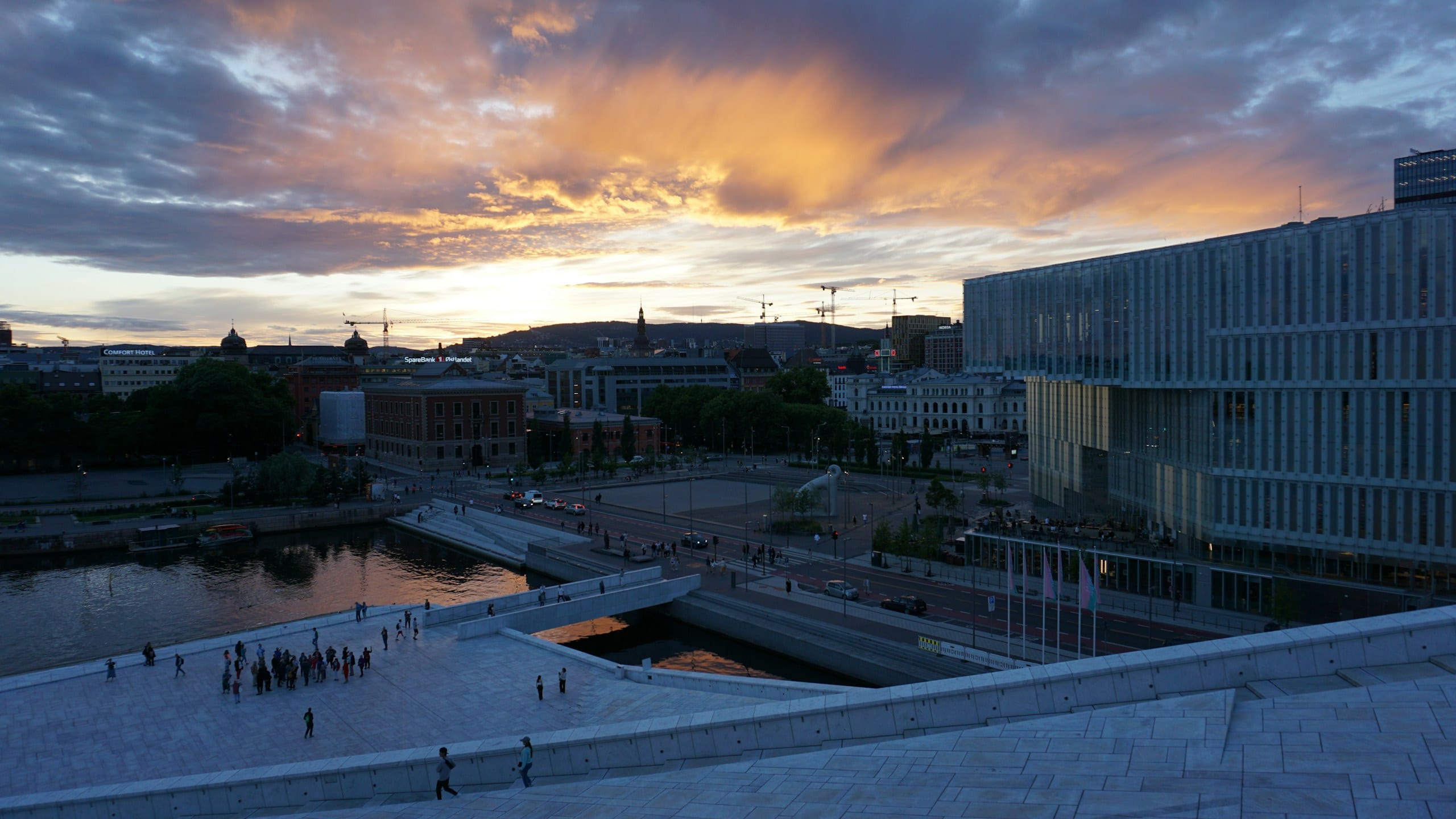
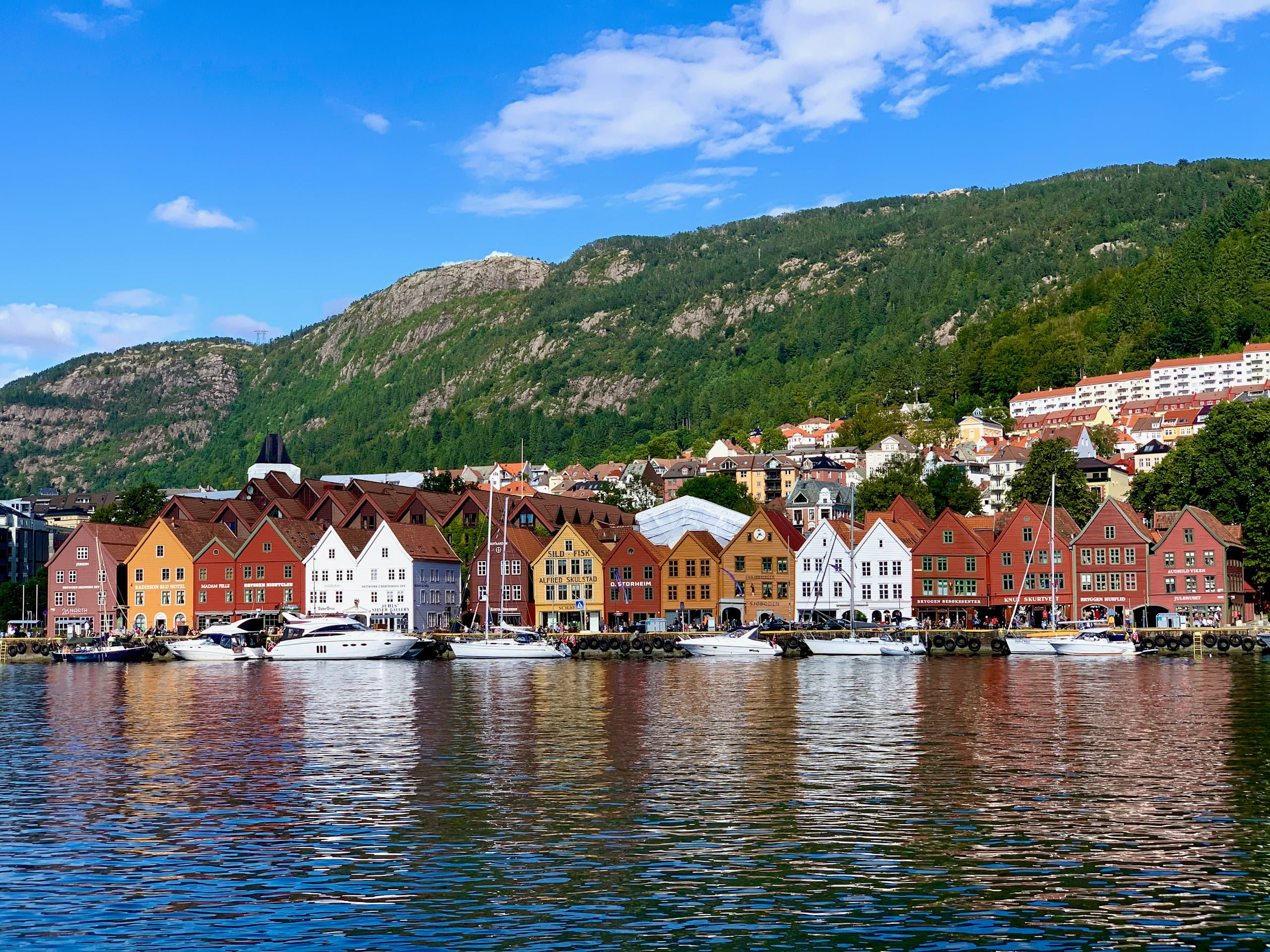
Bergen is Norway’s second city - about 290,000 people on the west coast, wedged between seven mountains and a working harbour. Picture a Hanseatic warehouse district glued to a hillside that does not flatten out. Bryggen - the leaning wooden gables painted ochre and red - is the most photographed stretch of western Norway. Behind it the city climbs: steep streets, wooden houses from the 1700s, staircases that double as streets, a university with 25,000 students, and a fish market that smells like a fish market. Almost every itinerary uses Bergen as a transfer. Give it three or four nights instead. The city behind the UNESCO waterfront is the part that holds. The same layover habit shows up in Oslo - the capital gets a museum sprint, then everyone races west.
The city gets roughly 240 days of measurable precipitation a year. Locals do not apologize. They sell umbrellas at the airport and keep walking. Flat grey light is the honest light here.
The rain is why the hills stay green and the walking trails stay thinner than the harbour at noon.
Bryggen works best before breakfast
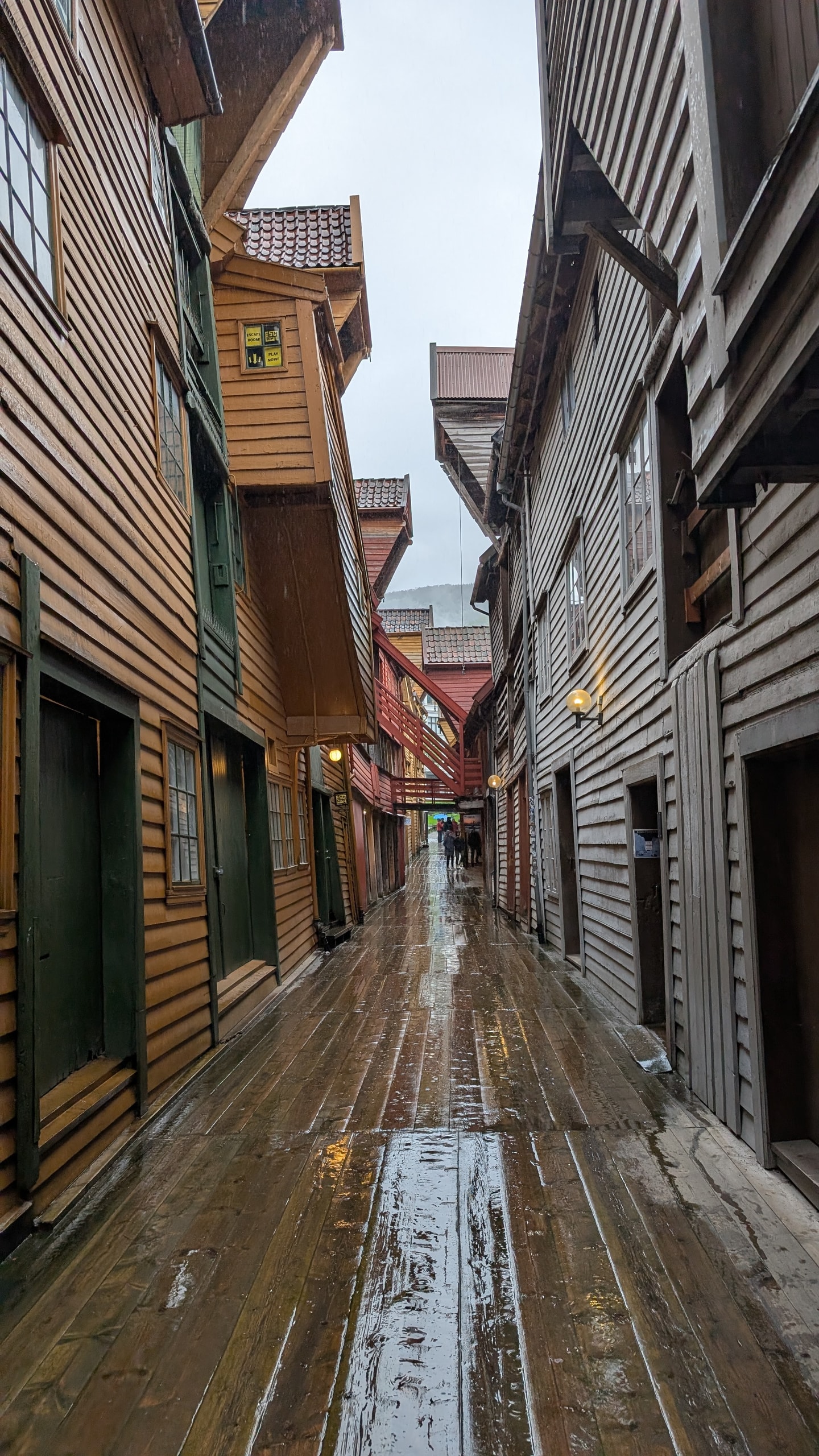
Do not skip Bryggen. The Hanseatic wharf has been a trading post since the 1300s, burned and rebuilt more times than guidebooks bother counting. UNESCO listed it in 1979. The narrow alleys between the warehouses - wooden passages tight enough to touch both walls - are worth a walk when you can still hear your footsteps on the wet planks.
Cruise days rewrite the waterfront. On a summer weekday the groups tend to hit Bryggen mid-morning; by noon the alleys feel like a funnel. Arrive while the delivery vans are still unloading and you get the gables without the lanyards. One of the facades may be under restoration - tarps printed with the building so the row still looks complete. Duck into the Hanseatic Museum if you want the history. Then leave the postcard edge and go uphill.
A $12 cinnamon bun from a bakery that knows what it is doing tastes better when you are not standing in a cruise queue to buy it.
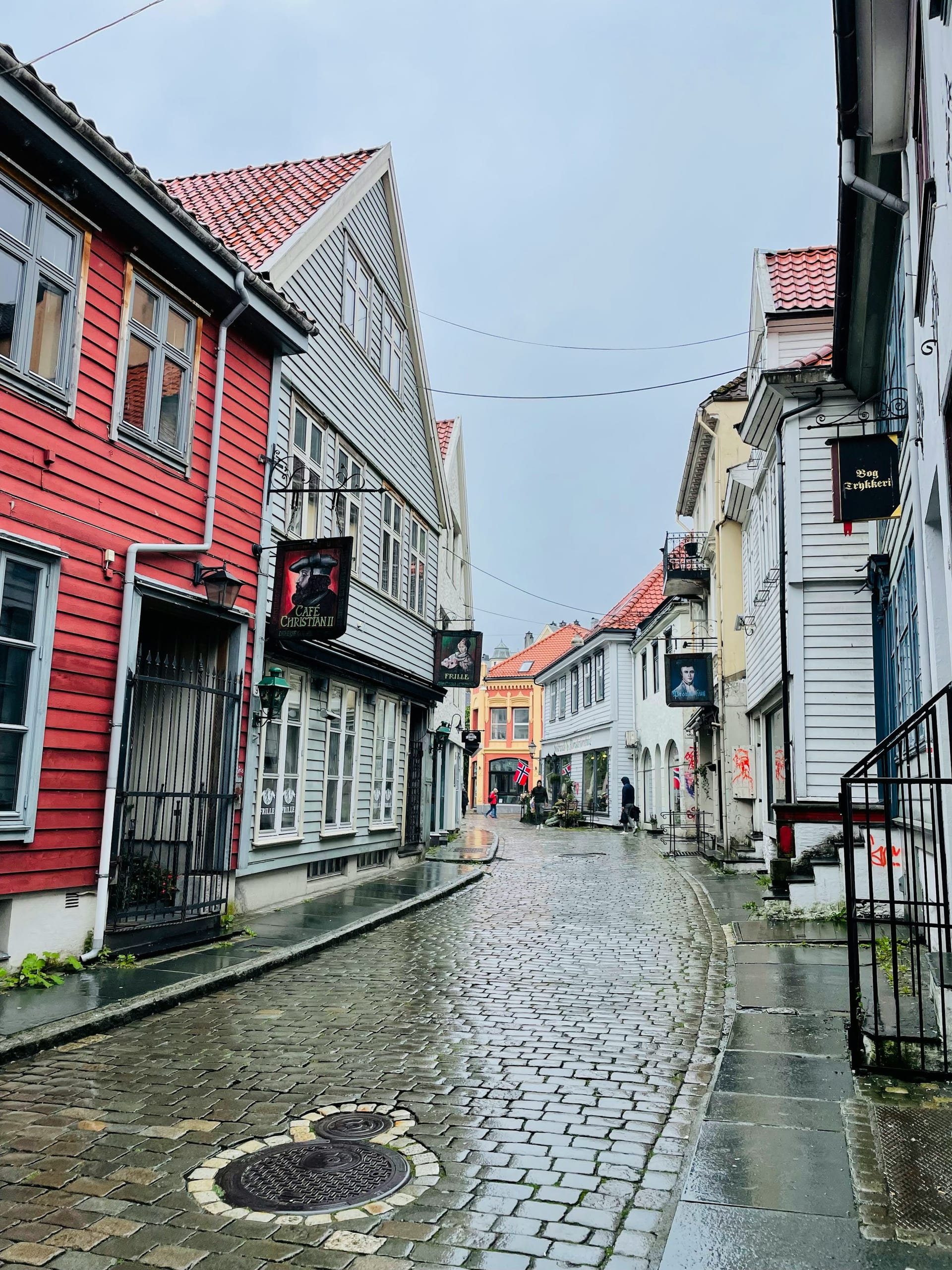
Wet boards, overhanging timber, a strip of grey sky. The alleys still feel like a working port, even when the shops at the far end are selling wool.
Ride Fløyen up, walk down
Bergen sits at the base of seven mountains - the city even runs an annual footrace up all of them - and the easiest summit is Fløyen. The Fløibanen funicular climbs from the centre in about six minutes, roughly $35 round trip for an adult. On a clear day: harbour, fjord, islands, suburbs climbing the opposite hills. On a misty day you still see the layout - Vågen cutting into the city, wet tile roofs - even when the peaks disappear into cloud.
The better move is funicular up, walk down. The forest trail back to town takes roughly 45 minutes through spruce and birch. A rain layer in a small daypack is enough. Some mornings fog drops visibility to thirty metres. Wait, walk anyway, or come back. The trail still beats another hour among cruise lanyards.
A day that is not a day tour
Fisketorget (the fish market). Touristy, yes. Also where a bowl of fish soup runs about $18 with bread - salmon and cod in a cream broth - eaten at an outdoor counter while rain comes in sideways. The live king crab tanks are for photos. Buy the soup. Skip the souvenir troll.
KODE art museums. Four buildings around Lille Lungegårdsvann, one combined ticket (about $20), and a proper Edvard Munch collection that most visitors walk past because Munch is supposedly Oslo’s problem. A rainy afternoon here earns its keep.
Nordnes peninsula. Walk west from the centre along the waterfront, past the aquarium (skip unless you have kids), into the old wooden neighbourhood. Small houses, narrow lanes, locals on balconies. Residential Bergen the postcards omit.
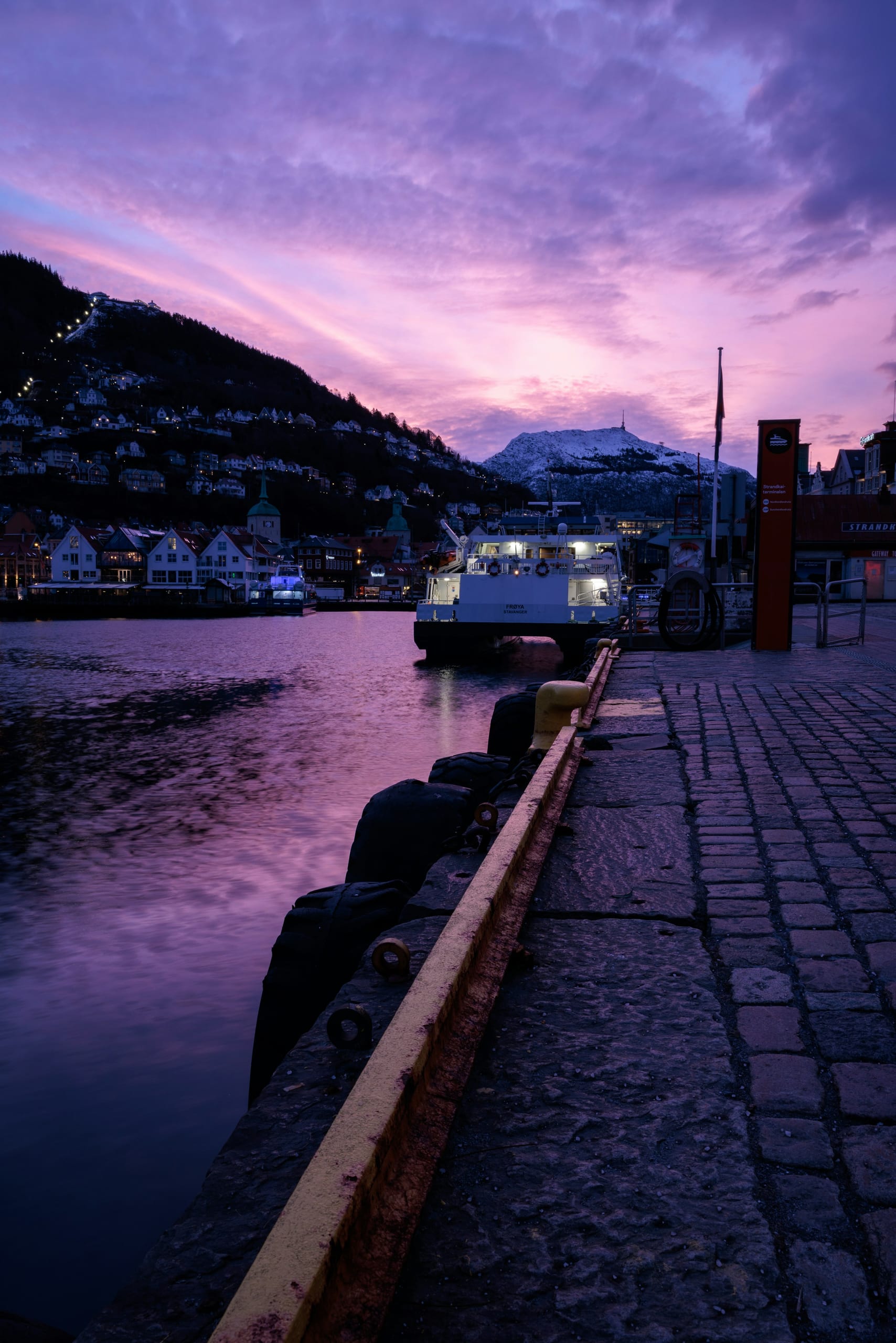
Evening harbour. After the cruise buses leave - usually by 6 p.m. - the waterfront empties. In May and June the light at 9 p.m. is still usable even under cloud. Vintage coastal ships sit at the quay; walk from Bryggen toward Skolten without a tour microphone.
Fantoft when the harbour is loud
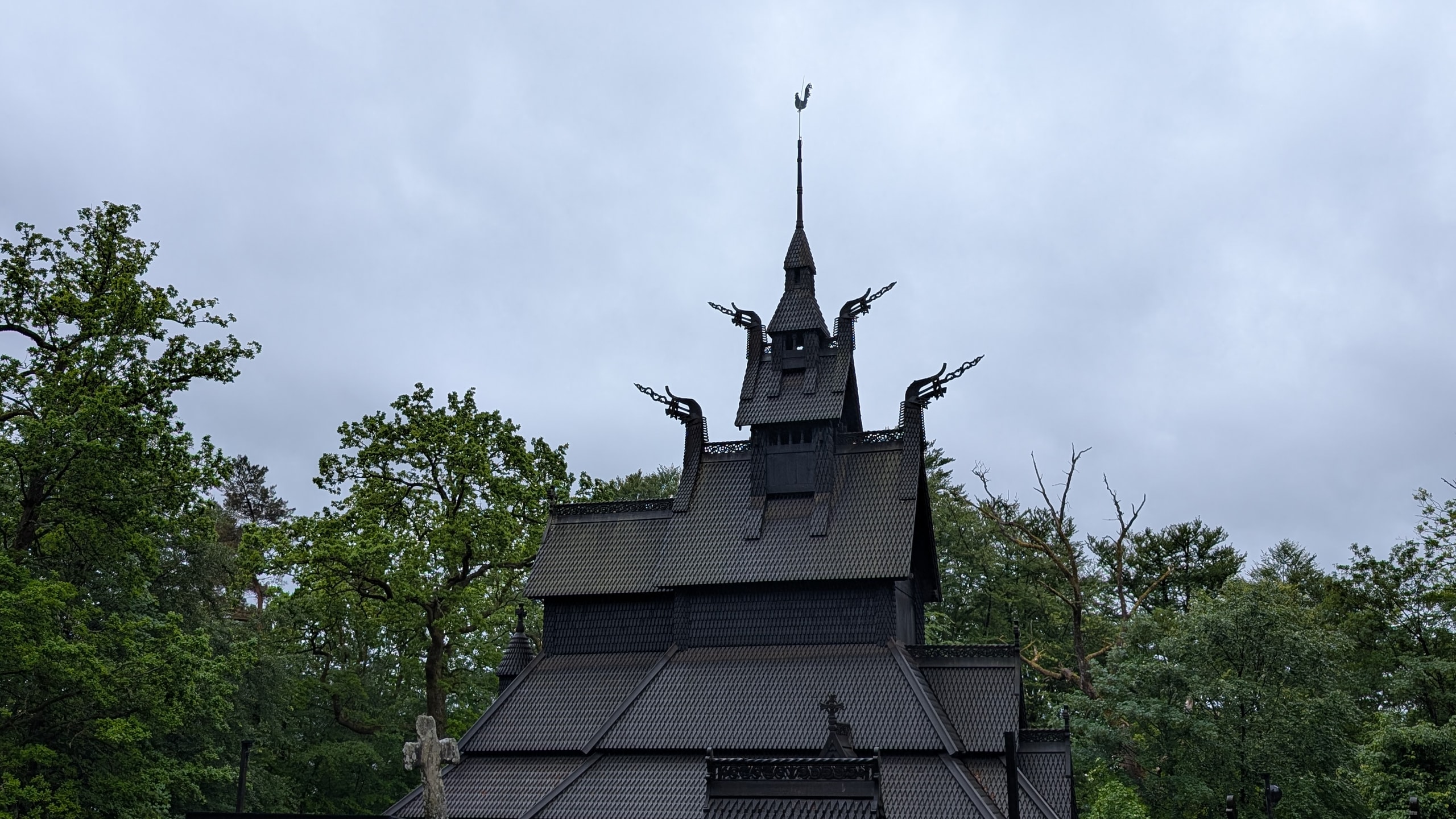
Half an hour from the centre by light rail (Bybanen toward Nesttun / Lagunen; get off at Fantoft) sits a black stave church in a stand of trees. Fantoft Stave Church is a reconstruction - the medieval original burned in 1992; what you see now was rebuilt in the 1990s, tarred dark, dragon heads on the gables. Entry is about 90 NOK ($9) in the summer season; outside those months you can still walk the churchyard even when the interior is closed.
Forty-five minutes among the trees is enough. It is a break from harbour commerce - older wooden Norway, no cruise microphones. Pair it with a rainy morning when Fløyen is socked in, or as a quiet stop before KODE.
If you want the fjord, do not rush it from Bergen
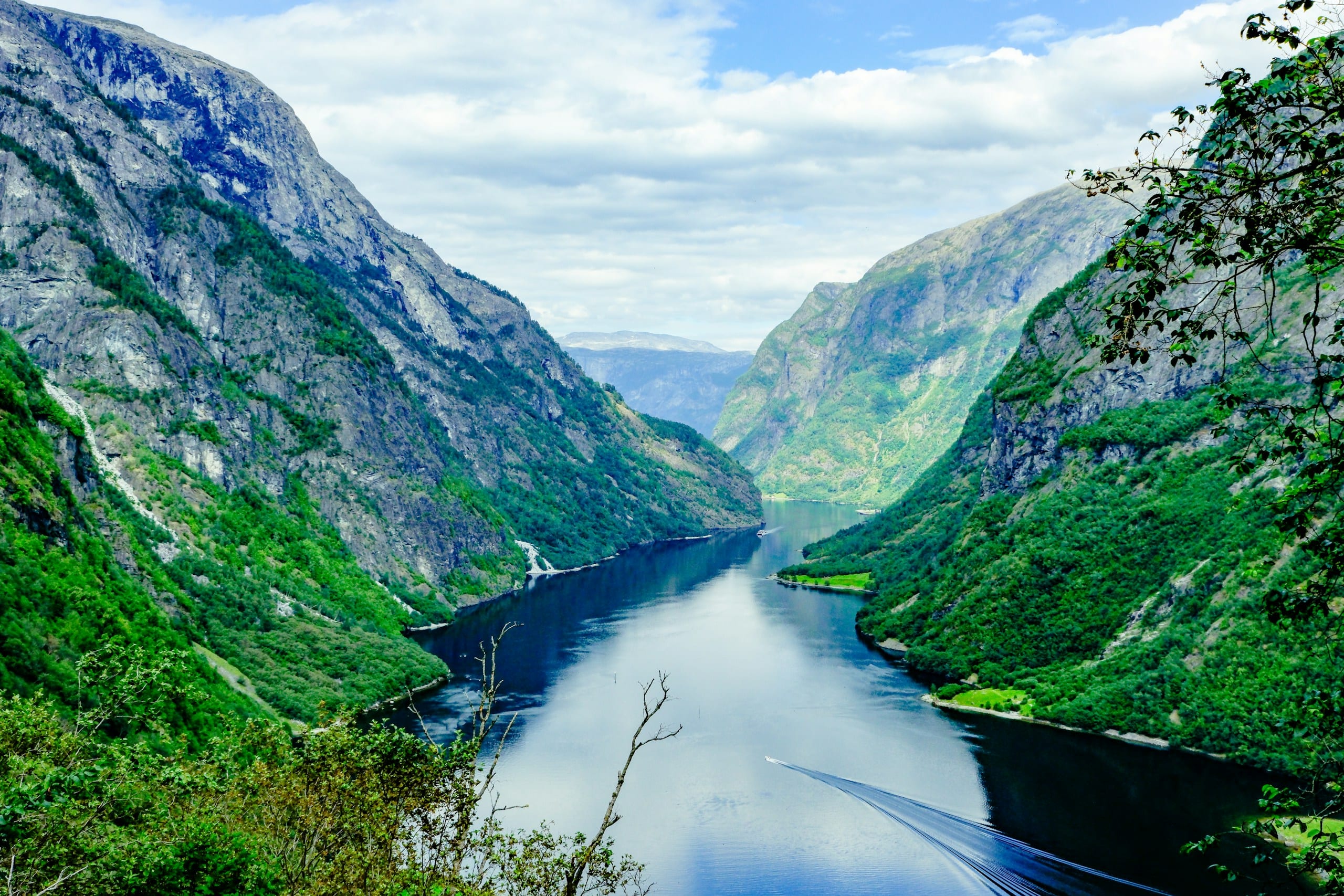
Nærøyfjord earns its UNESCO listing: narrow dark water, cliffs straight up. Doing the branded Nutshell circuit as a single day from Bergen means peak-season packing and a schedule you cannot bend.
Better if you want the fjord: overnight in Flåm or Gudvangen and go early, or book the legs yourself on Vy. If you want Bergen, stay in Bergen. Troldhaugen (Edvard Grieg’s house, about twenty minutes south, $15 entry), Fantoft, and a museum afternoon will teach you more about this coast than a twelve-hour blur through ferry glass.
Money, lodging, and the cruise calendar
Norway is expensive everywhere. Bergen has no cheap workaround.
- Central hotel: $140-200 a night in shoulder season, $200-280 in July-August
- Hostel dorm: roughly $45-65; book early when the cruise calendar fills
- Airbnb in Nordnes or Sandviken: often quieter and cheaper than Bryggen-adjacent options
- Daily mid-range: plan $150-220 once lodging is set
Weather is wet year-round, so pick your season for light and ships, not for guaranteed sun. Late spring brings long evenings and fewer tenders than high summer. Midsummer is warmest and busiest at the waterfront. Early autumn thins the cruise count and puts colour on Fløyen. Winter is dark and cosy if you lean into candles and fish soup.
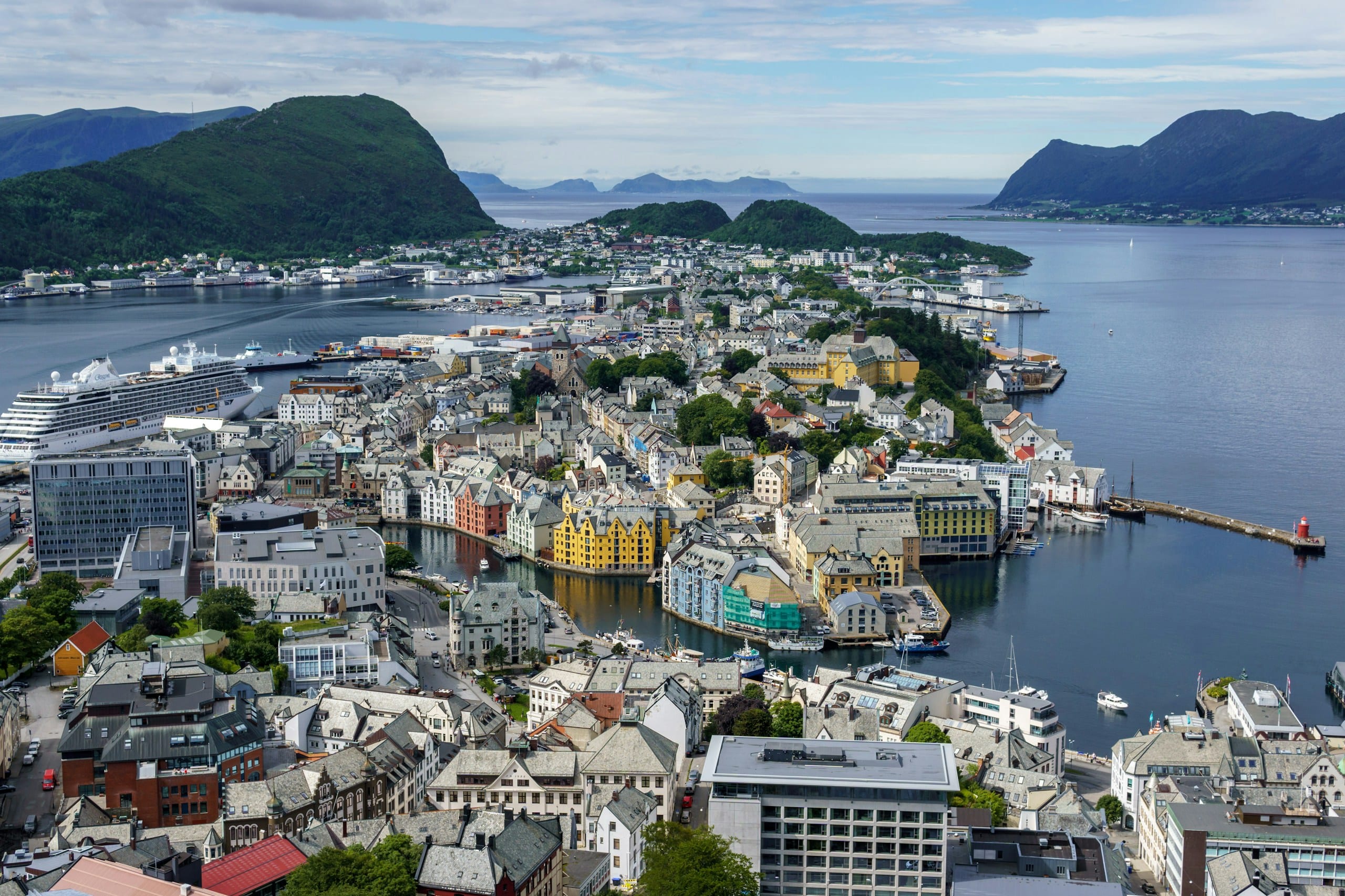
On a bad summer day three or four ships dock, and the waterfront clogs through the afternoon. Fix it with an early Bryggen walk, a late lunch, and harbour time after 6 p.m. - the same timing problem shows up in Ålesund, just with a different skyline. For what the coast drive north looks like when the schedule bites back, see the leather-jacket ferry chase toward Ålesund.
Stay walkable to the centre - Sentrum, Nordnes, or Nøstet - so rain does not strand you waiting for a bus. Waterfront hotels charge for a view you can get free from Fløyen. Sandviken is quieter: ten minutes from Bryggen on foot, often half the harbour-front price.
Country-level cost and distance reality sits in 10 things to know before visiting Norway.
How many nights Bergen needs
Three nights is the minimum if you want more than Bryggen and a funicular selfie. Four is better: one rainy museum day, one Fløyen day, one peninsula-and-harbour day, one buffer for weather, Fantoft, or a short fjord overnight.
A strong ordinary day does not look like a brochure. Coffee under an awning while it rains. Fish soup at the market when you are hungry. An uphill wander until your calves complain. KODE when the cloud sits on the harbour. The harbour again after 7 p.m. when the cruise schedule has emptied the alleys.
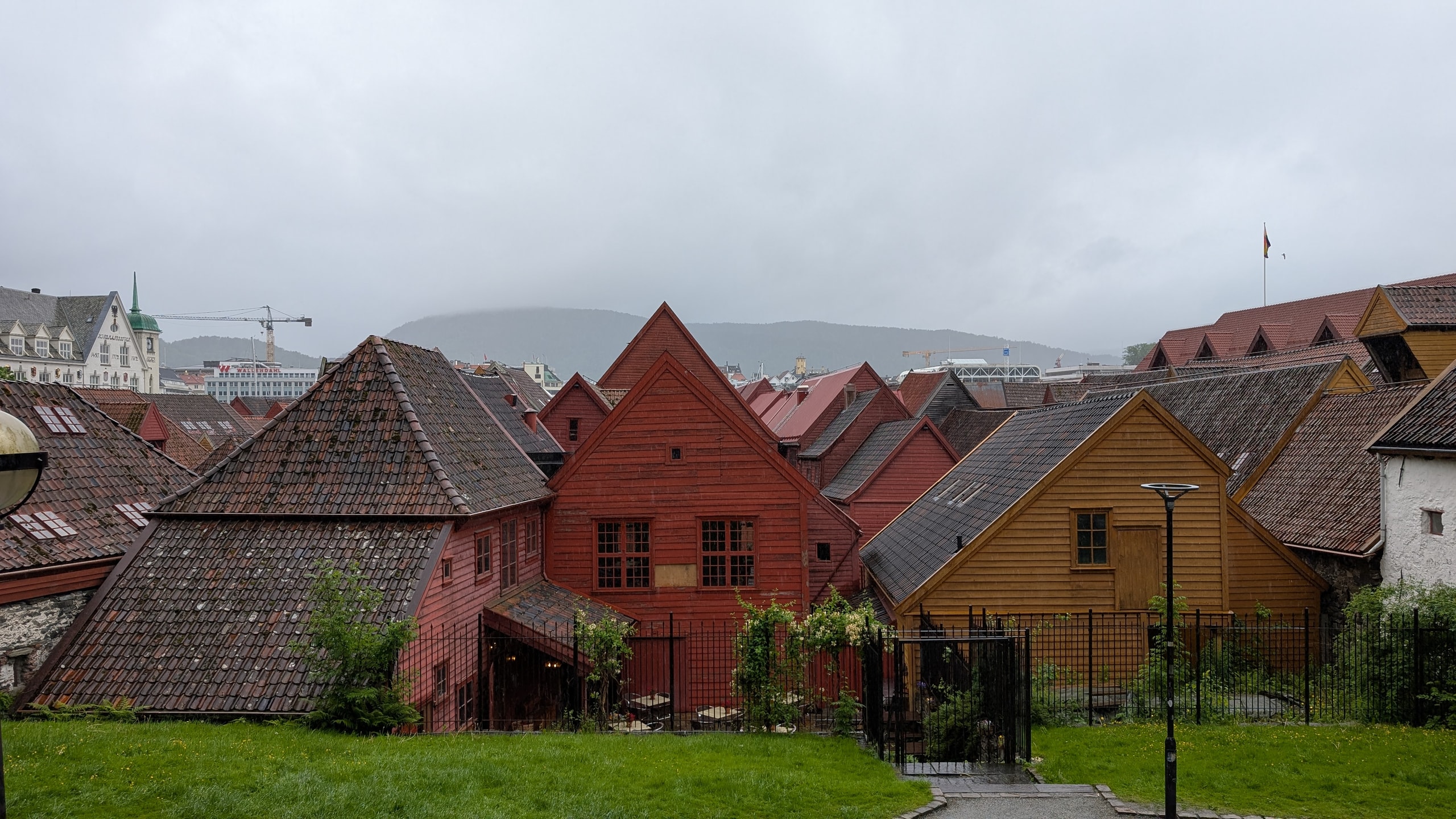
From the grassy slope above the warehouses, the red and yellow roofs stack into one dense block, cloud on the hills behind. That angle explains the city better than another harbour selfie.
Book Bergen if you want a lived-in west-coast city and you can live with wet sidewalks. Skip the peak-season Nutshell checkbox as your only Norway day, the king crab photo op, and any restaurant with a plastic Viking outside.