In early June the high plateaus still hold broken ice, sheep own the shoulder of the road, and a car ferry is simply how you get to the next valley. Norway tempts a checklist: land in Oslo, race west, pose on a rock, fly home poorer and vaguely impressed. The country only starts to make sense when you give real nights to west-coast towns like Ålesund - and when you accept a few rules that brochures sand down. More Norway notes cover those places one at a time.
These are the ten that change how the trip feels. Not the packing list. The stuff that decides whether Norway feels like a place or a blur of seat reservations.
1. Norway will cost more than your spreadsheet allows
Budget $150-250 a day mid-range once you are past flights - lodging, meals, local transport, one paid sight. That number sounds high until you price the pieces: a sit-down dinner for one with a beer runs $35-50, a hostel bunk in summer often lands near $40-60, a mid-range hotel in Bergen or Oslo in July is $180-280 a night if you book late, coffee is $5-7, and the Fløibanen funicular in Bergen is about $35 round trip. It comes down to Norwegian wages, rent, and geography, all showing up on the bill at once.
You can go lower with camping, self-catering, and free hikes. You can also burn a week of money in three days on tours and restaurants with a view of other tourists.
Supermarkets help. Rema 1000, Kiwi, and Coop are where locals buy lunch ingredients - bread, cheese, smoked salmon, a carton of juice for the ferry. A gas-station hot dog is a fine lunch. A harbour restaurant with English menus and cruise timing is where the money disappears. Build one expensive dinner into the trip on purpose. Do not accidentally build seven.
Buy alcohol at the airport if you drink. Vinmonopolet (the state liquor stores) closes early and weekends are short. Bar prices will make you quiet. A pint in a tourist-facing harbour bar can sit near $12-15; the supermarket sandwich you eat on a pier at dusk costs a fraction of that and often tastes better because the deck is empty.
2. Pack for rain, even in July
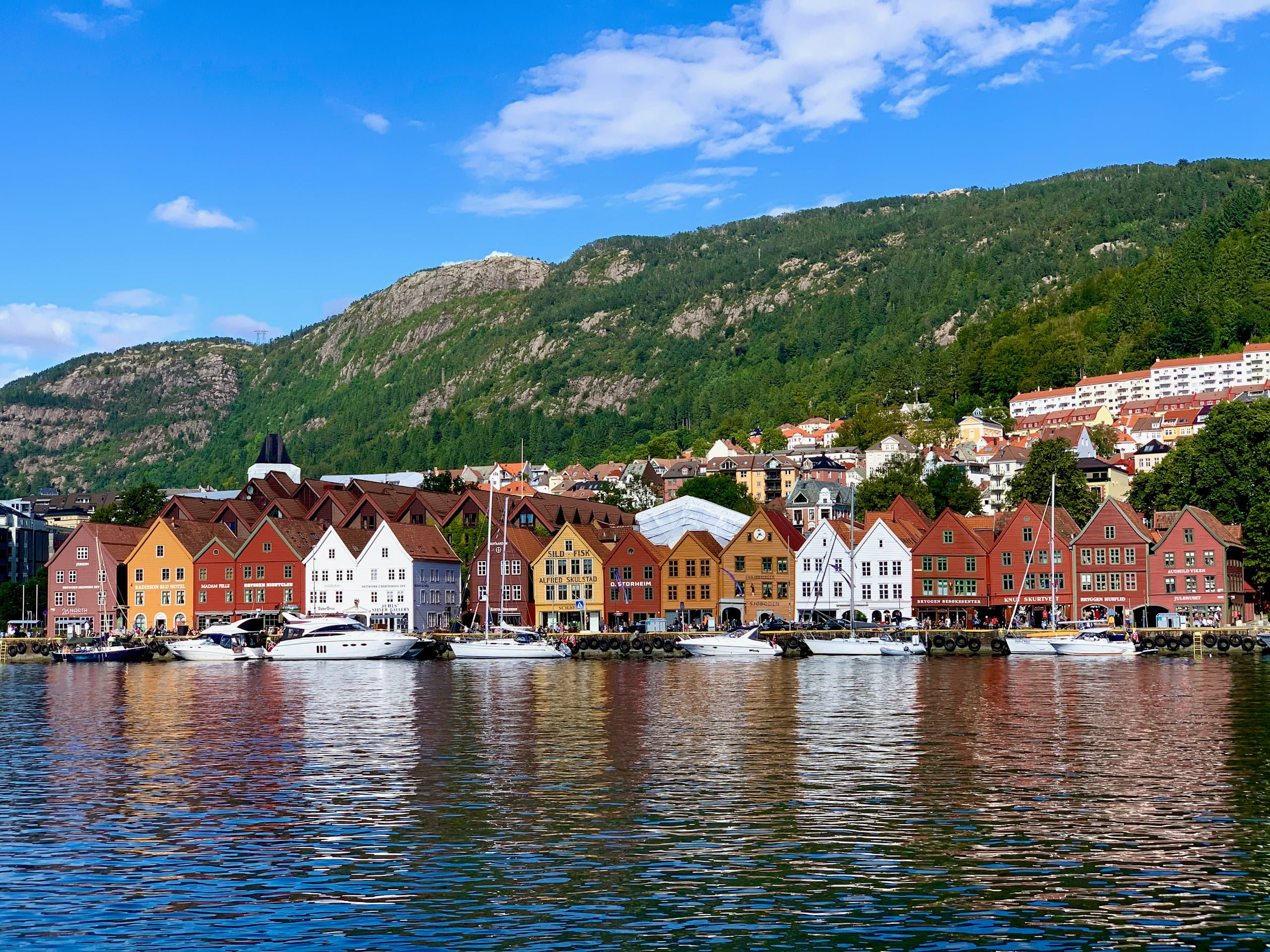
Western Norway is wet a lot of the time. Bergen shows you colourful Bryggen warehouses and then soaks you for a week - pack for it rather than resent it. The street stays shiny, buses throw spray, and shop awnings fill with people who did not bring a real jacket. Canceling a Nutshell-style day when the forecast is a grey wall can be the right call. Two hundred dollars staring through ferry glass at fog is a poor souvenir. Walking Fløyen in drizzle often teaches you more about the city.
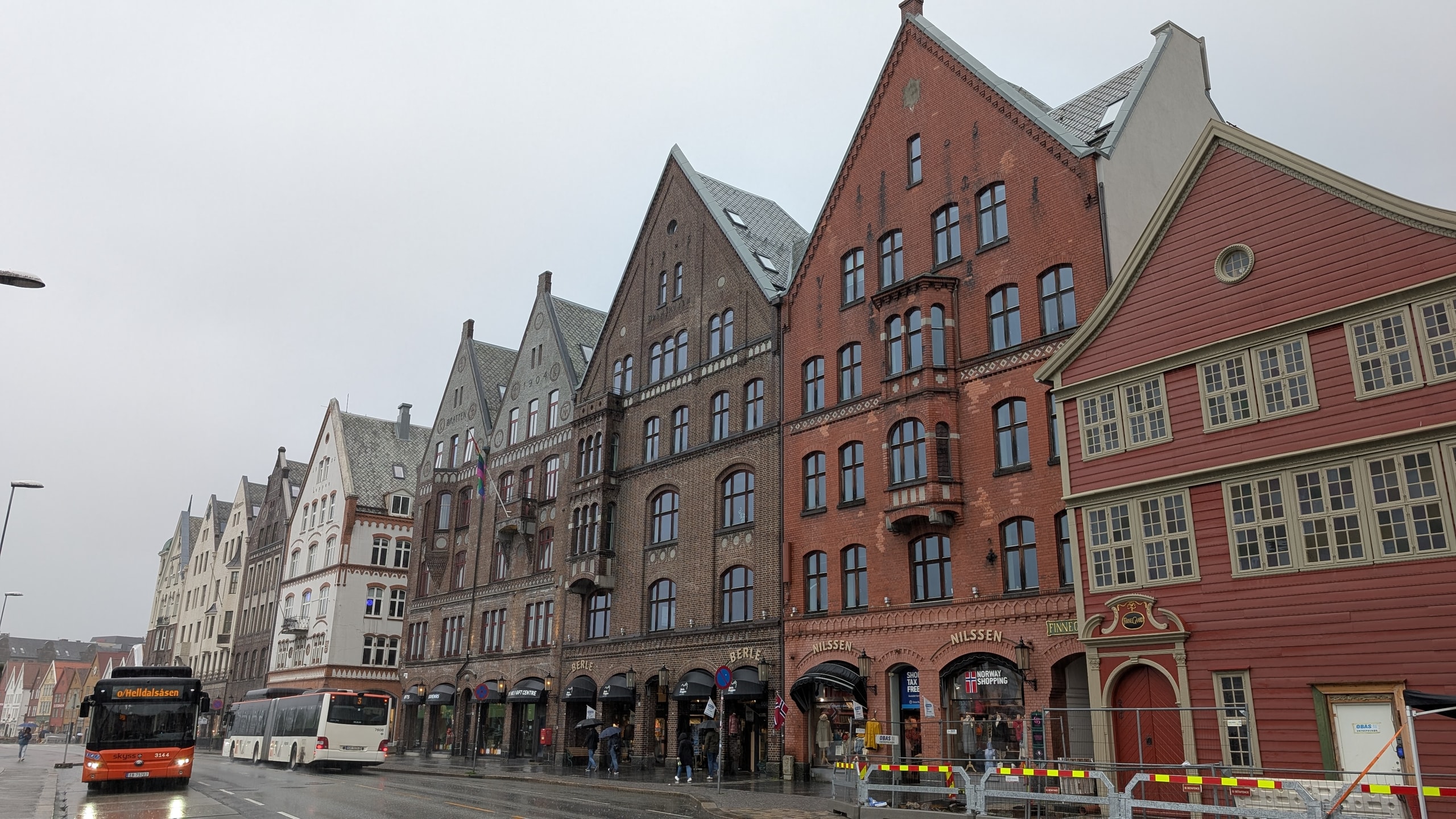
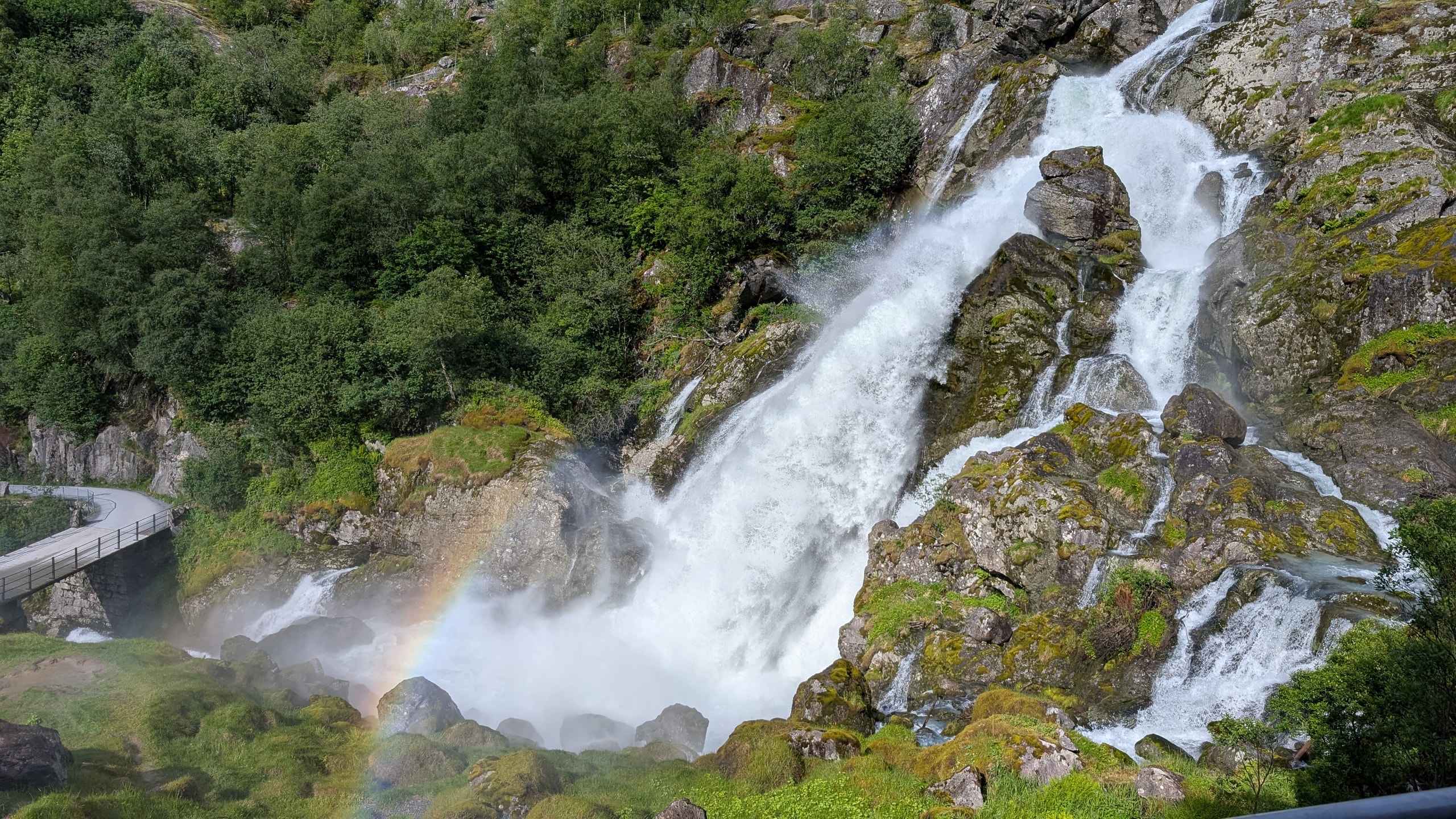
The upside of unsettled weather shows up fast. Sun through a break in the clouds turns every roadside waterfall into a short light show: spray, a hard rainbow, then grey again. Pack a real rain jacket, not a fashion shell. Merino layers under it. Waterproof shoes if you hike. Check yr.no like a local. It beats most travel apps. Some of the best hours are the ones where the cloud lifts for twenty minutes and you were already outside.
3. Give Oslo three real nights
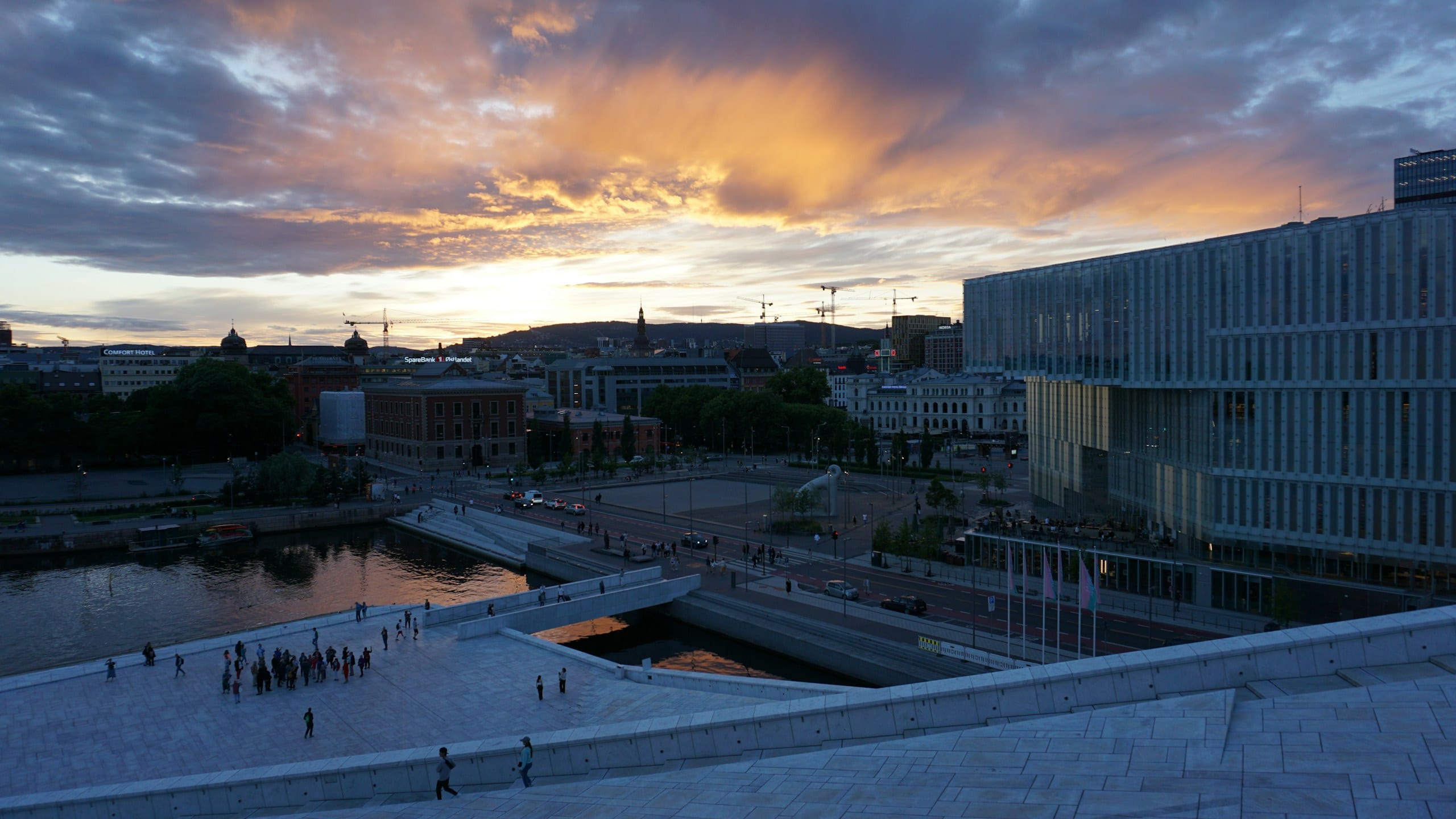
Give Oslo three real nights before you race to Bergen. The classic itinerary treats Gardermoen as a place to grab a train west, and that is how you miss the Opera roof at dusk, the museums that earn their tickets, and the neighbourhoods where people live.
The Oslo Opera House is the clearest argument for staying. You can walk onto the sloping white marble for free - runners, families, someone sitting with a coffee facing the fjord. The whole city treats its best building like a public park.
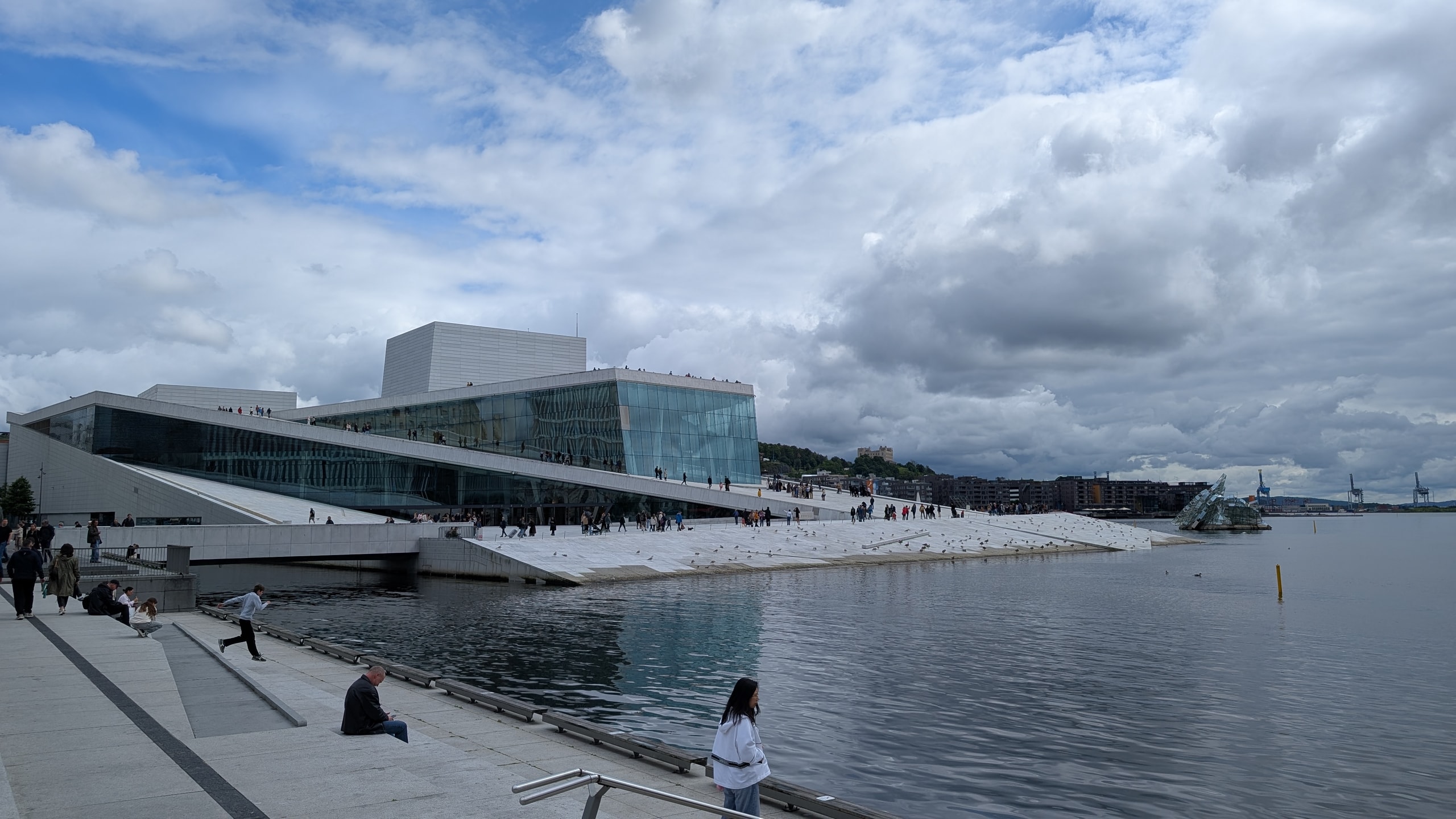
Oslo is expensive and occasionally stiff on the first afternoon. Stay anyway. Walk the harbour. Ride a ferry in the fjord for the price of a long coffee. Give Bygdøy a half day if polar history interests you - the Fram Museum puts the ship in a building that feels like ice and rope. A hotel near the train station with a 6 a.m. departure west turns Oslo into a hallway you barely saw. Details live in the Oslo three-night guide.
4. Break the Nutshell route into two days
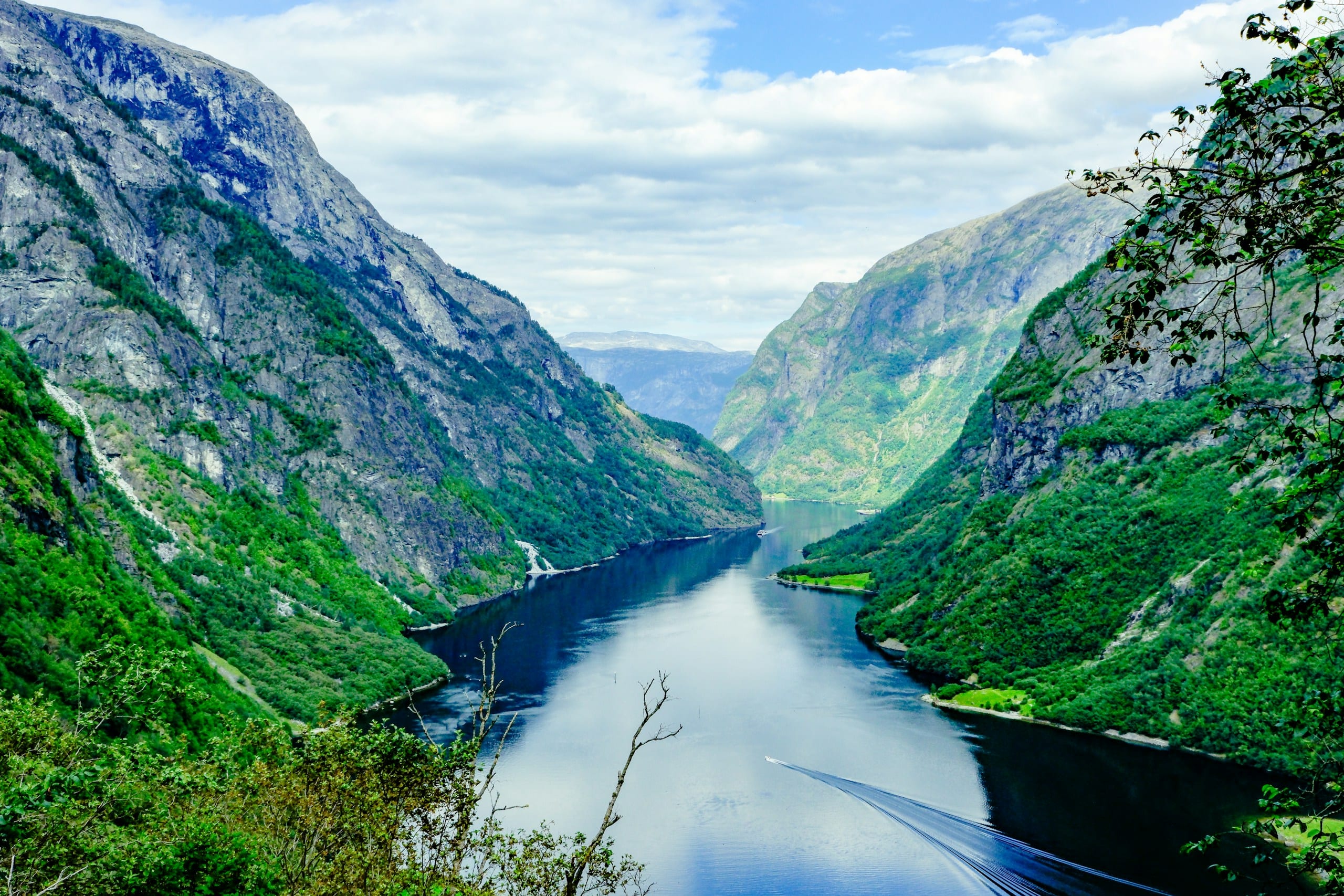
Break it overnight in Flåm, Aurland, or Voss instead of doing it as one exhausting day. The train-ferry-bus circuit between Oslo and Bergen is genuinely scenic - the Flåm Railway drops nearly 865 metres in about an hour, and the Nærøyfjord and Aurlandsfjord stretches are UNESCO-listed for a reason - but doing the whole thing in a single sitting is how a lot of people remember Norway as a blur of seat reservations and selfie sticks.
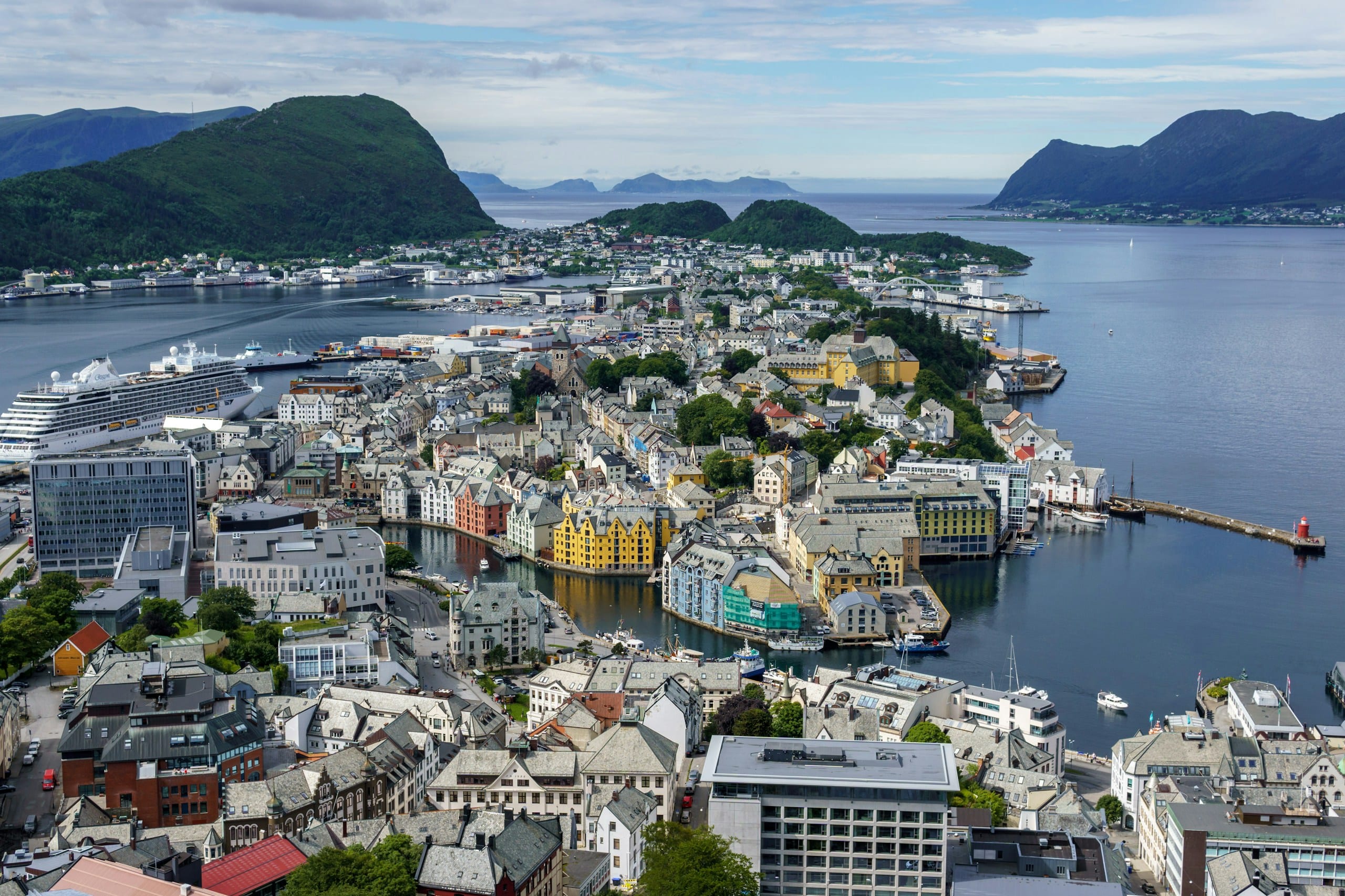
From a high viewpoint above a fjord village, the geometry is obvious: green walls, a thin road, a white wake cutting the water, a handful of red roofs that look toy-sized until you drive down to them. That view is better when you still have energy left to walk the shore afterward.
Or skip the branded package and book the legs yourself on Vy so you control the pace. The scenery is the same whether a brochure named it or not. The slow version is the one that sticks; the rushed version is mostly neck strain and other people’s luggage in the aisle. Bergen as a city, not a launch pad, is the related decision.
5. Distances lie, and ferries set the pace
Oslo to Bergen by train is roughly seven hours when things behave. Oslo to Bodø for Lofoten is a flight, not a drive you'd want to make. Norway looks compact on a phone map; up close it stretches out fast. Fjord country means waiting for boats, and summer means full car decks if you did not reserve.
That white car ferry crossing dark water under green cliffs is the road network here, full stop. Miss one sailing and the next valley waits an hour. Book long trains and key ferries ahead in July and August. Build slack into every transfer. Norwegian public transport runs on time, but it has no patience for a schedule built like a city metro with mountains dropped on top. For a day that ignored the brochure and chased a ferry anyway, read the leather-jacket run from Måløy.
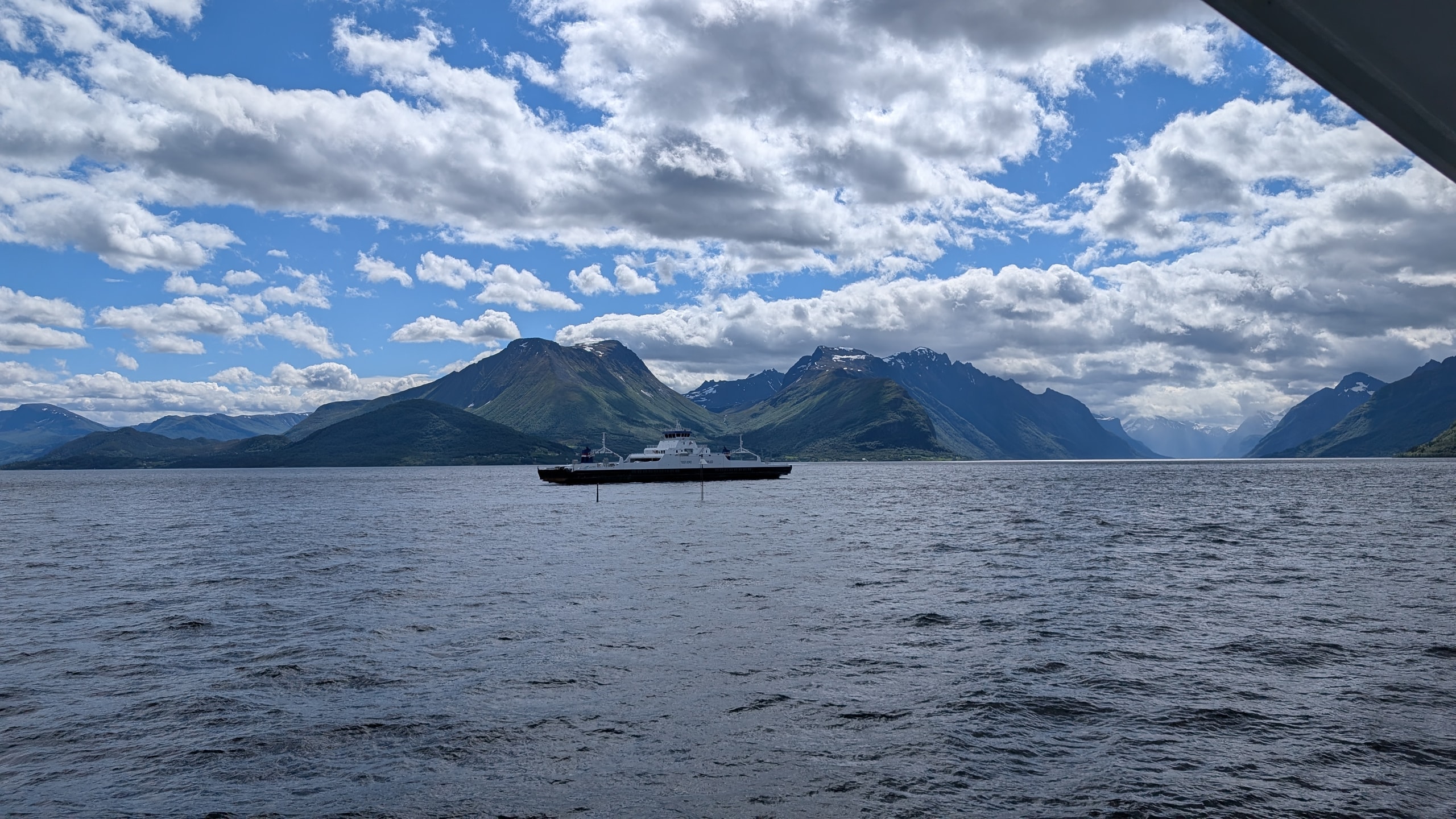
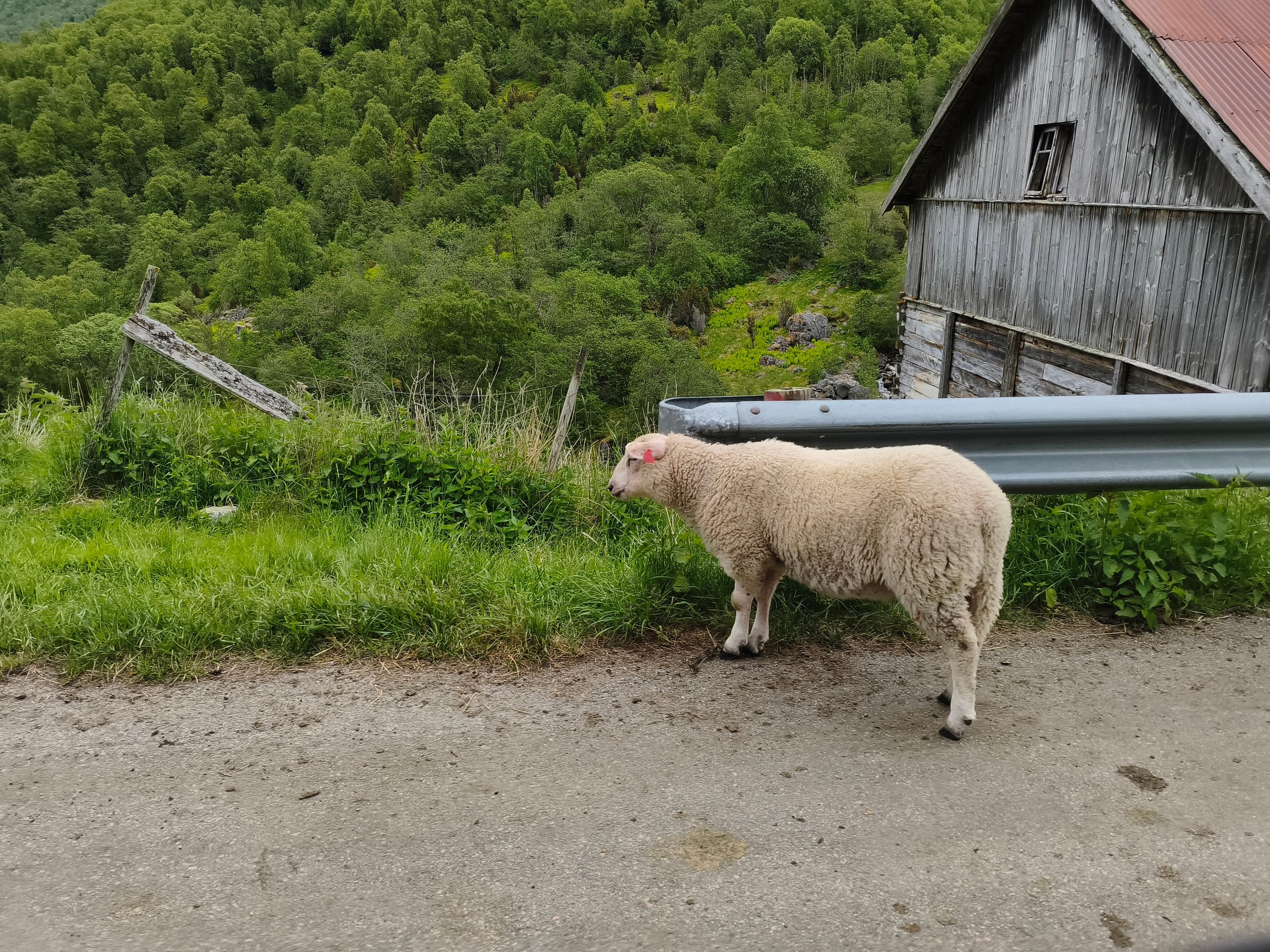
Driving is beautiful and expensive. Tolls, tunnels, ferries, and fuel add up fast. A rental makes sense for a fjord loop with multiple trailheads or for Lofoten. It makes less sense if you are mostly hopping between Oslo, Bergen, and towns the train already serves. On rural roads, sheep use the shoulder like sidewalk. Slow down. They will not move for your schedule.
Pick one region and go deep: capital and east, fjord west (Bergen-Ålesund-Geiranger), or Arctic north (Lofoten). Trying to stamp every famous name in ten days is how you remember airports. The destinations posts here are written that way on purpose.
6. Peak season turns famous viewpoints into waiting rooms
Go in May-June or September instead of late July if the famous viewpoints matter to you. Midnight sun and school holidays fill Preikestolen, Trolltunga, and the big coastal overlooks with lines of jackets in orange and neon green, cameras on tripods, everyone facing the same stretch of water. The rock doesn't change between July and September. The crowd standing on it does.
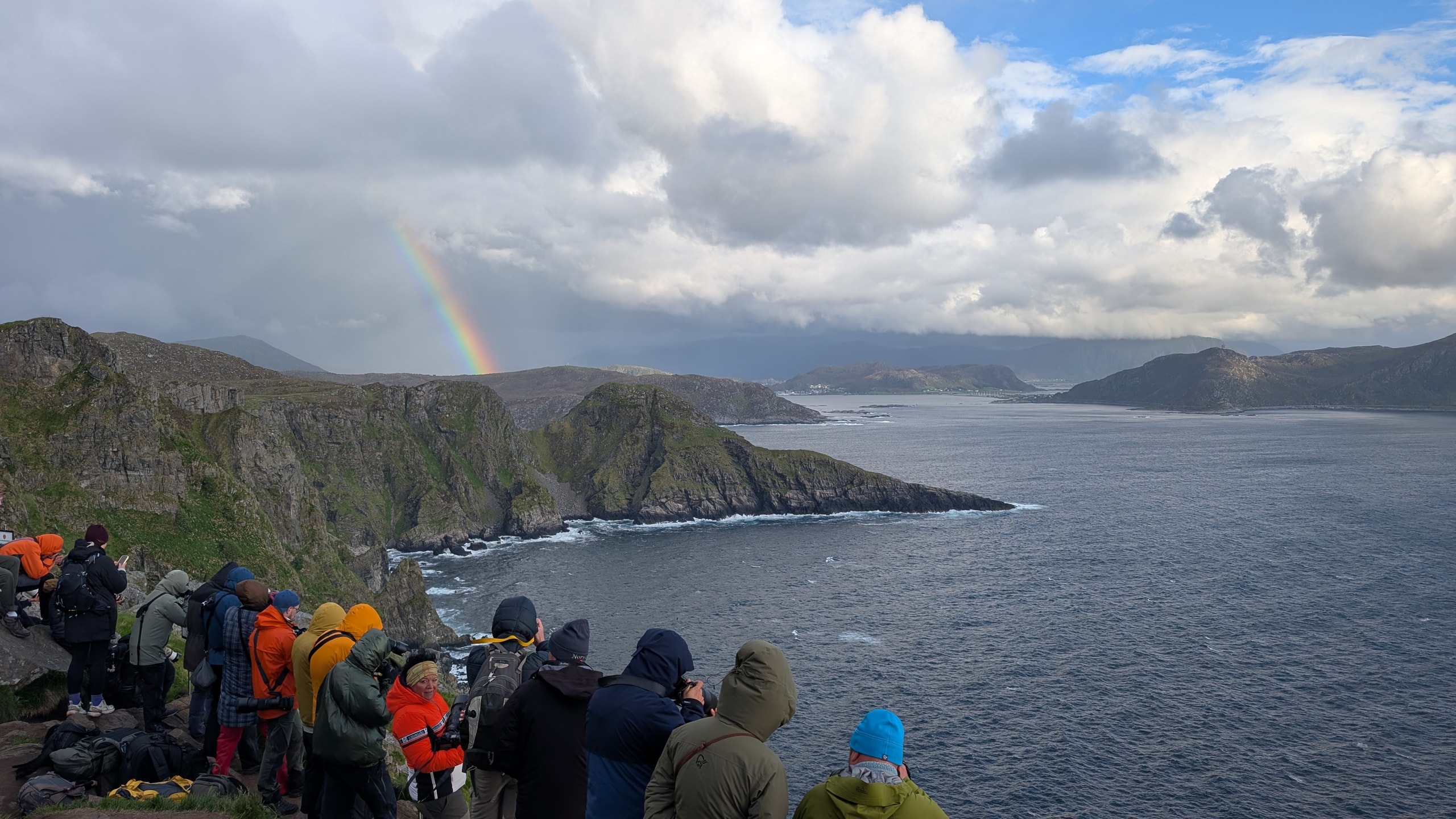
Shoulder months - May-June and September - win for fjords and Lofoten. You trade a little weather risk for fewer coaches. Early June can still leave snow on the plateaus and ice at the edges of mountain lakes; that is not a failed summer, that is Norway at altitude. Winter is a different trip: dark, beautiful, and not for people who need twelve hours of hiking light. Northern lights trips are their own planning problem; do not bolt them onto a summer packing list and hope.
Start famous hikes early. A coastal ridge at 7 a.m. is a different place from the same ridge at 5 p.m. - better light, a thinner crowd, and decent odds of a few quiet minutes before the tour groups show up.
7. Cards work everywhere. Cash is almost a museum piece.
You will rarely need kroner notes. Norway runs on cards and Vipps, and days can pass without touching cash - even small mountain kiosks usually prefer card over foreign currency. Tell your bank you are traveling. Carry a backup card. Do not arrive with a brick of currency you will not spend.
ATMs exist. You will rarely need them. The exception is odd rural corners and the occasional festival stall - still rare compared with most of Europe. Contactless works for coffee, ferries, museum tickets, and the supermarket run before a drive. If a machine asks for a PIN more often than you are used to, that is normal here - have one ready.
8. Right to roam is real - and June still means snow up high
Allemannsretten lets you walk and wild-camp on uncultivated land, with a short list of rules: keep clear of houses, leave no trace, do not trash pastures. That freedom is why mountain huts and simple overnight walks feel so possible here. It is also why popular trailheads look chewed up by July.
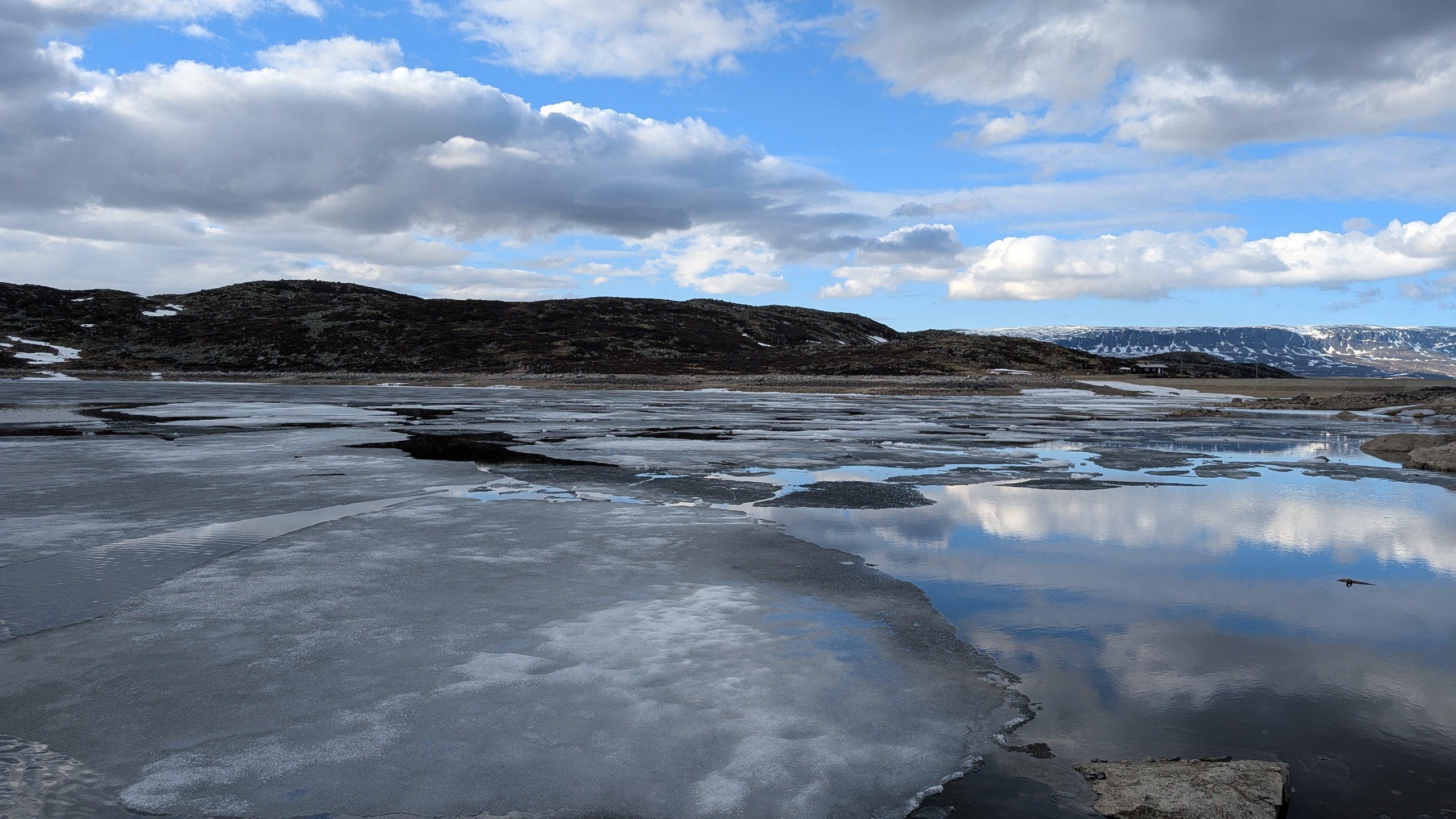
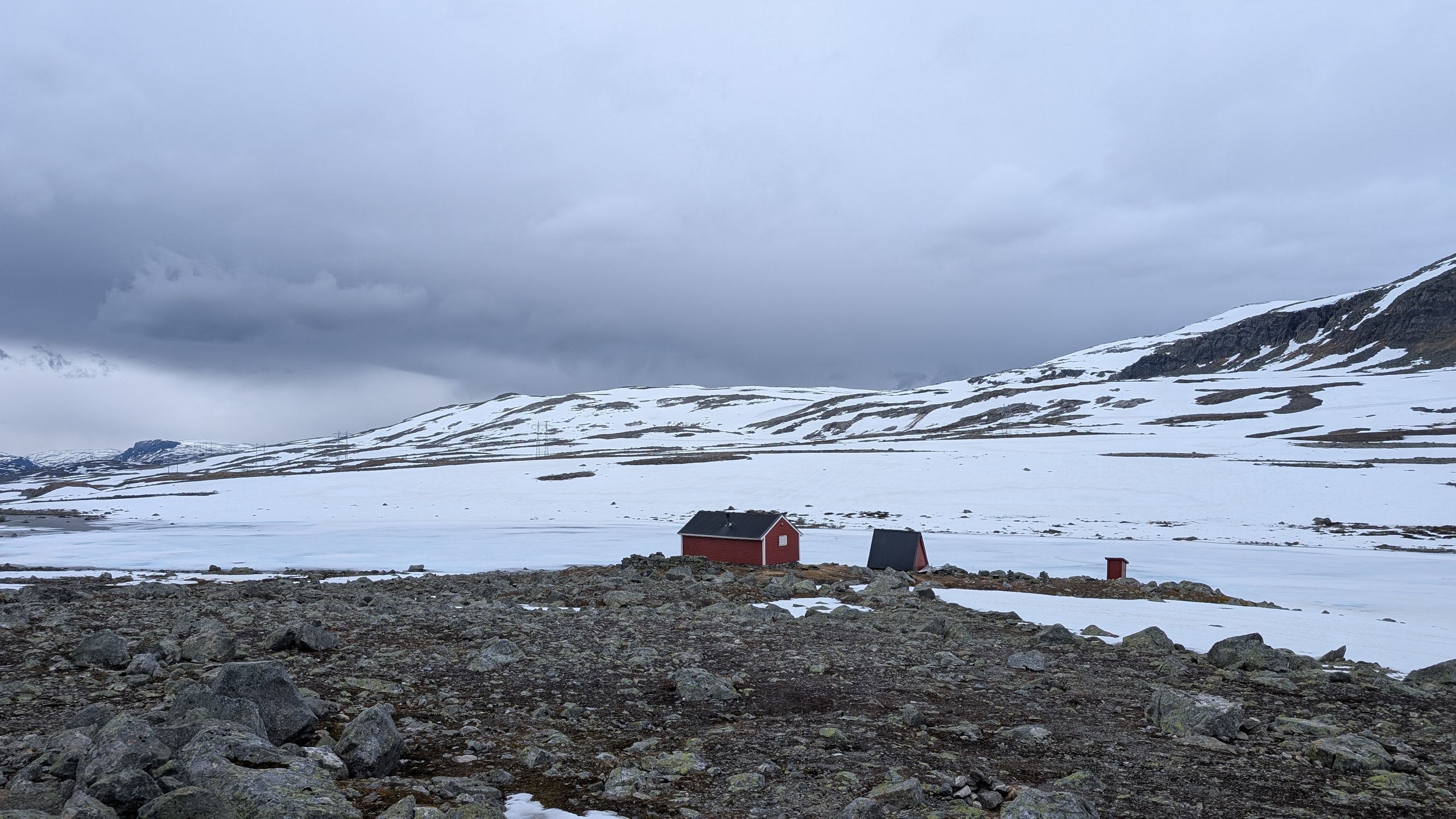
The high country does not care what the calendar says in town. On Hardangervidda and similar plateaus, early summer still looks like late winter at water level: broken ice on dark lakes, snow in the hollows, a single red cabin on a rocky shore under a sky that changes every ten minutes. Pack layers for that even if Bergen was mild the day before.
Bring a packable daypack, layers, and enough food that you are not raiding the last village shop at closing. Book DNT huts in season. A small red hytte on a snowy ridge is the postcard version of Norwegian outdoor culture - and also a reminder that weather can strand you in a place that looks empty on the map. Treat farm gates like they matter, because they do. Norway will let you walk almost anywhere. It will not clean up after you, and the next person will notice if you leave a mess.
9. The valleys in between are half the trip
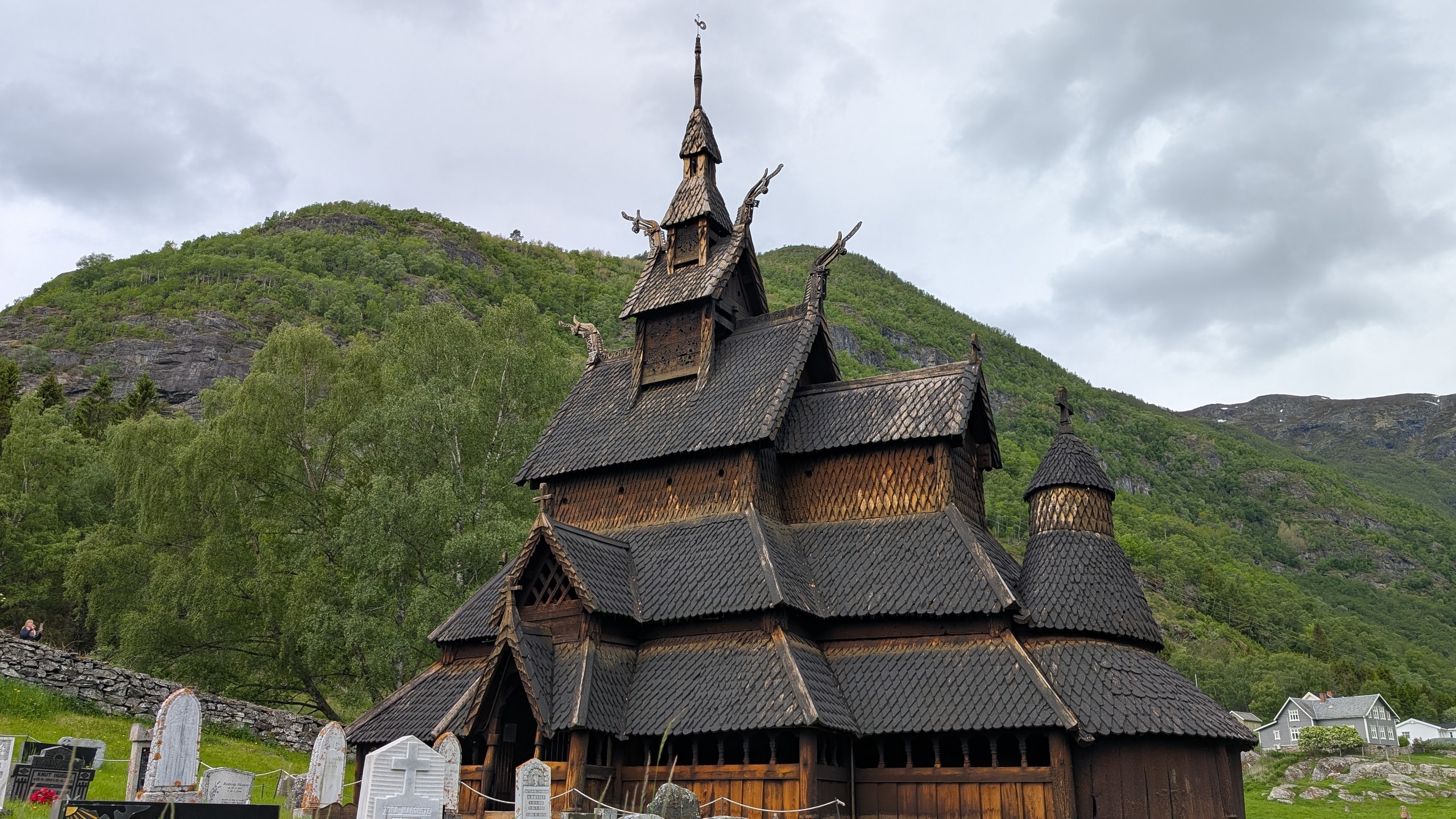
Do not treat the valleys between the famous water views as dead mileage. Glacial rivers run milky from rock flour. Waterfalls drop beside the road with no ticket booth. Stave churches sit in green folds of valley with dragon heads on the roof ridges - Borgund is the clearest surviving example, dark tarred wood against bright hillside trees, a graveyard out front, mountains behind. You can race past all of this on the way to the next ferry. You should not.
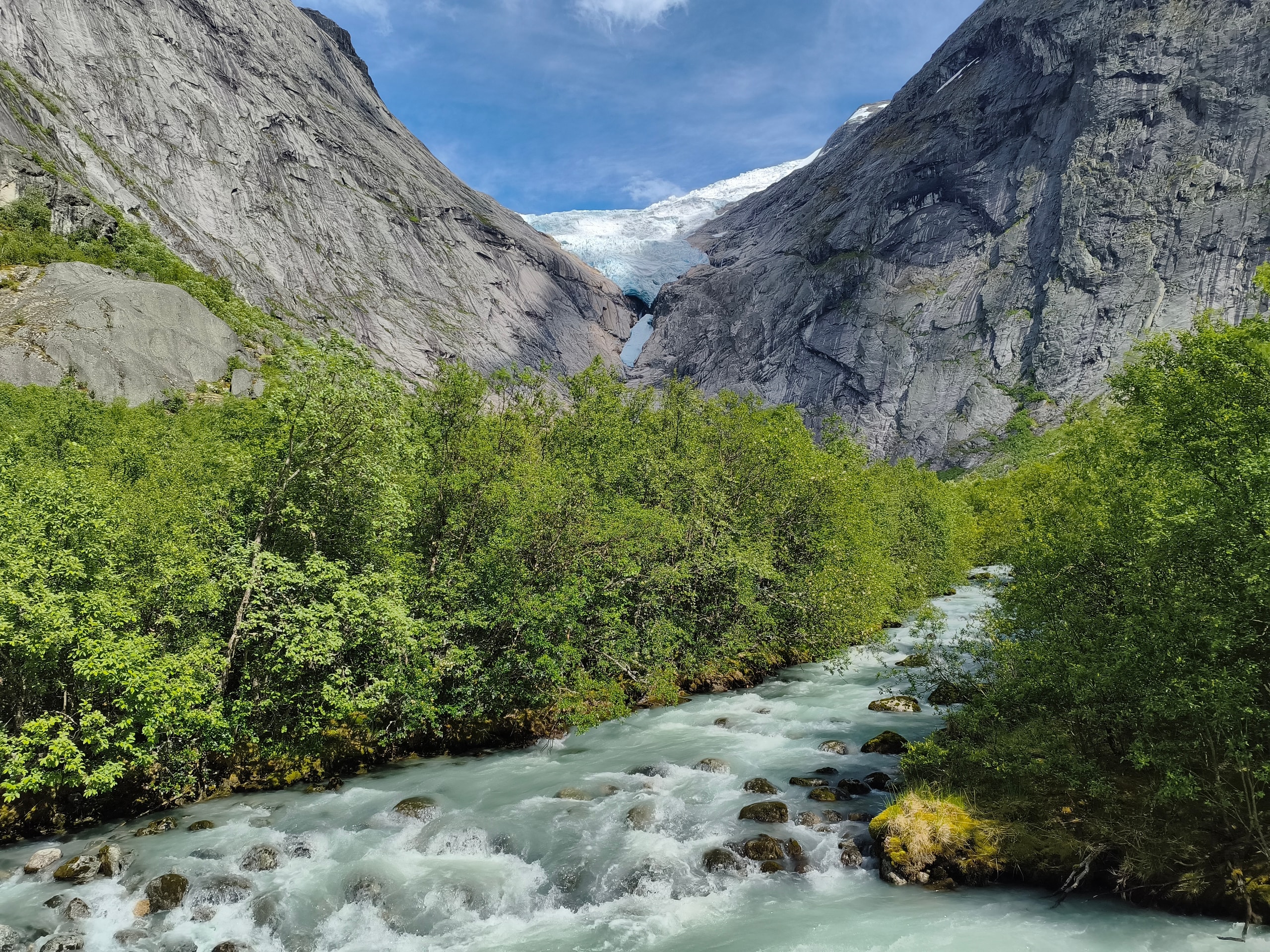
That glacier tongue between two rock walls is where the fjords actually come from - ice carved these valleys, and the melt still feeds the rivers below. An itinerary built only from UNESCO ferry stretches and viewpoint parking lots misses half the country. Give one inland half-day that isn't on any tour operator's list: a stave church, a short walk toward ice, a lunch from the supermarket on a rock with a view of something that does not have a gift shop.
10. The quiet hours are early morning and late evening
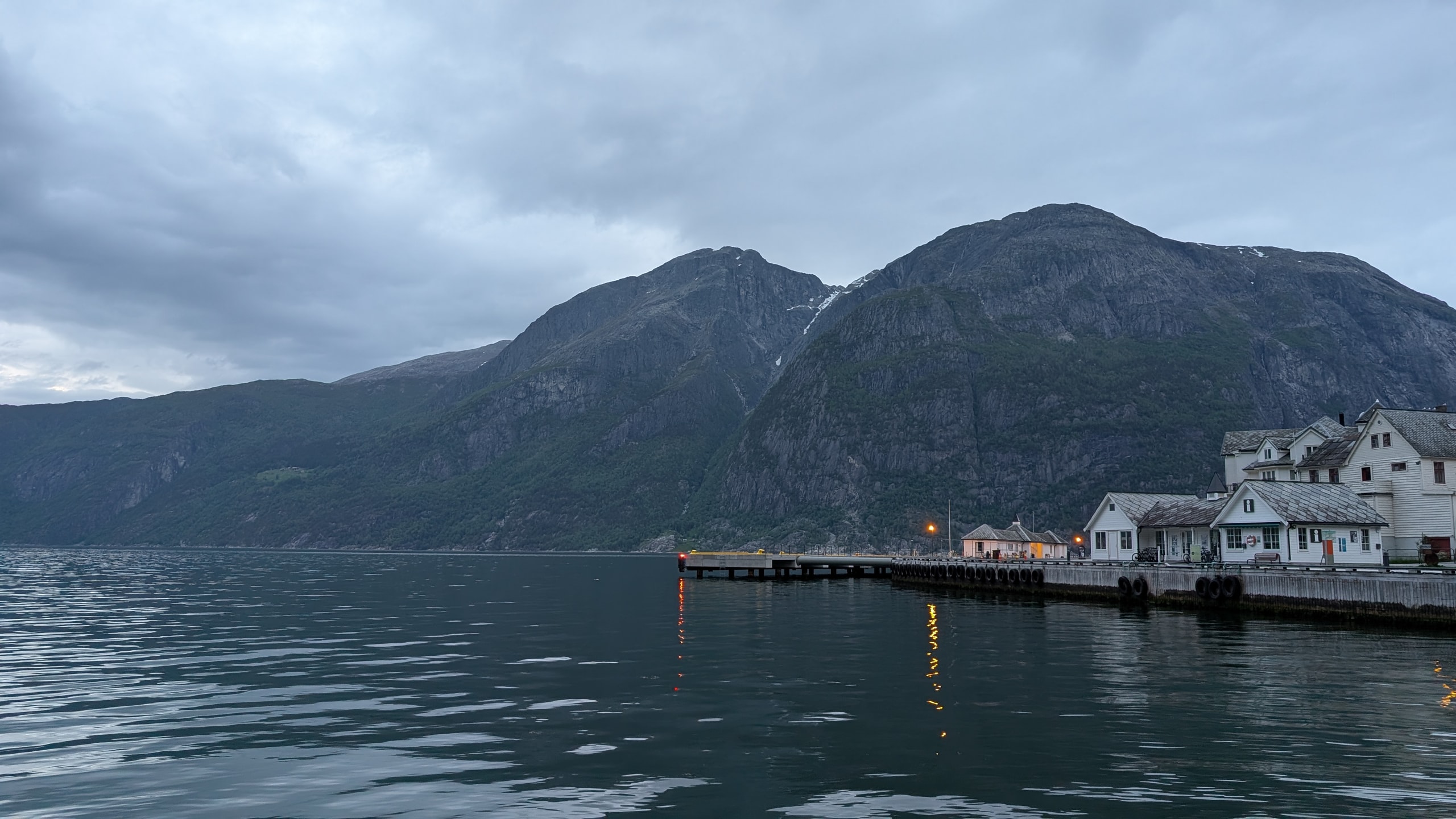
Bryggen before the cruise tenders. Opera roof before the noon crowd. Fløyen when the trail is mostly locals and dogs. A fjord pier when the light is flat, the windows glow orange, and the mountains sit black against the cloud.
You do not need to be a martyr about mornings. You need one or two of them, and a few evenings when the deck is half empty and the only sound is water against the pilings. Norway’s famous places get loud in high season. The quiet is temporary and local, and it is when the country makes the most sense.
Give Oslo a real bed, pack a proper jacket, and leave slack for the ferry. The country gets easier when you stop racing it.
Two weeks that stay in one place long enough
Pick one region and let the country pages on this site fill in the rest.
Fjord-heavy: Oslo two or three nights, train west with a break, Bergen four nights, Ålesund and a Geiranger day, done. North-heavy: fly to Bodø or Evenes, Lofoten for the bulk of the time, skip forcing Oslo. Capital-heavy: Oslo deep, day trips, one fjord overnight if you must see water between cliffs.
Leave these out unless you have a real reason: any tour that promises “Norway in a day,” king-crab photo ops at the fish market, stacking Preikestolen and Trolltunga in the same week, and hotel breakfast buffets that cost as much as a real lunch. Sometimes the buffet is worth it. Often a supermarket yogurt and a bakery roll is smarter.
Buy the rain jacket. Book the long hops early. Give Oslo a real bed. Leave slack for ferries and for the plateau day that still has ice in June. Then get on a boat when the weather is questionable anyway. Some of the best Norwegian views arrive sideways through cloud, and they do not wait for a perfect forecast.
You will be wrong about something: transfer times, whether you needed the big hike, what “light rain” means on the west coast. Adjust, eat something overpriced but good, and keep going. Norway rewards the person who slows down more than the person who collects viewpoints.