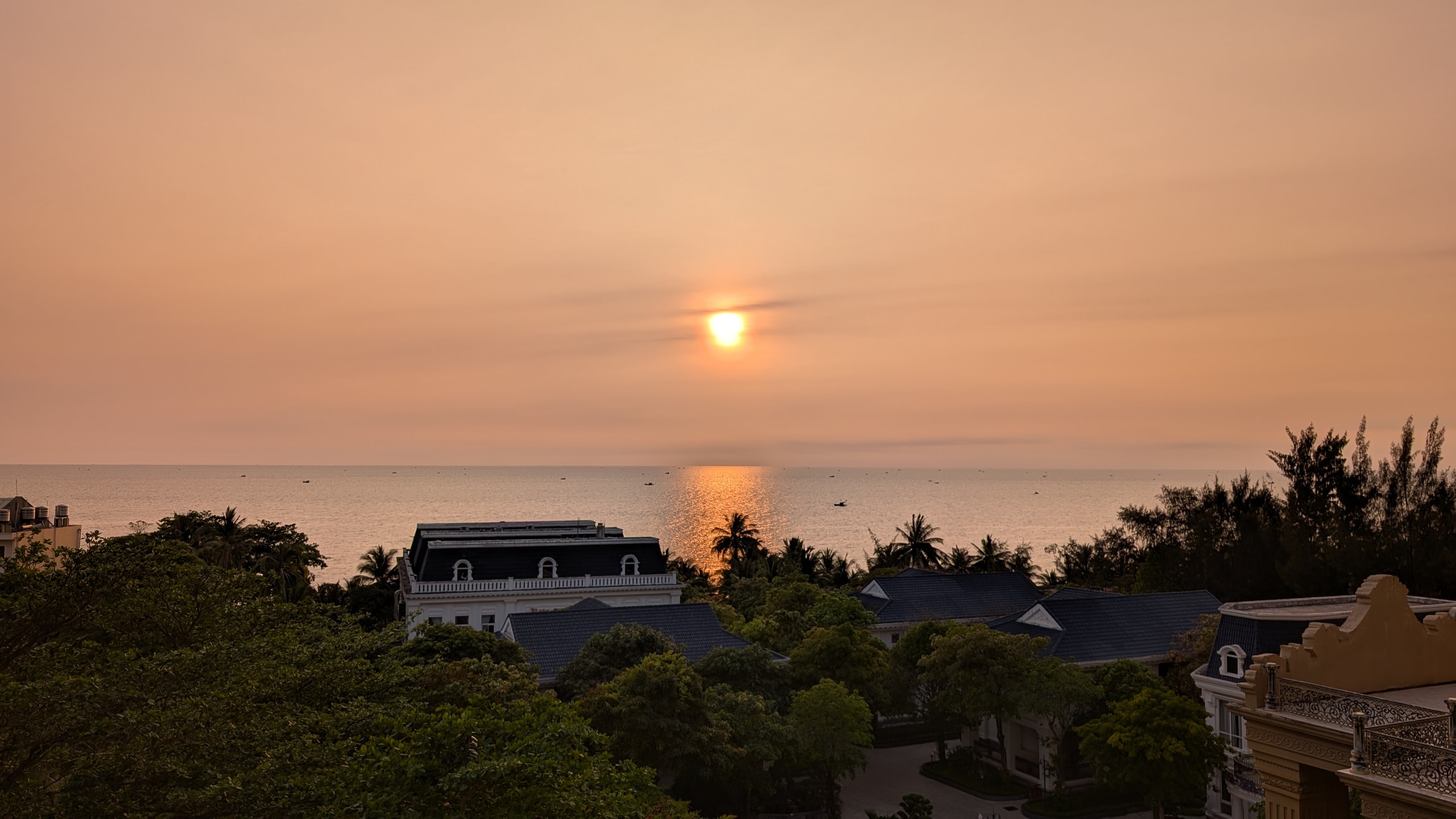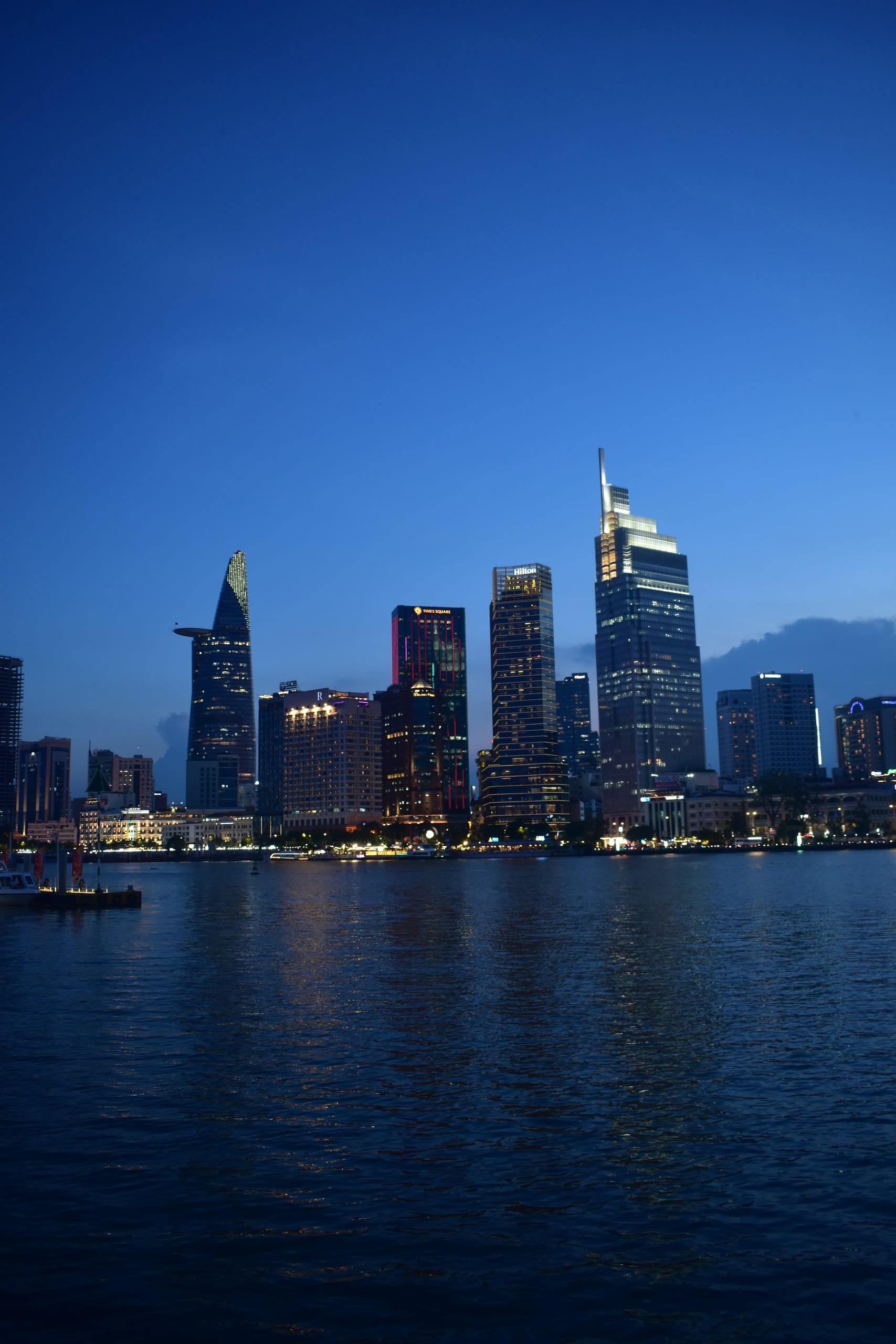
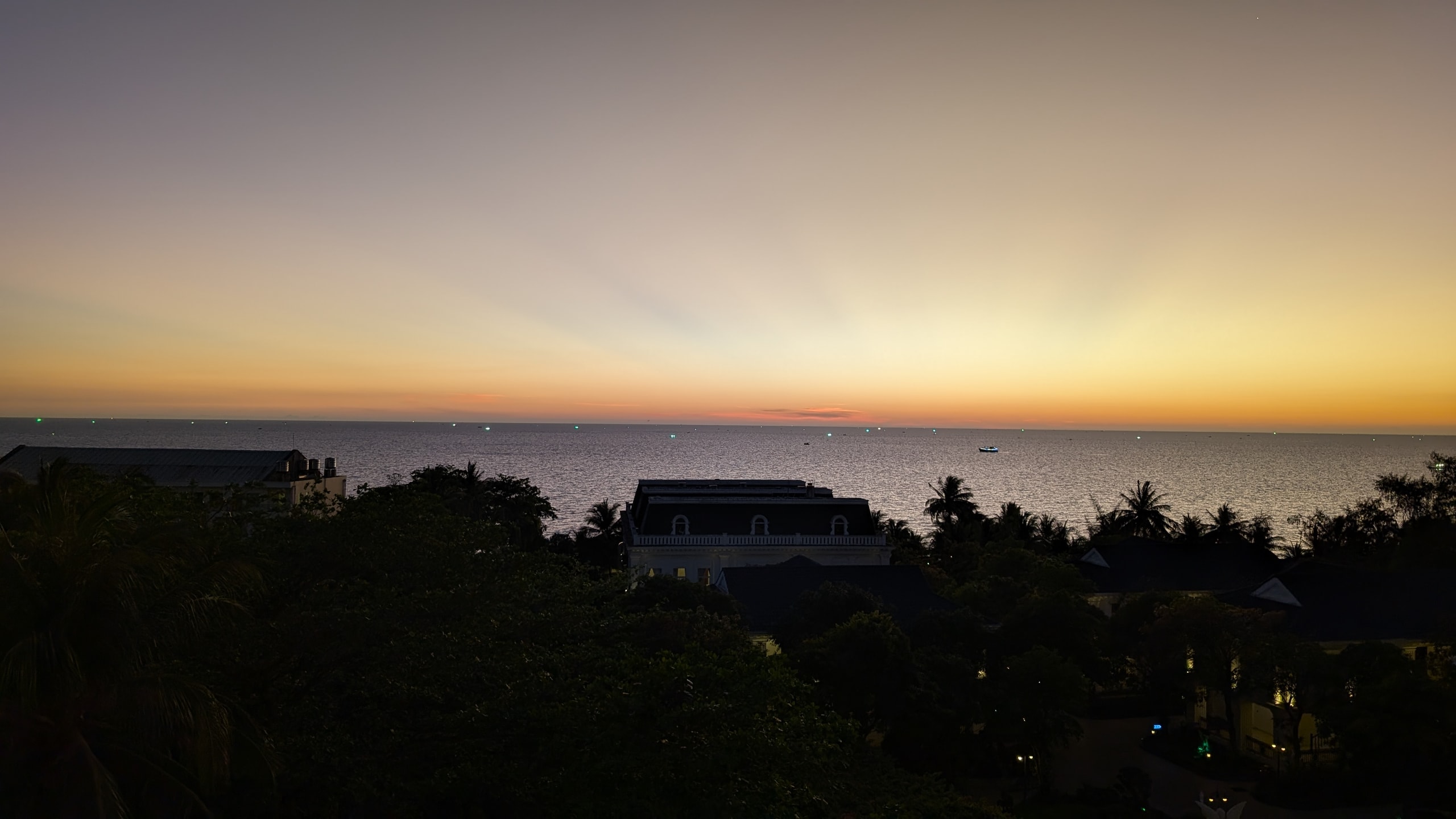
In early March the sun drops into the Gulf of Thailand at about quarter past six, and the entire west coast of Phu Quoc turns to face it. Bars swing their chairs around. Staff carry trays down onto the sand. Twenty minutes later the sky has gone from orange to purple, the sea is flat as a table, and small green lights start appearing along the horizon.
Phu Quoc is Vietnam's largest island: roughly 574 square kilometres of red dirt, pepper vines and forest, sitting closer to the coast of Cambodia than to mainland Vietnam. Since July 2025 it has been a "special zone" under An Giang province, so older guidebooks that say Kien Giang are out of date. From the northern tip down to the port at An Thoi is about 50 km, and that distance matters more than it sounds, because the north and the south now feel like two different holidays.
The south and centre are still a working island: fishing harbours, fish sauce warehouses, pepper farms, a grim prison museum, and a cable car strung out over the water. The north was cleared and rebuilt by Vingroup into a resort city with canals and gondolas. You should see both, and you should not give them equal time.
Getting there is cheap. Flights from Saigon take about an hour into Phu Quoc International (PQC), 15 km and 25 minutes south of the main town, Duong Dong.
One rule catches people out. Phu Quoc has its own 30-day visa exemption, open to every nationality, but only if you fly in directly from abroad and the island is your only stop in Vietnam. Land in Saigon or Hanoi first and it does not apply, so you need the normal e-visa. Check the current Vietnamese visa rules before you book. Most people do come after a few nights in Saigon, which is the right order for the trip and does mean sorting a visa.
The west coast is the whole point
Everything good about Phu Quoc happens on the western shore between about 5:45 and 6:45 in the evening. The island's long side faces due west into open water, with no headland or ridge to block the light. Bai Truong, usually called Long Beach, runs about 20 km south from Duong Dong and takes most of the resorts. Ong Lang, a few kilometres north of town, is rockier, quieter and cheaper.
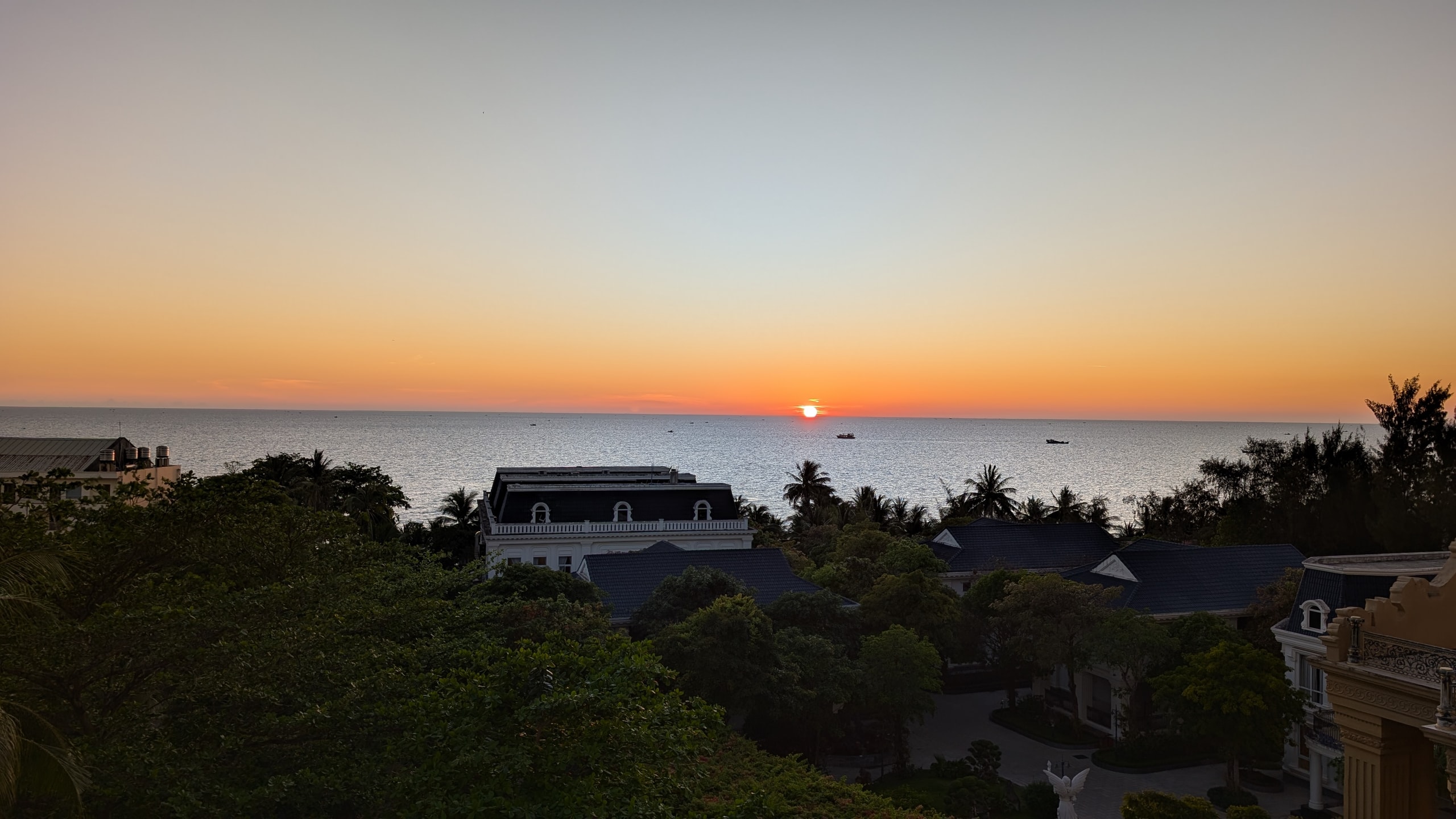
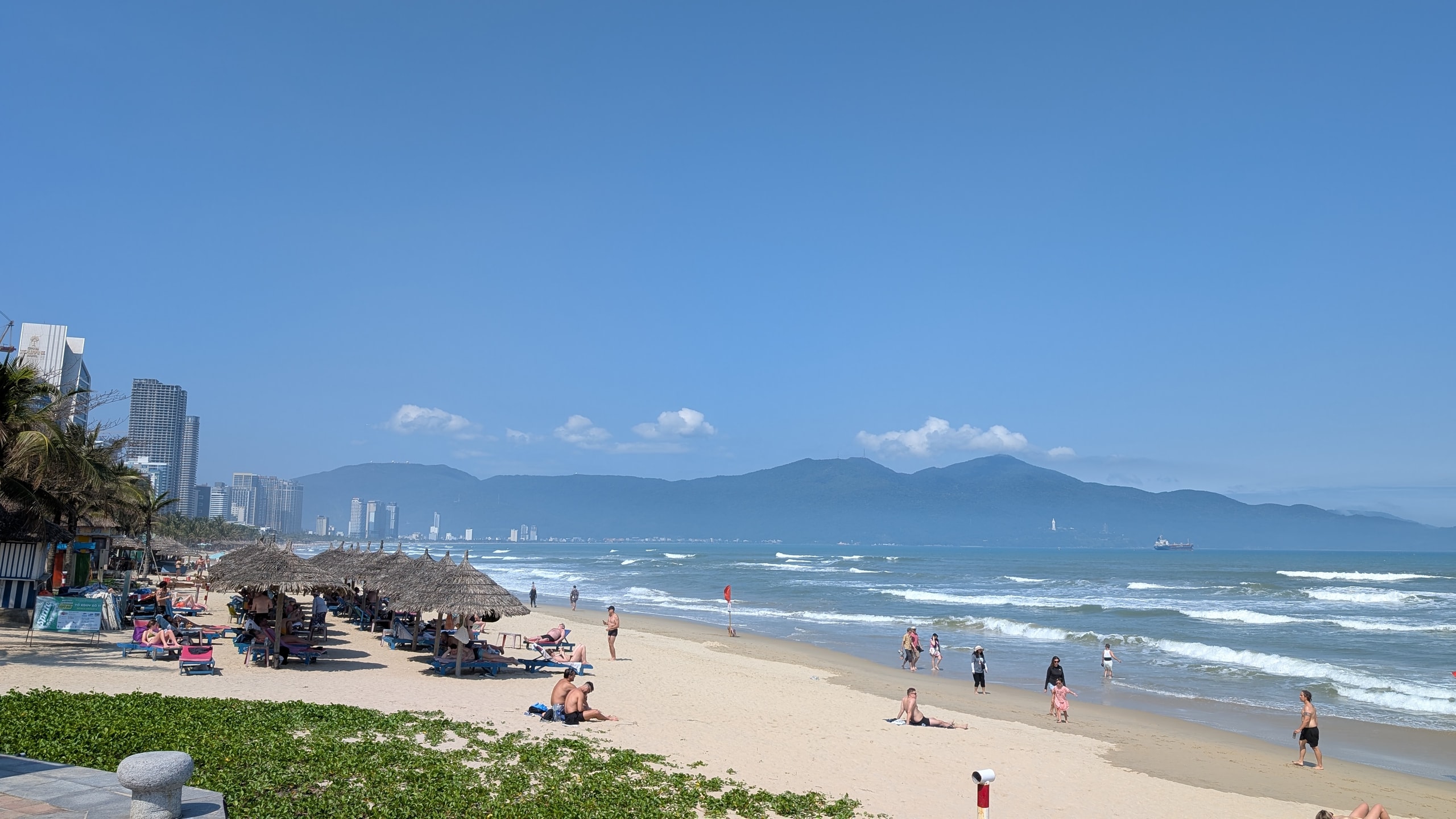
Be honest about the swimming. In the dry season the water off Long Beach is calm and generally clean, but it is bath-warm and so shallow you can wade a long way out without getting past your waist, and rubbish collects near the river mouths and fishing villages. This is a sunset coast, not a snorkelling coast. The clear water is in the south, around the small islands off An Thoi. If you came for turquoise, plan a boat day.
Sunset Sanato is the default spot if you want a lounger and a cocktail, and it charges accordingly. Public sand fifty metres away gives you the same view for free. In Duong Dong, the Dinh Cau shrine sits on a rock outcrop at the mouth of the river and takes about fifteen minutes. The Phu Quoc night market on Bach Dang is a ten-minute walk from there, opens around 6 p.m., and is loud and squarely aimed at tourists. Still worth one dinner of grilled squid and clams.
The sunset is free, it happens every evening, and it beats every ticket on the island.
Those green lights on the horizon are squid boats
Stay on the beach past dusk and the sea fills up with green. Phu Quoc's squid boats run banks of bright lamps to pull squid towards the surface, and on a clear night you can count twenty or thirty of them strung across the dark water. Nobody charges you for it.
If you want to go out with them, boats leave most evenings in the dry season, usually around 5 p.m., and stay out four or five hours with dinner and a hand line included. A place on a group boat starts near 280,000 VND ($11); a smaller boat with a proper meal runs up to about 1,000,000 VND ($40). It is a slow, pleasant, slightly boring evening, and you will probably catch something.
Sao Beach, pepper, fish sauce, and a cable car over the water
Bai Sao on the southeast coast is the beach the postcards use: fine white sand, calm shallow water in the dry season, free to walk onto. A lounger and umbrella runs 100,000-200,000 VND ($4-8) for the day, and some of the swing photo spots are roped off by beach clubs wanting a minimum spend. Go before 10 a.m. and it is genuinely lovely. Go at 1 p.m. and you share it with several tour buses.
The Hon Thom cable car from An Thoi is the one built attraction on the island that earns its ticket. It runs 7.9 km out over the sea to Hon Thom island, holds the Guinness record for the longest three-wire cable car, and takes about fifteen minutes each way, passing low over wooden fishing boats moored between the islets. Sun World bundles it with a water park and pricing shifts with the season, so check current tickets on the Hon Thom Sun World site rather than trusting a blog price. The ride is the point; the park at the other end is optional.
Fish sauce is the island's real export. Distilleries in Duong Dong ferment black anchovies in enormous wooden vats for about a year, and in 2012 Phu Quoc fish sauce became the first Vietnamese product to win a protected designation of origin in the EU, the same status that protects Champagne. Several warehouses let you walk in, smell the vats, and buy a bottle for a few dollars. Half an hour, free or close to it, and more revealing than any resort tour.
Pepper farms around Khu Tuong sell red, black and white peppercorns from the vines out front. Worth twenty minutes, no more. The Coconut Tree Prison in An Thoi is the opposite: a free museum on the site of a wartime prison camp, with barbed wire, reconstructed cages and mannequins showing how prisoners were treated. It shuts for lunch between 11:30 and 1:30. It is bleak, and worth an hour if you want some context for the island beyond beaches.
What to skip: Ham Ninh fishing village on the east coast, now mostly a jetty lined with seafood restaurants and souvenir stalls, and the safari and waterpark options unless you have children who will enjoy them.
Grand World is dead at five and packed at eight
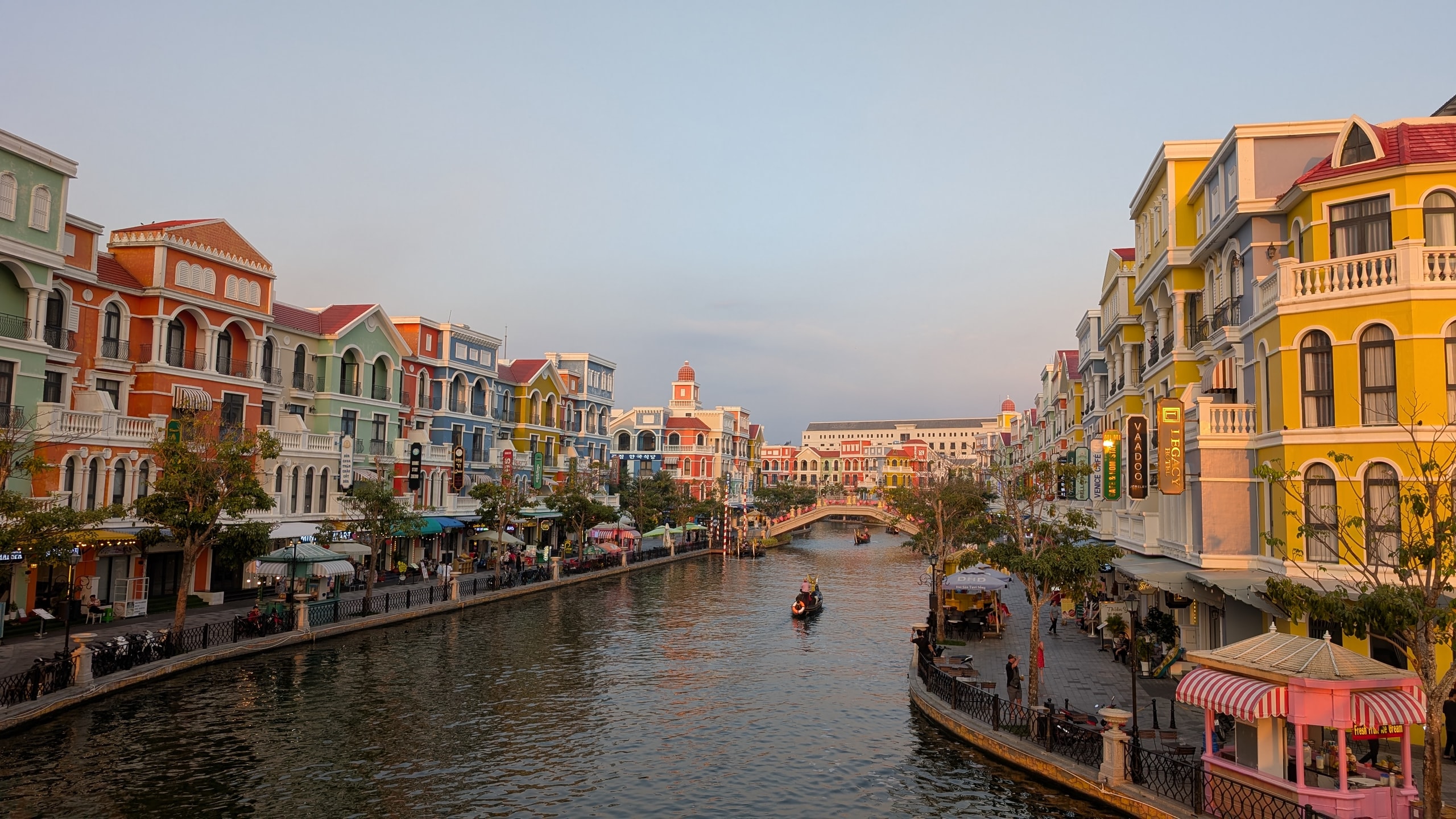
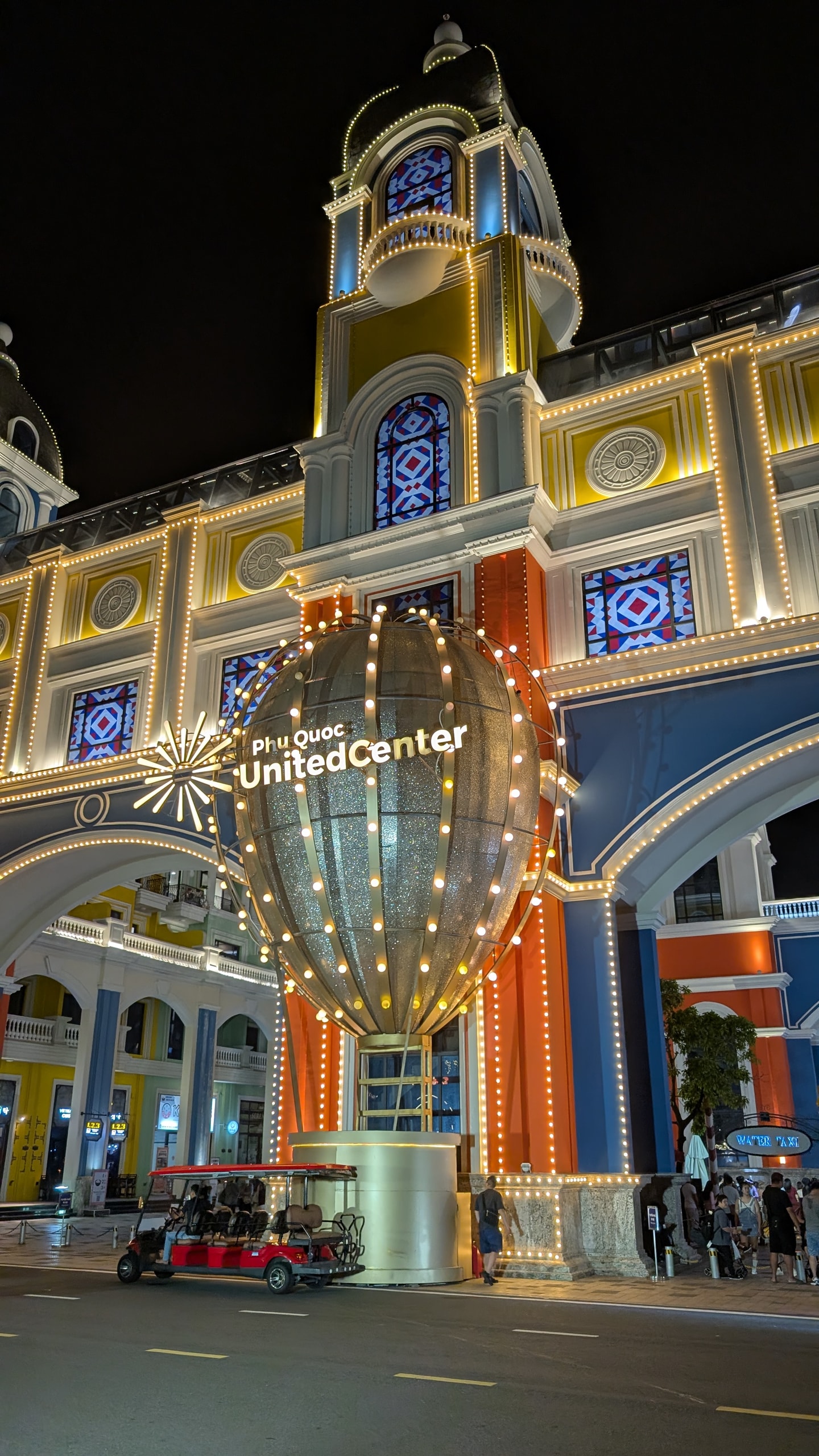
Drive 25 km north of Duong Dong and the island changes character completely. Phu Quoc United Center is Vingroup's resort city: hotels, a casino, a theme park, a safari, and at the centre of it a pedestrian complex called Grand World, opened in 2021 and built as a full-scale copy of a European canal town, with gondolas and painted shopfronts in mint, coral and mustard.
Arrive at half past five and it is a ghost town. The streets behind the canal are swept, lit by low sun, and completely empty. Shutters down. Nobody at the tables. You can walk down the middle of a street built for thousands of people and hear your own footsteps.
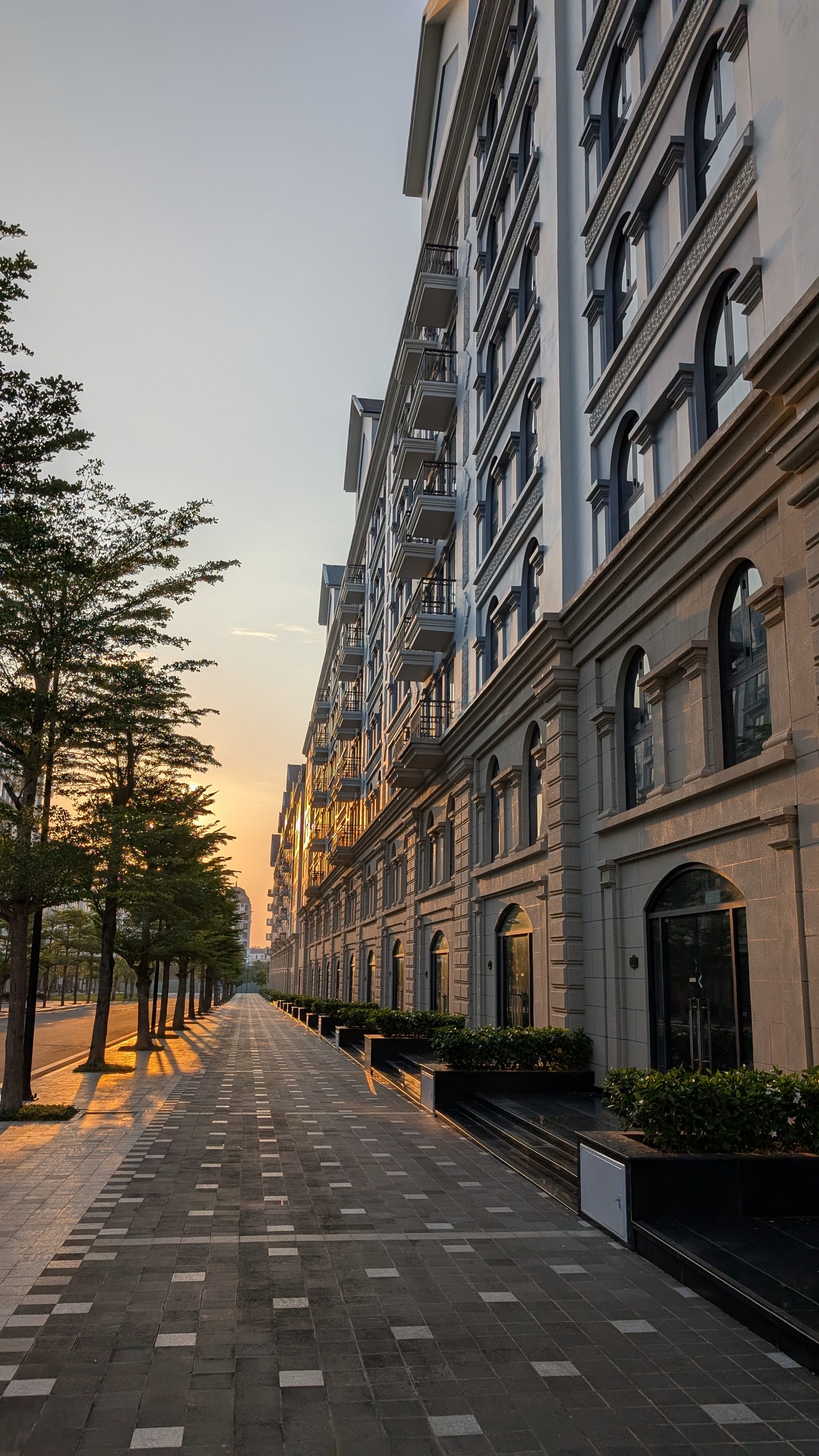
Then, around seven, it fills. Coaches unload, the shops open, the lights come on, and the street you had to yourself is shoulder to shoulder. This is the most useful thing to know about the place: Grand World is an evening venue that happens to be open all day. Turning up at two in the afternoon to look at closed shops is a wasted trip.
None of it is old, and it does not pretend to be. If you came to Vietnam for an old town with people living in it, that is Hoi An, where a family-run guesthouse near the old quarter costs about $50-60 a night. Judge Grand World as a night out and it does the job.
Walking into Grand World is free, and so is most of what is good about it: the canal, the streets, the bridges, the lake, and the Colours of Venice street show that runs along the water from about 8 to 8:45 every night. The tickets are for the gondola rides, the Teddy Bear Museum, and the indoor Quintessence of Vietnam show.
The lake, the gondolas, and what an evening costs
The canal opens into a lake with a clock tower at the far end and fountains in the middle. Around dusk they run to music, and it is better than it has any right to be. Sit on the steps on the east side for the water, the tower, and whatever the sky is doing behind it.
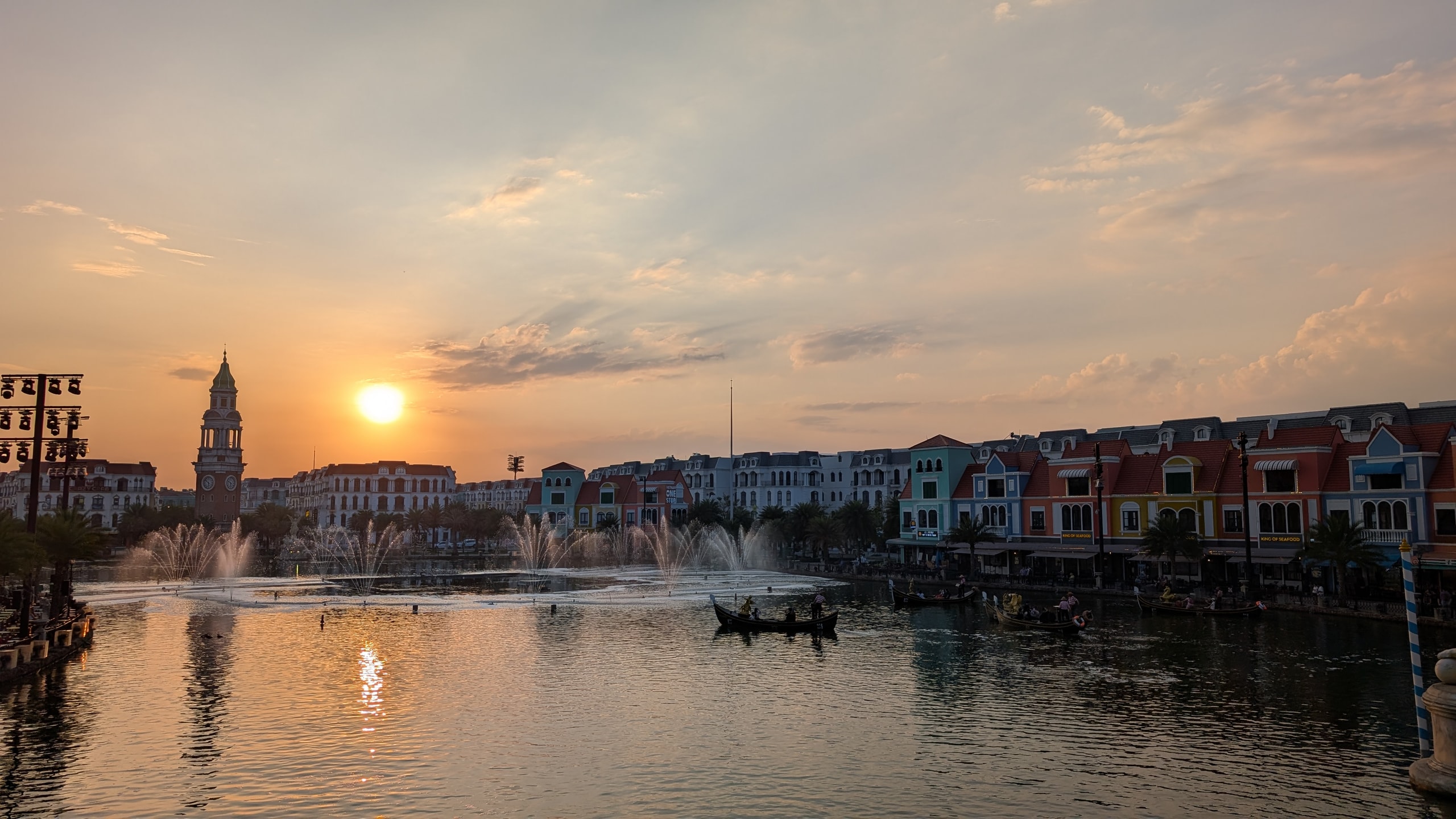
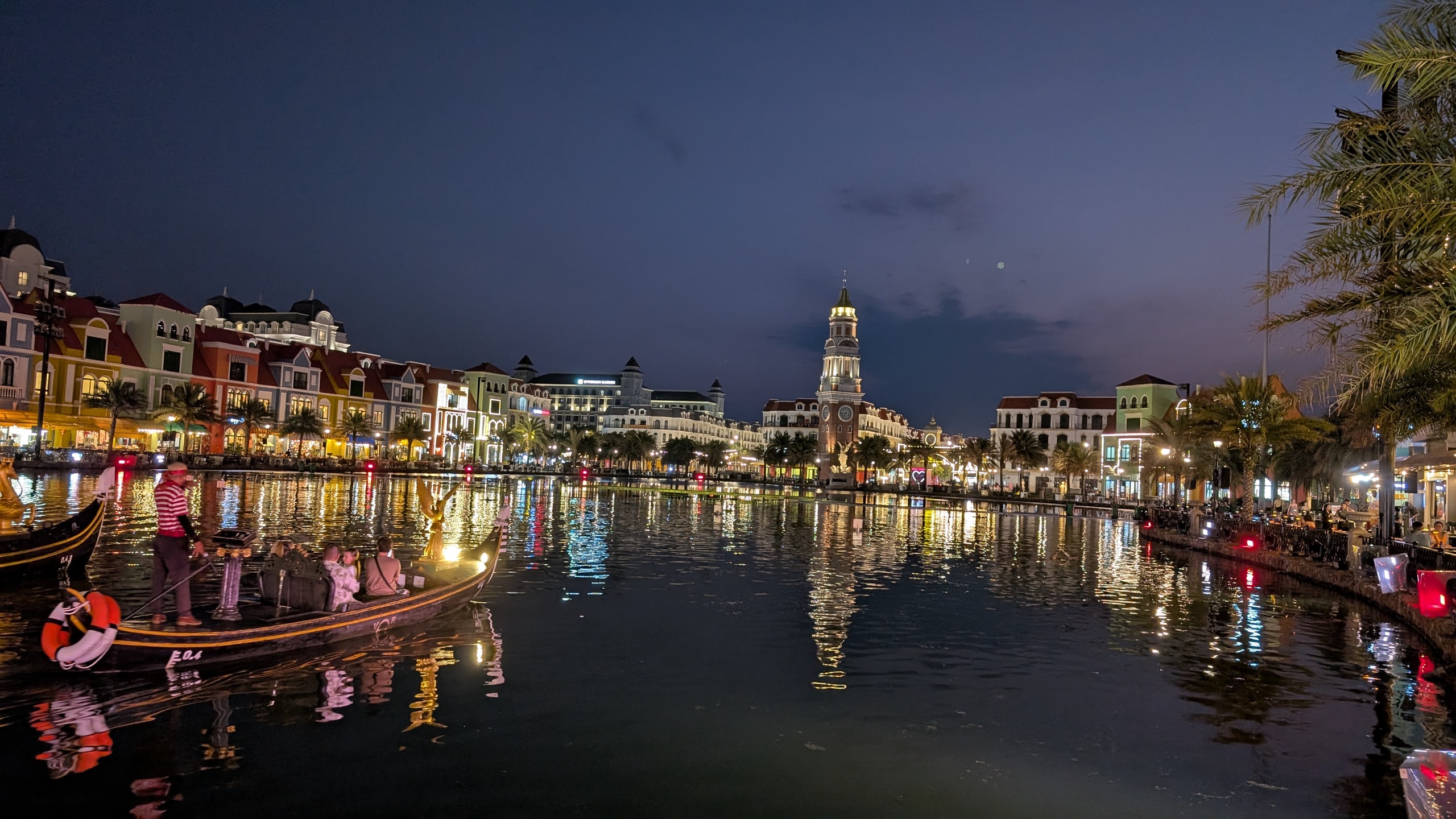
The gondolas are the thing everyone photographs. Real wooden boats, a striped shirt, a straw hat, sometimes a song. A ride costs 200,000 VND (about $8) a head, less for children and over-60s, lasts fifteen to twenty minutes, and draws a queue after 7:30. It is fine. If you only pay for one thing on the island, the cable car in the south is the better buy.
The complex is at its best after dark. The water goes black, the buildings turn into a wall of reflected light, and it stops mattering that none of it is real. Walk the far side of the lake, away from the shops.
The bamboo hall is better than the gondolas
Near the entrance to Grand World stands a huge open hall built almost entirely out of bamboo. Nha Tre Viet, signed in English as the Bamboo Legend, is about 15 metres high and made from roughly 42,000 bamboo poles, tied with bamboo pins and rope instead of metal nails. It is the largest bamboo building in Vietnam, designed by Vo Trong Nghia. You reach it across a low wooden footbridge, and looking at it costs nothing.
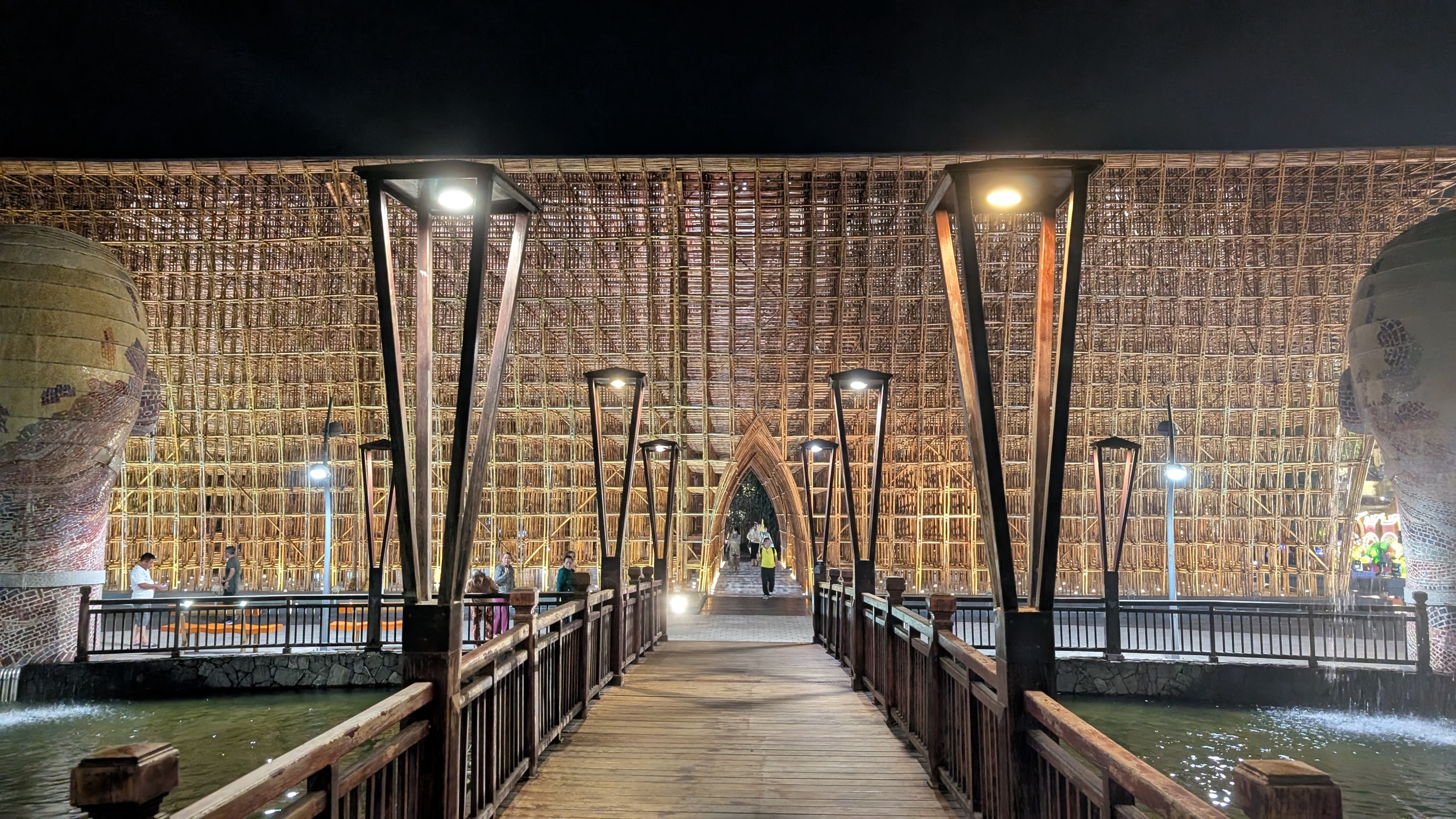
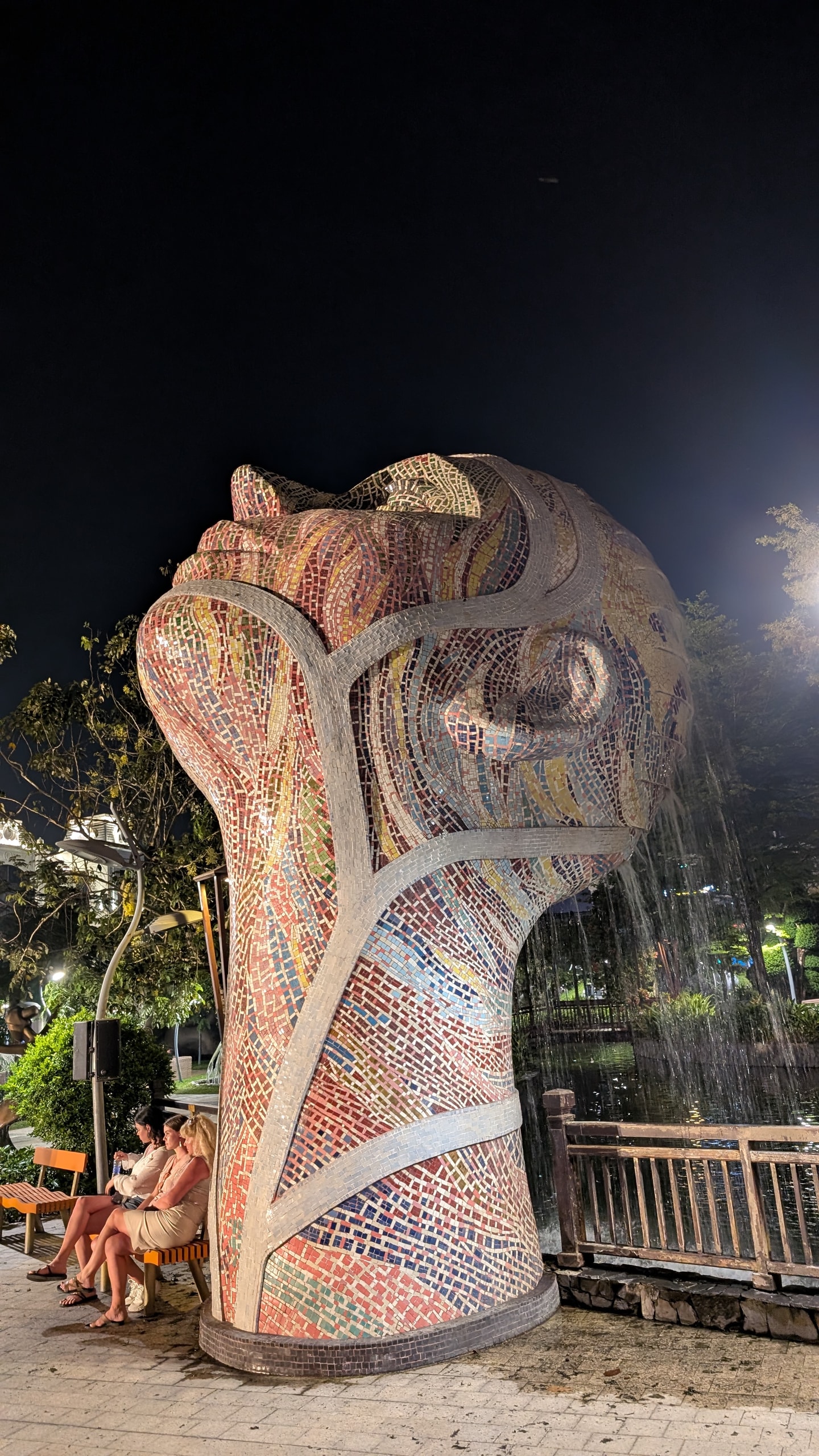
Flanking the bridge are enormous mosaic sculptures, tiled head to foot in ceramic and glass, standing several metres above the water with benches at their base. They belong to an open-air sculpture collection scattered through the complex, and they look far better under floodlight than in daylight.
Where to base yourself
Duong Dong or Ong Lang on the west coast is the right default. You are near the sunsets, real restaurants, the night market and the fish sauce warehouses, and within reach of both ends of the island. Guesthouses run about $20-35 a night; mid-range beachfront resorts sit around $60-120.
The north complex works if you want everything within a golf cart ride and do not mind that "everything" is one company's product. Free electric shuttles link the resorts and Grand World, hotel rates start around $80 and climb steeply, and the food is priced for a captive audience. You will still need a taxi for anything else on the island.
Getting around is the one real friction. Grab and Xanh SM both work here and usually undercut the taxis at the ranks, but cars thin out away from the Duong Dong-airport corridor and fares run higher than in Saigon. Most people rent a scooter instead, about 120,000-200,000 VND ($5-8) a day. Duong Dong to Grand World is roughly 40 minutes each way, and Duong Dong to An Thoi about the same, so a day with both ends of the island in it is mostly a day in a car. Country-wide practicalities like cash and SIM cards are covered in things to know before visiting Vietnam.
When to go, and how long
The dry season runs roughly November to March, and that is when to come. December through February is peak and busiest; April is hot and in between. In March the highs sit around 32°C (90°F) with very little rain, and haze drifting over from crop burning on the mainland takes enough edge off the sun to look straight at it. May to October brings the southwest monsoon: afternoon downpours, choppy water on the west coast, boat trips cancelled at short notice. Prices drop a lot, and so does the reason to be here.
A workable daily budget outside the big resorts is $50-80 for two people: a decent room, a scooter, seafood dinners, one ticketed thing. The island is pricier than the mainland, especially for food and drinks inside the resort zones.
Four nights is the sweet spot: one evening for the west coast sunset and the night market, one full day for the south (cable car, Bai Sao, the prison museum), one evening for Grand World arriving no earlier than six, and one day with nothing planned. Three nights works if you skip the north entirely, and that is a defensible choice. Other islands, cities and regions are on the destinations page.
The thing you will actually remember is not the canal. It is standing on warm sand at quarter past six with a cheap beer, watching a flat orange sea, waiting for the green lights to come on.