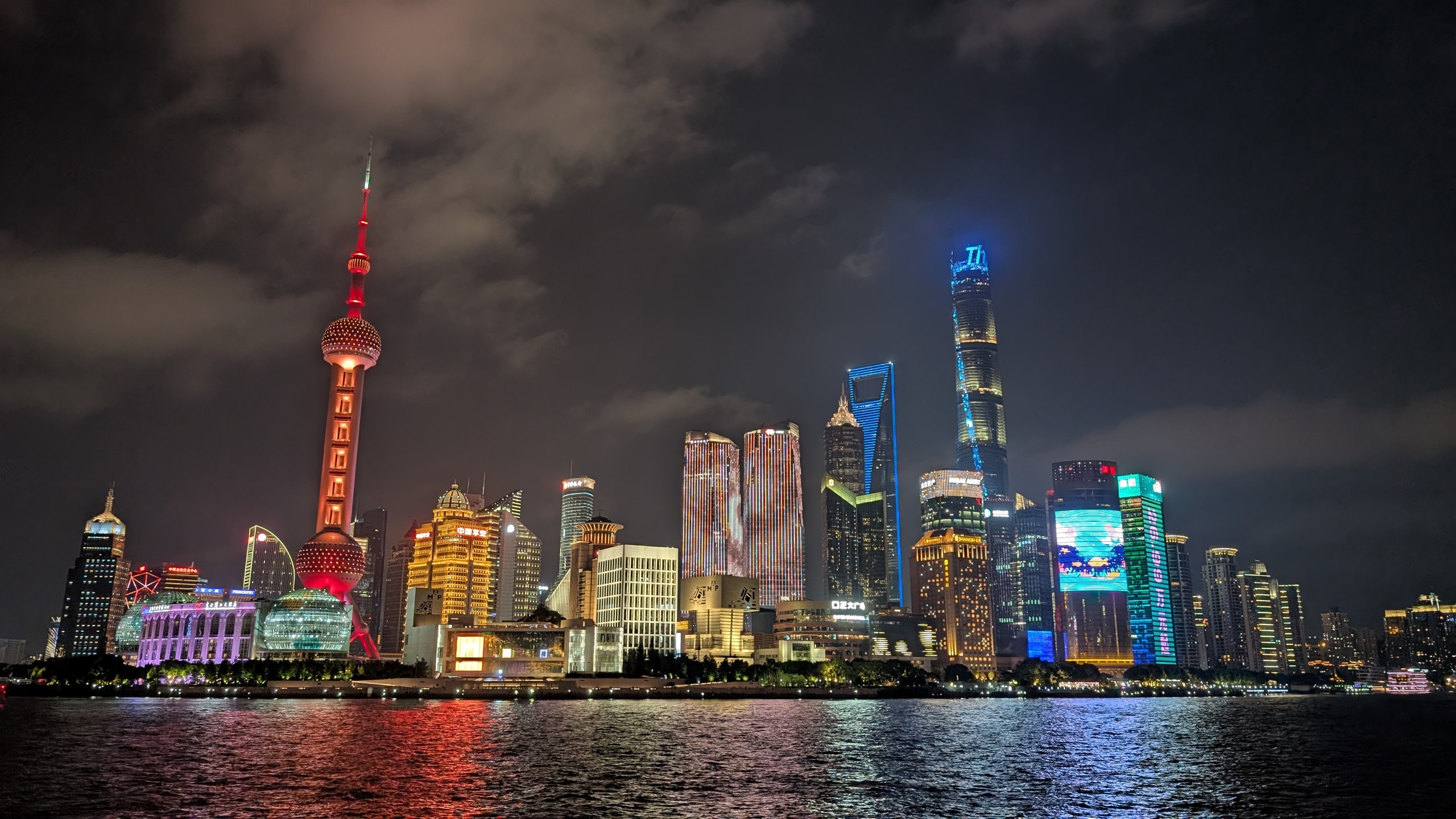
The famous photograph takes about four minutes. You climb onto the raised walkway on the west bank of the Huangpu, wait for a gap between shoulders, and there it is: the Oriental Pearl standing on its concrete legs, the Shanghai Tower twisting up behind it with a blue stripe running its whole height, a container barge sliding across the bottom of the frame. Then you have it. The people behind you would like their turn.
That view is worth seeing twice, once in daylight and once after dark. It is also about twenty minutes of a four-day trip. Shanghai is a city of roughly 25 million at the mouth of the Yangtze, and almost none of it looks like the postcard. Step two streets back from either bank and it goes flat and low, full of plane trees, laundry poles, and small shops. There are canals an hour west by metro, temples wedged between apartment towers, and parks where people turn up at seven in the morning to dance.
How many days Shanghai needs, and how to split them
Four full days. Three works if you cut the water town, and two is enough only if you have been before and know what you want. Anything past five and you should be putting the extra nights on a train to somewhere else.
A split that works:
- The Bund, Nanjing Road, People's Park. Museum in the afternoon if the weather turns.
- Yu Garden early, the old town after, Pudong after dark.
- Suzhou Creek: 1000 Trees, the M50 galleries, then the Jade Buddha Temple.
- Zhujiajiao by metro, back in the city for a long dinner in the old French Concession.
Set up Alipay or WeChat Pay before you land, because a lot of Shanghai will not take a foreign card, and download a map that works without a VPN. Those country-level headaches are covered in things to know before visiting China; this piece assumes you have already sorted them out.
The Bund: go twice, and give it twenty minutes each time
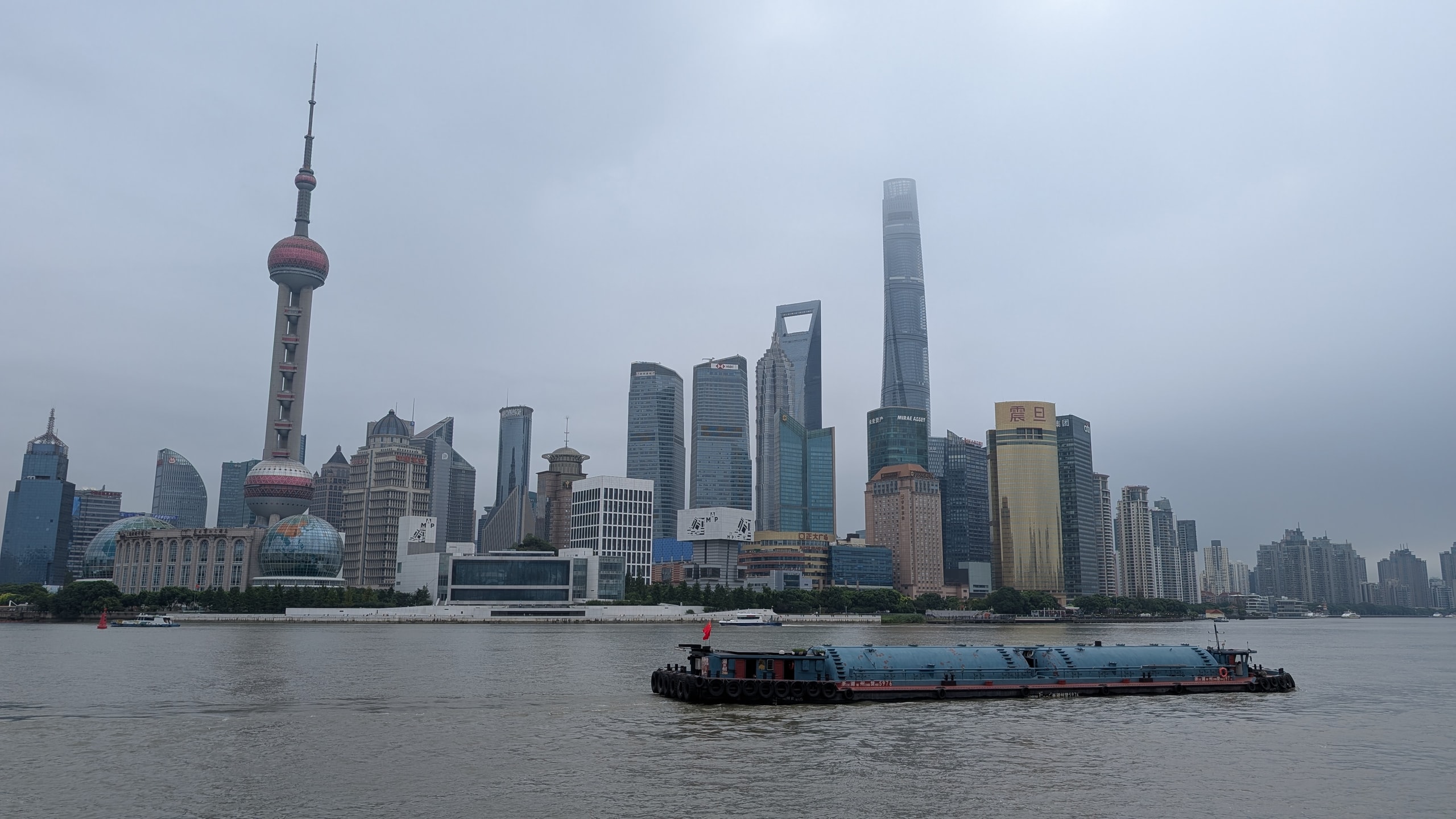
The Bund is the 1.5 km curve of banking houses on the west bank, built mostly in the 1920s and 1930s when this was the money end of the city. Across the water, Pudong was warehouses and vegetable plots until the early 1990s. That is the whole appeal in one frame: granite, columns and clock towers on one side, four decades of skyscrapers on the other.
The promenade is free and never closes. Daylight is the honest version, with the river doing the work: container barges, coal boats, ferries every few minutes. Come back after nine when the towers are lit and the crowd triples. There is nothing to do on the Bund except look, and once you have looked you are done.
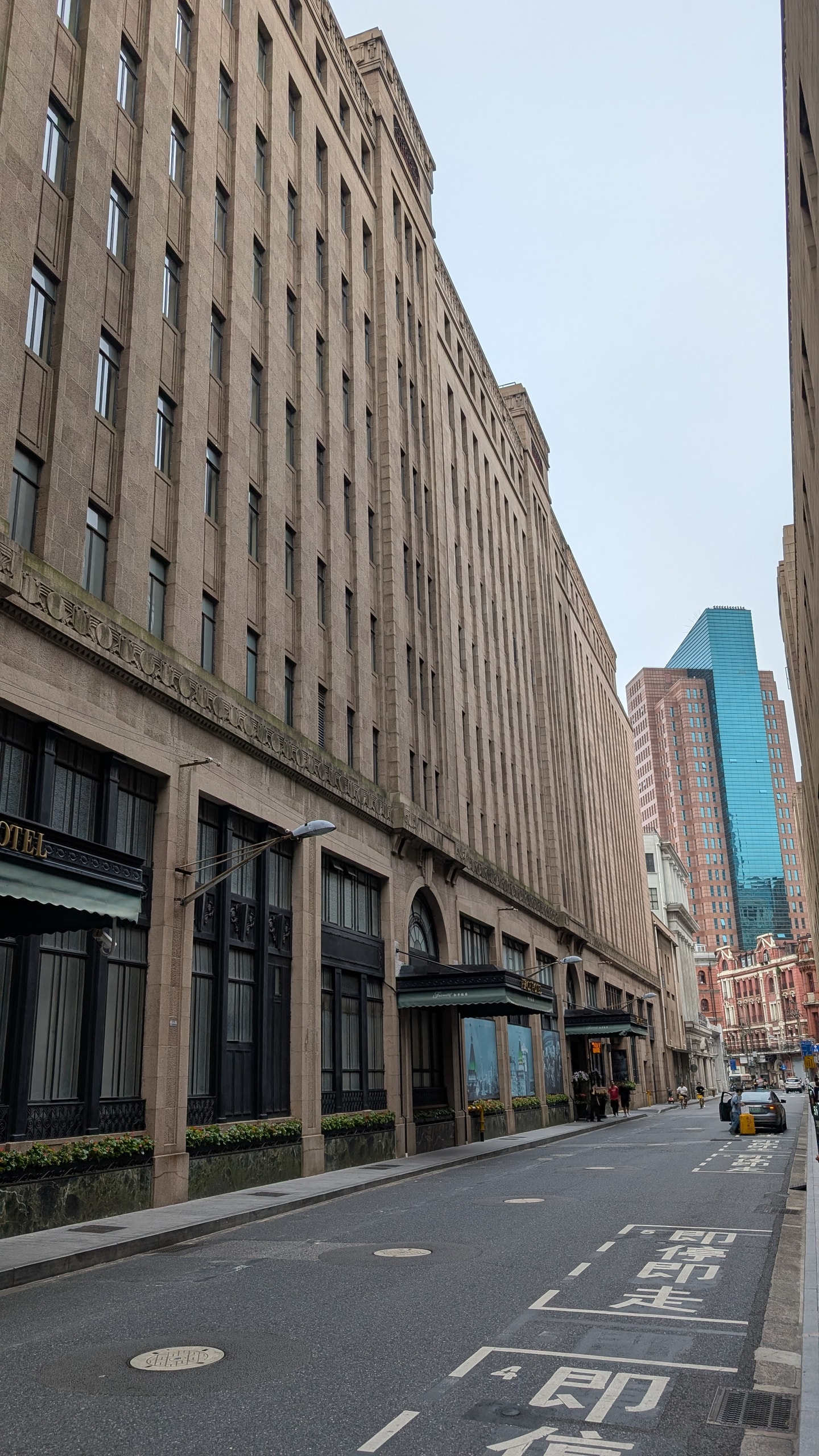
What almost nobody does is turn around and walk inland. The streets directly behind the Bund are near empty on a weekday morning, with the same period architecture and not a tripod in sight.
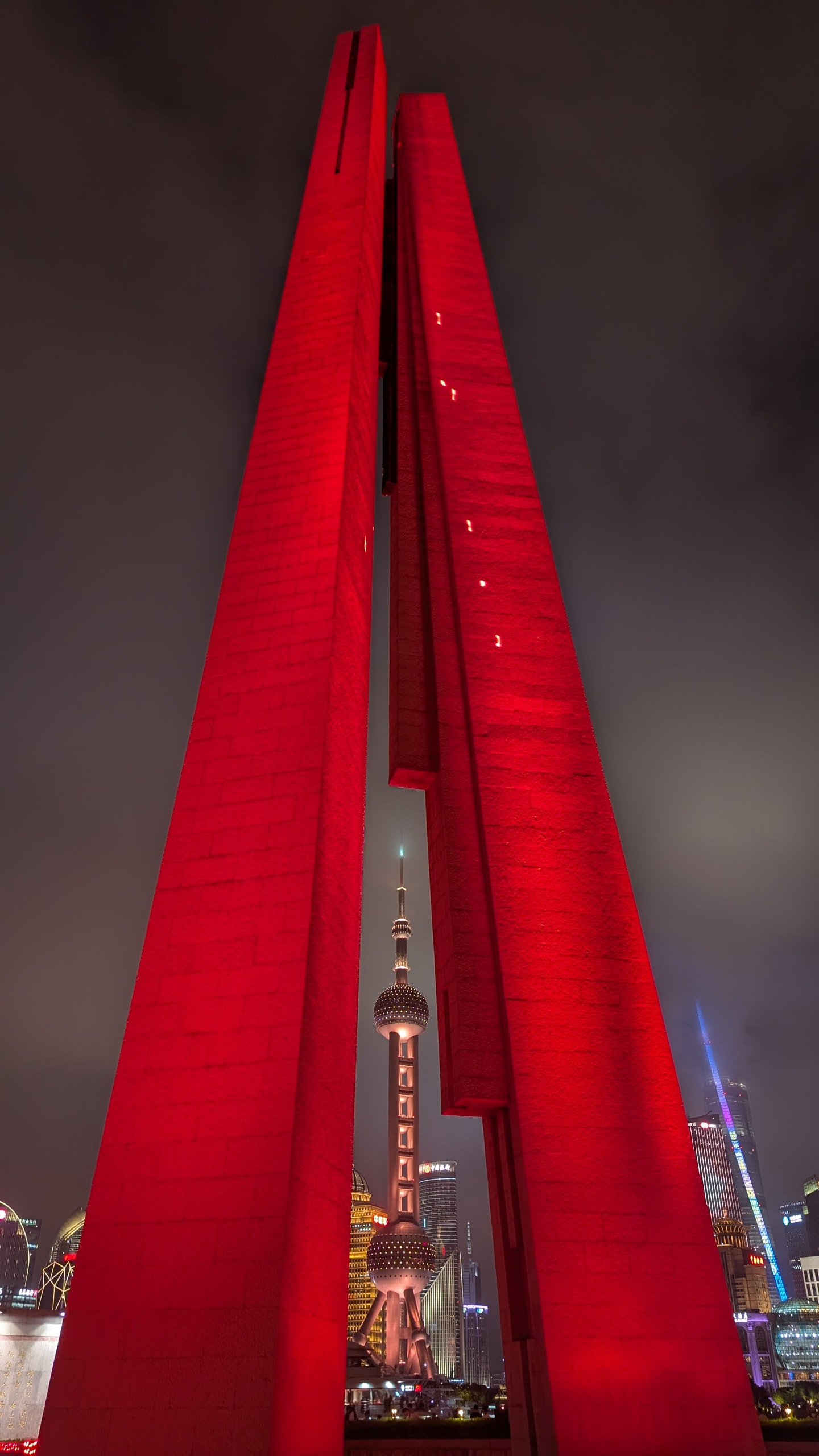
At the north end of the promenade, where Suzhou Creek meets the Huangpu, the Monument to the People's Heroes is three tapered concrete columns, 24 m high and meant to read as three rifles stacked together, lit hard red at night. Stand underneath and the gap between them frames the Oriental Pearl. It costs nothing, it is fifty metres from the crowd taking the standard photograph, and hardly anybody bothers.
People's Park, and the parents with the handwritten ads
Walk twenty minutes inland from the Bund and you reach People's Square: three metro lines, the Shanghai Museum, and a park that used to be a racecourse.
On Saturday and Sunday afternoons, roughly noon until five, one corner of People's Park fills with several hundred parents advertising their adult children for marriage. The listings are handwritten or printed on sheets of cardboard, propped in a long row along the path and taped to open umbrellas. A typical one: born 1993, 164 cm, a doctorate, a job at one of Shanghai's top universities, an apartment inside the Inner Ring, father still working, mother retired. The phone number at the bottom is the mother's. Parents stand behind the boards and negotiate with each other, and most of the children have no idea they are there.
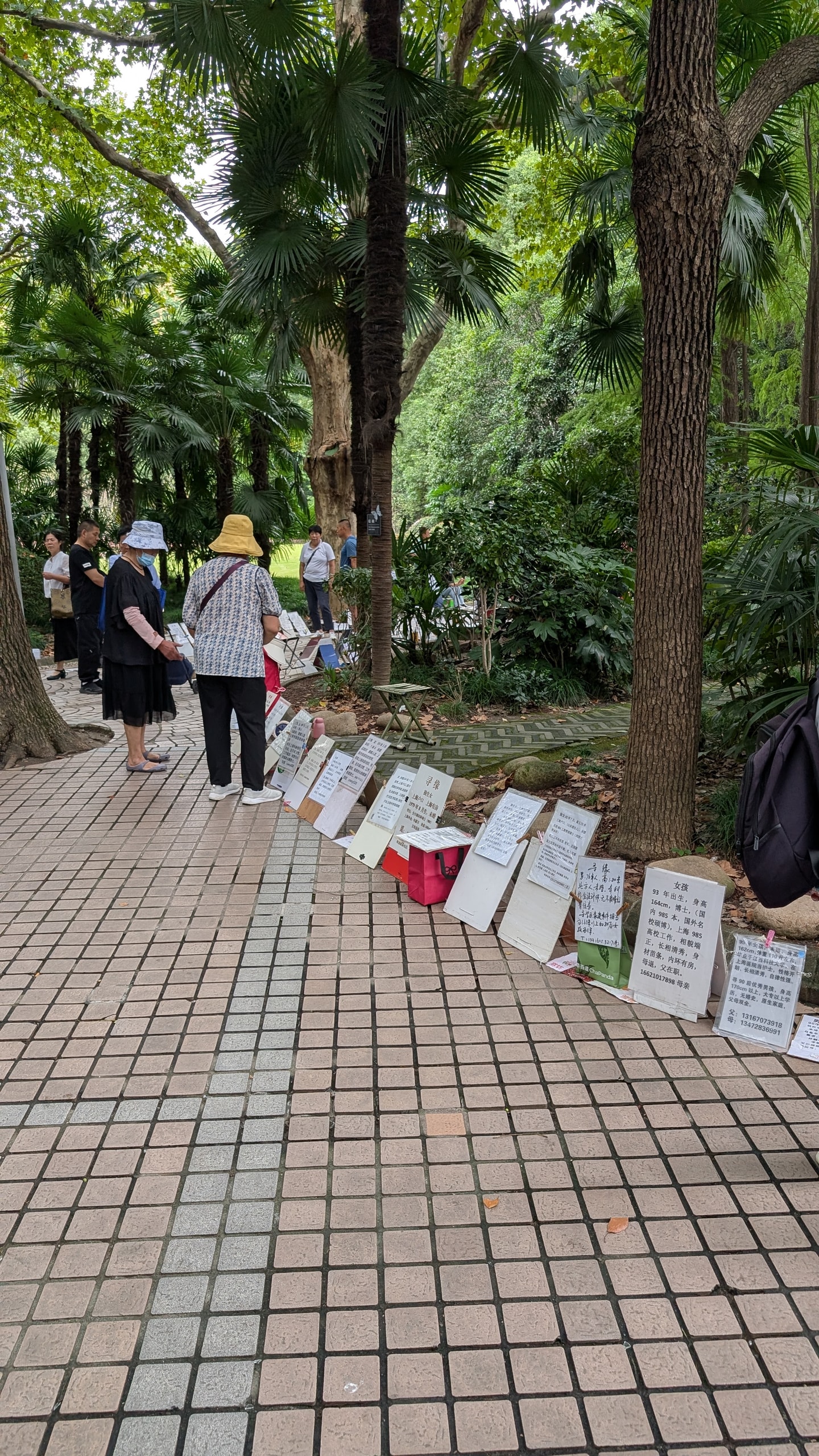
Nobody is putting this on for visitors, which is why it is the most interesting free hour in central Shanghai. Watch from the path, do not photograph faces up close, and twenty minutes is plenty.
The Shanghai Museum is on the same square and free, and since September 2025 you can walk in with your passport instead of booking a slot, though reservations come back during holidays and school breaks. The bronzes and the ceramics are the reason to go. It closes on Mondays.
Nanjing Road East, the pedestrian stretch between the square and the river, is department stores, a tourist train, LED screens, and around the October holiday a red flag on every lamp post. Walk it once. Do not eat there.
Yu Garden: the garden is fine, the bazaar is better after dark
Yu Garden is a Ming-dynasty scholar's garden from 1559, about two hectares of rockery, ponds, and dragon-topped walls in the middle of the old town. The ticket is ¥40 ($6) from April to June and September to November, ¥30 ($4) the rest of the year, and it closes on Mondays. It is genuinely good, and also very small and very busy: by eleven in the morning the walkways move at shuffle pace.
The larger thing is the bazaar wrapped around it: a few blocks of shops rebuilt in a heavy, ornate, upturned-eaves style that owes more to 1990s tourism than to the Ming. By day it is a wall of people and souvenir stalls. After dark, lit gold with the crowd thinned out, it is one of the better night walks in the city.
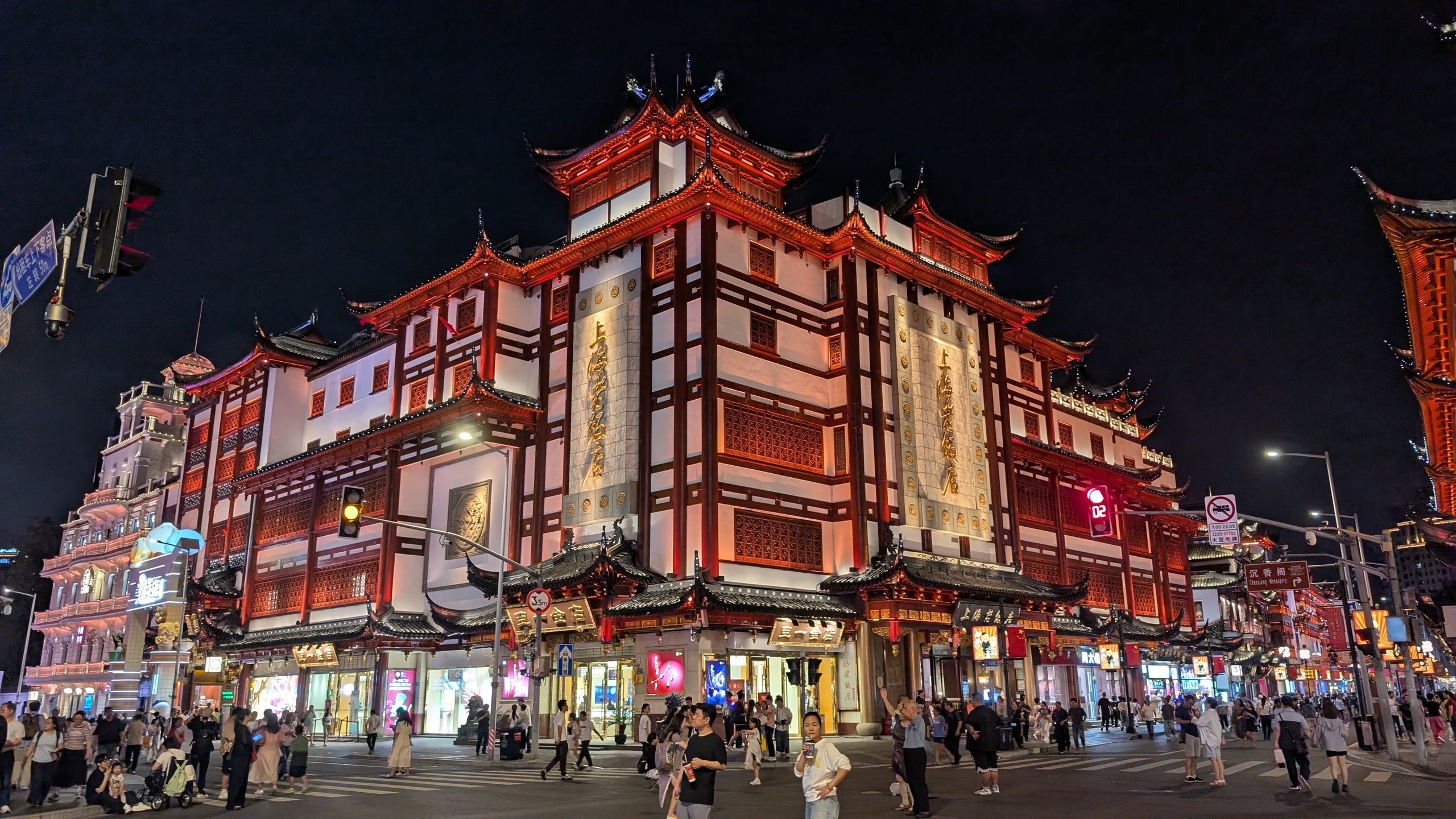
So be at the gate when it opens at nine and come back for the bazaar in the evening. And be careful about eating here: the famous soup dumpling shop by the nine-turn bridge has an hour-long queue, and any neighbourhood a metro stop away does the same thing better and cheaper.
Suzhou Creek is the best half day in the city
If you do one thing in this article, do this one. Suzhou Creek is the narrow waterway that runs west from the Huangpu through the middle of Puxi, and the walkway along it has been rebuilt end to end over the last few years. It is where old industrial Shanghai and new architectural Shanghai sit on the same bank, about twenty minutes apart on foot.
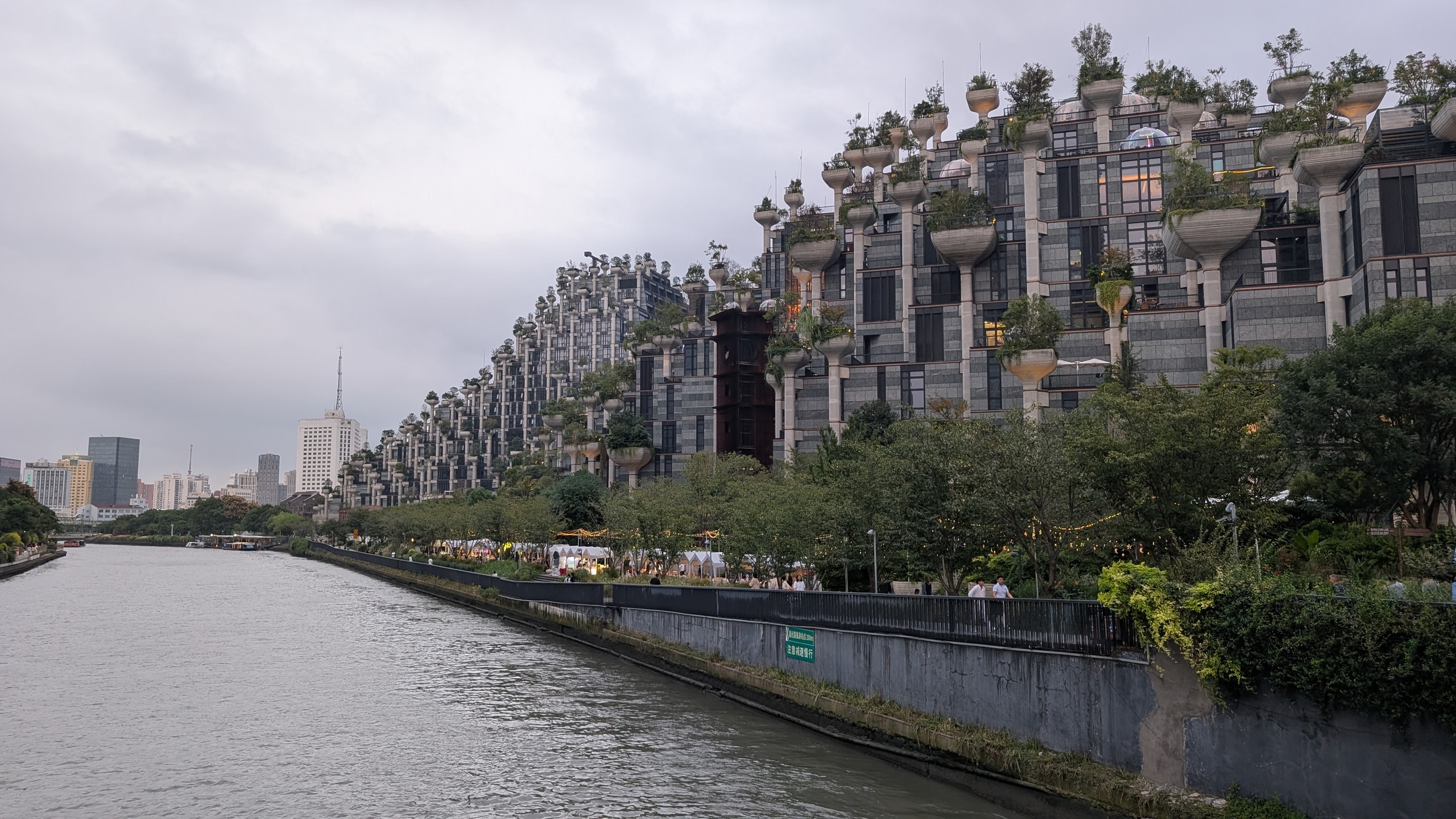
Start at 1000 Trees on Moganshan Road, a Heatherwick-designed complex that opened in December 2021 as two stepped hills of concrete columns, each one ending in a planter with a real tree in it. From the creek path it looks like a hanging garden someone forgot to finish. It divides people. From the water it works; from inside it is a shopping centre like any other. It is free to walk through, and no other building in China looks like it.
A few minutes further along is M50, the art district in the old Xinhe cotton mill at 50 Moganshan Road: brick sheds, a courtyard, and more than 120 galleries and studios above. Entry is free, most galleries are free, and on a weekday half of them are empty enough that you end up talking to whoever is at the desk. The lanes between the sheds are hung with neon.
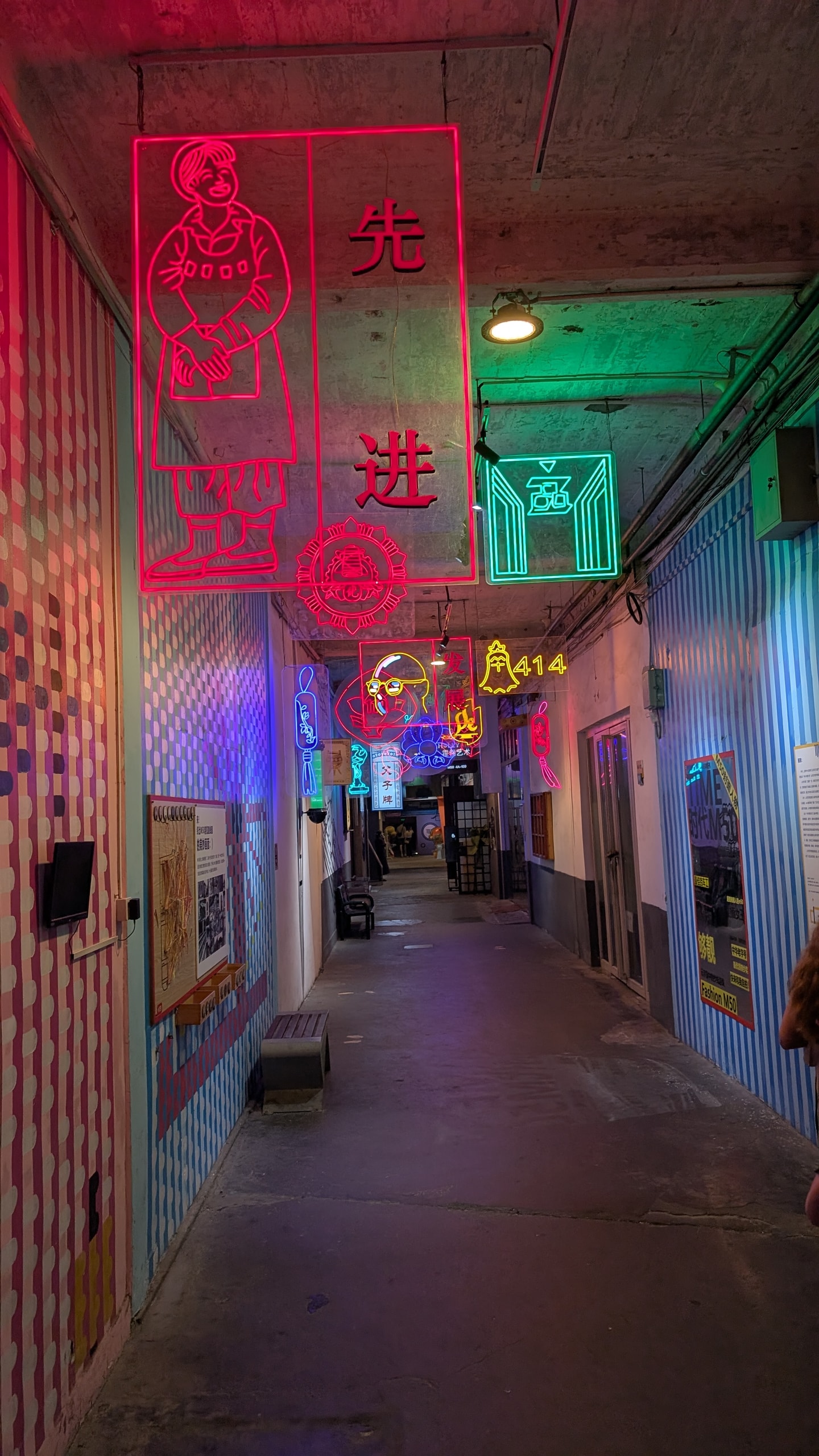
The creek walk from the Bund to M50 is about 5 km, and you do not have to do all of it. Take the metro to Jiangning Road and walk west.
You can see the skyline in one evening. Working out where you like to eat breakfast takes the other three days.
The Jade Buddha Temple, with apartment blocks over the roof
The Jade Buddha Temple sits on Anyuan Road in Putuo, and the first thing you notice is that it has no space around it. Look past the carved ridge of the main hall and there is a pink residential tower with air-conditioner units and laundry on every balcony. That is more interesting than a temple standing alone on a hill.
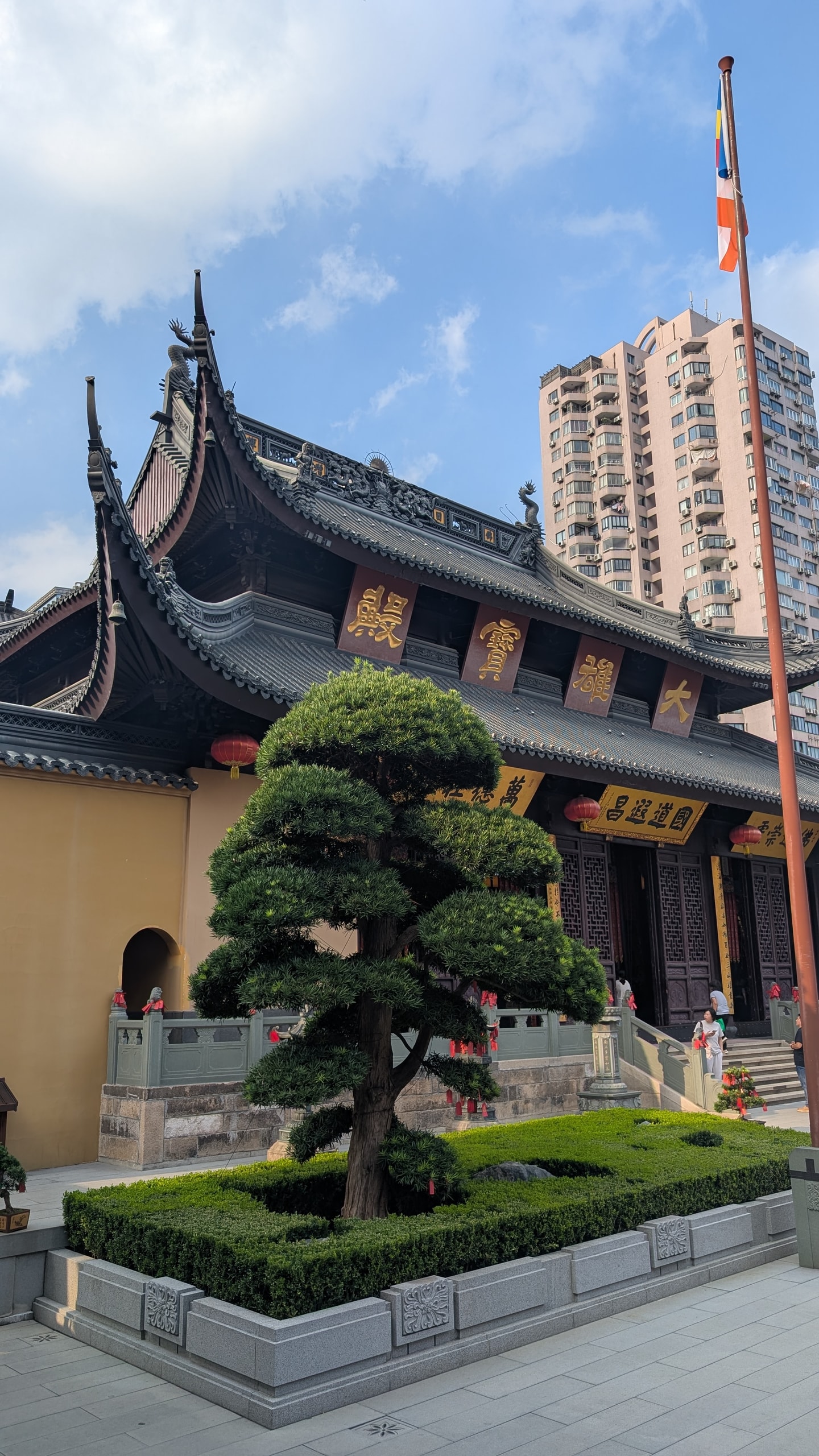
The temple is named for two Buddha figures brought from Burma in the 1880s. The seated one is just under two metres of jade and three tonnes, upstairs behind glass, no photography, and ¥10 ($1.40) on top of the ¥20 ($3) entry. The original reclining jade Buddha is easy to walk straight past, because it is 96 cm long. The four-metre reclining figure everybody photographs is marble, donated from Singapore in 1989. Most visitors leave thinking they saw the jade one. These are working halls either way, with people kneeling on cushions rather than queueing for photographs.
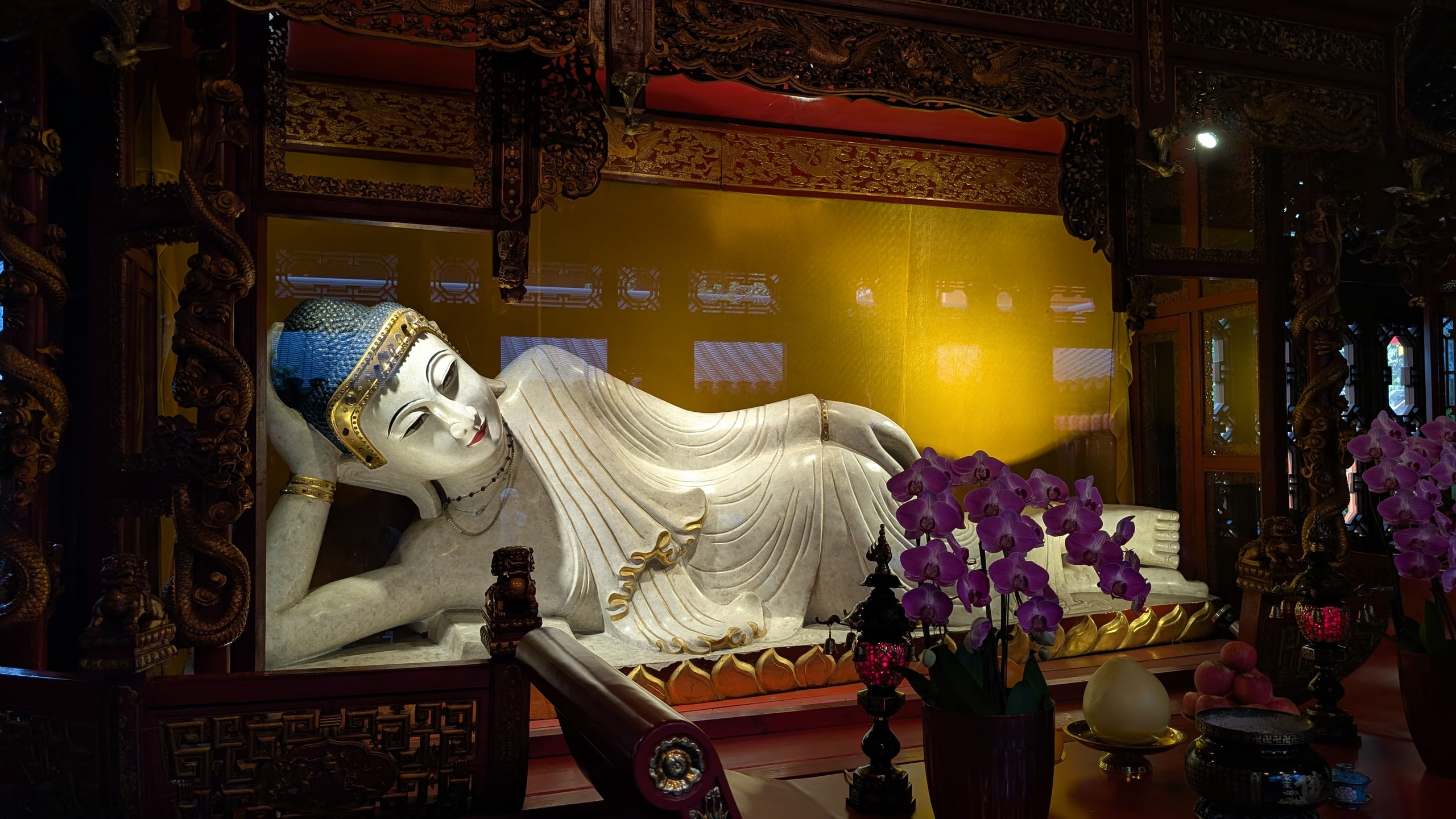
Go on a weekday morning. The vegetarian restaurant in the complex does a noodle lunch for about ¥30 ($4).
For a second temple, Longhua in the south is older, has a proper pagoda, and gets a fraction of the visitors. Jing'an Temple on Nanjing West Road is the most photographed and the least peaceful.
Parks are what people here actually do
Shanghai has very little private outdoor space, so the parks work harder than parks in most cities. They are the fastest way to stop feeling like a visitor.
Get to Fuxing Park in the old French Concession by seven in the morning and you will find ballroom dancing on the paving, several tai chi groups, men playing cards three deep around a table, and someone practising trumpet badly into a hedge. By evening they fill again with families, and the restaurants around the ponds turn their lights on.
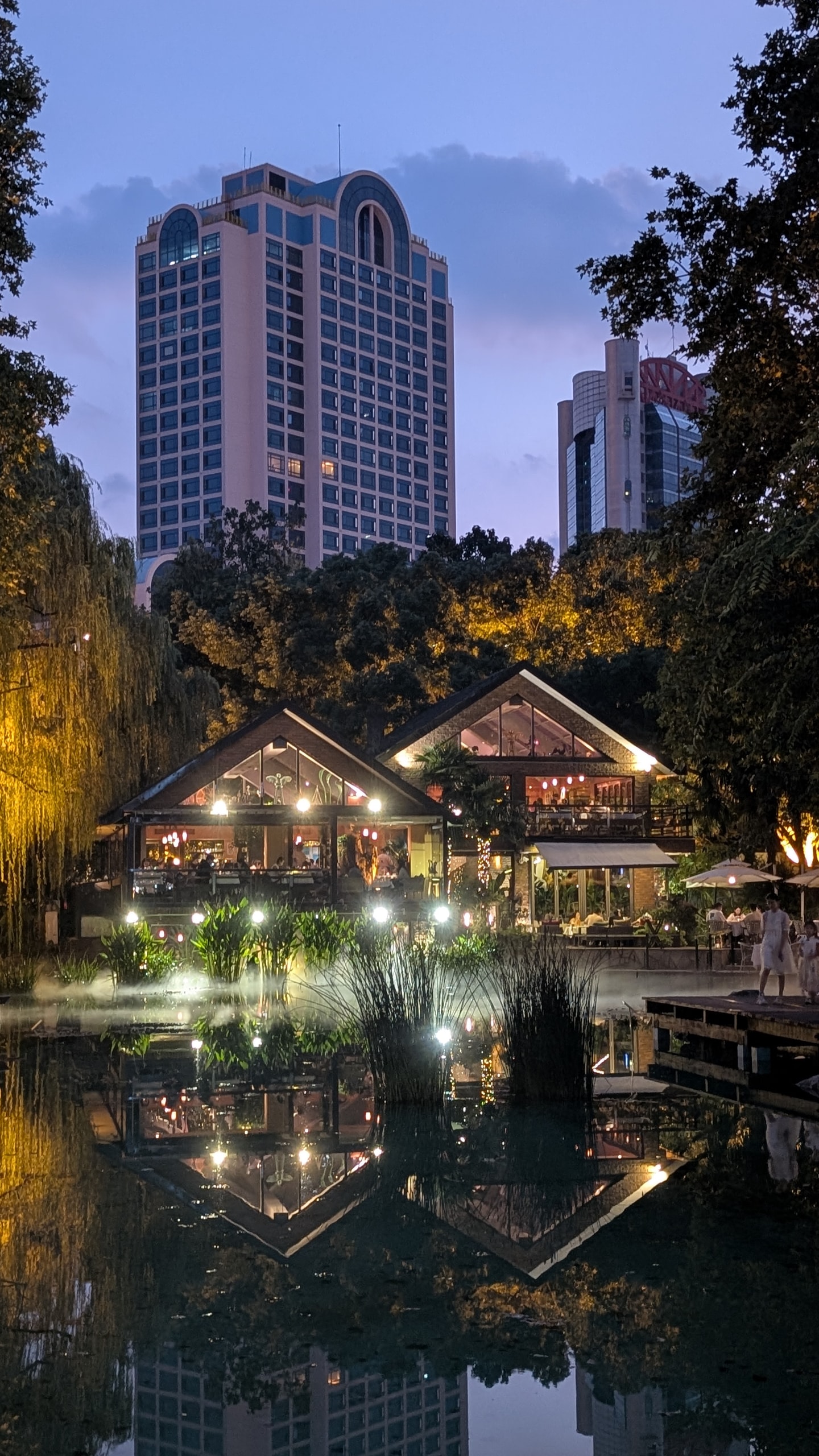
The old French Concession around it deserves a morning: Wukang Road, Anfu Road, Yongkang Road, all narrow and shaded by plane trees planted a century ago. Wukang Mansion, Laszlo Hudec's flatiron apartment block from 1924, is such a photo spot that police manage the pavement there on weekends. Turn down any side street and the crowd is gone in thirty seconds.
Compared with Beijing's imperial scale and timed tickets, Shanghai asks almost nothing of you in advance. There is no Forbidden City equivalent here, no booking window to hit. That is the argument for making it your first city in China rather than your second.
Zhujiajiao: the water town, done in half a day
Zhujiajiao is a canal town about 50 km west, and the one day trip out of Shanghai genuinely worth the metro ride. Line 17 runs from Hongqiao Railway Station to Zhujiajiao in about 40 minutes for ¥8 ($1.10), which is one of the better transport deals anywhere.
The town is a grid of narrow canals with stone bridges, whitewashed houses under black tile roofs, and wooden boats poled by men in straw hats. Fangsheng Bridge, the five-arch stone one from 1571, is the postcard. The water is green, the lanes are hung with lanterns, and yes, the main streets are a solid row of souvenir stalls.
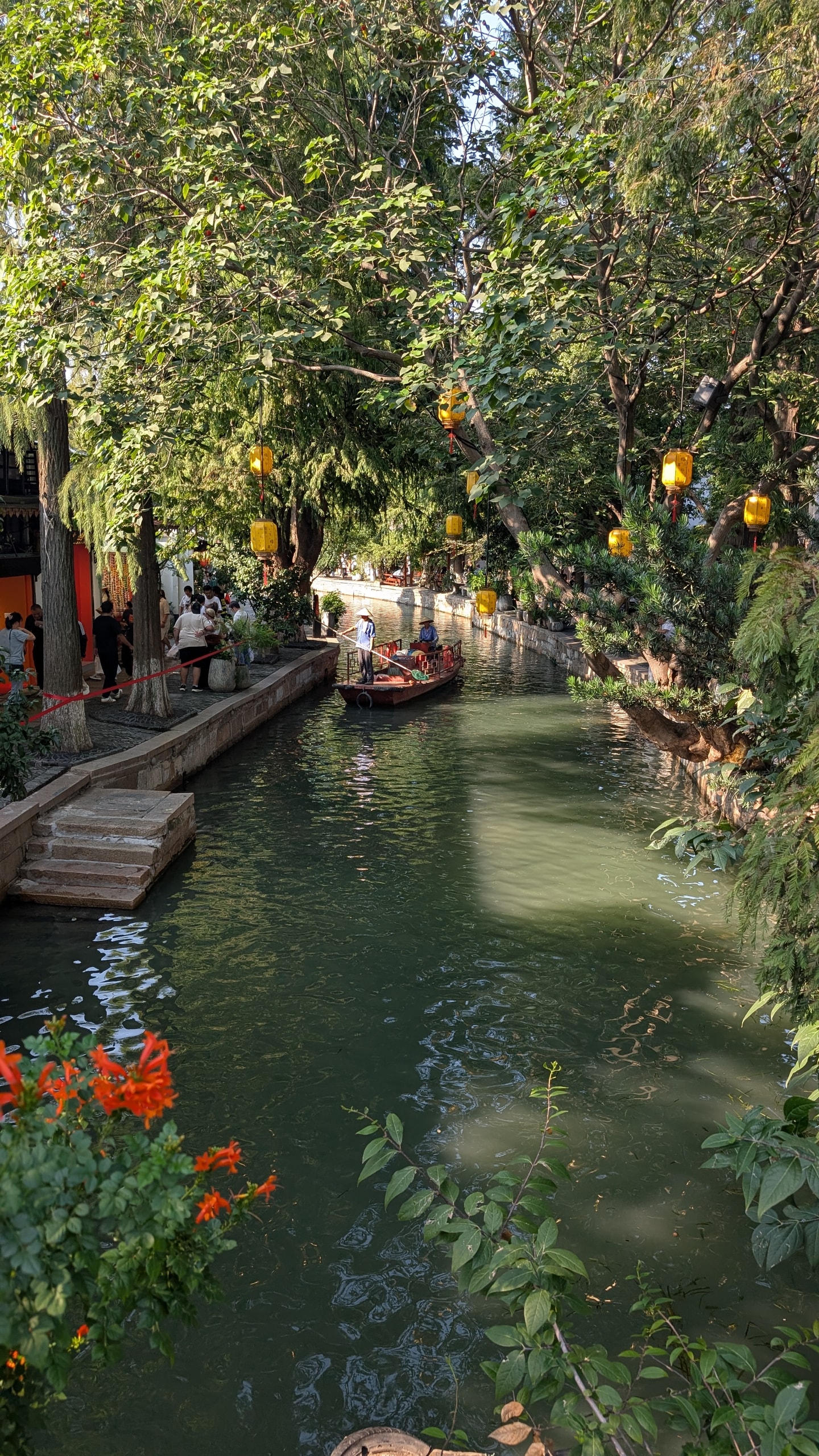
Walking the town is free. A boat is ¥150-300 ($21-42) for the whole thing depending on the route, and it holds six, so it is cheap split and steep alone. The gardens and old houses charge ¥10-30 ($1.50-4) each.
Two things make the difference. Arrive after two, once the morning coaches have left, and stay until the lanterns come on. And walk one block back from the main canal, where the shops stop and people are hanging washing over the water.
The metro works, and the streets are almost silent
Shanghai has the largest metro network in the world by route length: 20 lines, more than 500 stations, over 900 km of track. Fares start at ¥3 ($0.40) and rarely top ¥9 ($1.25), paid by scanning a QR code in Alipay or WeChat. The catch is closing time: most lines stop between 10:30 and 11 pm, earlier than the city does, so budget for a Didi home after a late dinner.
The strangest thing about street level here is the noise, or the lack of it. Look at the traffic and most of the number plates are green, which marks a new-energy vehicle. Shanghai auctions its petrol plates and winning bids run over ¥90,000 ($12,500), while a pure-electric car gets its plate free. The fleet flipped fast. Six lanes of rush hour make roughly the sound of a fan.
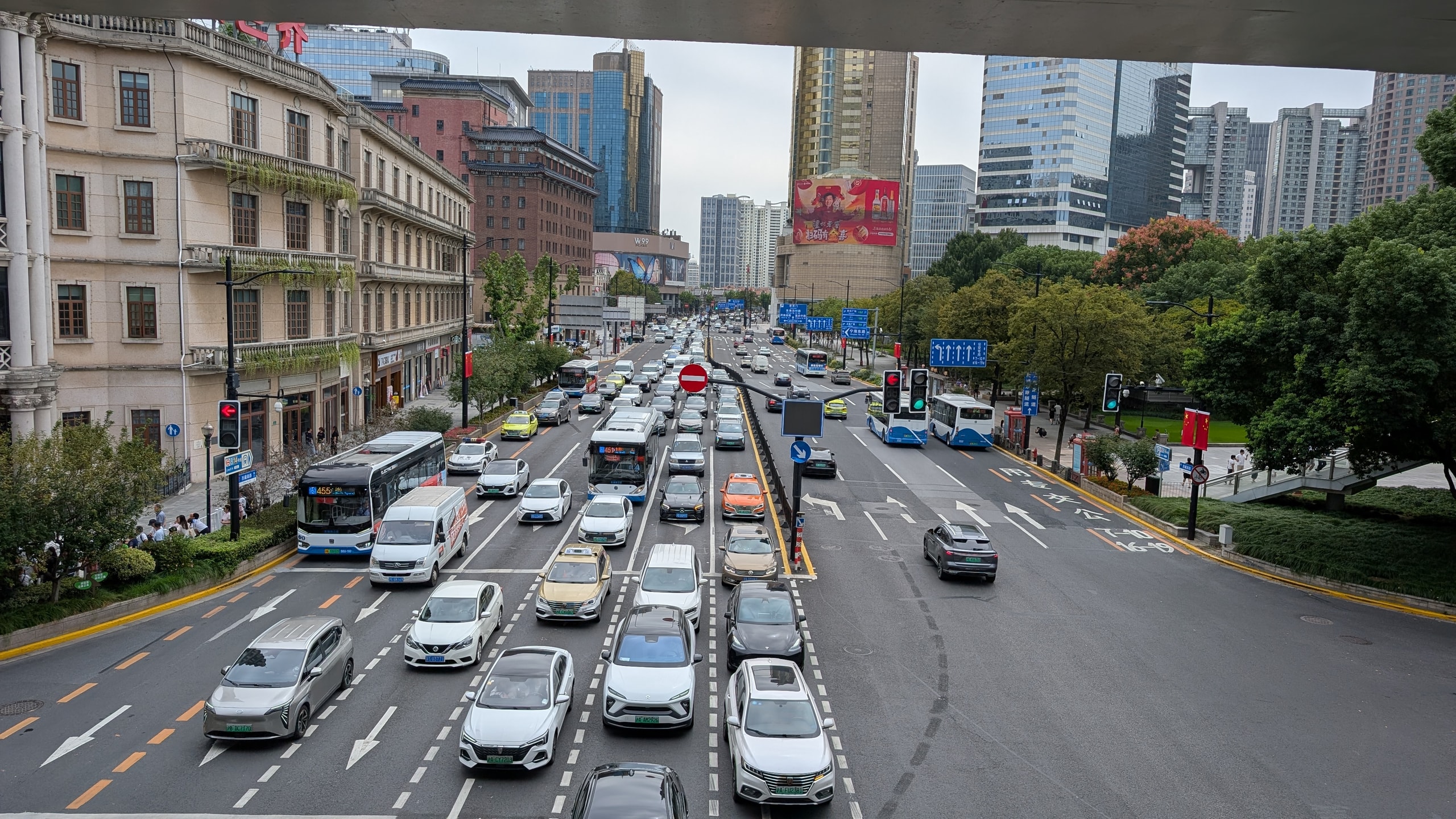
That silence has a downside. Electric scooters come from any direction, including up the pavement and the wrong way down a bike lane, and you will not hear them. Look both ways twice at every crossing, including a green one.
For getting out: the maglev covers the 30 km from Longyang Road to Pudong Airport in eight minutes for ¥50 ($7), which is both a novelty and the fastest way there. Hongqiao is the other airport, and shares a site with the main high-speed rail station.
What four days in Shanghai costs
Budget $90-140 a day per person for a mid-range trip, which puts Shanghai at the top of the Chinese range and still well under Tokyo or Singapore.
- Hotel: ¥400-800 ($55-110) a night for a clean, central, mid-range room. Under ¥300 ($42) gets you a small room a long way from a metro station.
- Breakfast: ¥15-30 ($2-4) at a bun and congee shop.
- Lunch: ¥30-60 ($4-8) for noodles or a rice plate.
- Dinner: ¥80-200 ($11-28) per person at a decent restaurant with beer. Much more for a river view, which is rarely worth it.
- Metro: ¥3-9 ($0.40-1.25) a ride. Ten rides a day still costs less than a taxi.
- Didi: ¥25-50 ($3.50-7) for most rides inside the centre.
- Tickets: most of the good things here are free. Yu Garden ¥40 ($6), Jade Buddha Temple ¥20 ($3), the Shanghai Tower observation deck ¥180 ($25).
Prices move, so treat these as a shape rather than a quote. The line worth arguing over is the observation deck: $25 to look down through glass, and from up there you cannot see the skyline you are standing in. The Bund is free and better.
What to eat, and where not to
Shanghai food is sweeter than most Chinese regional cooking, and heavier on soy, sugar, and slow braising:
- Shengjianbao - pork buns fried flat on the bottom, soft on top, full of scalding soup. The classic breakfast. Bite a hole first or you will wear it.
- Xiaolongbao - the thin-skinned steamed soup dumpling. Every neighbourhood has a decent one for ¥15-25 ($2-3.50).
- Cong you ban mian - noodles with scallion oil, soy, and dried shrimp. Three ingredients, no protein, still one of the best cheap bowls in China.
- Hongshao rou - red-braised pork belly, dark and sweet. Order it for the table, not for yourself.
- Zha zhu pai - a breaded pork cutlet served with la jiang you. The name means spicy soy sauce and it is neither: it is a local Worcestershire sauce, first bottled here in 1933, and the most concession-era thing you will eat all week.
- Crab roe noodles, xiefen mian, if you are here between roughly October and November. Crab roe and picked meat in a glossy sauce over dry noodles, with ginger vinegar on the side. Mix it all through before you start. A normal shop charges about ¥58 ($8); the famous places near the Bund want ¥360 ($50) for a bowl built from a dozen crabs. Eat the ¥58 one twice instead.
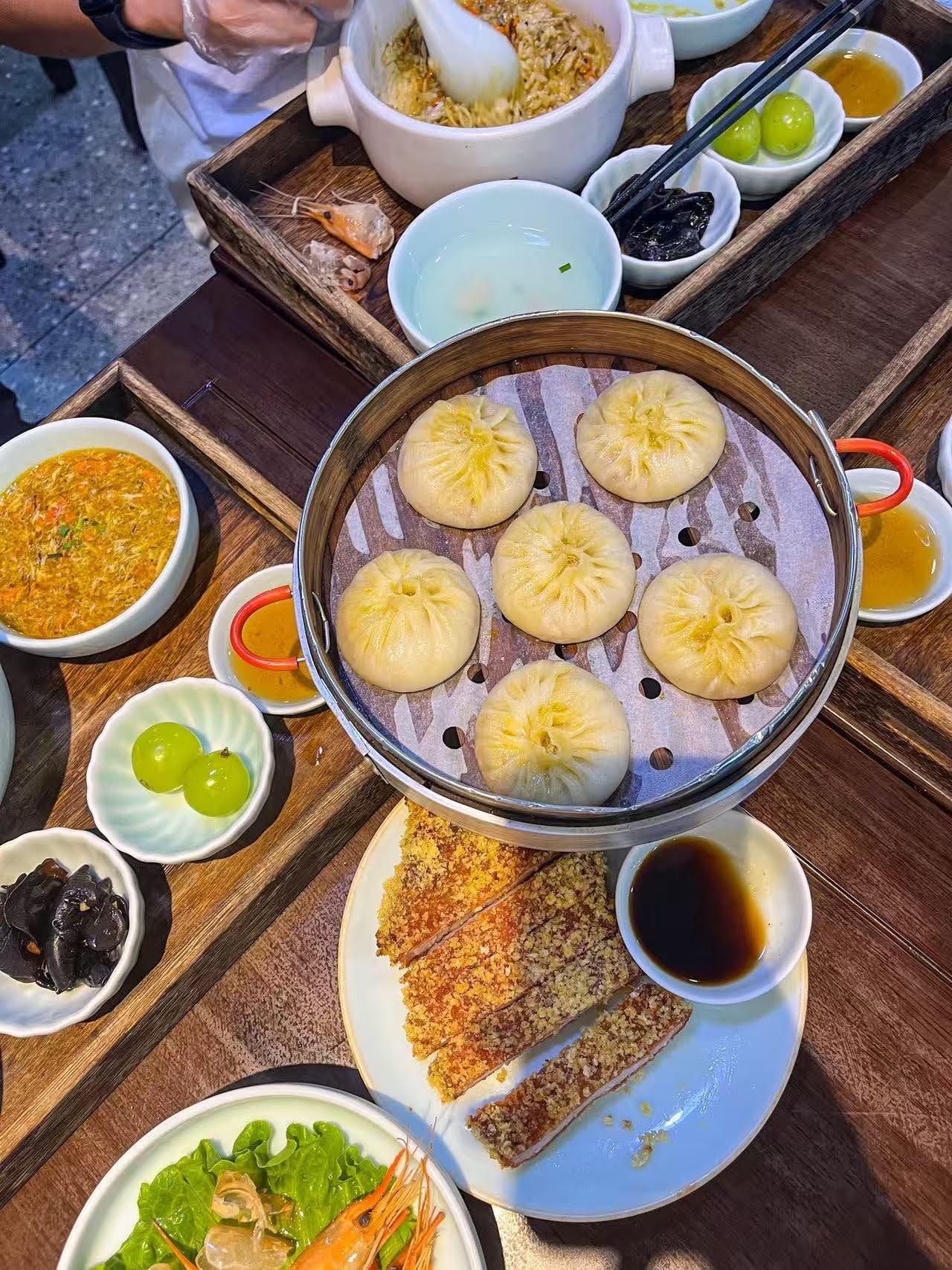
Where to eat matters less than where not to. Avoid river views, the food courts under the Yu Garden bazaar, and anywhere with a photo menu and a man outside inviting you in. A queue of people in work clothes beats any English sign.
When to go, and the week to stay away
Late March to May and October to late November are the two good windows. Spring is mild and wet, autumn is dry and clear and the light on the river is at its best.
Summer is the problem. June through August in Shanghai means high thirties Celsius with humidity to match, plus a real typhoon risk from July into September. Winter sits around 3-8 C, damp, grey, and colder indoors than the number suggests because older buildings have no central heating.
Then there is the calendar. Avoid the October 1-7 national holiday completely, and the May 1-5 break if you can. Several hundred million people travel in those weeks and everything is at capacity.
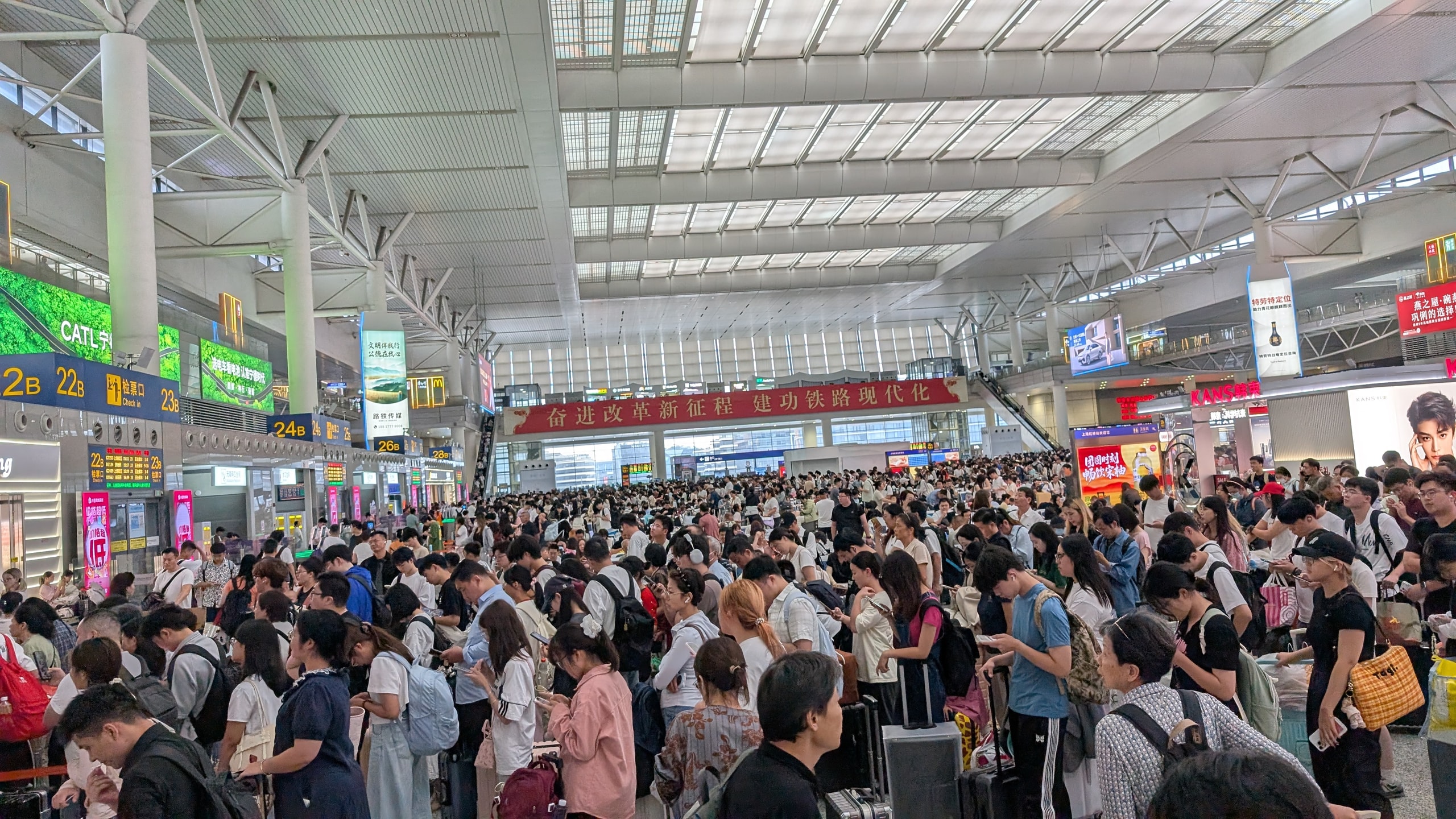
Check the dates before you book. If you are already in China during a holiday week, stay in one city and walk rather than move between them.
For onward trains, Hongqiao is where you leave from. Beijing is four and a half hours, Hangzhou is under an hour, and Chongqing's stacked streets and numbing hotpot are nine hours west on the fastest train and more like twelve on the rest. Book through Trip.com with your passport if you do not want to fight the official site.
What to skip
- The Bund sightseeing tunnel. ¥50 ($7) for flashing lights in a tunnel car.
- The observation decks, unless the height itself is the point.
- Tianzifang. A lane of souvenir shops sold as an artists' quarter. M50 is the real version.
- The ocean park out at Lingang. It keeps six orcas in a stadium tank. That is what you are paying for.
- Any restaurant on the Bund. You are buying the window.
Shanghai is the easiest big city in China to arrive in and the hardest to sum up, because the version you get depends on which streets you walk. Give it four days, put one on Suzhou Creek and one outside the city, and treat the skyline as the thing you pass on the way to dinner. Other place guides live in the destinations archive.