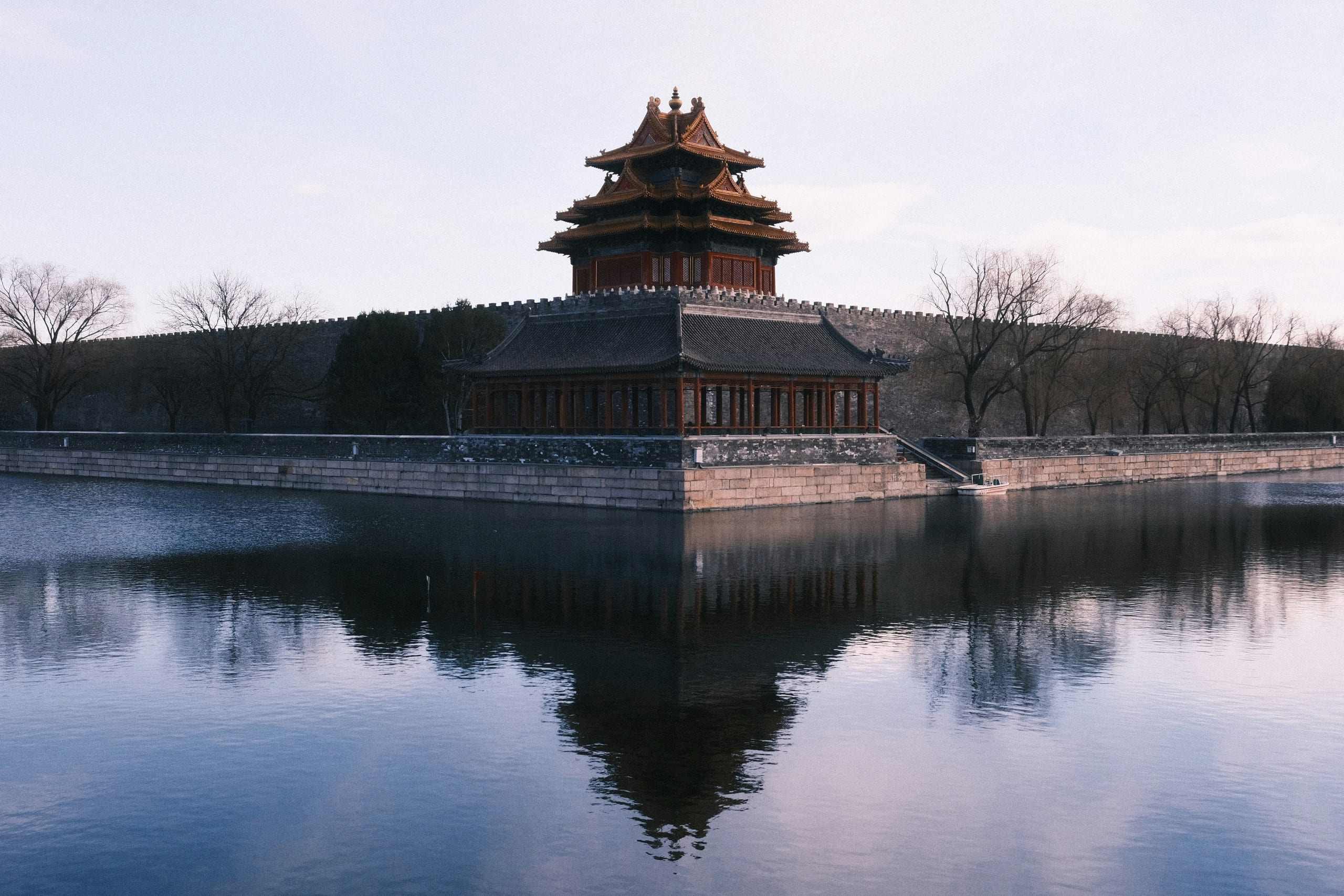
By mid-morning, the crowd outside the Forbidden City is huge. Tour leaders hold flowers and flags above thousands of heads. Security lines fold back on themselves. Everyone is aiming for the same red doorway.
Then you get through it, enter a courtyard broad enough to swallow the queue, and Beijing makes more sense. This is a capital built around scale: gates before gates, squares measured in hectares, roads that turn crossing the street into a small project. Give it four full days. Other place guides live in the destinations archive.
Beijing is worth visiting, but the headline sights punish improvisation. The Forbidden City needs advance booking, Tiananmen has security checks, and the Wall sits well outside the centre. Get those three decisions right and the city becomes much easier.
How many days you need in Beijing
Three days can cover the Forbidden City, the Great Wall, and the Temple of Heaven, but it turns the trip into a relay race. Four full days is the sensible minimum, particularly if Beijing is your first stop in China. Payments, VPNs, and train booking live in things to know before visiting China.
A useful first-time split is:
- Tiananmen, the Forbidden City, and Jingshan Park
- A full day at the Great Wall
- Temple of Heaven, hutongs, and a proper dinner
- Summer Palace, Beihai, or a weather buffer
Do not combine the Wall with the Forbidden City. Tour companies sell that day because it fits on a booking page, not because it is pleasant.
Day one: Tiananmen, the Forbidden City, and Jingshan
The Forbidden City is the centre of the first visit, and the least forgiving place to leave unplanned. Tickets are tied to passports and sold for specific dates. Check the official Palace Museum website before the booking window opens; rules and release times change often enough that old blog posts are poor company here. Bring the passport used for the reservation.
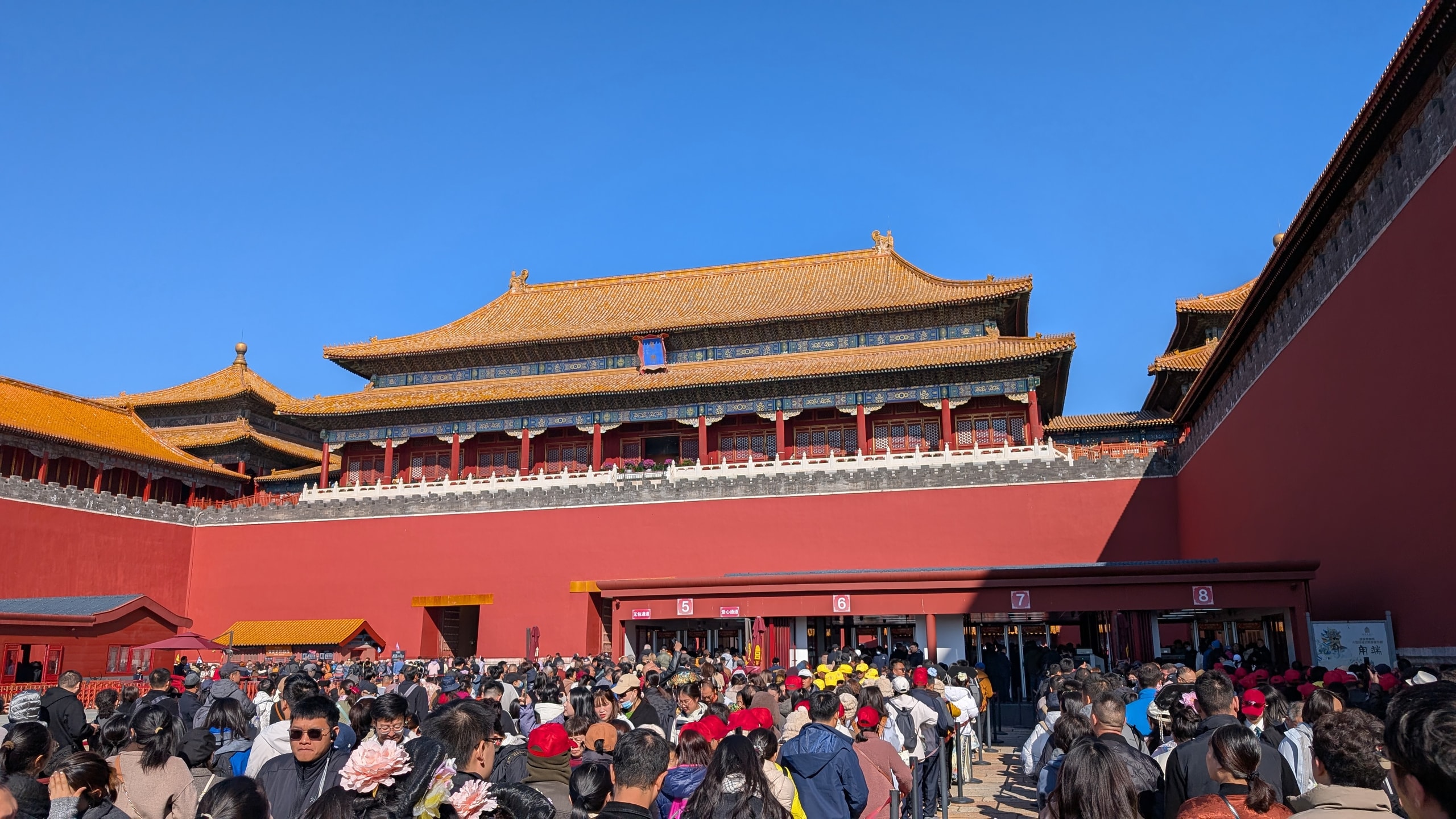
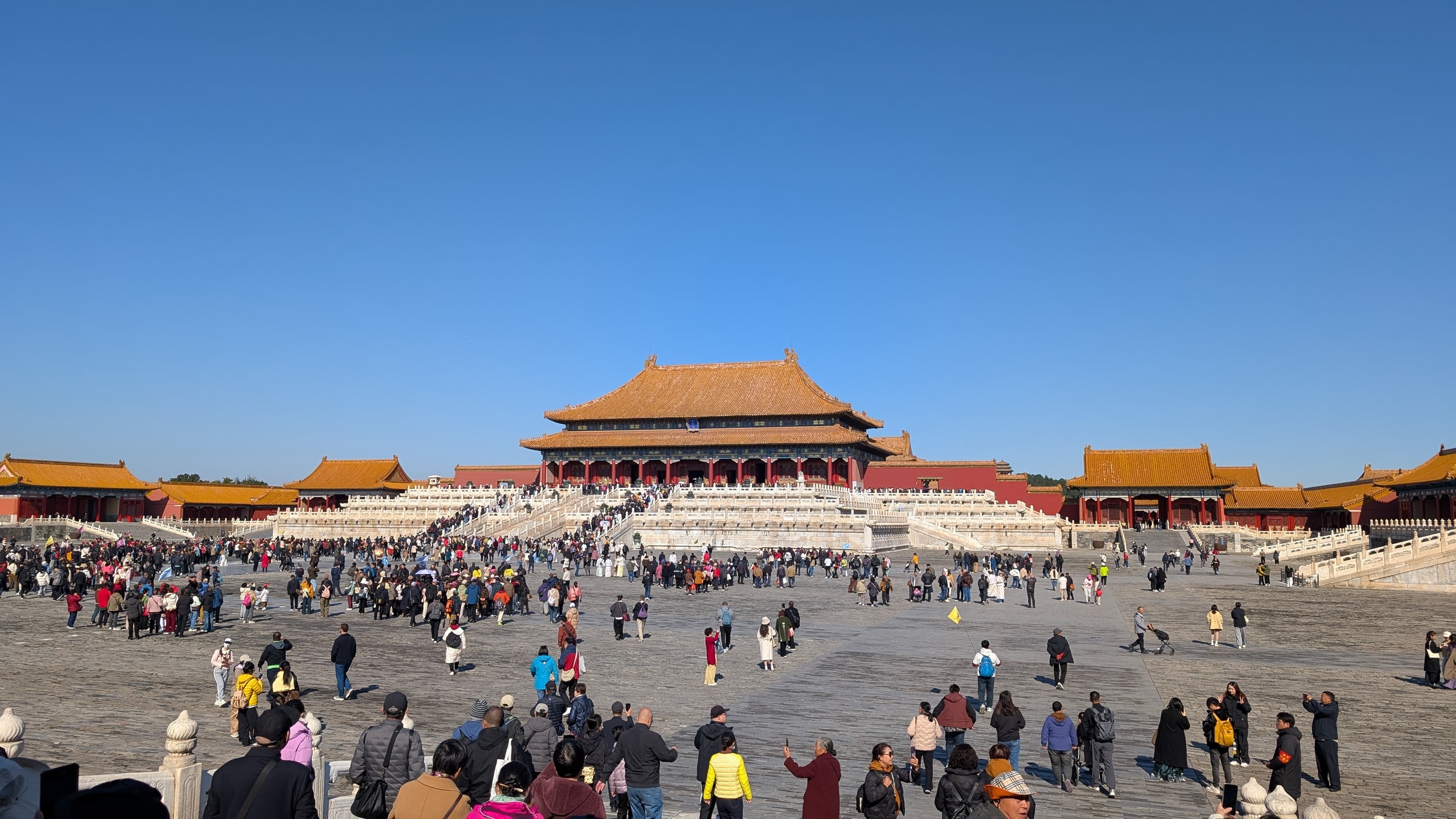
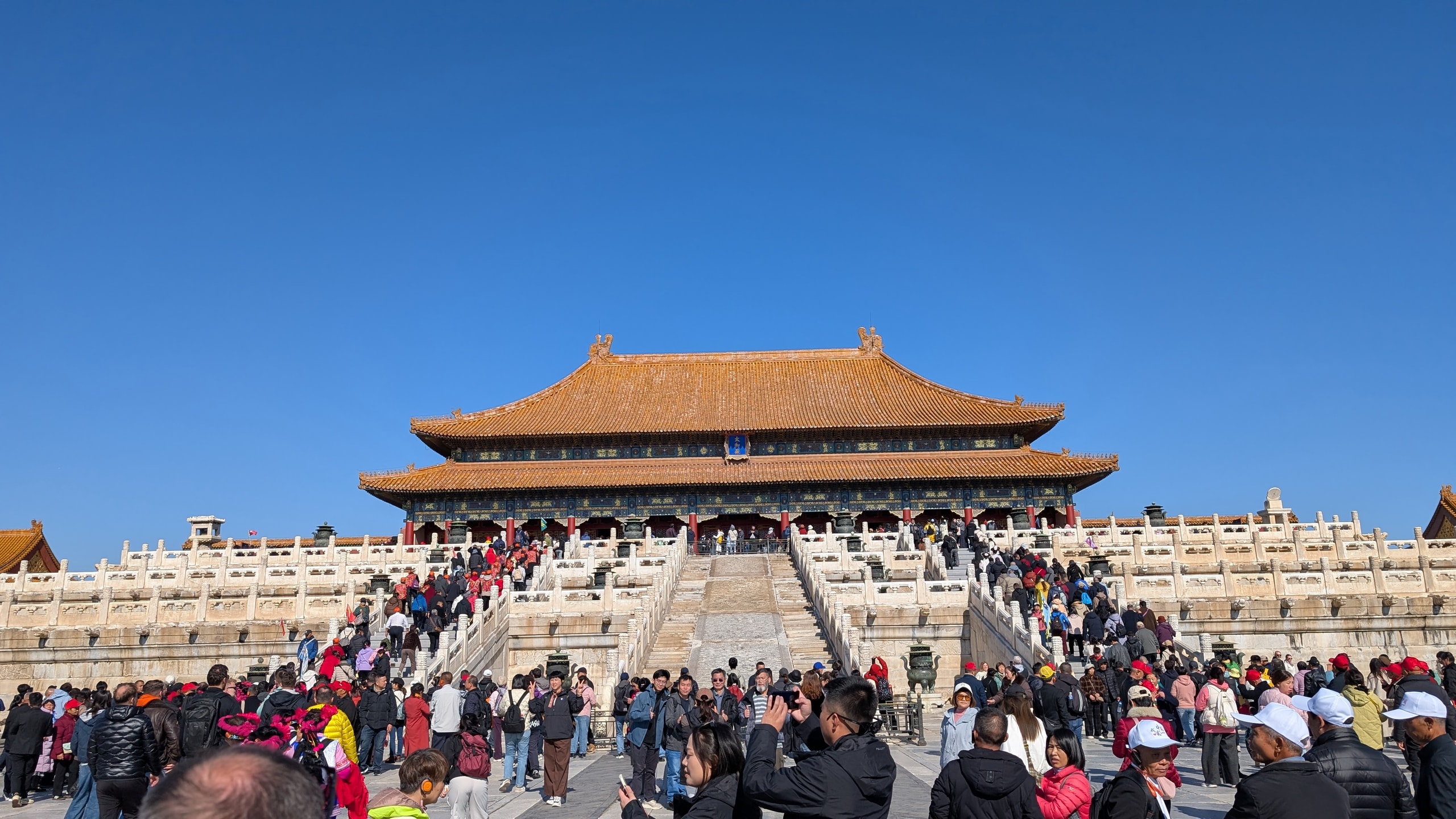
Enter through the Meridian Gate and allow three to four hours. The central route leads north through the biggest ceremonial spaces, including the Hall of Supreme Harmony. It is impressive, repetitive, and crowded. Each raised terrace and doorway controlled who could approach the emperor and how far they were allowed to go.
The courtyards look empty in photographs. They are not. Bottlenecks form on staircases and outside throne rooms, while side routes calm down once groups continue up the middle. Pick one or two interests. Trying to inspect every hall turns the afternoon into a blur of yellow roofs.
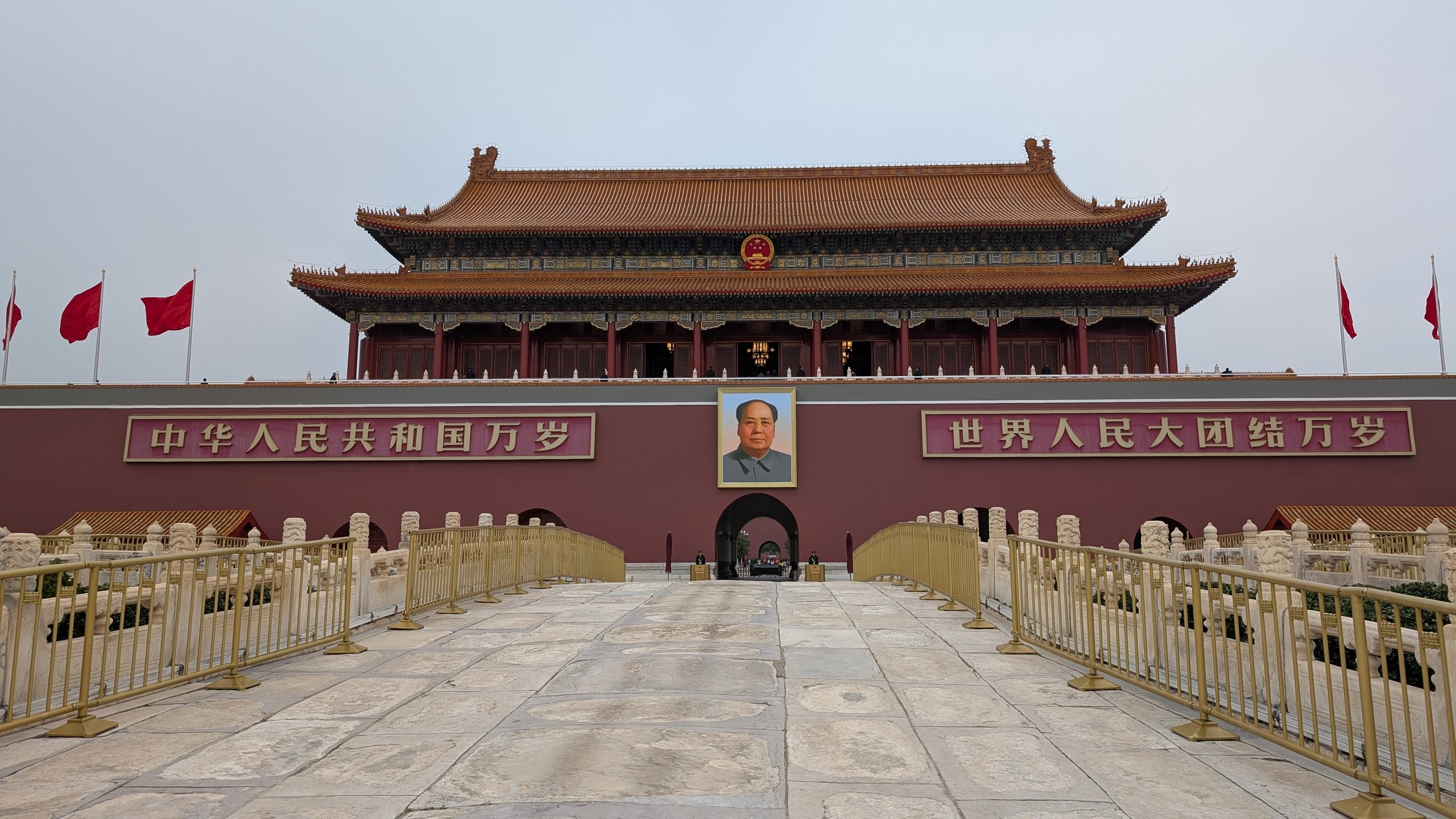
Visit Tiananmen Square before the palace if you have enough time for security. The square is severe, controlled, and historically unavoidable. The Gate of Heavenly Peace faces it from the north, with Mao's portrait above the passage into the imperial city. Access arrangements change, so treat it as a place with procedures rather than an open plaza.
Leave through the north gate and cross to Jingshan Park. Its hill was made with earth excavated for the imperial moat. From Wanchun Pavilion, the yellow roofs line up along Beijing's old north-south axis. Entry costs only a few yuan, and the view explains the palace better than another roped-off room.
If your legs still work, continue toward Shichahai or Beihai Park. If they do not, stop. Beijing punishes the idea that one more pin on a map is only a ten-minute walk.
Day two: choose the Great Wall section on purpose
There is no single Great Wall experience near Beijing. The section matters more than the fact that you went.
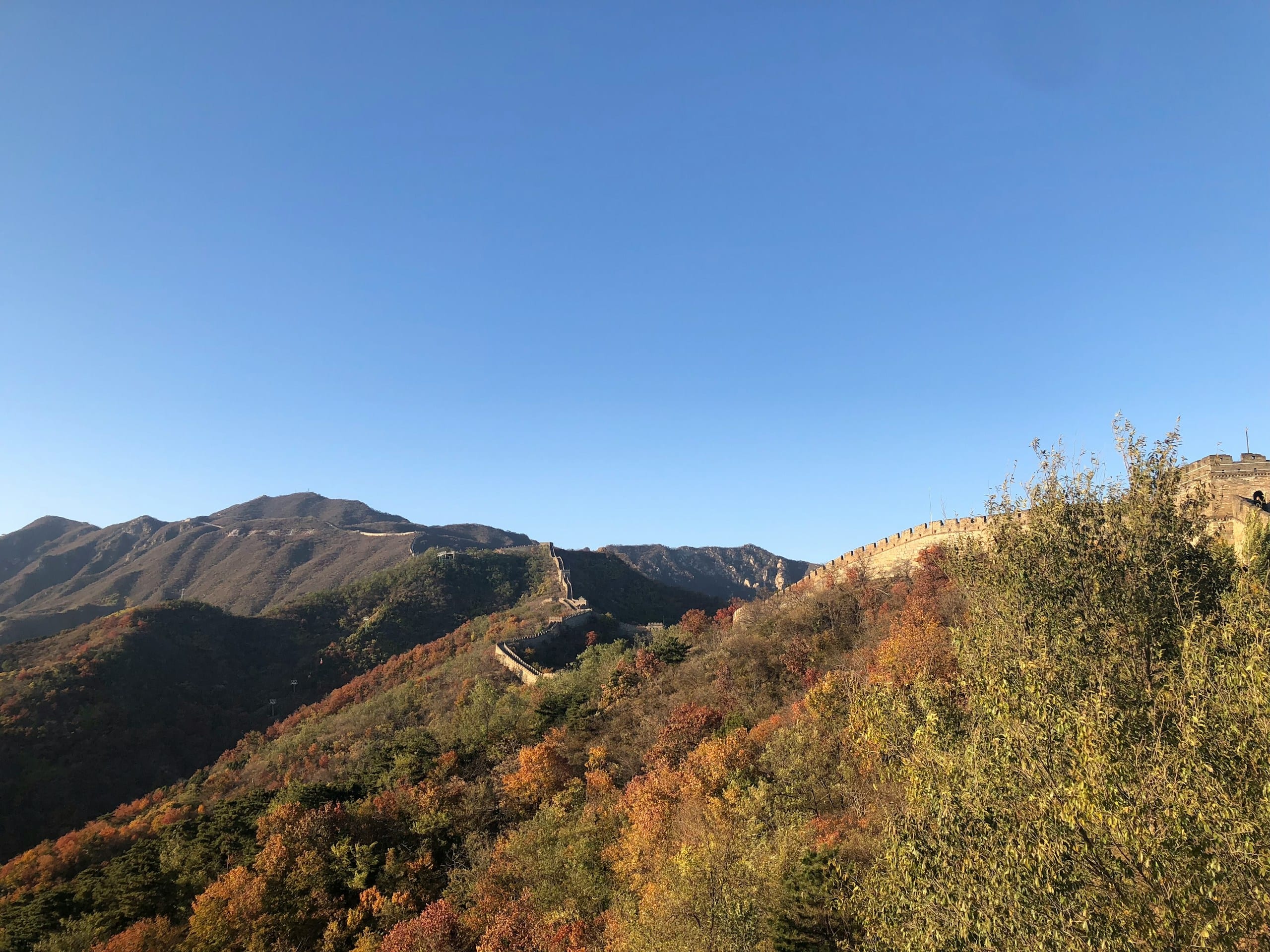
Mutianyu is the best first choice for most people. It is restored, set across steep wooded ridges, and has cable cars to remove the initial climb. The base is commercial and the exits busy, but the crowd thins a few towers away.
Badaling is easier to reach and receives the largest crowds. Go if simple transport or mobility matters most. Do not choose it expecting lonely battlements.
Jinshanling is farther away, less polished, and better for a longer hike across restored and rougher sections. Simatai also offers steeper terrain and, depending on current arrangements, evening visits, but entry is more involved.
The Wall is not a flat promenade. Steps change height without warning, smooth stone can be slippery, and the route repeatedly gives back the elevation you just earned. Wear shoes with grip and carry water. In October, a warm afternoon can drop quickly once the sun disappears behind the ridge.
The Wall looks like architecture from a distance. Under your feet, it feels more like a mountain that happens to have stairs.
Allow the full day, including 90 minutes to two and a half hours each way. A driver removes uncertainty around bus connections. Group tours cost less; avoid itineraries padded with jade shops or tea demonstrations.
Day three: the Temple of Heaven deserves half a day
The Hall of Prayer for Good Harvests is one of those buildings that looks suspiciously neat in photographs. In person, the deep blue roof and painted brackets hold up. The surprise is that the building is only one part of a large park.
The Temple of Heaven was a ritual complex where Ming and Qing emperors made offerings for good harvests. A through-walk connects the Hall of Prayer, Imperial Vault of Heaven, Echo Wall, and Circular Mound Altar. Buy the combination ticket; a park-only ticket excludes the main structures.
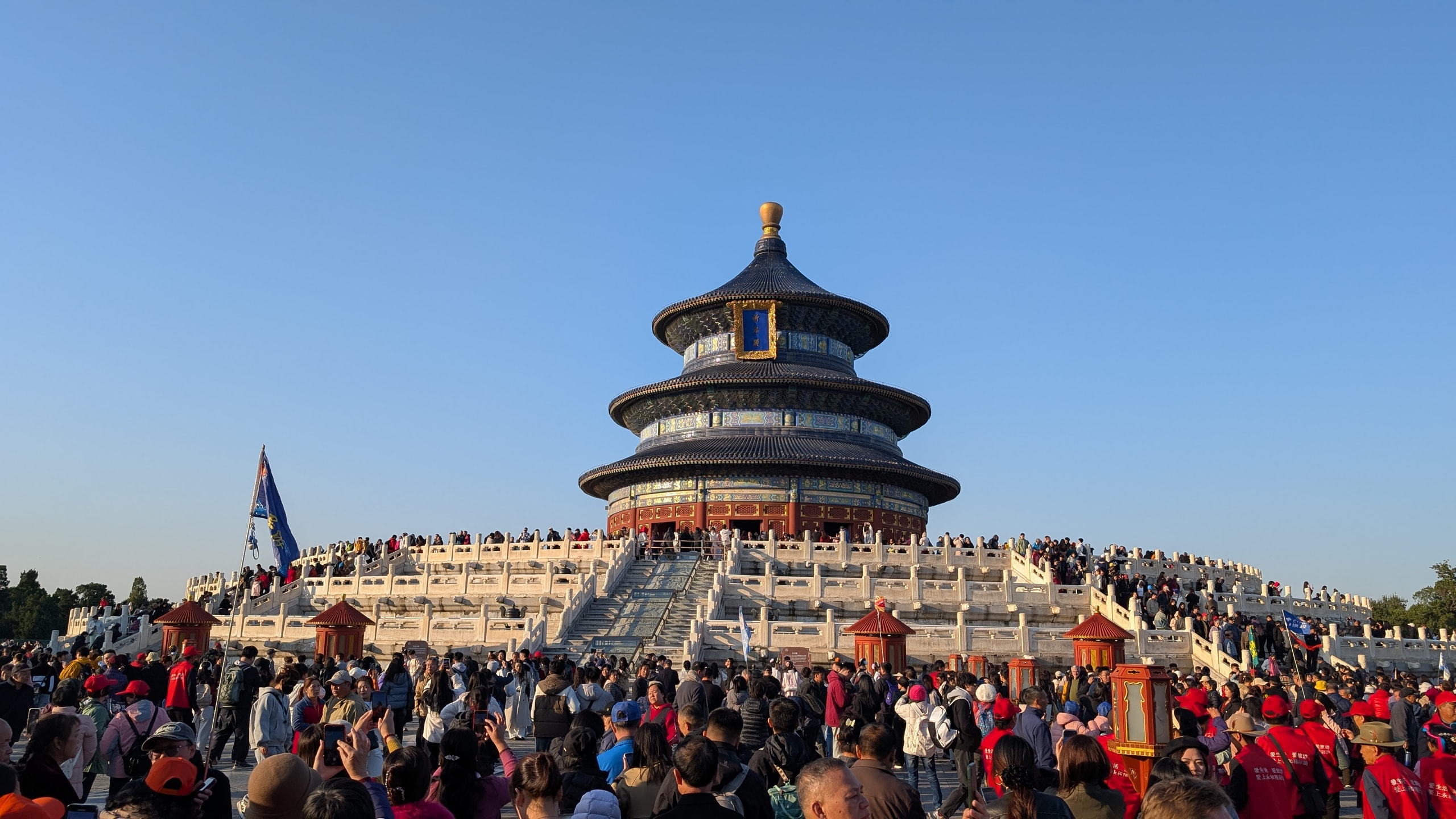
Go in the morning for local park life or late afternoon for lower light on the blue tiles. Allow two to three hours. Check which entrance suits your route because the grounds are larger than they appear.
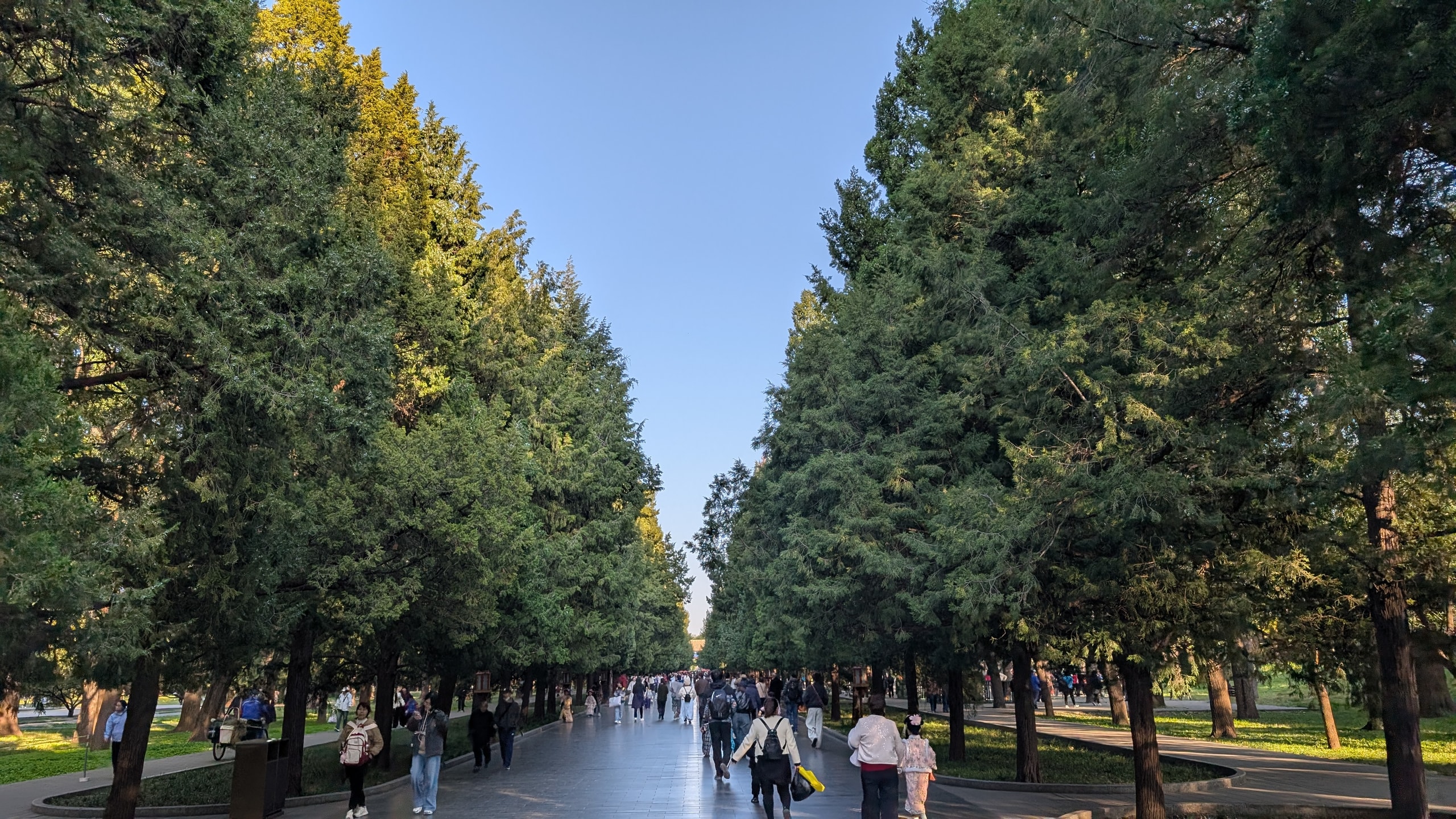
The cypress paths are where people sit, practise music, and use the grounds as a neighbourhood park. At the Hall of Prayer, the calm ends. Tour groups gather on the white terraces and nearly everyone wants the same straight-on picture. Walk around the circular base for more room.
Use the other half of the day for a hutong area. Nanluoguxiang is easy to reach and easy to dislike: handsome lanes, chain snacks, souvenirs, and too many people moving at half speed. The smaller lanes around Dongsi are less staged. Yangmeizhu Xiejie mixes older shopfronts with careful restoration and newer cafés.
Walk rather than taking a rickshaw tour. Notice the scale change: grey walls, bicycles beside doorways, public toilets, delivery scooters, then a lane opening onto a six-lane road. These are lived neighbourhoods, so keep cameras out of open doorways.
Eat the duck, then eat something cheaper
Peking duck is worth one dinner. The skin should crack rather than bend, and the meat arrives with thin pancakes, cucumber, spring onion, and sweet bean sauce. A whole duck is too much for two people once the side dishes start landing. Order a half duck or bring friends.
Expect roughly ¥180-350 ($25-50) per person at a comfortable specialist restaurant. Famous names charge more and often require a reservation.
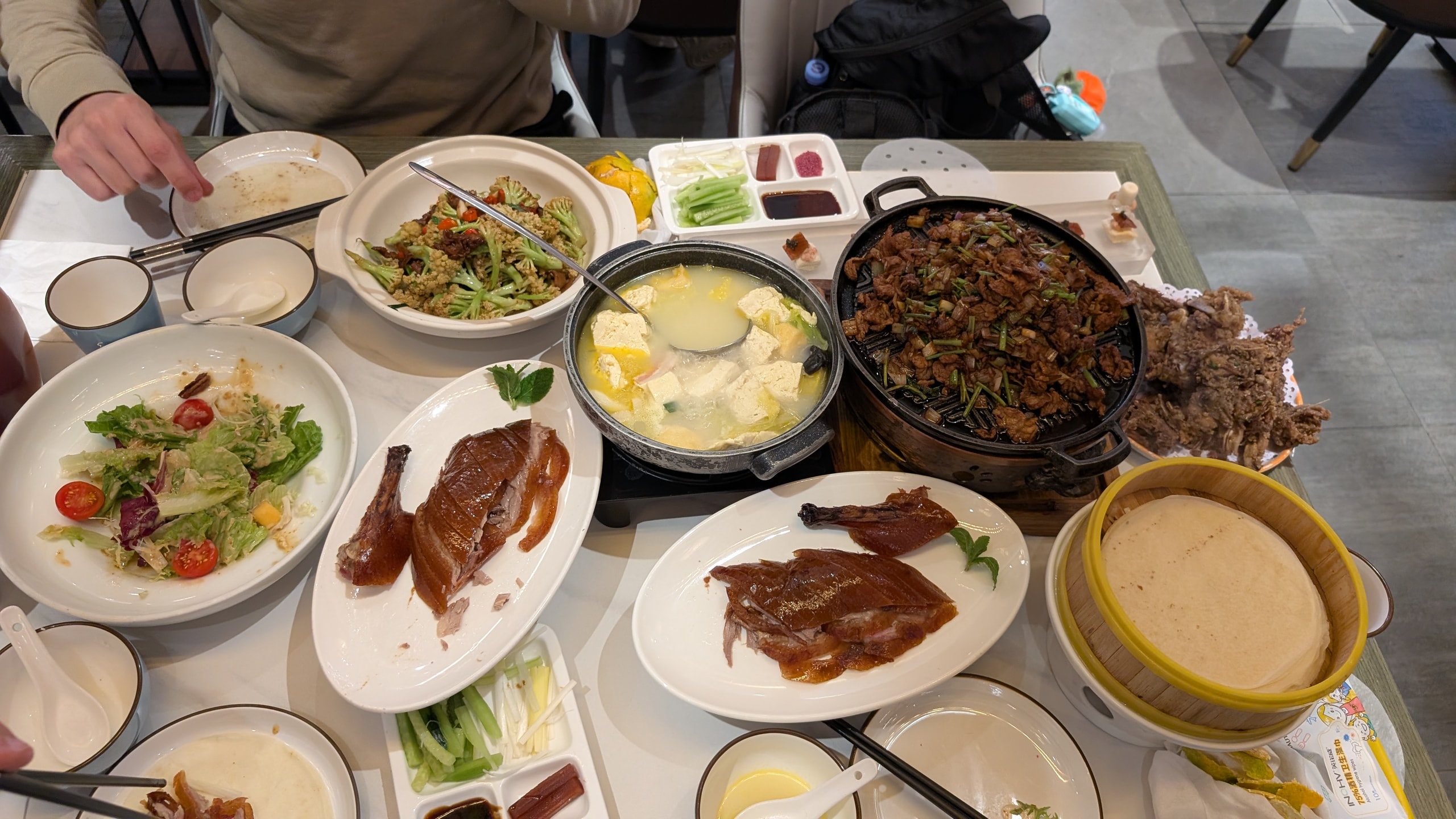
The everyday meals are more useful. Jianbing, a crisp-edged breakfast pancake with egg and sauce, costs around ¥8-15 ($1-2). Zhajiangmian is a bowl of wheat noodles with fermented soybean paste and raw vegetables, usually ¥25-45 ($3.50-6). Beijing-style copper hot pot puts thinly sliced lamb into a clear broth and leans on sesame sauce, a long way from Chongqing's chilli-oil version.
Around Wangfujing and the Shichahai bars, you pay for the address. Walk away from the main strip and look for a busy room with a short menu. Translation apps handle printed Chinese well enough. Pointing at the next table still works.
What to do with the fourth day
Choose one large place, not three.
- Summer Palace: the best pick in clear weather. Kunming Lake and Longevity Hill need at least half a day. Skip it if palace fatigue has set in.
- Beihai Park and Shichahai: better for a slower day close to the centre. Walk the lake, then continue into the surrounding hutongs.
- National Museum of China: useful when the weather is poor, but reserve ahead and expect security.
- 798 Art District: a former industrial area turned gallery district. Pick it for contemporary culture, not old Beijing.
This buffer day also absorbs a Forbidden City ticket you could not get, rain at the Wall, or the simple discovery that crossing Beijing takes longer than expected.
When to visit Beijing
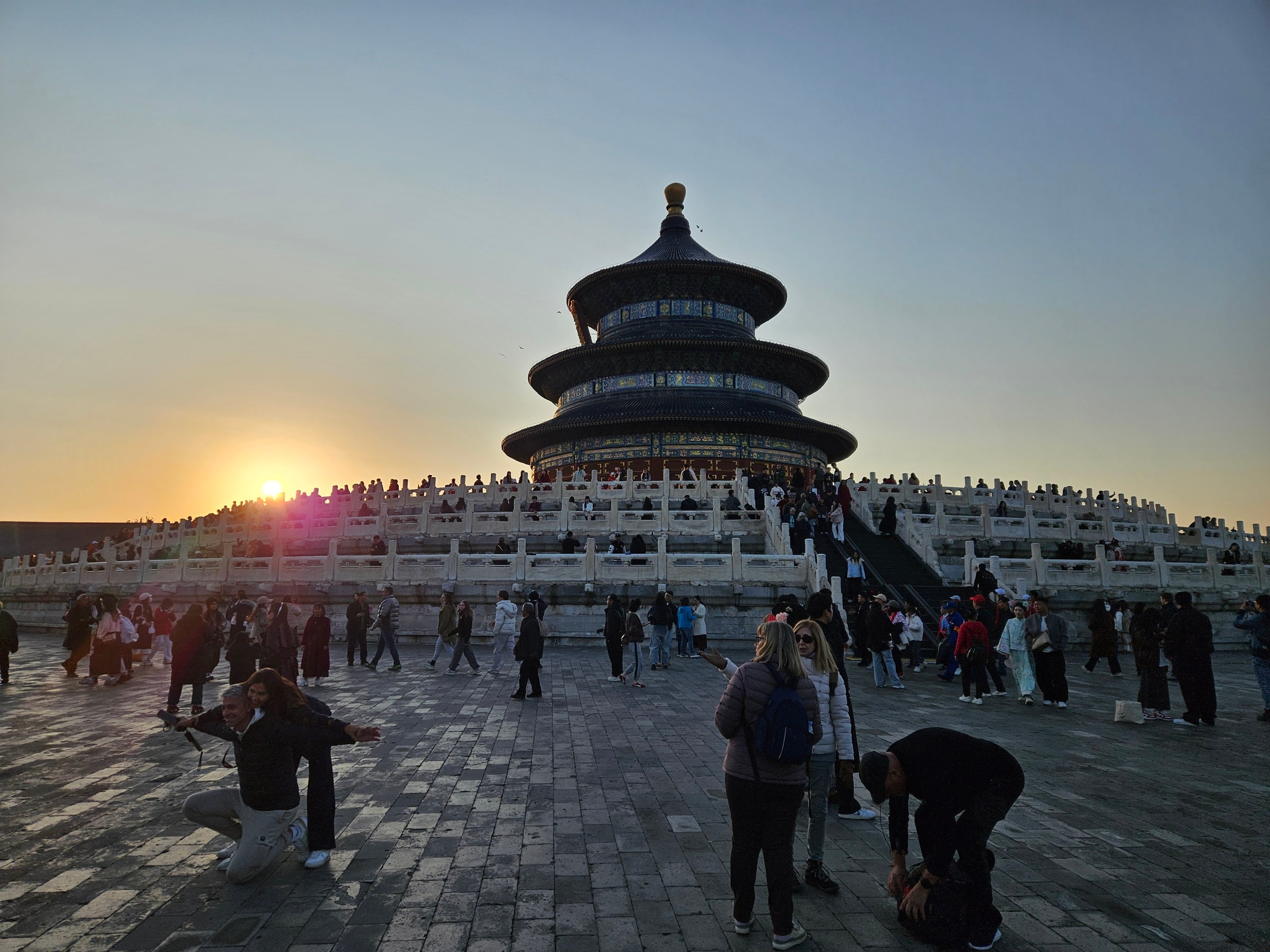
Late September through October is the strongest window: cooler walking weather, lower humidity, and autumn colour outside the city. Avoid the National Day holiday around the first week of October, when domestic travel surges and scarce tickets become scarcer. The photos here were made later in October, when the sky could be hard blue and the evening cold enough to notice.
April and May can work well, though wind and occasional dust are part of spring. June through August brings heat, humidity, school holidays, and limited shade in the big stone courtyards. Winter is dry and properly cold. The reward is thinner crowds and sharp light; the cost is a wind that finds every gap in your coat.
Air quality deserves a daily check, but Beijing has many clear days. Keep an indoor option for a poor one.
What Beijing costs
A realistic mid-range daily budget, excluding the international journey, is ¥650-1,100 ($90-150) per person when sharing a room. That covers a comfortable central hotel, metro rides and occasional Didi trips, ordinary meals, and admission to city sights. The Great Wall day can add ¥300-900 ($40-125) depending on public transport, a group tour, or a private driver.
Metro fares are usually ¥3-8 ($0.40-1.10). A noodle lunch can stay below ¥50 ($7). Hotels swing most around holidays and location; a cheap room beyond the Fourth Ring Road can collect its discount back in lost hours.
China runs on mobile payment. Set up Alipay or WeChat Pay with an international card before arrival, and keep a second method ready. Carry some cash, but do not assume every small business wants it.
The parts that wear you down
Beijing is not a graceful city to cross on foot. Blocks are long, roads are wide, and underpasses can send you away from the corner you wanted. The metro is excellent, but stations themselves involve plenty of walking and security screening.
Crowds are not confined to weekends. Major sights draw groups all week. Early starts help, but they do not grant private access to a city of more than twenty million people.
The broad courtyards provide some relief, but the central halls squeeze everyone back onto the same staircases. Visitors stop at the top for photographs while the queue keeps arriving below. Keep moving past the first packed terrace; the view is usually much the same from the next one.
Passport details must match, reservations disappear quickly, and English pages can lag behind Chinese information. Screenshot confirmations and save place names in Chinese characters. Leave enough space that one failed booking does not break the trip.
Skip the Wangfujing snack spectacle unless novelty food is specifically what you want. Skip a rushed Olympic Park detour unless the Bird's Nest matters to you. Be suspicious of friendly invitations to tea near Tiananmen and of tours with vague shopping stops. A firm no saves both time and a strange bill.
Is Beijing the right first stop in China?
For most first visits, yes. Beijing gives context that other Chinese cities assume you already have: the imperial centre, the political capital, the scale of public space, and one of the most accessible stretches of the Great Wall. It is tiring, procedural, and often crowded. It is also difficult to replace.
Choose Dunhuang first if Buddhist art and desert history justify the extra travel. Beijing is the clearest opening chapter, not the whole country.