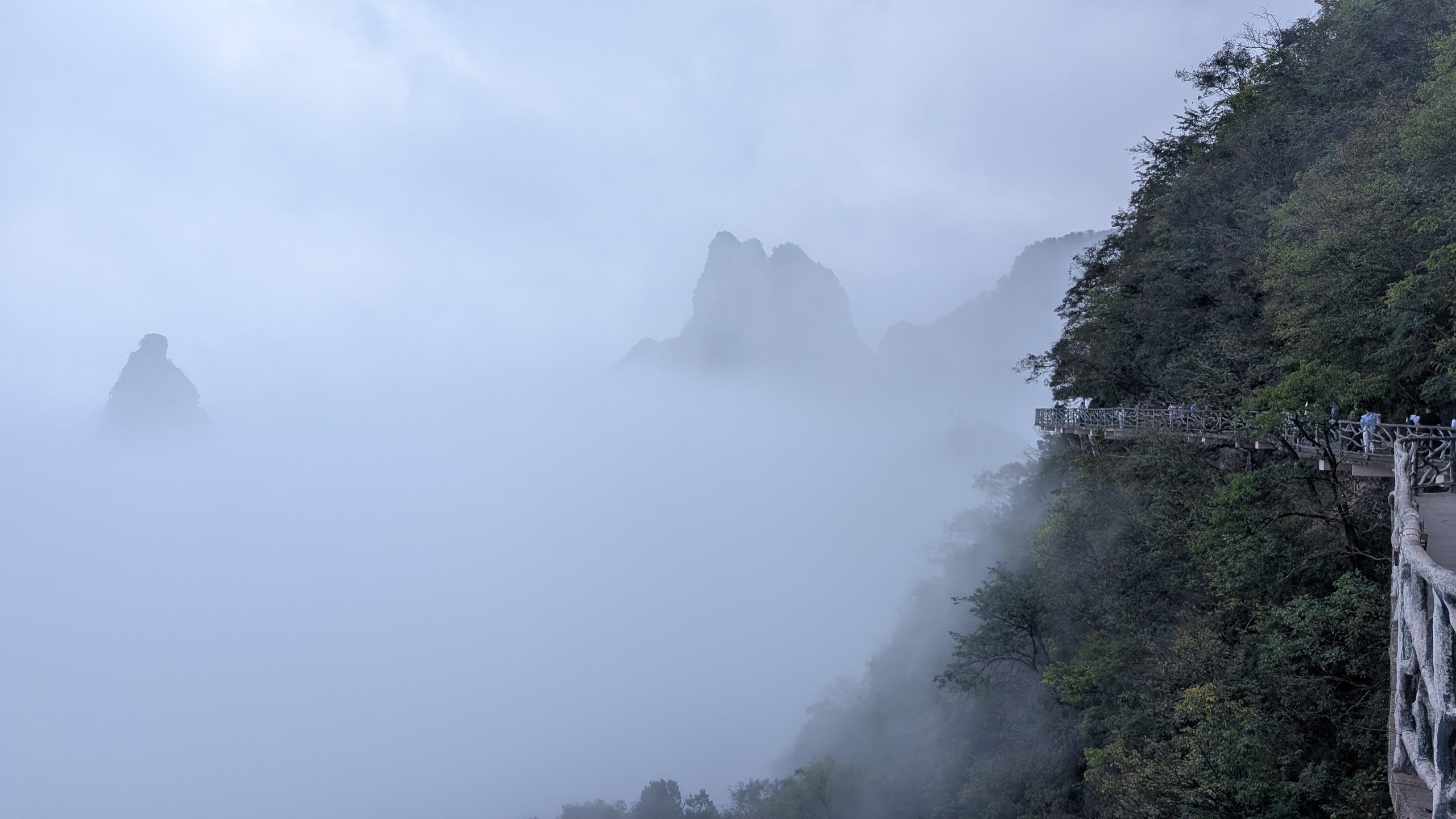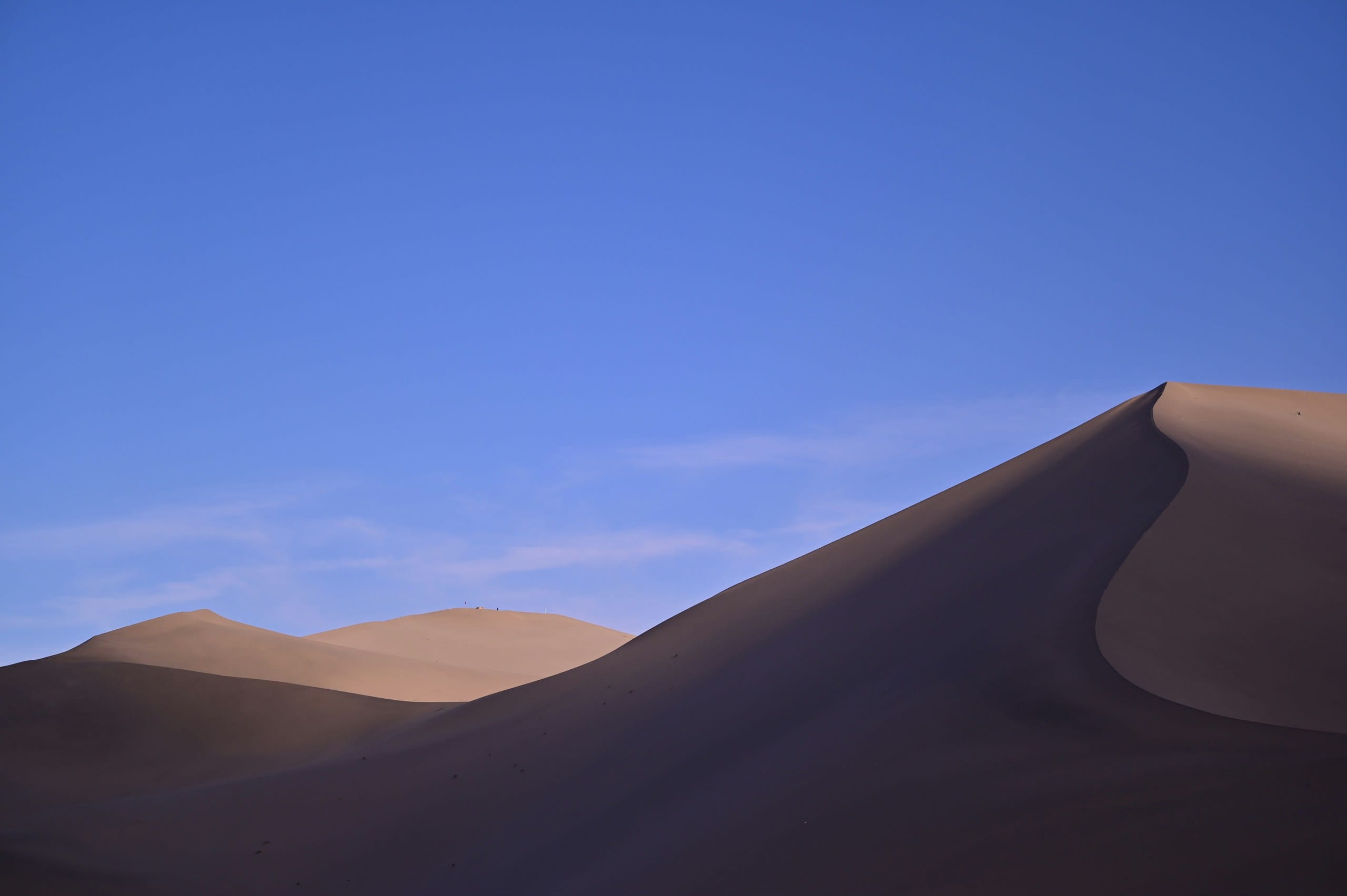
At the foot of Mingsha Mountain the Bactrian camels kneel in rows, each saddle pad stamped with a white number - 488, 034, 496 - like a parking lot that got up and walked into the Gobi. Behind them a dune rises so clean it looks cut with a knife. That is Dunhuang's postcard half. The reason most people come this far is underground: painted Buddhist caves in a cliff that has no business surviving fifteen centuries of desert air and tour groups.
Dunhuang is a city of about 190,000 in far northwest Gansu, where the Hexi Corridor runs out of useful road. Chinese travellers know it for the Mogao Caves and the singing dunes; a lot of Western itineraries never get here. Distance is part of it - Beijing and Shanghai eat the oxygen. If you want a China that feels like a borderland rather than a megacity, this is the direction. Pair it with Chongqing only if you accept a multi-leg journey.
The Mogao ticket problem
This is the part older blogs bury in a footnote, and it will waste a desert trip if you ignore it.
The Mogao Caves - the Thousand Buddha Grottoes - sit roughly 25 km southeast of town. Monks carved and painted them from the 4th century onward; for a thousand years Silk Road traffic paused here long enough to pay for murals and manuscripts that later scattered to museums worldwide. The Dunhuang Academy manages access now. Photography inside is banned - flash and breath damage pigment - so you cannot substitute a phone gallery for being there.
Standard visits run through timed slots and a fixed route - usually around eight caves, in a group with a guide, for 45-90 minutes inside. Capacity is capped. In peak season (July-August, Golden Week), tickets sell out days ahead; some high-value caves use a lottery that changes year to year. Book early. Passport details must match your ID exactly. Miss a slot and you should not assume a second chance. The Academy's visitor pages are the source of truth. Country-level booking habits sit in things to know before visiting China.
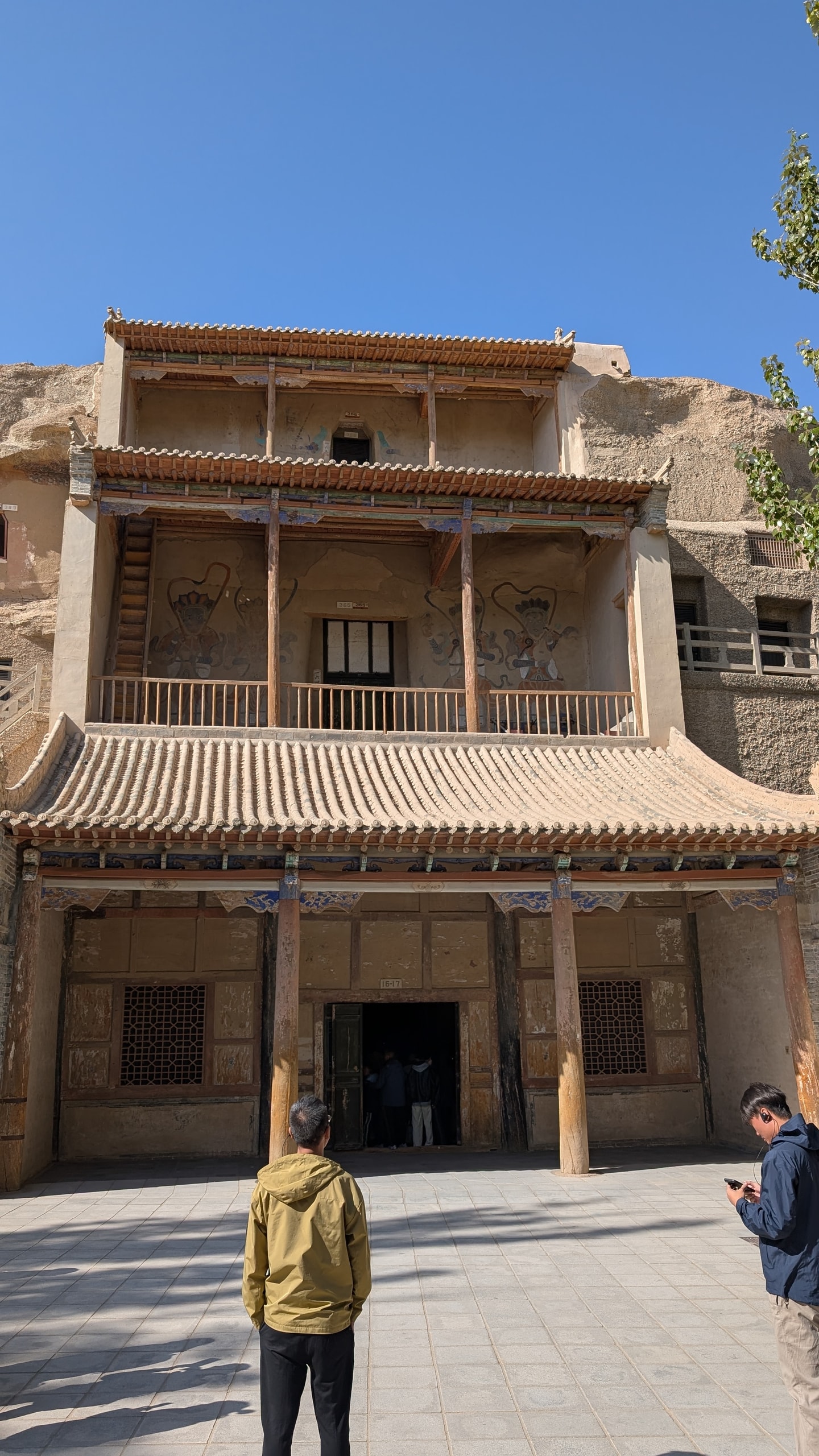
From the courtyard you see the Nine-Story Building first: a red wooden facade stacked against the sandstone cliff, Cave 96's housing for a colossal Buddha. That exterior is the only Mogao photograph that matters. Inside, you move cave to cave in low light while guides name the dynasty on each wall - Tang flying apsaras, Song bodhisattvas with gold leaf still catching the torch beam. Some chambers feel like a painted jewel box; others hold a seated Buddha the size of a house. The colours are still vivid after so many centuries.
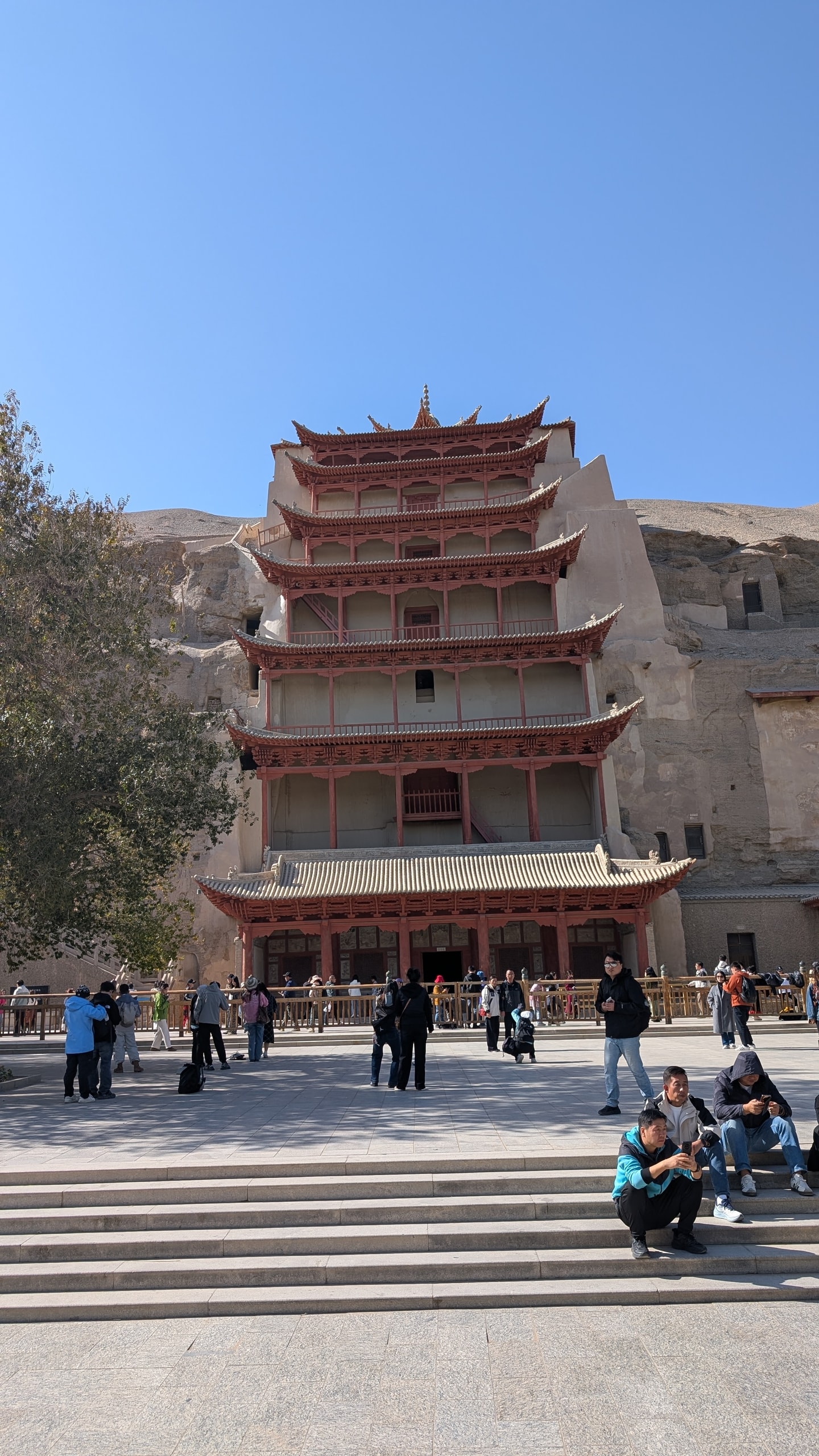
Everyone aims a phone at the Nine-Story Building. Useful for scale. Useless as a stand-in for the painted caves.
Elsewhere along the cliff, smaller wooden temples cling to the rock - lattice windows, painted eaves, faded guardian figures. If you resent crowds, tight scheduling, and no photos, you will resent Mogao. If you accept those terms, it belongs on any serious destinations list - the persistence here is pigment on mud brick in desert air.
If your ticket allows a pause outside, take it. Desert light on the wood and sandstone is the only half of Mogao your camera is allowed.
Mingsha Mountain: sand, camels, and a loud afternoon
Closer to town - about 6 km south - Mingsha Mountain (鸣沙山) and Yueyaquan, Crescent Lake, are the dunes and the spring that has somehow not been swallowed by sand. Touristy. Also genuinely odd. Entry runs roughly ¥110-140 ($15-20) depending on season and extras. From there you walk, ride a camel, rent a dune buggy, or take the cable car toward the ridges.
The camel staging area is hard to miss: dozens of two-humped Bactrians with numbered saddles, a visitor building behind them, a dune wall rising clean against the sky. Walking often beats the camel queue; the ride is still worth it once - short loop, animal smell, grit in your teeth.
Sunset is the obvious slot and everyone knows it. The dunes turn orange, the lake catches the last light, and the gift-stall speakers do their worst. Weekday late afternoon in May or October is busy but manageable; weekend peak season feels like a national park on a holiday Monday. Crescent Lake is smaller than aerial photos suggest and partly maintained - visit it as part of the Mingsha ticket, not as a day of its own.
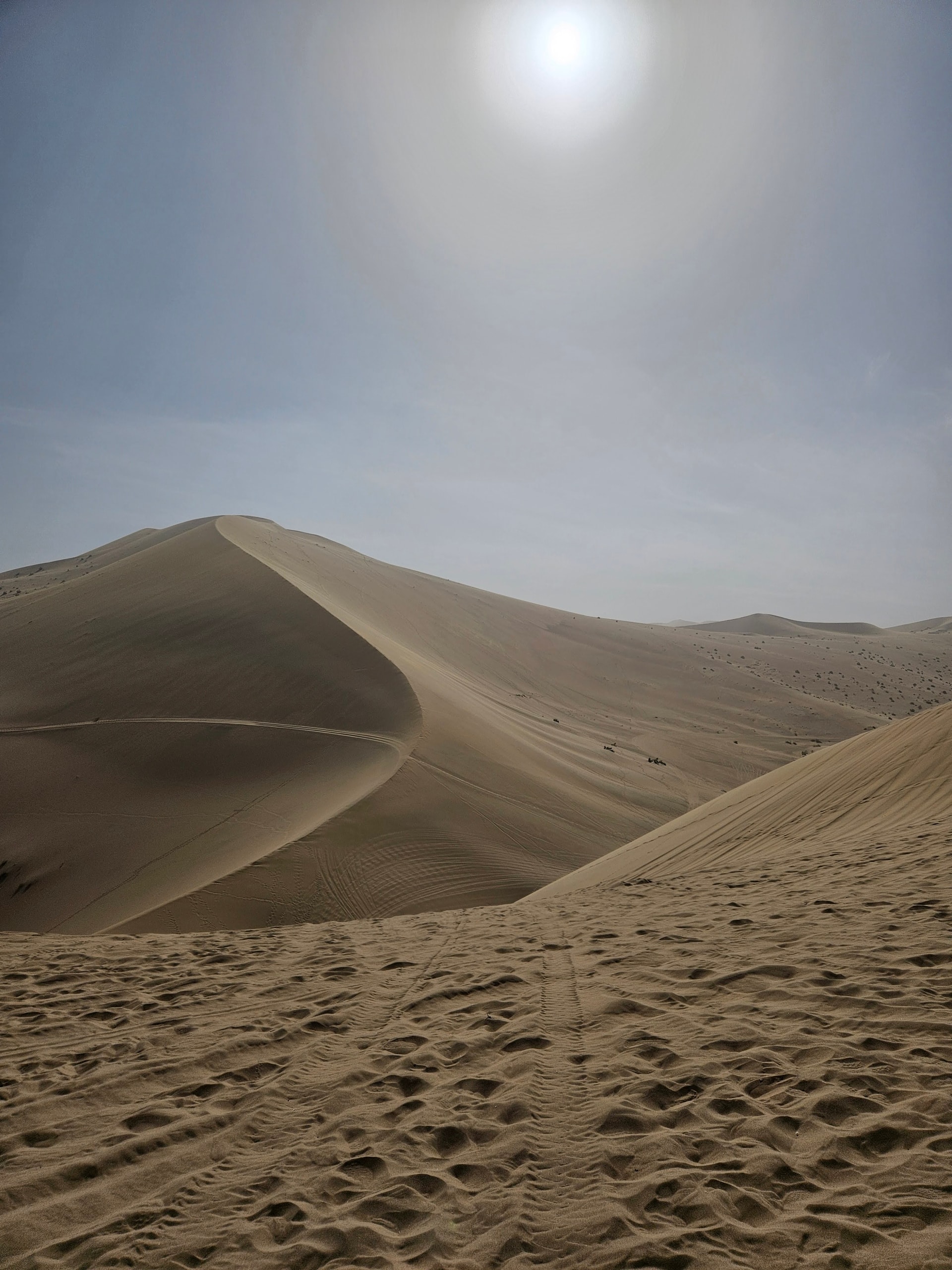
Sand sledding (¥20-30 / about $3-4 for a plastic board) is brief and fun; the sand can make a low engine sound when you slide. Climbing a ridge on foot is harder: each step collapses halfway back, and the view from the top is mostly more sand, which somehow still satisfies. Wear shoes you can shake out, or the orange sand covers the rental stalls sell.
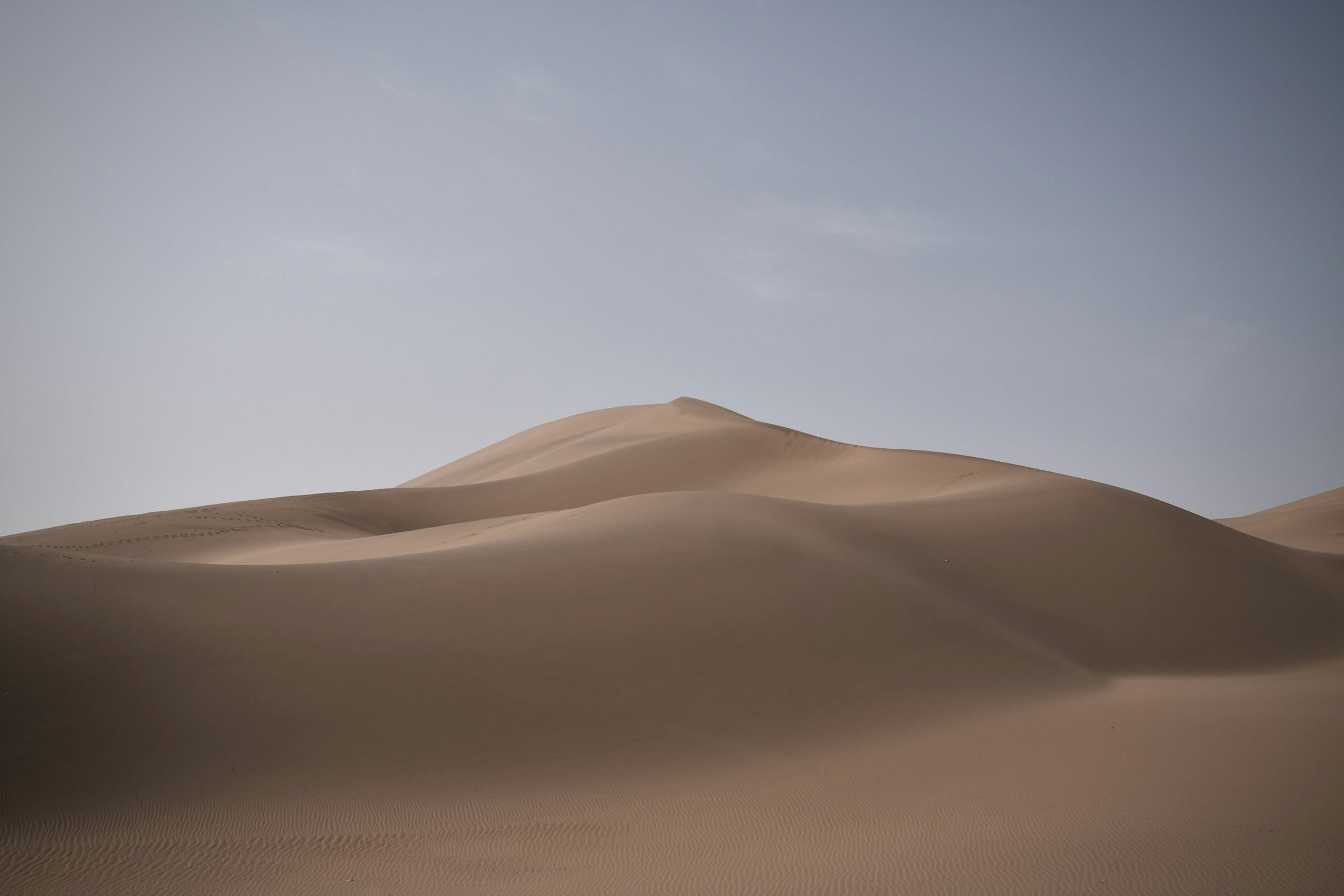
Dune buggies cost extra and chew through the afternoon fast - loud, fun if that is your trip, unnecessary if you came mainly for the caves. The quieter move is to walk a ridge away from the camel pens until the megaphones thin out. You will still see footprints and tire tracks; this is not wilderness. The scale of the dunes does most of the work once you get a little height.
The climb is slow because each step slides back in the sand. The crest is where the wind hits, and the view is mostly more dunes - which is still worth it.
The town after dark
Dunhuang proper is a functional grid of hotels and restaurants. The night market is loud, smoky, and where you should eat after a day in sand. Vendors in embroidered caps work long charcoal grills packed with cumin-rubbed lamb; the smoke hangs under the lights. A solid meal runs ¥60-100 ($9-15). Expect northwest China flavours - skewers, hand-pulled noodles, watermelon by the slice.
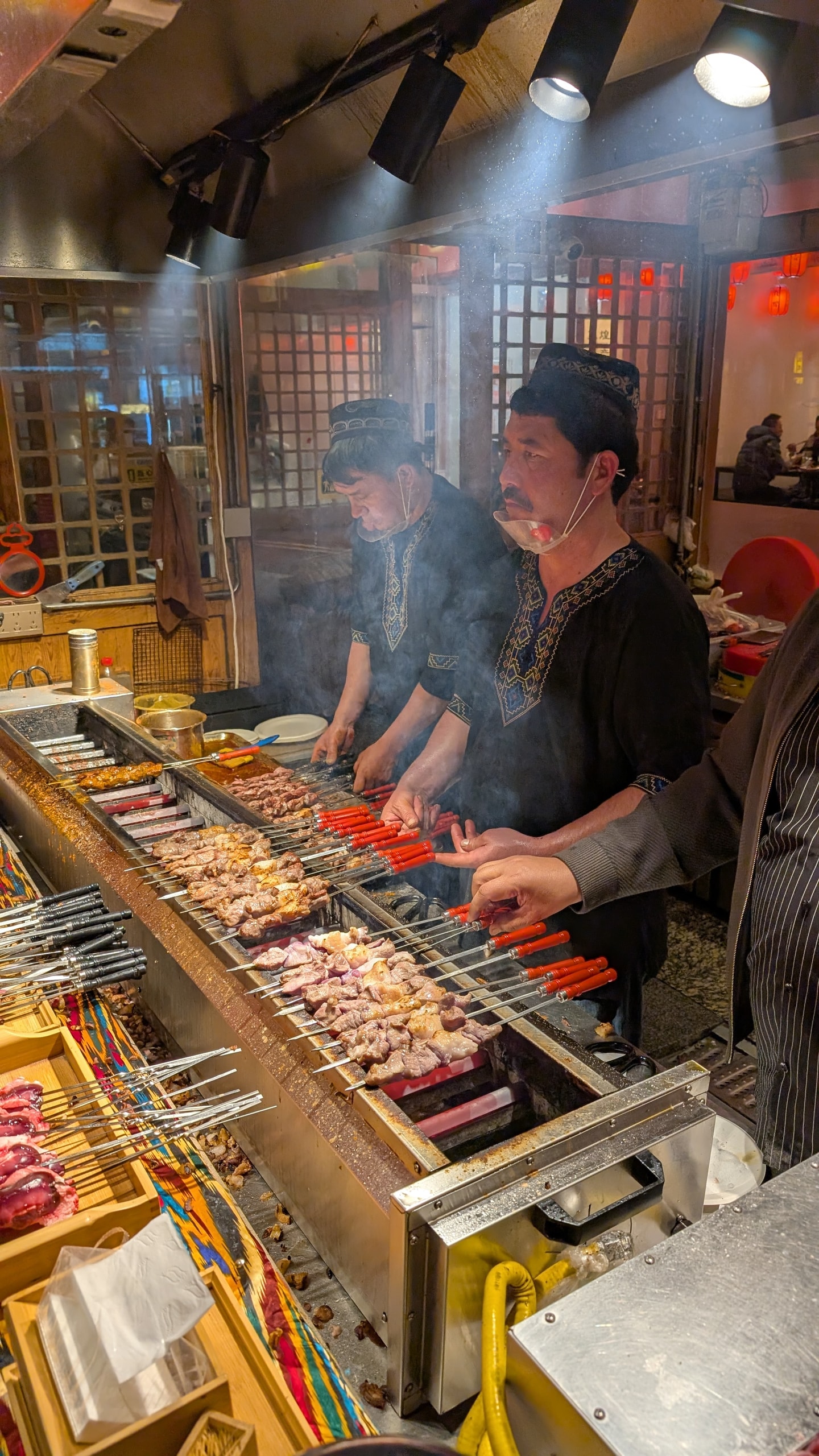
Point at the grill and let someone else count the sticks. Lamb with cumin after Mingsha is the correct end to the day.
Skip the film-set "Ancient City" and the light-show attractions unless that is specifically your trip. On a longer visit, Yardang National Geopark - wind-carved rock about two hours by road - is the quieter extension; hire a driver or join a small group.
Hotels cluster near the night market; mid-range rooms run roughly $40-80 a night. Book something with a shower you trust after Mingsha - sand gets everywhere. Taxis between town, Mogao, and the dunes are straightforward; have destinations written in Chinese.
Getting there, how long, what it costs
Most people arrive by train - roughly 8 hours on the high-speed line from Lanzhou. From Chongqing or Chengdu you need a multi-leg journey unless you fly. Compared with a first-timer's Beijing circuit, Dunhuang is a detour that costs real travel days - spend them only if the caves are the point.
Day one: Mogao (timed ticket, passport, no photos), then the night market. Day two: Mingsha late afternoon into sunset - walk a ridge, maybe a camel or a sled. Day three (optional): Yardang, or a quieter second pass at the dunes. Do not force Mogao and Mingsha into the same rushed morning.
April-May and September-October are the easiest months: warm days, cool evenings, not the 35°C+ furnace of midsummer. Winter is cold and quiet. Shoulder months make Mogao booking slightly less frantic; reserve early anyway. Mid-range daily budget: ¥400-700 ($55-100) for hotel, meals, taxis, and one major ticketed site. Pack sun protection, lip balm, a scarf for windblown sand, and shoes that tolerate grit. Drink more water than you think.
Book Mogao first - then decide if the desert is for you
Come if you care about the caves or the desert and will book tickets in advance. Stay away if you want an easy long weekend from Beijing with your phone out the whole time. Distance, Mogao bureaucracy in peak season, and megaphones on the dunes are real. This is a popular desert stop that rewards preparation, not a spontaneous add-on.
The caves justify the journey. The numbered camels, the singing sand, and night-market skewers make the place feel lived-in rather than only museum-preserved. Two full days minimum; three if you want Yardang. Book Mogao before you arrive.