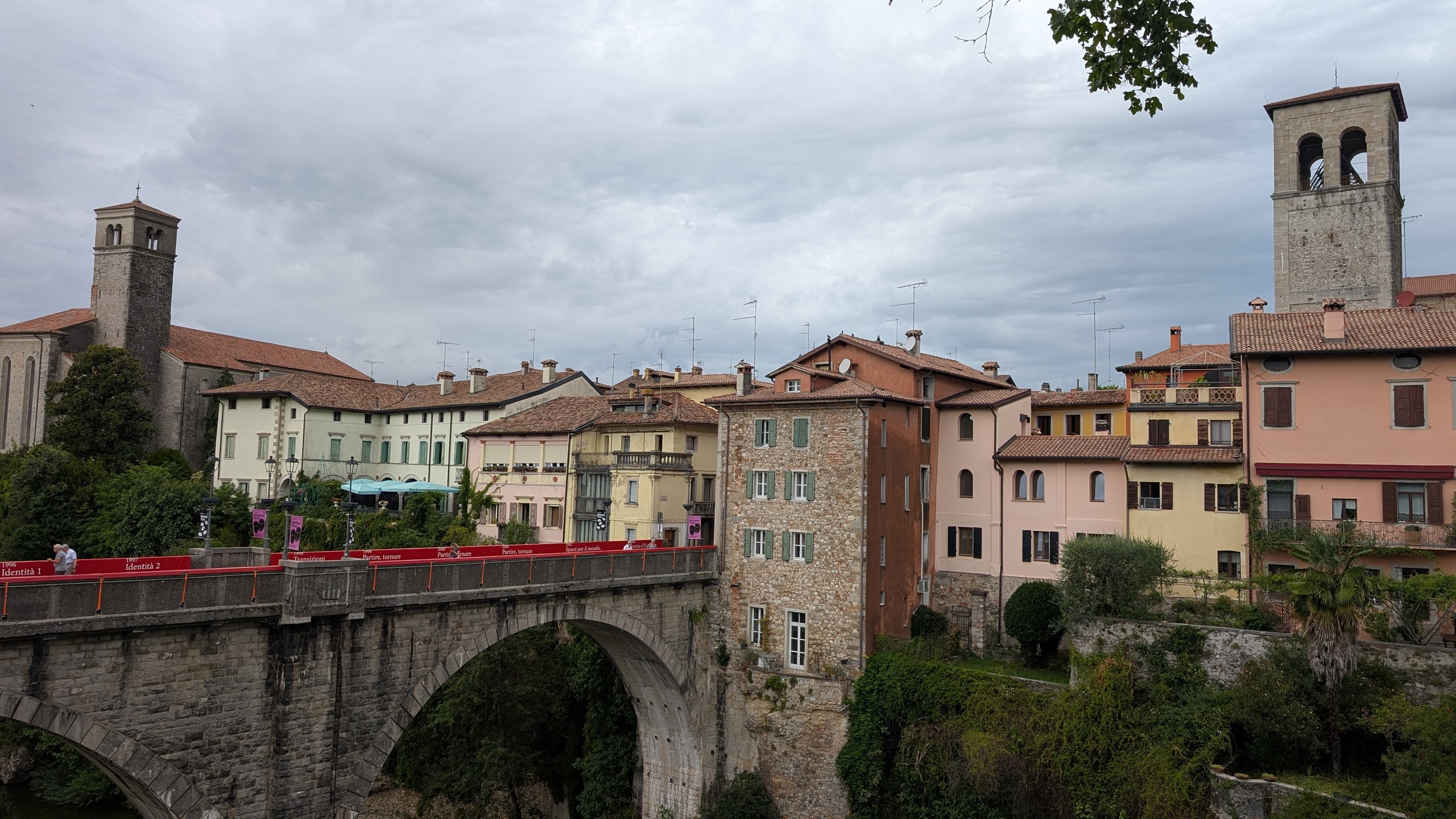
The best view in Cividale del Friuli comes with a large stone in the way. The Ponte del Diavolo crosses the Natisone on two uneven arches because its central pier had to land on a boulder in the riverbed. Look downstream and the town appears in layers: green water, limestone walls, trees, terracotta roofs and square bell towers under the low hills.
Cividale sits 10 miles east of Udine, close enough to Slovenia that menus and road signs begin to pick up a second language. It is compact, walkable and far more historically important than its size suggests. Julius Caesar established Forum Iulii here around 50 BC; the name gradually became Friuli. When the Lombards entered Italy in 568, they made the town their first duchy.
That makes Cividale a good answer to two different questions: what is an easy day trip from Udine, and where can you see early medieval Italy without fighting Florence-sized crowds? One full day covers the centre. A night gives you the bridge and river after the museum groups have gone. If you want a mountain day on the Slovenian side after the stone streets, Krn Lake from Lepena is the forest climb that pairs with it.
Start with the Devil's Bridge, then get underneath it
The present Ponte del Diavolo took several builders and most of the 15th century to finish. The town preferred a better story: the devil agreed to build it in exchange for the first soul across, so the locals sent a dog over. The bridge was blown up during the Italian retreat after Caporetto in 1917 and rebuilt from its old plans. Cividale has been crossing here ever since.
Walking over it is free and takes about a minute. Do not stop at the top.
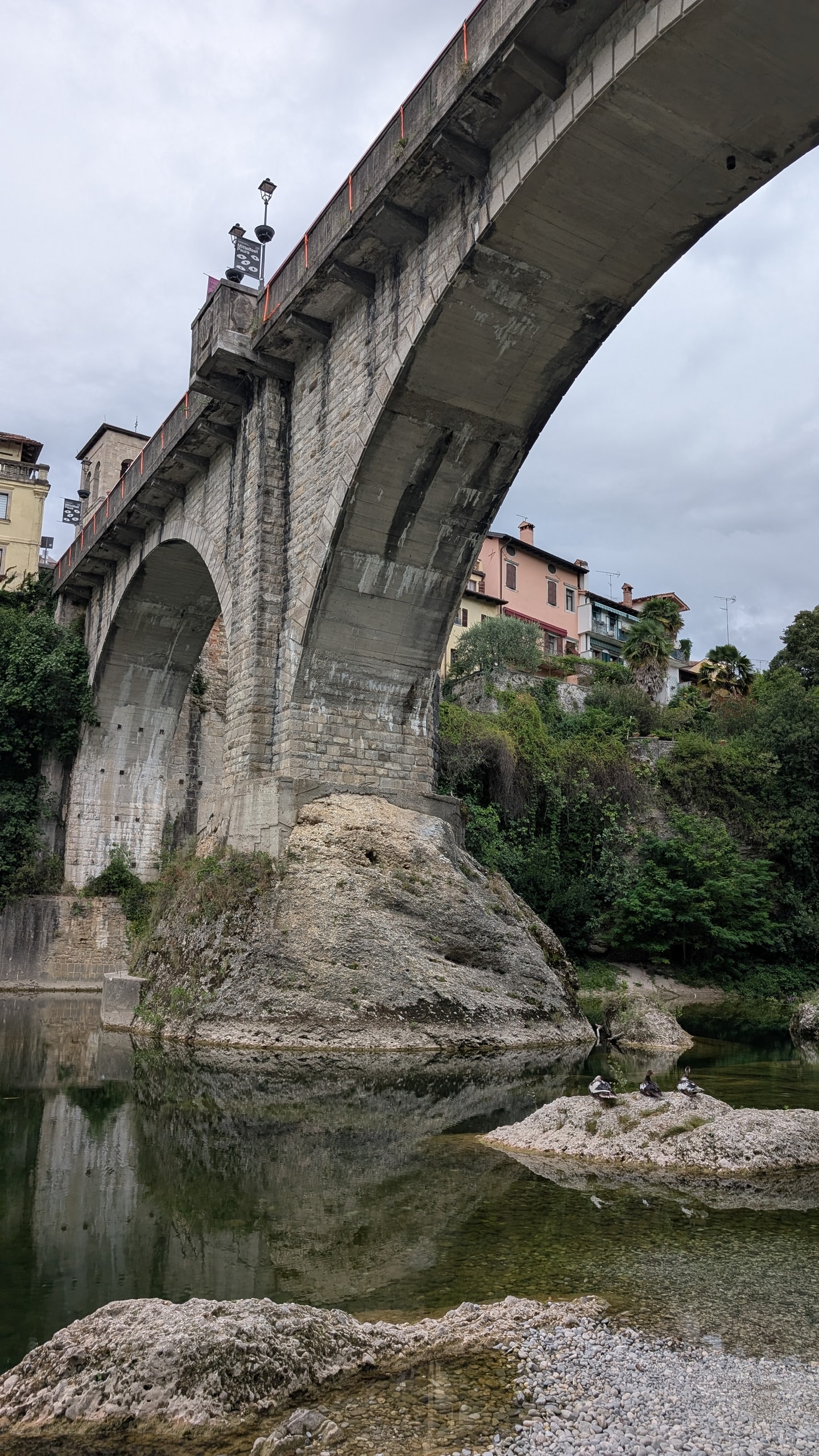
From the riverbank, the odd engineering decision becomes obvious. One arch springs from the bank; the other lands on a slab of limestone in midstream. The bridge is less graceful down here and much more interesting.
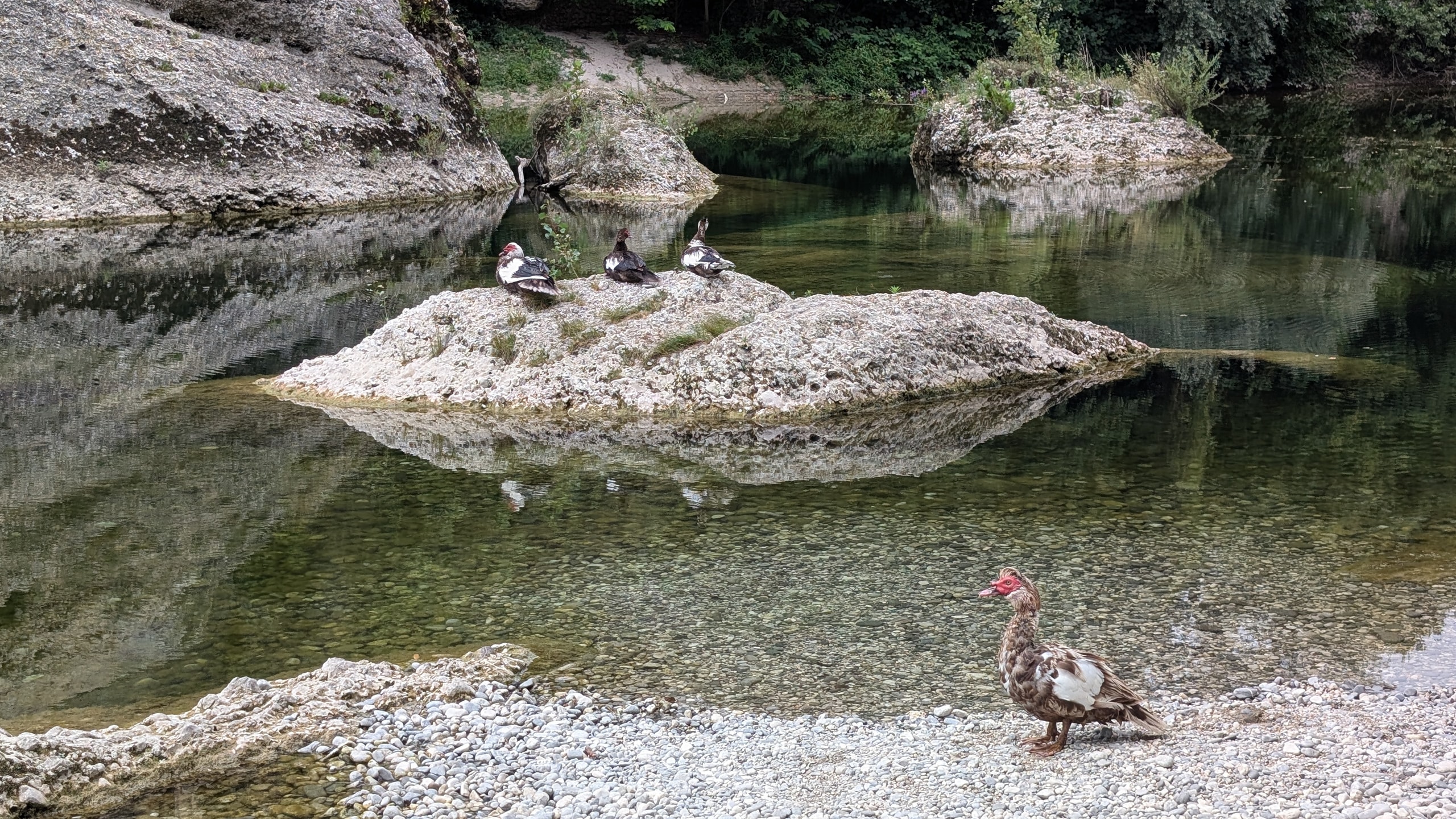
Paths and steps on both sides drop toward the Natisone, where the scale changes completely. From below, the river runs through clear green pools between pale rock shelves. Muscovy ducks stand on the stones as if they own the place. The buildings above disappear behind trees, and a town that looked like brick and plaster becomes a river gorge with houses balanced on its edge.
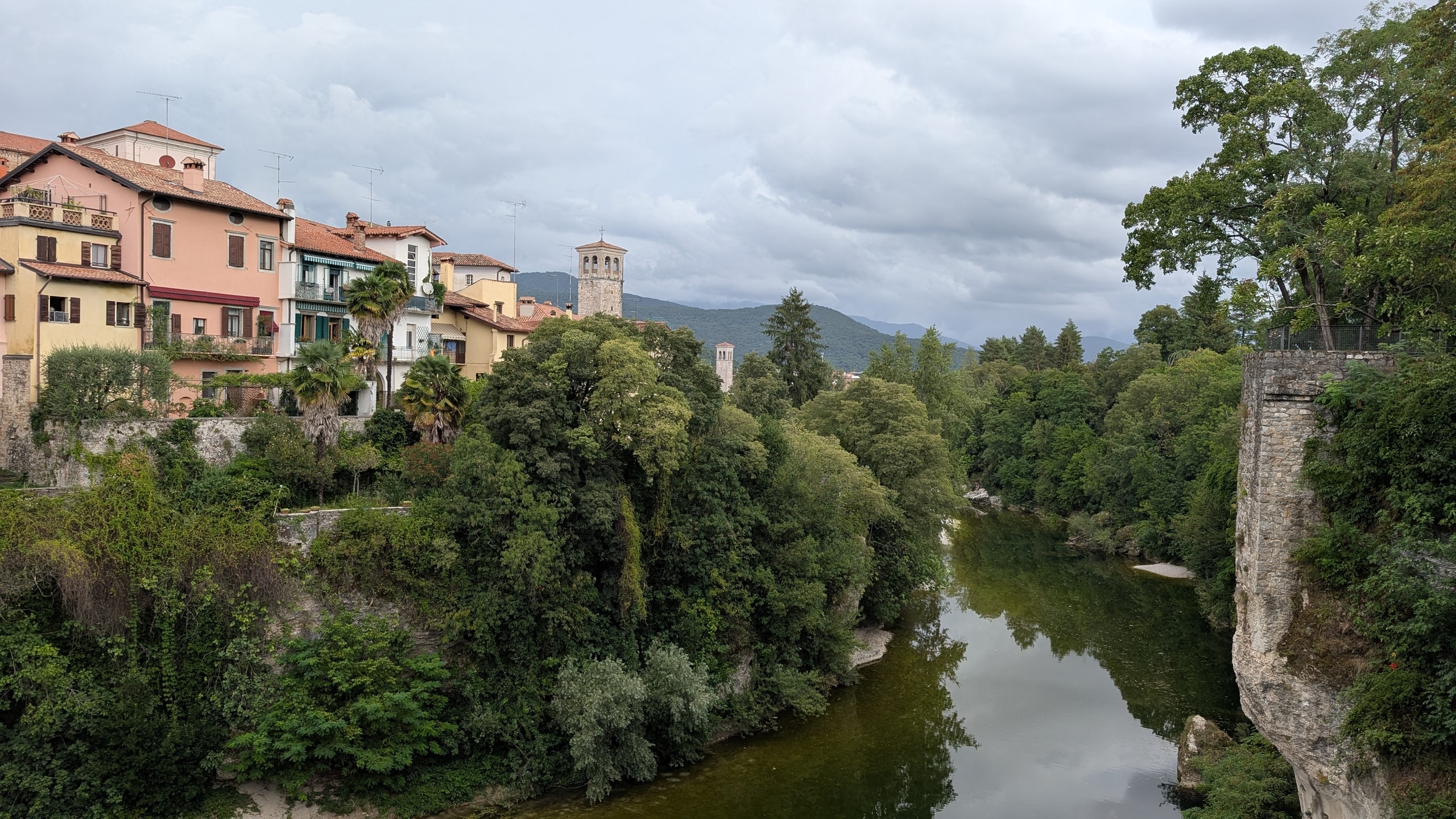
The water level can rise quickly after rain, so stay off exposed gravel bars when the current is high. On a dry day, allow forty minutes for the riverbanks rather than treating the bridge as a photo stop.
The Lombard Temple is the reason to come
Cividale's UNESCO listing is not for the whole old town. Its core is the Tempietto Longobardo, a small 8th-century chapel inside the former Monastery of Santa Maria in Valle. “Temple” oversells the scale; the room is intimate. What matters is what survived inside it: Byzantine-influenced frescoes, carved marble and six pale stucco figures high on the west wall, their long robes still sharply folded after roughly 1,250 years.
The Lombards are usually reduced to a migration map and a date. Here they left faces.
Entry to the Tempietto and monastery costs €4 ($5). A €9 ($10.50) combined ticket also covers the Christian Museum and cathedral treasury. Check the official Tempietto visitor information before going, because opening hours shift by season.
Across Piazza Duomo, the National Archaeological Museum fills the Venetian Palazzo dei Provveditori. Its grave goods do the heavy lifting: gold crosses, weapons, combs and jewellery recovered from Lombard cemeteries around town. Admission is €6 ($7), and the museum is open Tuesday to Sunday, 10:00-19:00. If your interest in buckles has a natural limit, give it an hour and spend the saved time by the river.
The centre is small, and people still live here
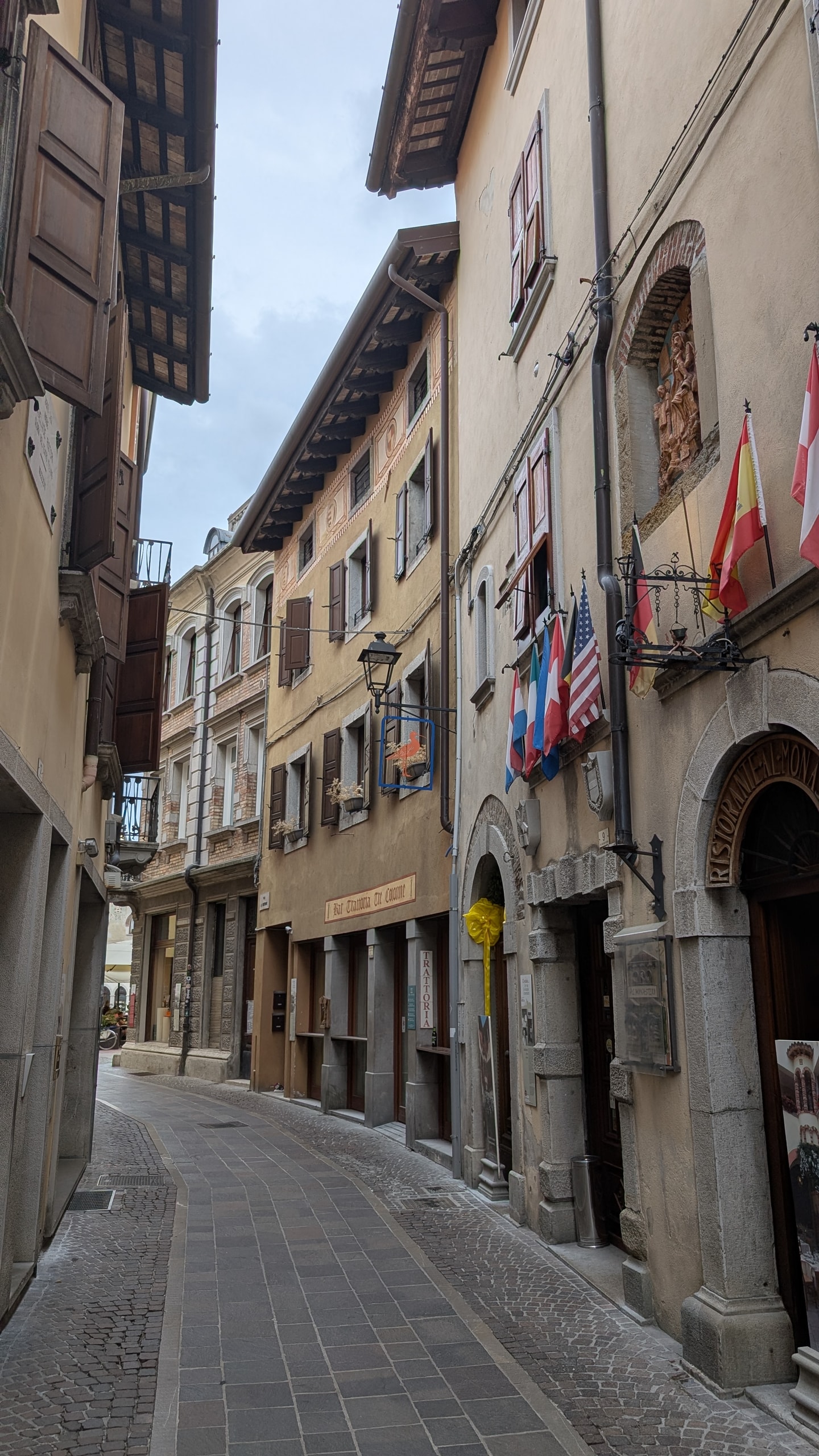
Between Piazza Duomo and the bridge, Cividale narrows into stone-paved lanes with deep roof overhangs, wooden shutters and shopfronts fitted into old arches. Flags hang outside a trattoria; satellite dishes and drainpipes share walls with carved lintels. That mixture helps. The place has UNESCO plaques, but it still looks like somewhere people need to get deliveries through on a Monday morning.
Walk Via Carlo Alberto and the lanes around Piazza Paolo Diacono without trying to make a route of them. The centre is too small to get properly lost, which frees you to follow whichever archway, bakery window or worn stone doorstep looks promising.
The stranger stop is the Celtic Hypogeum, a set of damp chambers cut into the rock above the river. Nobody can say confidently what it was for. Theories include a Celtic burial place, a Roman or Lombard prison and a cistern; rough masks carved into the walls settle nothing. Visits currently run by guided tour on weekends and holidays, leaving the tourist office at set hours, for €5 ($6). Book or check at Informacittà rather than assuming the door will be open. The ladder is steep and the floor wet, so this is not the accessible part of town.
Eat Friuli, not generic tourist Italy
This is the point where ordering another plate of carbonara would be a waste. Frico is the local staple: Montasio cheese fried with potato until the outside catches and the middle stays soft, usually served with polenta. It is heavy, salty and exactly right after a damp morning in stone chambers.
Finish with gubana, a dense spiral cake from Cividale and the Natisone Valleys, packed with walnuts, raisins, pine nuts and grappa. One slice is plenty. A bakery portion costs a few dollars; a whole loaf makes a better train snack than it does carry-on luggage.
A simple lunch runs $18-25 a person. Dinner with local wine is closer to $35-50. Friuli's Colli Orientali vineyards begin just outside town, so the house white has a better chance than usual of being genuinely local.
What Cividale costs
- Lombard Temple and monastery: about $5
- Combined Tempietto, Christian Museum and cathedral treasury ticket: about $10.50
- National Archaeological Museum: about $7
- Celtic Hypogeum guided visit: about $6
- Coffee and pastry: $4-6
- Lunch: $18-25 a person
- Double room: roughly $85-150; prices climb on summer weekends
You can have a full day, including two paid sights and lunch, for around $45-65 a person before transport. Cividale is cheaper than Italy's headline historic cities, partly because almost everyone still treats it as a day trip.
Getting there and the best time to go
Under normal service, the independent Udine-Cividale railway takes about 24 minutes and costs only a few dollars. As of July 2026, infrastructure works have replaced trains with buses, stretching the trip to roughly 35 minutes. Check Ferrovie Udine Cividale for the current timetable rather than relying on a journey planner that still shows trains. The station is a ten-minute walk from Piazza Duomo.
By car, park outside the historic core and walk in. You will not need wheels again until you leave.
Come in May, June, September or early October. The riverbanks are green, the centre is easy to walk, and restaurant terraces still have life in them. July and August can be humid and busy on weekends. Heavy rain is the real spoiler: it flattens the colour of the Natisone, makes the lower paths questionable and turns a large part of the visit into indoor history.
One day is enough for the bridge, Tempietto, museum, lunch and a river walk. Stay overnight if Cividale is the start of a slower trip into the Natisone Valleys or the Colli Orientali wine country. Otherwise, do not pad it into a three-day city break. Small is part of the appeal. More compact historic towns sit in the destinations archive.
Is Cividale del Friuli worth visiting?
Yes, especially if Udine or Trieste is already on the route. Cividale gives you a river gorge, a genuinely important piece of Lombard Italy and a centre small enough to understand before dinner. Its weakness is the same thing as its strength: there is no long checklist, little nightlife and no reason to rush.
Come for the bridge view, but go below it. Pay for the tiny chapel, then look carefully at the faces on the wall. Eat something involving fried cheese. That is a very good day.