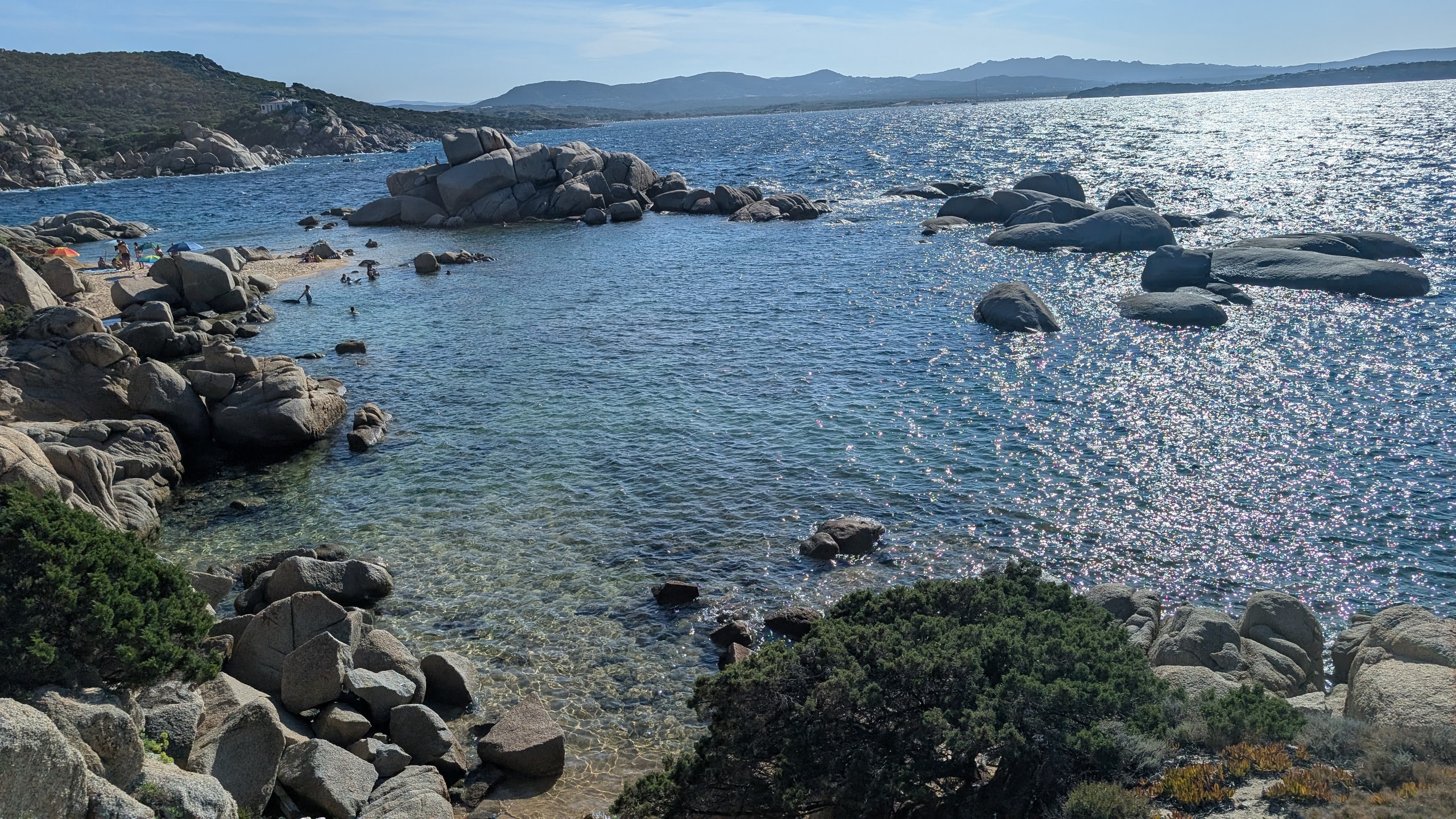
Most people who say “North Sardinia” mean Porto Cervo: white hotels, berth fees that make a grown adult blink, and a coastline sold as if the rest of the island were an afterthought. That strip is real. It is also a thin piece of a much larger coast.
Drive twenty minutes west of the yacht docks and the rock changes. Gallura’s granite arrives in pale, wind-sculpted blocks that look more lunar than Italian. Water turns clear enough to read the seabed through. Farther west, Alghero still puts Catalan on shop windows and walks its sea walls at dusk like a working town that never fully converted to resort.
Book the North you actually want: Gallura granite and coves, Alghero’s Catalan walls, or a thin yacht strip you mostly drive through. Rent a car. The brochure version of Costa Smeralda does not need your nights.
Two bases, one driving day between them
Think of the top of the island as two bases with a driving day between them, not one continuous beach strip.
Gallura occupies the northeast: Santa Teresa Gallura, Capo Testa, the Valle della Luna coves, the Nuragic sites inland from Arzachena, and the ferry link to Corsica. Granite, maquis, and small swimming holes that fill by late morning in August.
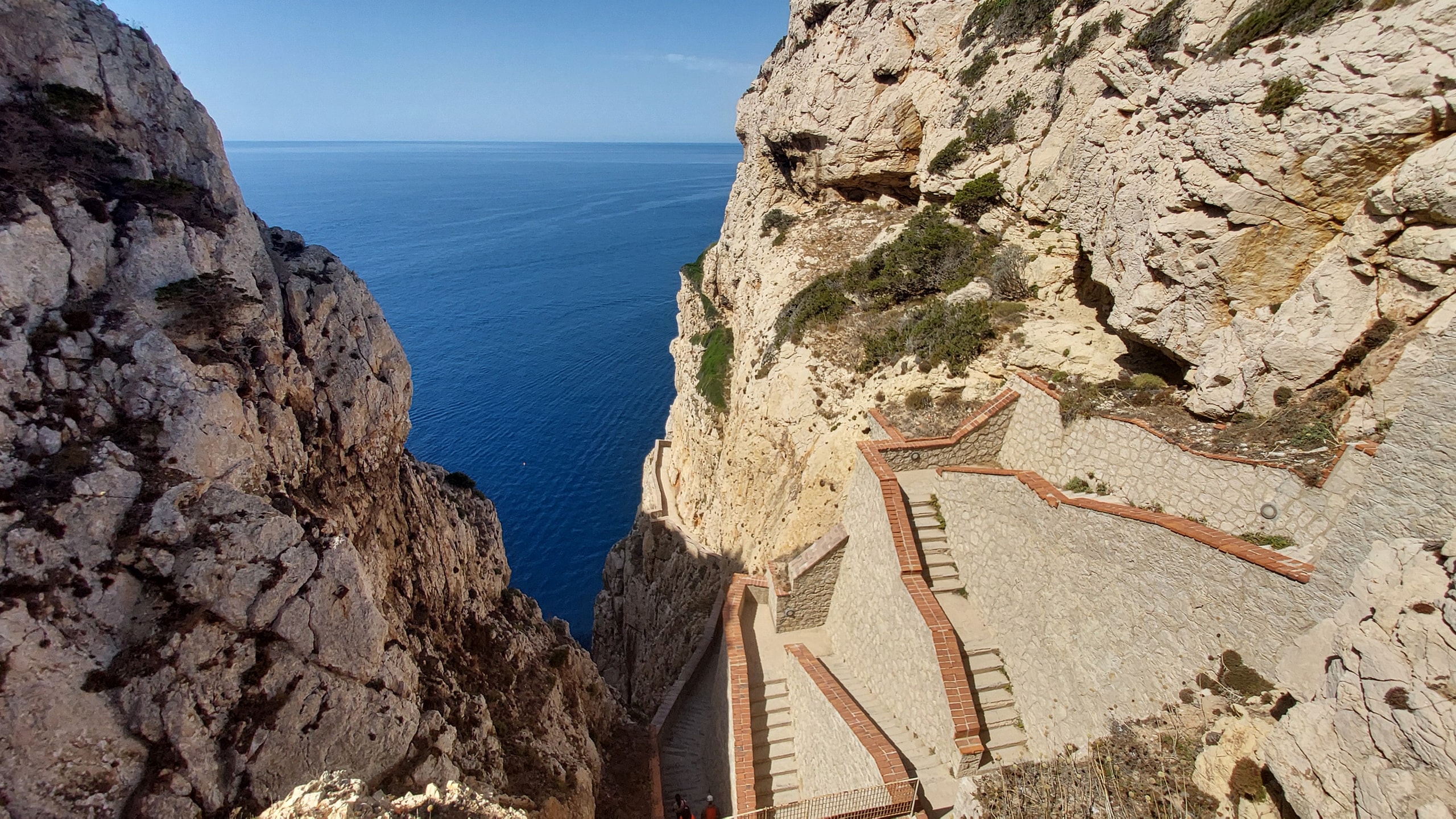
Alghero and Capo Caccia sit on the northwest. Limestone cliffs replace granite. The old town is Catalan in street names and dinner rhythm. Capo Caccia holds Neptune’s Grotto and the 654-step Escala del Cabirol down the cliff.
Between them, coastal roads cross scrub, cork oaks, and hill towns. Castelsardo is a natural lunch stop on a base transfer. Costa Smeralda sits on the Gallura side of that map - optional scenery, not the itinerary.
Seven to nine nights covers both coasts without turning every day into a transfer. Four nights in Gallura and three in Alghero is a clean split. Five and three works if Capo Testa is the main reason you came.
Public transport links the larger towns. It does not serve granite coves, cliff car parks, or archaeological turnoffs well. A rental car is the honest answer. Budget roughly $35-55 a day for a small automatic in shoulder season, plus fuel and the usual Italy extras (full-to-full, parking, ZTL awareness in town centres).
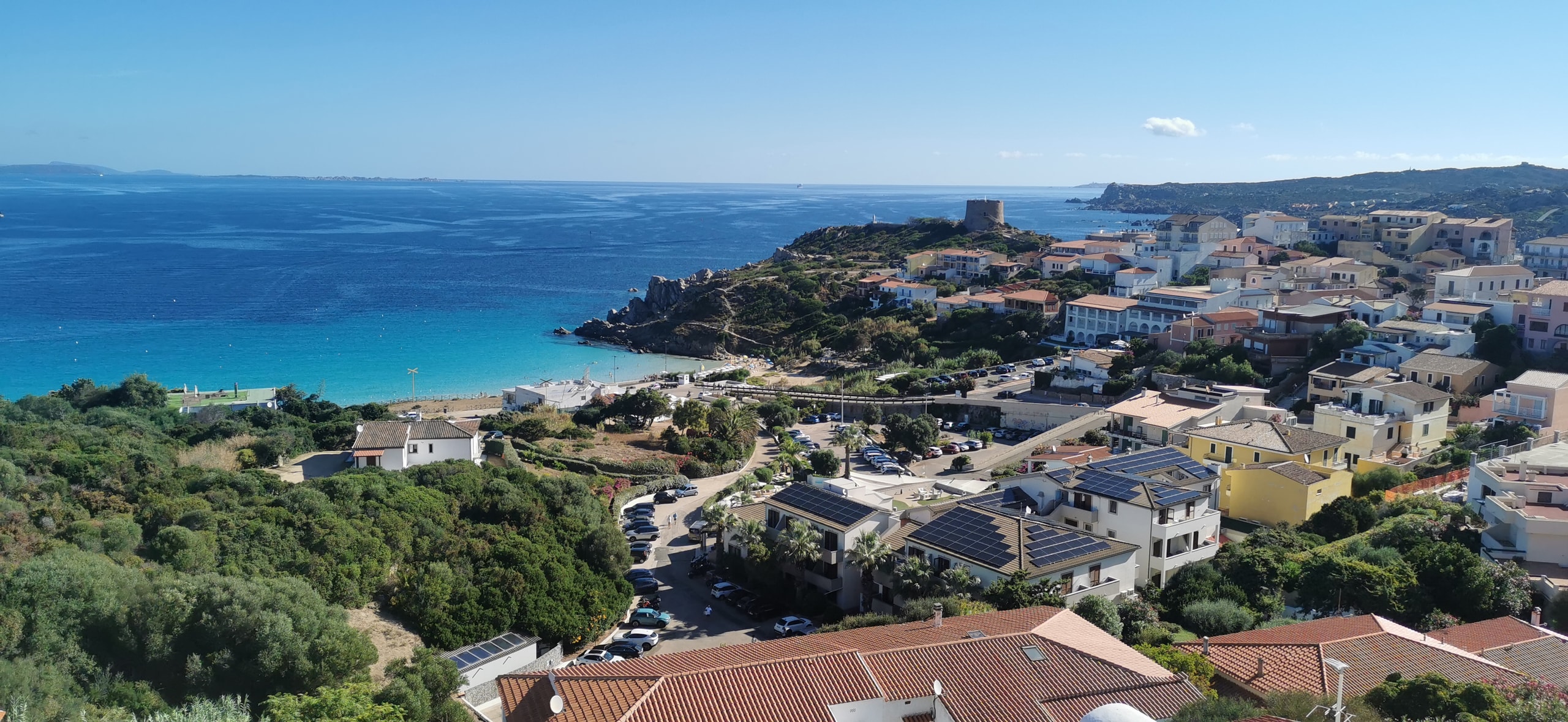
Santa Teresa Gallura is the right northeast base
Santa Teresa sits on the northern tip looking toward Corsica, close enough that the ferry to Bonifacio is a day-trip option if the weather holds. The town is compact: low white and cream buildings, a small centro, and Rena Bianca beach under the headland. It is touristy in summer, but in a practical way - grocery stores, gelato, boat offices - rather than a gated resort.
Stay here if Capo Testa and short drives to quieter coves matter more than nightlife. Rooms in a simple B&B or apartment run roughly $90-160 a night in June and September; August pushes higher and books earlier. Dinner for two with seafood pasta, a shared antipasto, and house wine often lands around $55-80 if you skip the absolute waterfront tables.
Rena Bianca is fine for an easy swim on arrival day. Do not make it the week’s main beach. The interesting water is ten minutes west, where the granite starts.
Capo Testa and the Valle della Luna
Capo Testa is a granite peninsula just west of Santa Teresa. Wind and salt have carved the rock into ribs, overhangs, and hollows locals call tafoni. Trails wind between the blocks to small inlets where the water sits still and pale over white sand. This is the landscape that makes North Sardinia feel unlike Mallorca’s limestone calas or the Amalfi cliffs: the stone itself is the attraction.
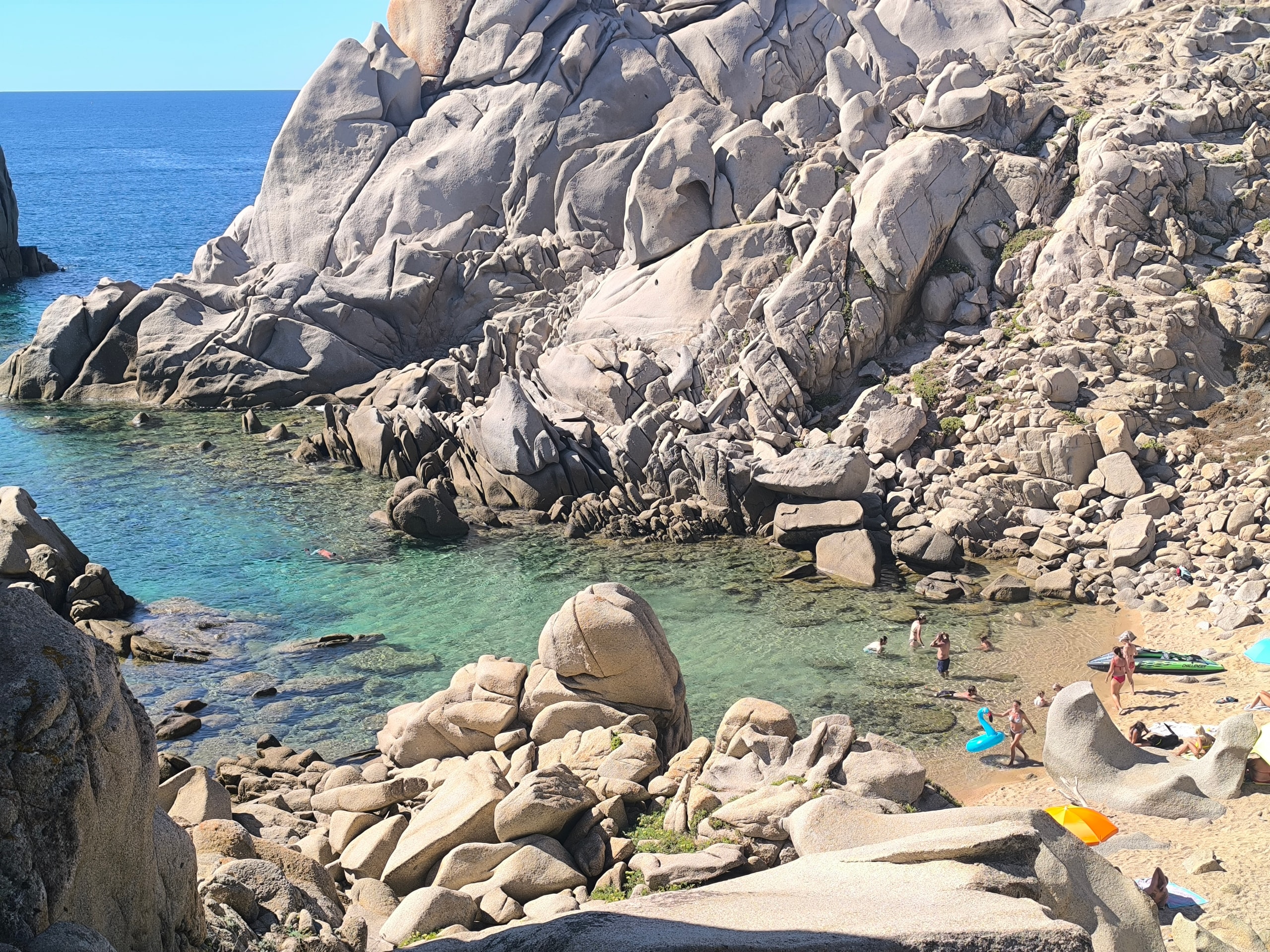
Park in the signed areas near the lighthouse road and walk. Flip-flops are a bad idea on the rock. Bring water, a hat, and shoes with grip. In July and August the easier coves fill by 11 a.m. Arrive earlier, or accept that “secluded” becomes relative once three umbrellas and an inflatable swan appear.
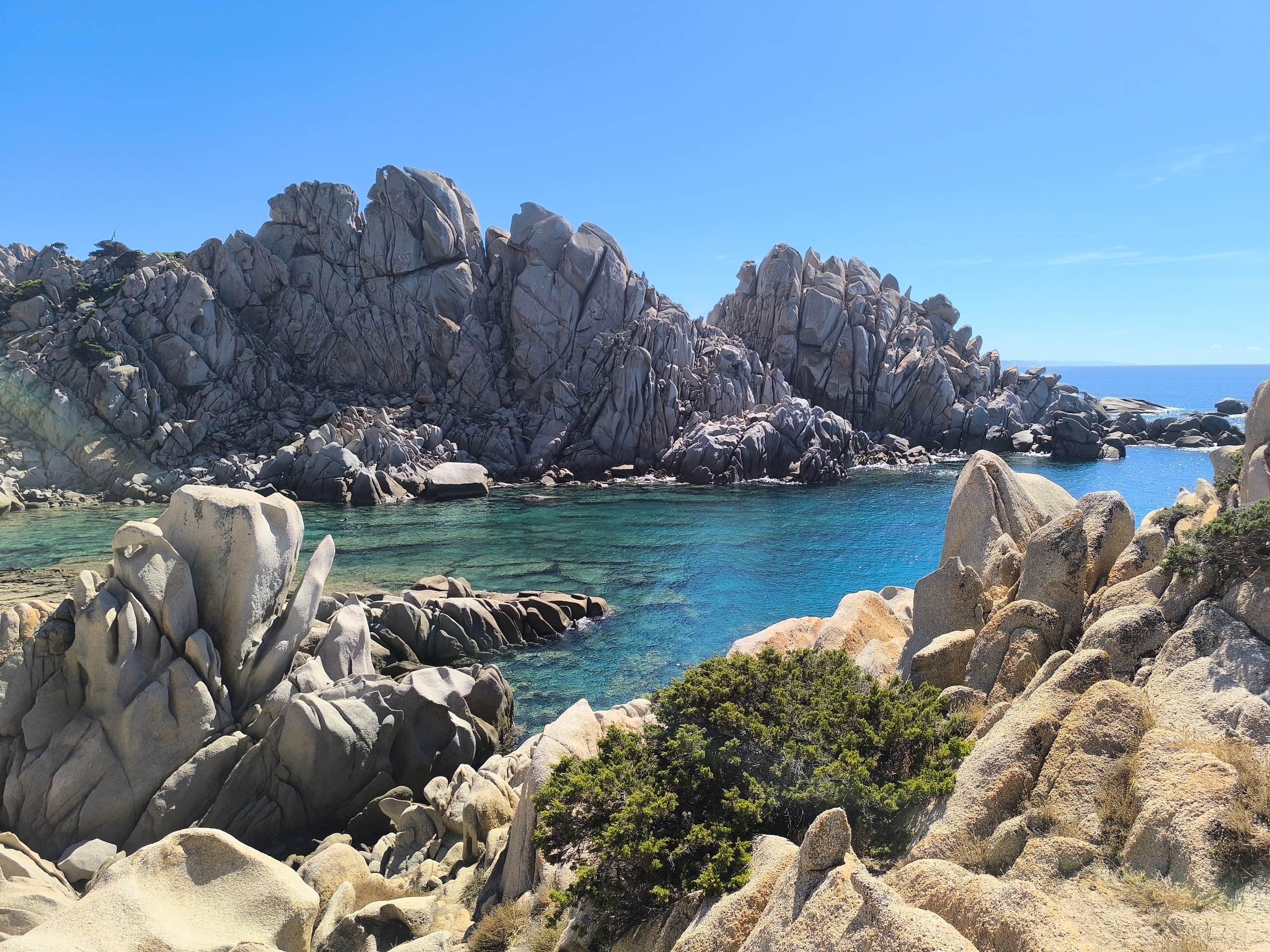
The Valle della Luna (Moon Valley) sits on the same stretch - pale boulders dropping to a narrow sandy notch. From above, the cove looks almost private. From the sand, you see how small the usable beach really is. Clarity and drama in exchange for limited towel space: that is the Gallura bargain.
Go for the swim and the scramble, not for a beach-club day. There are no reliable services on the rocks. Pack out what you bring in. If someone has a speaker, move to the next inlet; Capo Testa has several.
A few rules that hold across the northeast beaches:
- Arrive before 10 a.m. in high summer, or after 4 p.m. for a quieter swim.
- Wear real shoes on granite approaches. The rock is smooth and sloping.
- Do not trust every map pin. Some “secret beaches” end on private land or a cliff with no safe descent.
- La Maddalena is worth a ferry day from Palau if you want island hopping. It is optional if Capo Testa already filled the granite brief.
If you only want a lounger, a bathroom, and a spritz without a walk, base near a serviced beach and say so up front. There is no prize for pretending otherwise.
You need a car, and the roads are the point
Gallura’s interior is cork oaks, dry grass, granite outcrops, and two-lane roads that feel empty even in September. The drive is how the region makes sense: coast, scrub, and Bronze Age stone within twenty minutes of each other.
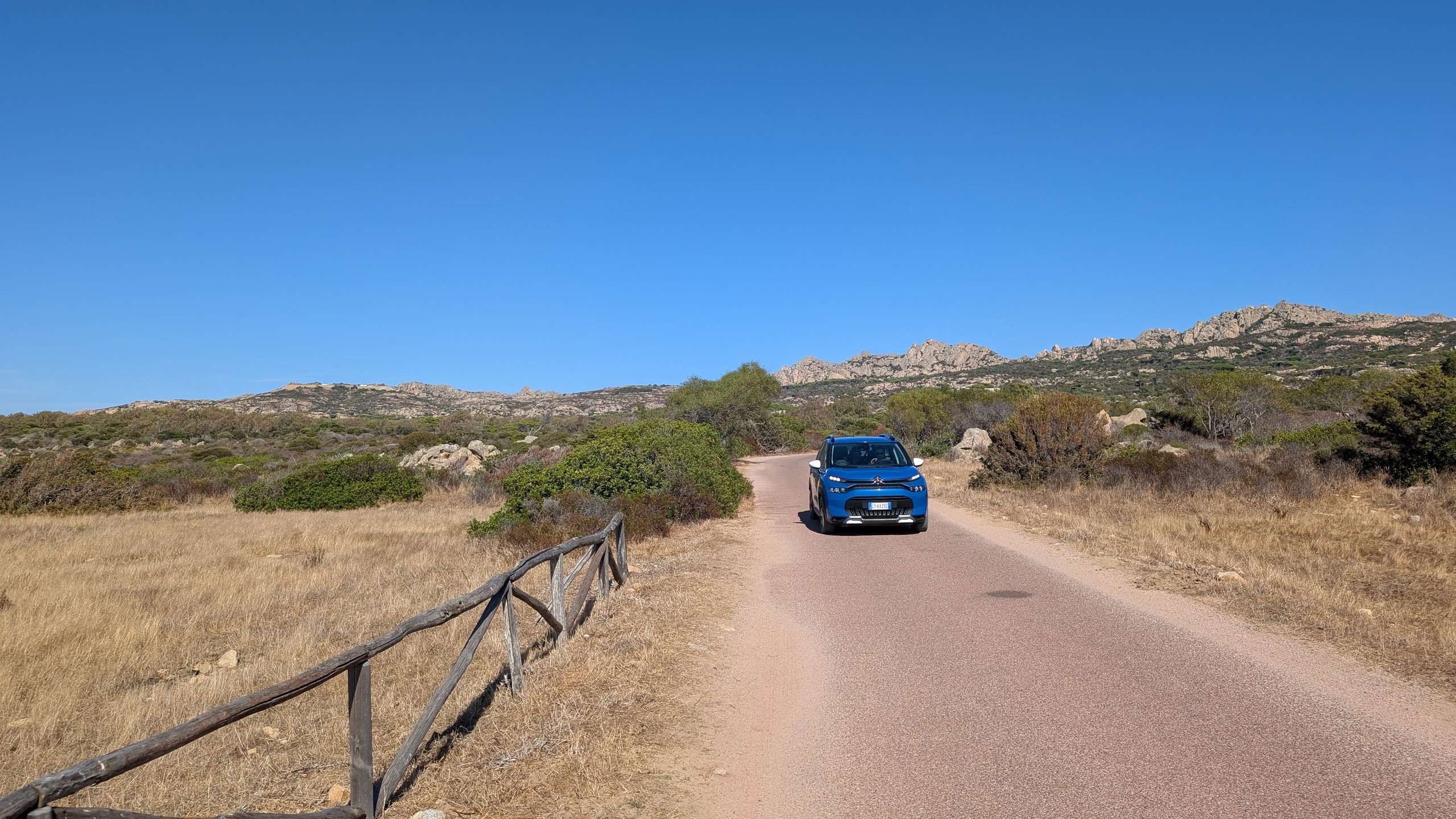
Fuel up in town. Some coastal spurs end in gravel. Watch for sheep and for rental cars stopped mid-bend for a photo. Parking at popular coves fills early; if the verge looks illegal, it probably is, and Italian towing fees are not a fun souvenir.
The giants’ tombs are older than every resort on the coast
A few kilometres inland from Arzachena, the Nuragic past sits in open fields as if nobody told it about yacht week. Coddu Vecchiu is a tomba dei giganti - a Bronze Age gallery grave with a tall central stele and a semicircle of standing stones (the exedra). The stele is roughly four metres high. The little arched opening at its base is not a door for people; it is the symbolic passage for offerings and the dead.
You do not need an archaeology degree to feel the scale. The stones are local granite, the same pale rock you swam beside that morning, rearranged into something intentional around 1700 BC. Nearby Nuraghe La Prisgiona is the larger complex if you want walls and chambers; Coddu Vecchiu is the sharper single image.
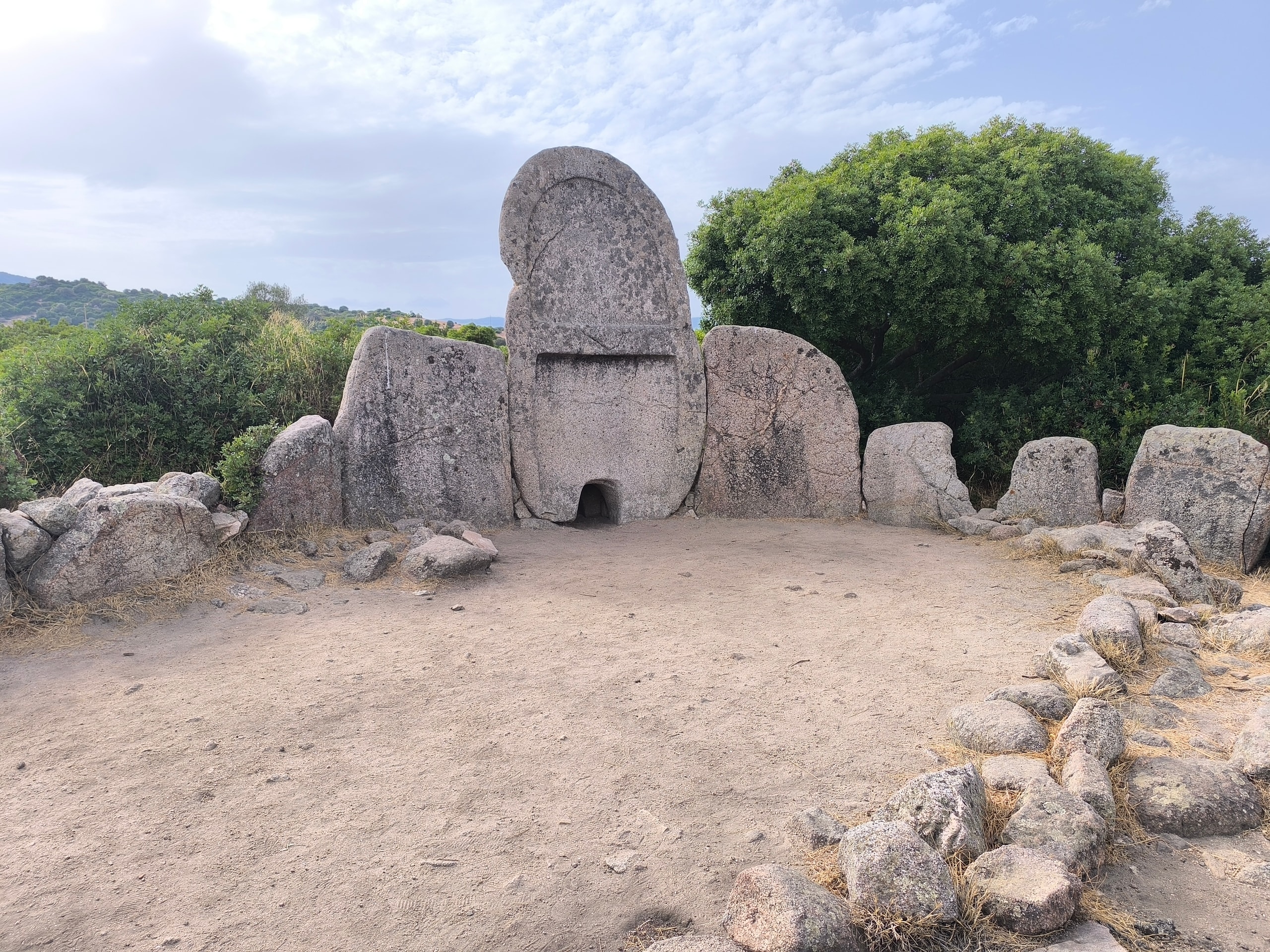
Single-site tickets run about $4-5; a two-site combo with La Prisgiona is roughly $8. Hours shift by season - roughly 10 a.m. to early evening in summer. Check current Arzachena archaeological site info before you go. Half a day covers both without rushing. Wear sun protection; there is almost no shade on the stones.
This is the corrective to Costa Smeralda marketing. The northeast was inhabited and built long before anyone sold a berth.
Costa Smeralda: drive through, do not base there
Porto Cervo delivers the photographs the hotels paid for: sculpted hedges, white architecture, swimming-pool-brochure water. Prices match. A simple lunch can cost what a full dinner costs in Santa Teresa.
If you are curious, drive the coastal road once, stop for a view, and keep moving. Basing there only makes sense if the resort scene is the trip. For granite coves, Nuragic sites, and a town you can walk at night without a hotel wristband, Santa Teresa or a quieter Gallura village is the better use of the same nights.
Castelsardo breaks up the transfer west
The drive from Gallura to Alghero takes roughly two to two and a half hours. Castelsardo sits on a rocky headland along the way, old town stacked in narrow lanes above the Gulf of Asinara. The castle views are the draw; the lanes are the pleasure - yellow and pink plaster, cobbles, ceramic stair tiles, and shops selling the woven baskets the town is known for.
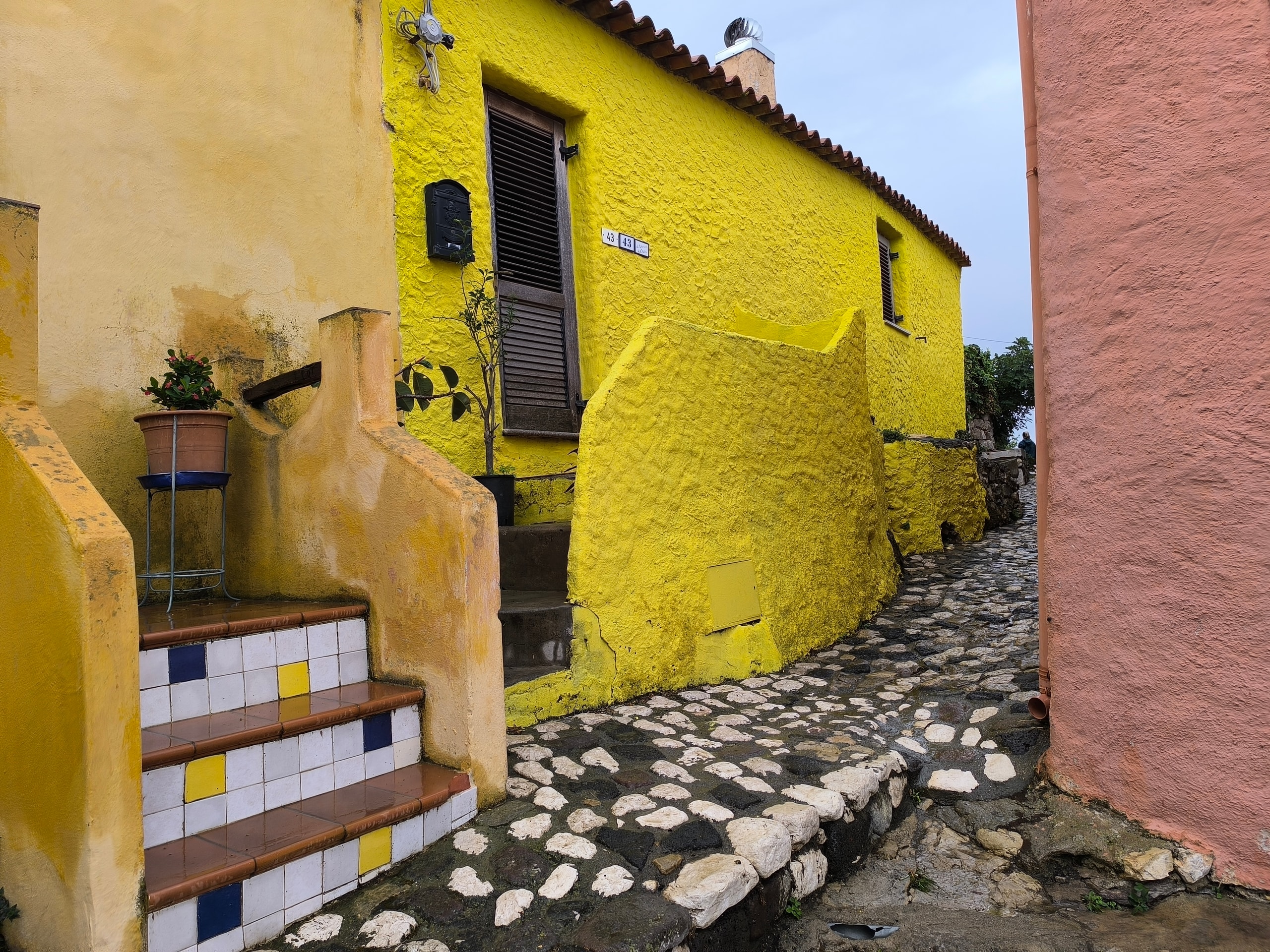
Park below and walk up. An hour or two is enough. Eat lunch here, then continue west while you still have daylight for Alghero’s walls.
Alghero is the northwest’s real town
Alghero is not a beach village with a cathedral glued on. It is a fortified port with a Catalan past still audible on menus and street signs. The Bastioni sea walls make the evening walk obvious: stone underfoot, the cathedral bell tower above the rooftops, Capo Caccia a blue silhouette across the bay. For another Mediterranean port that rewards walking the hard parts instead of the postcard strip, Marseille is the French cousin - rougher, denser, same instinct to stay longer than planned.
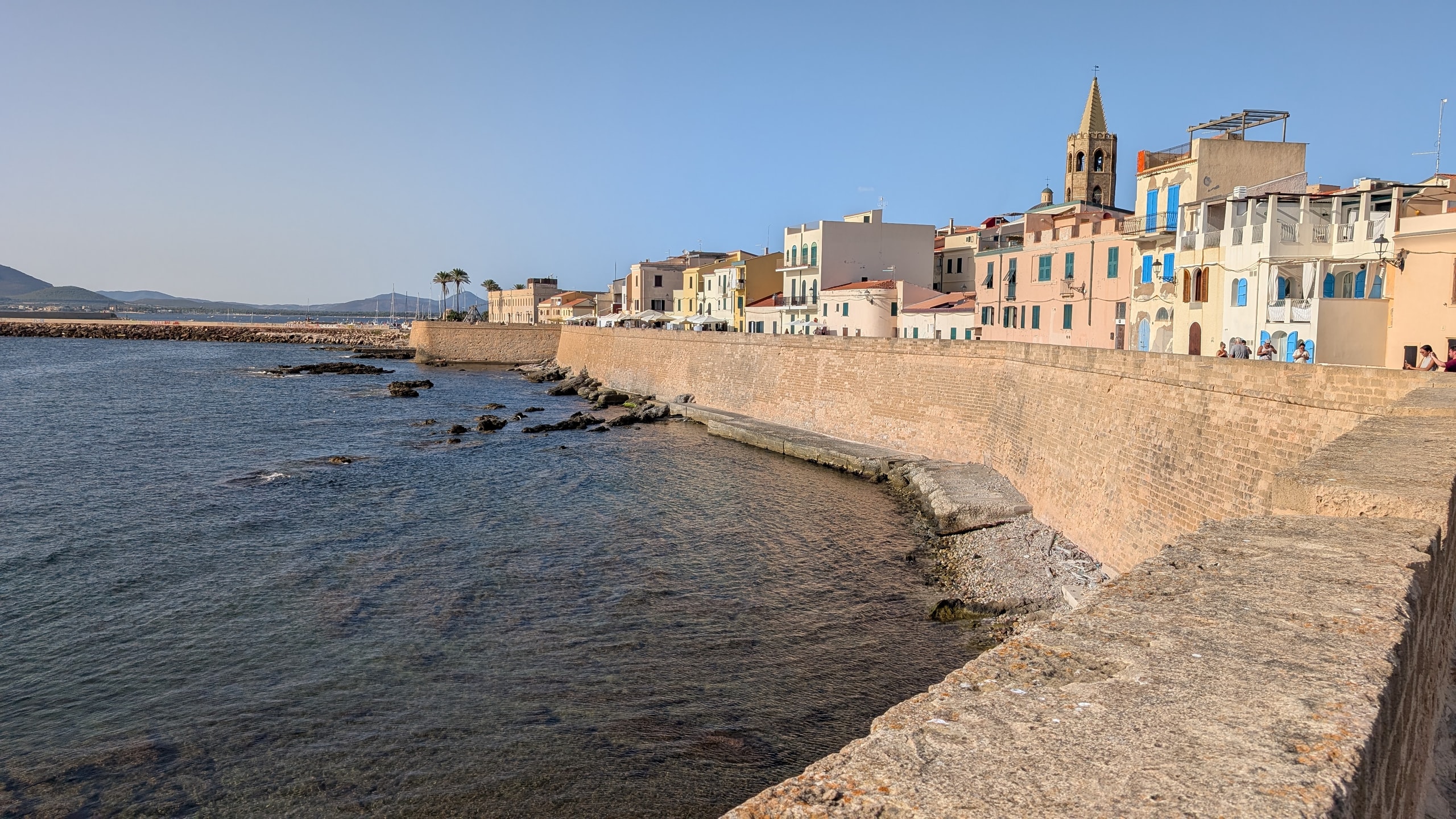
Give the old town a full day: the walls at golden hour, the centro’s coral shops (the red coral tradition is real; so are the prices - look before you buy), and dinner of lobster Catalan-style or simpler grilled fish. A mid-range seafood dinner for two often runs $70-110. Rooms in or just outside the old town land around $100-180 in shoulder season.
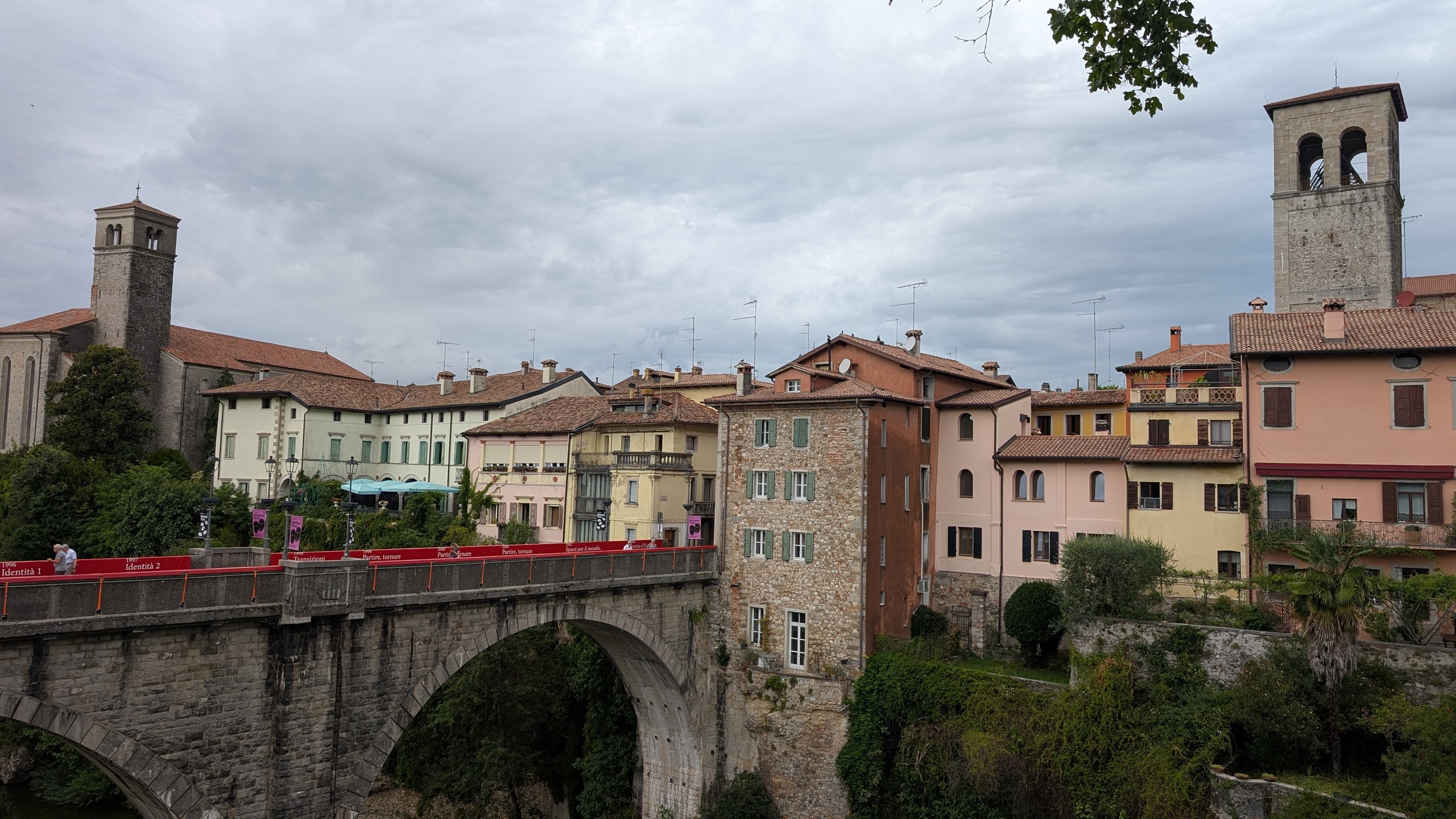
Stay at least two nights; three is better if you want a beach day plus the grotto without stacking them on the same morning. For another Italian town that rewards stone and history over a checklist dash, Cividale del Friuli sits at the opposite end of the country with a river gorge instead of a sea wall.
Capo Caccia and Neptune’s Grotto are worth the stairs
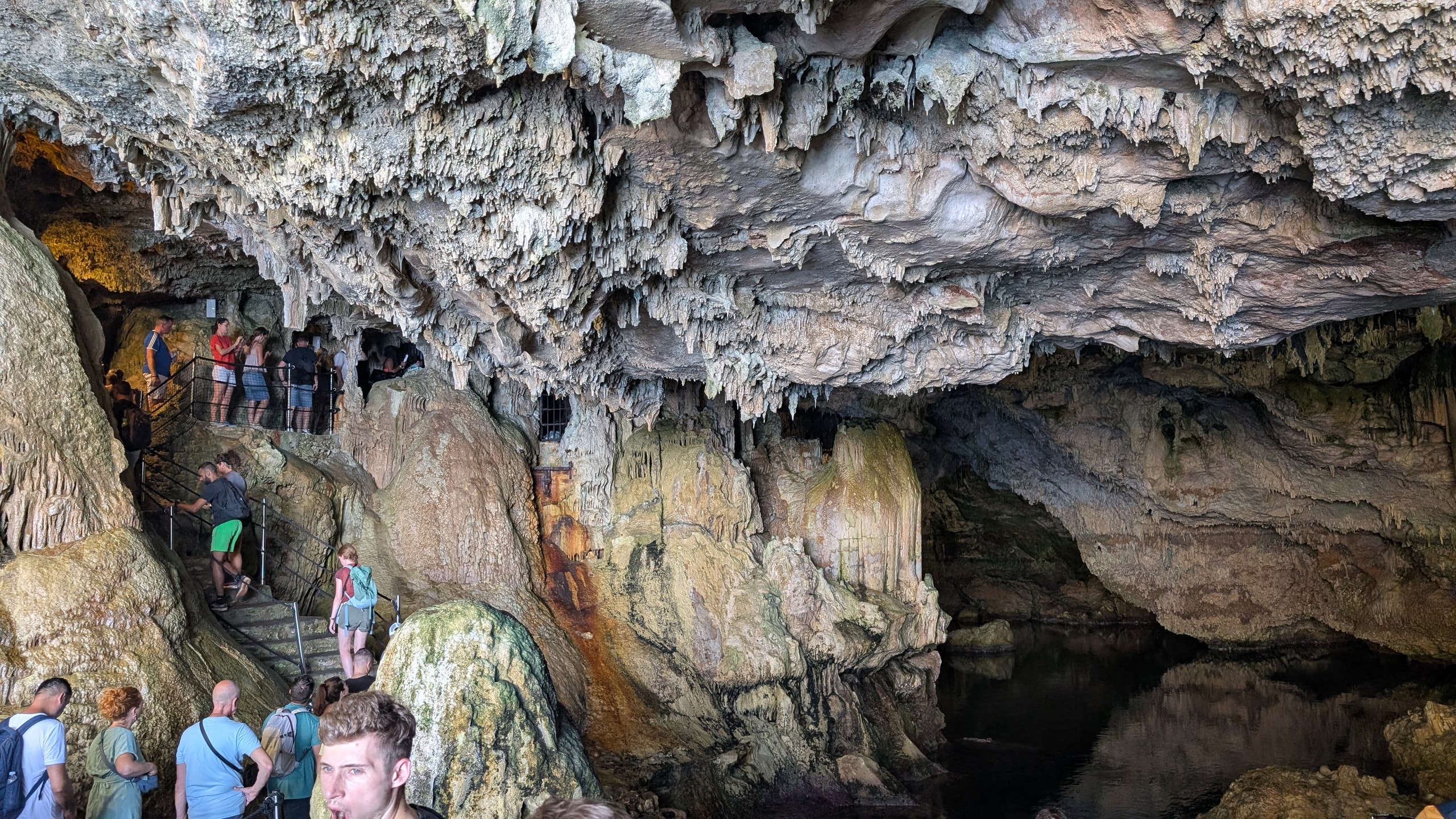
Capo Caccia is a limestone headland west of Alghero - white cliffs dropping into deep blue water. The headline visit is Neptune’s Grotto (Grotta di Nettuno): a sea cave with stalactites, chambers, and the underground Lago La Marmora, open on guided visits of about thirty minutes.
Reach it two ways. By boat from Alghero harbour in season (roughly April-November) - coastal ride, no climb, boat fare separate from the cave ticket. By land, via the Escala del Cabirol: 654 steps cut into the cliff from the Capo Caccia square, about 119 metres of descent, with the gulf opening between the rock walls as you go down.
Land access requires a timed booking. In summer, parking rules often push you toward a shuttle from a designated lot. Arrive early for your slot - official guidance asks for roughly 40 minutes before the visit time so you can descend without sprinting. Full-price cave entry is about €18 ($20); reduced tickets are lower for children and students. Confirm hours and land-access rules on the official Alghero Experience pages before you lock the day.
Inside, the path is railed and guided. No flip-flops, no touching the formations, no food. The chamber with the lake is the moment the walk pays off - cool air, lit stone, water reflecting the ceiling.
The stairs are steep, exposed, and a poor choice in peak afternoon heat or if knees and hearts object to long climbs. The boat exists for a reason. Capo Caccia’s viewpoint above the cliffs is still worth ten minutes even if you skip the cave.
The grotto is why you go. The staircase is the part you will remember.
What a week actually costs
Rough ranges for two people in June or September, mid-range habits, rental car included:
| Item | Approx. cost |
|---|---|
| B&B / apartment (7 nights) | $700-1,200 |
| Rental car + fuel | $300-450 |
| Food (mix of groceries and restaurants) | $450-700 |
| Neptune’s Grotto + Nuragic sites | $50-80 |
| Ferries / extras | $0-100 |
A careful week can land near $1,600-2,200 for two before flights. August and Costa Smeralda addresses move that number up fast. Cooking a few dinners pulls it down without making the trip feel cheap in a bad way.
Flights into Alghero (ARO) or Olbia (OLB) both work. Olbia is closer to Gallura; Alghero airport drops you on the Catalan side. Flying into one and out of the other is ideal if the rental company allows a one-way - ask before you assume it is cheap.
When to go
Late May, June, and September are the sweet spot: swimable water, open restaurants, and parking that still exists after 10 a.m. July and especially August bring Italian holiday traffic, full coves by mid-morning, and higher rates. October can still work for towns and walking; swimming depends on the year. Winter is for residents and empty walls, not beach days.
Sardinian summer sun is not a gentle suggestion. Capo Testa’s rock reflects heat. Capo Caccia’s stairs have almost no shade. Start early, carry more water than feels dignified, and treat midday as indoor or underwater time.
This trip suits anyone happy to drive, scramble a little for a swim, and split time between empty-looking granite and a real town with an evening passeggiata. It is a weaker fit if you want one resort for the whole week, nightlife every night, or a trip that works entirely by bus.
Skip the yacht strip as a base. Keep Capo Testa for the rock and the water. Keep Alghero for dinner and the walls. Keep the giants’ tomb so the week has some history that is older than the hotels. That combination is the North worth the flight.