A deli fridge a few streets from Parma's cathedral holds most of what this part of Italy is famous for. Prosciutto di Parma aged 36 months sells for €55 a kilo ($60). Lower down, Parmigiano Reggiano from red Reggiana cows, aged at least 24 months, costs €35 a kilo ($38), cut and vacuum-packed for the trip home.
Parma and Modena sit about 50 km apart on the railway between Bologna and Milan, in the flat farm country of Emilia. Parma gives its name to the ham and half its name to the cheese. Modena makes the real balsamic vinegar, and Ferrari builds its cars just south of it in Maranello. It is a different side of northern Italy: no coast, smaller crowds, and a lot of eating.
Trains link the two cities in about 30 minutes, so one day covers both if you get the order right. Parma's best sights are indoors and keep daytime hours, so it gets the morning. Modena's main sights sit around one cathedral and its tower, and they look best in the early evening. The Ferrari museum fits in between only if you care about cars, because it takes the whole afternoon.
Parma in the morning: the cathedral, the baptistery, and two Correggio domes
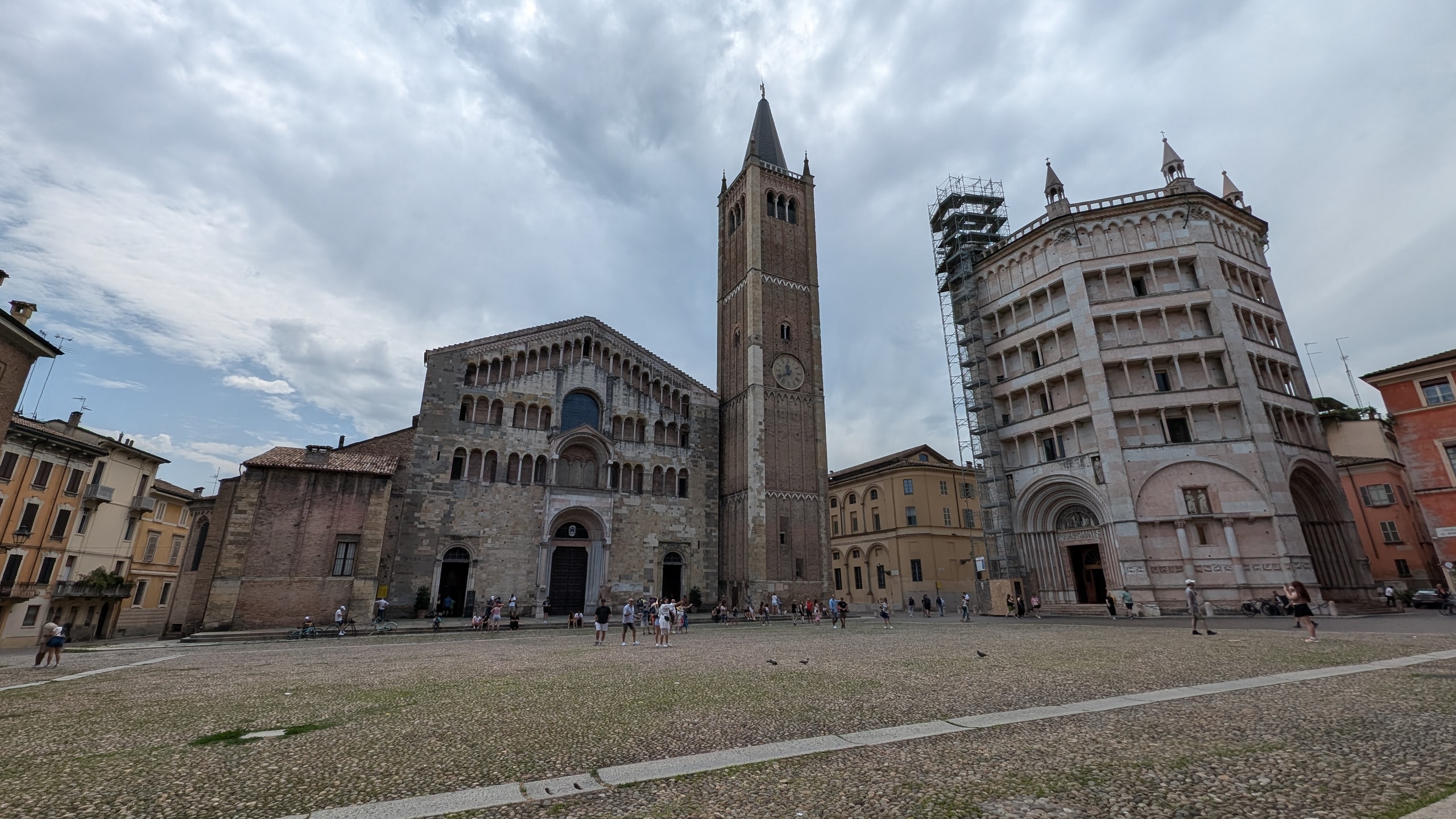
Start at Piazza Duomo, 15 minutes on foot from Parma station. Three buildings share one cobbled square: the Romanesque cathedral, consecrated in 1106, its brick bell tower, and the eight-sided baptistery in pink Verona marble, begun in 1196 by the sculptor Benedetto Antelami. In July 2024 scaffolding covered one side of the baptistery.
The cathedral is free and open from 7:45 to 19:20. Walk to the middle of the nave and look up. Correggio painted the Assumption of the Virgin inside the dome between 1526 and 1530, a crowd of saints and angels spiralling up into bright sky. One of the canons reportedly called it a stew of frogs, because of all the legs.
The baptistery and the Diocesan Museum share one ticket, €12 ($13), valid for two days. Hours are on the Piazza Duomo visitor page. Inside the baptistery, Antelami's stone figures of the months each do that month's farm work.
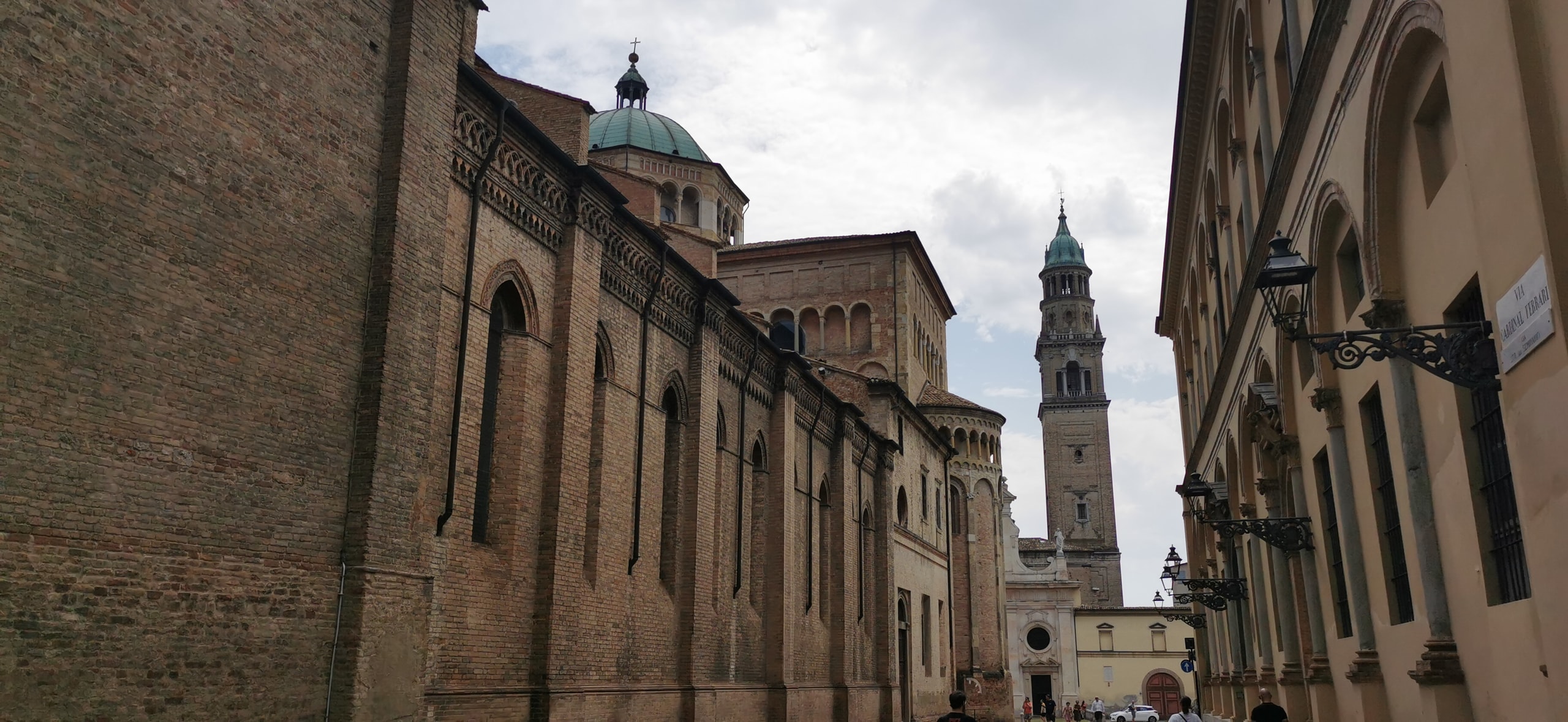
Then walk down Via Cardinal Ferrari to San Giovanni Evangelista, whose 75 m bell tower is the tallest in Parma. Correggio painted this church's dome first, from 1520 to 1524. The church is free. Seeing both domes in one morning lets you compare his first try with the cathedral dome he painted a few years later.
The Pilotta: a palace the Farnese never finished
A few minutes' walk west, the Palazzo della Pilotta fills a whole block. The Farnese dukes started it in the 1580s and never finished it, and Allied bombs hit it in 1944. The walls are still bare brick with empty arches.
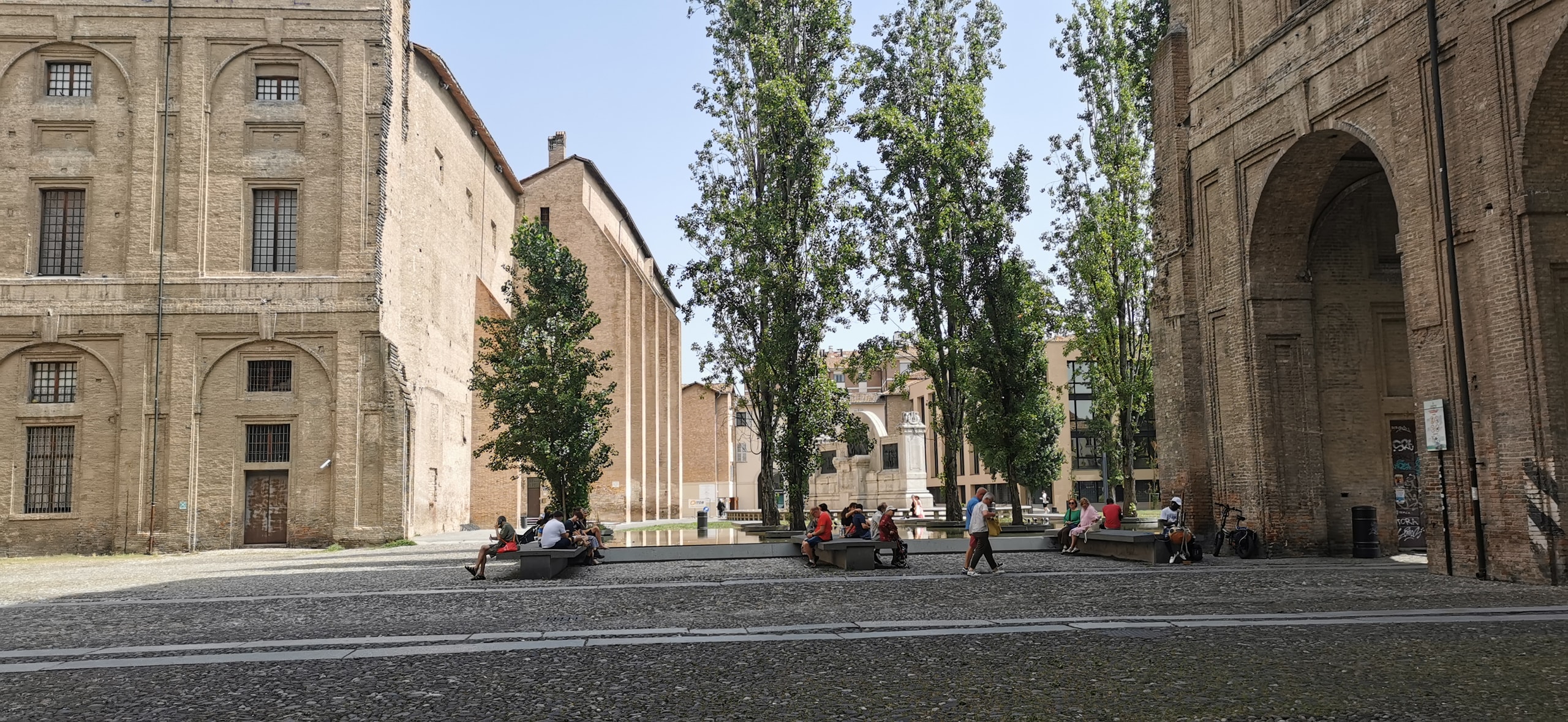
One €18 ($20) ticket covers the Teatro Farnese, the National Gallery, the Palatine Library, and two more museums. After 17:00 it drops to €10 ($11). The Teatro Farnese alone is worth it: a huge U-shaped theatre built almost entirely of wood in 1618. The gallery has Leonardo's small unfinished head of a girl, La Scapigliata. Allow 90 minutes, and check times on the Pilotta ticket page.
Parma ham and Parmigiano: what to buy and what it costs
The salumerie around the cathedral cut ham and cheese to order, usually aged longer than what reaches supermarkets abroad. Prices from one shop near Piazza Duomo:
- Prosciutto di Parma DOP, aged 36 months: €55 a kilo ($60)
- Another producer's prosciutto crudo, aged 30 months: €51 a kilo ($55)
- Parmigiano Reggiano Vacche Rosse, aged at least 24 months: €35 a kilo ($38)
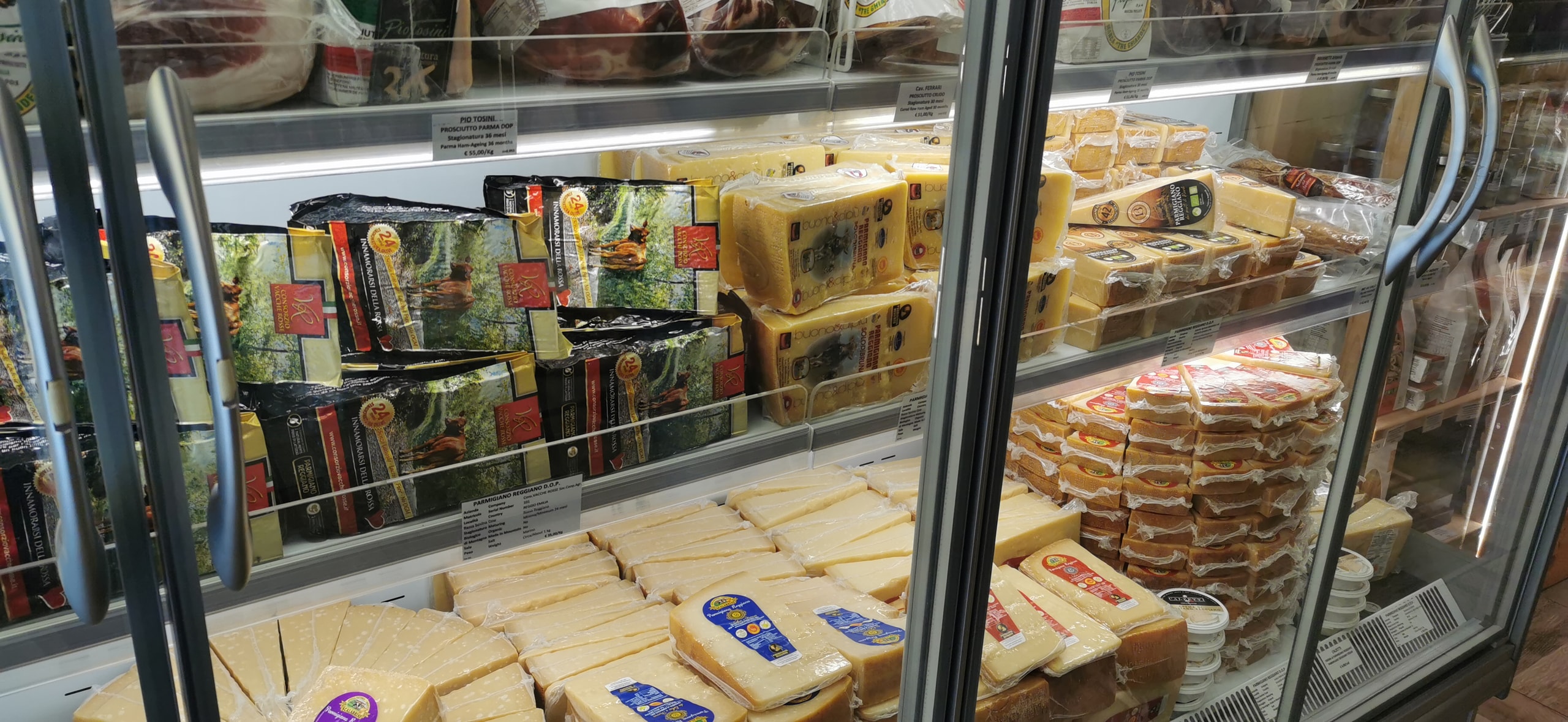
Vacche Rosse means "red cows." The cheese uses only milk from the Reggiana breed, which gives less milk, so it costs more. Ask for anything you buy sottovuoto, vacuum-packed. Hard cheese travels fine. If you are flying to the United States, leave the ham: the USDA does not allow prosciutto in travellers' bags because of African swine fever in Italy.
For lunch, order anolini in brodo, small stuffed pasta in broth and Parma's own dish, or torta fritta, puffy fried dough served with ham and salami. With a glass of wine, lunch runs about $25-35.
The Ferrari museum in Maranello: only if you care about cars
Ferrari has two museums, and people mix them up. The Museo Enzo Ferrari is near Modena station, built around the house where Enzo Ferrari was born. The Museo Ferrari is in Maranello, 18 km south near the factory, and has the newest road cars and the Formula 1 cars.
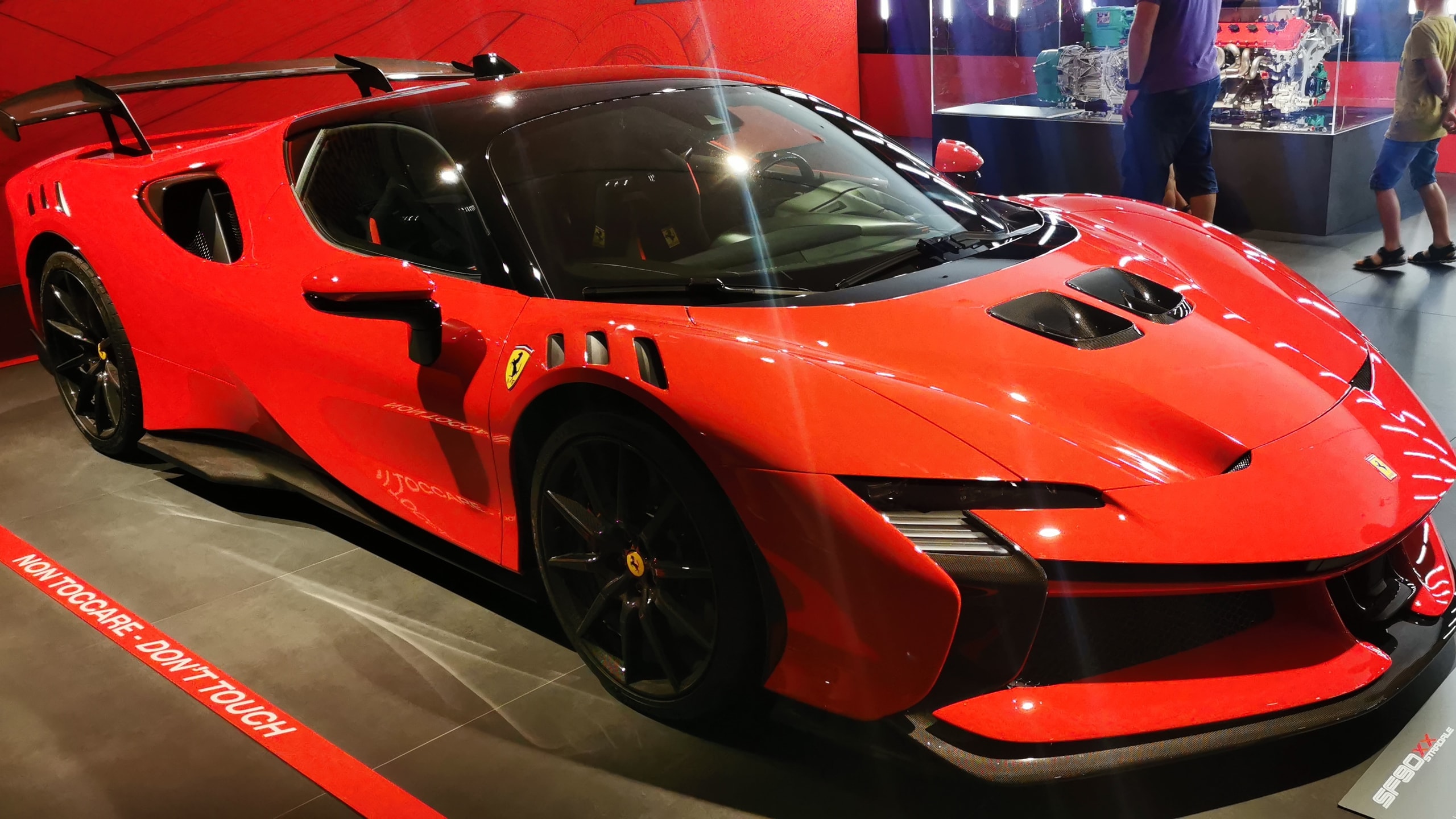
Maranello tickets run roughly $30-35 depending on the season, and a pass for both museums about $45. Check the official Ferrari museums site before you go. A shuttle bus links Modena station, the Modena museum, and Maranello. The factory is not open to museum visitors.
With travel, Maranello takes three to four hours, which is the whole afternoon in a one-day plan. If Ferrari is a big part of why you came, go, and give Modena its own day. If you only half care, skip Maranello and spend an hour at the museum by Modena station.
Modena's cathedral square and the Ghirlandina tower
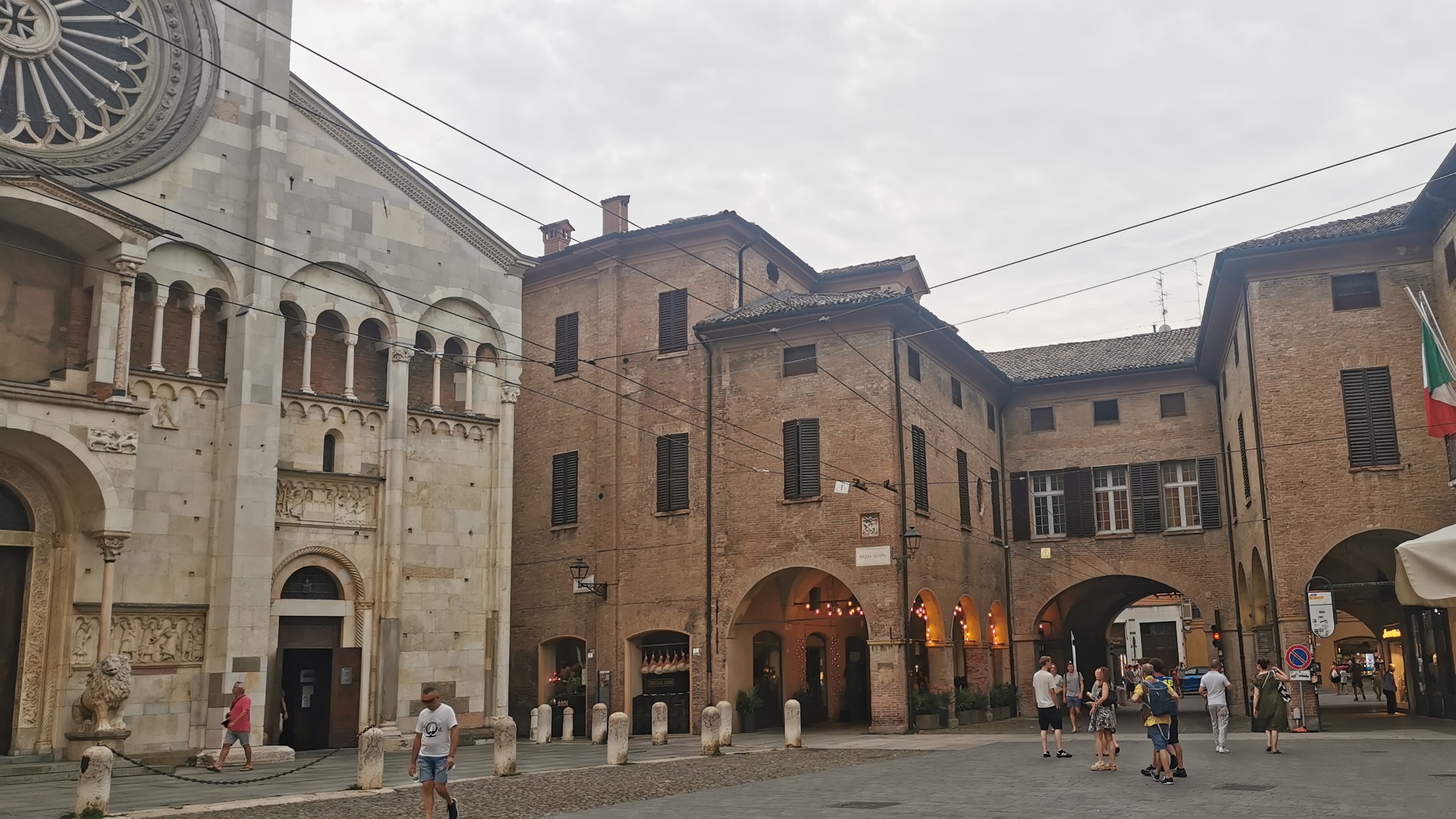
Modena's centre is a 15-minute walk from the station. The cathedral, begun in 1099, its bell tower, and Piazza Grande have been a UNESCO World Heritage Site together since 1997. The cathedral front has a big rose window, stone lions holding up the columns at the main door, and carved Genesis panels by the sculptor Wiligelmo from around 1100: Adam and Eve, Cain and Abel, Noah's ark. Entry is free.
If old church carving is what pulls you in, the stucco saints in Cividale del Friuli's Lombard Temple are three centuries older.
Around the side of the cathedral, Piazza Grande holds the town hall and its clock tower. In front of the arcade lies the Preda Ringadora, a big block of stone. Speakers once stood on it to address the square, and debtors were later made to sit on it in public shame.
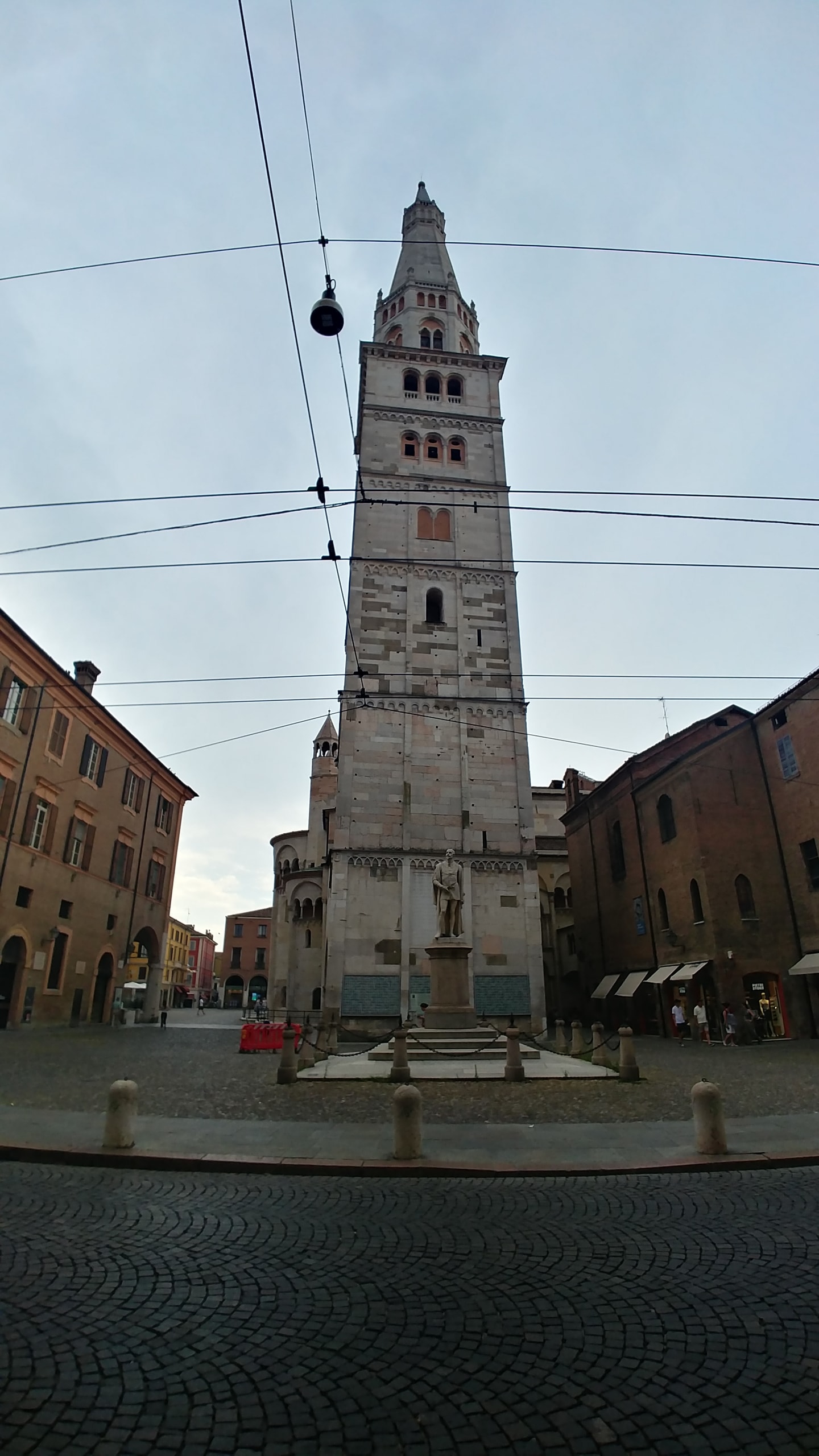
The Ghirlandina bell tower is 86 m tall and leans slightly. Climbing its 200 steps costs €3 ($3.50), with a free hourly booking on the Visit Modena Ghirlandina page. Inside hangs a copy of the Secchia Rapita, a wooden bucket Modena's soldiers took from Bologna in 1325. The original is in the town hall. The poet Alessandro Tassoni wrote a mock-epic poem about it, and his statue stands at the foot of the tower.
Modena in the evening: dinner, real balsamic, and a walk
For dinner, order tortellini in brodo, or tigelle, small hot flatbreads eaten with cured meats and pesto modenese, a spread of lard, garlic, and rosemary. Drink Lambrusco cold. Sorbara is pale and sharp, and Grasparossa is darker. A trattoria dinner with a bottle runs about $35-50 a person. Massimo Bottura's Osteria Francescana is the famous name, booked months ahead, but you don't need it to eat well here.
Real balsamic, Aceto Balsamico Tradizionale di Modena DOP, ages at least 12 years in a row of wooden barrels. It is sold only in a small round 100 ml bottle designed by the car designer Giorgetto Giugiaro. A cream cap means 12 years, and gold means 25. Expect about $50-80 for a 12-year bottle. Giusti has made it in Modena since 1605 and runs tastings.
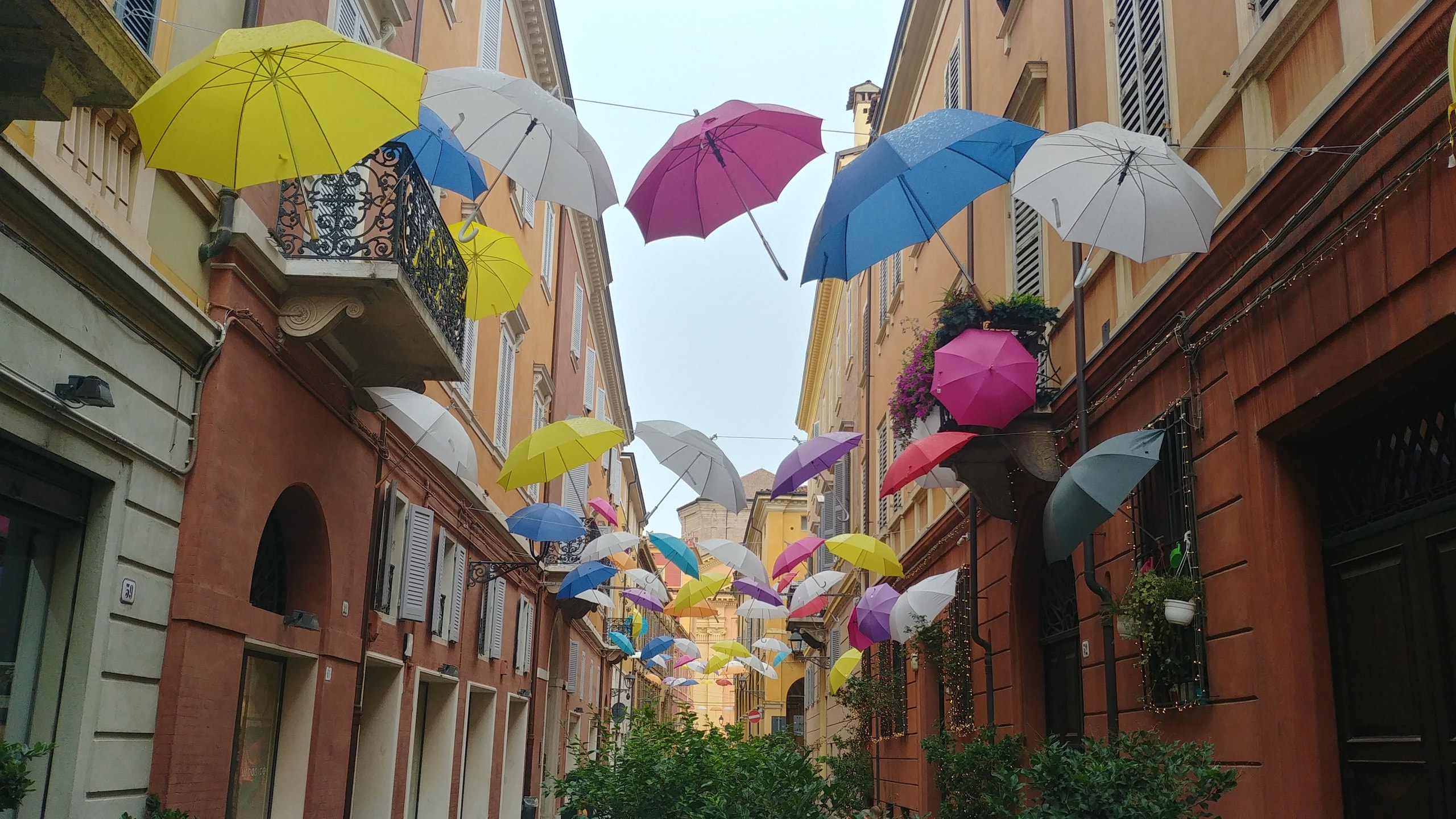
After dinner, people stroll up and down Via Emilia, the old Roman road through the centre. Side streets lead north to the Palazzo Ducale, the Este dukes' palace from 1634 and now Italy's military academy. It opens only for guided weekend tours, €10 ($11), booked through Visit Modena, and not in August. In summer some side streets get decorations strung between the houses.
Trains, where to sleep, and what the day costs
Parma to Modena takes about 30 minutes on the faster regional trains and up to 50 on the slower ones, for about $7. Bologna is 20-30 minutes past Modena, so a day trip from Bologna works: Parma first, Modena on the way back. Parma also has a line over the Apennines to La Spezia, about two hours away, for the Cinque Terre in summer. For a night here, sleep in Modena, which sits in the middle and is closest to Maranello.
Rough costs per person for the day:
- Trains from Bologna and back: $18-22
- Parma baptistery, museum, and the Pilotta: $33
- Ghirlandina climb: $3.50
- Lunch and dinner: $60-85
- Maranello (optional): $30-35
That is about $115-145 without Maranello.
When to go
April to June and September to October are the easy months. July and August on this plain are hot and humid, often 32-35°C (90-95°F), with late-day thunderstorms. Many family restaurants close for two or three weeks around Ferragosto, 15 August. Winter brings fog and the heavy boiled-meat dishes, bollito misto and zampone.
If you only have time for one city, pick Parma. It has more to see indoors, and its food shops are why most people come. Pick Modena if Ferrari is the point, or if you would rather build the whole day around dinner.