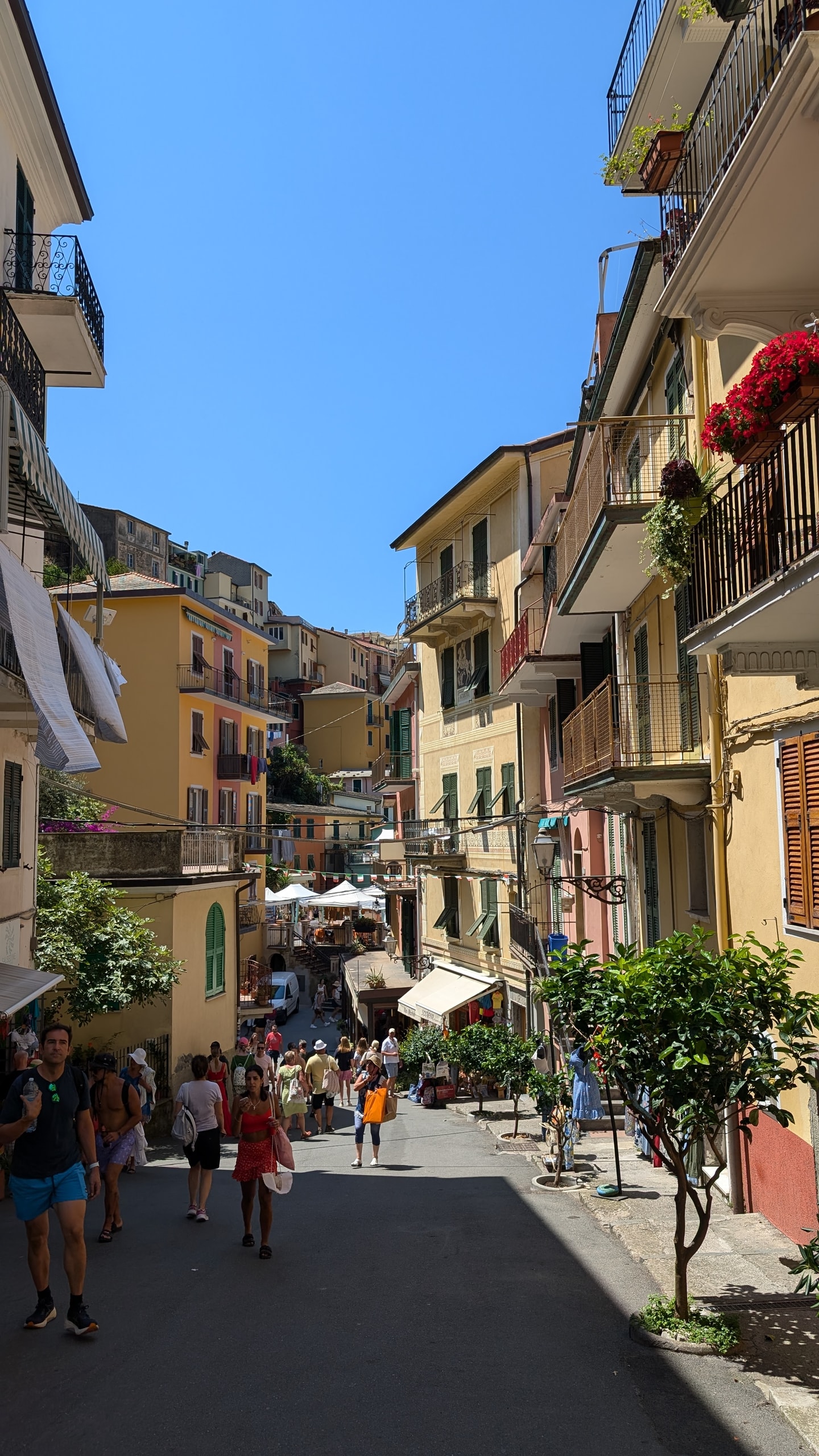
By eleven on a July morning, Via Discovolo in Manarola is one slow line of people walking downhill. Sun hats, day packs, a woman in a red sundress with her sun hat in her hand. The street runs from the church at the top of the village down to a small harbour with no beach, and most of the people on it came in on the same train.
That is the Cinque Terre in summer: five fishing villages on roughly 12 km of steep Ligurian coast between Levanto and La Spezia. Monterosso, Vernazza, Corniglia, Manarola, and Riomaggiore have about 4,000 residents between them and a few million visitors a year, most of them in the warm months.
The usual plan is to see all five in one day. In July that mostly means standing on platforms. A better summer plan is to give one village the whole morning and spend the hot afternoon swimming somewhere built for it. Here, that means Manarola for the morning and San Terenzo, on the Gulf of La Spezia, for the afternoon.
Why all five villages in one day doesn't work in July
A regional train links the villages, mostly through tunnels, and each hop takes two to five minutes. The ride is easy. Everything around it is the problem.
In peak season a single ride costs €10 ($11), the same price for one stop or four. The Cinque Terre Treno MS card, which covers unlimited trains plus the paid trails, is €35 ($38) a day on the busiest 2026 dates. Trains come every 15 to 30 minutes, and on summer weekends the platform can be full before the train pulls in.
Each village has the same basic shape: one street down a ravine to the water, houses stacked up both sides, a church near the top. Rush all five and you get about forty minutes in each, much of it walking to and from the station. You come home with five versions of the same photo and no memory of lunch.
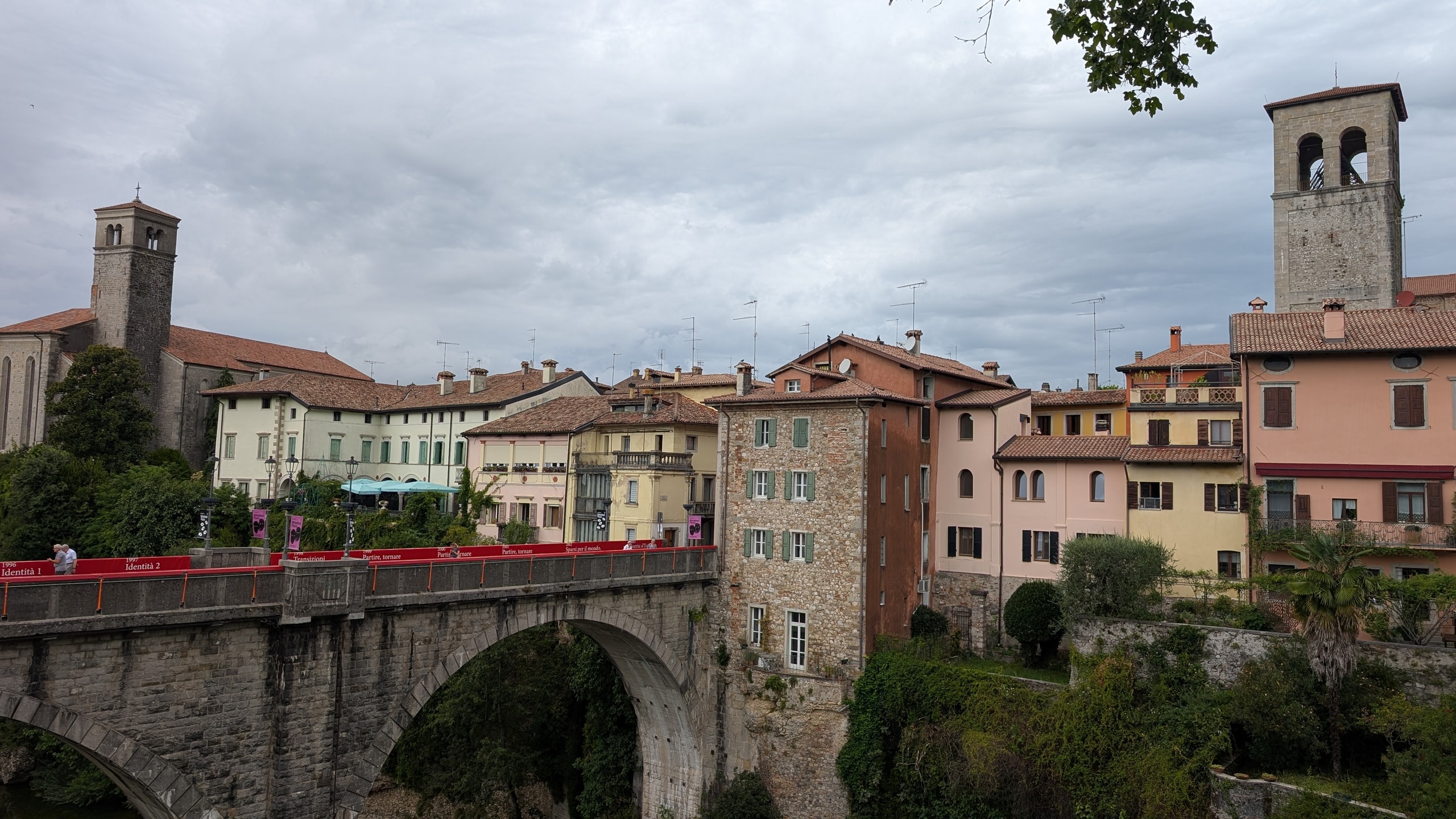
The Cinque Terre will never be quiet in summer. If that is what you want from a small Italian town, Cividale del Friuli in the far northeast gets a fraction of the visitors.
Why Manarola is the village to pick
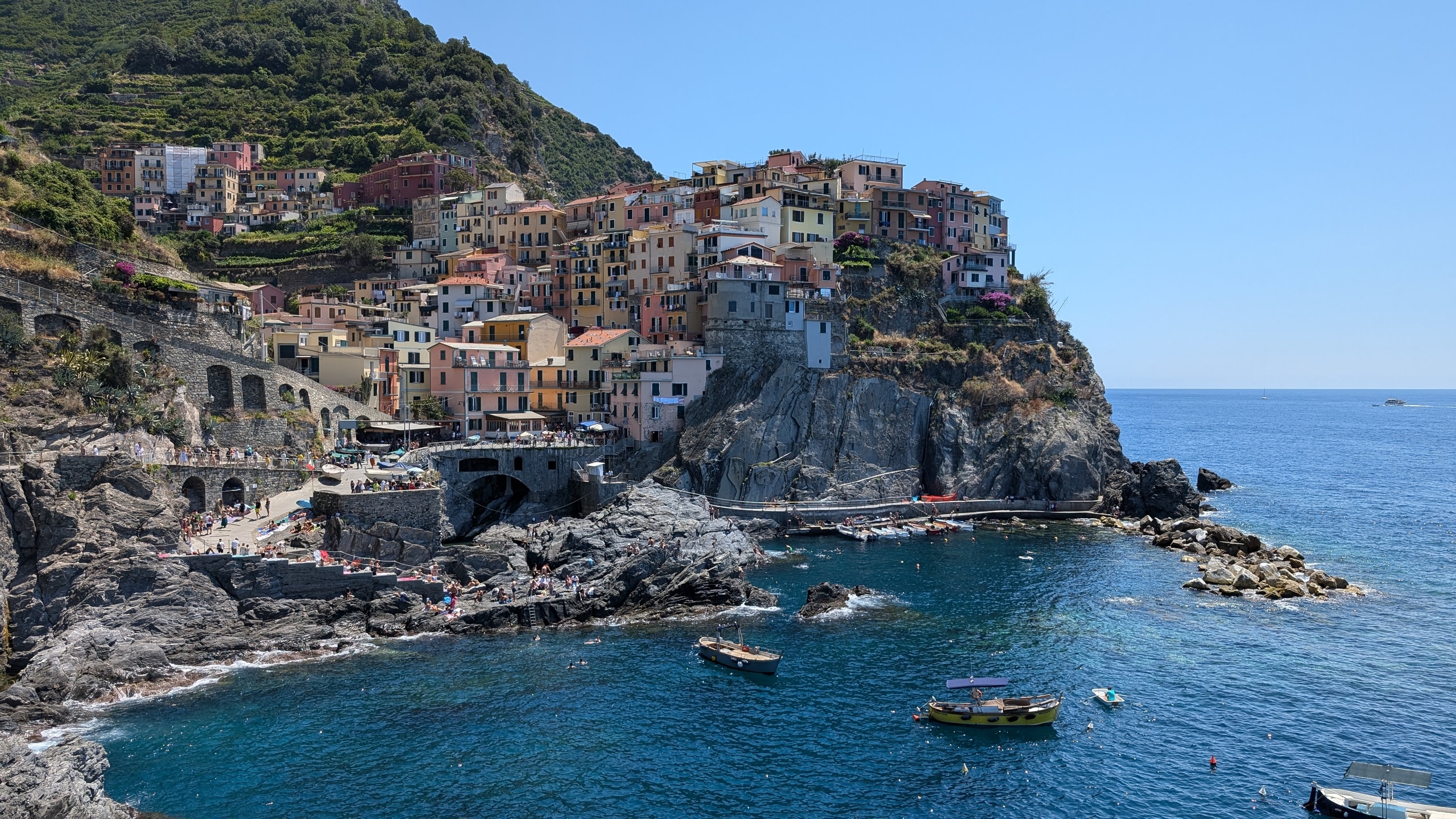
Manarola is the village most people picture when they think of the Cinque Terre, because of the view from the path to Punta Bonfiglio. Walk down to the harbour and follow the paved path that climbs around the headland. Within five minutes the whole village appears on its rock: pink, ochre, and pale yellow houses on a black cliff above deep blue water. That is the photo at the top of this page, and it costs nothing.
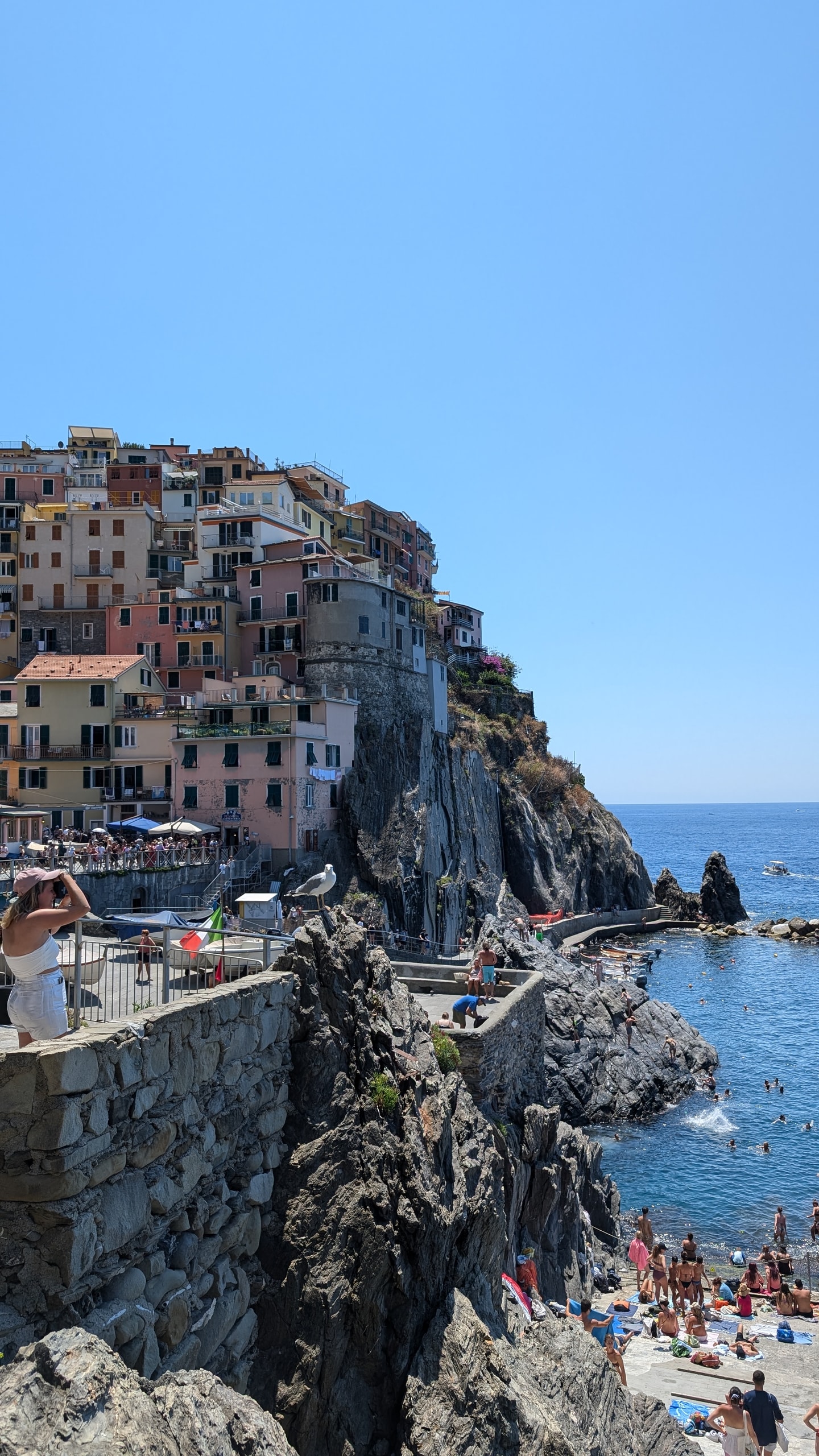
Get there before ten. By late morning people stand three deep at the railing. Further up the headland is Nessun Dorma, a bar whose terrace faces the village. In summer people book through its app or queue from late morning. You are paying for the view, and the path below has the same one for free.
Walk up through the village, not just down
Most visitors stay in the bottom third of Manarola. Go the other way. Via Discovolo climbs to the church of San Lorenzo, built in 1338, and above it the houses give way to terraced vineyards held up by dry stone walls. From the top you look straight down the ravine to the sea.
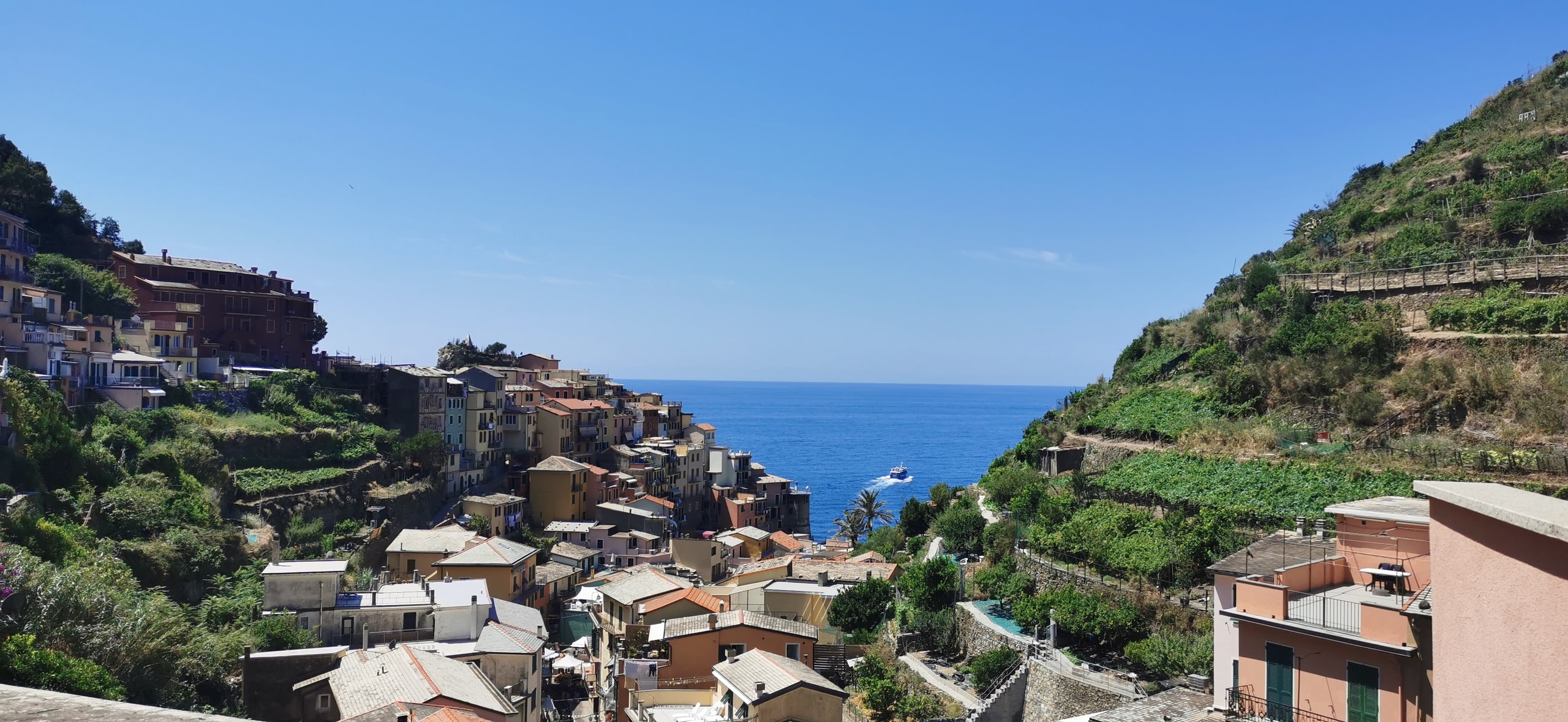
Those terraces grow the grapes for the dry white Cinque Terre DOC and for Sciacchetrà, a sweet amber wine made from dried grapes. A half bottle of Sciacchetrà often costs $35 or more, so buy one only if you already like dessert wine.
Swimming off the rocks in Manarola
Manarola has no beach. People swim off the rocks and the concrete landing beside the harbour, and climb back out on a metal ladder. The water gets deep right away. It is clear and turns green over the rocks.
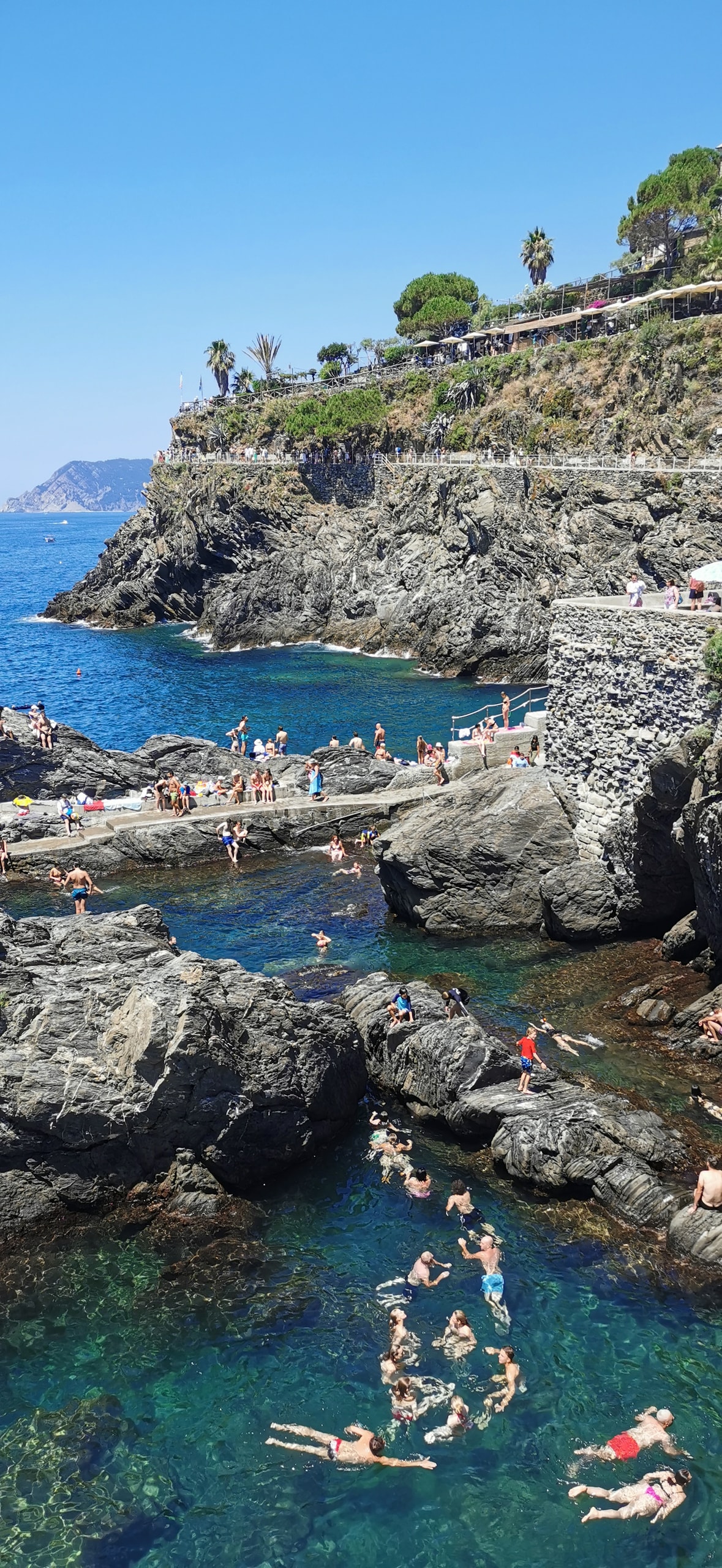
It is a good swim for confident swimmers and a poor one for small children. Bring water shoes, because the rock is sharp in places and hot by noon. There is no shade by the water, and when the sea is rough, stay out.
How the other four villages compare
If you have a second day, here is how the rest stack up:
- Riomaggiore is closest to La Spezia and pairs easily with Manarola. The Via dell'Amore, a flat cliffside walk between the two, reopened in 2024. It runs one way, Riomaggiore to Manarola, with timed entry capped at 400 people an hour. Book on the official Via dell'Amore site.
- Vernazza has the prettiest harbour and the busiest one. Arrive early or stay late.
- Monterosso has the only long sandy beach on this coast, mostly covered in rented loungers.
- Corniglia sits on a cliff with no harbour, nearly 400 steps above its station. Ferries can't stop there, so it stays the quietest.
The coastal trails: what's open in 2026
The Sentiero Azzurro, the path between the villages, is only partly open. Manarola to Corniglia has been closed by a landslide for more than a decade, with no reopening date. Corniglia to Vernazza and Vernazza to Monterosso are open with a trekking card or the Treno MS card. Sections also close after heavy rain, so check the Cinque Terre National Park site that morning.
In July these are hot, exposed climbs on stone steps. Start before nine, or leave the trails for a cooler month.
La Spezia is the cheaper base
Sleeping in a village has a real payoff: the streets empty out after six. It is the same reason an overnight in Sintra beats the day trip from Lisbon. But rooms in Manarola or Vernazza often run $180-300 a night in summer, many are up long flights of stairs, and the good ones sell out months ahead.
La Spezia, 8 to 10 minutes by train from Manarola, is the practical choice. Rooms near the station run about $100-160 in July. It is a working city of about 90,000 with normal supermarkets, restaurants priced for locals, and the main base of the Italian Navy.
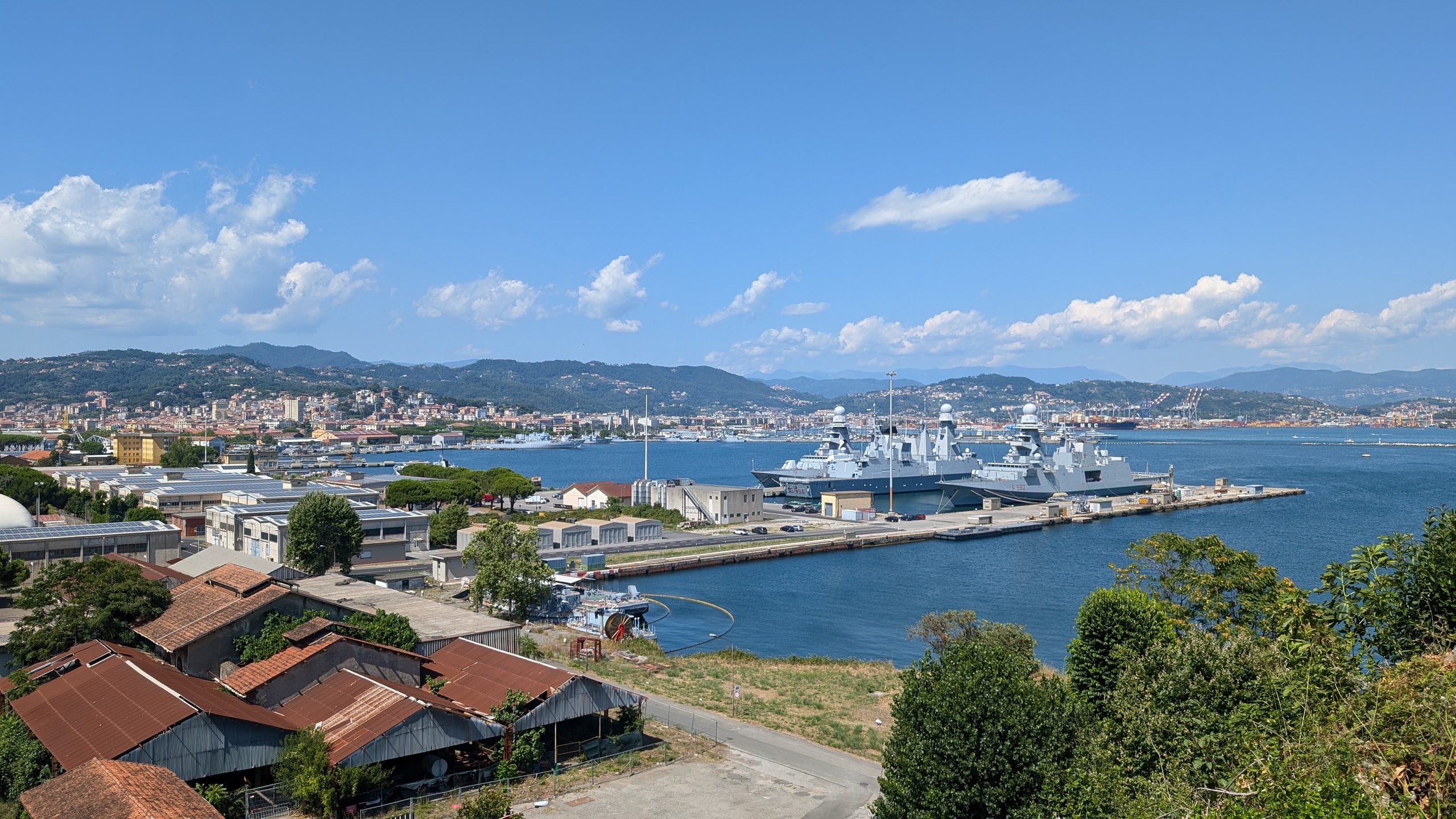
From the road toward Portovenere you look down on grey frigates tied up in front of the city. If a working navy town appeals to you, Toulon on the French coast has a lot in common with it.
Don't drive into the Cinque Terre in summer. The roads down are narrow and the parking above the villages fills early. A car only earns its keep on the gulf side.
The afternoon: swim at San Terenzo on the Gulf of Poets
By early afternoon Manarola is at its hottest and most crowded. That is the time to leave. On the far side of La Spezia, the eastern shore of the gulf has sand beaches, umbrella pines, and crowds made up mostly of Italian families.
San Terenzo is about 25 minutes from La Spezia station on the ATC L or S bus. Percy Shelley rented Villa Magni on its seafront in 1822 and drowned that summer sailing home from Livorno. Byron visited too, which is why this is called the Golfo dei Poeti, the Gulf of Poets.
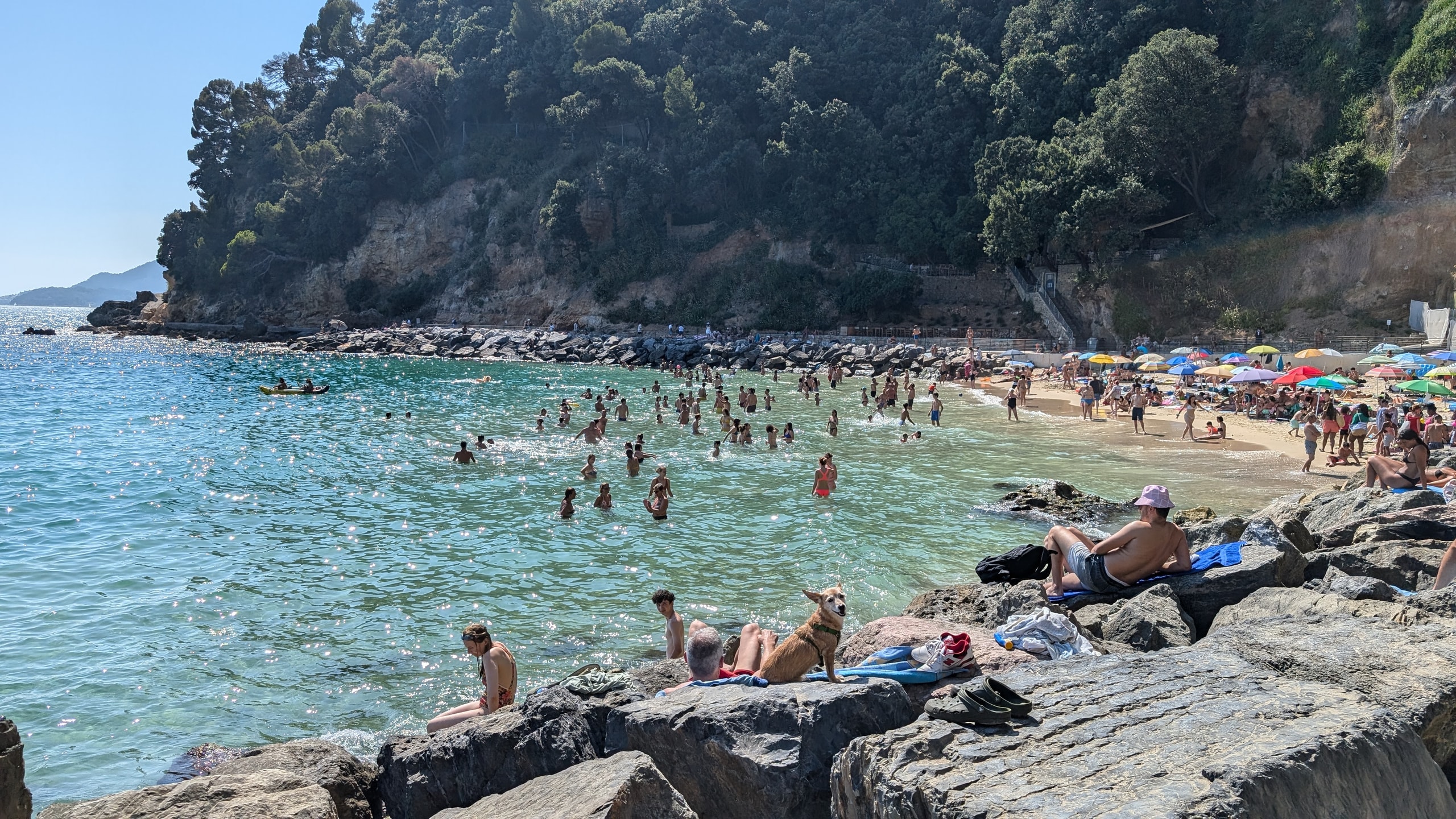
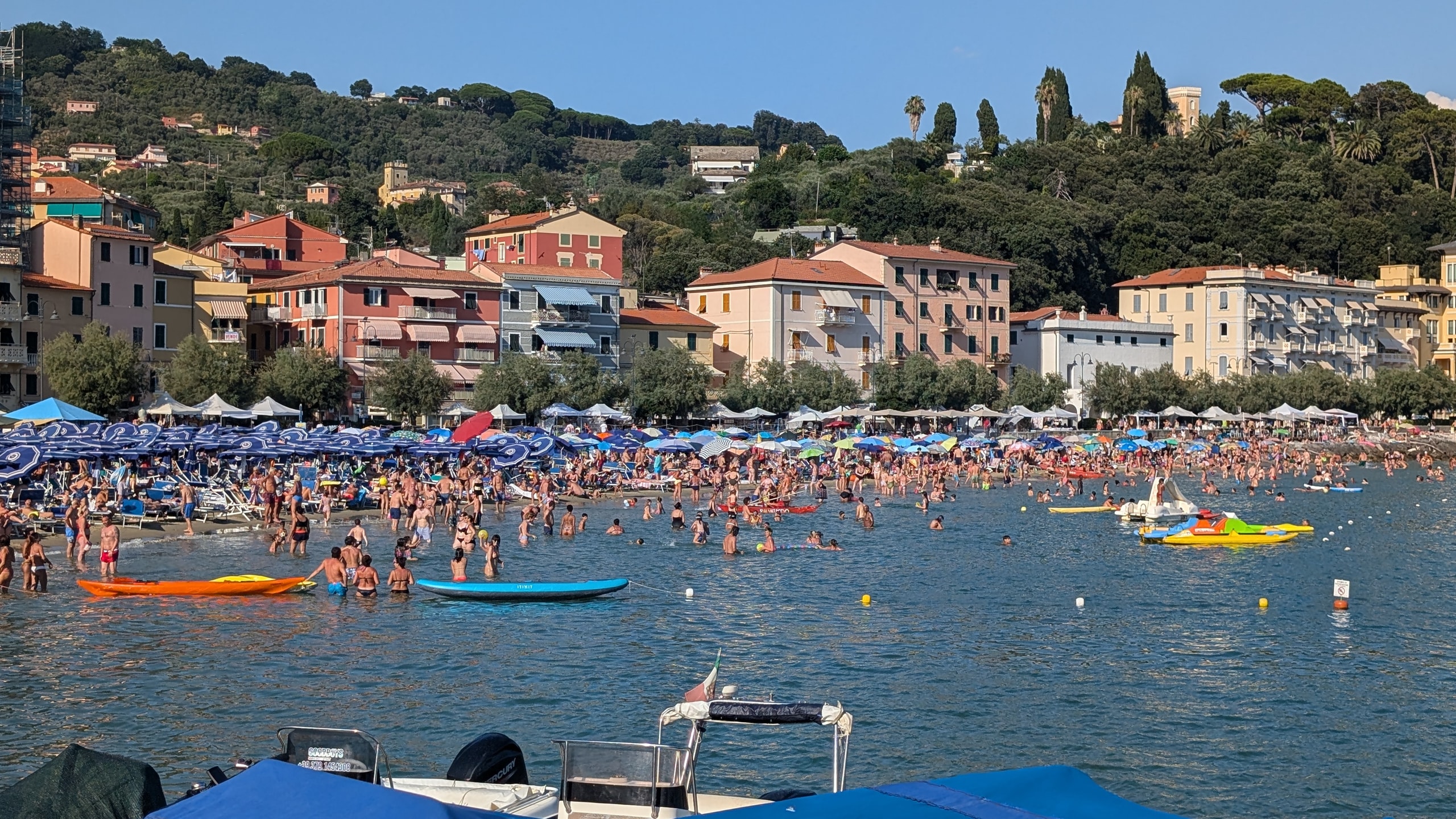
The main beach is lined with stabilimenti, private beach clubs that rent loungers and umbrellas by the day. At the ends of the bay are free strips where you can put a towel on sand or flat rock. The water is calm and shallow near the shore. Afterwards, walk the seafront path to Lerici in about 40 minutes, past the small castle on the point, and take the bus back from there.
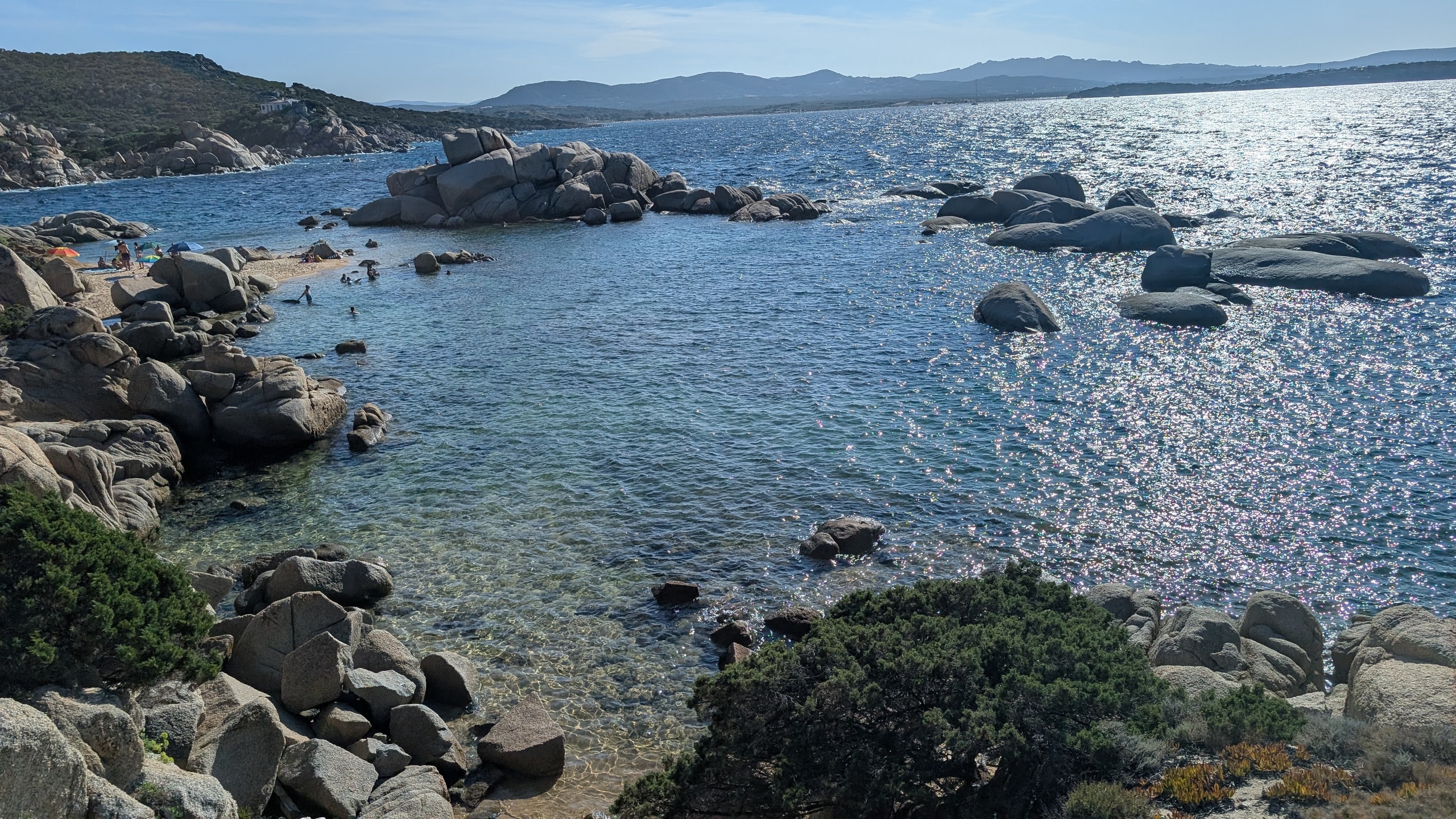
San Terenzo in July is busy, loud, and full of kids with inflatables. It is an ordinary Italian summer beach, and that is the appeal: easy swimming and gelato on the seafront. If you want empty water, the granite coves of North Sardinia are clearer and quieter, at least before August.
What a summer day costs
Rough 2026 prices per person in peak season:
- Train between villages: €10 ($11) a ride, or €35 ($38) for the day card. Three rides or one paid trail and the card pays off.
- Ferry: about €42 ($46) for a day ticket on the tourist boats. Slow, and cancelled when the sea is rough.
- Lunch: focaccia $3-5, a paper cone of fried anchovies and squid $10-15, trofie with pesto at a table $15-20.
- Granita: €4 ($4.50) at bars around the gulf. Get lemon.
- Beach club at San Terenzo: roughly $30-50 for two loungers and an umbrella. The free strips cost nothing.
With a mid-range room in La Spezia, a full day for one person comes to about $200-250.
When to go, and how to do July if you must
Late May, June, and September are the best months: warm sea, open trails, busy but bearable trains. July and August are hot, usually 28-32°C (82-90°F), and the worst crowds land on weekends and around Ferragosto on 15 August.
If July is your only window, take an early train out of La Spezia and walk the Punta Bonfiglio path before the railing fills. Climb to the vineyards, then swim off the rocks before the sun is straight overhead. Be on a bus to San Terenzo by two, swim again, and walk to Lerici as the light turns orange. Eat dinner back in La Spezia around nine, when the city finally cools down.