Most people see Da Nang through a car window. The plane lands, a driver holds up a card with their name on it, and forty minutes later they are in Hoi An. The airport sits only 3 km from the Han River, so the city is very easy to skip.
It is worth two nights. The Vietnam things-to-know guide says not to build a trip around Da Nang, and that still holds. But a city with a 10 km beach, a row of marble hills full of cave shrines, a 67-metre Buddha on a jungle peninsula, and a bridge shaped like a dragon that breathes fire on weekend nights deserves more than a transfer.
The catch is timing. Almost everything good here has a best hour, and the wrong hour is hot, crowded, or both. (Since July 2025, Hoi An is officially part of Da Nang city after a province merger. Below, "Da Nang" just means the city on the river and its beach.)
Marble Mountains: be at the gate at 7 a.m.
The Marble Mountains are five limestone and marble hills that stick straight up out of flat land about 9 km south of the centre, on the road to Hoi An. Each is named after an element: metal, wood, water, fire and earth. The one to visit is Thuy Son (water), the biggest, which is full of caves holding altars, statues and incense.
Get there when it opens at 7 a.m. The paths are steep, the stone is slippery when humid, and the upper stairs have little shade. By ten the tour buses from Hoi An arrive. At half past eight on a Saturday in early March, the car park below Thuy Son held exactly two coaches.
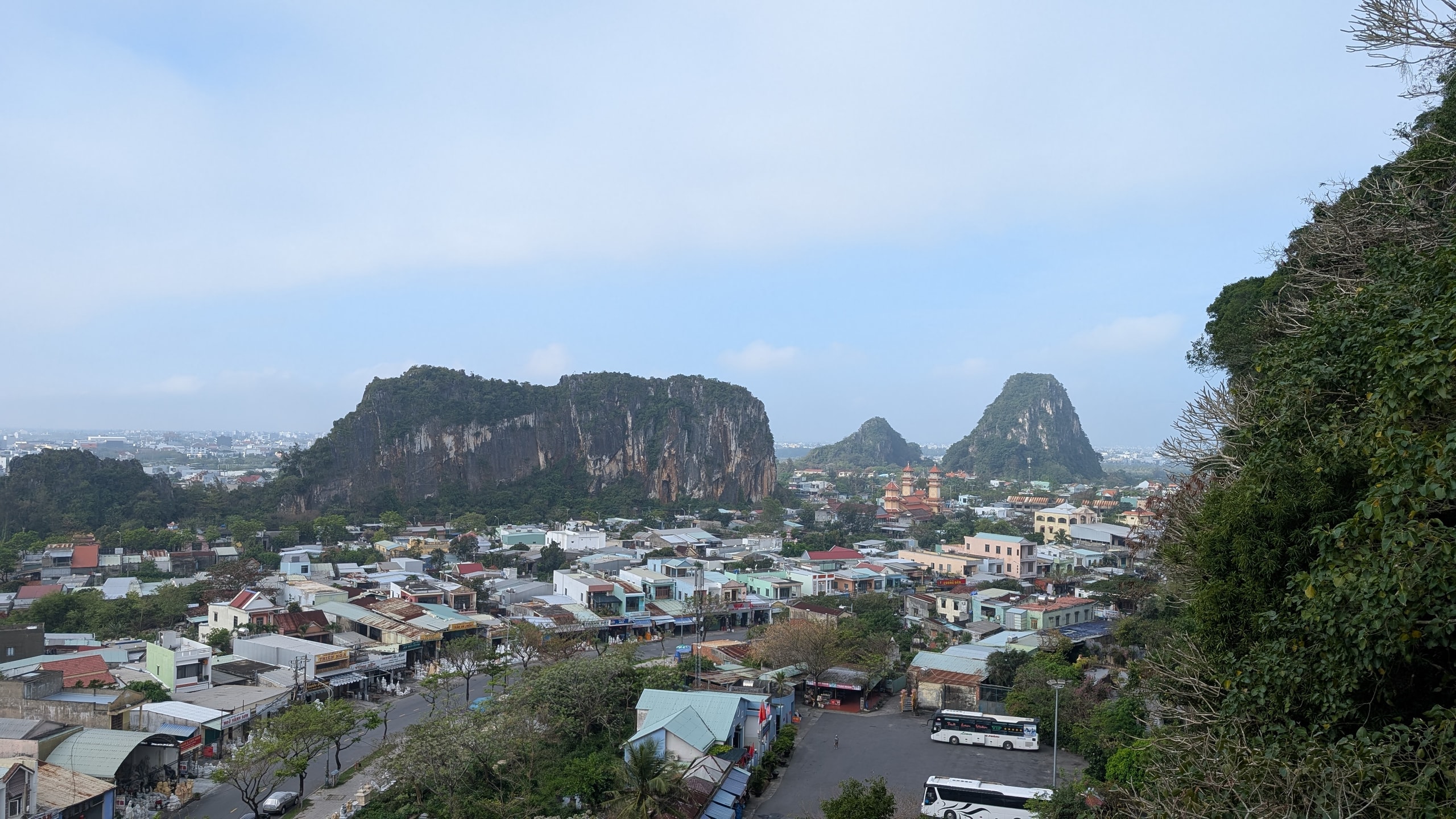
A ticket for Thuy Son costs 40,000 VND ($1.60). A glass lift takes you most of the way up for 15,000 VND ($0.60) each way. Ride up and walk down, since the stairs pass most of the caves. Allow two hours.
Huyen Khong is the big cave, a tall chamber with holes in the roof and a shrine at the back. The beams of light through the roof are strongest late in the morning, exactly when the crowds arrive. Choose the empty cave over the famous photo.
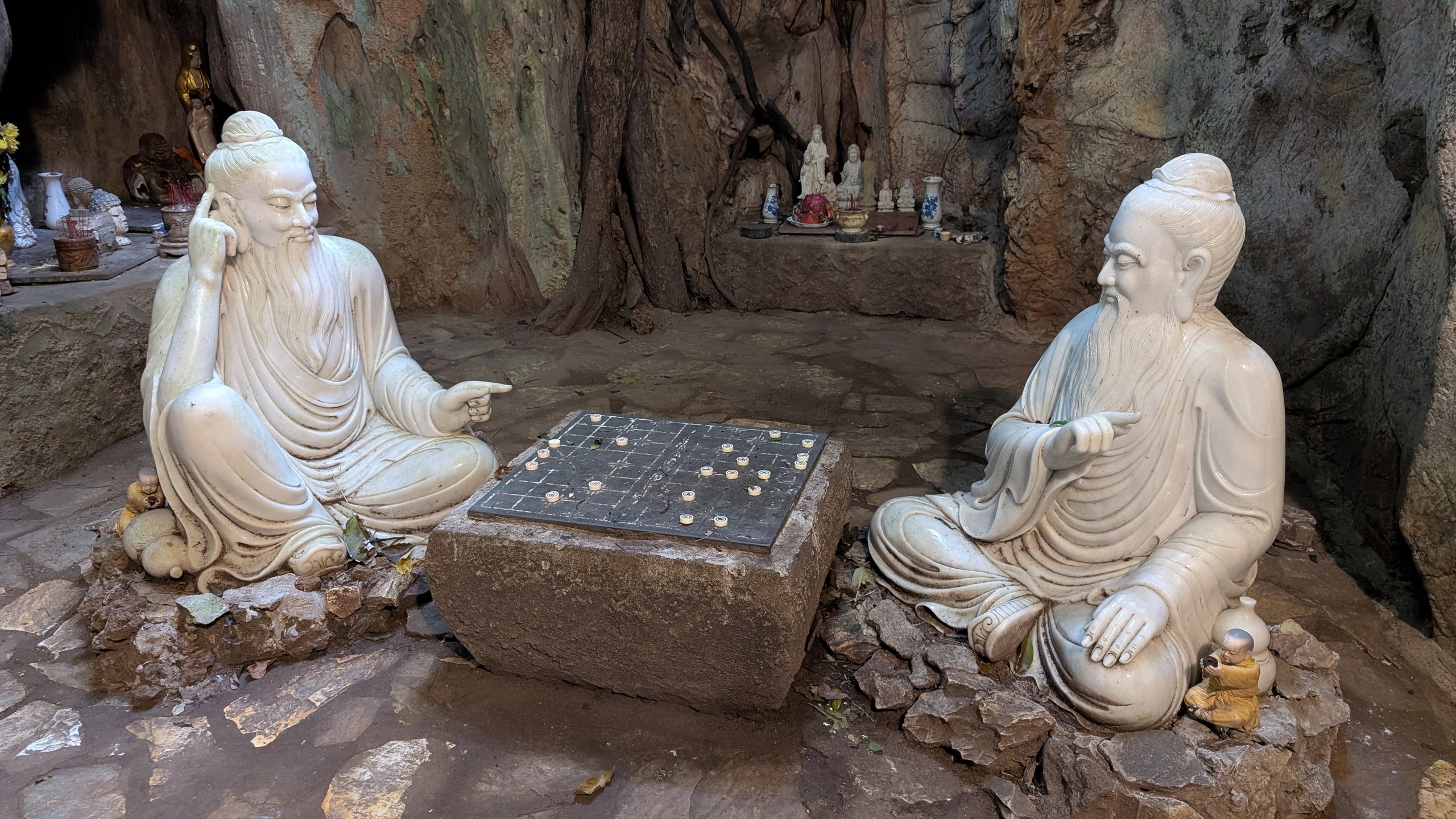
Smaller grottoes are tucked into the rock all over the hill. In one, two white stone old men sit cross-legged over a Chinese chess board, one pointing as if the other just made a bad move. No sign explains them.
Am Phu cave, the one with hell in it
At the foot of Thuy Son is Am Phu, the cave of the underworld. It has its own ticket, 20,000 VND ($0.80), and it is the strangest thing in the complex. You cross a small bridge over a stream that stands for the river of the dead, then walk down past statues of judges, demons, a scale for weighing deeds, and some graphic punishments small children may not enjoy. A long stair then climbs to a lighter chamber meant to be heaven.
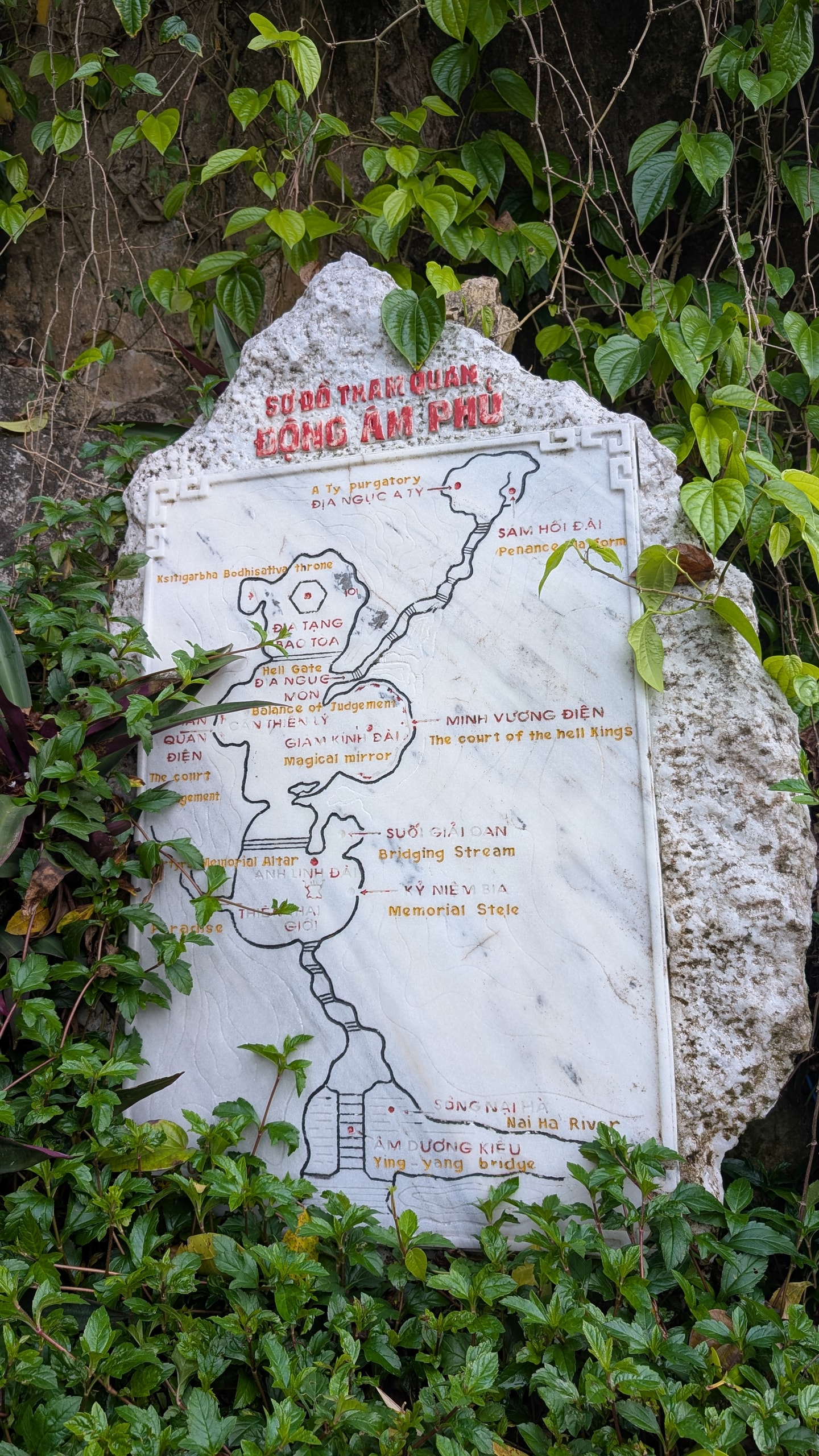
Look at the map first, because inside it is dark and the route is not obvious. Wear shoes with grip. The floors are wet and the stairs are narrow and polished smooth.
The road below is lined with stone-carving workshops, with life-size Buddhas and lions standing in rows on the pavement. Quarrying the hills themselves has been banned for years, so the stone now comes from other provinces. Look, but a 200 kg lion is a big souvenir.
My Khe beach: early or late, and watch the flags
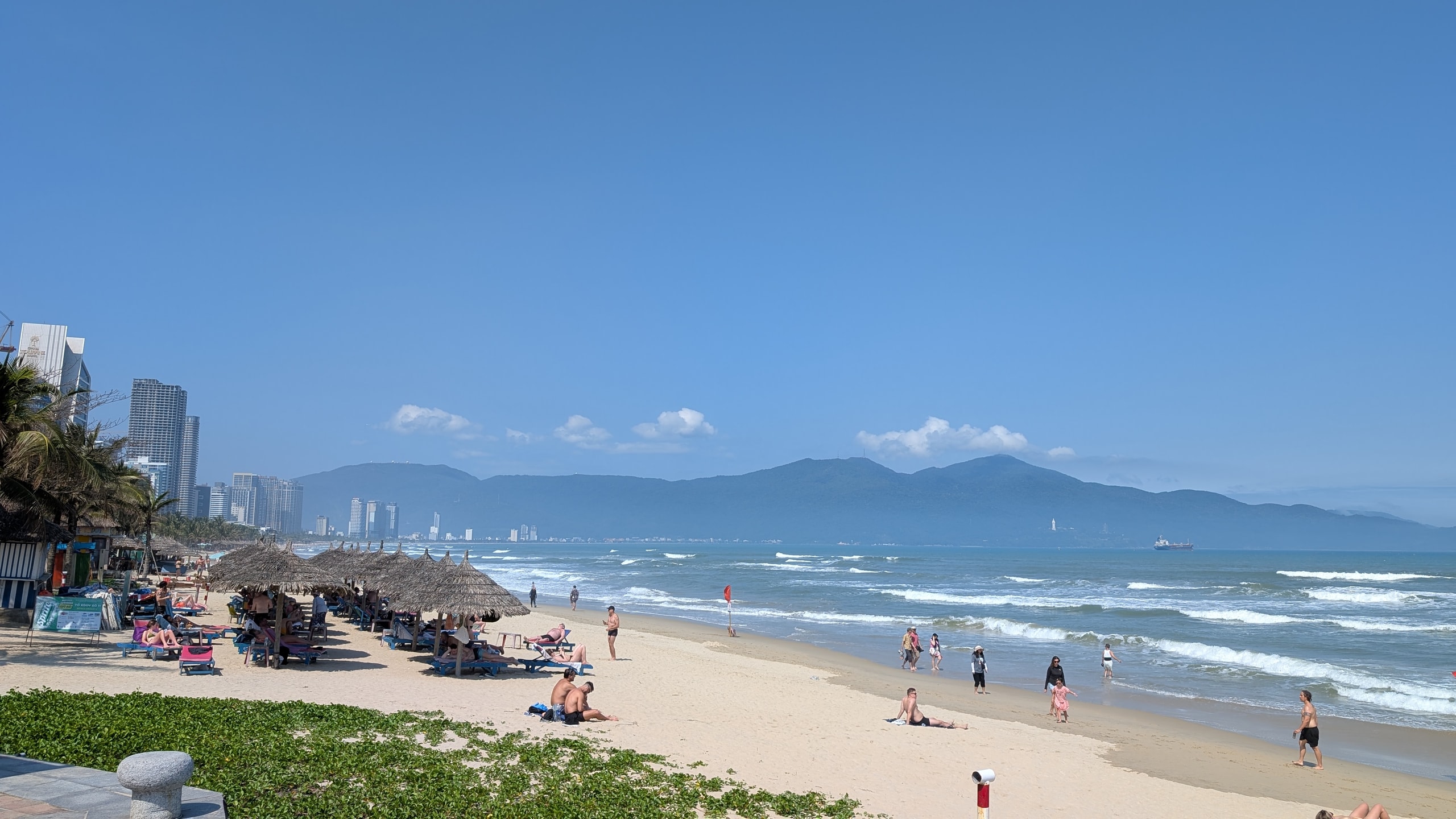
My Khe is the long beach on the city's east side and the reason Da Nang has so many high-rise hotels. The pale sand runs about 10 km south towards the Marble Mountains. At the north end, the Son Tra peninsula closes the bay, and on a clear day you can see the Lady Buddha as a white speck on its hillside.
Locals use the beach at the edges of the day. By 5 a.m. people are swimming, jogging and doing group exercise at the waterline, and in the evening families come down when the heat drops. At midday the sand is mostly foreign visitors under thatched umbrellas. A lounger with shade costs around 50,000 VND ($2).
From about September to March, wind from the north-east brings bigger waves and a strong pull, and lifeguards put up red flags, even on a hot, bright day in February. Do not swim when the red ones are up. From May to August the sea is usually calm.
For a winter beach holiday with flat, warm water, Da Nang is the wrong choice. Phu Quoc and its west-coast sunsets are much better for that from November to April. My Khe works best as a place to cool off between other things.
Son Tra peninsula and the Lady Buddha
Son Tra is the green hump of land north of the beach, mostly protected forest. It is home to red-shanked douc langurs, grey monkeys with red legs, which you can sometimes spot in the trees along the upper roads.
The main stop is Linh Ung Pagoda, about 10 km from the centre. Entry is free. A Grab from the beach costs around 100,000-150,000 VND ($4-6) each way. Ask the driver to wait, because a ride back down can take a while to find.
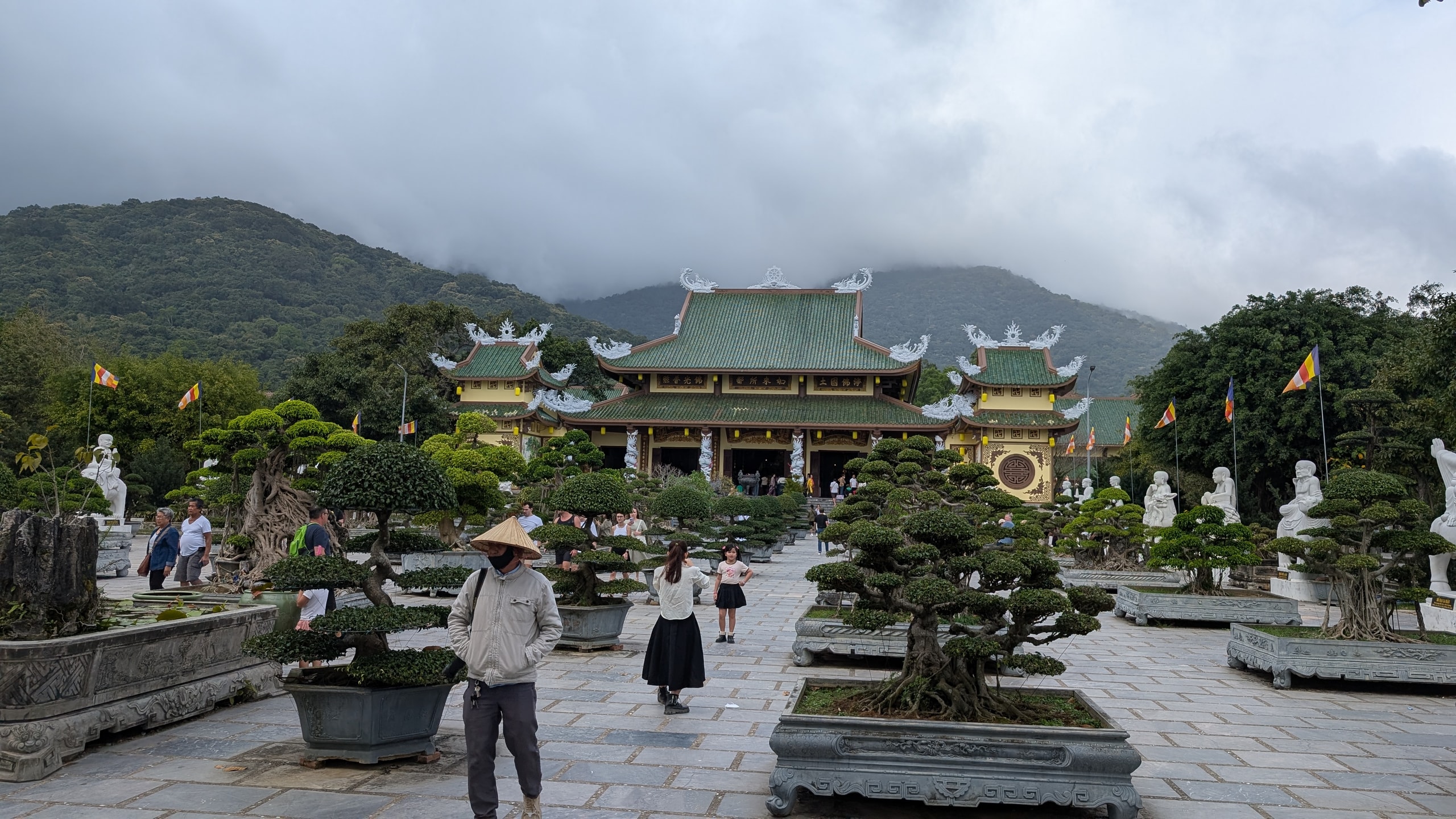
The courtyard in front of the main hall is lined with huge bonsai trees in carved stone planters. Along one side stand white marble statues of the eighteen arhats, the Buddha's disciples. The complex was built in the 2000s and looks new, but it is an active temple, so cover your shoulders and knees.
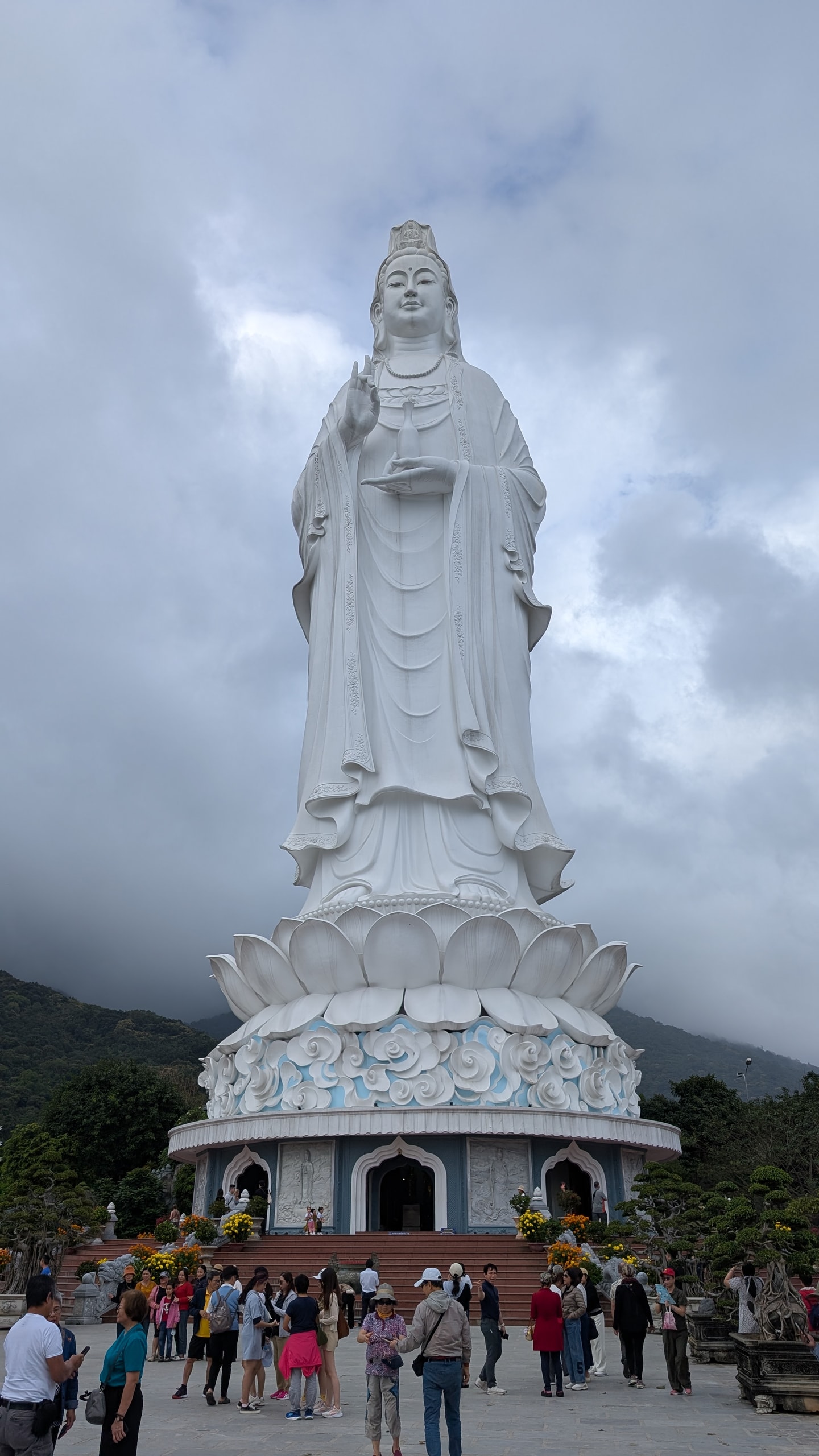
The statue is the reason most people come. The Lady Buddha, Quan Am, is about 67 metres tall and stands on a lotus base that you can walk into. She was finished in 2010 and faces out to sea, and locals say she watches over the fishermen in the bay. From the plaza you have to tip your head right back to see her face.
Late morning is busiest, when the tour minibuses arrive. The afternoon is quieter and the light on the statue is better.
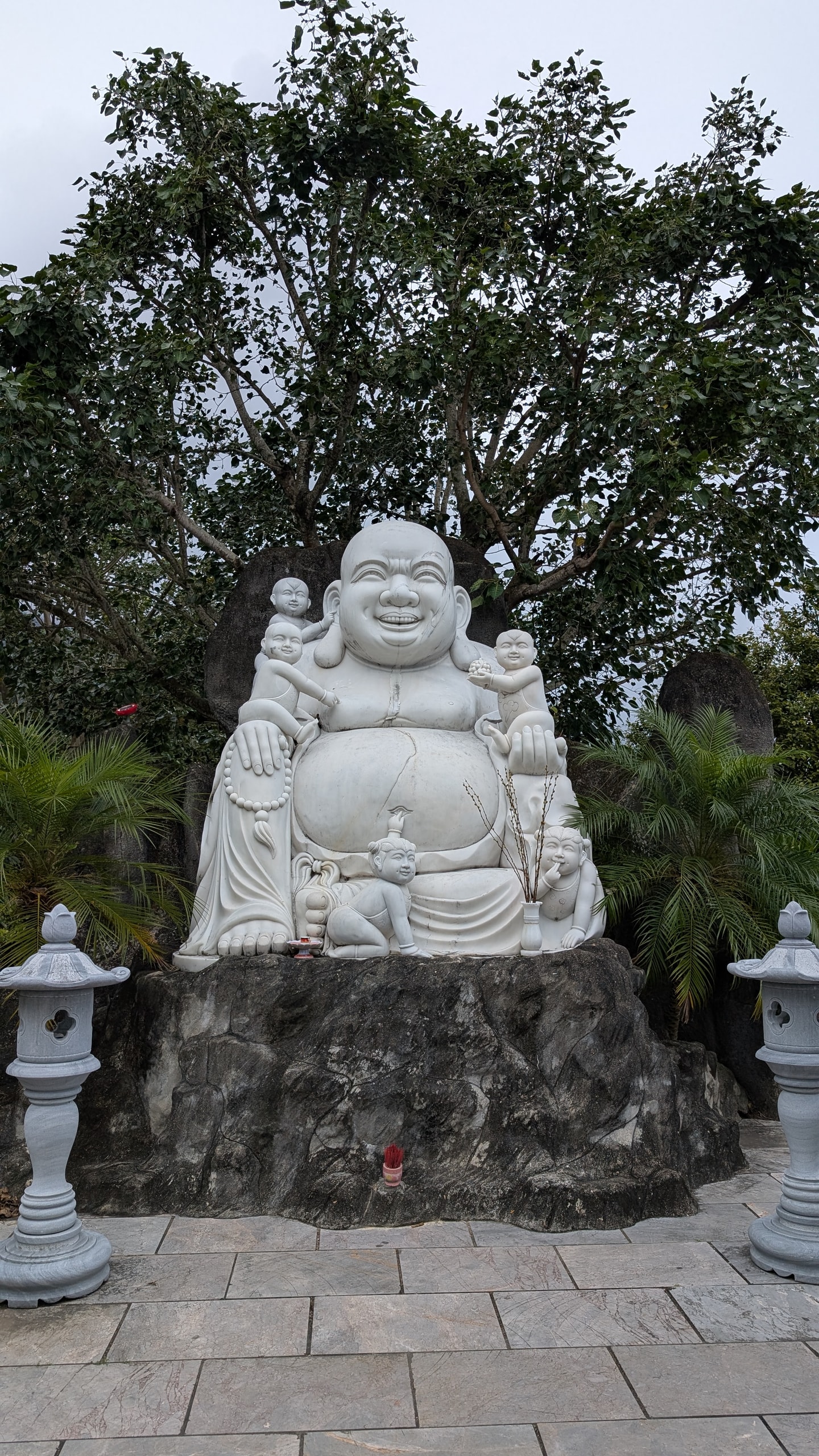
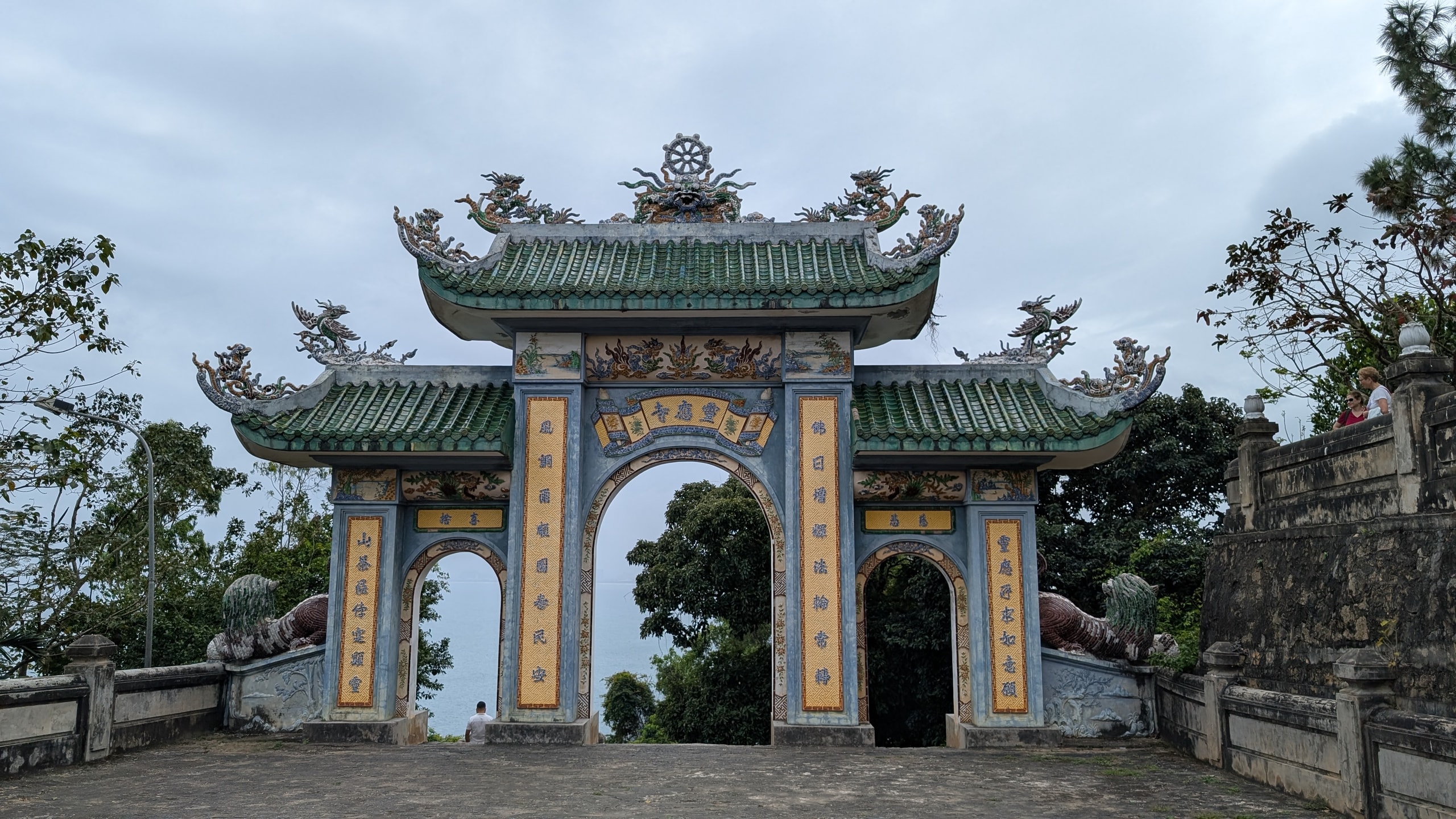
Walk around the back to find Di Lac, the laughing Buddha, whose belly people rub for luck. Past him, stairs lead down to a three-arched gate facing the sea.
Give Linh Ung an hour and a half. Confident riders can take a motorbike up the steep, quiet road to Ban Co peak for a view over the whole city. It is not a road for a first ride. The same goes for the Hai Van Pass across the bay, the old coast road that is the best way to reach Hue and its imperial city.
Ba Na Hills: expensive, crowded and often in cloud
Ba Na Hills is the one everyone has heard of: the Golden Bridge held up by two giant stone hands, 1,400 metres up in the mountains an hour west of the city. The ticket, with the cable car and theme park, costs close to 1,000,000 VND ($38-40).
For that you get a long cable car, a fake French village, rides, and a bridge so packed with phones that you can barely see the hands. The top is often in cloud, and then you have paid for fog. If Son Tra has cloud on it, Ba Na, more than twice as high, almost always will.
Skip it unless you actually like theme parks. Spend the day on the Marble Mountains and Son Tra instead.
The Marble Mountains and Linh Ung together cost under $3 in tickets, and people still come to both to pray.
What to eat in Da Nang
Mi Quang is the local noodle: flat yellow rice noodles in a little rich broth, with pork or shrimp, peanuts, herbs and a sesame cracker you break into the bowl. It costs 30,000-50,000 VND ($1.20-2) and is best at breakfast.
Banh trang cuon thit heo is boiled pork you roll yourself in rice paper with herbs, dipped in fermented anchovy sauce. The sauce tastes better than it smells. A set for one runs about 80,000-120,000 VND ($3-5).
Seafood is dinner. The big restaurants on the beach road keep tanks of fish, crab and clams, and you pay by weight. Ask the price per kilo before they cook and watch the scale, because this is where visitors get overcharged. Clams, grilled squid and a fish for two, with beer, comes to around 500,000-800,000 VND ($20-32). For a cheap lunch, try the food stalls in the middle of Con Market.
Dragon Bridge at 9 p.m. on Saturday and Sunday
The Dragon Bridge crosses the Han River in the middle of the city. It opened in 2013 and is 666 metres long, with a steel dragon arching along its length that glows and changes colour every night.
Plan around the weekend show. At 9 p.m. every Saturday and Sunday, and on some public holidays, the dragon's head breathes fire, then sprays water. The whole thing lasts about fifteen minutes. Check the city's official tourism site for current times and any holiday changes.
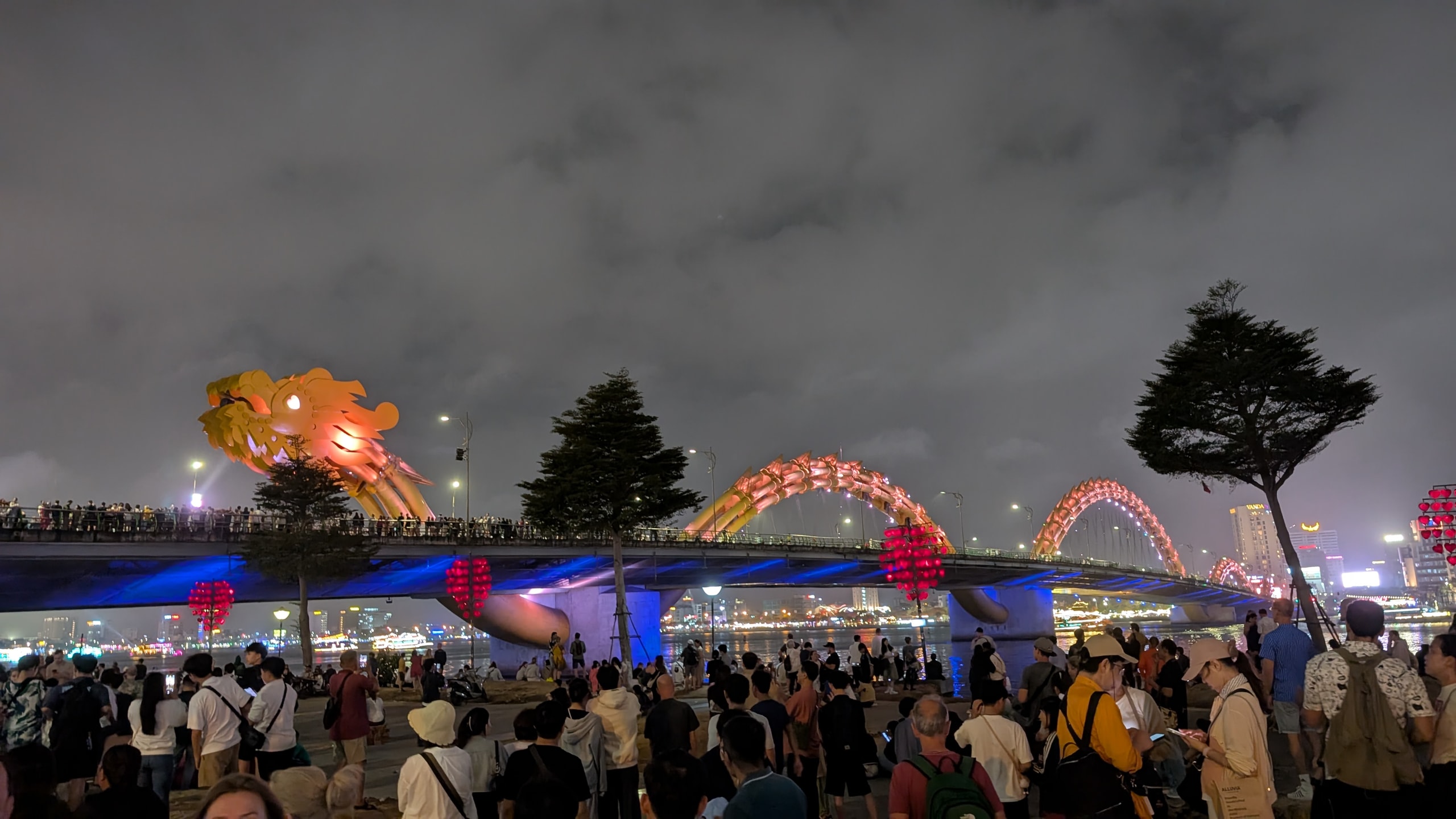
The head is on the east bank, near the red heart-shaped lights, and the crowd there fills up by 8:30. Stand on the riverbank or on the bridge itself. For the fire, get close. For the water, stand back or accept that you will get wet, because the spray drifts a long way on a windy night.
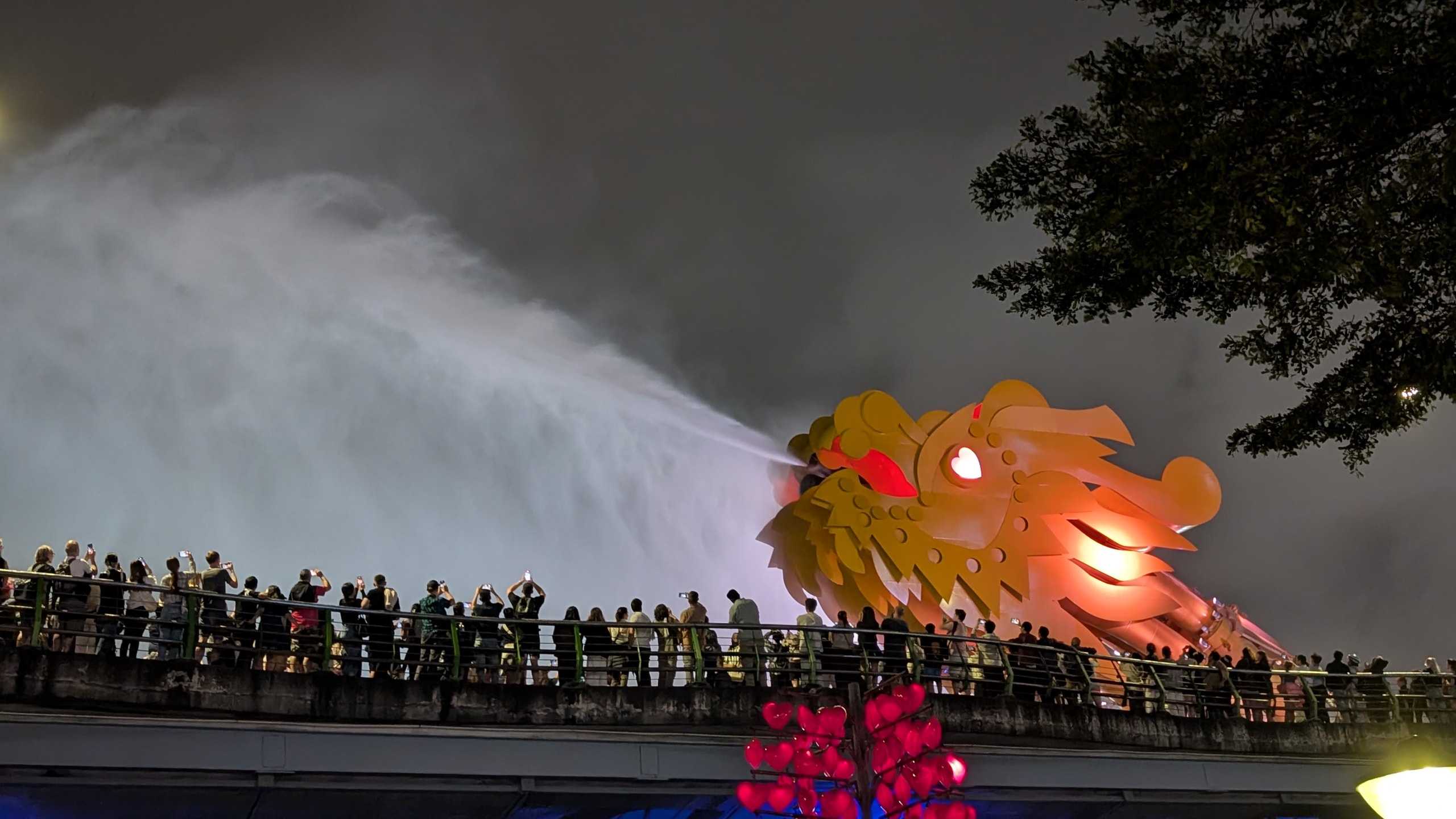
Afterwards, the bars along Bach Dang on the west bank stay busy late, and a Grab back to the beach costs about 50,000 VND ($2). If your dates miss a weekend, do not rearrange the trip for it. The lit bridge is still worth a walk any evening.
What Da Nang costs
Hotels are cheaper than in Hoi An for the same quality, because there are so many of them. A guesthouse near the beach runs $15-25 a night. A mid-range hotel with a rooftop pool, a block or two back from My Khe, costs $35-60. The big international resorts further south along the coast start around $150 and go well past $300.
Grab works everywhere. The airport to the beach costs 60,000-120,000 VND ($2.50-5). The centre to the Marble Mountains is around 120,000-180,000 VND ($5-7), and a Grab all the way to Hoi An is about 350,000-450,000 VND ($14-18).
A full day with the Marble Mountains, Linh Ung, the Grab rides, mi Quang for breakfast, a seafood dinner and a mid-range room comes to about $60-90 for one person, and less for two sharing.
When to go, and how long to stay
February to May is best for sightseeing: dry and around 25-30°C (77-86°F), though February has grey days and a rough sea. June to August is hot, often over 35°C (95°F), with the calmest water and beaches full of Vietnamese families on summer holiday. September to December is the wet season, and October and November bring typhoons and floods. Avoid them if you can.
Two nights is right. Arrive, spend the afternoon on the beach and have seafood for dinner. The next day, go to Son Tra and Linh Ung after lunch. If you can, make that day a Saturday or Sunday, so you can finish at the Dragon Bridge at nine. On the morning you leave, do the Marble Mountains at opening time with your bags in the car, and you reach Hoi An in time for lunch.
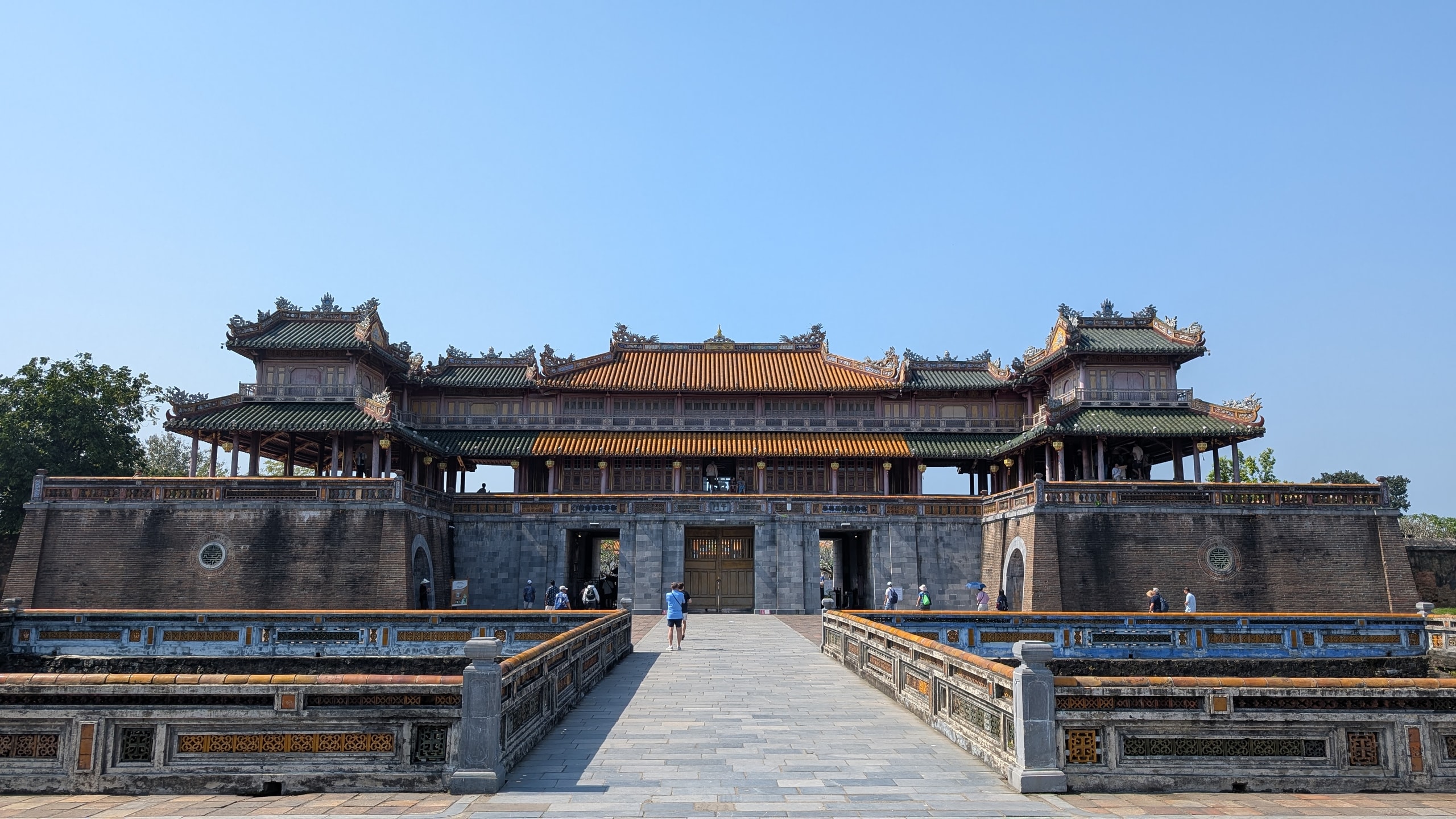
From there, go north or south. North over the Hai Van Pass, about three hours away, is Hue, which deserves its own overnight. South is Hoi An, forty minutes down the coast, where a hotel like Little Gem on the Hoi Muong River makes a quiet base for the old town. This time, at least, you will have seen the city you flew into.