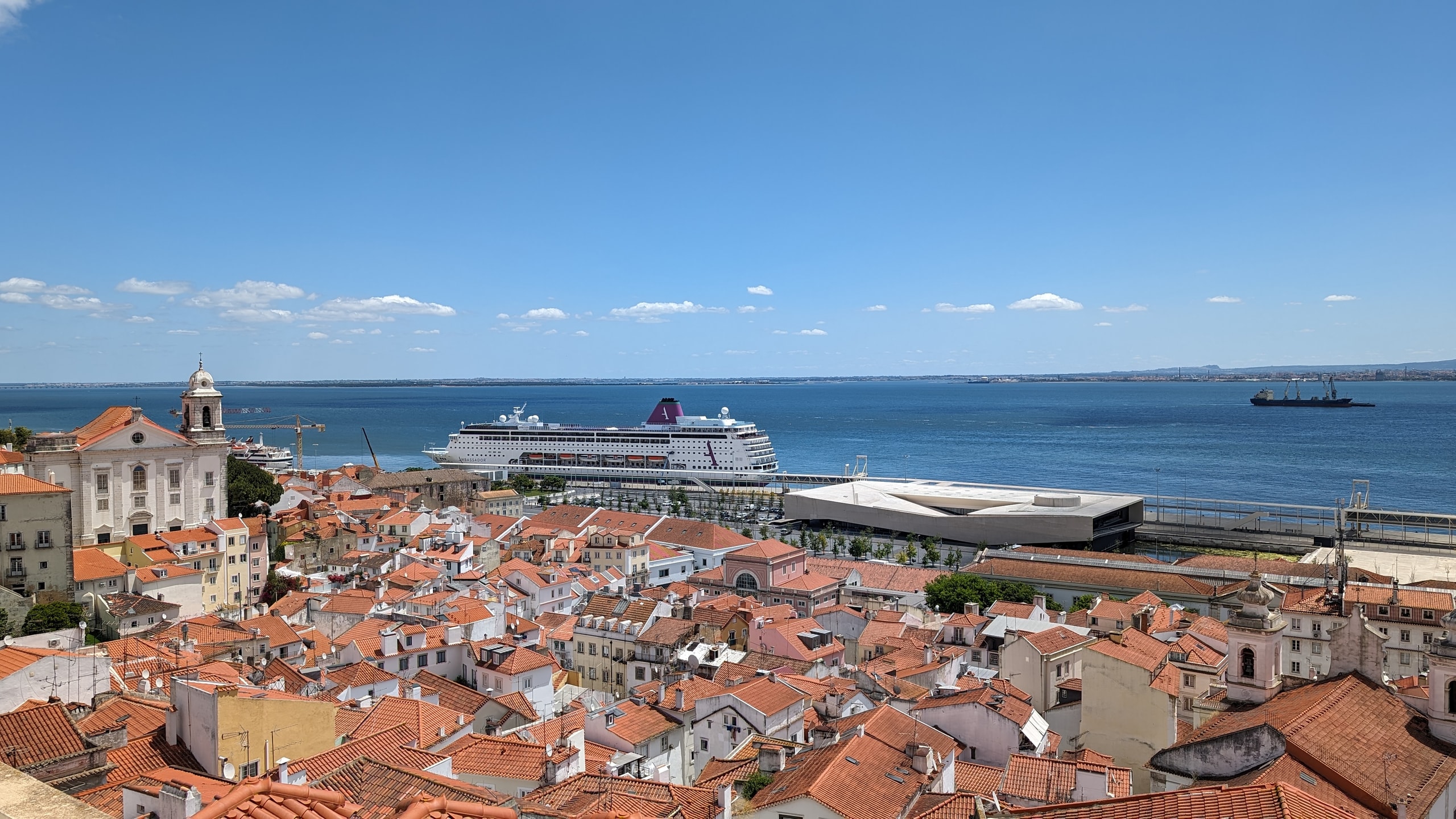
From Portas do Sol the city looks like a pile of terracotta, then a river, then a cruise ship the size of a city block. The white tower of Santo Estêvão sticks up out of the tiles. Several thousand people will be on those same lanes by lunch. That is Lisbon on a clear morning: a medieval hillside, a working Tagus, and a lot of company.
Give it four nights. Three works if Belém is a river walk and you skip the cloister. Two nights is a custard tart, a tram photograph, and the feeling that you never quite entered the city. The rest of Portugal is on the map; this piece is the capital.
Lisbon sits on the north bank of the Tagus, about 15 km from the Atlantic. Roughly 550,000 people in the city, nearly three million in the metro. After the 1755 earthquake, downtown was rebuilt as a grid. The older quarters on either side kept their stairs. Orderly Baixa in the middle, Alfama and Bairro Alto climbing off it: that is the map you walk.
The postcard version sells Tram 28. The better days are on foot, downhill, plus one cheap ferry so you can look back at the city from the water.
Start in the square that faces the river
Praça do Comércio is the rebuilt city's front door: a huge paved square, yellow arcaded buildings, and the Tagus at the open south side. Tour groups form here because the space is easy to photograph. Walk it once in the morning, before the cruise shuttles arrive, and keep moving.
The Rua Augusta Arch stands on the north side. Glory, Valor, and Genius sit on top. Through the opening, Rua Augusta runs up to Rossio: the main street of the grid laid out after 1755 so a ruined port city could work again.
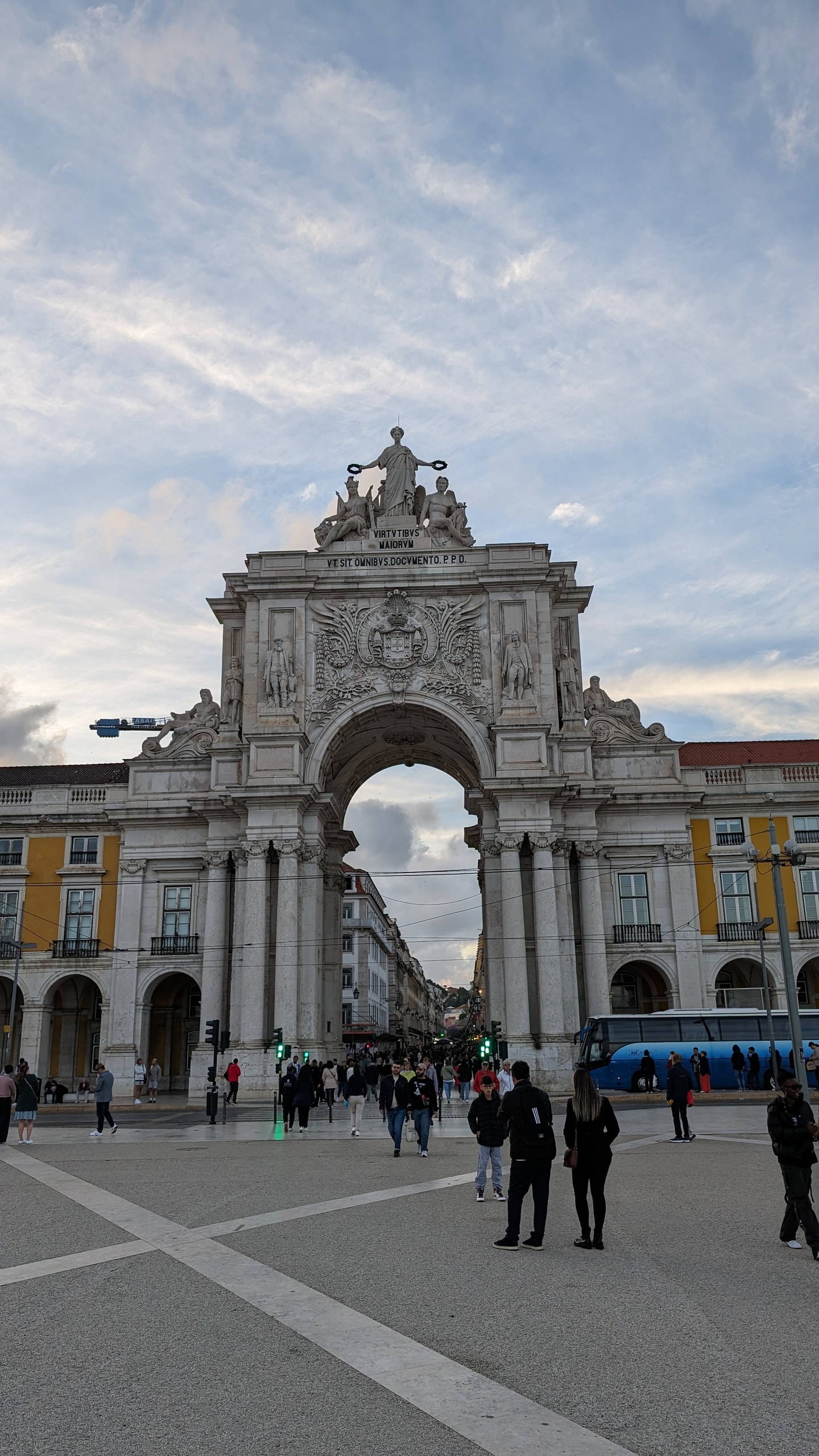
You can pay to go up the arch for the view over Baixa. It is a decent look at a flat grid. Save the better views for the hills, which are free.
Rua Augusta itself is marble tables, gelato, and men with lanyards selling tours. Walk it to get oriented. Eat one street over. A plate of grilled fish or a prego (steak sandwich) a block off the main pedestrian street runs $12-20. The same meal on the square costs more and comes with a view of other people's suitcases.
Buy a Navegante occasional card at a metro machine on day one: €0.50 ($0.55) for the card, then zapping credit. A metro or Carris ride is €1.72 ($1.90) from that balance. Tapping a bank card on the metro gate is €1.92 ($2.10) and does not work on trams and buses. The airport is already on the Red Line. Same card, about 40 minutes to Baixa-Chiado, one change at Alameda.
Alfama is stairs. The castle ticket is optional.
East of the grid, the streets stop being straight. Alfama is the hill that survived 1755 in a more tangled shape: laundry, tiny bars, tiles, and a slope that will find your calves. It is also the neighbourhood the cruise terminal empties into. Midday in high season, the lanes near Santa Luzia feel like a funnel.
Go early. Miradouro de Santa Luzia and Portas do Sol sit a few minutes apart on the same ridge. Both are free. Both look over the rooftops to the river. That is the view people pay €17 ($19) to see from Castelo de São Jorge. The castle is a real site with walls and a small museum. If that is what you came for, book on the official castle site and go at opening. If you came for the lookout, spend the €17 on dinner and stand at Portas do Sol at 8:30 a.m.
Walk downhill from there, not up. Let gravity do the work. You will get lost. That is normal here. Keep a hand on your bag in the tightest lanes; pickpockets follow the same route as the tram.
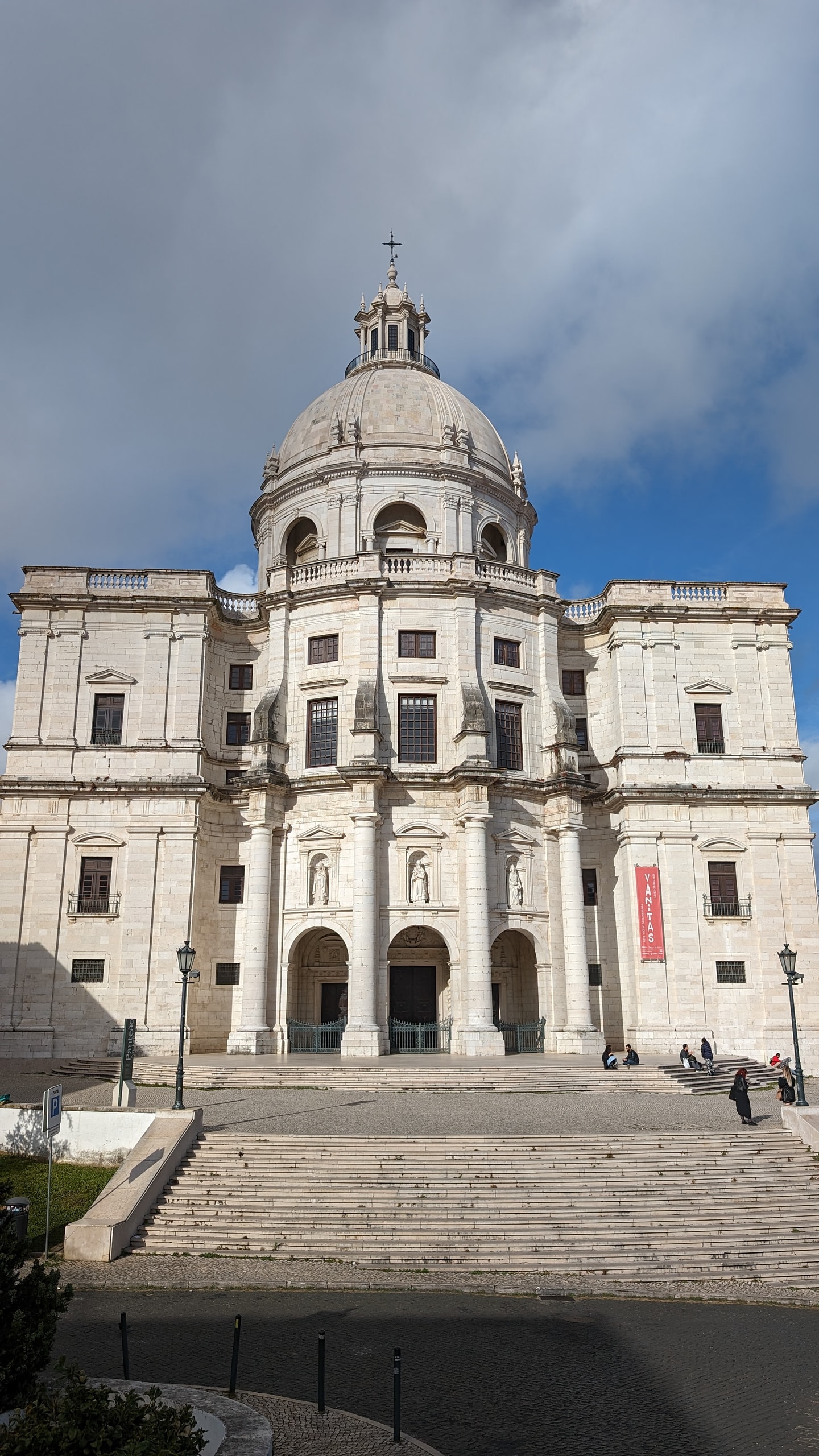
Further east, the National Pantheon - the old Church of Santa Engrácia - is a white Baroque drum with a dome you can see from half the hill. Adult entry is €10 ($11) on the Museus e Monumentos ticket list. The interior holds cenotaphs of Portuguese writers and public figures. The useful part of the ticket is the terrace around the dome: Alfama, the river, and the cruise ships from a quieter angle than Portas do Sol. Closed Mondays.
Tram 28 runs through this hill and everyone knows it. The wooden cars are pretty. They are also slow, packed, and a favourite workplace for thieves. A ride you pay for on board is €3.30 ($3.60) - almost double zapping. Skip it as an activity. If you want a tram for the rattle, take a quieter line later in the day, or the 15E out to Belém, which at least goes somewhere you meant to go.
Chiado, purple trees, and a church with no roof
West of Baixa, Chiado still feels like a city people use: bookshops, theatres, offices above the cafés. Praça Luís de Camões sits between Chiado and Bairro Alto. People sit on the monument steps in the sun. A ship is laid into the black-and-white pavement under the poet's feet.
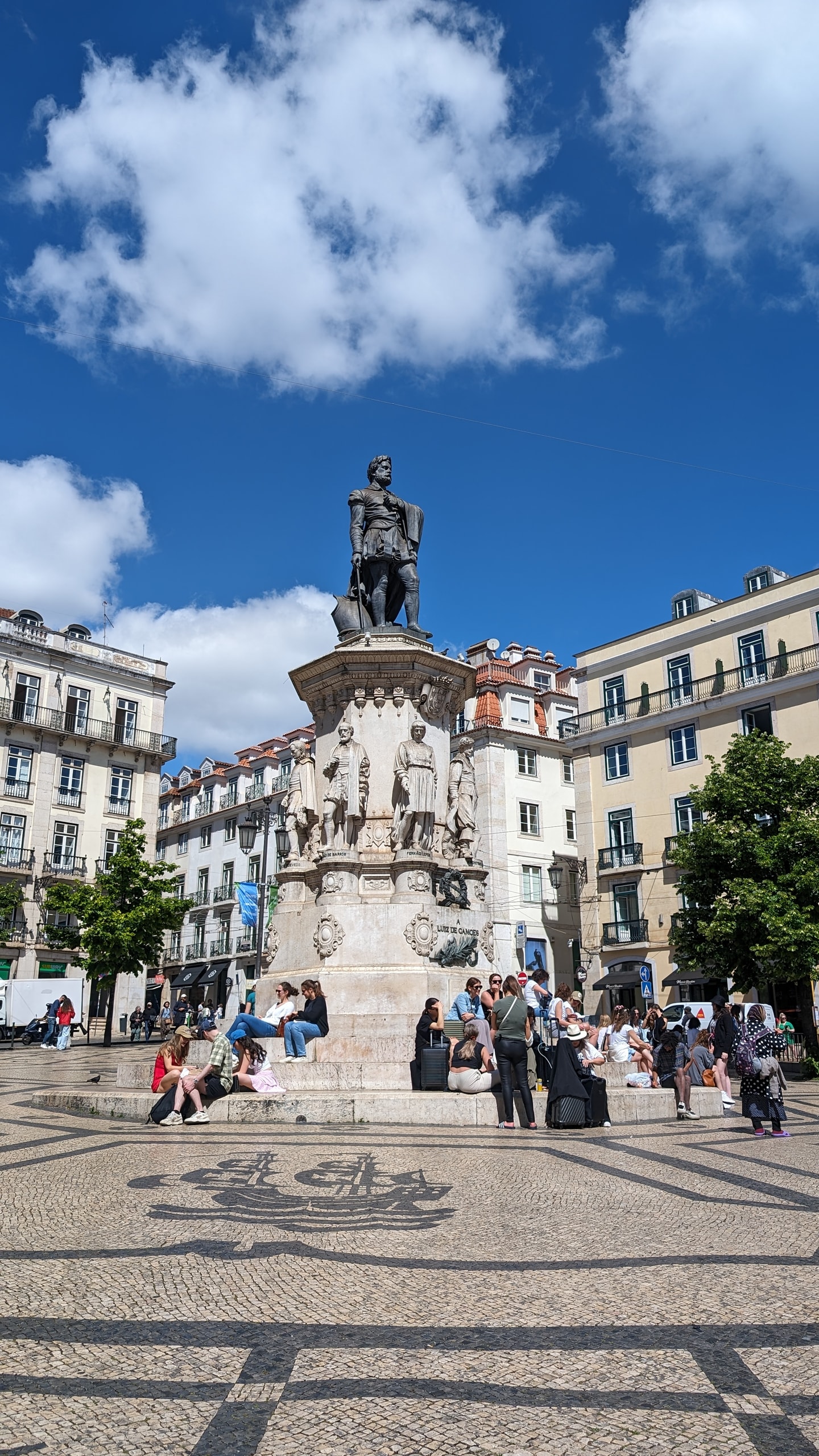
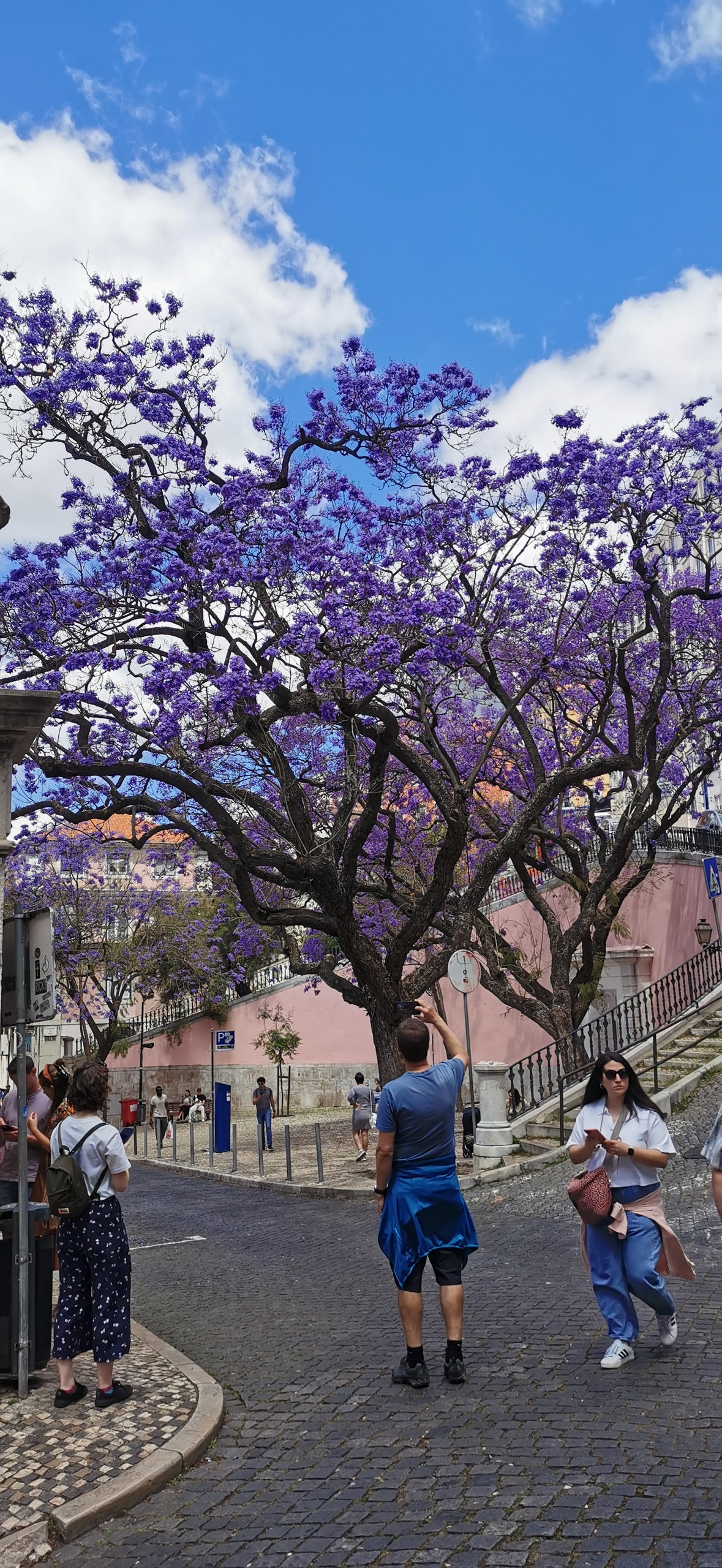
In late April and May, jacarandas flower on the squares. The canopy goes violet for a few weeks. People stop in the calçada to photograph it, which is annoying and also fair. If you can pick a month, pick this one.
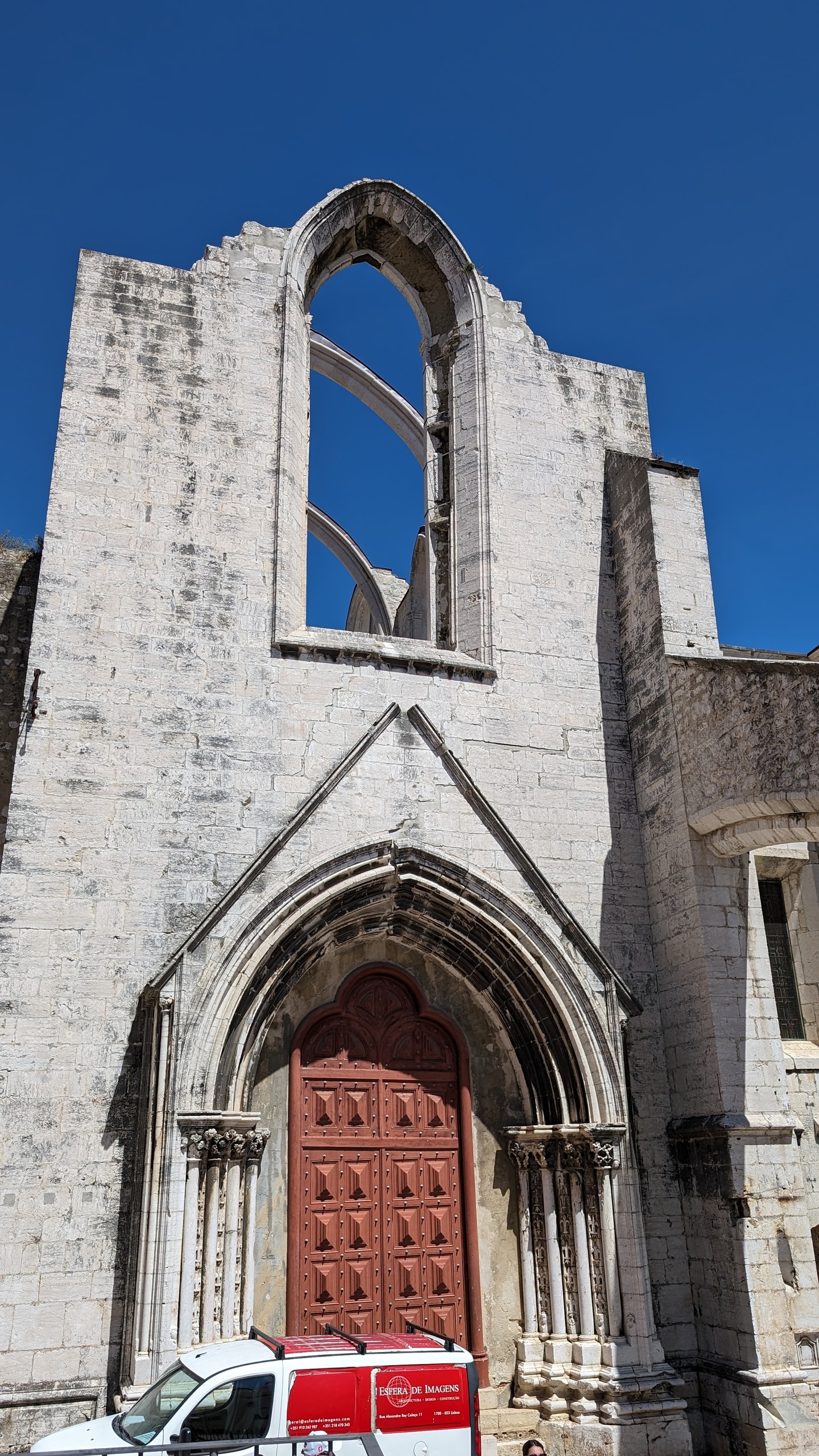
A short walk uphill, Convento do Carmo is the 1755 earthquake left standing. The Gothic church lost its roof in the quake. The stone arches still frame sky. Inside, the Carmo Archaeological Museum fills the nave with tombs, masonry, and a couple of slightly unsettling mummies. Adult entry is €7 ($8). Closed Sundays. Forty-five minutes is enough. The point is the empty vault: you stand on a church floor and look at the sky.
The square outside, Largo do Carmo, is where the Estado Novo dictatorship ended in 1974. Captains of the Carnation Revolution surrounded the headquarters of the National Republican Guard; the prime minister surrendered. There is still a GNR building on the square, still a ceremonial guard. The flowers in rifle barrels are from the photographs. The square is an ordinary place to drink a coffee, which is part of why it works.
From here the Elevador de Santa Justa is a neo-Gothic lift that everyone queues for. The Carmo terrace already did similar work. Skip the line unless you like industrial ironwork.
At Carmo you stand in a church with no roof. The arches frame the sky.
Belém needs a morning and a booked ticket
Belém sits 6 km west of the centre, where the Tagus widens toward the Atlantic. You get a monastery, a tower in the river, a famous bakery, and a lot of coaches. Take the 15E tram or the train from Cais do Sodré (about 15 minutes). Give it a morning. Book anything that sells out before you ride.
The Jerónimos Monastery is the building that eats the time. The south portal is a wall of carved limestone: saints in niches, nautical rope in stone, Prince Henry between the doors, the Virgin above them. You can stand on the pavement and look at that facade for free. The church of Santa Maria de Belém is also free - Vasco da Gama and Camões are buried inside - and it is the half of the visit most people actually remember.
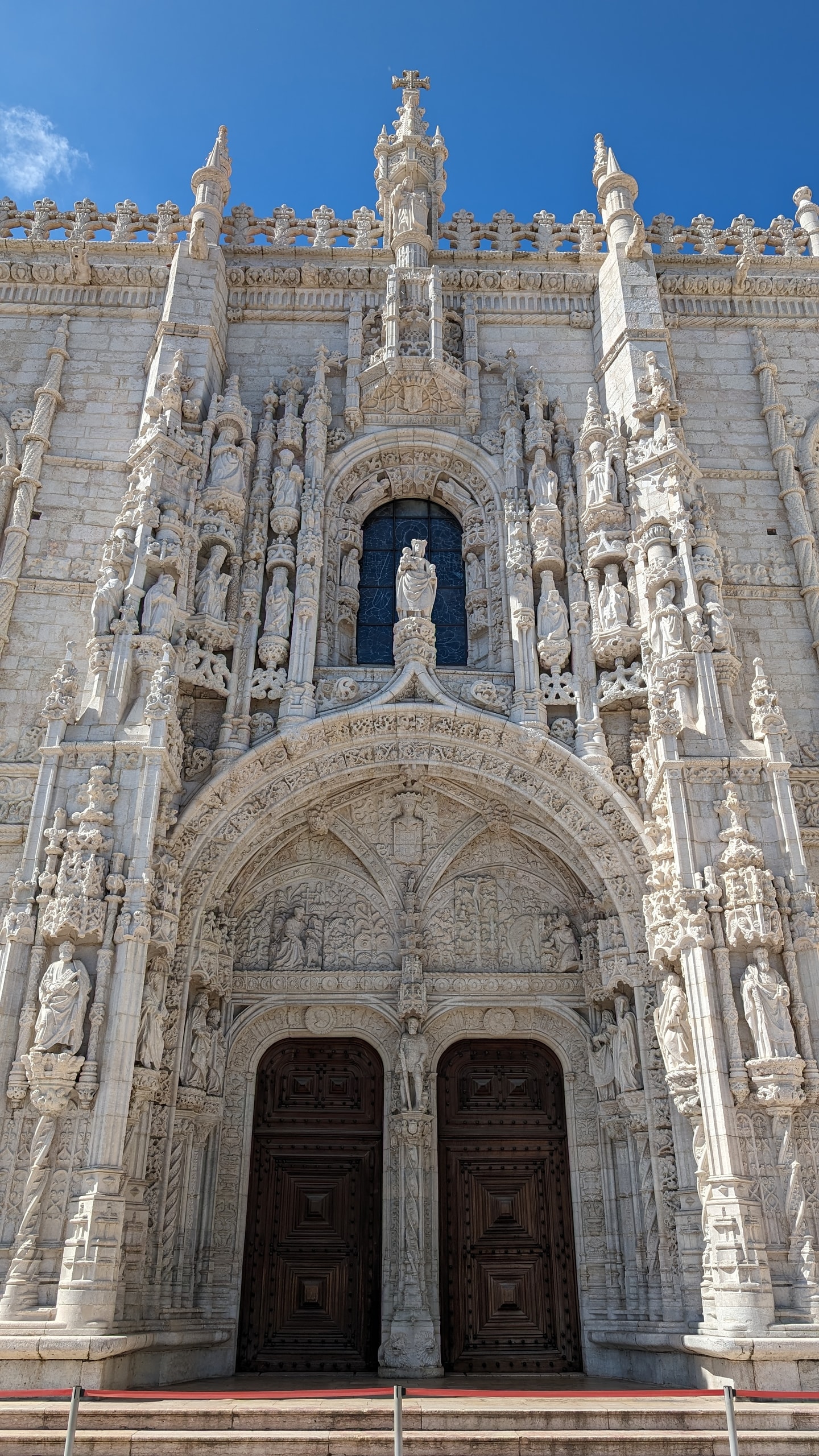
The cloister is the paid part: €18 ($20) for adults, half for ages 13-24 and over-65s, on the official monument tickets page. Two-storey Manueline stonework, and a queue. Book a morning slot. If you only have energy for one interior, take the free church and the portal and keep the €18. Closed Mondays.
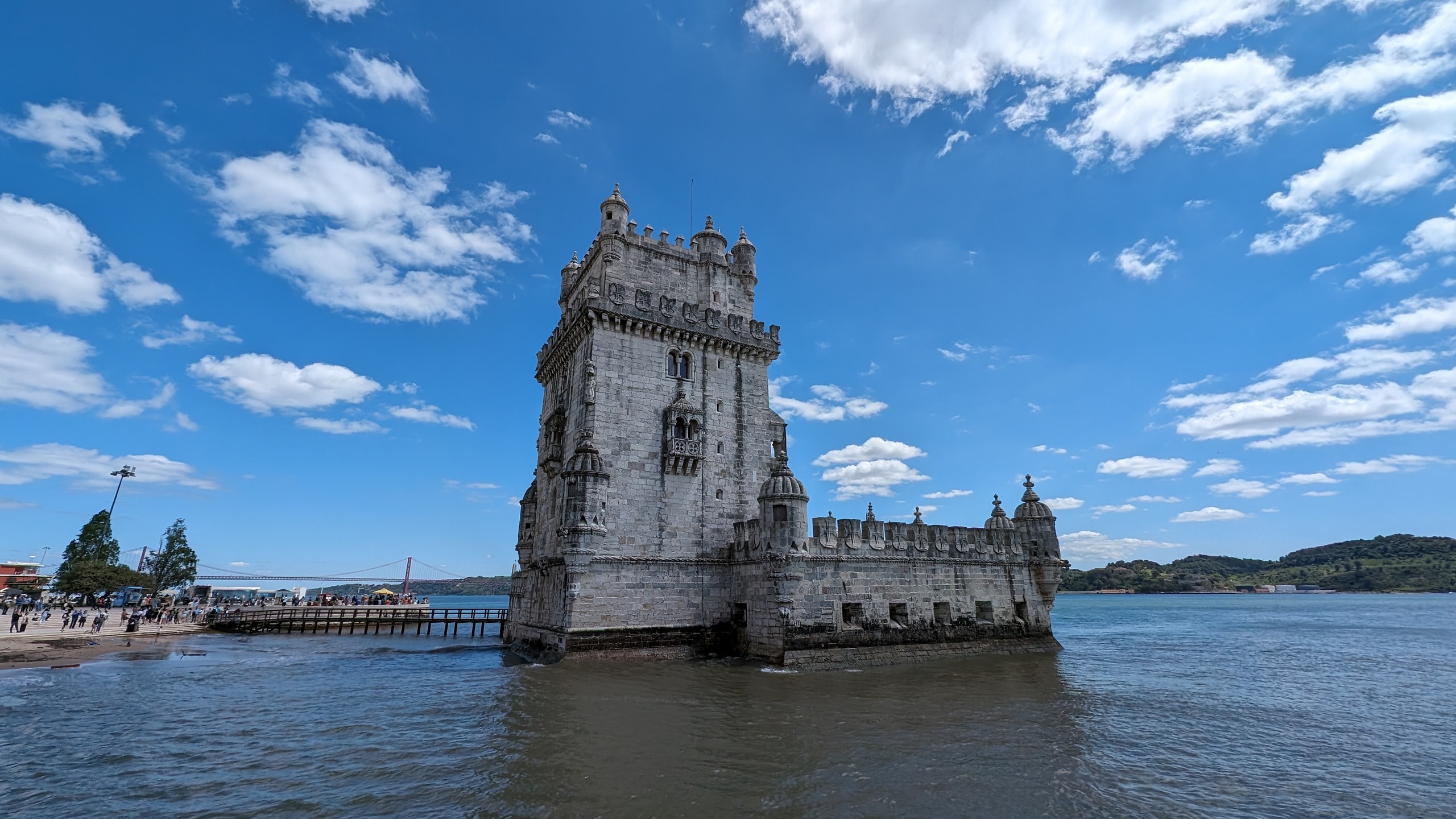
Ten minutes west along the water, Torre de Belém sits in the river on a wooden walkway, a small fortress with onion-domed turrets and the 25 de Abril Bridge in the haze behind it. Adult entry is €15 ($16.50), timed, and the interior is tight - a spiral stair, some chambers, a bastion with cannon slots. The photograph from the bank is the stronger half of the stop. If the slot is sold out, walk the perimeter and leave. You will not have missed a secret room.
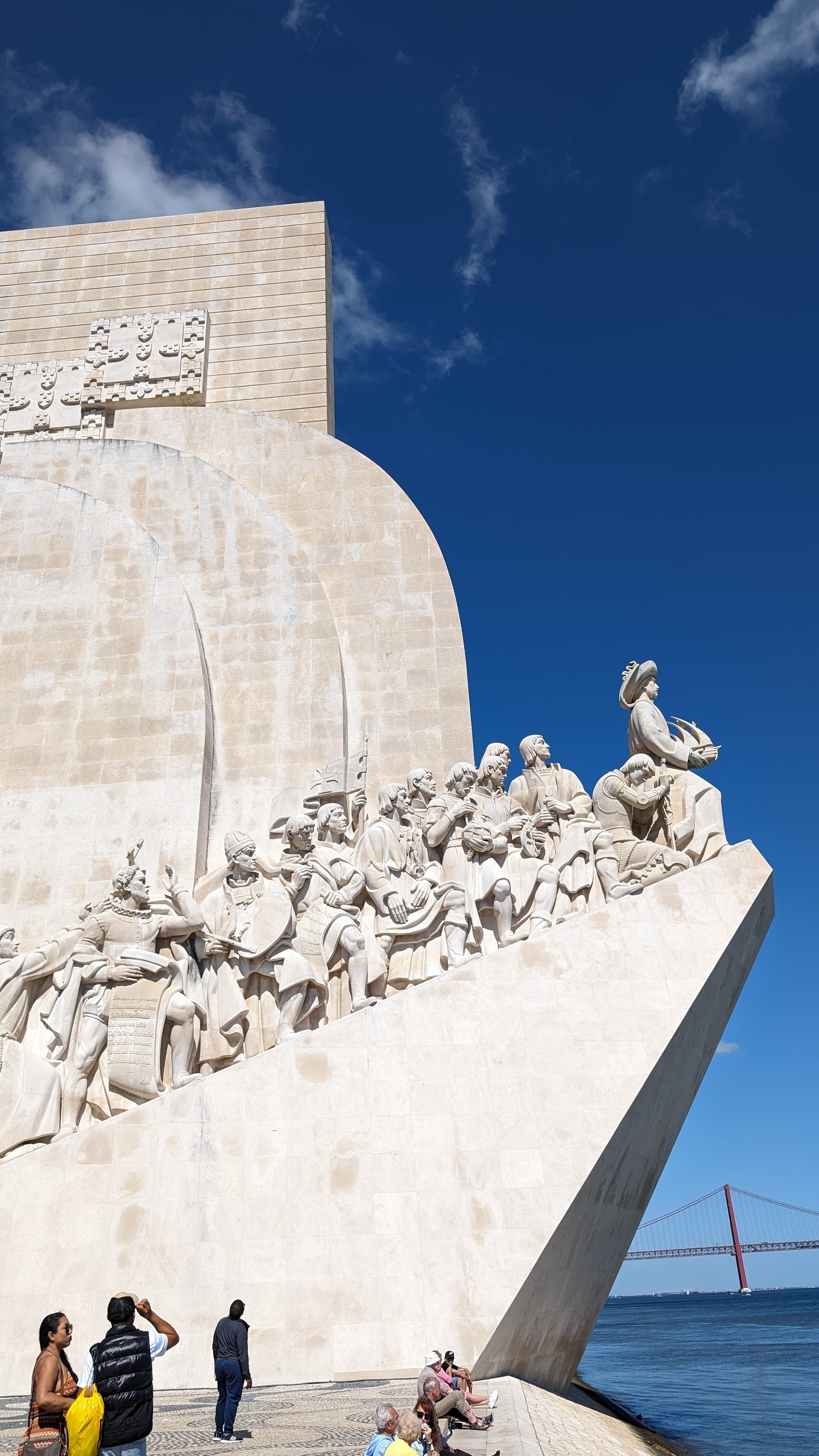
Between the monastery and the tower, the Padrão dos Descobrimentos is the 1960 stone prow with Henry the Navigator at the front. Free to look at from the pavement. The lift to the top is a separate ticket and another view of the same river. Skip the lift if the morning is slipping.
Pastéis de Belém is the bakery that industrialised the custard tart. The line is real. The tarts are good. They are not four times better than Manteigaria in Chiado, where you watch them come out of the oven without losing 40 minutes of a monument morning. If you wait at Belém, go at opening, buy a box, and eat them on a bench facing the water.
The Jerónimos and Belém Tower UNESCO listing covers both monuments together. There is no official combo ticket. Anyone selling you a bundle on the waterfront is adding a markup.
The view that explains the city is on the other bank
Lisbon is a north-bank city. The south bank is Almada: a cliff, a statue of Christ with arms out, and a ferry that commuters treat as a bus. Ride it once. Fifteen minutes, plastic seats, and the whole ridge of the capital seen from the water.
From Cais do Sodré, Transtejo runs to Cacilhas in about 15 minutes. A single is €2 ($2.20); zapping is about €1.60 ($1.75). There is no return ticket - tap again coming back. The boats are commuter cabins with teal plastic seats. There is often no outdoor deck. You look through the windows: water, then the red suspension cables of the 25 de Abril Bridge, then Cristo Rei on the ridge. That is enough.
On the Cacilhas side, walk west along the old quay, Cais do Ginjal. The wall is tagged. A sign says Perigo de derrocada (danger of collapse). The path ends at Restaurante Ponto Final, a white house with blue trim sitting in the water, the bridge behind it, the Boca do Vento elevator climbing the cliff. A grilled-fish lunch here runs $25-40 a head with wine, looking at Lisbon from across the river. Book if you can. Walk-up at sunset in summer is a shrug from the waiter.
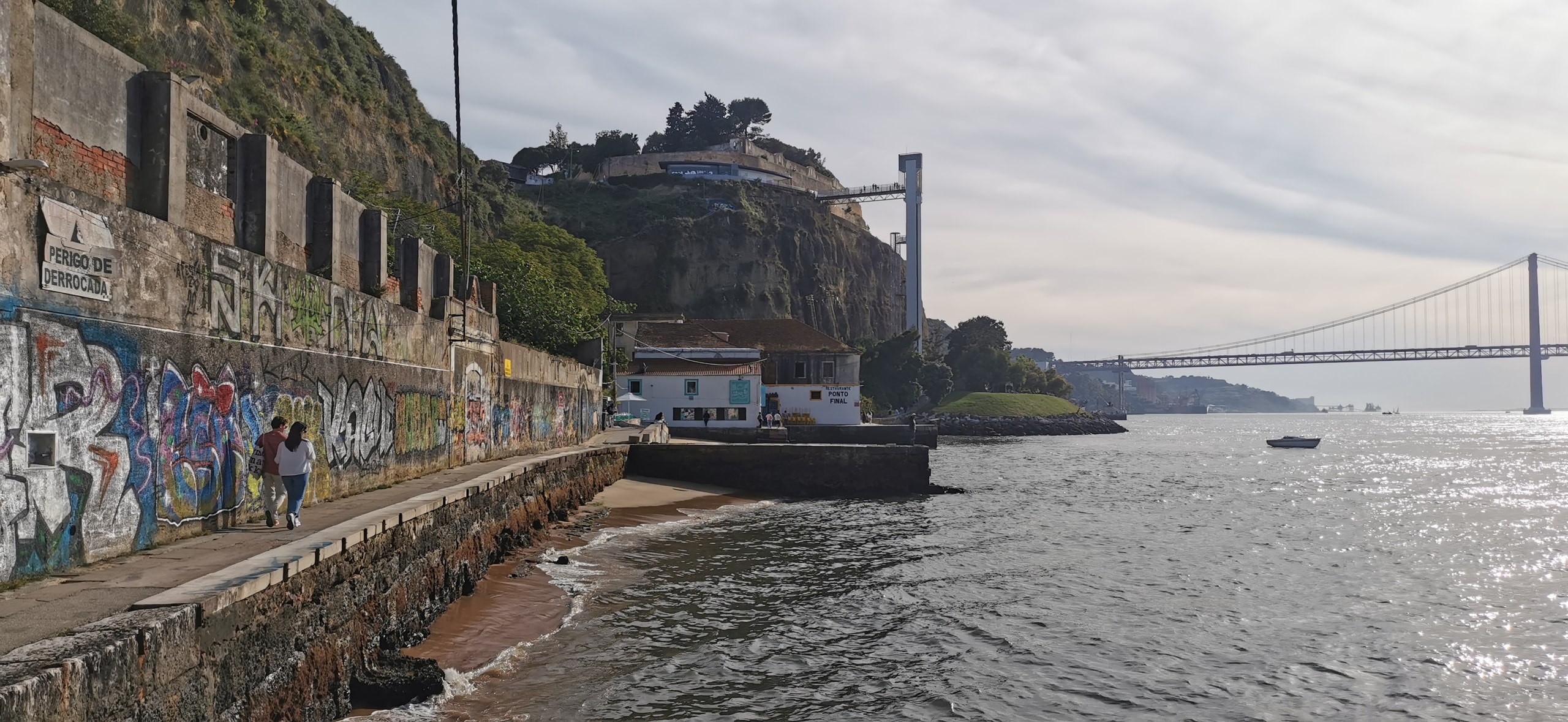
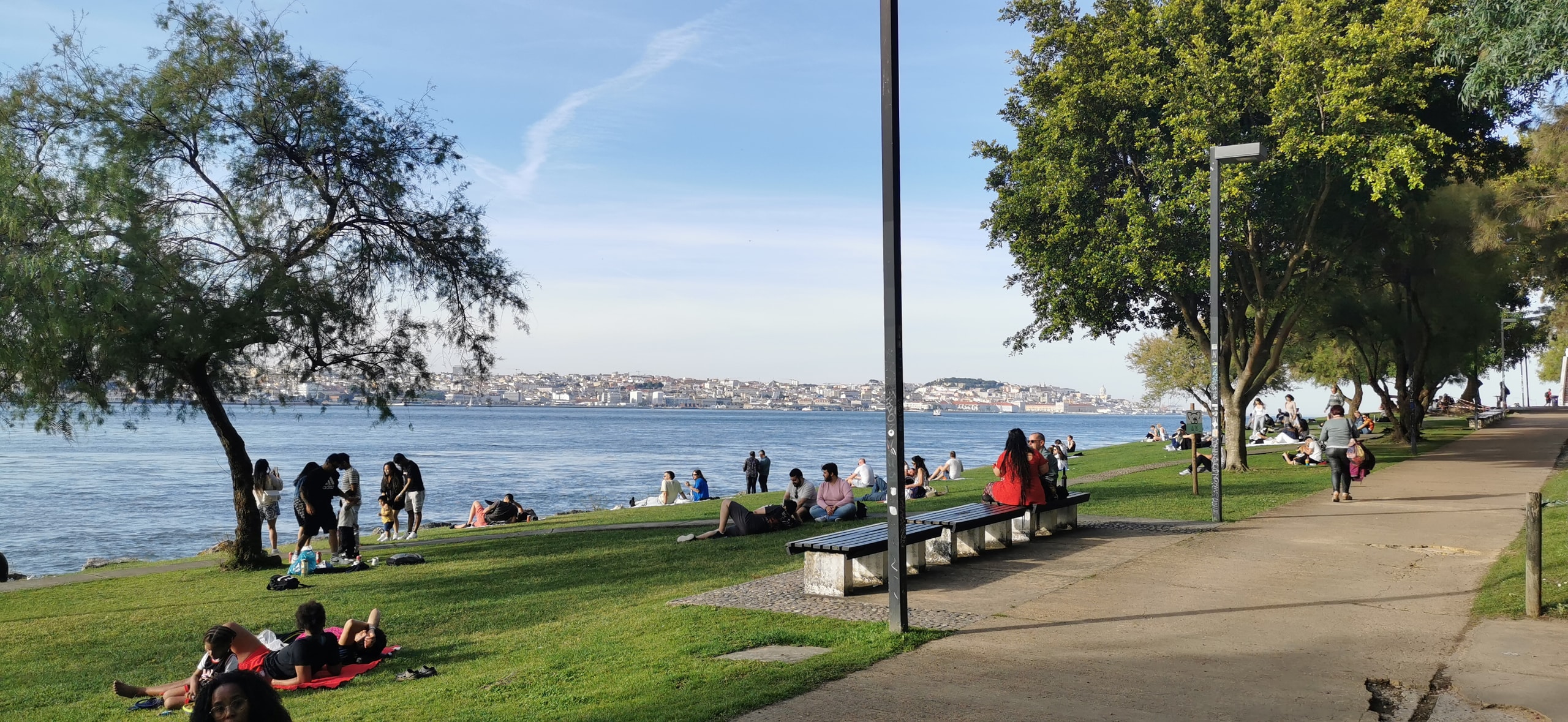
You do not have to eat at Ponto Final. Keep walking. A lawn opens toward the river - trees, a long bench, Lisbon stacked on the far bank. In the late afternoon it fills with people on the grass, mostly young, a red blanket, the city doing the work of a viewpoint. Nobody is rushing a monument slot. Stay an hour. This is the part of the crossing that is actually nice.
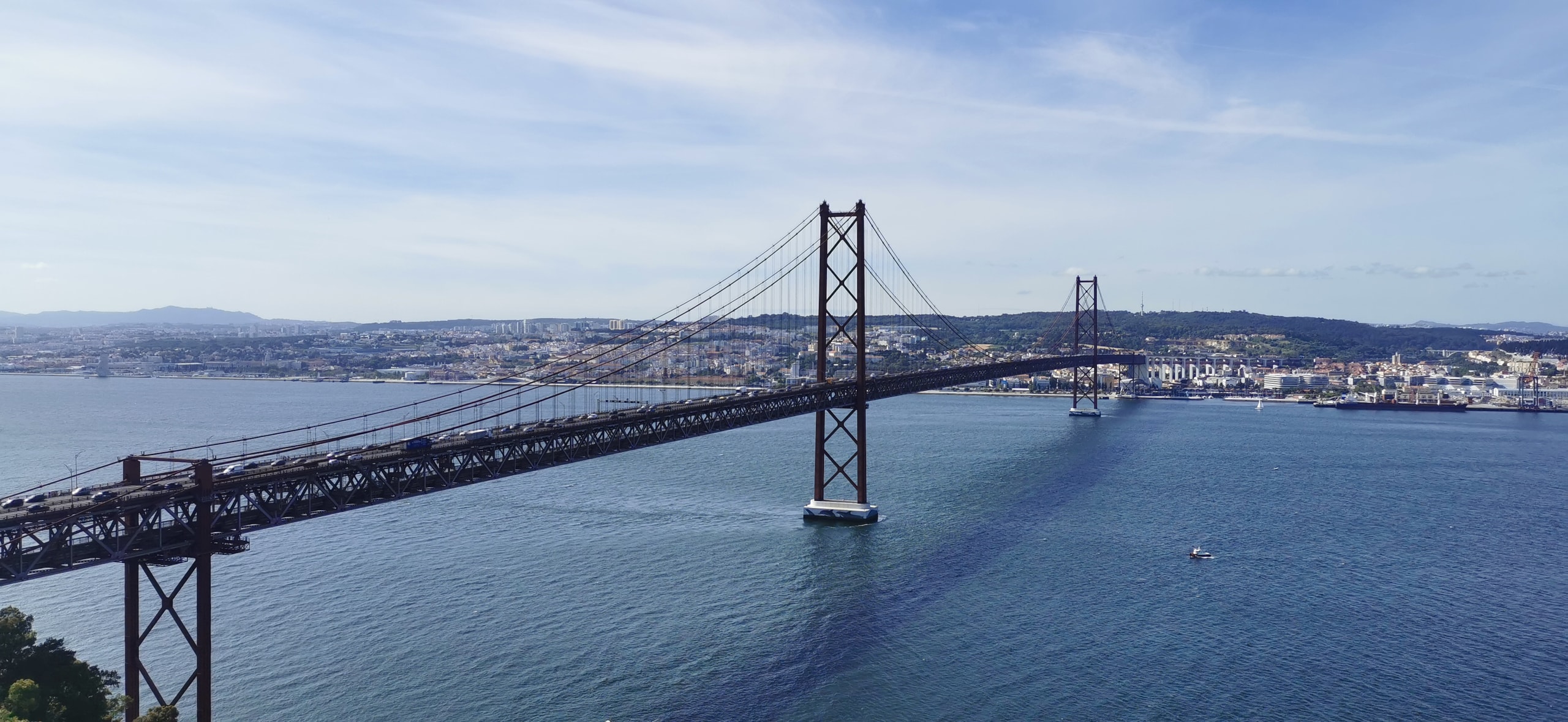
From the same bank the 25 de Abril Bridge is the whole picture: rust-red towers, a deck full of traffic, Lisbon's hills on the far side. Cristo Rei sits on the ridge above Cacilhas if you want the terrace - 1950s concrete, 110 metres including the pedestal. Fine. The bridge and the city are the view.
A 24-hour Carris/Metro ticket that includes this ferry is €10.35 ($11.50). Worth it on a day you also ride the 15E. On a walking day, zapping is cheaper.
What four nights actually cost
For two people sharing a room, a realistic mid-range stay in late April, May, or September looks like this:
- Room in Baixa, Chiado, or the edge of Alfama: $130-220 a night. August is higher. Stay walkable to a metro stop; you do not want a steep alley that is a 20-minute climb at midnight.
- Airport to centre: metro $1.90 per person with zapping, or a Bolt/Uber $12-22
- Navegante card: $0.55, then $1.90 a ride in the city
- Lunch off the main squares: $12-22 per person
- Dinner with wine: $28-45 per person if you leave Rua Augusta
- Pastel de nata: $1.50-2.50, and you will eat more than one
- Carmo: $8
- Pantheon: $11
- Jerónimos cloister (optional): $20
- Belém Tower (optional): $16.50
- São Jorge Castle (optional): $19
- Ferry to Cacilhas and back: about $4 per person
That is roughly $700-1,100 for four nights of lodging plus the useful tickets, before a Sintra overnight. Lisbon is cheaper than Paris or Oslo. It is not the bargain European capital of 2012. Cruise days and July weekends move restaurant prices and crowd the hills.
May is the month that earns the flight
Late April through early June, and September into October, are the windows that make sense. May has the jacarandas, long light, and days that are warm without the August crush. Mornings can start in a sweater. Afternoons on the waterfront are T-shirt weather.
July and August work if you start outdoor walking at 8 a.m. and treat 1 p.m. as indoor time: a museum, a long lunch, a nap. Belém's riverfront has almost no shade. Winter is greener, quieter, and wetter. Carmo's open nave in the rain is still Carmo.
Weekdays beat weekends. A Saturday in Alfama with two ships in port is a different city from a Tuesday in May.
Skip the two-night tram loop
Skip Tram 28 as an activity. Walk Alfama downhill from a viewpoint. Use other trams when they go where you are going.
Skip a day-trip van that stacks Belém, a viewpoint, and Sintra into one paid exhaustion. Sintra needs a night. The palaces do not fit in the gap between a monastery slot and a return train.
Skip eating every meal on Rua Augusta or in front of Pastéis de Belém. The food improves one street back. The tarts are sold in more than one shop.
Skip Parque das Nações on a first four nights unless the Oceanário is the actual plan.
Skip trying to add the western Algarve as a day from Lisbon. That coast wants its own week and a car.
Four nights is for people who will walk a hill twice, book one timed ticket, and spend an afternoon looking at Lisbon from a plastic ferry seat. The tram will still be there if you want it later.