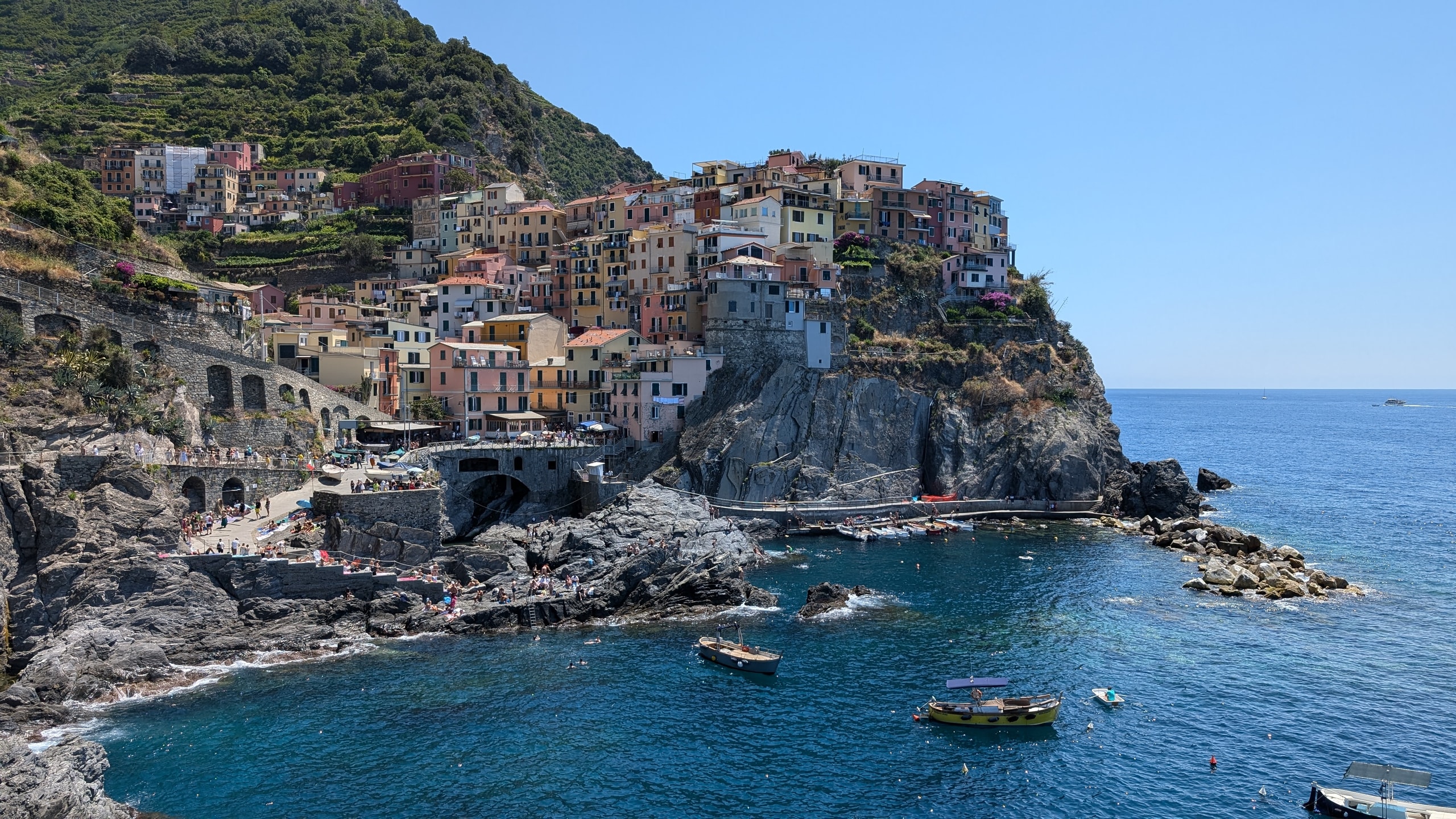
There is a white food truck at Cabo de São Vicente with a cartoon sausage on the roof and a German sign that translates as “last bratwurst before America.” Behind it, a red-capped lighthouse sits on the southwestern corner of mainland Europe. The Atlantic is loud. The queue is real. That pairing is the western Algarve in one stop: a serious piece of coast, and the slightly absurd tourism that grew up on it.
Albufeira and Vilamoura sell the other version - sunbeds, golf, and a British-menu strip that runs for kilometres. That coast is easy to book and easy to dislike. Drive west of Portimão and the rock changes the trip. Limestone stacks rise out of water that goes from turquoise to navy in a few metres. The west-facing beaches get real swell. Inland, a red sandstone castle still looks down on a town that used to be the region’s capital.
Give the western Algarve five to seven nights and a car. Four can work if you stay in Lagos and accept that Sagres and Silves each take a proper half-day. Trying to add Benagil, a golf resort, and the cape on the same Tuesday is how the week becomes a memory of car parks. More of Portugal is on the map; this piece is the west.
Lagos is the right base for the west
Lagos has a walled old town, a marina, and enough restaurants that dinner is not a project. More useful: Ponta da Piedade is ten minutes south, Praia da Rocha is a short hop east, Sagres is under an hour west, and Silves is about forty minutes inland. You can cover the interesting Algarve without changing hotels every night.
A simple apartment or small guesthouse in town runs roughly $90-160 a night in late April, May, and September. August prices jump and availability disappears. Stay inside the old walls or just east of them if you want to walk to dinner.
Buses link Lagos with Sagres, Portimão, and Faro. They do not reach cliff pull-offs or Vicentine car parks without eating the day. A small rental car is the honest answer. Budget $30-55 a day in shoulder season before insurance and fuel. Village streets are tight. A compact car is easier than an SUV you will regret in a Silves alley.
Ponta da Piedade is the cliff walk worth the hype
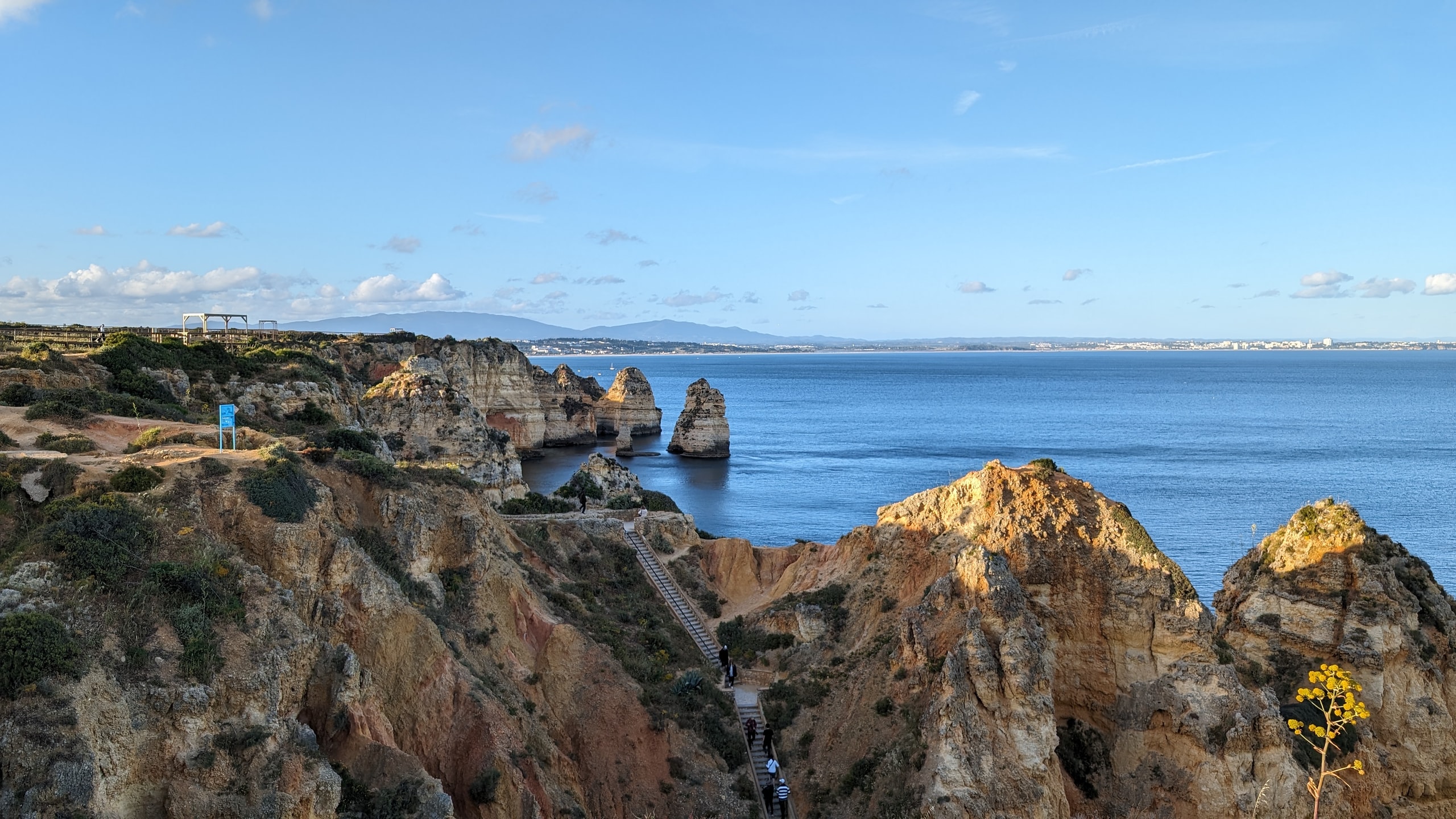
The headland south of Lagos is the image most people mean when they say Algarve: layered ochre limestone, isolated stacks, and water clear enough to see the rock under the boats. A wooden staircase drops into a gully between two cliffs. From the top, people on the steps look small.
Go late afternoon. Midday light flattens the stone and fills the paths. Toward evening the rock goes gold, the sea turns a darker blue, and the tour boats thin out. Stay on the marked tracks. The edges crumble, and a photo from one metre farther out is not worth the drop.
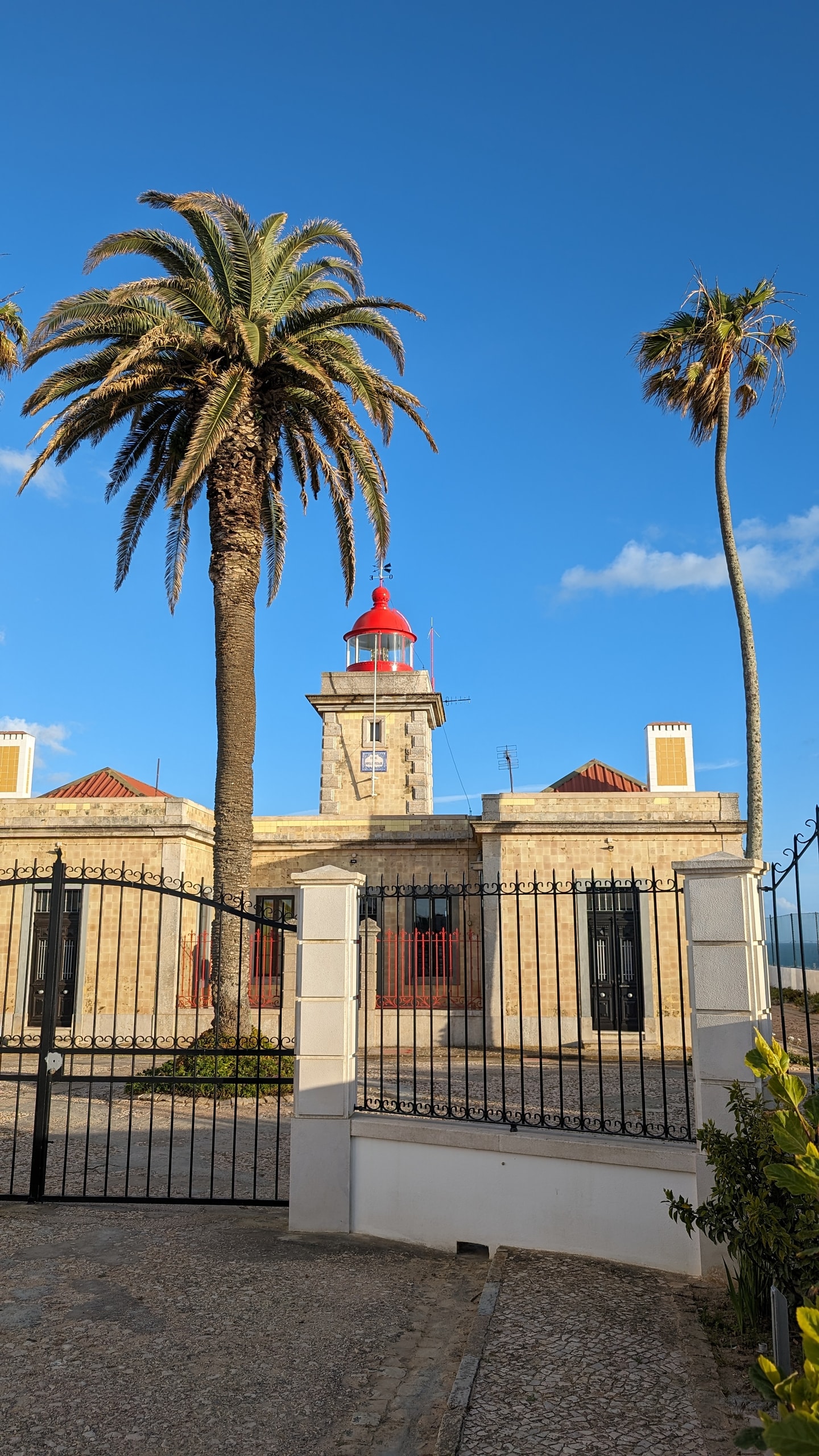
The small Ponta da Piedade lighthouse - square stone tower, red lantern, two palms, a cobbled forecourt - marks the end of the walk for most people. Boat trips leave from Lagos marina and thread the arches from below. A short cruise runs about $25-40. It is worth it if you want the caves; it is skippable if the clifftop already did the job.
Wear shoes with grip. Flip-flops on this limestone are how people collect a story they did not want. There is little shade. Bring water even for a one-hour loop.
Praia da Rocha is the easy beach with the same geology
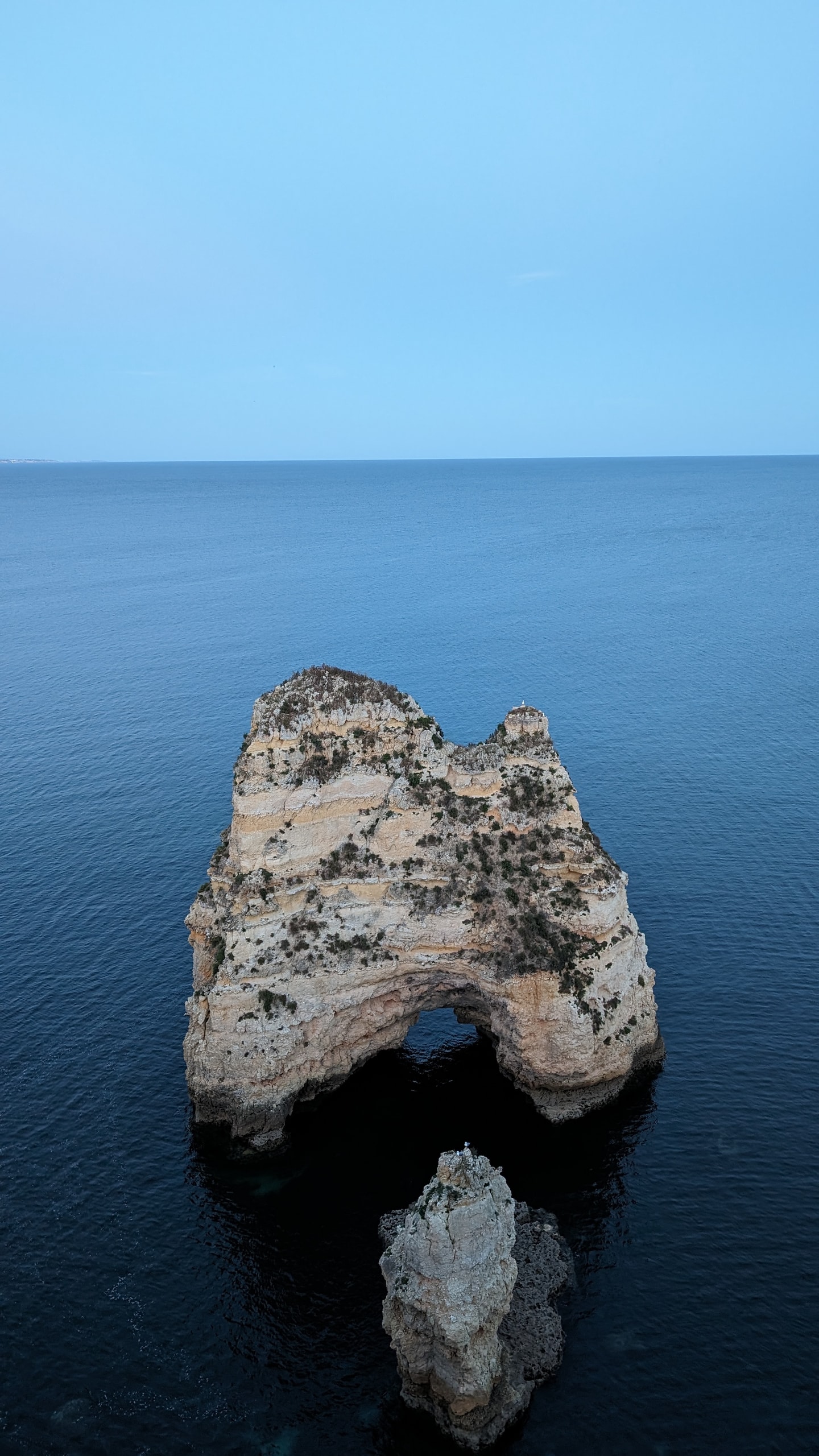
If you want a swim without a scramble, Praia da Rocha in Portimão is the practical version of the same coast. A wide band of sand sits under the same gold cliffs. Sea stacks stand in the shallows. Two people walking the shoreline look small enough to remind you of the scale.
It is also a resort beach. White apartment blocks sit on the clifftop. There are restaurants, a promenade, and in summer a lot of umbrellas. That is not a failure of the place. It is what you get when the sand is easy to reach. Use it for an actual swim and a coffee. Do not make it the week’s main event if Ponta da Piedade and the west coast are why you came.
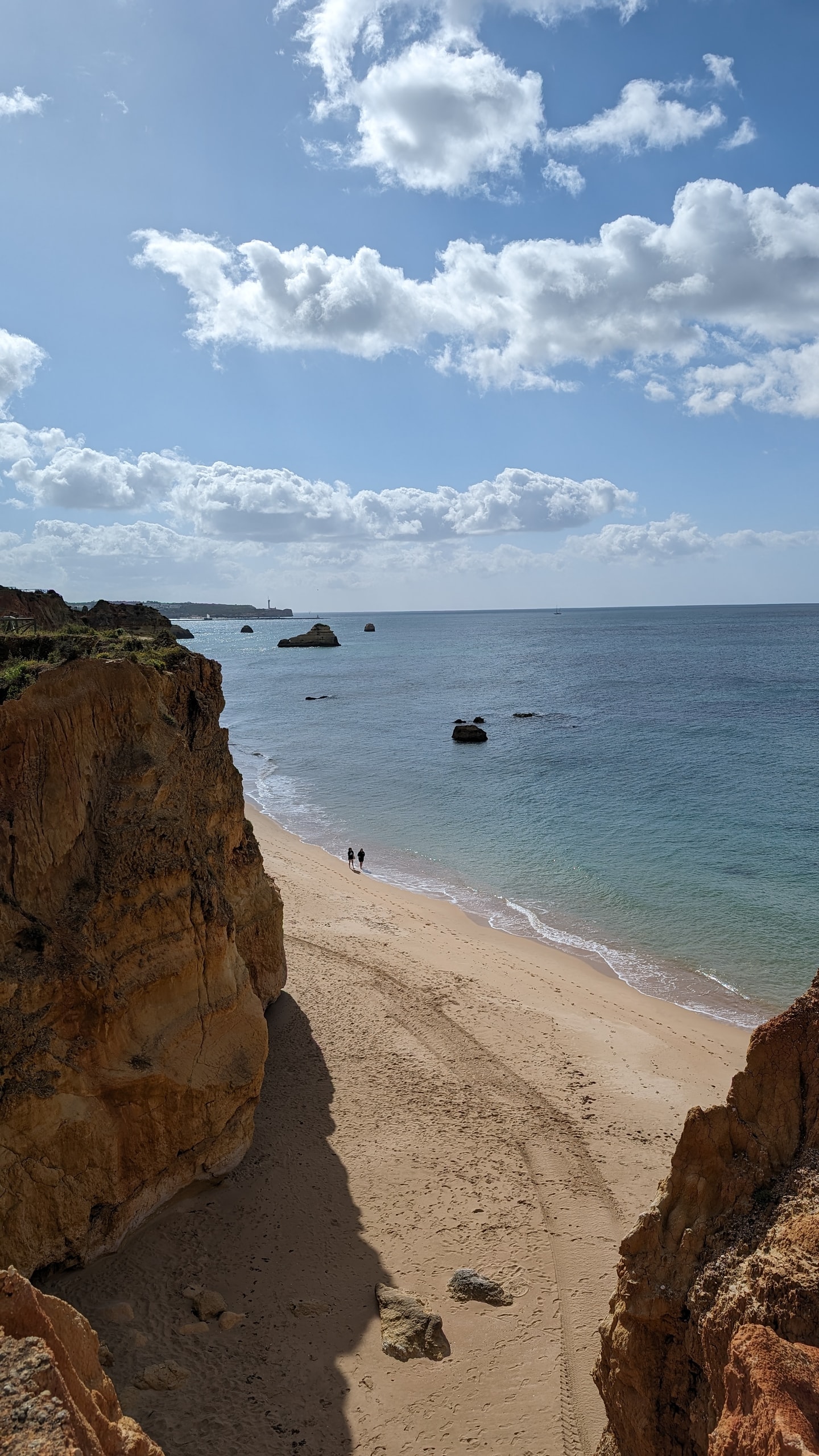
Parking fills by late morning in July. In early May you can still walk onto sand that is not a grid of sunbeds. The sea in spring is cool, not the bath the brochures imply.
Sagres and Cabo de São Vicente feel like a different country
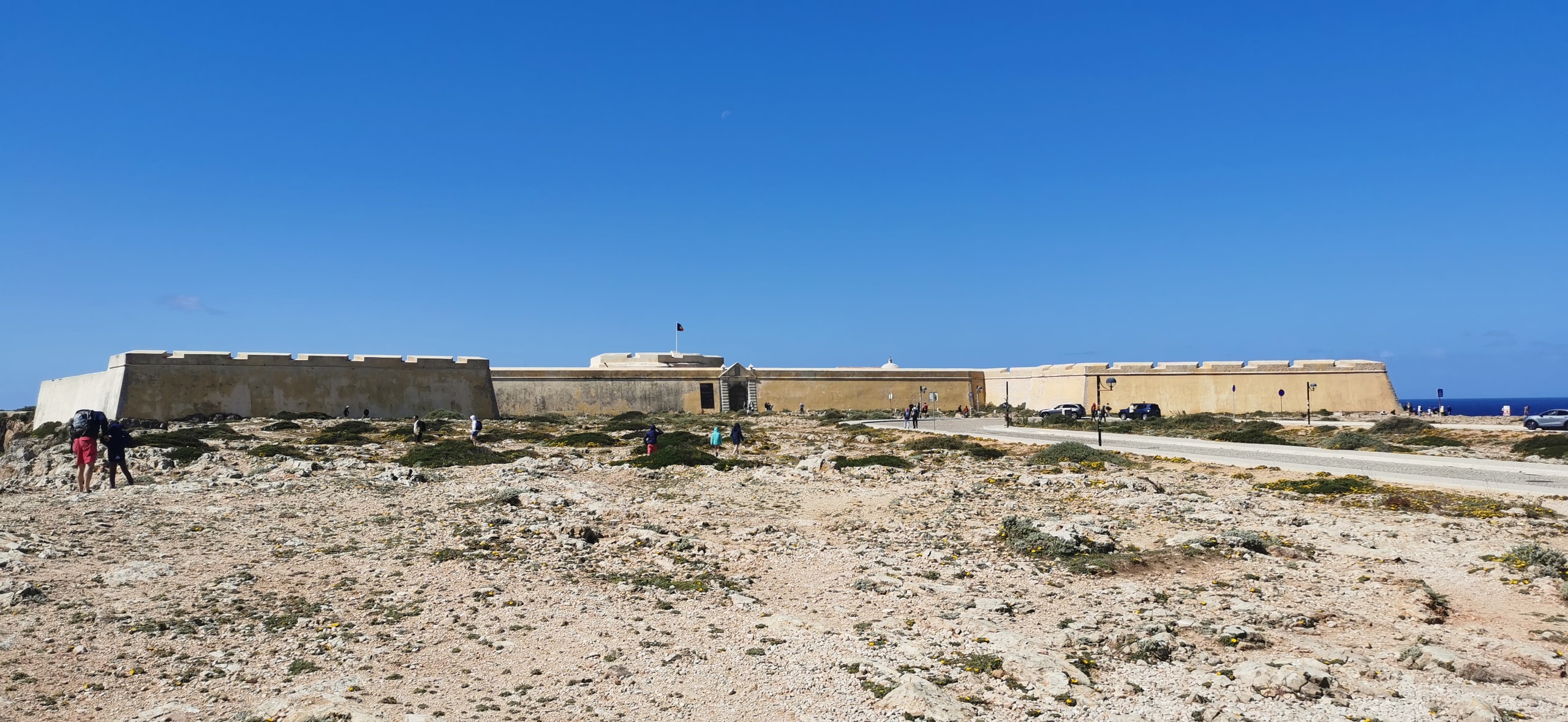
West of Lagos the limestone resort coast gives way to a wind-cut plateau. Sagres sits on that point: a small town, a surf beach, and the Fortaleza de Sagres stretched across the headland like a low wall against the Atlantic. Prince Henry the Navigator’s school of navigation is the story the site sells. What you actually get is a huge paved courtyard, a 16th-century fortress, and a view that makes the rest of Europe feel like it is behind you.
Adult entry is €10 ($11). Reduced tickets for ages 13-24 and over-65s are €5 ($5.50). Check current hours and prices before you go; the site closes on a few holidays including 1 May. An hour is enough unless you want to sit on the walls and watch the swell.
A few kilometres on, Cabo de São Vicente is the cape. The lighthouse complex is white walls, terracotta roofs, and a red lantern room against a lot of blue. Ice plants and other succulents cling to the cliff edge. The ocean below is a darker, colder colour than the coves around Lagos. This is the open Atlantic, not a swimming pool with scenery.
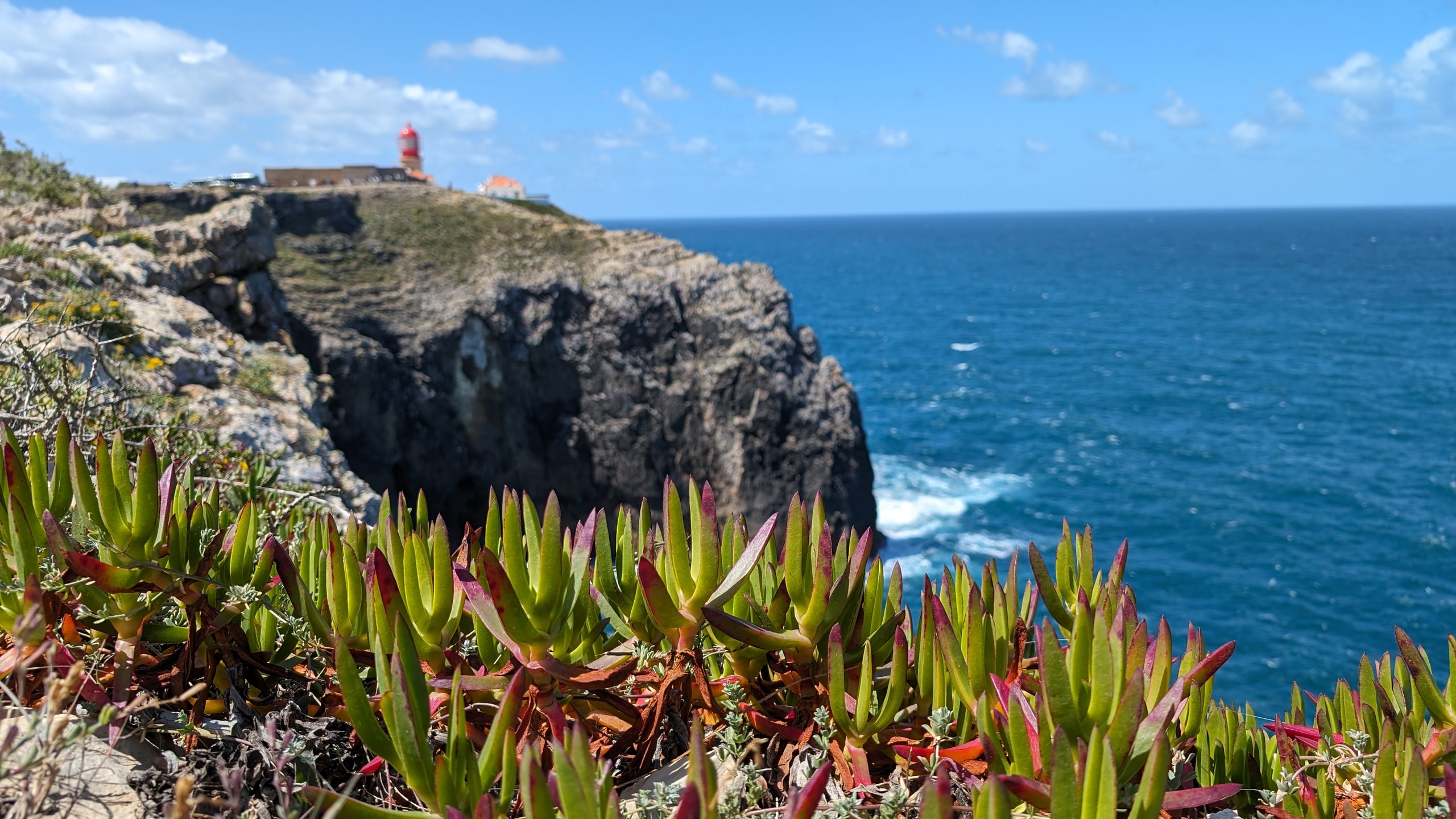
The cliffs are unstable. Signs say so in Portuguese and English, with a falling-rock pictogram, and they mean it. Keep a real distance from the edge, even when someone else is standing closer for a selfie. The limestone looks solid until a piece of it is not.
The bratwurst van is optional. Eat there if you are hungry. Do not make it the reason you drove west.
The Vicentine beaches are why the west coast exists
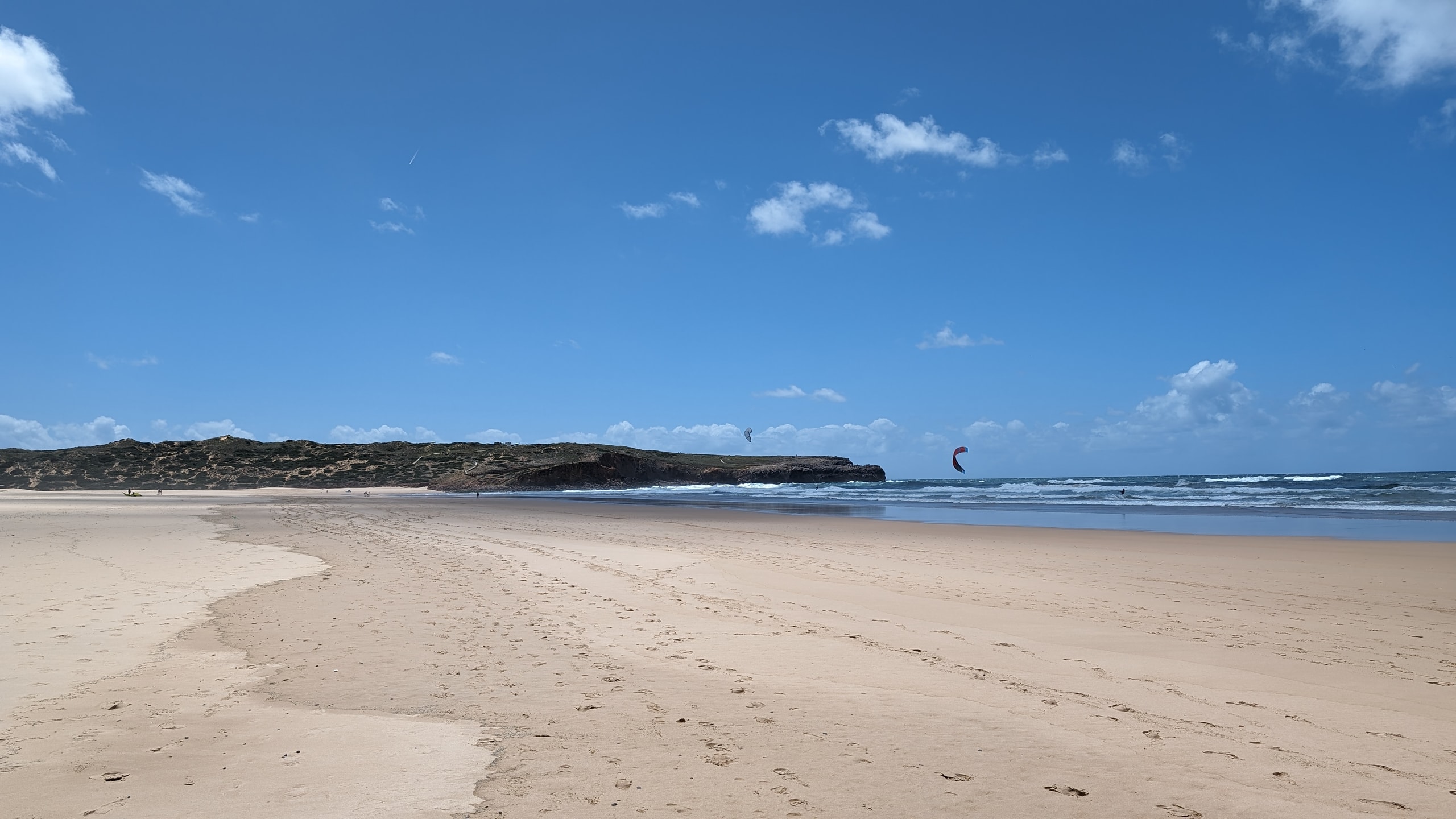
North of the cape, the Costa Vicentina stretches in long, empty-looking strands inside the Southwest Alentejo and Vicentine Coast Natural Park. Praia do Amado, near Carrapateira, is the one that shows up on surf reports: a huge band of sand, a real break, and enough wind that kitesurfers work the bay while walkers look like specks.
This is not a lounger beach. There is a café in season and a car park that fills when the swell is good. You bring water, a wind layer, and shoes for the path down. The water is colder than at Rocha. The sky is bigger. If you came to the Algarve for still turquoise coves, this will feel like a different trip. That is useful information, not a flaw. For granite coves and a Catalan old town instead of limestone and Atlantic wind, north Sardinia is the other direction.
Rockfall is a real issue at the cliff base. Amado posts a bilingual danger board with a map of the hazard zone - a band 1.5 times the cliff height, where sitting feels sheltered and is not. Do not picnic against the wall because it looks like shade. The same rule holds at Rocha and along the Lagos cliffs.
The Rota Vicentina Fishermen’s Trail follows this coast if you want a walking day rather than a beach day. Even a two-hour stretch of clifftop path is enough to reset a week that has been too much car.
The south coast is for swimming. The west coast is why you rented the car.
Benagil is a licensed tour now, not a scramble
East of Lagos, the coast between Carvoeiro and Praia da Marinha is the other postcard: hanging valleys, small sandy notches, and arches you can paddle through. Kayaks look like toys against the rock. White houses sit on the clifftops. Boat wakes cut the deep blue.
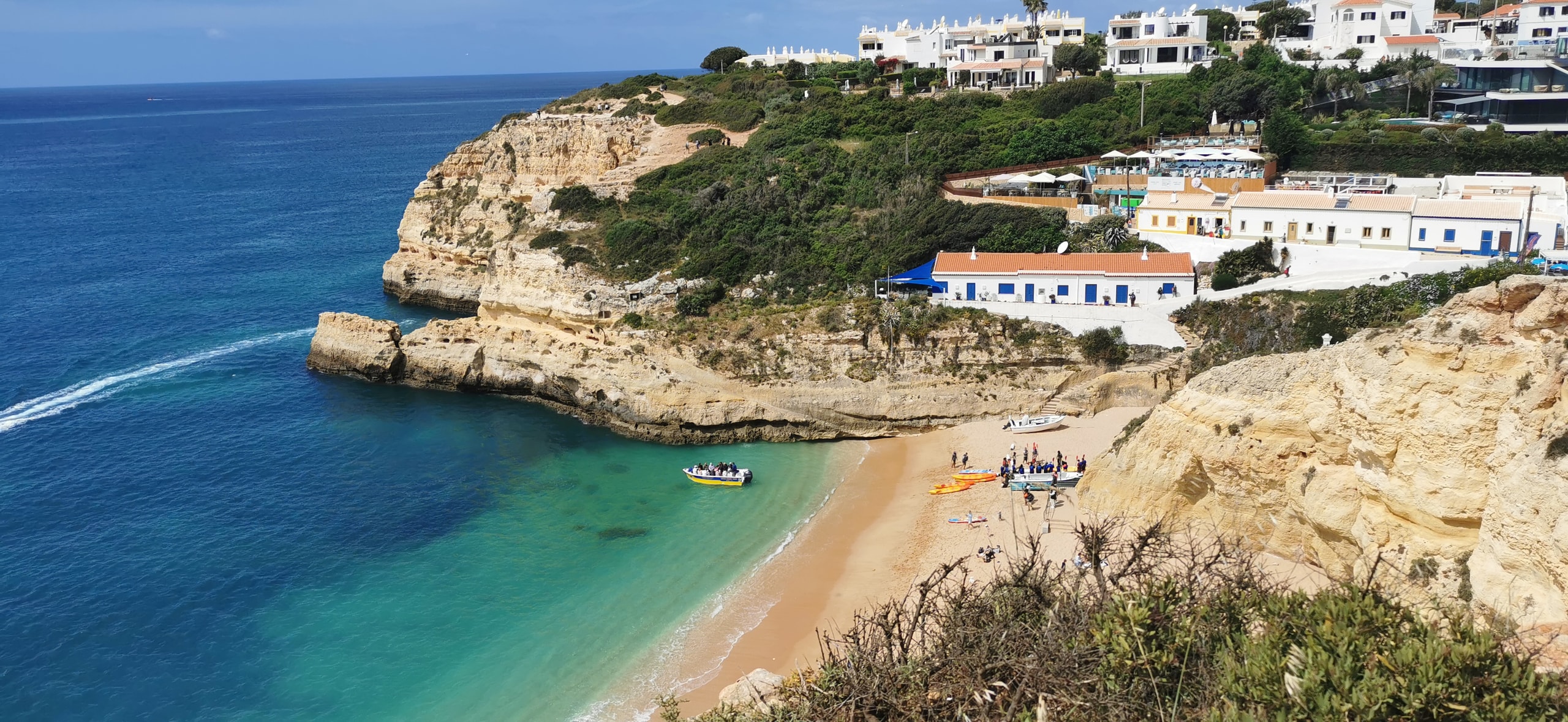
Benagil Cave - the sea cave with a hole in the roof - is the name everyone searches. Treat the search results with suspicion. Since 2024 you cannot swim in, you cannot rent a kayak and go alone, and nobody is allowed to land on the sand inside. Licensed boat tours and guided kayak or SUP trips are the only legal way in. Time inside is short. The photo of someone standing in the sunbeam on the interior beach is, at this point, either old or against the rules.
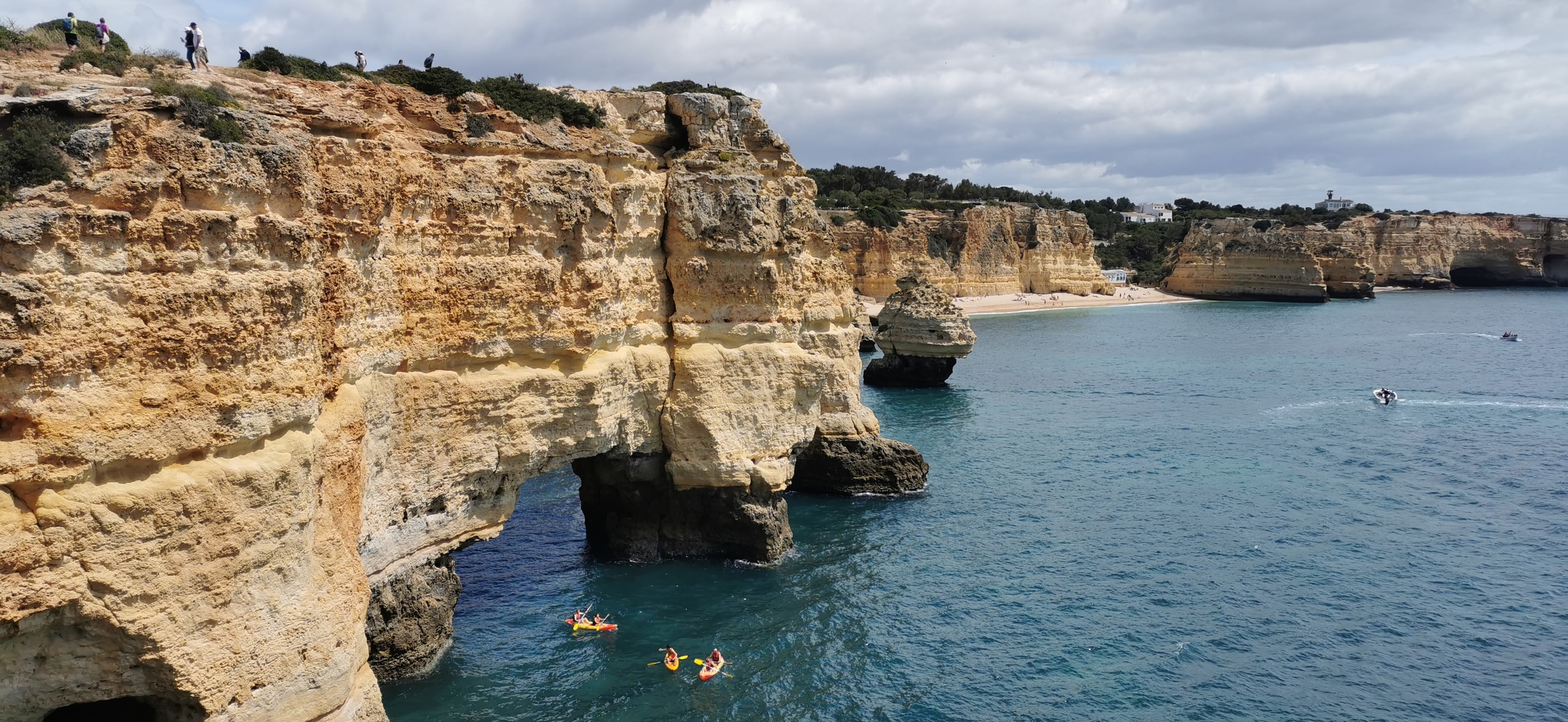
A guided kayak from Benagil beach typically runs $45-75 for two to three hours. A small-boat cave tour from Carvoeiro, Benagil, or Portimão is often $25-45. Book a morning slot; afternoon seas get choppier and the cave queue gets longer. If the swell is up, operators cancel, which is the correct decision.
You do not have to enter the cave. The Seven Hanging Valleys clifftop path (Percurso dos Sete Vales Suspensos) between Praia da Marinha and Praia de Vale Centeanes gives you the same rock from above, with the kayaks as scale. That walk is the better use of a first morning in this stretch. Save the ticket for a calm day if the cave still bothers you.
Carvoeiro works as a second base if this coast is the whole trip. For a week that also includes Sagres, stay in Lagos and drive over for one day.
Silves is the inland correction
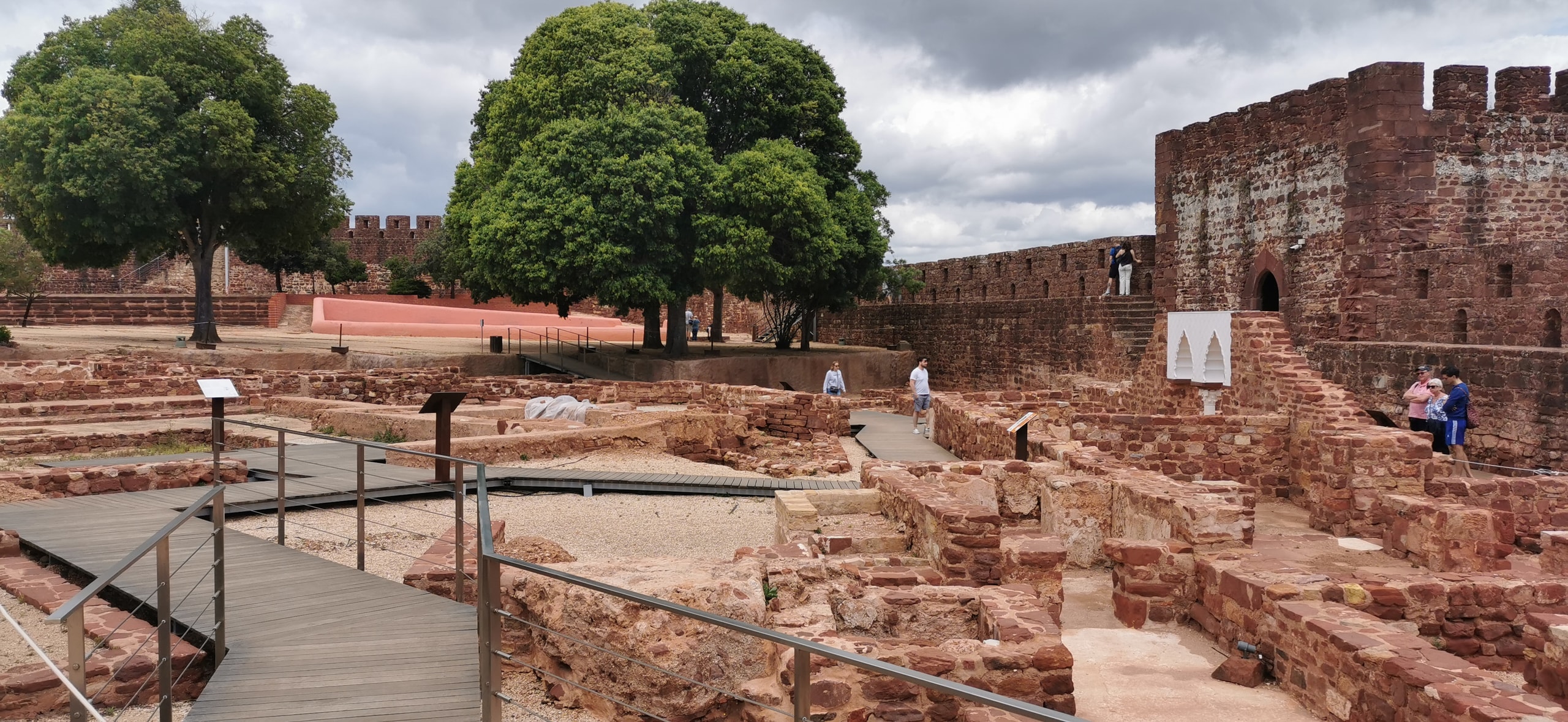
Most Algarve weeks never leave the N125. Silves sits north of it on the Arade, built in the red sandstone the town is named for - grés de Silves. In the Moorish period this was Xelb, the regional capital. The castle on the hill is why that still matters on a beach holiday.
The walls are low, crenellated, and a deep terracotta that looks almost orange in late light. A bronze King Sancho I stands in chainmail at the foot of a square tower, sword point-down, Portuguese flag above him. He took the town from the Almohads in 1189; they took it back; it changed hands again. The statue is not subtle. Neither is the stone.
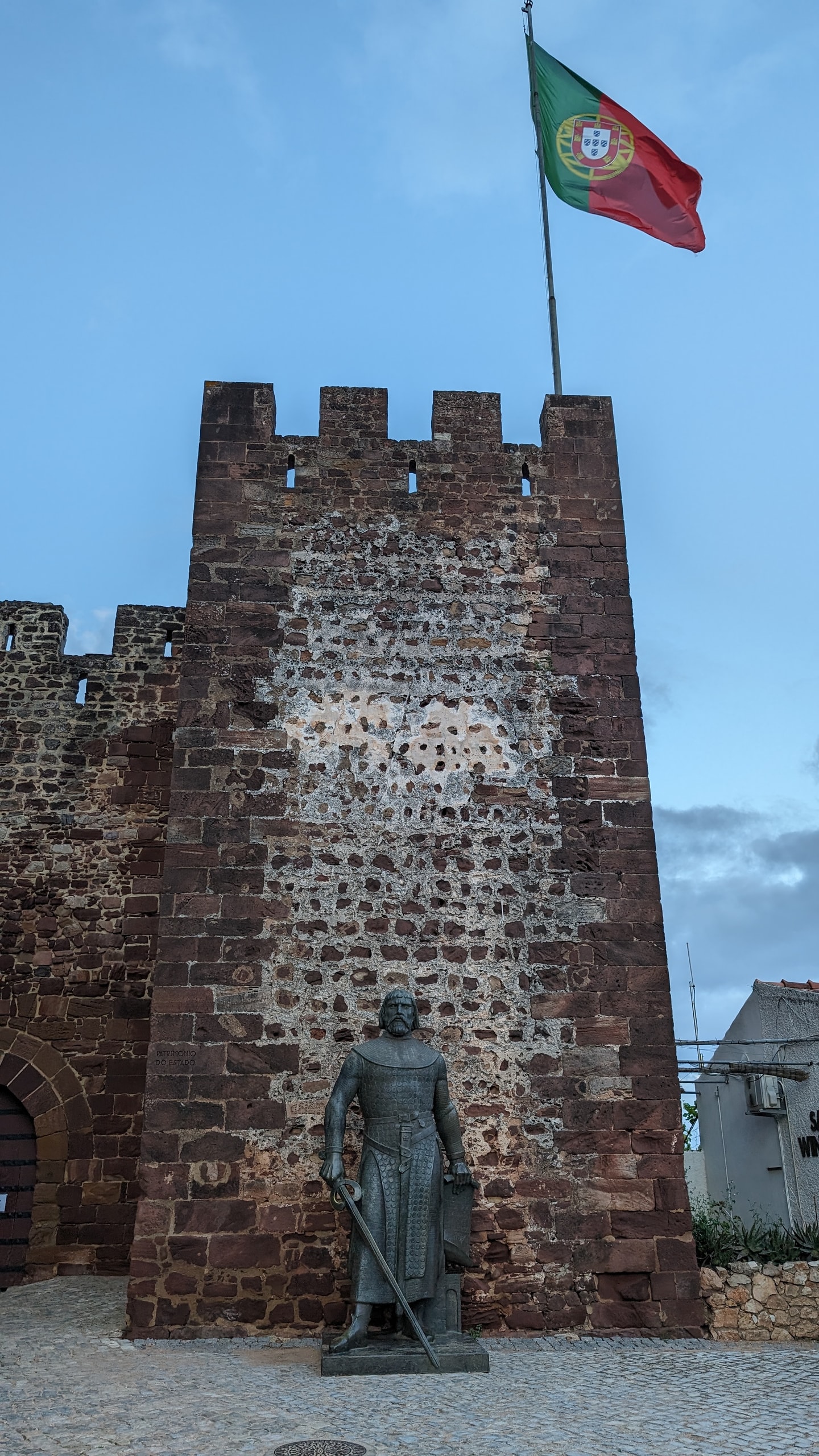
Adult entry to the castle is €2.80 ($3). A combined ticket with the Municipal Archaeology Museum is €3.90 ($4.50). Hours shift by season - confirm on the Silves municipal castle page rather than a blog from 2019. Inside, wooden walkways cross excavated foundations. The cisterns and the view over terracotta roofs are the reason to go up. Allow ninety minutes for the castle and a slow walk down.
The Sé de Silves, the cathedral, sits just below in the same red stone, with Gothic lancet windows and a later white bell tower. It was raised on the site of the old mosque. You do not need an architecture degree to feel the overlay. The lanes around it are cobbled, whitewashed, and trimmed in blue and ochre. A red hatchback will be parked somewhere it barely fits. The place is still a town.
Eat here, not at a beachfront place you will forget. A clay caçoila of choquinhos à algarvia - small cuttlefish in a dark sauce, ringed with a heap of house-fried potato chips and a bay leaf - is the inland plate. It costs about $15-22. Cataplana of clams and pork shows up on every menu for a reason. Order the thing cooked in copper, not another Caesar salad.
Silves is a half-day from Lagos, or a first-night stop if you land at Faro and drive west. The castle ticket office will not wait for an 8 p.m. arrival. If you reach town after closing, walk the lanes, eat, and come back in the morning.
When to go, and what a week costs
Late April through June, and September into early October, are the strongest windows. Early May is wildflowers on the cliffs, swimmable water if you are not fussy, and car parks that still have spaces at 10 a.m. July and August work if you start at 8, treat noon as lunch in town, and book everything that involves a boat.
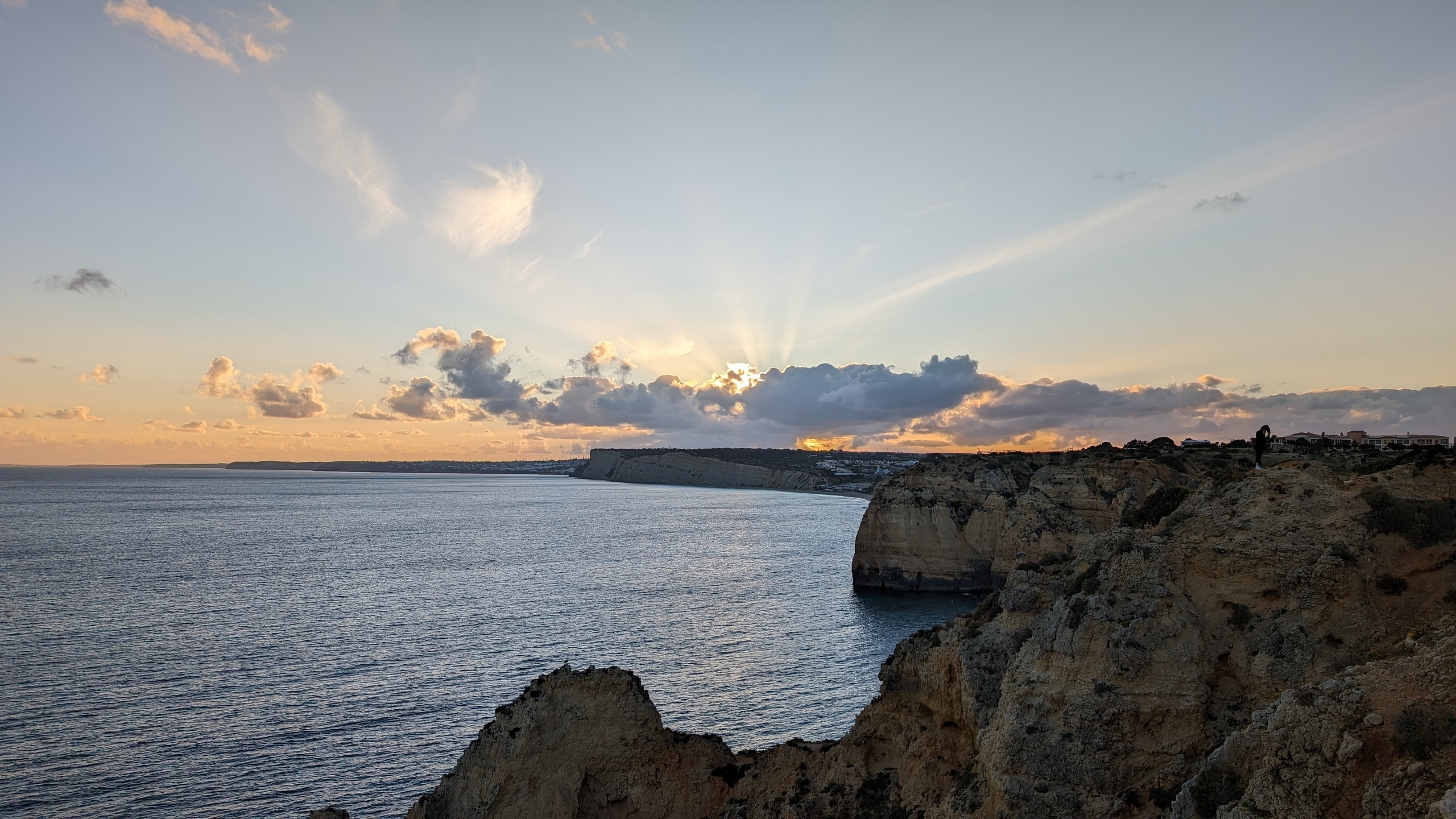
The west coast is windier than the south-facing coves in every season. That is why the kitesurfers are at Amado and the still water is at Rocha. Winter is green, quiet, and better for walking than swimming. Some beach restaurants shut. Sagres does not get less windy.
For two people sharing a room, a realistic mid-range week in the west looks like this:
- Lodging in Lagos: $90-160 a night in May or September; $160-280 in August
- Small rental car: $30-55 a day, plus fuel and the usual full-to-full policy
- Lunch: $12-20 per person for a plate of grilled fish inland; more on a marina terrace
- Dinner: $25-45 per person with wine if you stay off the most obvious square
- Tickets: Silves castle about $3; Sagres fortress $11; Ponta da Piedade is free to walk
- Boat or kayak: $25-75 depending on the boat and whether you paddle
Fly into Faro. The drive to Lagos is about an hour. Faro itself is a fine old town if you have a spare night at the start or end; it is not a substitute for the west.
What to skip
Skip Albufeira’s strip unless nightlife is the actual trip. For a Mediterranean island that also splits between a loud resort strip and a mountain-and-cala version, see Mallorca beyond Magaluf.
Skip Benagil at 2 p.m. on a choppy Saturday in a large boat that promises ten caves in an hour. The cave is a hole in a rock. The surrounding cliffs are the better half-day.
Skip any plan that treats Sagres as a sunset selfie and Silves as a sign on the motorway. The fortress needs an hour. The castle needs another. Both are why this coast is more than a beach.
Who this coast is for
The western Algarve is for people who will drive, walk a clifftop, and eat cuttlefish in a clay bowl. Lagos in May is busy in a workable way. Ponta da Piedade has a staircase because thousands of people needed one. Timing and a base west of the golf belt are what separate a good week from a week of roundabouts.