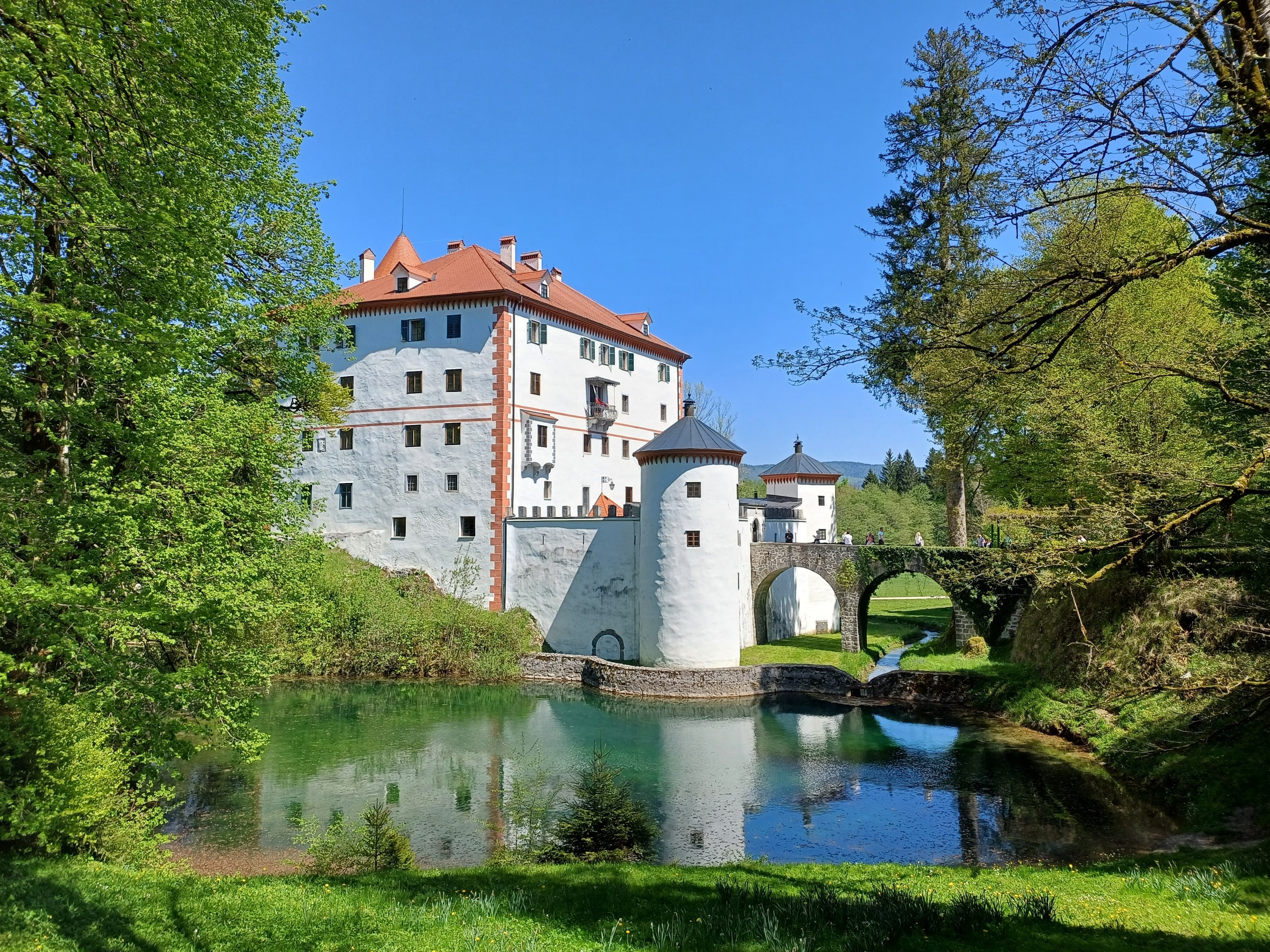
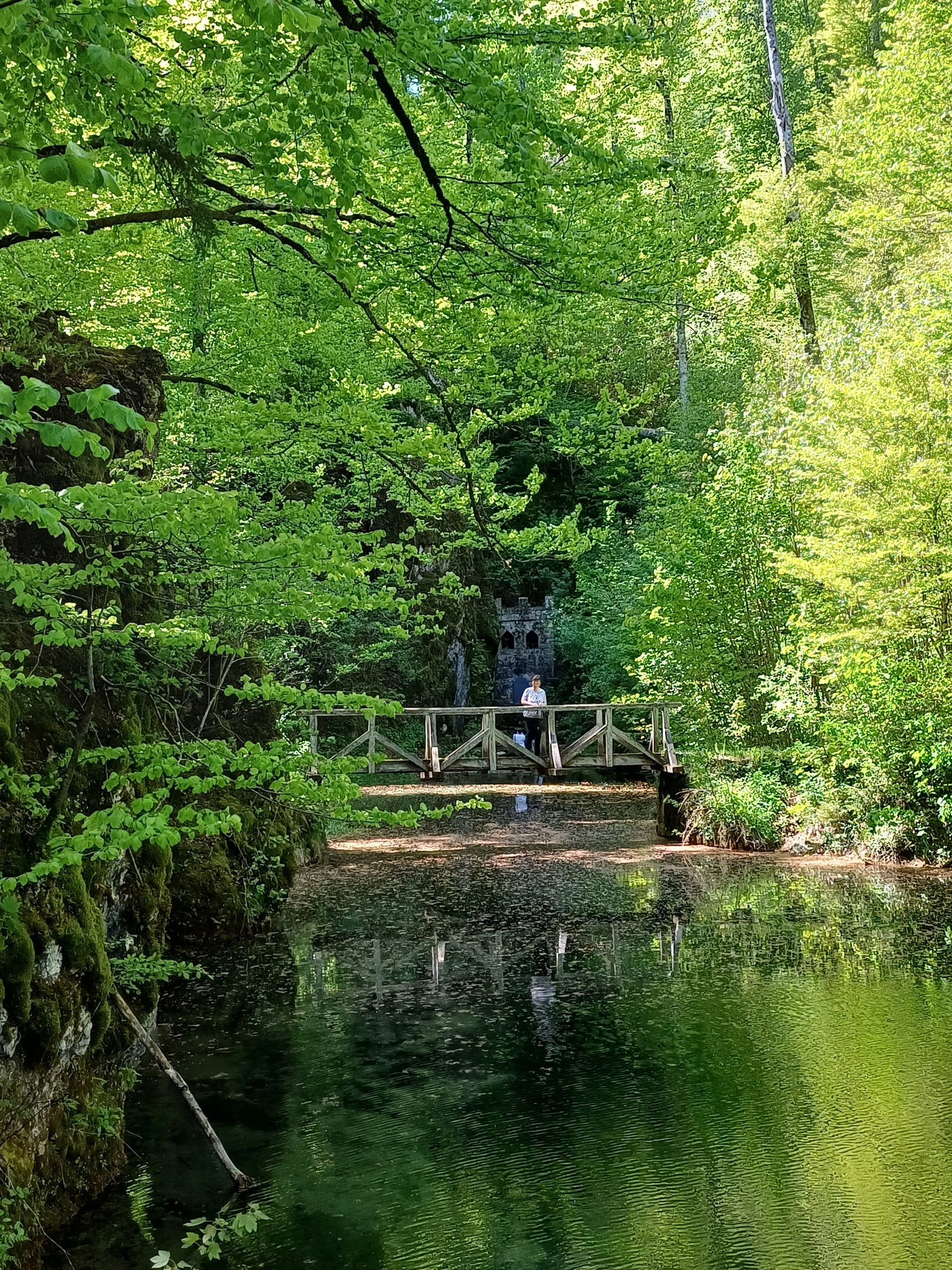
The pond in front of Snežnik Castle is a river that has just come out of the ground. The Obrh and the Brezno spring surface at the foot of the castle rock, dammed into a pond wide enough to reflect the whole building. In early May the water is bright green where it runs shallow over limestone.
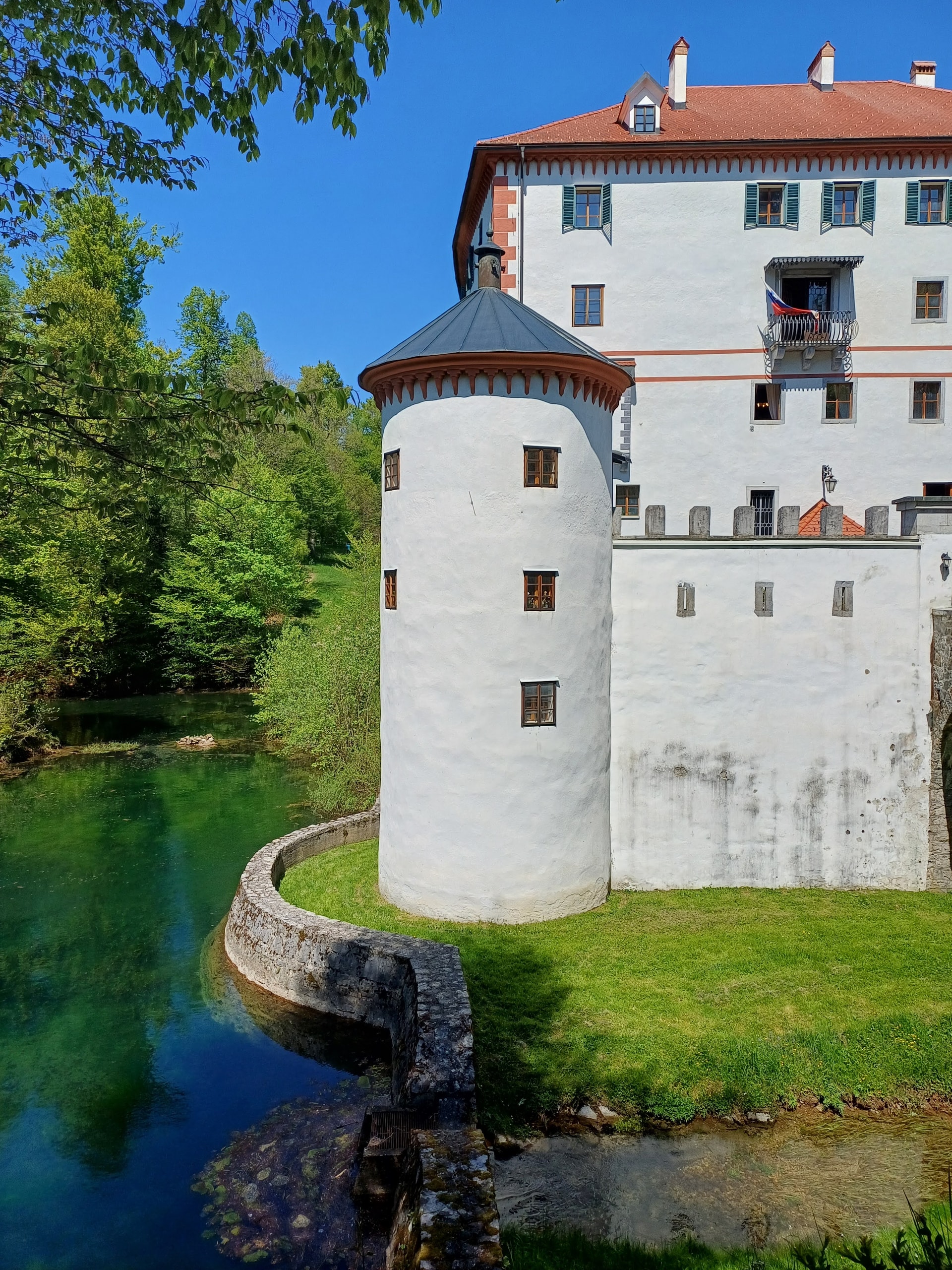
Snežnik Castle (Grad Snežnik) stands at Kozarišče in Loška dolina, a flat karst valley in the Notranjska region of southern Slovenia, about 65 km from Ljubljana. It is not big: a white block with red trim, round corner towers, a stone wall with square battlements at the base, and a bridge across the water to the gate. Plenty of Slovenian castles look like this from the road. The reason to drive out here is that this one's rooms were never emptied. More place notes live in the destinations archive.
The rooms nobody emptied
The lords of Snežnik turn up in records in the 1260s, and the core took its Renaissance shape under the Lambergs in the 1400s. The part that matters is more recent. In 1853 a German prince from near Dresden, Oton Viktor of Schönburg-Waldenburg, bought the estate as a hunting seat and furnished it like a house his family lived in. They held it until 1945, and the contents stayed put when the estate changed hands after the war.
That leaves Snežnik as one of only two castles in Slovenia with its original interior in place, not a reconstruction or loans from a depot. The tour goes through the parlours and bedrooms of Princes Herman and Ulrich and Princess Ana, past mid-1800s furniture, tableware, wall hangings, books and the small things that normally disappear first. The oddest room is the Egyptian Room, fitted out in the early 1900s when Egyptian revival style reached this corner of Europe.
The National Museum of Slovenia has run it since 1983, and you can only go in with a guide. Tours leave on the hour, so allow an hour inside.
One rule catches people out: no photography inside. None. Every photo on this page was taken outside the walls.
A tour with your phone in your pocket is a different kind of visit. You end up looking at the stove tiles.
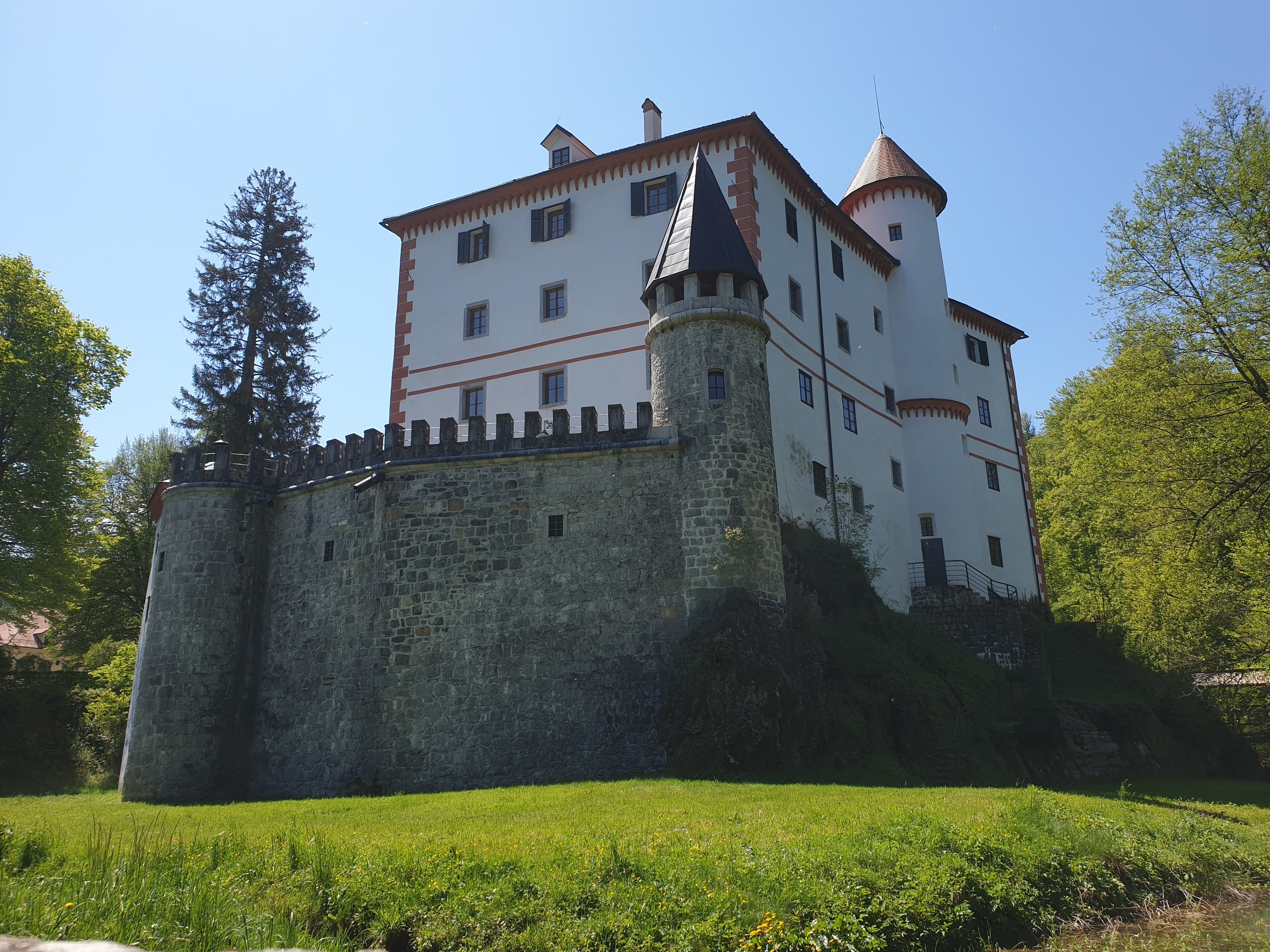
From the south meadow the place looks like a fortress: rough grey stone, square battlements, squat round towers. Most of it went up in the second half of the 1800s, when castles were remodelled to look older than they were, and the same owners added the bridge. The plain white house behind it is the old part.
The dormouse museum in the outbuilding
One of the outbuildings holds a museum about hunting dormice. Not a novelty exhibit. In Notranjska, catching polh - the edible dormouse - is a recorded tradition going back to at least the 13th century. They were taken for meat and for fat used as folk medicine, and the skins tanned into fur for the polhovka, a winter hat.
The collection has been here since 1980: traps, gear, hats, and a room of hunting trophies from the local forests. Twenty minutes, and its own ticket at the door. Go in. Dormouse hunting still happens in these woods, in autumn and only with a permit.
The park is free, and it is half the visit
The park has no gate and no ticket. Chestnut and lime avenues run out from the castle in double rows, with a four-row avenue at the entrance, and two more small lakes in the grounds.
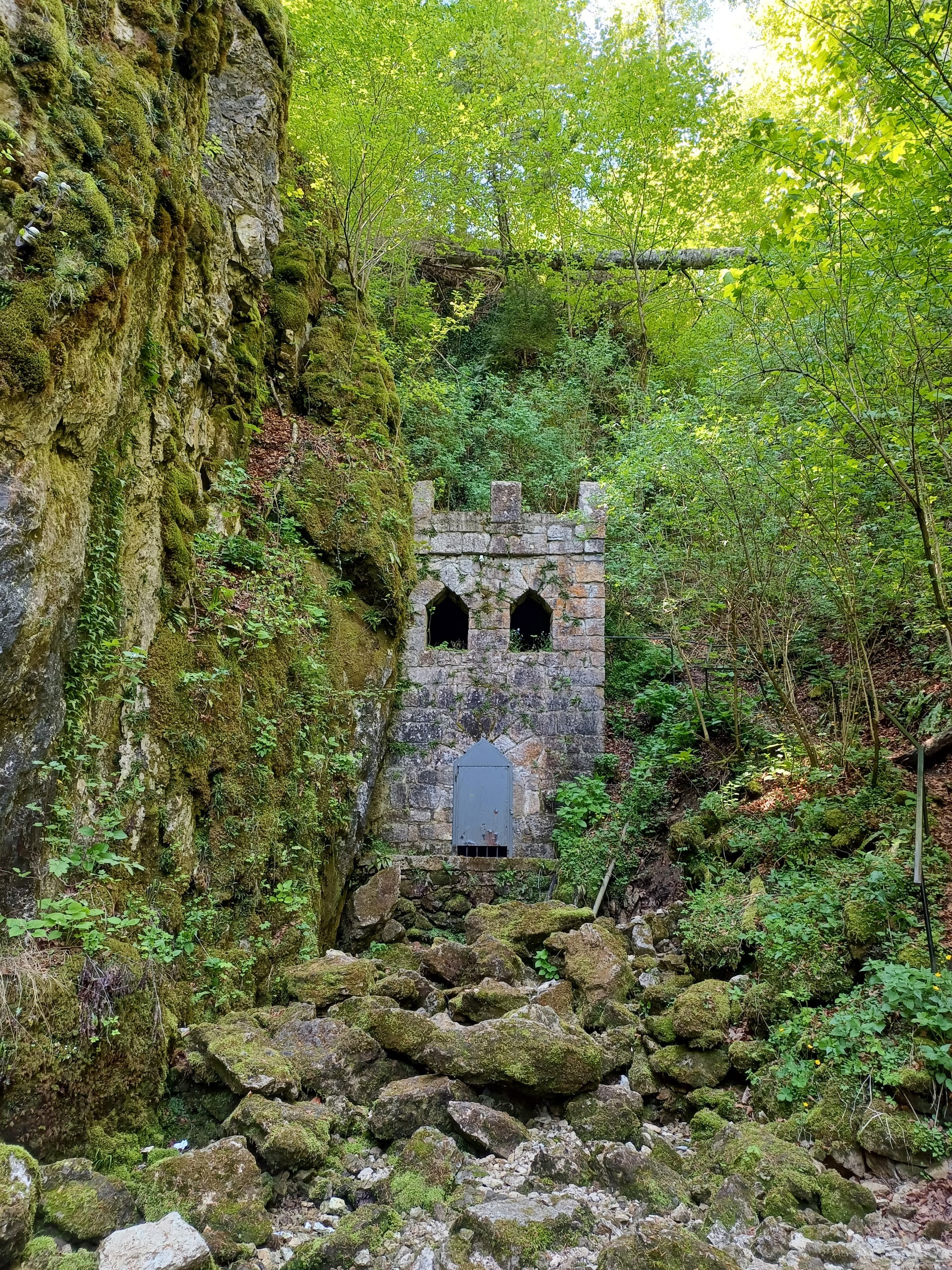
Follow the water rather than the avenues. A short path drops to the waterside, where a low stone building with a metal door is set into mossy limestone with ferns in the joints. It is wet, noisy and colder than the meadow above.
Downstream, a wooden footbridge on trestles crosses the pond, and the water under it goes dark bottle green. It is the one spot where the castle is out of sight and the valley is just water and birds.
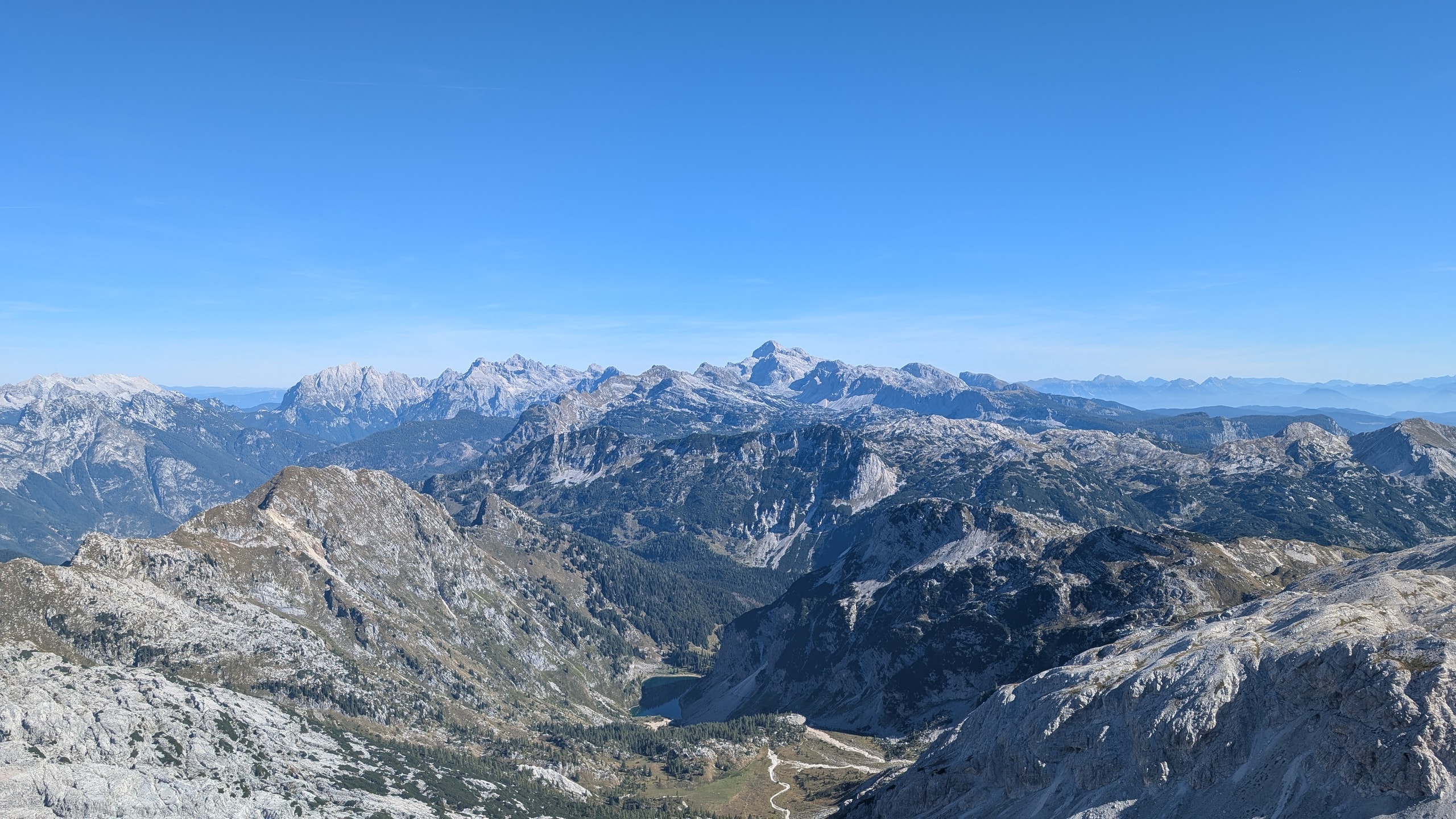
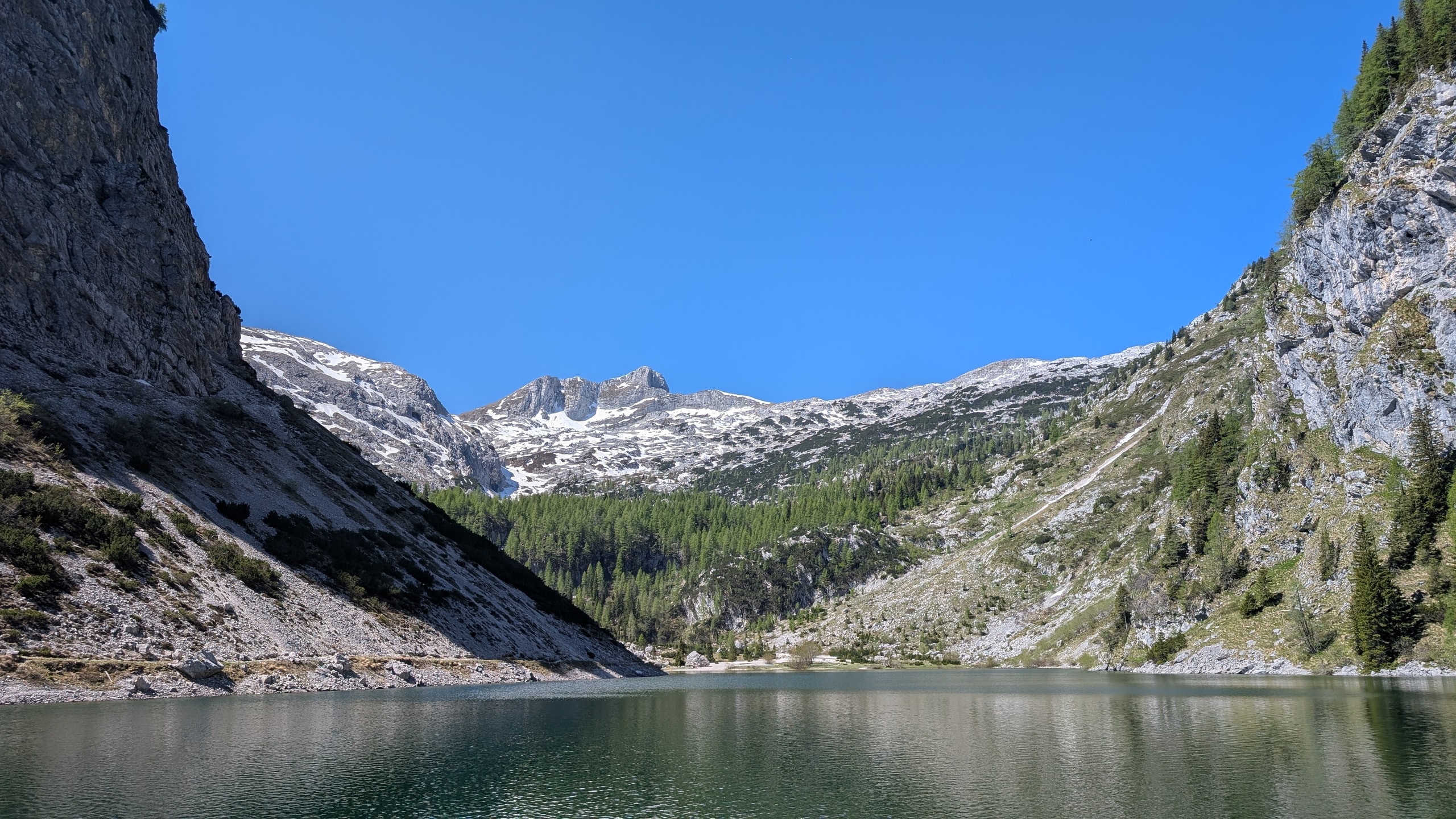
Marked trails leave the park toward Luizenstein, Mašun and Mount Snežnik, which at 1,796 m is the highest Slovenian peak outside the Alps. The beech forest on its slopes includes Snežnik-Ždrocle, on the UNESCO World Heritage list since 2017. Those walks need boots and a weather check. For a mountain day with a lake at the end, the forest climb to Krn Lake from Lepena is three hours away.
What it costs and when tours actually run
Tickets are cheap. Adults €8 ($9), students, seniors and school children €4 ($4.50), family €16 ($18). Groups of ten or more pay less but must book. The dormouse museum is separate.
Hours change with the season, which is where day trips fall apart:
- 25 June to 31 August: daily, 10:00 to 17:00.
- 1 April to 24 June, and September: weekdays 11:00 to 15:00, weekends 10:00 to 16:00.
- October: closed Mondays, Tuesday to Friday 11:00 to 15:00, weekends 10:00 to 16:00.
- November to March: closed Mondays, otherwise 11:00 to 15:00.
The last tour leaves before closing time, not at it. The castle shuts on 1 January, 1 November and 25 December. Check the National Museum of Slovenia's Snežnik page before you drive, and ask for English when you buy the ticket, not at the door.
There is a café in the renovated outbuildings, and apartments on the estate. Kozarišče has little else, so plan lunch in Stari trg pri Ložu, a couple of kilometres up the road.
Getting there, and what to pair it with
By car from Ljubljana it is about an hour: A1 to the Unec exit, then Rakek, Cerknica, Bloška Polica, and right through Stari trg pri Ložu to Kozarišče. Parking is free.
Without a car it gets awkward. There is no direct bus from Ljubljana: you change at Cerknica, the trip takes roughly two hours, and from Stari trg pri Ložu it is a half-hour walk or a short taxi. Trains only reach Rakek, so you need a bus anyway. It can be done. It is not a relaxing day.
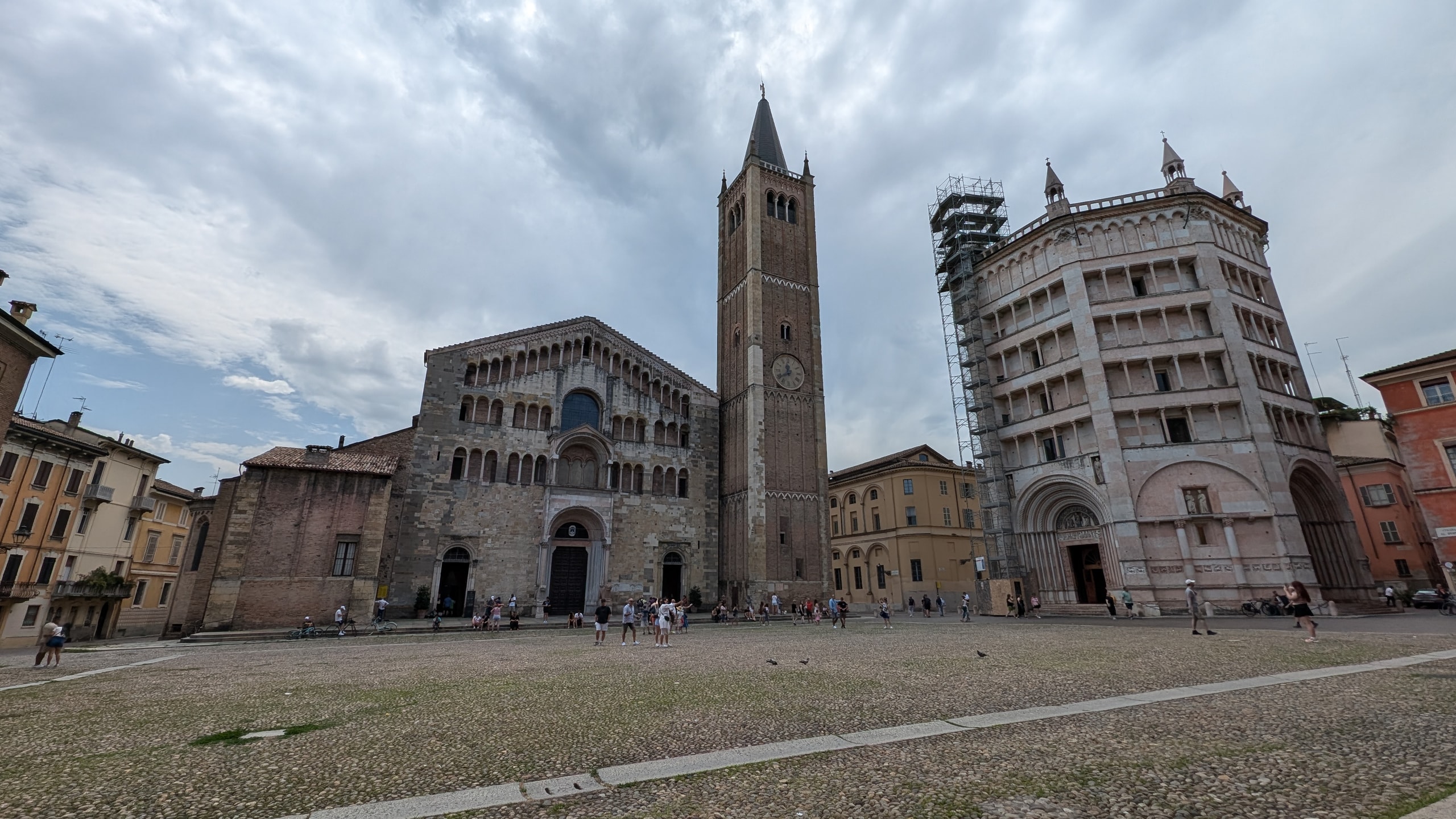
Give the castle an hour and the park another, then spend the day on what surrounds it. Križna jama is about 10 km away and the best thing in the area: rubber boots on, a walk in, then a boat onto the first underground lake, an hour or so in all. The long trip deeper into the chain of lakes takes four people at a time and books out far ahead. Lake Cerknica, 20 km away, empties most summers and fills again in autumn, so check there is water in it before you drive over. Heading west, Cividale del Friuli across the Italian border is about two hours away.
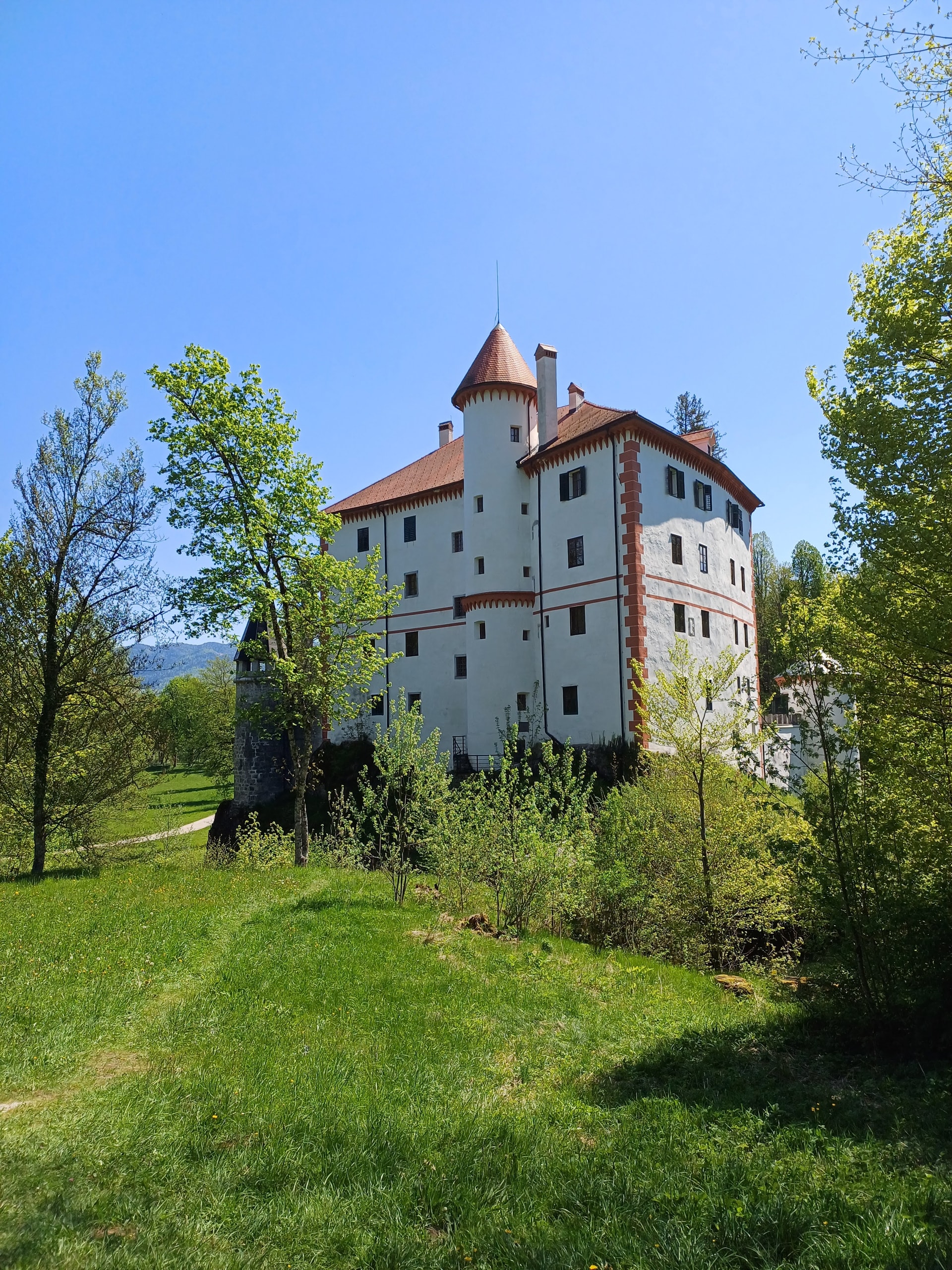
Come in early May or October. May gives you new leaves and a clean reflection. October gives you beech colour and tour groups you can count on one hand. Skip Mondays from October on.
Snežnik is worth going out of your way for. An hour inside a house somebody actually lived in, an hour by the water in the woods, and you are back in Ljubljana in time for dinner.