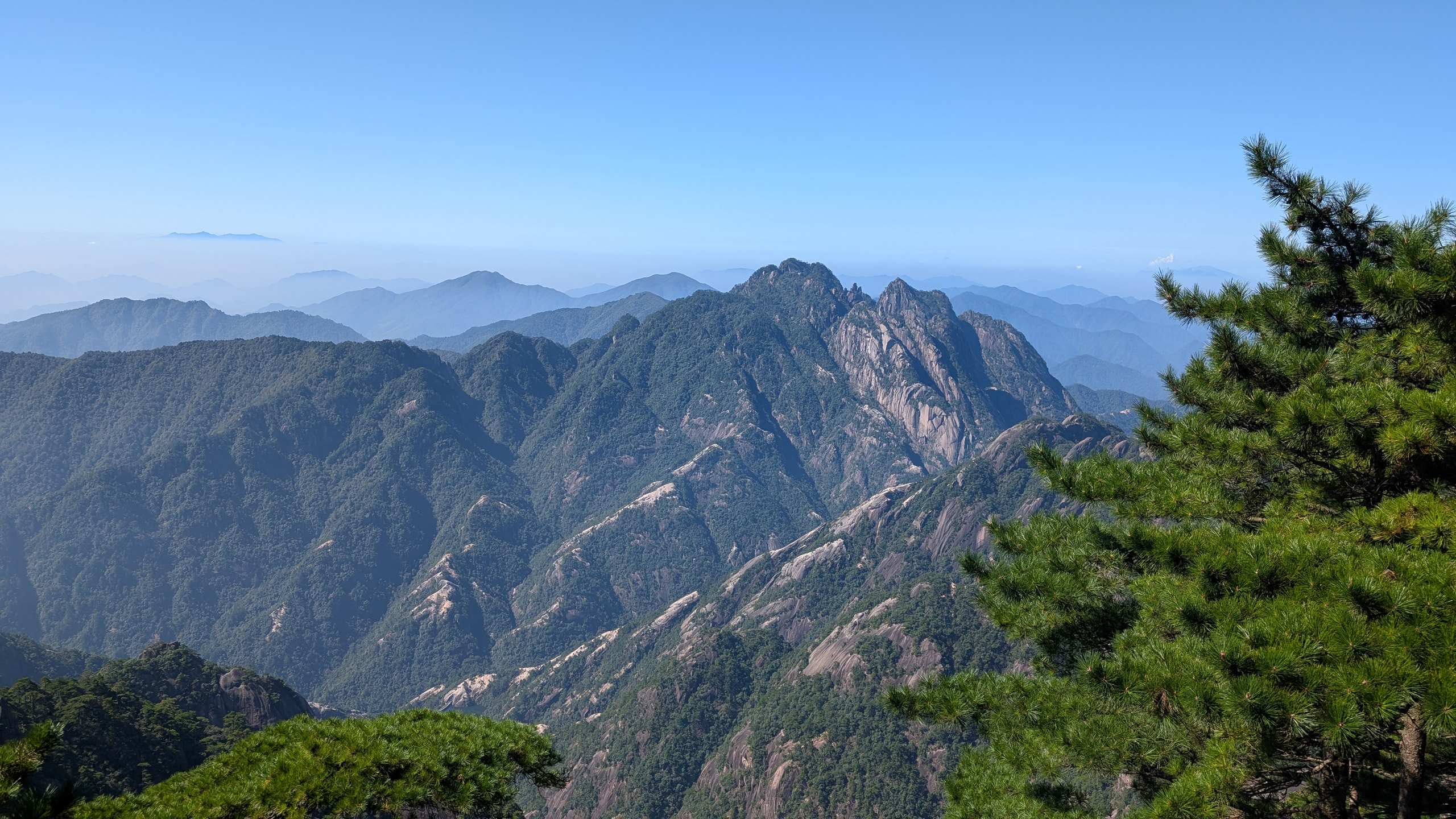
By the third time we passed the same couple on the stairs, I stopped pretending we had a smart plan. They rested; we climbed. We rested; they climbed. Huangshan's West Sea Grand Canyon is a long, steep stair climb, and you keep seeing the same people. That climb out of the canyon is still one of the clearest memories I have from China.
A hotel that bought us the morning
We stayed in Huangshan District, close to the entrance of the mountain. That sounds like a small detail. It was not. Private cars cannot drive up to the trailheads. You take the official shuttle into the park, then a cable car or a long staircase. Every minute you waste getting there is a minute you lose on the mountain. Being near the gate meant we could start early, still half-asleep, and catch the shuttle before the day got busy.
Breakfast was quick. Packs on. The kind of morning where nobody talks much because everyone knows it will be a long day. From the hotel door to the shuttle felt short enough that we did not resent the early alarm. That is the point of sleeping near the gate: you spend your energy on the mountain, not on getting to it.
Huangshan is in southern Anhui. Older English books call it Yellow Mountain. It is famous for tall granite peaks, pines that grow out of cracks in the rock, and valleys that fill with cloud. People come for sunrise, for the Welcoming Pine, for the postcard views. We came for a hard day of walking.
The plan was simple. Shuttle in, cable car up, hike to the hotel area in the middle of the mountain, see the place properly, get back down to the valley before the last cable car closed. The hard part was still ahead of us.
Up to the middle
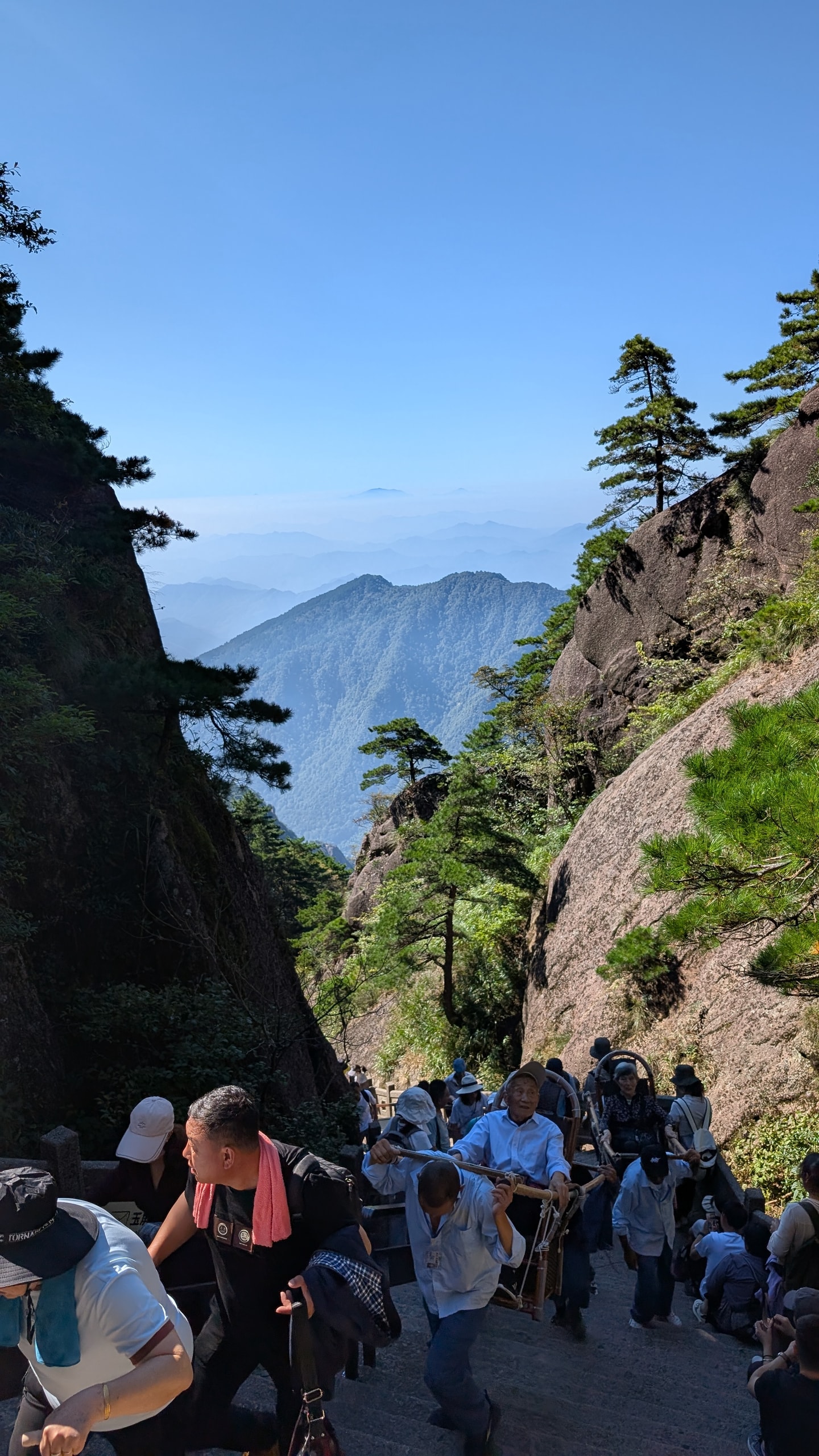
We took the shuttle into the park, then the cable car up - the hanging cabin that saves the first big climb from the valley. Ticket windows, timed entries, and app payments are the usual China logistics; once you are through them, the mountain is mostly stone underfoot. From the upper station it was stairs and hiking toward the mid-mountain hotel area. The path is not a soft dirt trail. It is almost all stone steps - wide where the crowds move, narrow where the rock closes in, always going up or down, almost never flat. Porters still carry people in sedan chairs here: two men, long poles, a wooden seat. We stepped aside for one on a steep flight and watched their legs do the hard work. Around them were the usual hikers - sun hats, backpacks, someone with a pink towel around their neck, shoes scraping on granite.
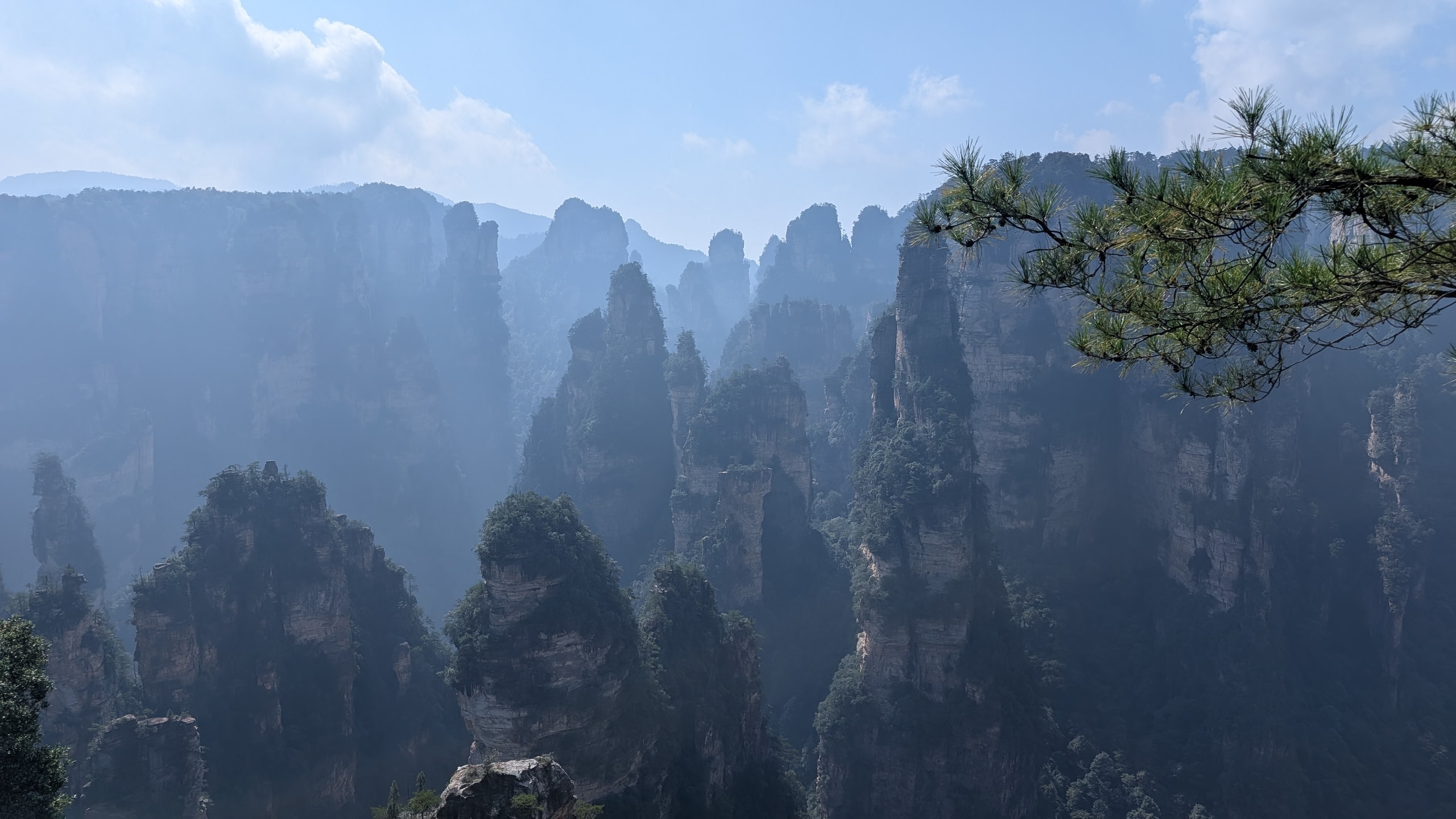
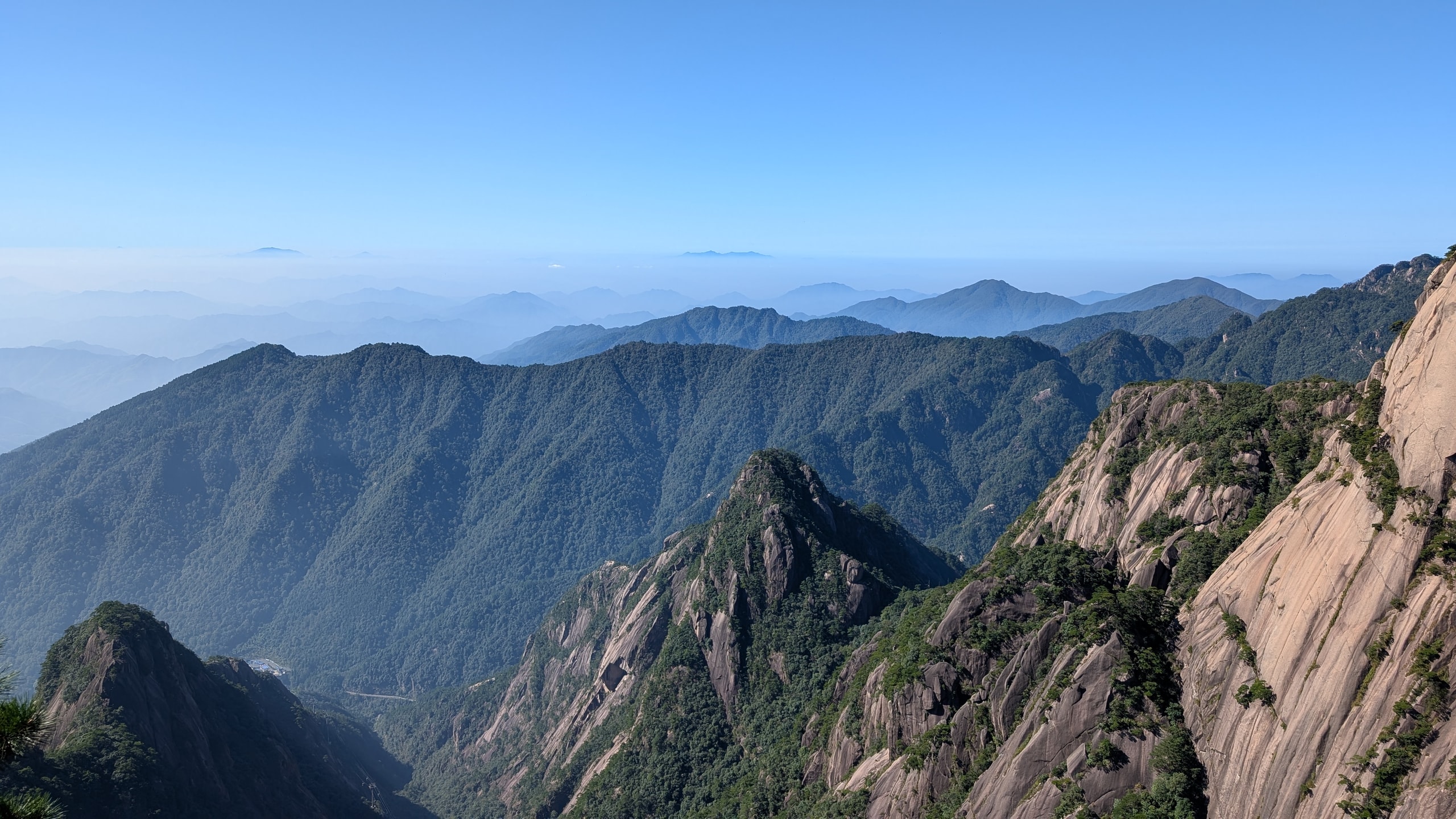
Then the view opened up. Pale rock faces dropped into green valleys. Ridges stacked toward the horizon, each one a lighter blue than the one in front. Pines leaned out of cliffs at odd angles. A thin cable line cut across one gorge - a reminder that somewhere below, people were riding what we were climbing.
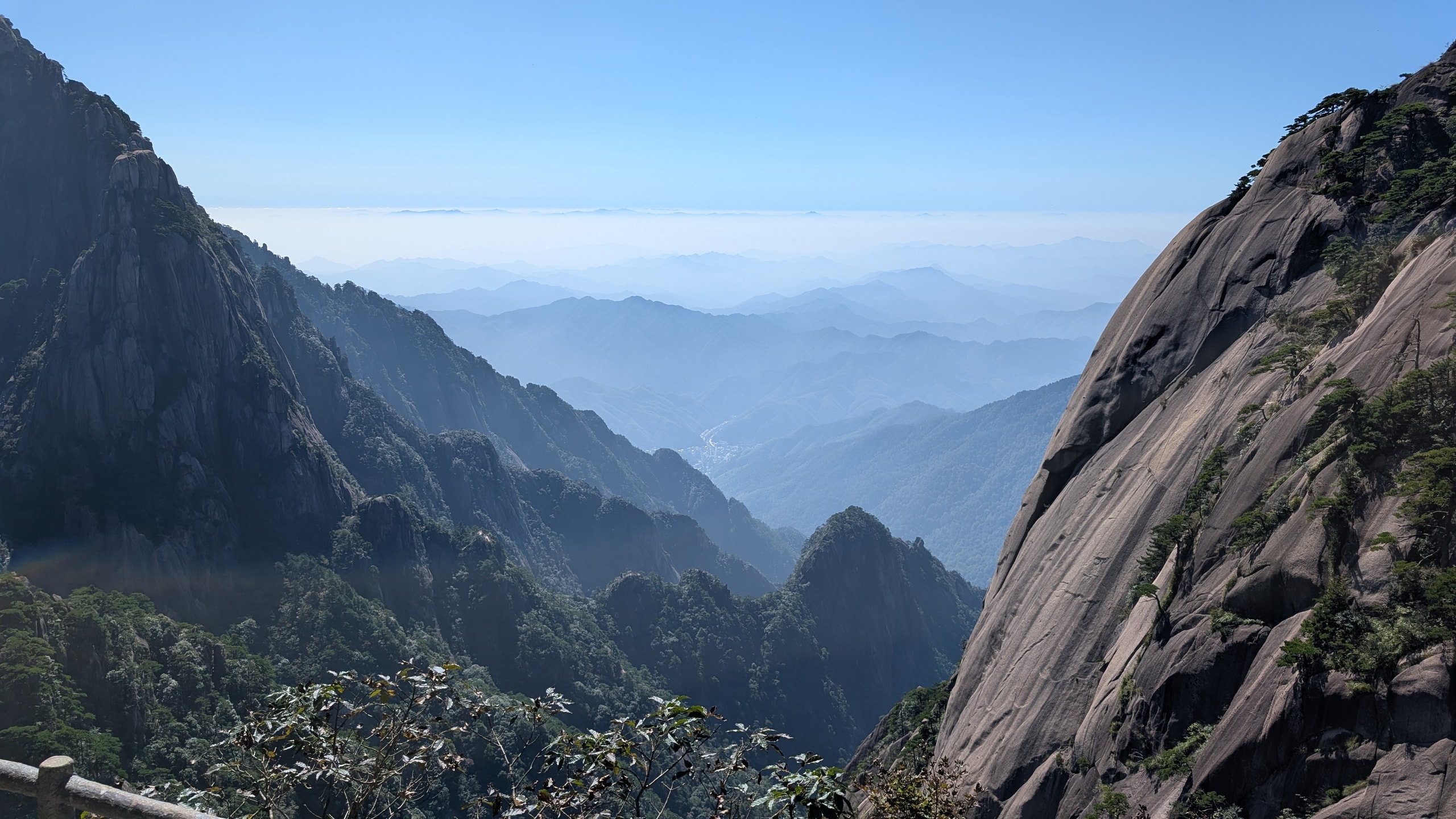
From one lookout you could see deep into the valley, with a tiny cluster of buildings far below and more mountains fading into haze. It is hard to explain the scale until you are standing there with a railing under your hands and your phone out for the third time in ten minutes.
We reached the hotel area in the middle of the mountain feeling proud and also a little worried. The day still had a lot left in it. Hotels up here exist mostly so people can sleep on the mountain and catch sunrise. We were day visitors with a hotel waiting down in the valley, so the clock mattered more than the bed. We filled water, sat for five quiet minutes, checked the map, and headed toward the West Sea. Around us, people with overnight bags looked fresher than we felt - a fair trade if you want dawn from the top. We wanted the stairs and the views in one long push.
The funicular most people take the other way
West Sea Grand Canyon - Xihai - is one of the best parts of Huangshan. Paths stick to the cliffs. Stone bridges cross small gaps. The First and Second Rings take you deeper into the canyon, between steep rock walls and pine trees, until the bottom feels far away. Most visitors hike down those rings and take the West Sea funicular back up. The glass cabin on rails saves a climb that can take hours.
We took the funicular down.
It felt like a good idea at the time. In peak season the West Sea funicular costs about ¥100 ($14) one way - money most people spend so they do not have to climb what we then climbed on foot. The cabin tipped forward into the gorge. Rails dropped between rock walls. Phones came out. The ride is short, maybe eight minutes, on a track under a kilometre long. It drops you deep in the canyon, where the air is cooler and the cliffs look taller because you are looking up at them.
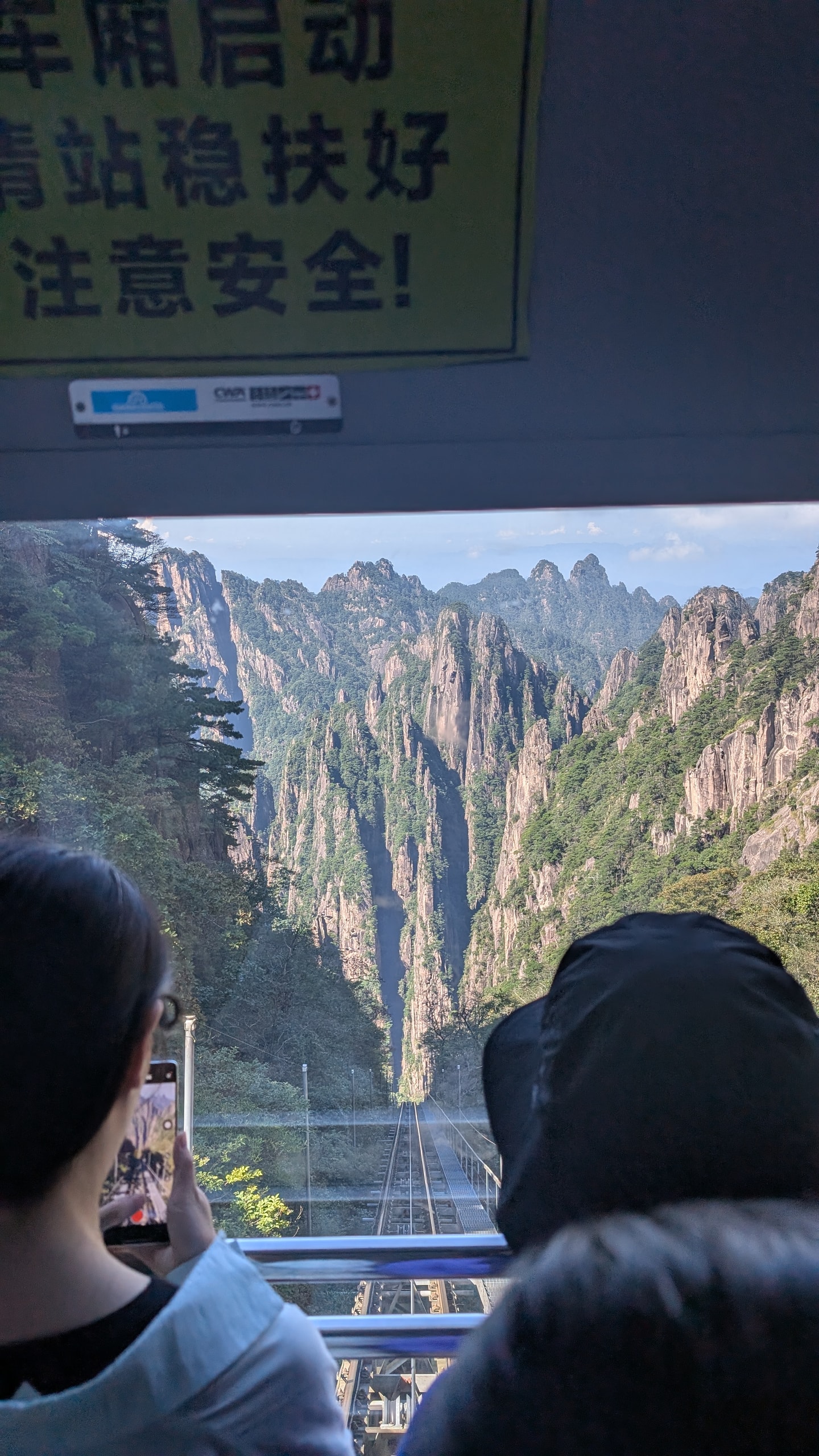
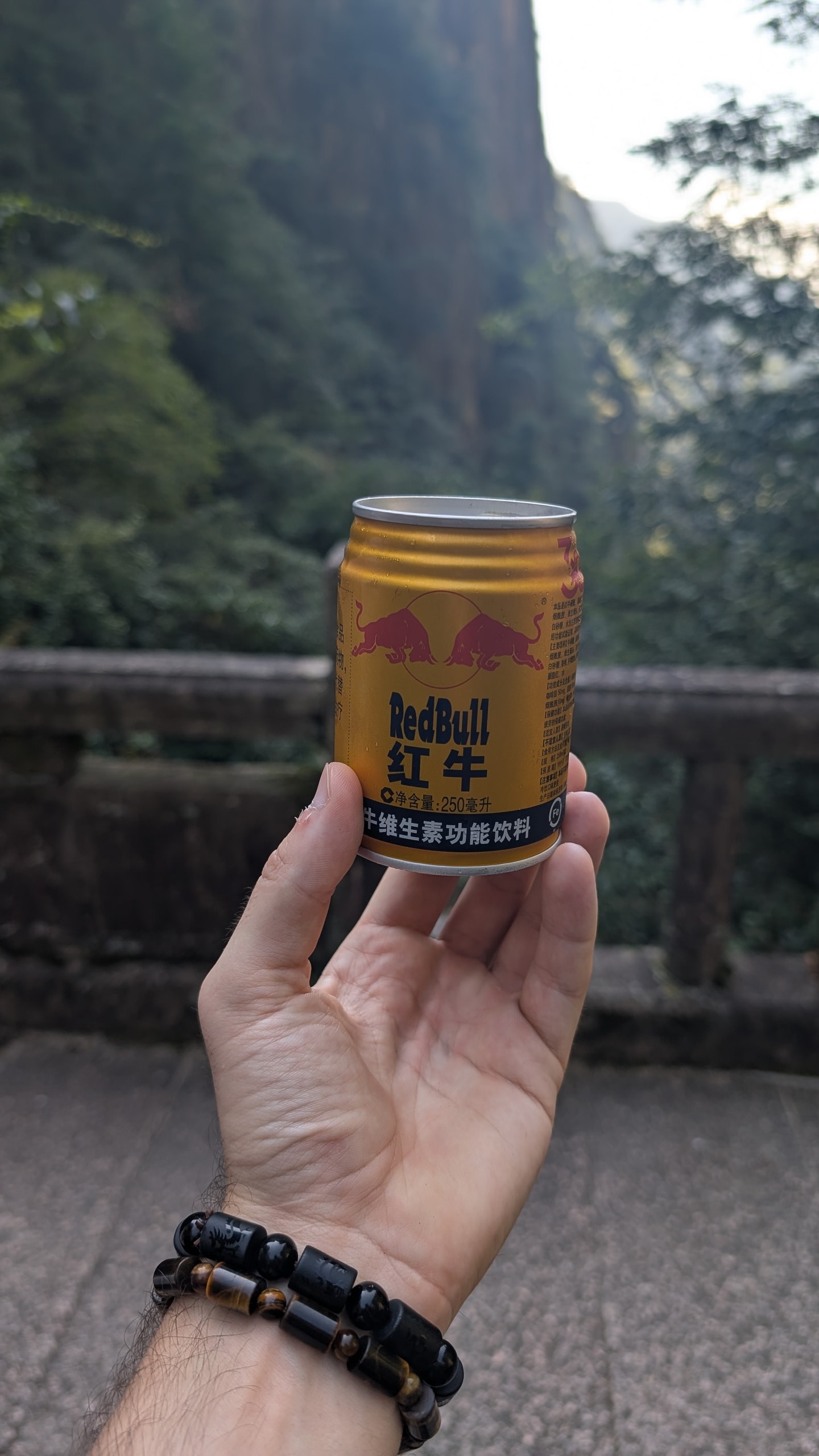
After we got out, we kept going downstairs. More steps. A bend. Then a small civil-service or police hut at the bottom, and beside it a tiny shop selling drinks and snacks. I grabbed a cold Red Bull while we still had flat ground under us and finished it before the stairs began again. Whether it was the sugar or the pause, something in that stop made the first stretch back up feel possible. Then we turned around and started climbing.
Stairs again - and the same people
Hiking from the West Sea floor back to the mid-mountain hotels is the opposite of what most people do. Guides talk about a few hours downhill plus the funicular back up. Climbing out feels like a second hike stuck onto the first. Steps zig-zag up cliff faces. Railings show up exactly where you want something to hold. Pines cling to ledges. In places the path is a single-file slot between walls of rock, and you climb in a line of strangers who are all thinking the same thing: keep going, or sit down for a minute.
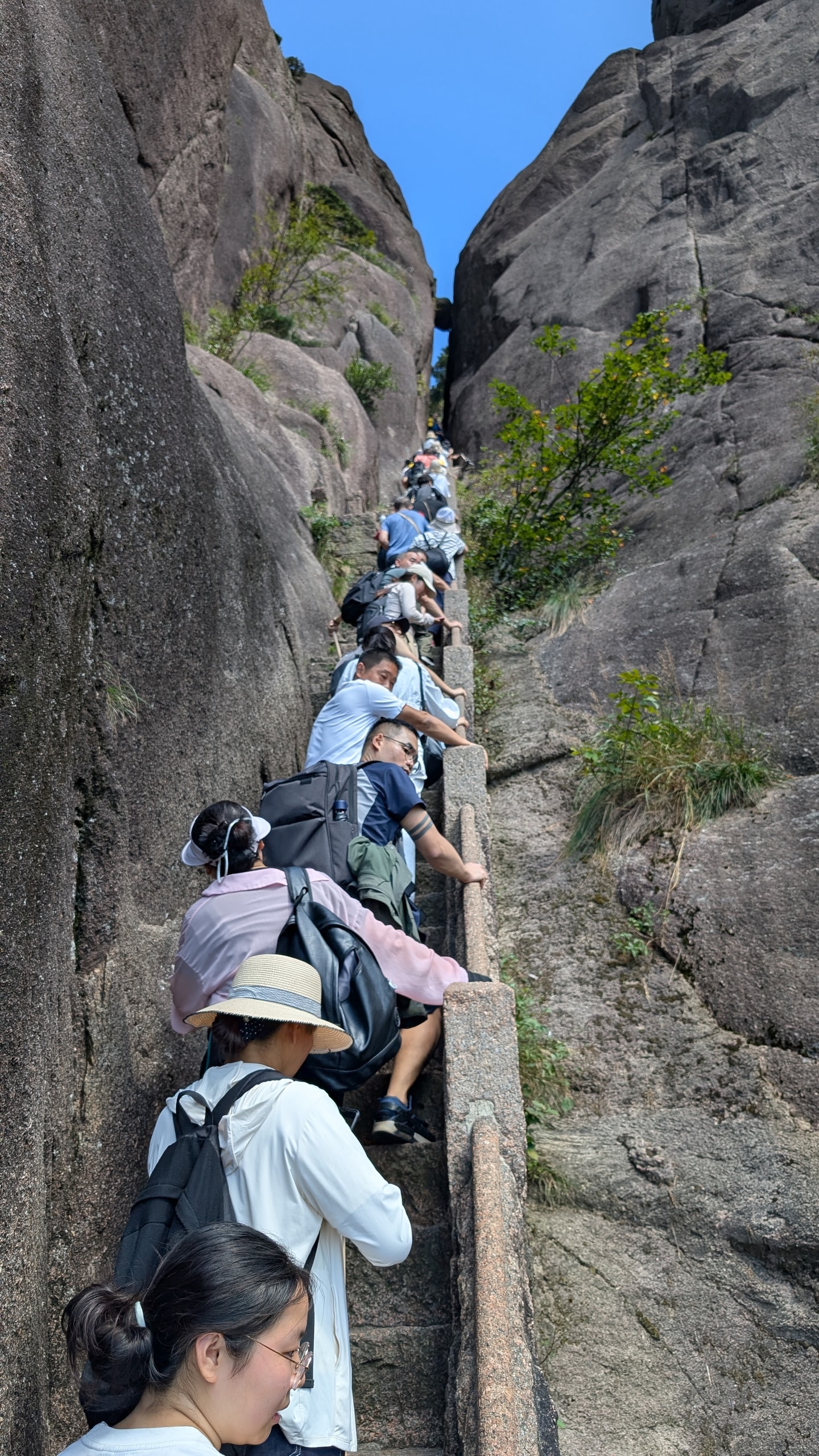
Some stretches hang on the side of the mountain with nothing but air and rock beside you. Hikers go up and down past each other. You flatten against the railing, wait, then start again.
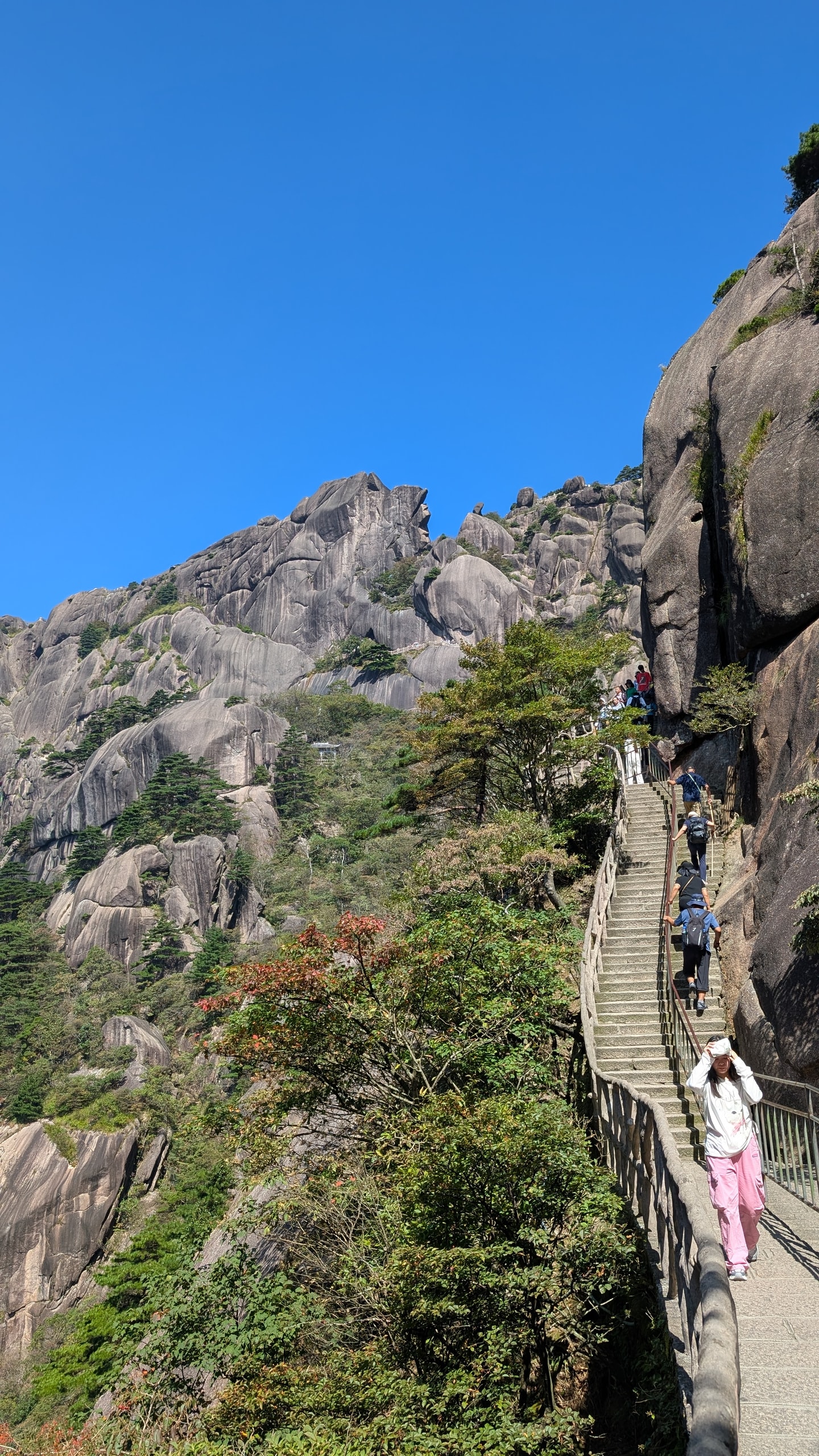
We kept seeing the same faces. A couple in matching hats. A man with a big backpack. A group that chattered on the easy stretches and went quiet on the steep ones. They passed us when we stopped for water. We passed them when they stopped for photos. Most of that traffic happened without words - a glance, a half-smile, room made on a narrow step. On a mountain where almost nobody around you shares a language, the shared work is the conversation.
The one real chat we had was with a father from Korea and his very young daughter. They were on the same stretch of stairs as us for long enough that a few sentences felt natural. Nothing deep - where we were from, how much further, the usual trail small talk - but it stuck, maybe because the rest of the climb was so quiet between strangers.
That back-and-forth with the same hikers became part of the day anyway. Same faces at a bend. Same short rest on a warm stone step while someone else squeezed past. It made the climb feel less lonely even without a shared language.
The views did not care how tired we were. Stone bridges crossed green gaps under big rock walls. Lookouts opened onto valleys that seemed to have no bottom. Pale rock, dark pine, blue distance - it kept repeating in new shapes until I stopped saving the camera battery and just took the pictures. Some corners smelled like warm pine and dust. Others were cool rock shade and footsteps above you.
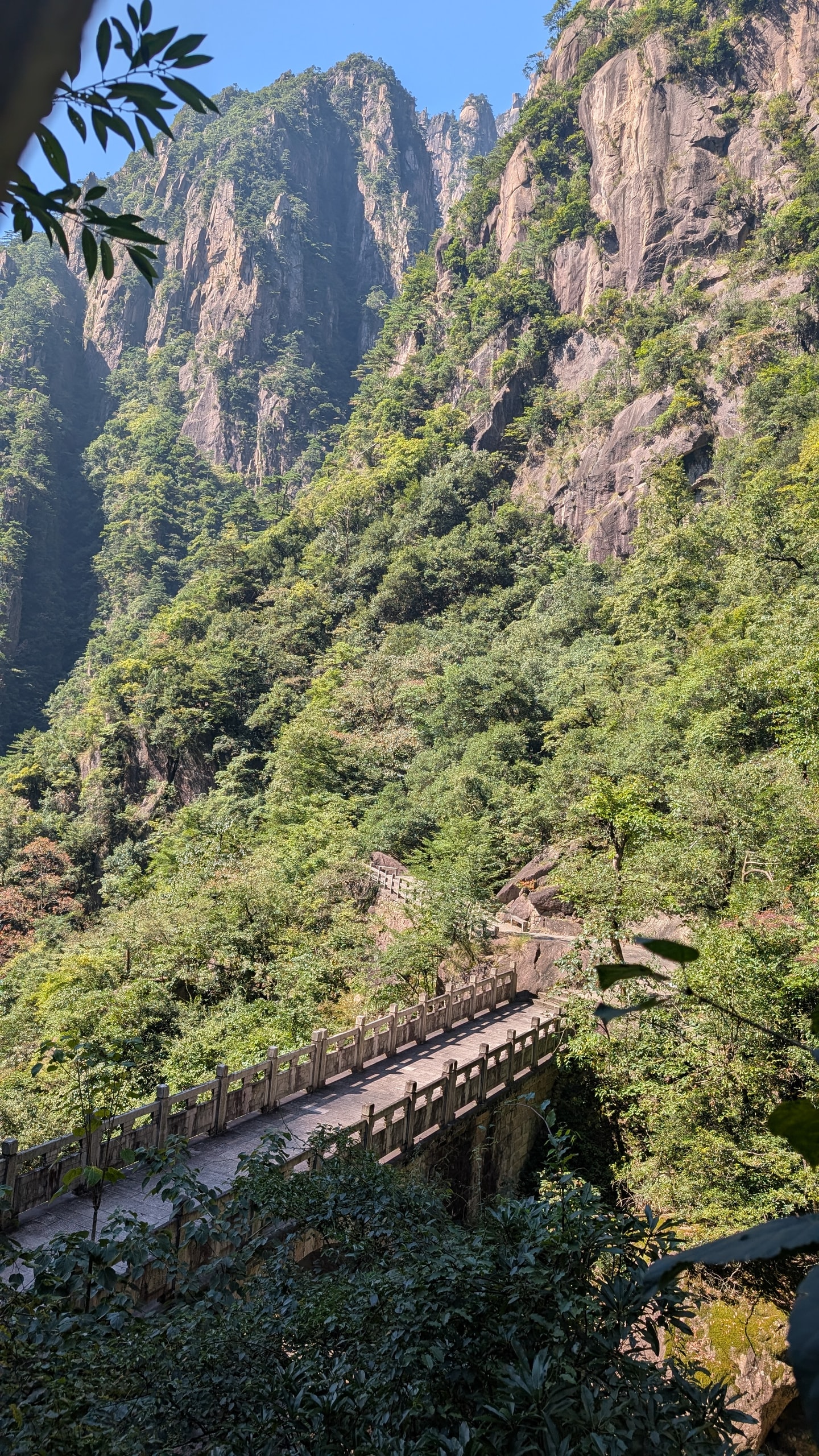
Somewhere on that long climb we crossed Fairy-walking Bridge - Buxian Qiao - a small stone arch between two tall pillars of rock. The drop under it makes you hold the railing even if heights do not usually bother you. A hiker stood in the middle with arms out for a photo. Behind the bridge, more peaks. Below it, the green floor we had left on purpose.
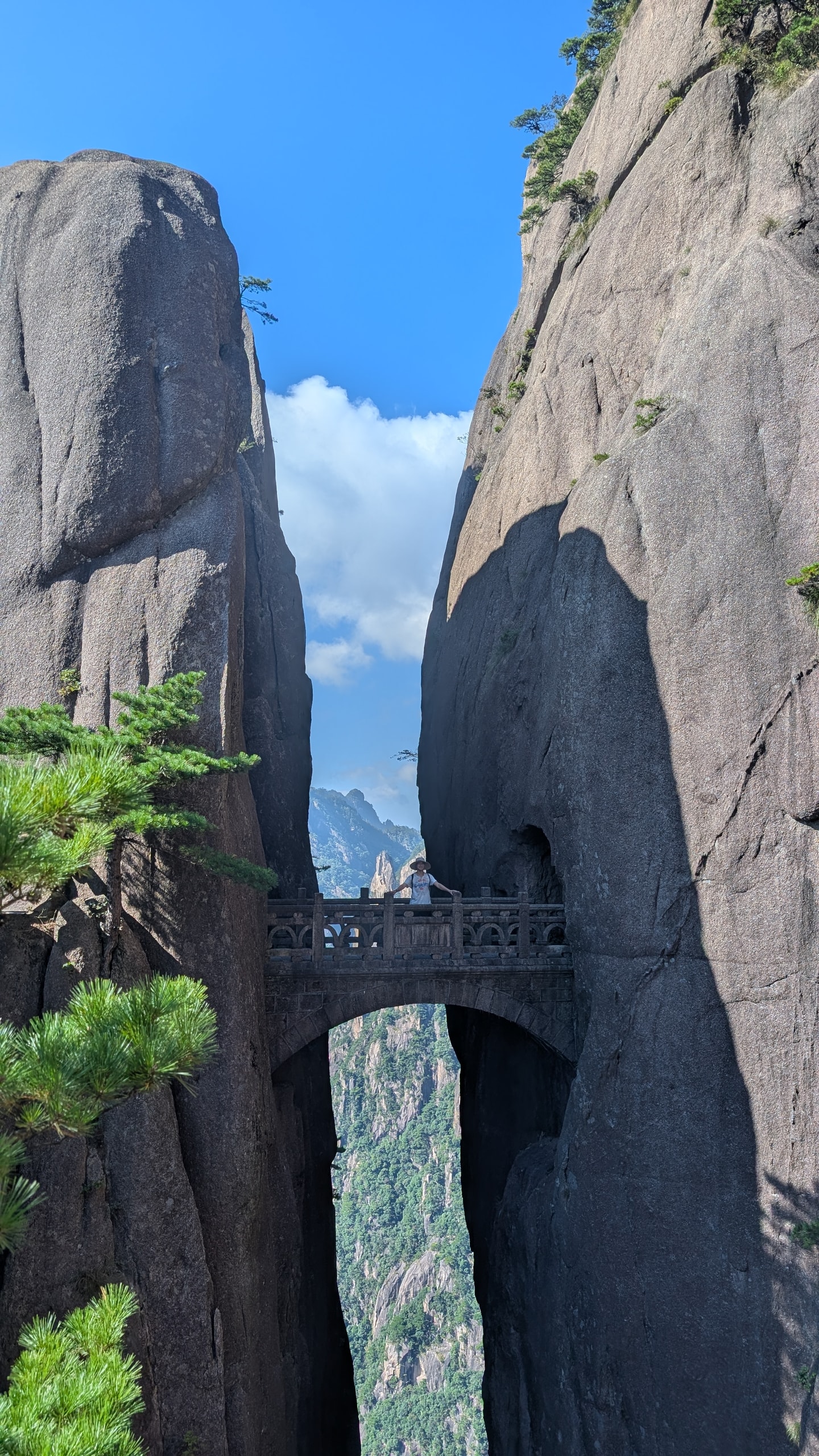
One more flight of stairs, then a view that makes you forgive the last one.
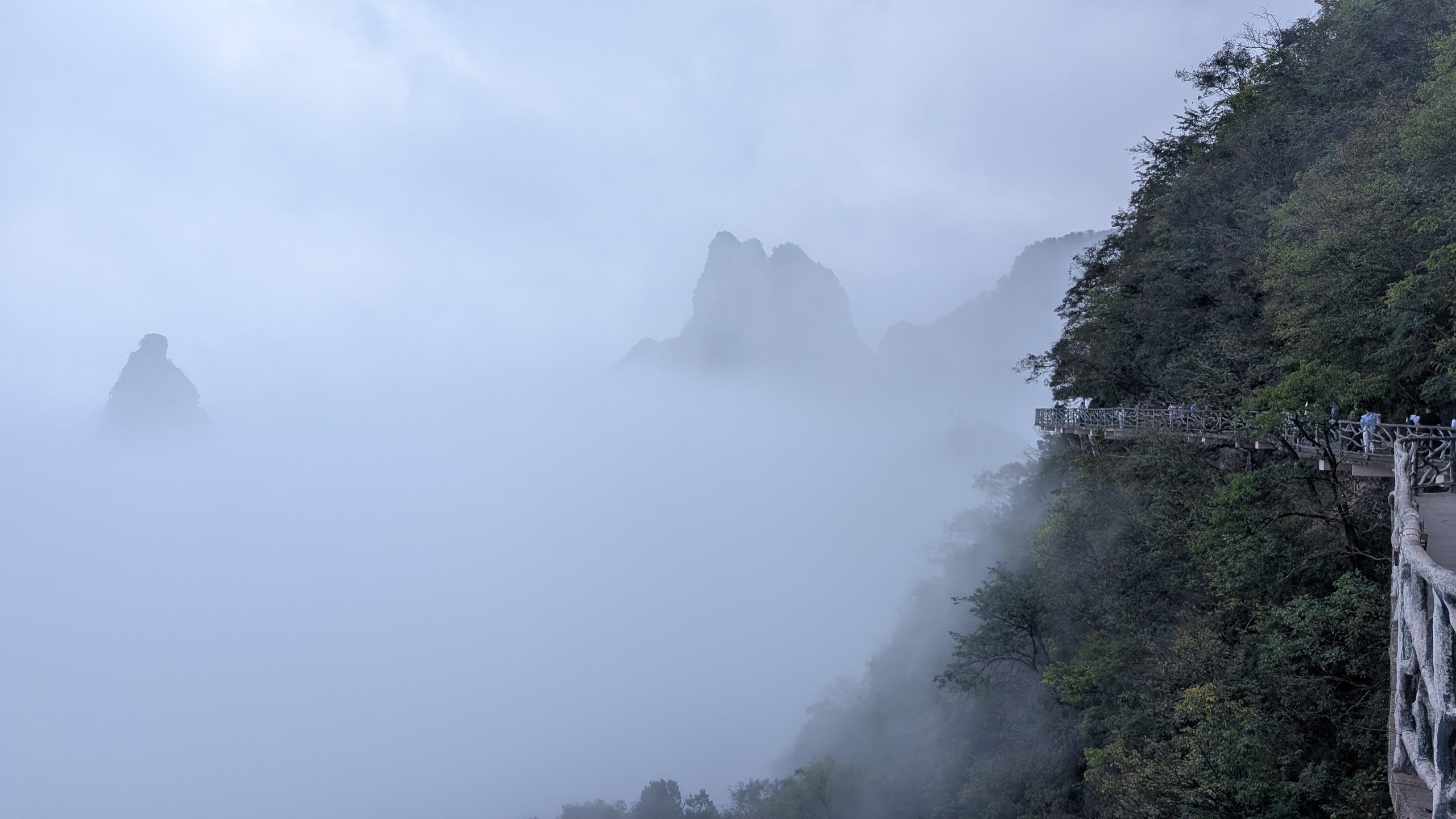
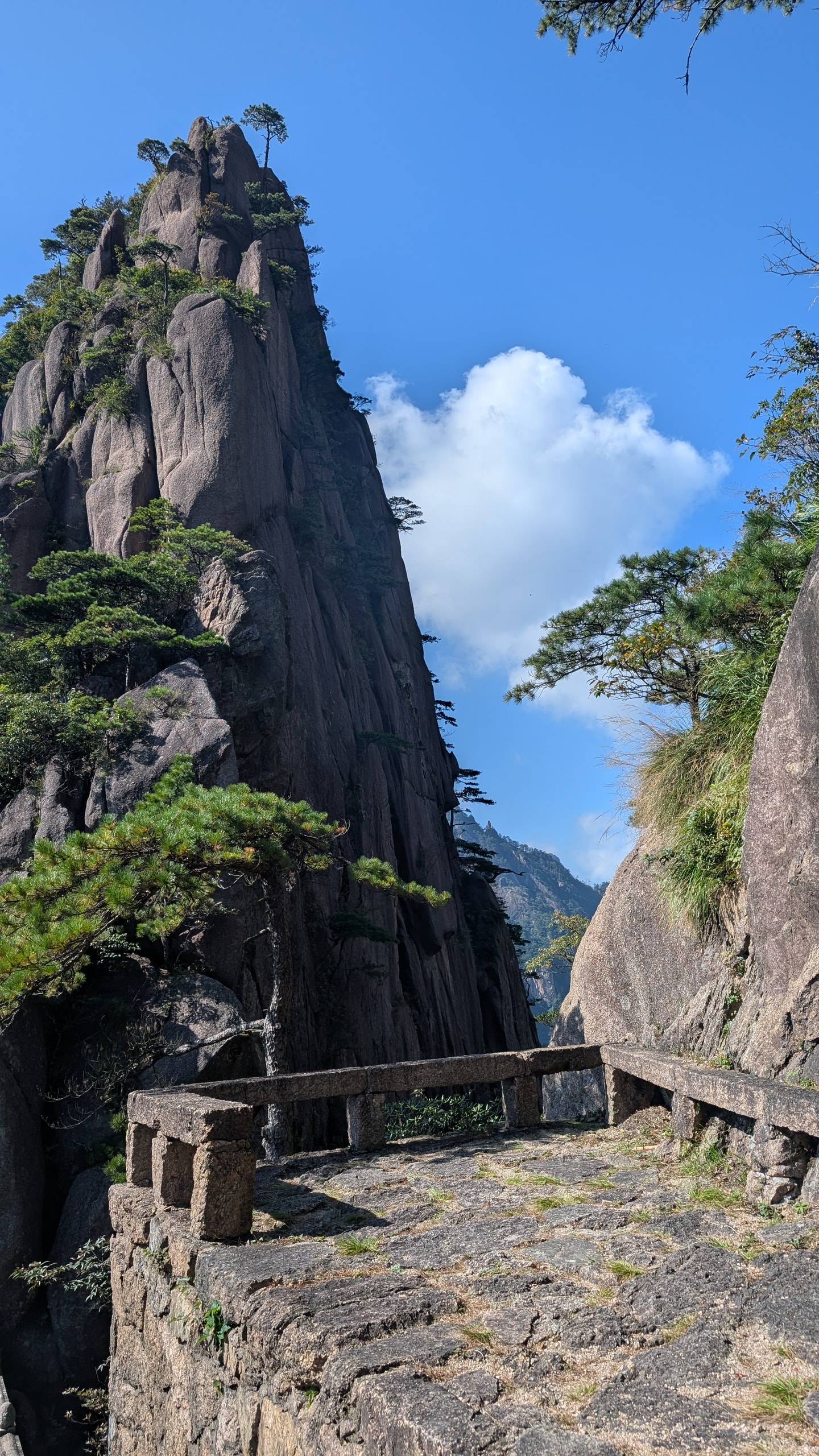
Later we stopped on a stone lookout wedged between peaks, with a white cloud sitting in the gap like it had been placed there. That is Huangshan at its best: you are tired, you lean on the railing, and the view is still huge.
I will not list every named rock. What stayed with me was simpler: granite looking soft in the afternoon light, pines growing out of a crack the width of a coin, the sound of hundreds of shoes on stone, and being tired in a place that is actually that beautiful. The peaks through the pine branches looked almost unreal - sharp, stacked, and bright under a clean blue sky - but our dirty shoes and empty water bottles kept the day honest.
Back to the hotel, then the last cable car
By the time we got back to the mid-mountain hotel area, the day had changed. Morning curiosity had become afternoon maths. We still had to walk from the hotel zone to the cable car that drops you toward the valley - more ups and downs that would have felt small at nine in the morning and felt personal after the canyon. People were already drifting toward the exit lines with that end-of-day walk, half done and half hurry. Huangshan's cable cars do not wait for people who "almost" made it. Miss the last one and you face a long stair walk down in the dark, or a night you did not book.
We checked the time more than the map. We did not stop for one last scenic detour. We just kept moving toward the station, past snack stalls and tired faces, with the same quiet focus you get when a ferry or a train is the only thing left that matters.
We caught the last cable car down. I remember the cabin more for the relief than for the view. Legs shaking a little. Phone full of photos I already knew I would look at later and still not quite believe. Outside, the peaks we had spent the day climbing slid past at a speed that felt unfair after so many hours of earning every metre with our knees. Nobody in our group said much on the way down. That felt right. We were tired.
How far, and what it was
Add it up and the day sits around 12 kilometres - roughly 7.5 miles - of walking, almost all of it on stairs. That is not a perfect GPS track. It is the hike from the cable car to the mid-mountain hotels, the West Sea funicular down (which is not walking, but it was a choice), the long stair climb back out of the canyon, and the final walk to the valley cable car. On Huangshan, distance does not tell the whole story. A flat 12 km is a long walk. A 12 km day of stairs is a different kind of tired - in the thighs, in the knees, and in the moment you stop counting steps because it stopped helping. Other day-to-day pieces live in the journal.
Was it spectacular? Yes. I have seen a lot of mountains. Few of them put granite, pine, and empty air together quite like this. On a clear day the West Sea looks like a painting you can walk through and scuff with your shoes. The crowds are real. The porters are real. The tiny shop at the bottom is real. None of that ruined it. If anything, the shared hard work made the views feel earned. You remember the same faces on the stairs as clearly as you remember the peaks.
I would do the funicular-down, stairs-up trick again - but I would not pretend the climb out is a short detour. I would also keep staying near the entrance. The head start is not fancy. It is how you still have legs when the cable car schedule becomes the only schedule that matters.
If you are building a China trip and wondering whether Huangshan belongs on it, put it on for the stairs and the granite - not for a sunrise you sleep through in a summit hotel. Give the mountain a full day, and expect to look tired after a few thousand steps. Ticket and cableway hours are on the Huangshan Scenic Area committee site; they shift with season and weather, and the last cable car is not a suggestion.
I left with sore legs, a camera full of the same peaks from slightly different angles, and the odd warmth of faces we kept overtaking and then falling behind again. Huangshan did not teach me a big life lesson. It just stuck - mostly because we took the hard way out of the canyon.