I realised the jacket was gone at the exact wrong second. We were already parked on a ferry about an hour's drive north of Måløy, the boat giving that small final shudder that means you are no longer on land, and I opened the car door just to stretch my legs after the drive. Cool air off the water, the usual ferry smell of wet metal and diesel, and then the quiet panic of patting empty shoulders and an empty back seat. My brown leather jacket - soft from wear, a gift from a close friend - was still hanging on a chair in a restaurant an hour behind us. I had a phone, a ferry schedule I suddenly cared about far too much, and a car that had already done about seven hours of west-coast driving that day. What I did not have was a plan that made any sense.
The long road north, before the mess
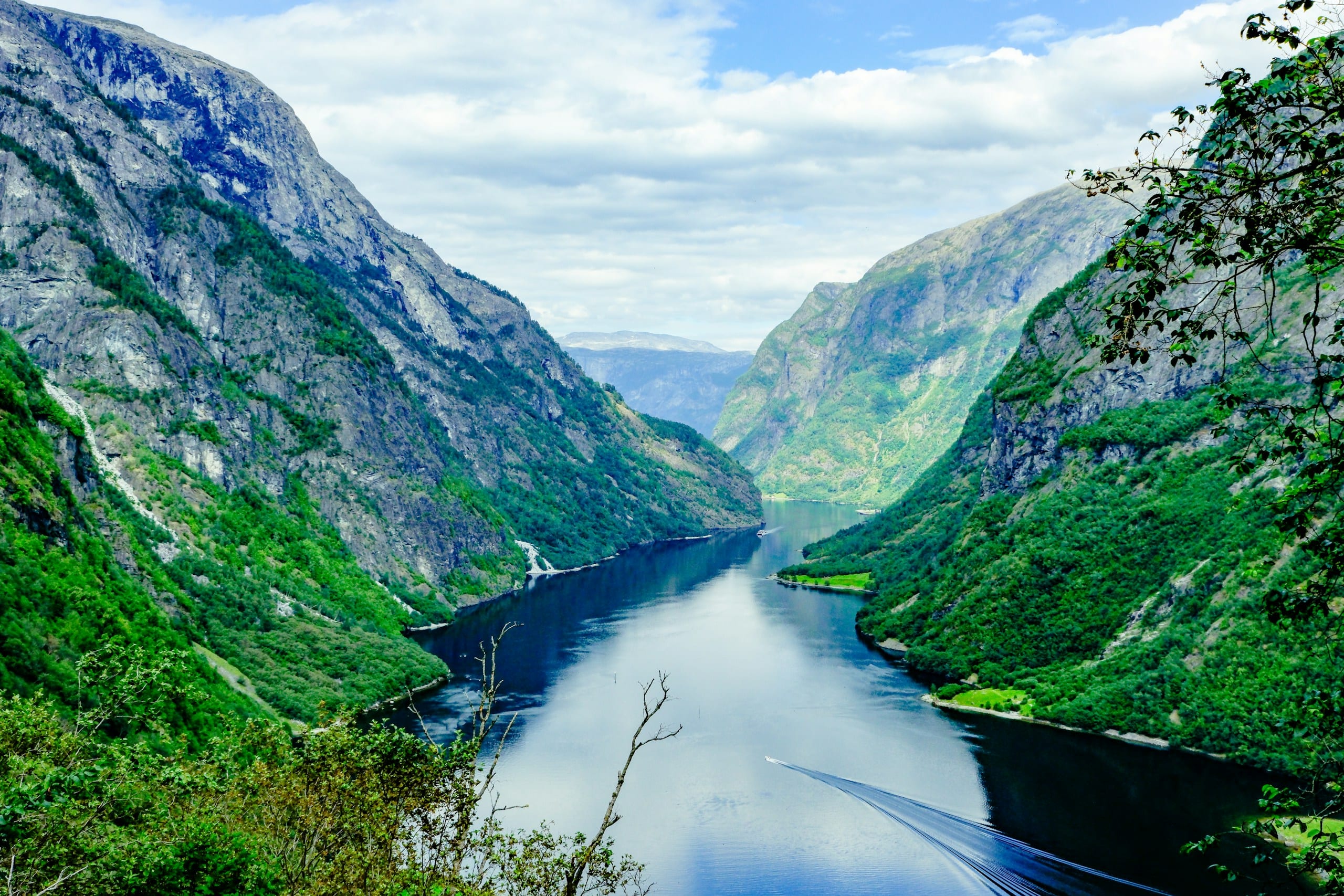
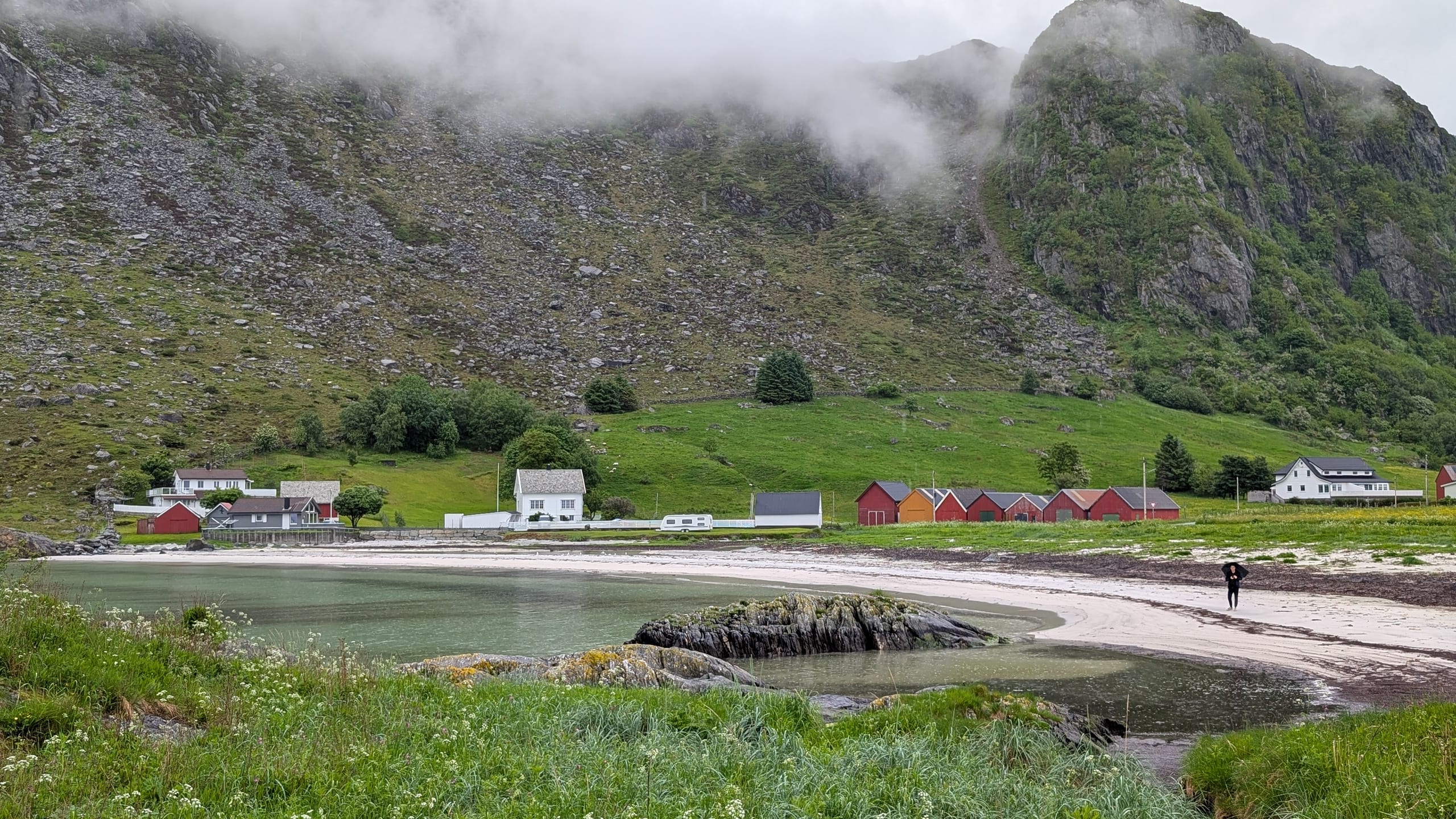
There were four of us on the road from Bergen to Ålesund in June 2026, skipping the packaged scenic circuit and just taking the coast: tunnels, fishing towns, stretches of water that appear when the map goes quiet. Norway has a habit of putting something ridiculous next to the asphalt - a waterfall pouring straight into dark water with mist stuck to the cliffs - and we pulled over for one of those without pretending we had a better plan.
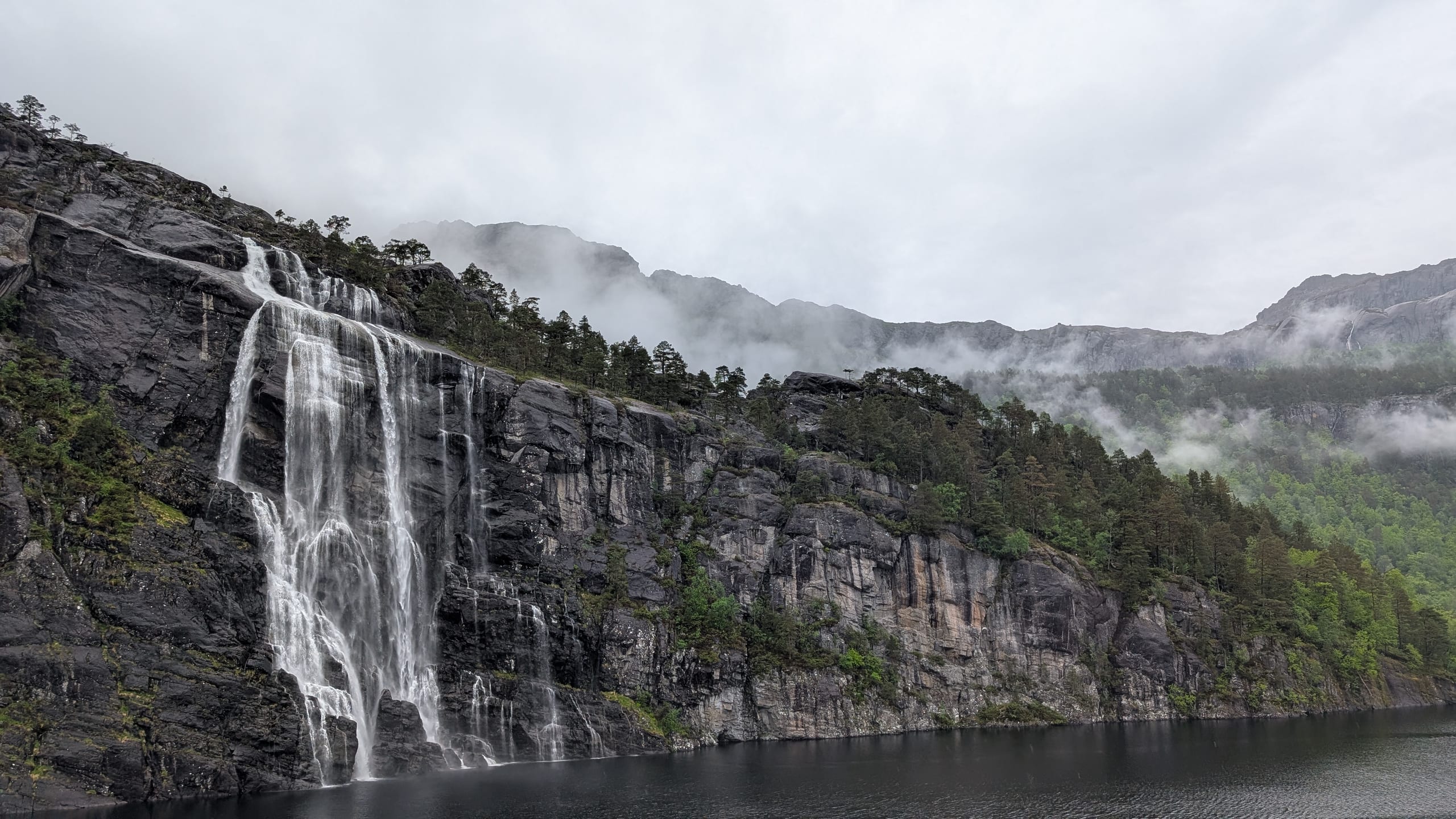
Further along sits Grotlesanden, a wide pale crescent of sand under a mountain that spends half its time inside a cloud. We stopped because the water looked almost tropical from the rocks above it, and because after enough Norwegian asphalt your brain starts bargaining hard for anything that is not another tunnel.
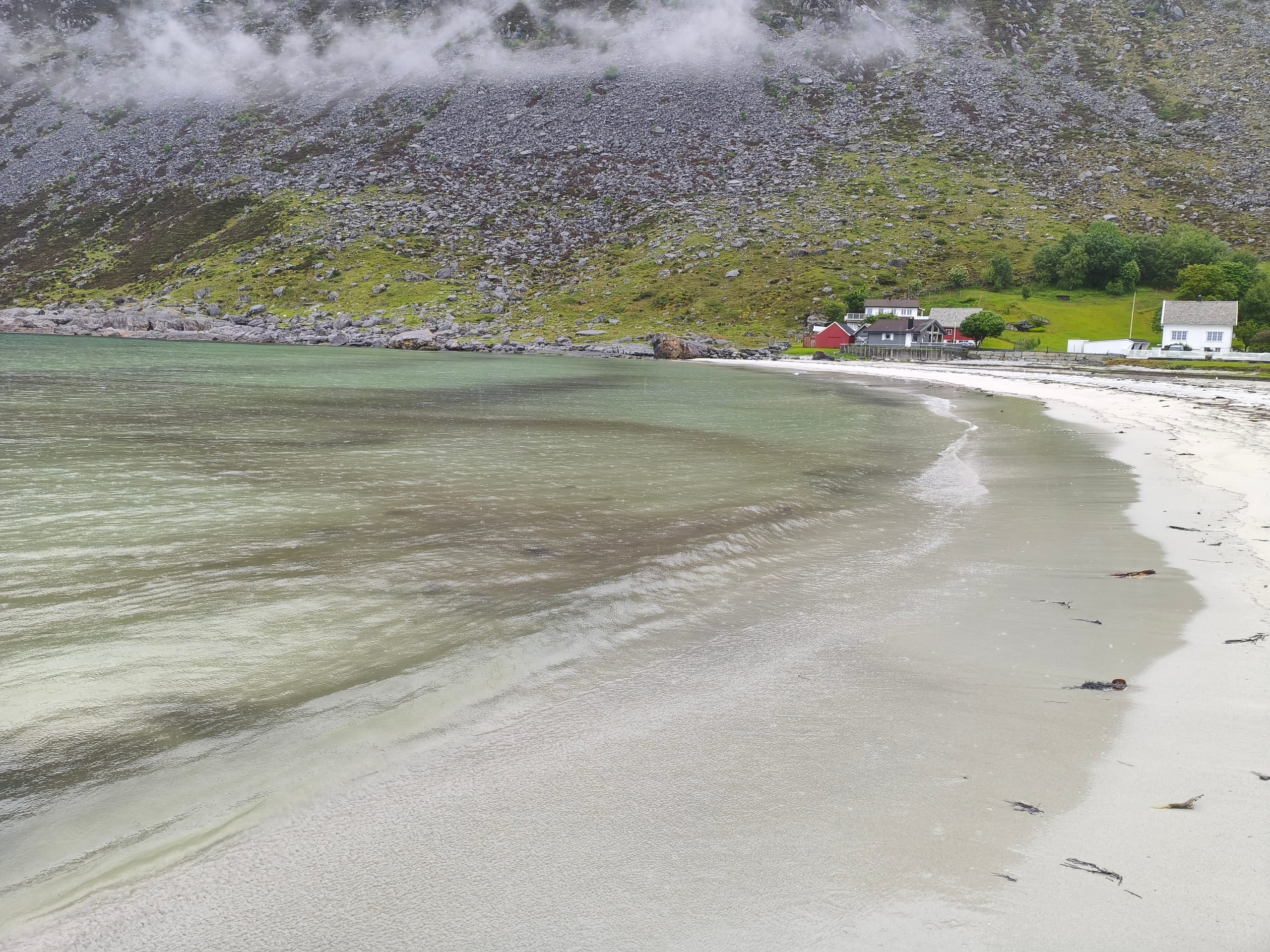
It was grey and beautiful in the ordinary west-coast way, where nobody pretends the weather is cooperating and the place still looks good anyway. White flowers in the grass, somebody with an umbrella on the sand for scale, red boathouses under a mountain that kept disappearing into cloud. We walked the beach, took the photos you take when the sea goes that colour against dark rock, and climbed back into the car with the mild optimism of people who still believe dinner will be simple. By then the day already had the soft blur of a long drive - shared snacks, bad jokes, the kind of conversation that only happens when four friends have been stuck in the same vehicle long enough to stop performing for each other.
Pera Restaurant, and a slow night in Måløy
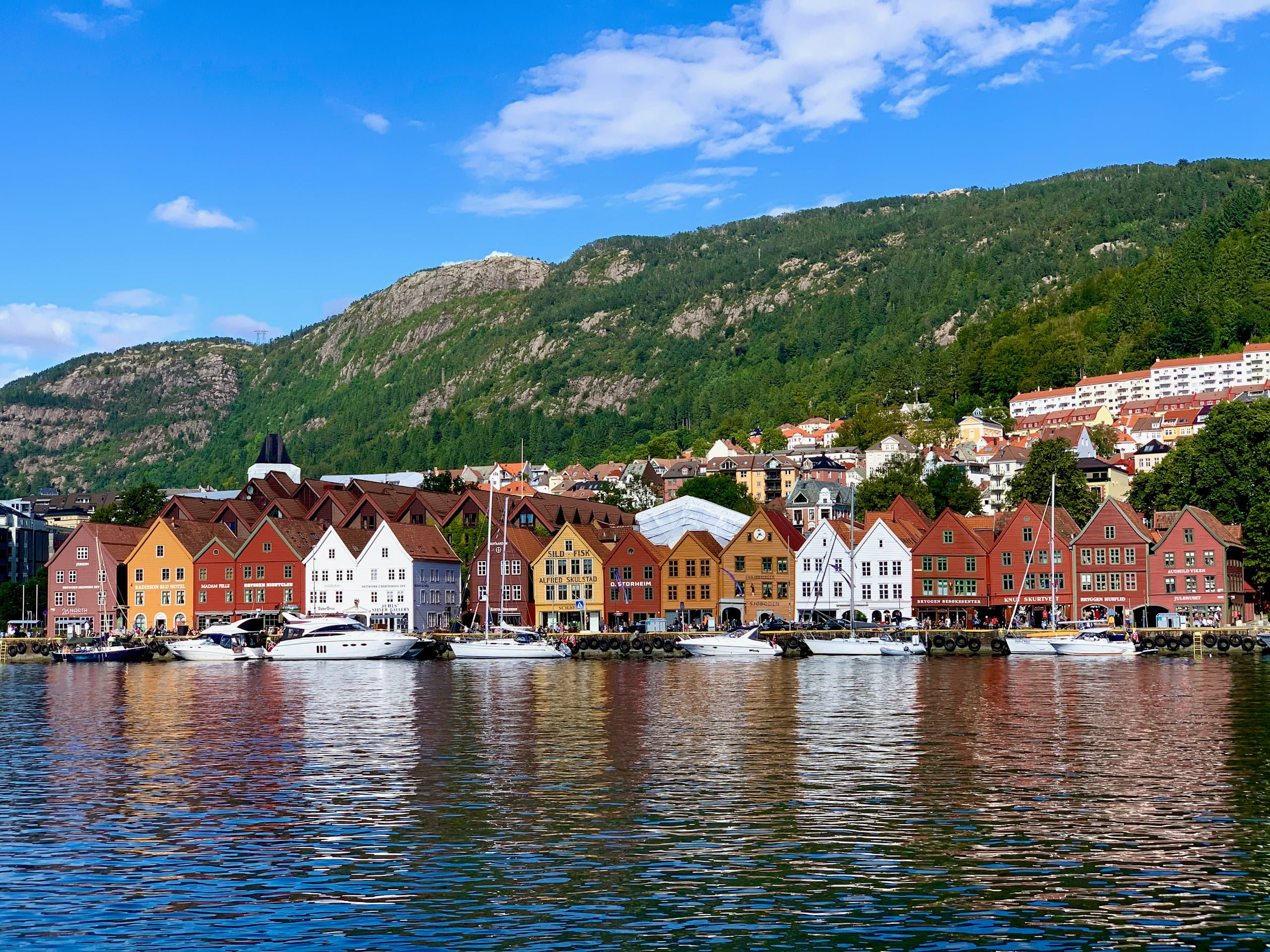
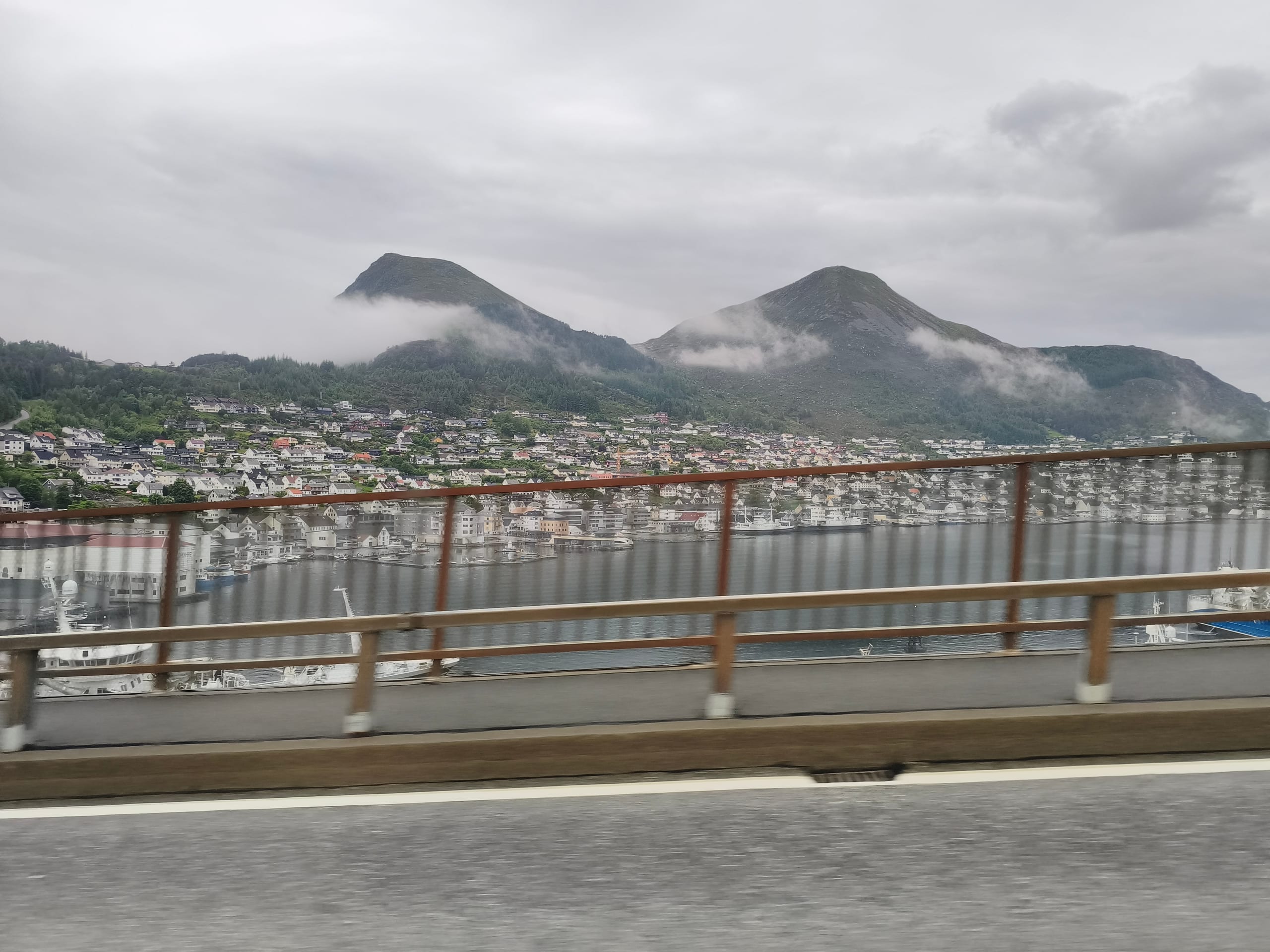
Måløy is a working town on the edge of the water, not a place that dresses itself up for visitors. Coming in across the bridge you get the whole picture at once: harbour, white houses, mountains with cloud stuck halfway up them, the working docks that make it clear this place has a job besides looking at the view.
We needed food more than ambience, scrolled for whatever was open, and landed on Pera Restaurant. Walking in felt a little like interrupting someone mid-shift. The dining room was empty, tables wiped and waiting, the smell of dough and tomato hanging in warm air, the whole place humming the soft idle of a restaurant that had prepared for a Friday and gotten four tired travelers instead.
The man working that night was Black, African, and about as warm as a person can be while standing alone behind a pizza counter in a quiet Norwegian harbour town. He had this easy, outgoing energy - a little theatrical in the best way - and he treated our arrival like good news rather than a chore at the end of a slow service. I mention where he was from only because it is part of what made the evening memorable, and because small coastal towns in Vestland do not always look the way postcards suggest. Mostly I remember how glad he seemed that somebody had walked through the door.
We ordered. The pizzas were properly good, the kind where the crust still has a bit of chew and you stop mid-bite to agree that yes, this was the right call. For Norway they were reasonably priced at about $20 each, which in this country still feels like a small win. We ate, talked, paid, thanked him, and left in that loose, full way you leave a place when the evening has been kinder than expected. Somewhere in that exit I failed to put my jacket back on. I did not notice. None of us did.
The ferry, the call, the bad arithmetic
An hour or so later the road simply ended in water, as Norwegian coastal roads often do, and we rolled onto a ferry dock that was not Måløy itself - just a slip with a waiting lane and a timetable and the usual quiet competence of people who move cars across fjords for a living. We parked on the deck. I got out to unkink my legs, nothing more dramatic than that, and the missing jacket hit me the way a missing wallet does: first as a vague wrongness, then as a full inventory of everywhere it was not.
I called the restaurant while the boat was still reversing into open water. Was there any chance - any chance at all - that someone heading toward Ålesund tonight could bring the jacket along? Of course not. Why would there be? He answered anyway, and he sounded genuinely sorry, which made it harder to hang up and be practical. It was around eight in the evening. The jacket was a gift, the sort you wear until the elbows go shiny. I could not just replace it at the next petrol station. Leaving it on a chair in Måløy felt like leaving a piece of a friendship behind by accident.
We waited out the crossing and kept driving toward Ålesund in the particular quiet that means everyone in the car is doing the same ugly maths. Going back meant another ferry south, another hour to town, a restaurant that closed at ten, and then the whole route in reverse - including two ferry links that stop running for the night and will cheerfully leave you on the wrong side of a fjord until morning. We had already been on the road for something like seven hours. The smart move was to mourn the jacket, keep going, and deal with it later by phone and luck.
I am not always good at the smart move.
The decision that ruined the evening (on purpose)
Somewhere on that road north I decided I was willing to do the stupid thing properly. Turn around. Take the ferry back. Drive the hour to Måløy. Get the jacket. Then sprint north again before those two ferries between Måløy and Ålesund shut down for the night. I said it out loud expecting resistance, or at least a long silence while three tired friends weighed friendship against sleep. Instead they said yes. That still means more to me than the jacket itself.
I left a voicemail for the restaurant: I am coming back, please wait if I am late. Then I called five more times because stress makes you dial. Nobody answered. Closing time was 22:00.
We had also taken too long to decide. By the time we got back to the dock, the ferry we needed had already left, and we stood there for another twenty minutes waiting for the next one. When it finally arrived we boarded, crossed, and then drove south for an hour, a little faster than felt polite in Norway, while the tunnels kept opening onto the same grey evening.
We rolled up to Pera Restaurant at 21:50. Ten minutes to spare.
He was still there. He had put the jacket away safely in the back room, and when I walked back in he looked genuinely glad to see me. We barely knew each other. We had shared one dinner and a phone call full of bad news. He still seemed pleased that I had actually come back for it. He handed the jacket over carefully. I thanked him more times than I needed to. He waved us off like we were regulars.
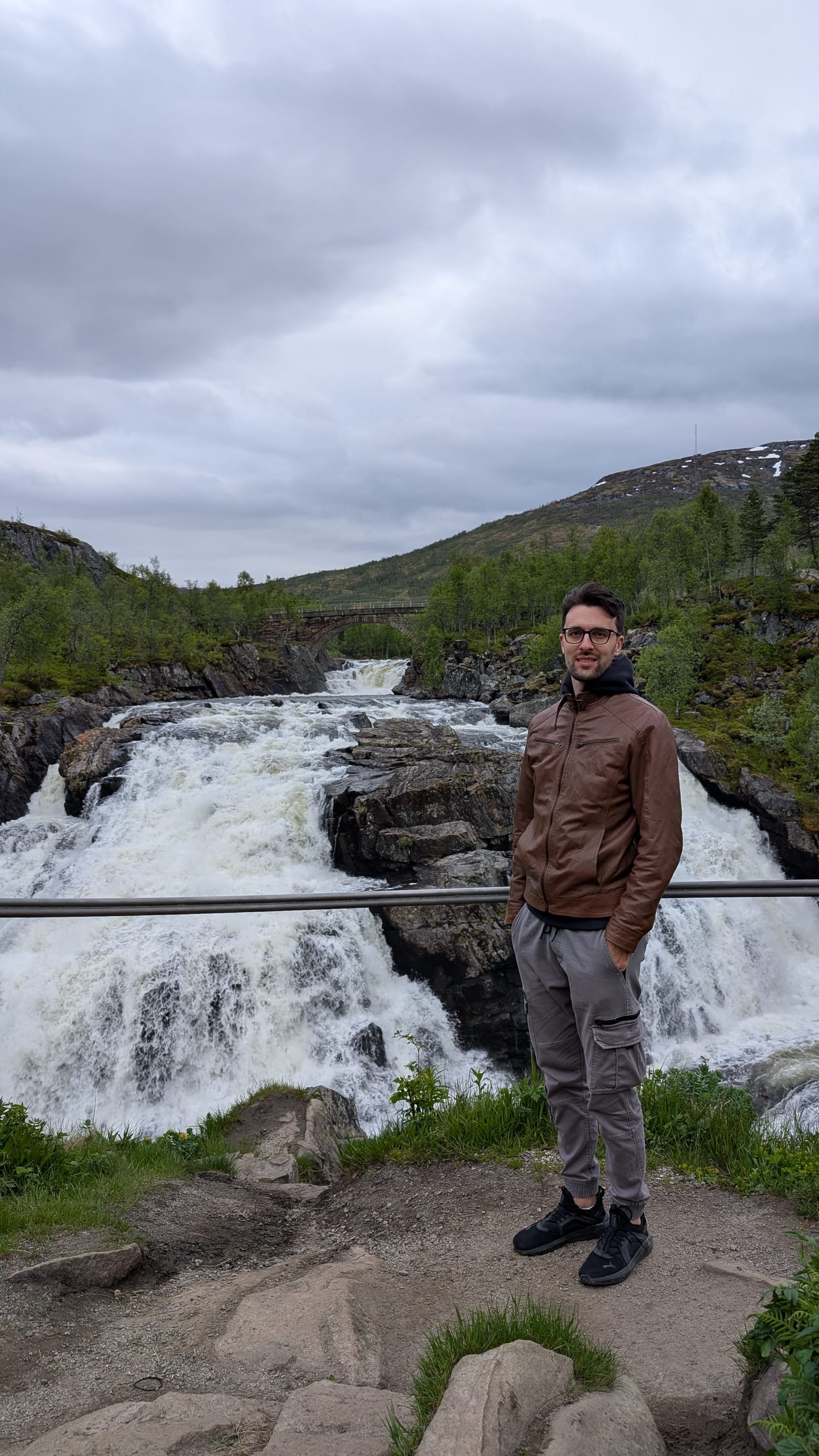
I could end the story there. That would be neat. It would also be a lie, because Norway was not finished with us.
Twenty percent battery and the last boats of the night
We had an electric car, and the battery was sitting at twenty percent. That is not much when the next stretch is Måløy to Ålesund with fjords in the way and two ferries that will not wait while you look for a charger. The country-level version of this - ferries that change the day, batteries that drop fast, maps that are longer than they look - is in what I'd actually know before Norway.
Luck of the boring, practical kind put chargers right outside the restaurant. We plugged in, stood in the cooling evening while the percentage crawled upward, and left around fifty percent - not comfortable, just enough to stop arguing with the dashboard. Then it was north again into the dark, trying to catch the last two ferries of the night.
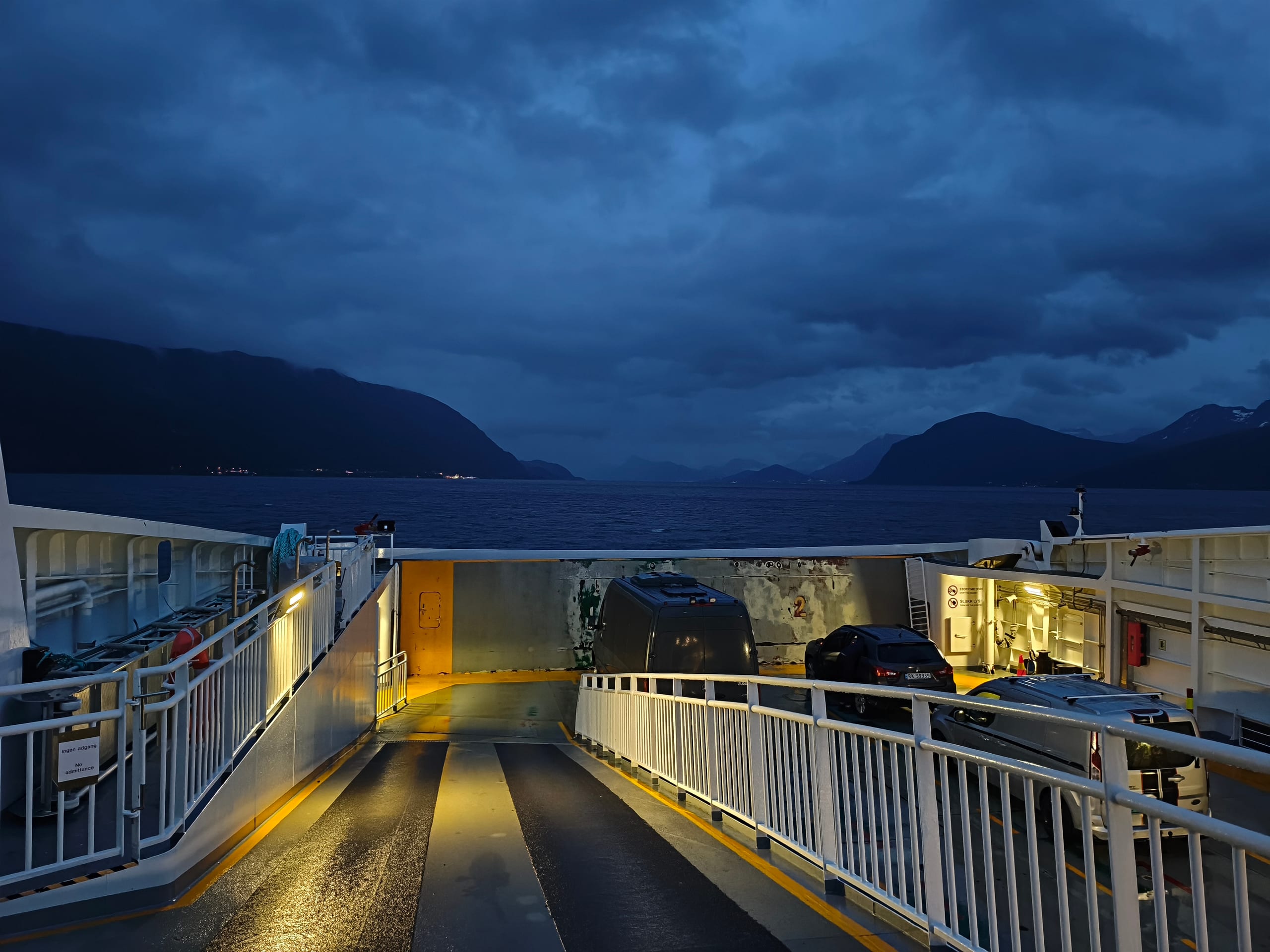
We caught both. I am still slightly surprised by that sentence when I write it down. The decks were quiet, the water black, the mountains reduced to shapes against a late June sky that never quite goes fully dark this far north. At some point we realised we had crossed with the same ferrymaster three times in a row - north when I noticed the jacket was gone, south on the rescue run, north again with the leather back where it belonged. We waved. He waved back. He was probably just being decent on a long shift.
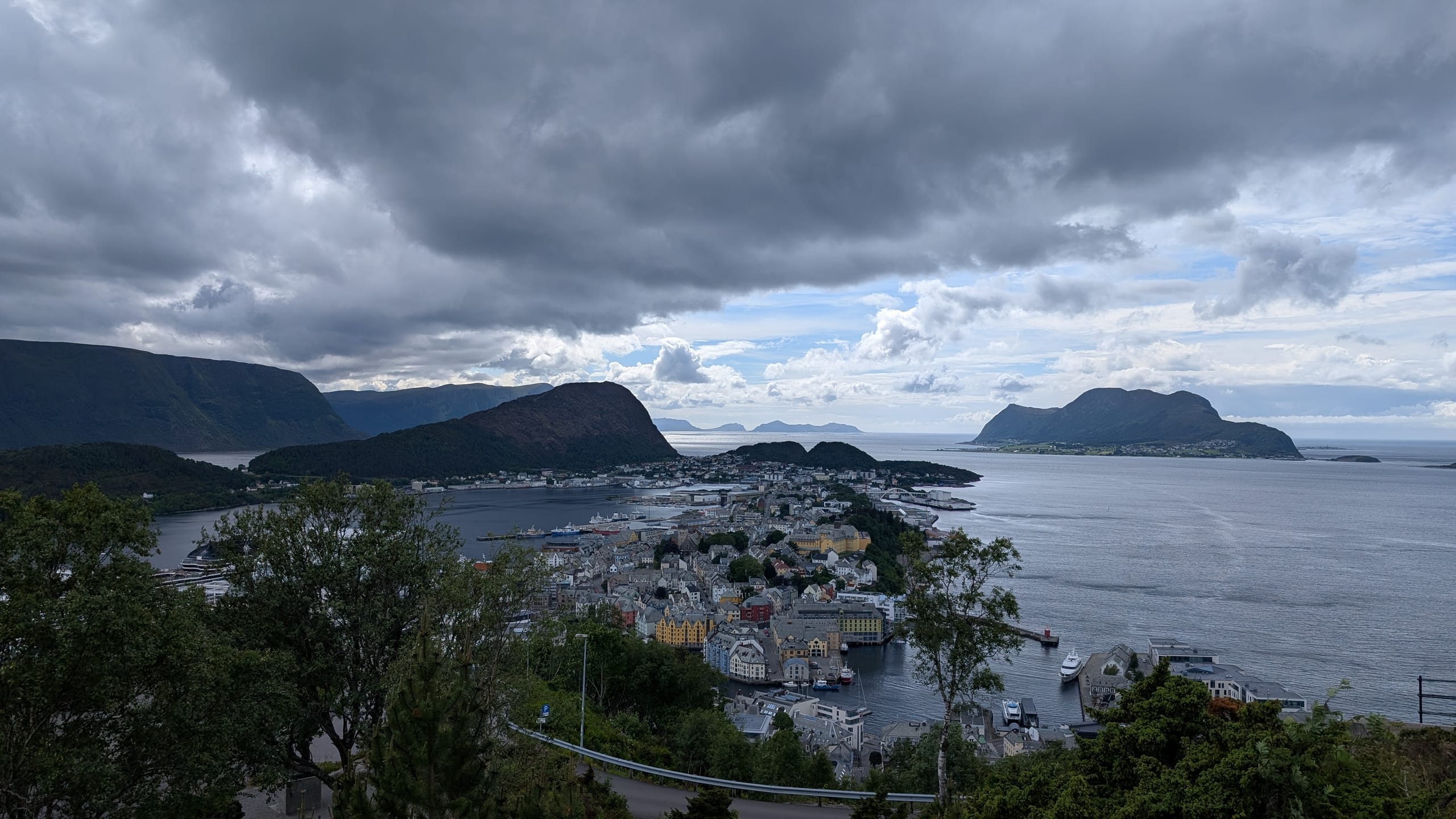
We pulled into the Airbnb in Ålesund around two in the morning. The town was asleep - canals, turrets, nobody asking why four people were arriving with ferry-tired eyes and the loose laughter of a plan that almost failed. Behind us sat something like seven hundred kilometres, roughly twelve hours of driving, four ferry rides that should have been two, one recovered gift, and a pizza place in Måløy that saved the night.
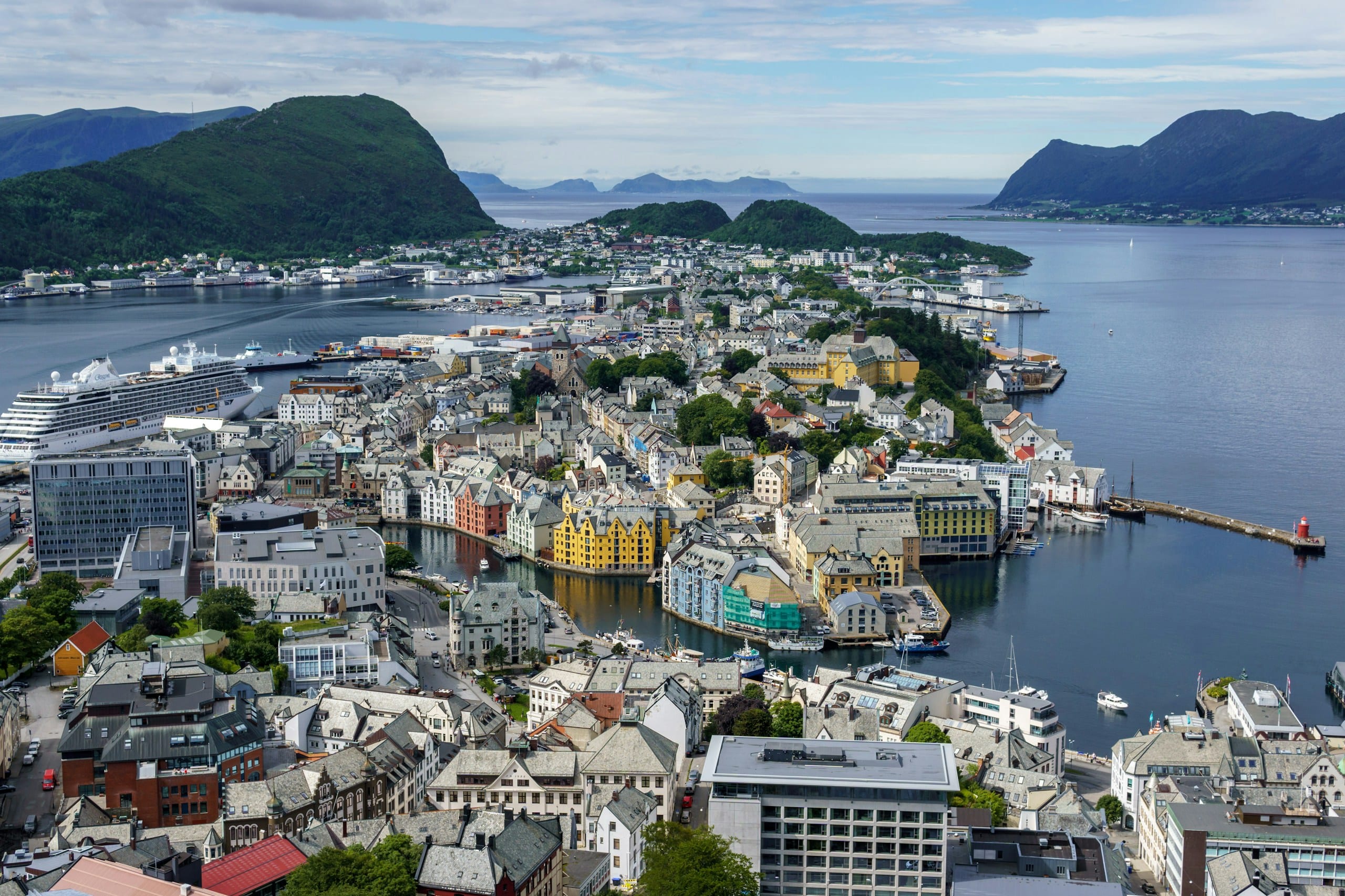
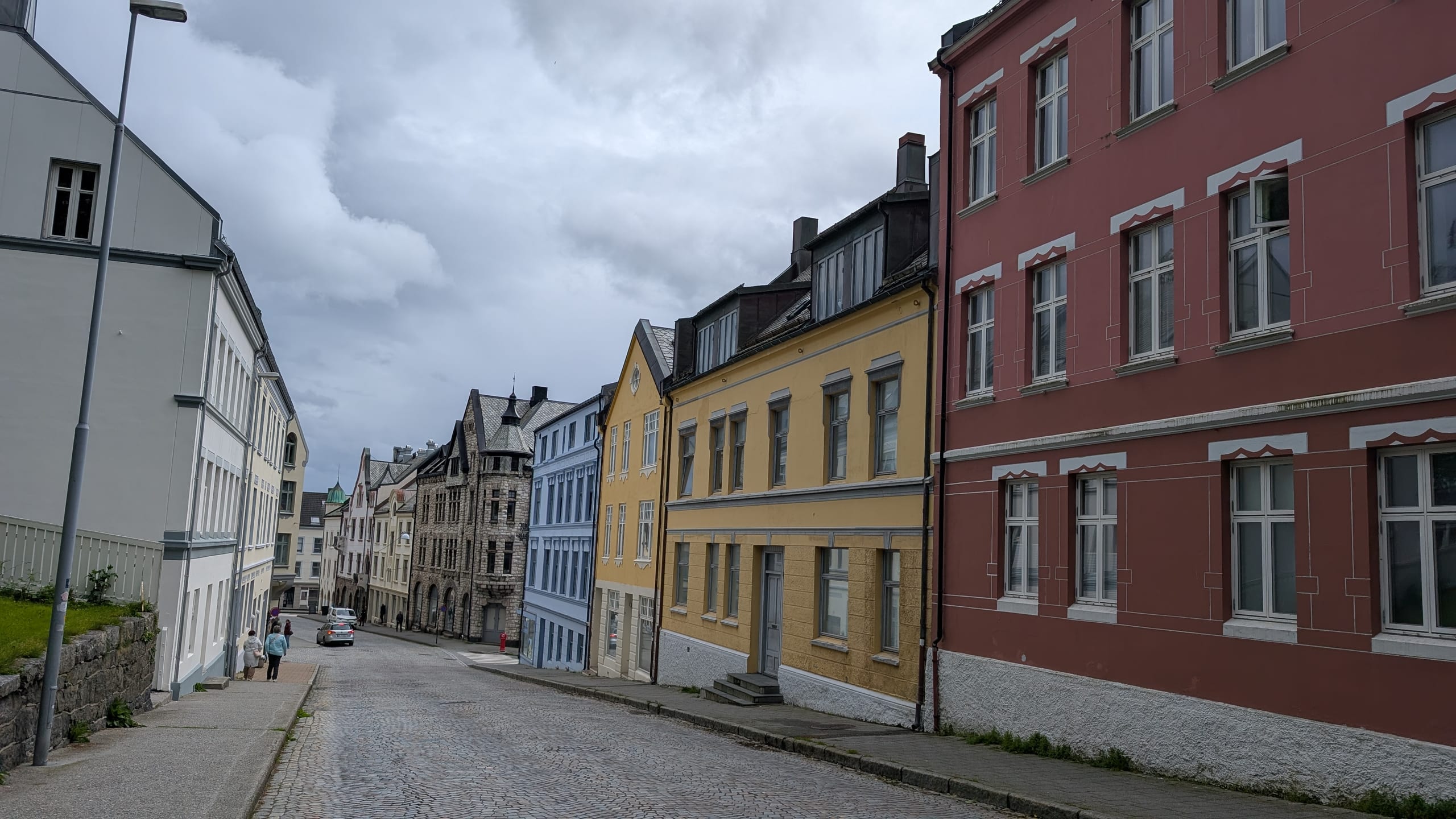
The next day the same streets looked almost calm: sloping cobbles, terracotta and yellow facades, the Jugendstil details that make Ålesund feel rebuilt on purpose rather than grown by accident. We were happy to walk them slowly.
What I am actually saying
What mattered that night was simple: the jacket came from someone important to me, we still had time on the clock, three friends in the car were willing to turn around with me, and a man in Måløy who barely knew my name treated a forgotten coat like it was worth staying late for.
If you ever eat at Pera Restaurant and he is working, tip well, say thanks, and count your layers before you leave. The pizzas are good. The rescue mission is optional, but it makes for a better story than the sensible alternative, and it taught me something small I keep relearning anyway: most of the kindness that saves a trip comes from people who did not have to bother, and from the friends who say yes when turning around would be easier.
More nights that went sideways in the journal.