On the night of 23 January 1904, a lamp tipped over in a fish-drying loft. Sixteen hours later almost the entire wooden town was ash. Ten thousand people stood in the snow watching their homes burn. Kaiser Wilhelm II sent aid. Young Norwegian architects trained in Germany came home and rebuilt the harbour in Jugendstil - Scandinavia’s Art Nouveau - with spires, bay windows, and pastel facades planned as one streetscape. That fire is why Ålesund looks like nowhere else on this coast.
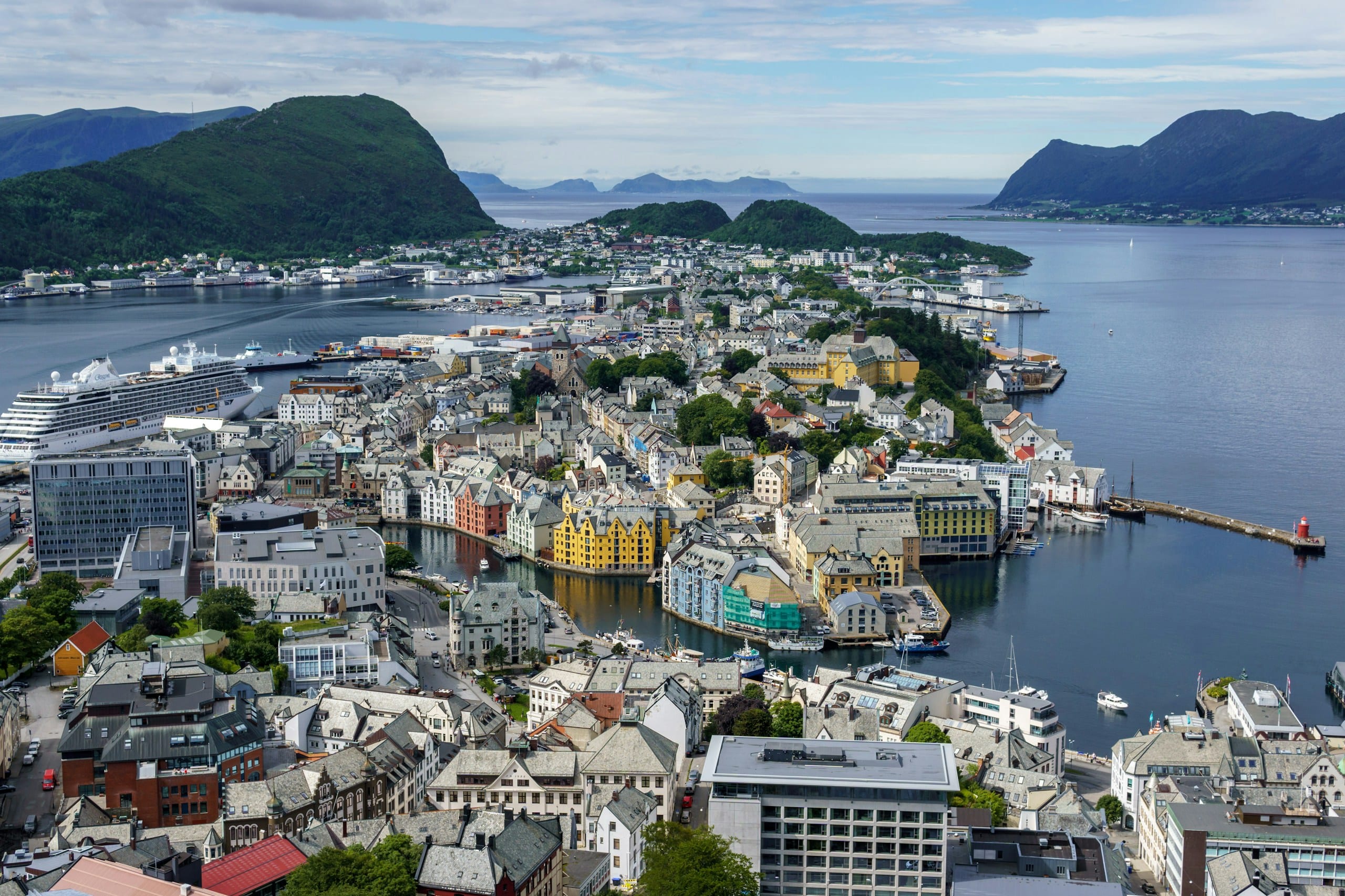
From the top of Aksla you see what most cruise passengers miss. The town sits on low islands between dark water and green mountains, turrets and pastel roofs packed along the harbour, and often a ship parked at the dock like a floating hotel. Most passengers get four hours ashore - enough for a sweater, a viewpoint photo, and a ferry onward to Geiranger. That is not enough for a town that was rebuilt on purpose. Bergen is the bigger west-coast city with the same cruise-clock problem; Ålesund is the one that still fits in a walk.
About 50,000 people live across Aspøy, Nørvøy, and Heissa. A working harbour sits on one side; the Brosundet canal cuts through the centre. Stone and brick replaced the old timber. Dragon heads, floral reliefs, and curved lintels sit over ordinary shops and flats. The tourist loop is Apotekergata and the canal. The useful version of town is four blocks wider: delivery vans, supermarket breakfasts, high-vis jackets heading to the boats.
Read the streets at walking speed
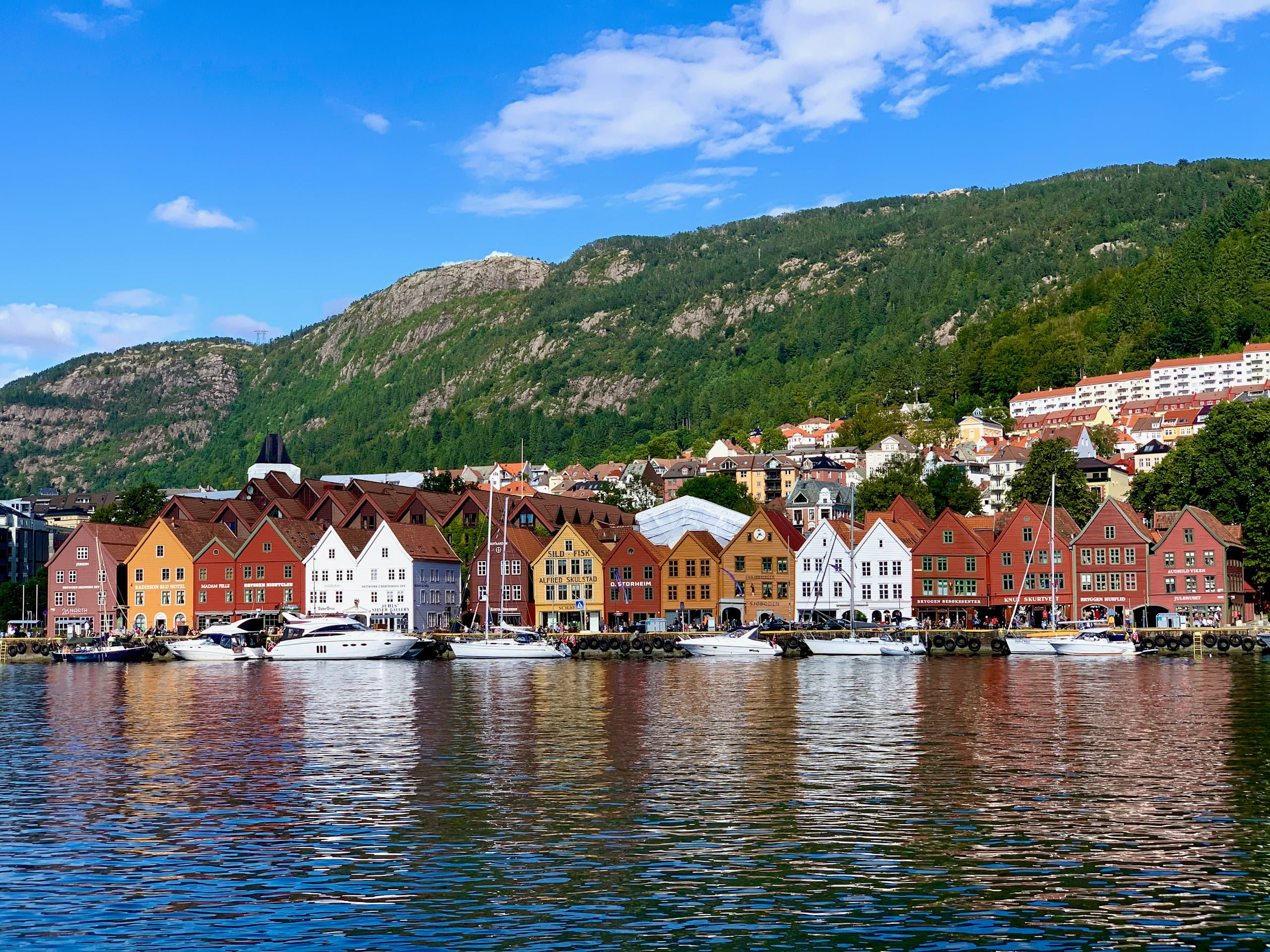
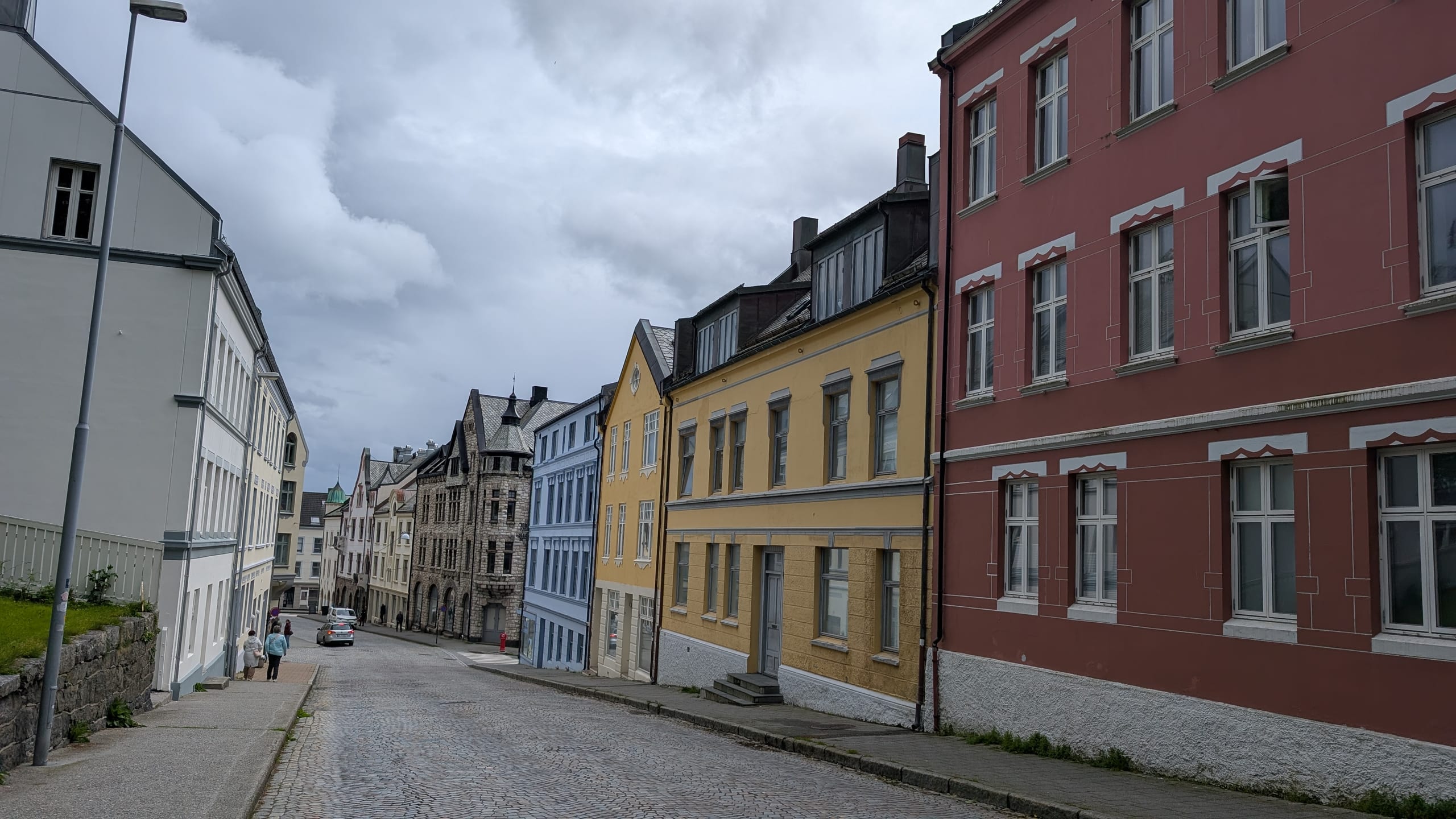
The sloping cobbled streets above the harbour are the show. Terracotta next to mustard yellow next to pale blue, white window frames with scalloped lintels, a grey corner turret catching the weather. On a grey morning - and most mornings here are grey - the colours still hold.
Ship days fill the centre by late morning with people on a ninety-minute clock. Walk the Jugendstil blocks first thing, then drift a few streets uphill when the pier crowds arrive. The sidewalk opens again almost immediately.
The Jugendstilsenteret in the old Swan Pharmacy is the one museum that earns a hard slot. Fifteen minutes inside explains why every cornice in town looks related. Then get back outside. The exhibition is useful. The streets are the reason you stayed.
Brosundet after the usual photo
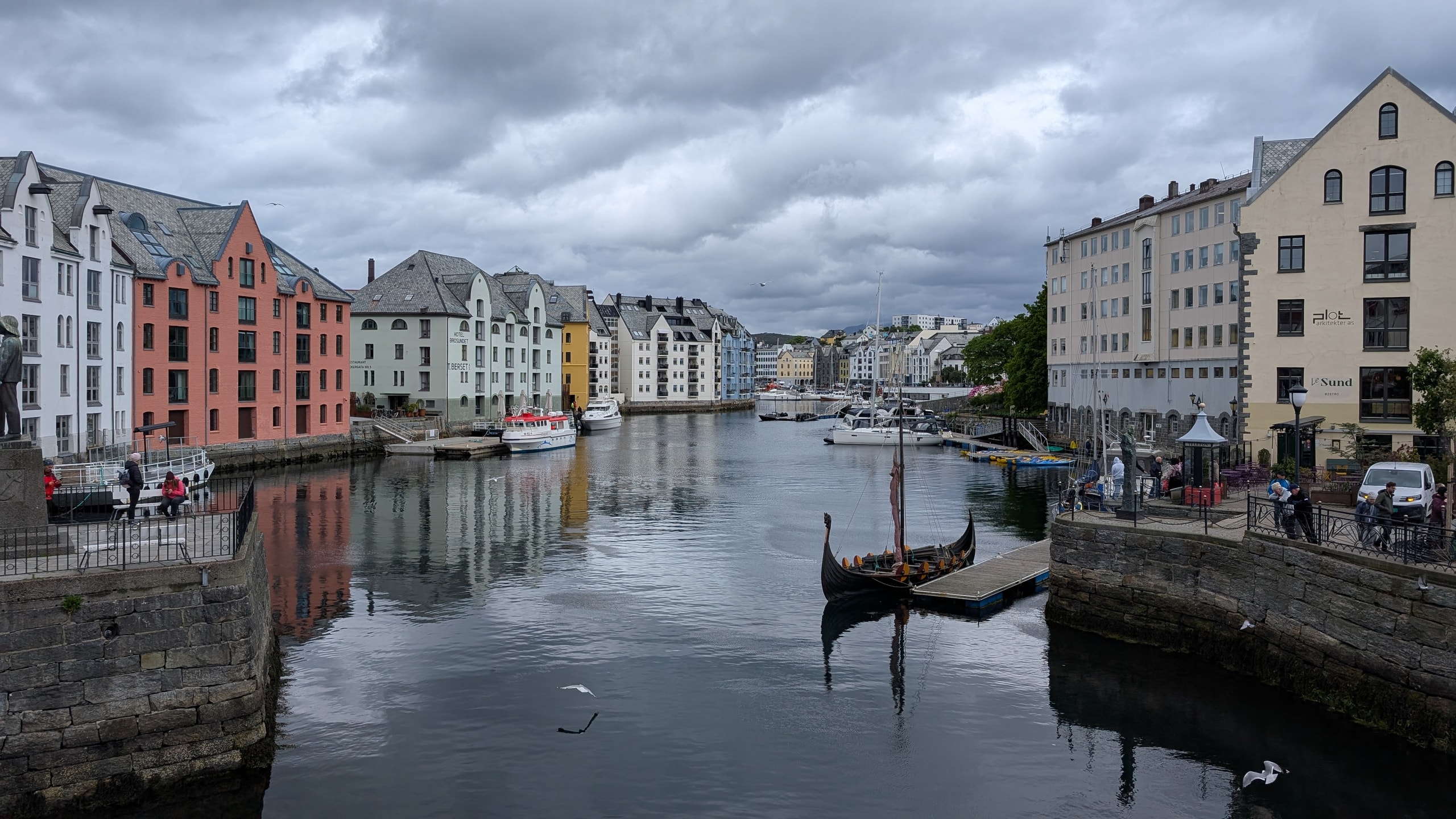
Brosundet is the narrow canal through the centre - stone quays, boats rafted along both sides, facades mirrored in dark water when the wind drops. Peach, white, and sage green gables stack against the green hill behind. Walk both banks. Cross the bridges. Sit once and look without taking a photo.
Fish soup at a harbour café runs about $22 with bread. Look for rooms where locals also eat, not only tables facing the pier. Sit-down fish dinners further from the dock run $35-55. Supermarket breakfasts keep the mornings sane.
The whole town burned in a night. What replaced it is the most deliberate streetscape in Norway - and most visitors never leave the cruise shuttle loop.
Climb the 418 steps when the cloud might lift
Aksla rises behind the harbour. Fjellstua sits at the top. You can drive, or climb the Town Steps - 418 of them, painted municipal red, starting near the town park. The climb sorts the crowd. Cruise passengers in the wrong shoes turn back around step sixty.
At the top the layout finally makes sense: islands, harbour mouth, breakwater with its small lighthouse, mountains behind with snow that can linger into May. On a clear day the Sunnmøre peaks stack up like a second coast. On a normal day cloud sheets in off the Norwegian Sea, erases the view for twenty minutes, then lifts enough to show the spires again. Locals talk about 220-odd wet days a year - believe them. Pack layers for damp cold. Coffee at Fjellstua runs about $6.
Climb twice if you have the nights: once in grey light, once when a break opens. The second time is rarely the same city.
Runde for the coast; Geiranger only if you need that one fjord
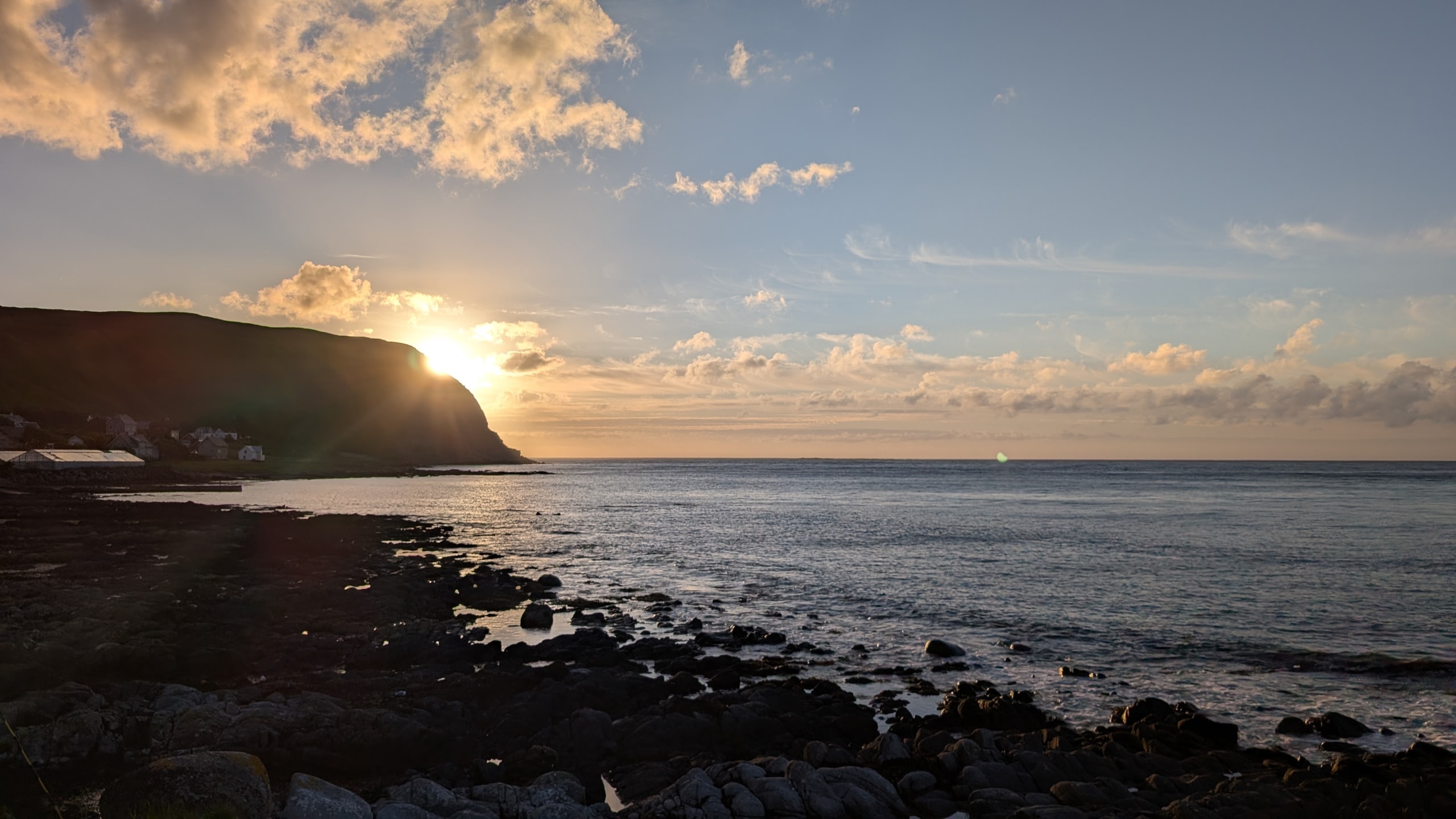
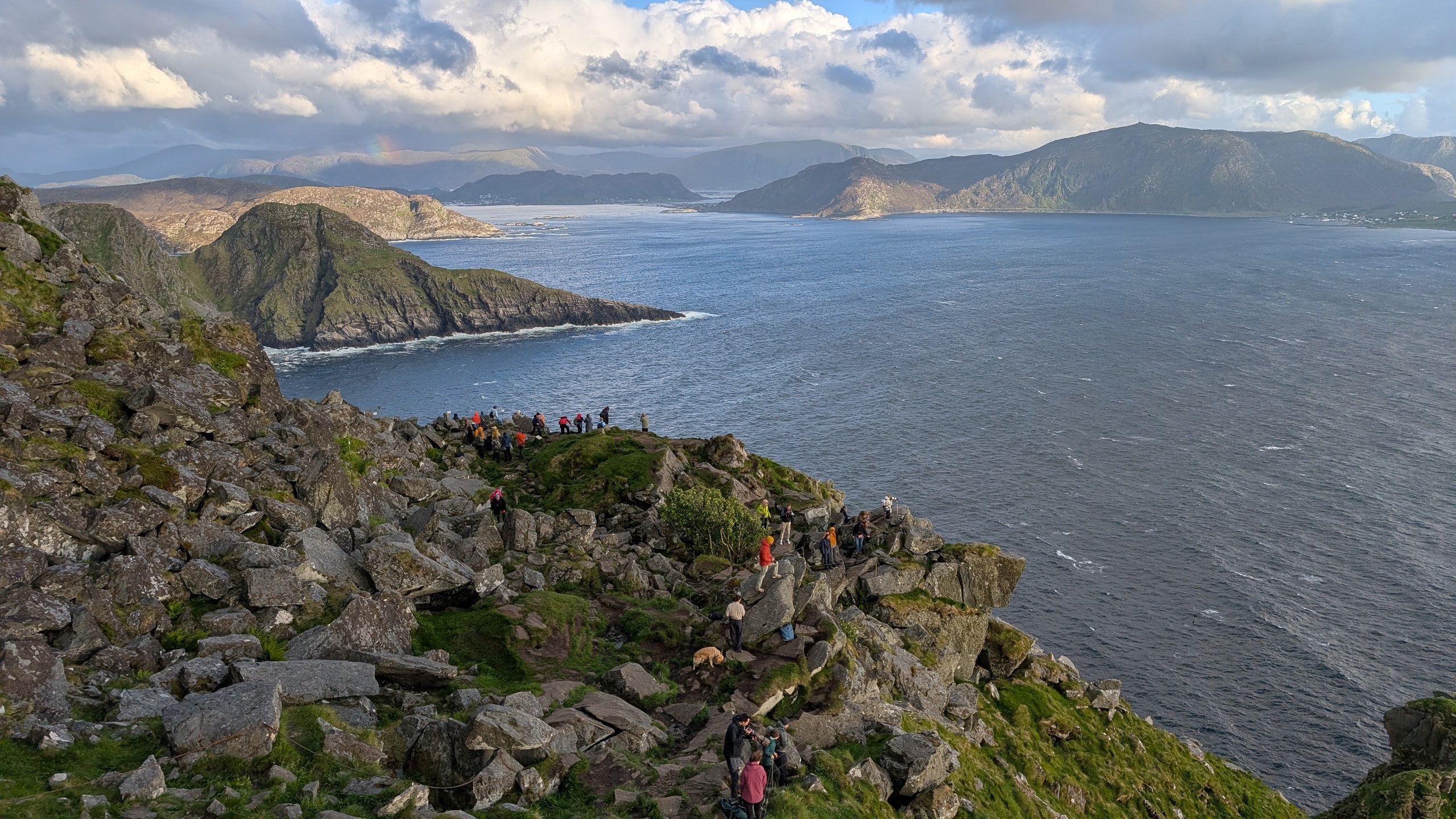
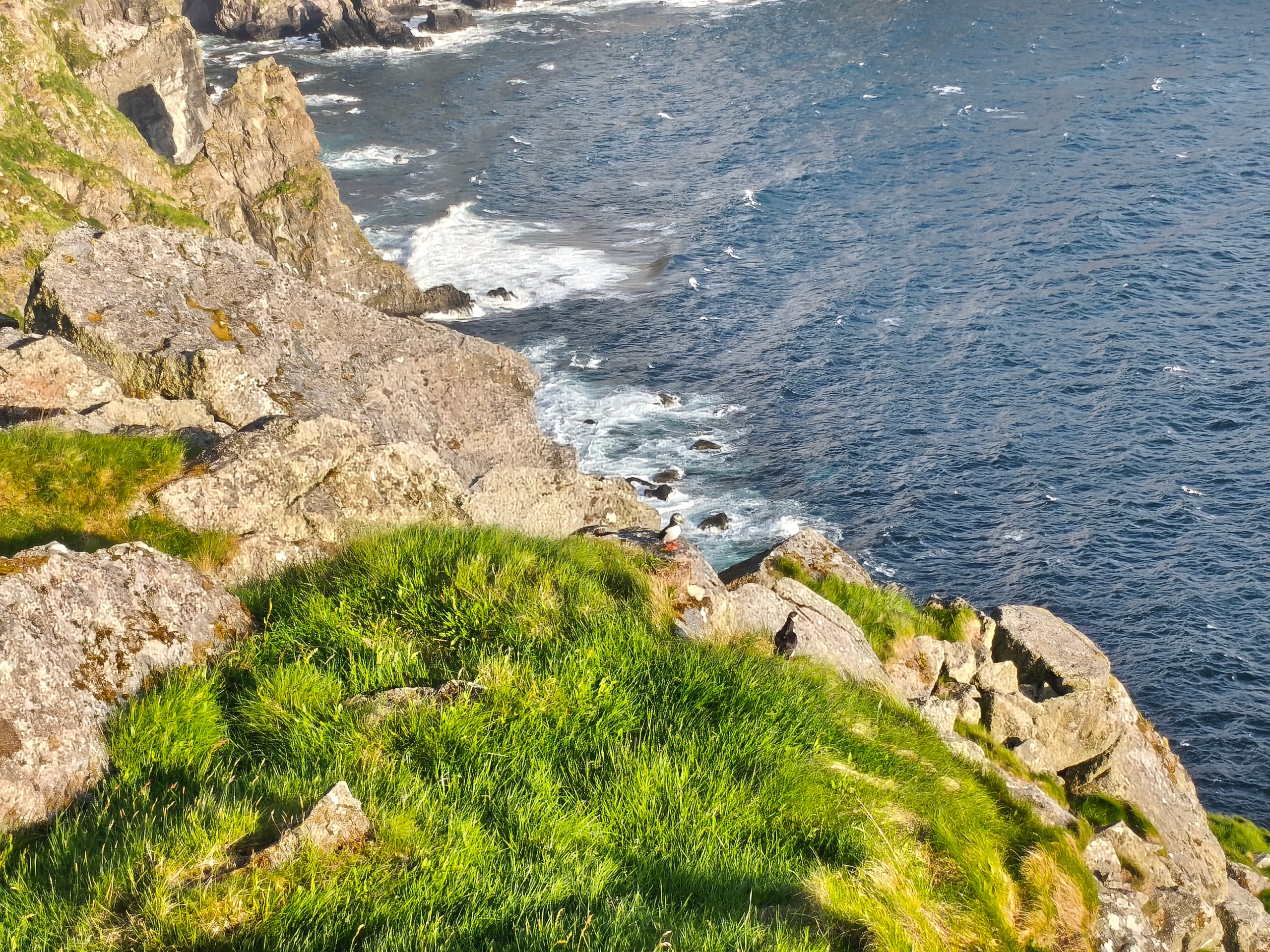
About an hour south by car, Runde is the day trip that matches what this coast actually feels like. Bird cliffs drop into Atlantic swell. Green slopes hold onto grey rock. On a good June afternoon you can stand above the water with hikers along the ridge, a rainbow hanging over the islands, and puffins on the rocks below.
Bring binoculars and a rain layer. Nesting season runs roughly April through August; June is reliable if the wind cooperates. Trails are exposed. Fog and sun can trade places in the same hour. Pair Runde with a late return so you still get an evening walk after the tenders leave.
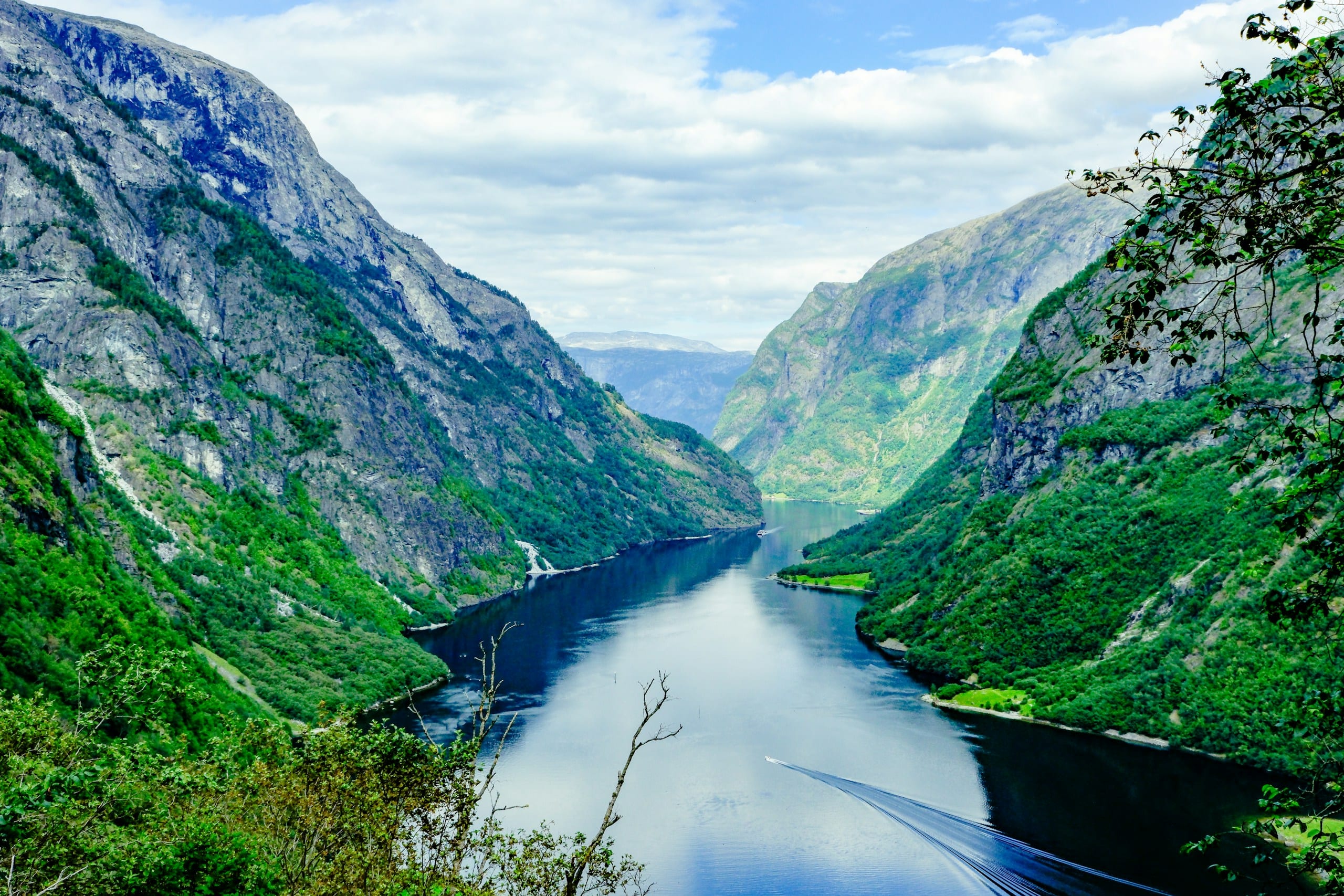
Geirangerfjord is the classic ferry day - via Hellesylt, roughly $55-75 depending on season. Sheer walls, waterfalls that turn to spray before they hit the water. It earns the reputation. It is also crowded in July and August, with tour buses at every viewpoint and a village that exists largely to sell magnets. Go once if you have never seen a fjord like that; prefer a weekday in late spring or early autumn, and book ahead. Hjørundfjord is the quieter repeatable move - same alpine-meets-water geometry, fewer crowds. The ferry-chase journal from Måløy toward Ålesund is what the coastal hop looks like when the schedule bites back.
Atlantic Sea Park on Tueneset is the rain-day backup - underwater tunnels, puffins, seal pool - about $35 for an adult. Useful with kids. On a dry day, go to Runde instead.
Practical Ålesund: nights, money, ships
Norway is expensive everywhere. Ålesund does not get a discount for being smaller than Oslo.
- Decent central hotel: $150-220 a night in summer, less in the shoulders
- Hostels and guesthouses: exist, but book early - the city fills with the cruise calendar from May through September
- Daily mid-range once lodging is set: plan $150-230, same west-coast math as Bergen
Long light arrives in late spring, before the thickest cruise calendar. High summer is green and busy at the pier. Early autumn thins the ships and puts colour on the lower slopes. Weather stays wet and changeable in every season - pack for damp cold, not for a beach week.
On a busy day three or four large ships dock at once, and the centre clogs through the afternoon. Sleep on Aspøy or Nørvøy near Brosundet - harbour-front warehouses cost more; guesthouses uphill are quieter and still walkable. A calm day here looks like: Jugendstil streets while the town is still waking, Aksla or the Art Nouveau Centre mid-morning, Runde or a fjord as a deliberate afternoon, harbour walk after the tenders leave.
Two nights is the floor. Three lets you climb Aksla twice in different weather, walk the canal without rushing, and take Runde or a fjord day without turning the rest of the trip into recovery. Country-wide costs and ferry reality live in 10 things to know before visiting Norway.
Who Ålesund is for
Stay if you like walking architecture, harbour towns that still smell like boats, and a coast day that involves cliffs and binoculars. A four-hour cruise stop will leave you with a sweater and a photo from Aksla’s lower steps. Geiranger alone is a thin reason to come - the rebuilt streets and Runde are the stronger ones.