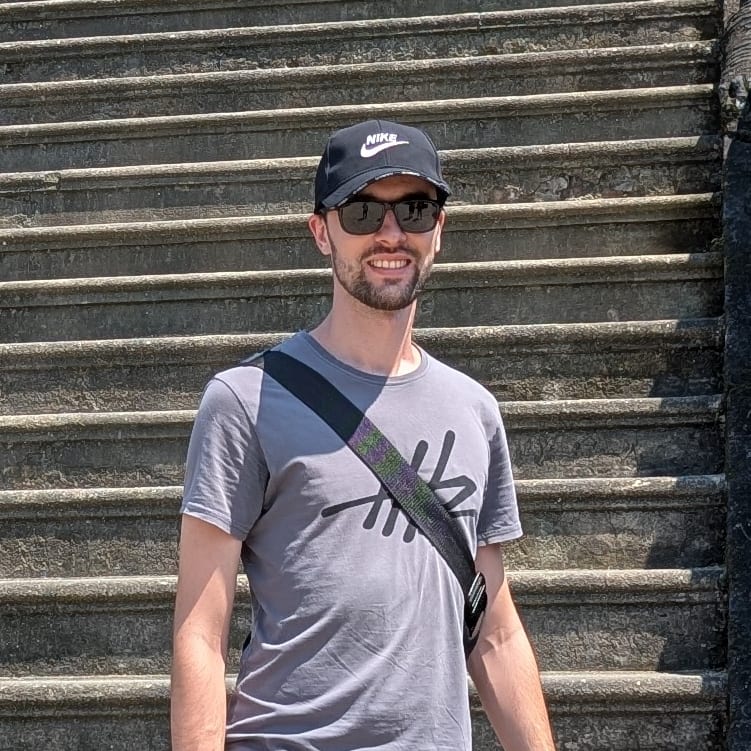
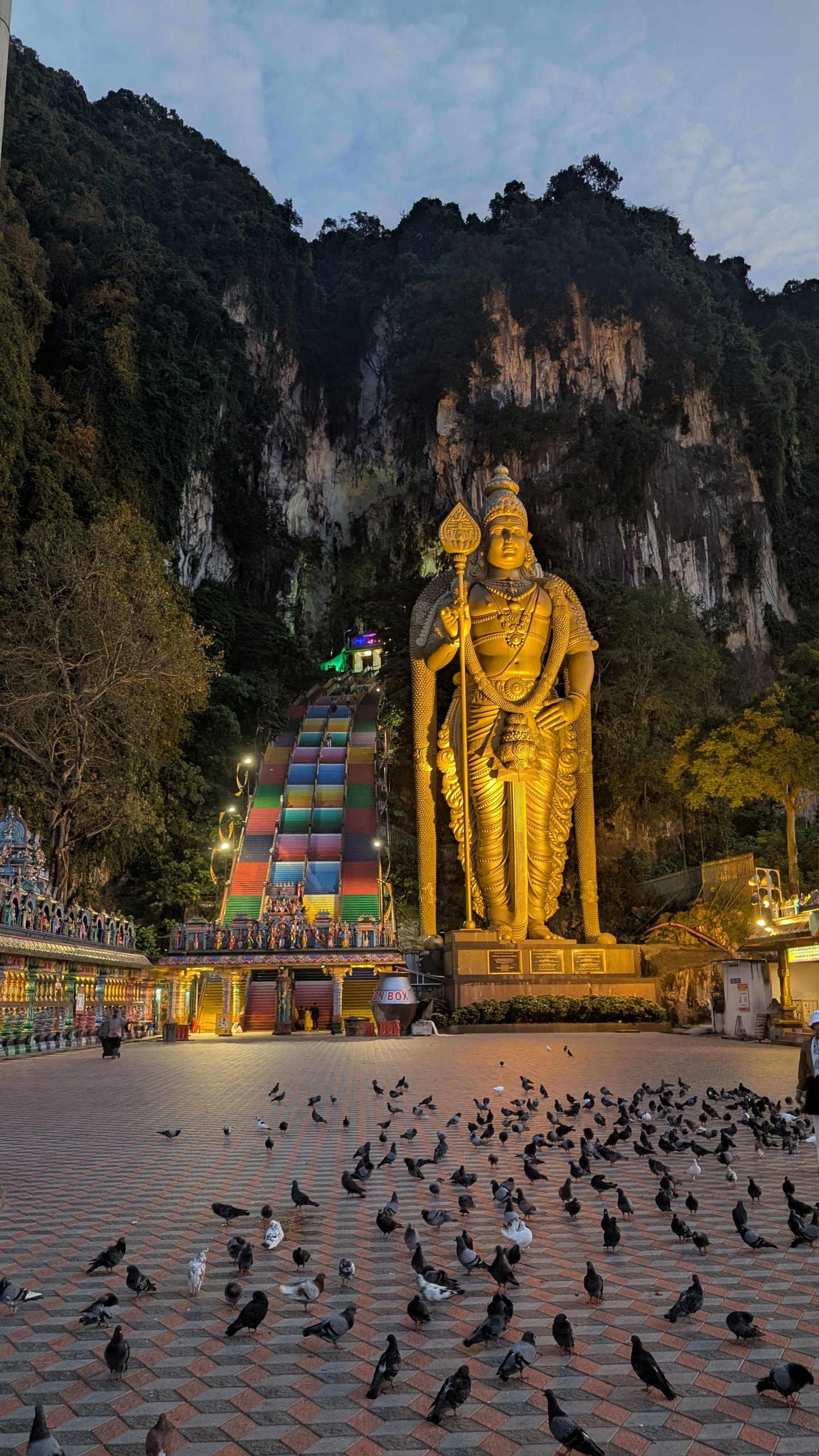
At ten past seven the plaza below Batu Caves is empty except for pigeons. The 272 stairs are still lit, each flight painted a different colour, and the gold statue of Lord Murugan stands 42.7 metres tall against a limestone cliff that hasn't caught the sun yet. An hour later the tour buses pull in, the heat comes up off the tiles, and the same stairs hold a slow line of people stopping for photos every ten steps.
That hour is the best way to understand Kuala Lumpur. Malaysia's capital is hot, spread out and built around highways, and from about 3 p.m. most days it is heat, thunderstorms and traffic. Before lunch it is a very good city. Do the sights in the morning, spend the afternoon indoors or by a pool, and go back out after dark to eat.
The name means "muddy confluence," after the spot where the Klang and Gombak rivers meet. Most visitors give KL one night between flights. Three nights is right: Batu Caves, the colonial core, the twin towers and a Chinese temple, with the afternoons free. It makes a good first stop before four slow days in George Town on Penang, the better food city but a much smaller one.
Batu Caves: go at 7 a.m., leave by 9
Batu Caves is a Hindu temple complex inside a limestone hill 13 km north of the centre. Entry to the main Temple Cave is free. The Murugan statue went up in 2006 and the stairs were painted in 2018.
The climb takes about ten minutes. At the top, the Temple Cave opens into a chamber close to 100 metres high, with a second shrine at the back under a gap in the roof. Early on, the lamps are still lit and the floor is wet from hosing.
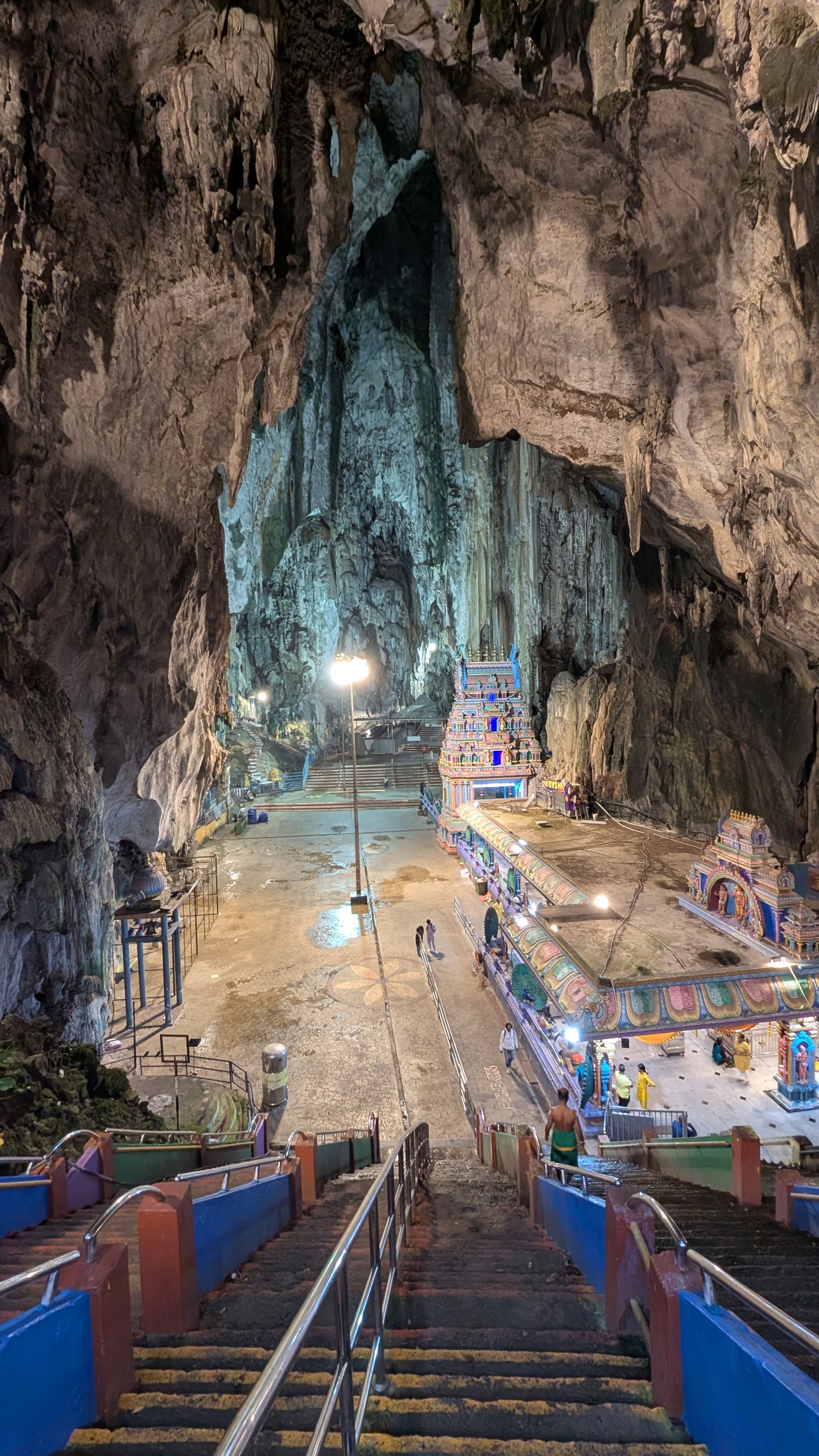
A few things to know before you go:
- Dress code. Knees and shoulders covered. Sarongs are for hire at the foot of the stairs for a few ringgit.
- Monkeys. Long-tailed macaques work the stairs. Keep food and plastic bags out of sight.
- Getting there. A Grab from Bukit Bintang costs RM25-35 ($6-8) and takes about 25 minutes before rush hour. The KTM Komuter train from KL Sentral costs under RM3 ($0.70) and takes about 35 minutes.
- Thaipusam. The festival, in late January or February, brings more than a million pilgrims. Go on purpose or avoid it.
Skip the paid side caves at the foot of the hill if time is short.
Merdeka Square and the old colonial core
The oldest part of the city sits around Dataran Merdeka, a long lawn where the British flag came down at midnight on 31 August 1957. Along Jalan Raja on the east side runs a row of 1890s government buildings in red brick, with Moorish arches and dark domes. The largest is the Sultan Abdul Samad Building, with a 41-metre clock tower.
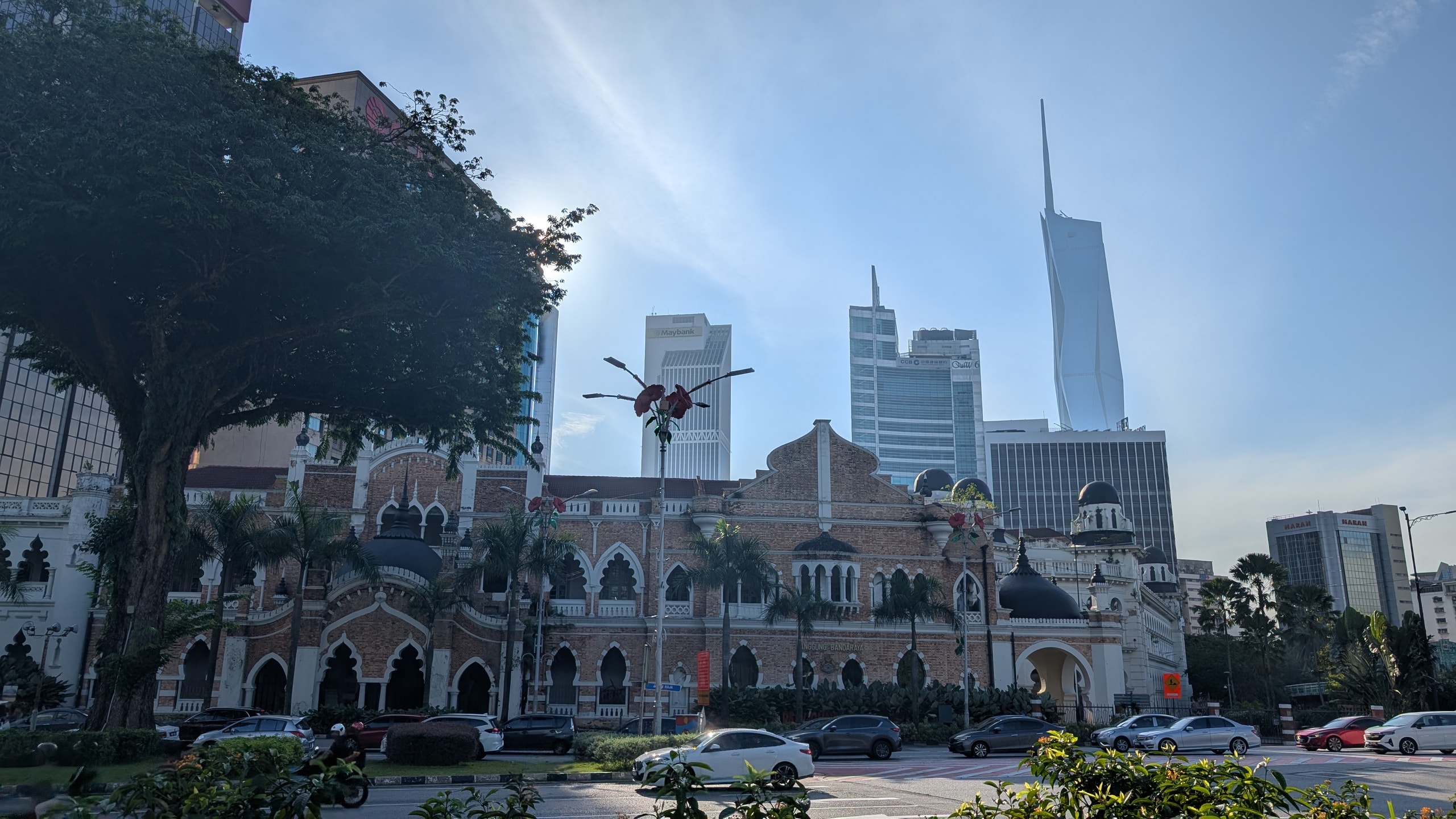
See it on foot as one early loop. From the square, walk five minutes north to Masjid Jamek, the 1909 mosque on the point where the two rivers meet. After dark, blue lights and mist run along the rebuilt riverbanks. Then head south to Central Market, an art deco hall full of batik, and on to Petaling Street in Chinatown.
Petaling Street's covered market mostly sells fake watches. The streets around it are better: Sri Mahamariamman Temple, old coffee shops, shophouses with the shutters half up. The loop is about 3 km, two to three hours with stops. Start by 8:30. By 11 the square has no shade at all.
Merdeka 118: the second-tallest building in the world
A short walk south of Chinatown stands Merdeka 118, finished in 2023 at 678.9 metres. Only the Burj Khalifa in Dubai is taller. It was built right beside Stadium Merdeka, the open-air stadium where Tunku Abdul Rahman read Malaysia's declaration of independence the morning after the flag came down.
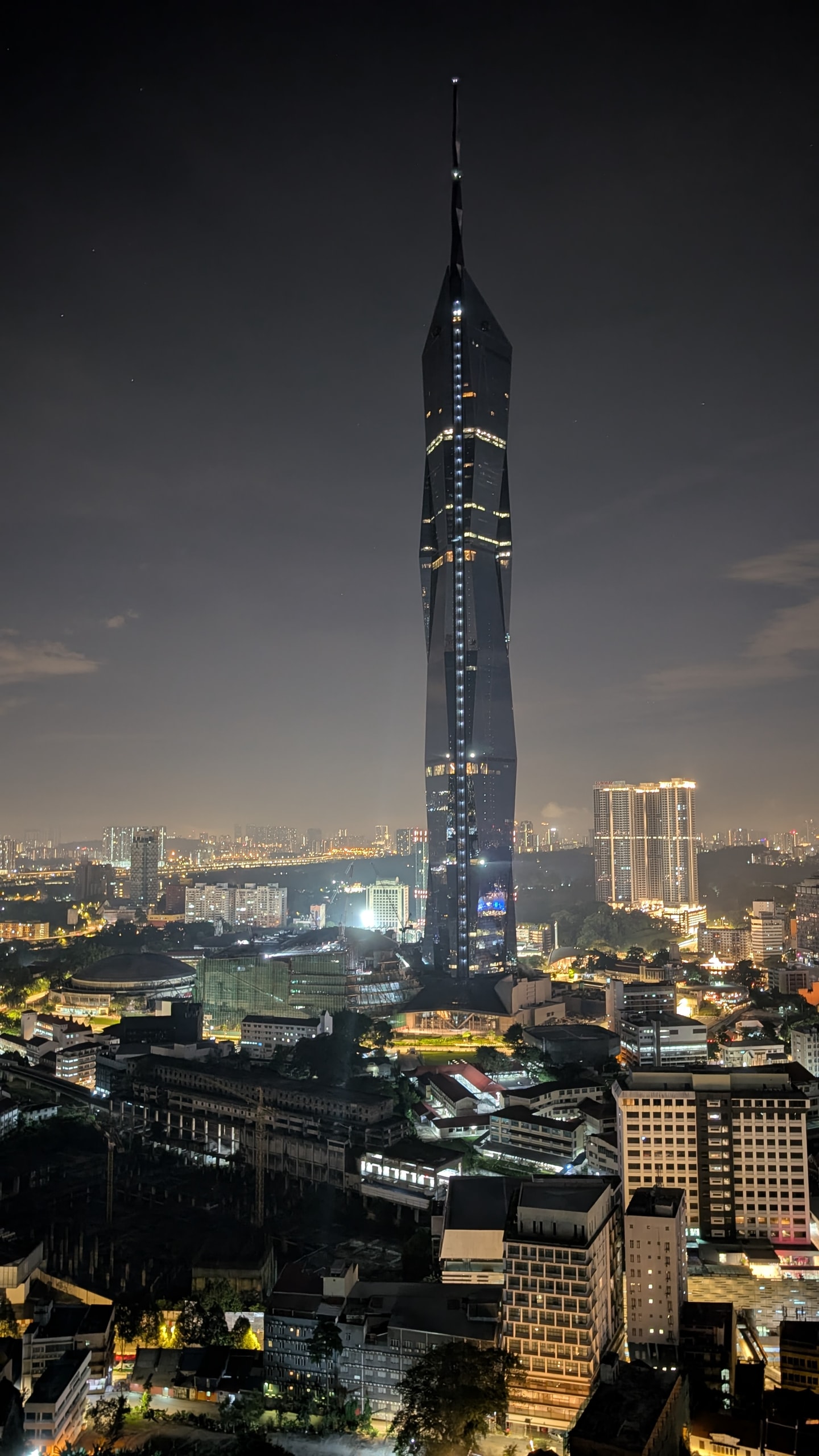
It looks best at night, when a strip of lights runs up its spine. Check whether the observation deck is open before planning around it.
Petronas Twin Towers: the park view is free
The Petronas Towers, 452 metres and 88 floors each, were the tallest buildings in the world from 1998 to 2004. They are better to look at than to go up.
Tickets for the 41st-floor skybridge and the 86th-floor deck run about RM100 ($22) for foreign adults, in fixed time slots on the official Petronas Twin Towers site, and weekends sell out. The view is fine, but the building you came to see is the one you're standing in.
Spend the time in KLCC Park instead: 20 free hectares of lawns and a lake at the foot of the towers, laid out by the Brazilian landscape architect Roberto Burle Marx. Walk to the fountain terrace for the straight-up shot, then past the row of Malaysian flags. From 8 p.m. the lake fountain runs short light shows on the hour.
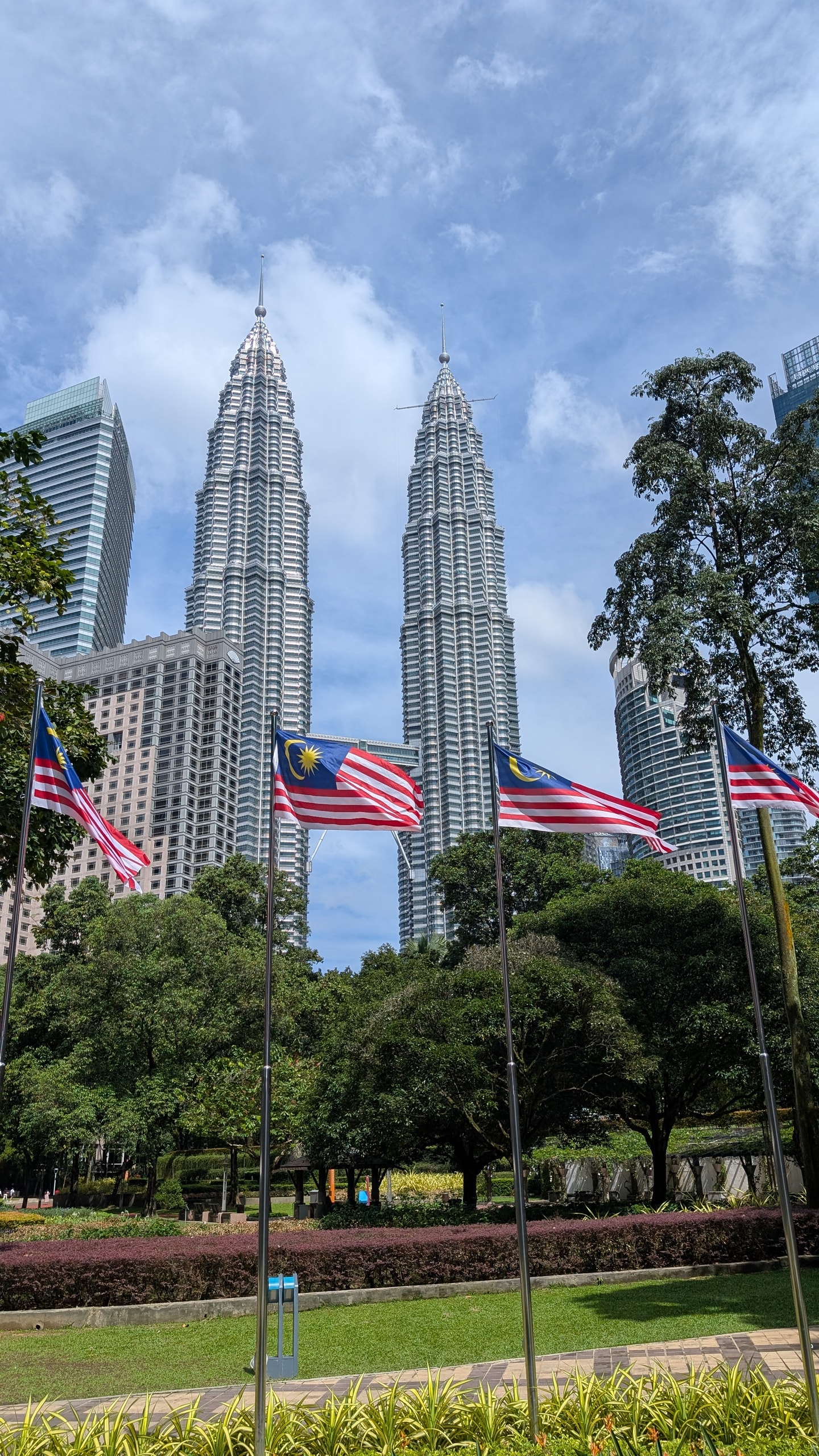
Suria KLCC, the mall in the base of the towers, is where to wait out an afternoon storm. A covered, air-conditioned walkway runs about 1 km from the park to Pavilion in Bukit Bintang and skips the worst road crossings.
Thean Hou Temple and the New Year lanterns
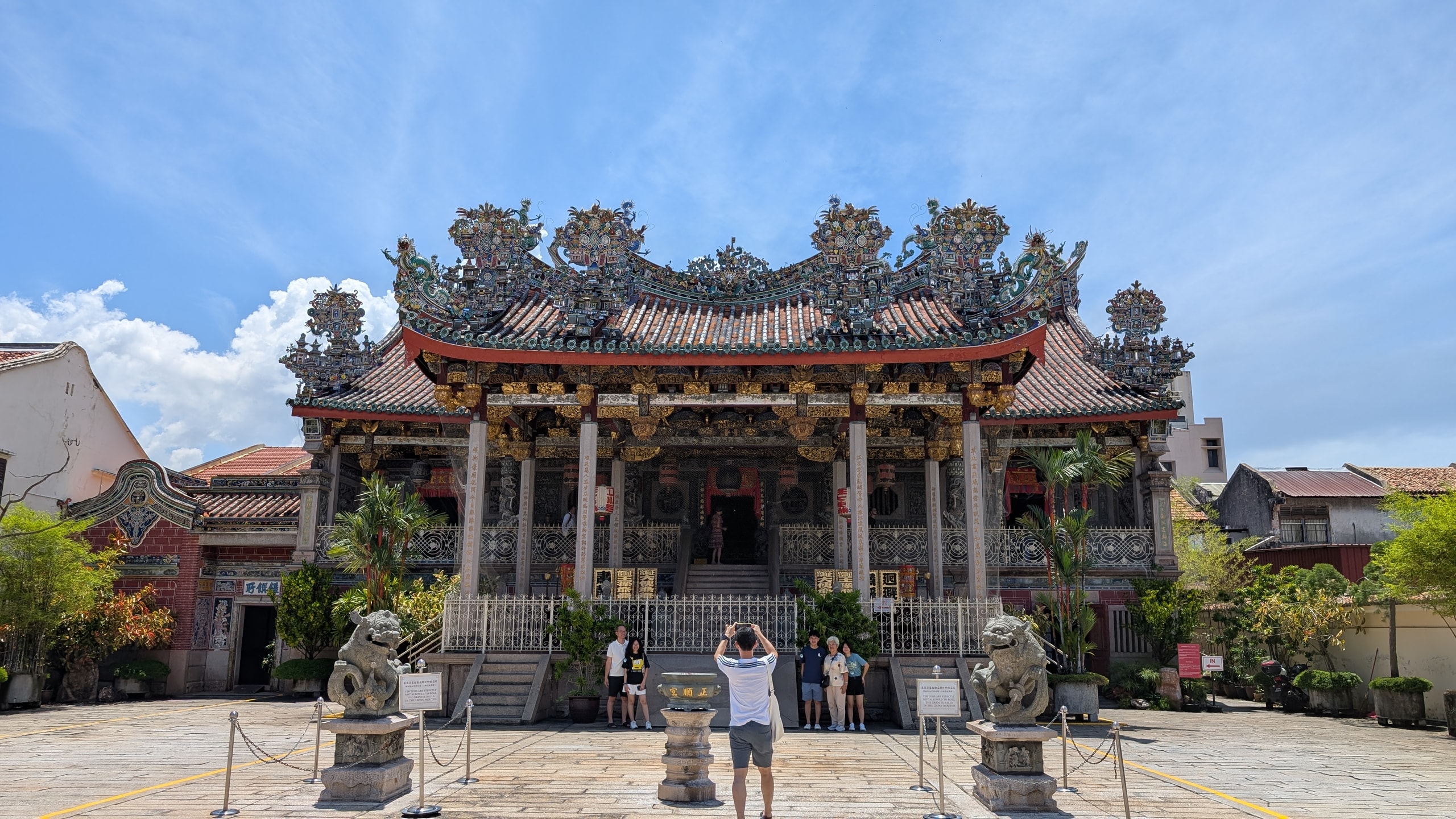
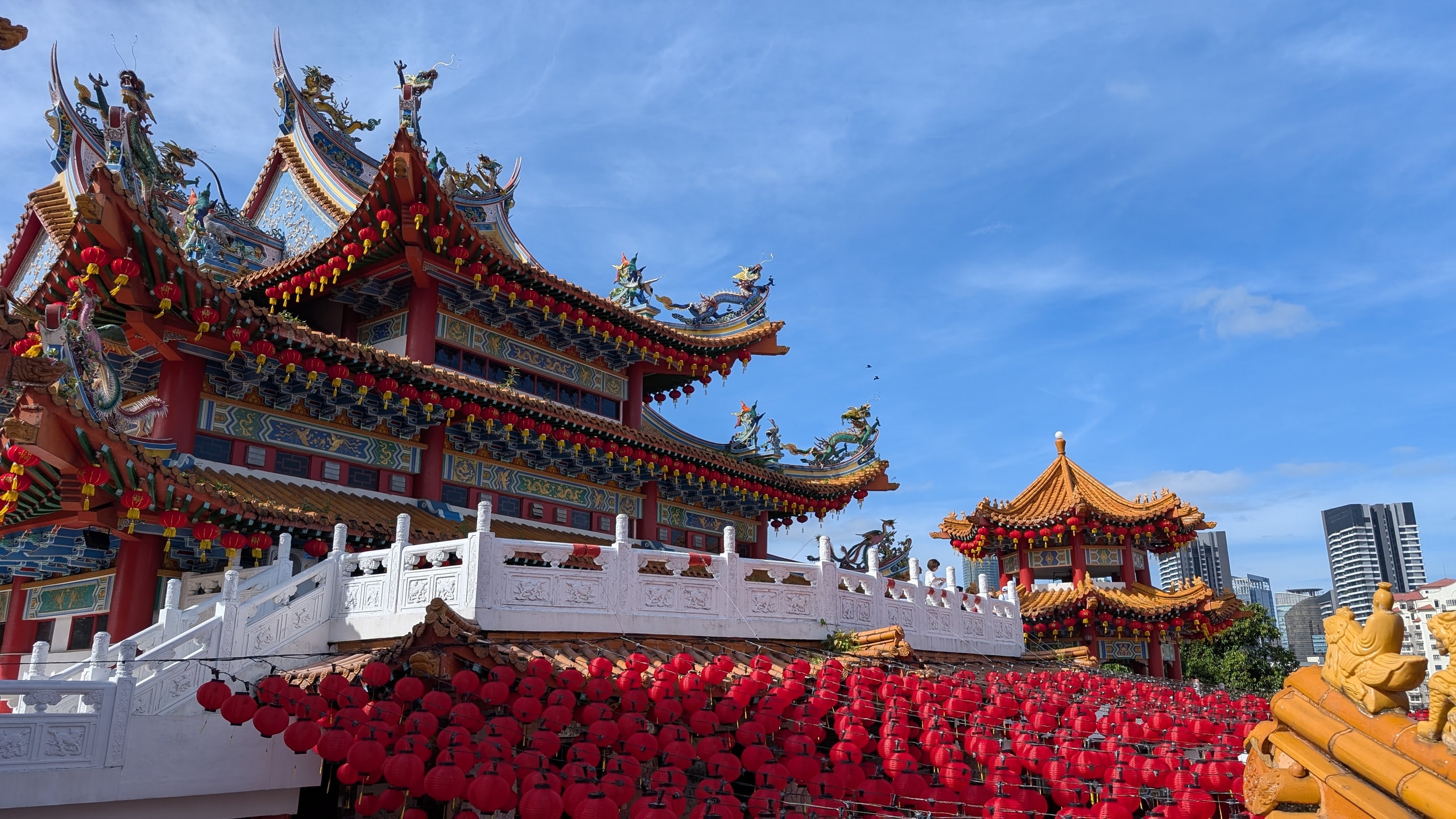
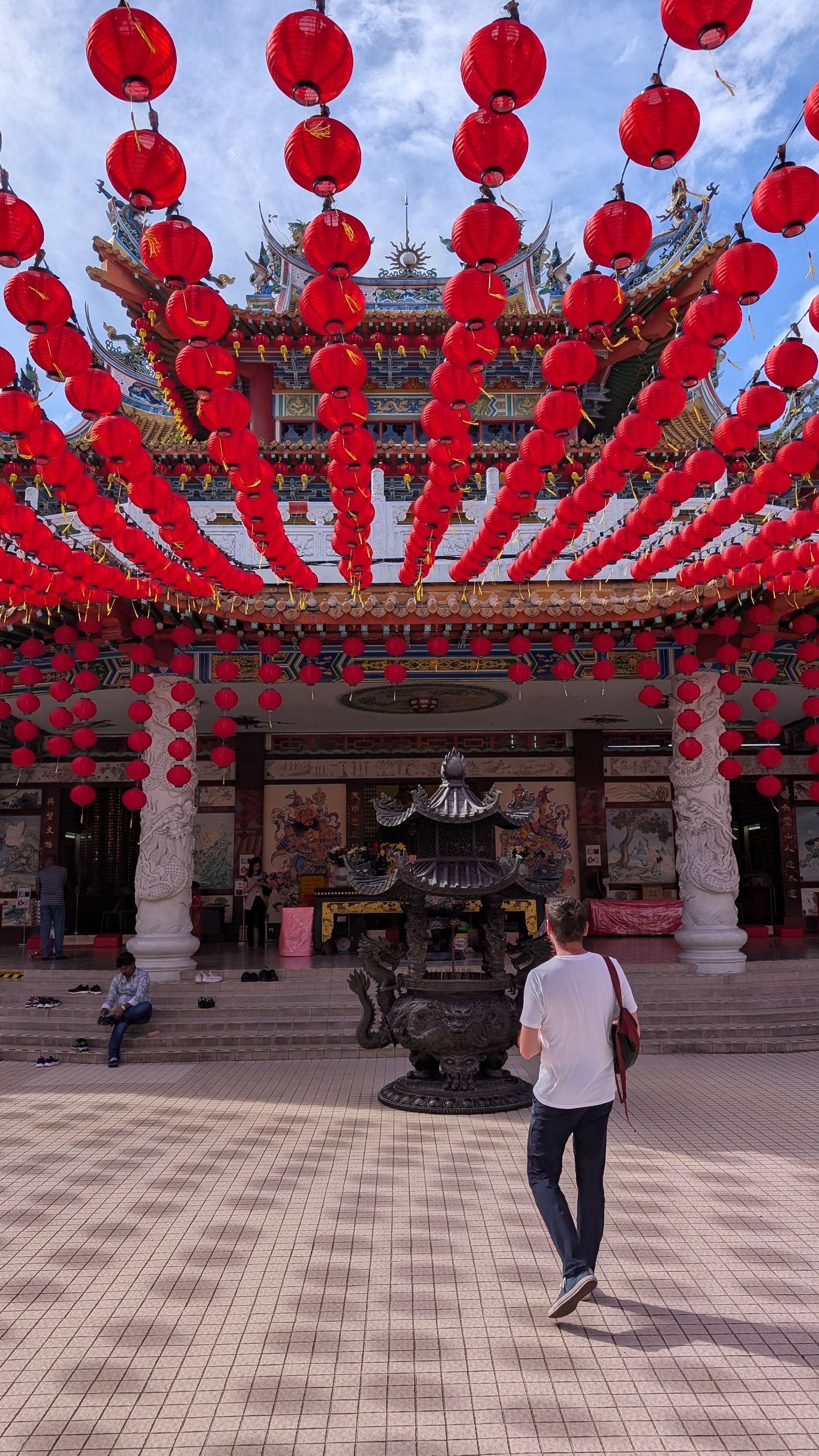
Thean Hou Temple sits on a hill in Robson Heights, about 15 minutes south of the centre by Grab (RM12-18, $3-4). KL's Hainanese community opened it in 1989 for Mazu, the sea goddess, and entry is free. It rises in levels of red pillars, orange roof tiles and dragons along every ridge.
In the weeks before Chinese New Year, thousands of red lanterns go up over the courtyards. About two weeks out, crates of spares still sit in the car park while crews string them, and they stay up until the fifteenth day of the new year. Go on a weekday morning, before the tour buses and wedding photographers. Walk every level, including the upper terrace where the photo at the top of this page was taken, and take your shoes off for the prayer hall.
Over the holiday itself, many KL hawker stalls close for a few days. Singapore over Chinese New Year has the same problem, with more decorations.
Where to eat: Jalan Alor is fine, the mamak is better
KL food is a mix of Malay, Chinese and Indian cooking, and the cheapest meals are often the best ones.
- Mamak restaurants are Indian-Muslim canteens, many open 24 hours. Roti canai with dal costs RM2-4 ($0.50-1) and a teh tarik about RM3. This is breakfast before Batu Caves.
- Nasi lemak is coconut rice with sambal, fried anchovies, peanuts and egg. RM5-12 ($1-3), more with fried chicken.
- Jalan Alor in Bukit Bintang is the famous night food street: grilled chicken wings, satay and plastic tables under neon. It's worth one evening, but prices run well above the same dishes a few streets away, and touts stand in the road with menus.
- Kampung Baru, a Malay neighbourhood of old wooden houses right below the towers, has grilled fish and nasi lemak stalls in the evening, fewer tourists and lower prices.
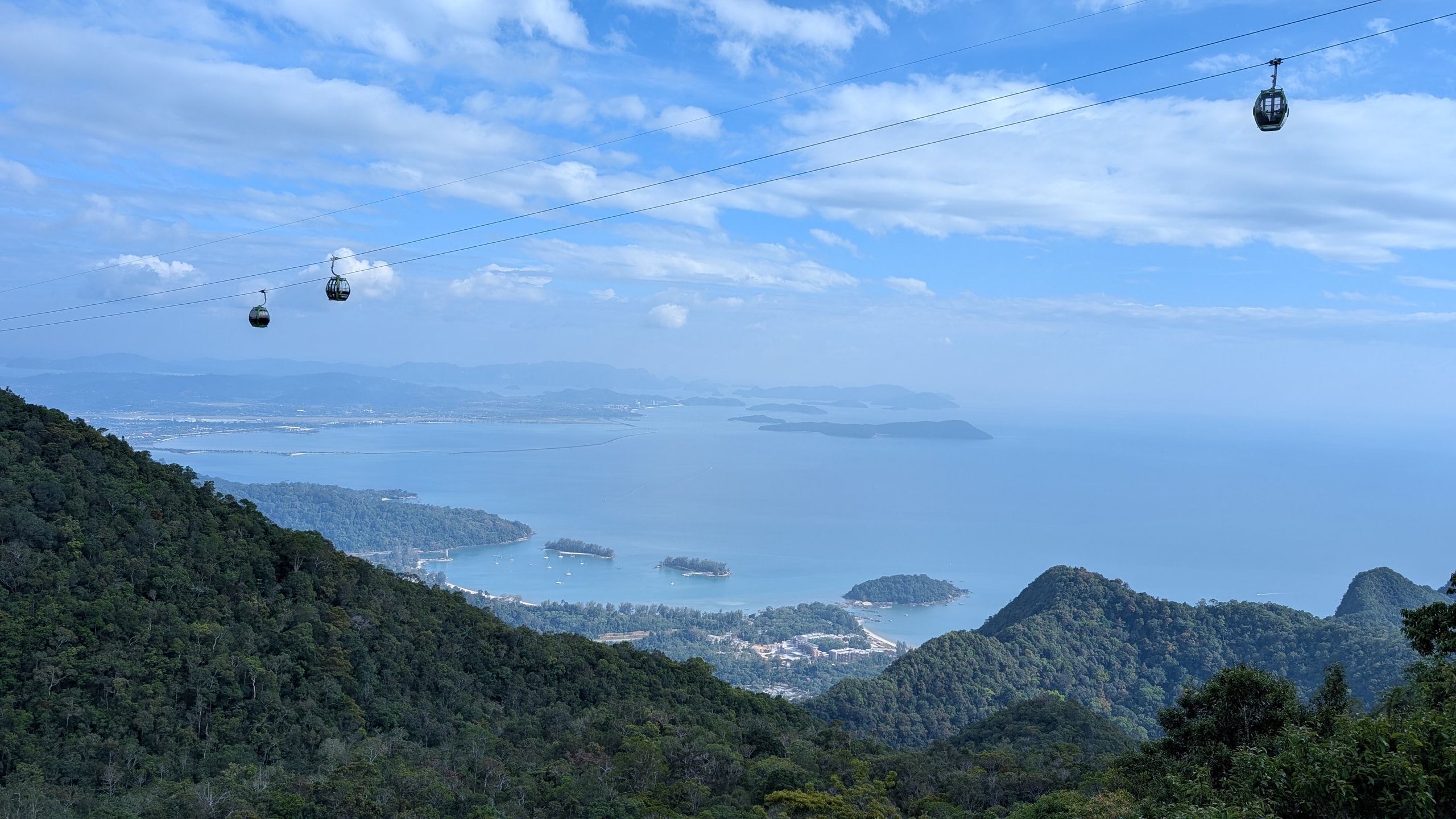
Alcohol is heavily taxed. A beer in a bar costs RM18-30 ($4-7), close to double the beach-bar price on duty-free Langkawi, an hour away by plane.
Where to stay: Bukit Bintang, KLCC or Chinatown
Hotels are good value: a four-star room with a rooftop pool costs $50-90 a night, a hostel dorm $8-15, and the luxury hotels around KLCC start around $150.
- Bukit Bintang is the best base for a first visit: the most food, the monorail, and the walkway to KLCC. It stays loud until late.
- KLCC has the pool hotels with tower views. It is quieter and pricier, with less to eat at street level.
- Chinatown is cheapest and closest to Merdeka Square. Some guesthouses there are grim, so read recent reviews.
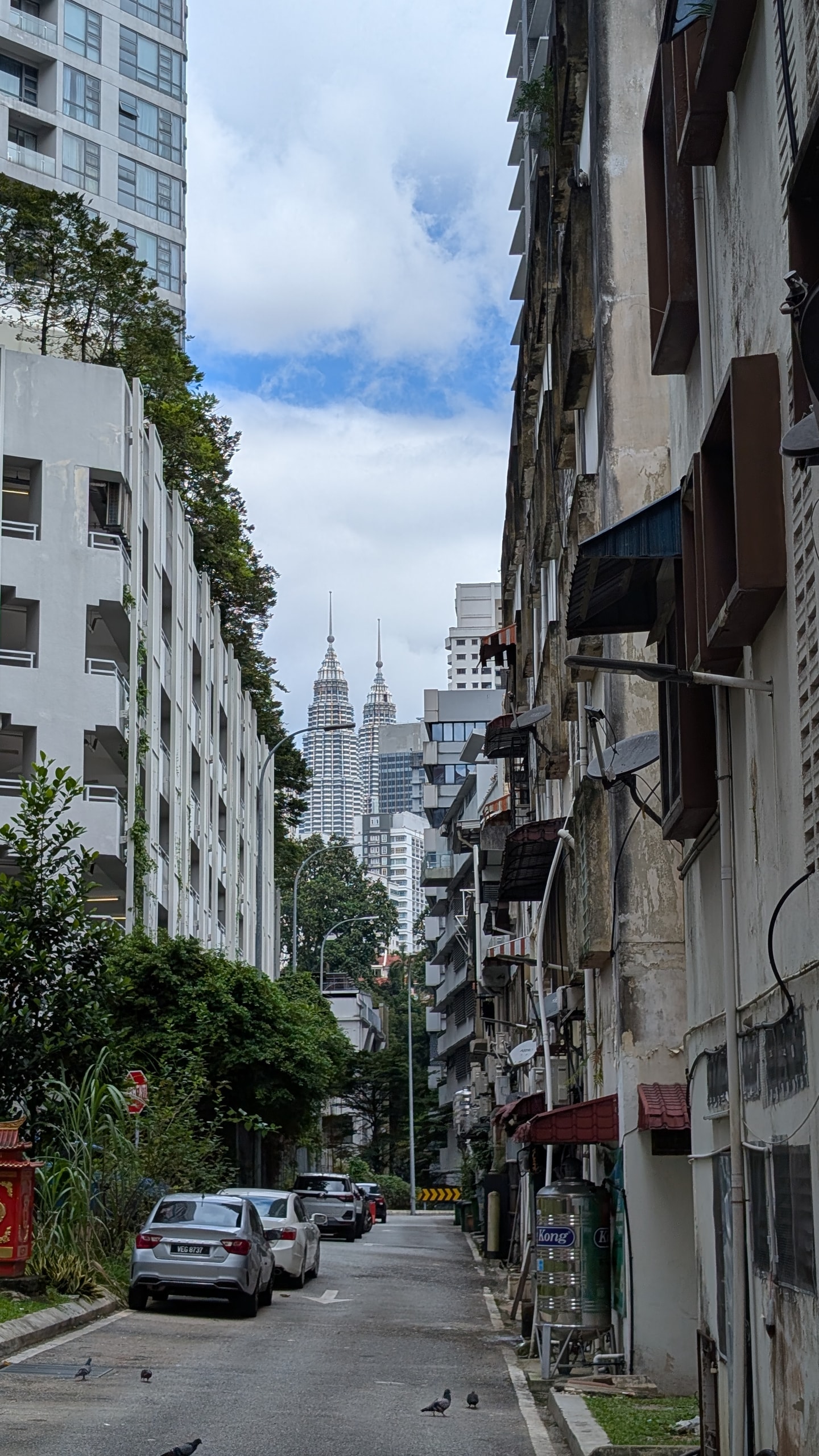
Wherever you stay, walk the streets behind it once. One block off the main road, KL is old shophouses with rusty awnings, cars parked half on the pavement and a glass tower at the end of the lane. That is where you find the RM8 lunch.
Getting around, costs and the weather
Walking between areas is miserable: pavements vanish and highways cut through neighbourhoods. Walk within each area and ride between them.
- From the airport: the KLIA Ekspres train reaches KL Sentral in about 30 minutes for RM55 ($12). A Grab costs RM65-100 ($15-22) and takes an hour or more in traffic.
- In the city: the LRT, MRT and monorail cost RM1-6 ($0.25-1.40) a ride. Buy a Touch 'n Go card at a station. Grab covers the gaps for RM8-20 ($2-4.50) on most trips in the centre.
- Daily budget: $60-100 a person covers a good hotel room shared by two, local food, Grab rides and one paid ticket.
Highs sit at 31-33°C (88-91°F) all year. What changes is the rain: April and October-November are wettest, and January-February and June-July are a little drier. Some years, smoke from fires in Sumatra brings haze in August and September. Whatever the month, expect a clear morning, cloud after lunch and a storm around 4 p.m.
Set the alarm for six, reach Batu Caves before the buses, be back at the hotel pool by 1 p.m., and eat at a plastic table in Kampung Baru at 9. Do that for three days and you have seen Kuala Lumpur properly. The rest of the Malaysia trip is on the Malaysia page.