Chinatown Complex has more than 200 food stalls under one roof. On the second morning of the new year, about thirty are open. The rest carry the same handwritten sign taped to the roller shutter: closed, back on the sixth. The queue at the one chicken rice stall still cooking runs past the drinks fridge and around the corner.
That is Singapore over Chinese New Year, and almost nobody warns you about it. The city that sells itself on cheap, excellent, always-open food takes about five days off. Everything else stays wide open, and the skyline turns red.
Singapore is a country, a city and a working port on one island of roughly 730 square kilometres, small enough to cross by train in an hour. The population is mostly Chinese, with large Malay and Indian communities, and the new year is when all of that shows up on the street at once. It is also the orderly bookend to a scruffier trip through the region, the opposite kind of city to Saigon, where the traffic decides your day.
The week the city turns red
The date moves with the lunar calendar. It fell on 29 January in 2025, and lands on 17 February in 2026 and 6 February in 2027. Two days are public holidays, and the run-up starts about five weeks earlier when New Bridge Road and Eu Tong Sen Street go up in lanterns and a street market fills Pagoda Street with pineapple tarts, zodiac tat and vacuum-packed pork.
The queue outside Lim Chee Guan for bak kwa, sweet grilled pork jerky, runs for hours down the pavement in the last week before the holiday, with staff handing out numbers. It costs around S$70-90 a kilo ($52-67), and people still leave with a full one.
Then the city stops. New Year's Eve is a family reunion dinner, and by the next morning the working half of Singapore has gone home: hawker stalls, coffee shops, barbers, most small independent shops. Malls, hotel restaurants and chains keep normal hours. The small kitchens that make this city worth eating in close for anything from three days to two weeks.
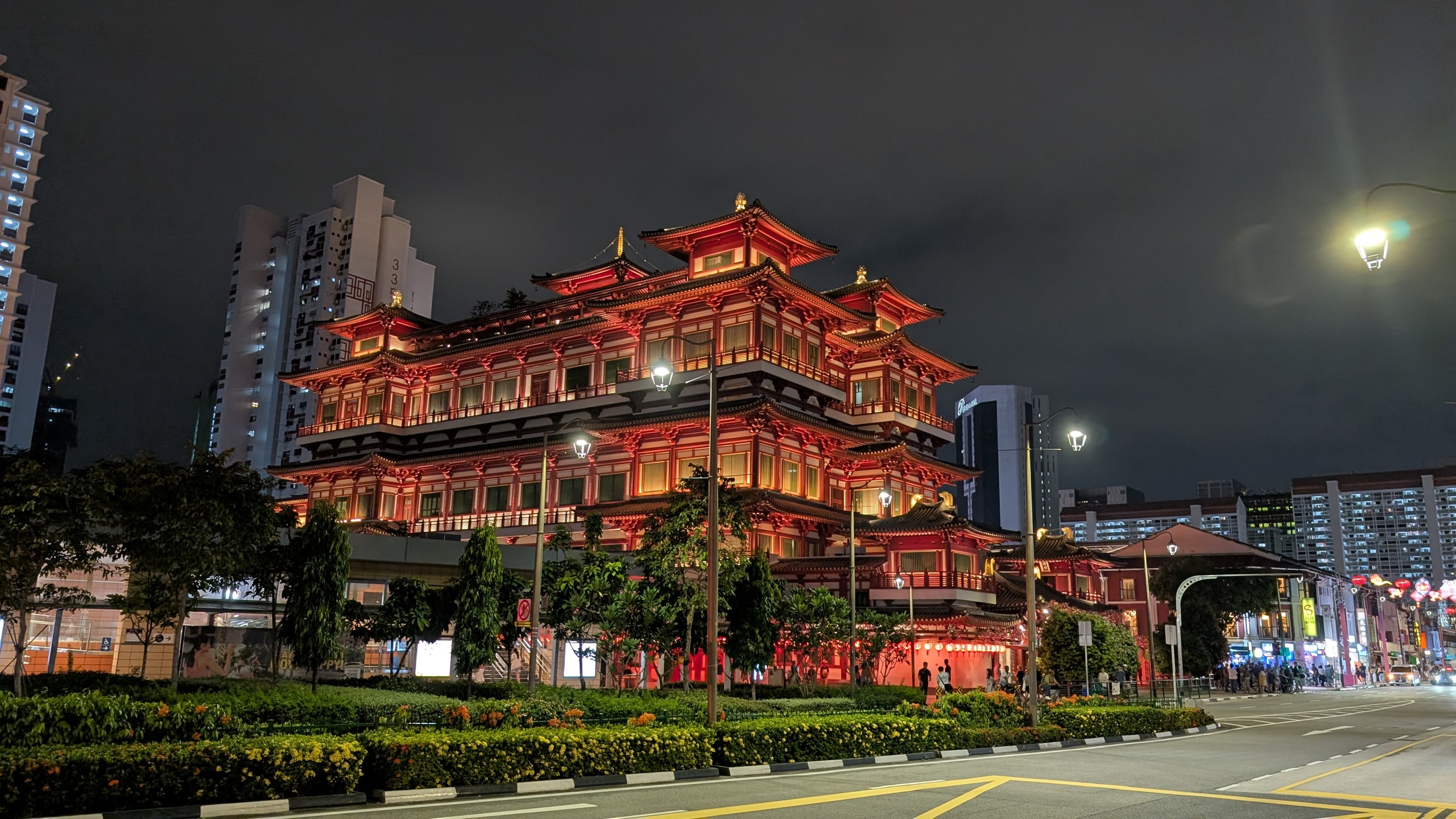
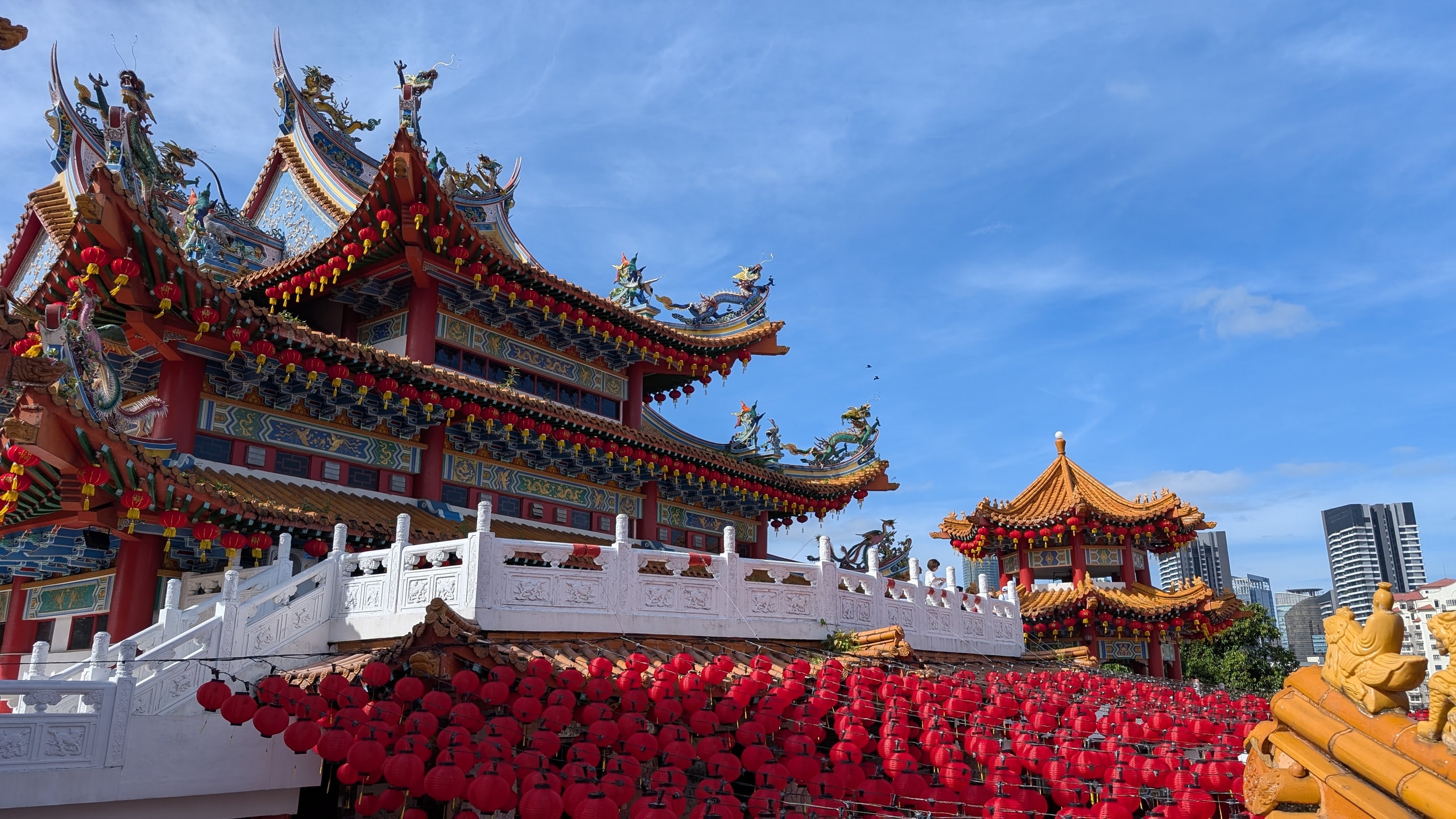
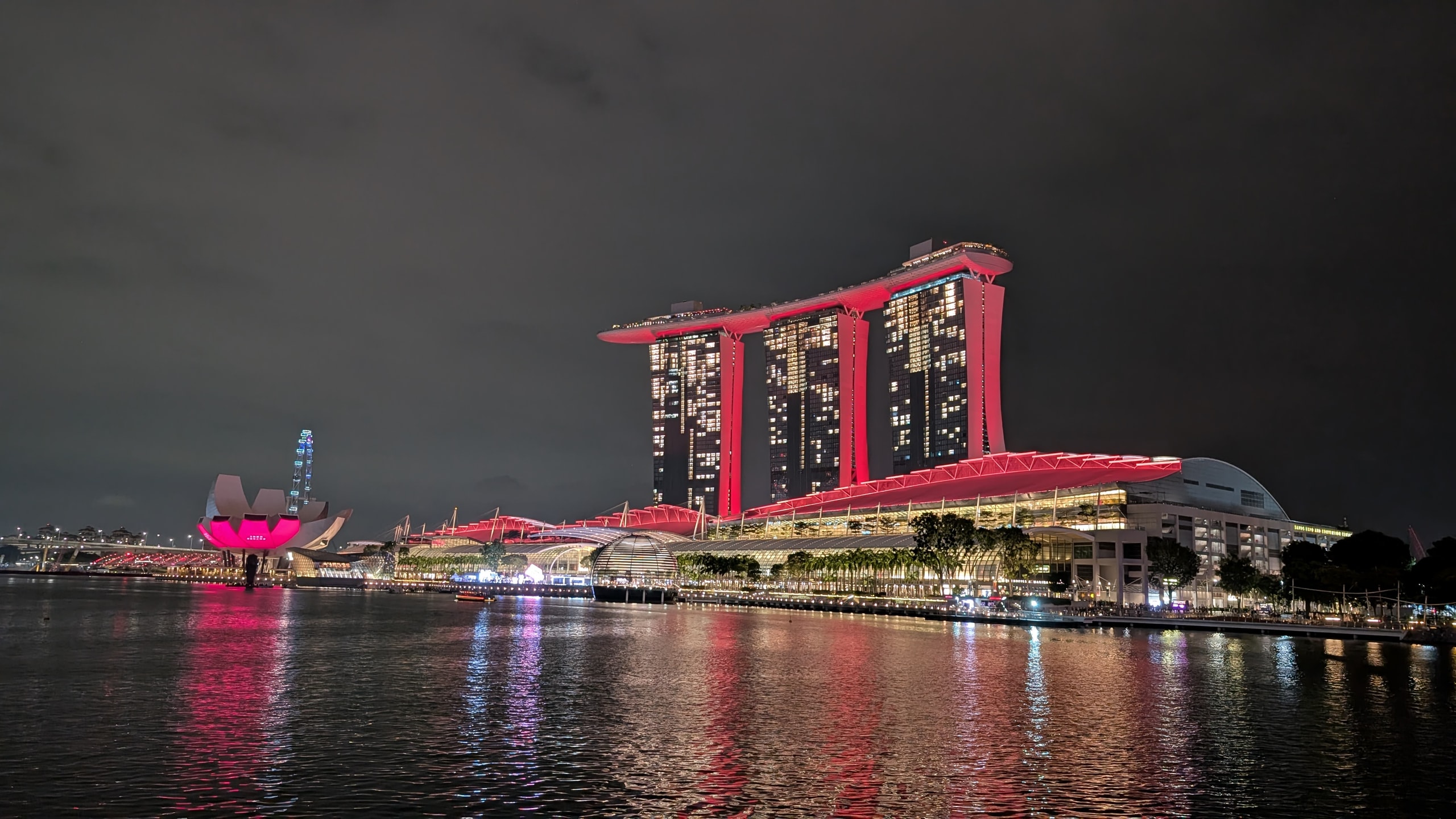
What stays on is the decoration, and it is not subtle. Marina Bay Sands is floodlit red for the holiday, and the ArtScience Museum goes pink beside it. The Buddha Tooth Relic Temple on South Bridge Road, red and gold in Tang dynasty style and finished only in 2007, is lit all night and free to walk into during the day. Take your shoes off, cover shoulders and knees, and go up to the roof garden, where there is a prayer wheel and almost no one.
Two events are worth planning around. River Hongbao fills The Meadow at Gardens by the Bay for about ten days with lit zodiac figures, a stage and food stalls that open precisely when the hawker centres do not. It is free. The Chingay Parade the following weekend at the F1 Pit Building is ticketed, sells out, and is the largest street parade in Asia.
Eating well when your first three stalls are shut
The workaround is simple. Chinese New Year is a Chinese holiday, and roughly a quarter of Singapore is Malay or Indian.
Little India does not close. Tekka Centre on Serangoon Road cooks through the whole week: biryani, fish head curry, thosai for a couple of dollars. Indian Muslim prata shops around Jalan Besar run 24 hours: roti prata S$1.50-2 (about $1.20-1.50) a piece, teh tarik under S$2. Geylang Serai Market does the same on the Malay side, with nasi padang and mee rebus while Chinatown sleeps.
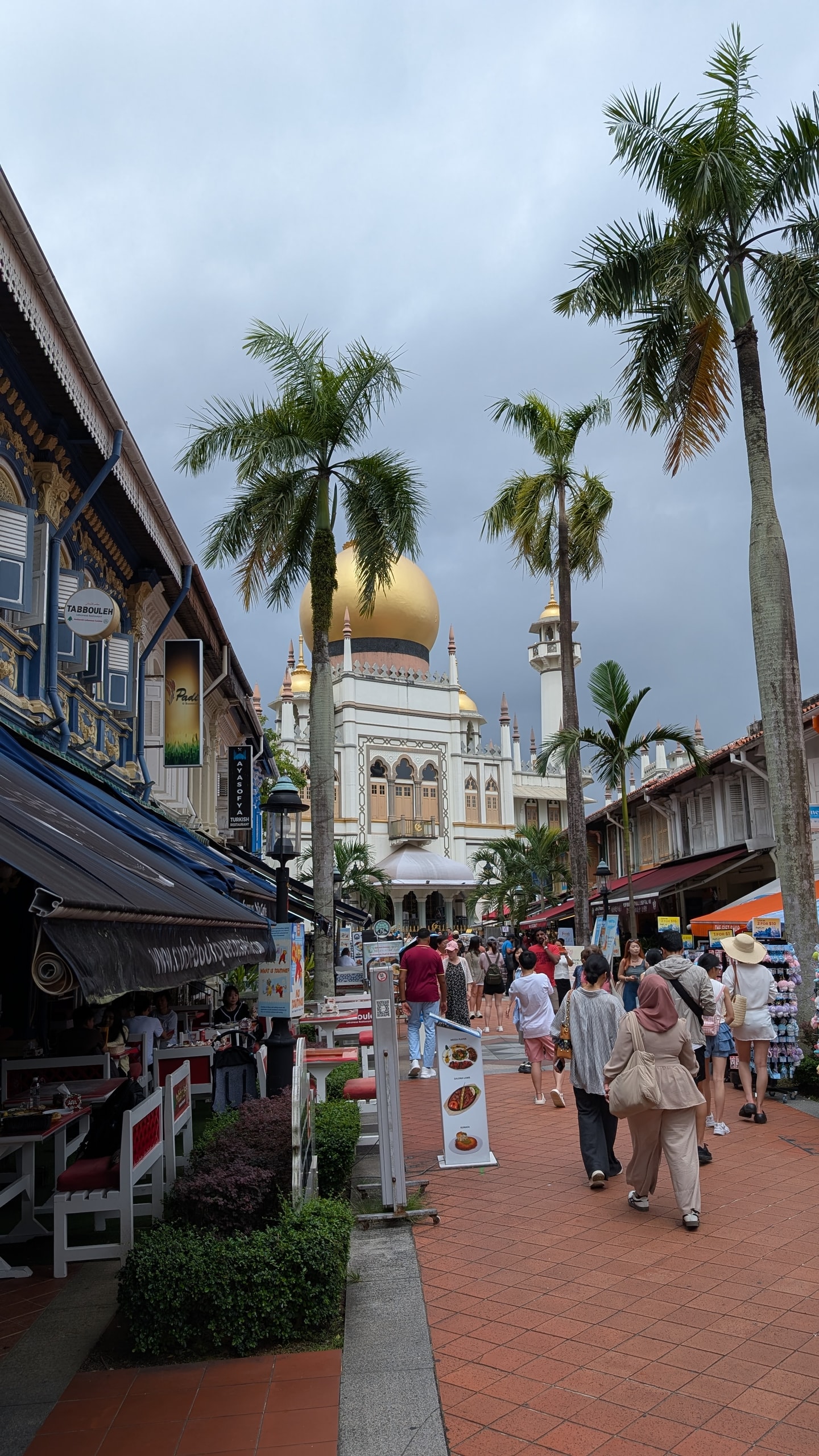
Kampong Glam is the best base for the holiday week. Bussorah Street runs straight at the gold dome of Sultan Mosque with restaurants down both sides, Arab Street sells textiles, and Haji Lane behind it is photographed more than it deserves. Murtabak at Zam Zam, nasi padang at Hjh Maimunah, mint tea under an awning while it rains. None of it shuts.
When the Chinese stalls come back, the ones worth the walk are Maxwell Food Centre for Hainanese chicken rice, Lau Pa Sat for the cast-iron Victorian hall and the satay street on Boon Tat from 7 p.m., and Old Airport Road Food Centre for the version locals queue at. Skip Newton Food Centre, where the touting is aggressive and the seafood is priced for tour buses.
A hawker main is S$4-7 ($3-5), roughly double what the same bowl costs across the causeway, where four days of hawker food in George Town is the whole reason to go. Singapore's version is cleaner, more regulated and slightly tamer. Meal for meal it is still some of the best cheap food anywhere.
Marina Bay: the best views are free
The SkyPark Observation Deck on top of Marina Bay Sands costs around S$32 ($24) and puts you standing on the one building you actually want in the photograph. What you get is a good view of container ships.
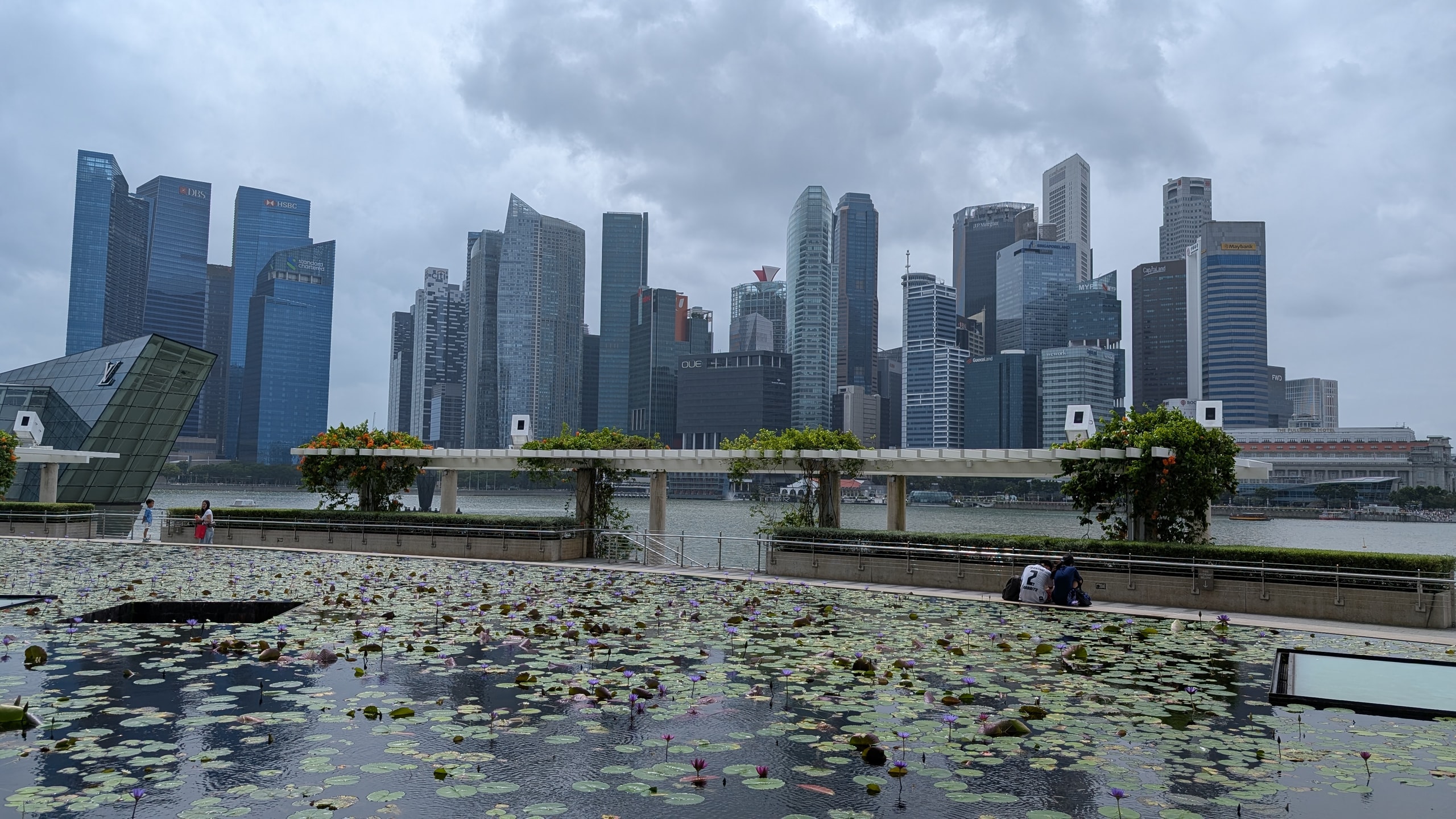
Everything at ground level is free and better. The promenade loops the whole bay in about 45 minutes on foot. The lily pond beside the ArtScience Museum gives you the financial district reflected in flat water with the Helix Bridge across it, and on an overcast morning the towers go grey and silver. Spectra, the light and water show on the Event Plaza, runs free at 8 and 9 p.m., with an extra show at 10 on Friday and Saturday.
Merlion Park is a ten minute stop, and the statue is smaller than the photos suggest. Keep walking to the Esplanade, the theatre everyone calls the durian.
Gardens by the Bay: pay for the Cloud Forest, not the tree walk
The outdoor gardens and the Supertree Grove at Gardens by the Bay are free. Garden Rhapsody, the light and sound show in the grove, runs at 7.45 and 8.45 every night, and standing under a 50-metre steel tree covered in living plants while it changes colour is the most Singaporean ten minutes available.
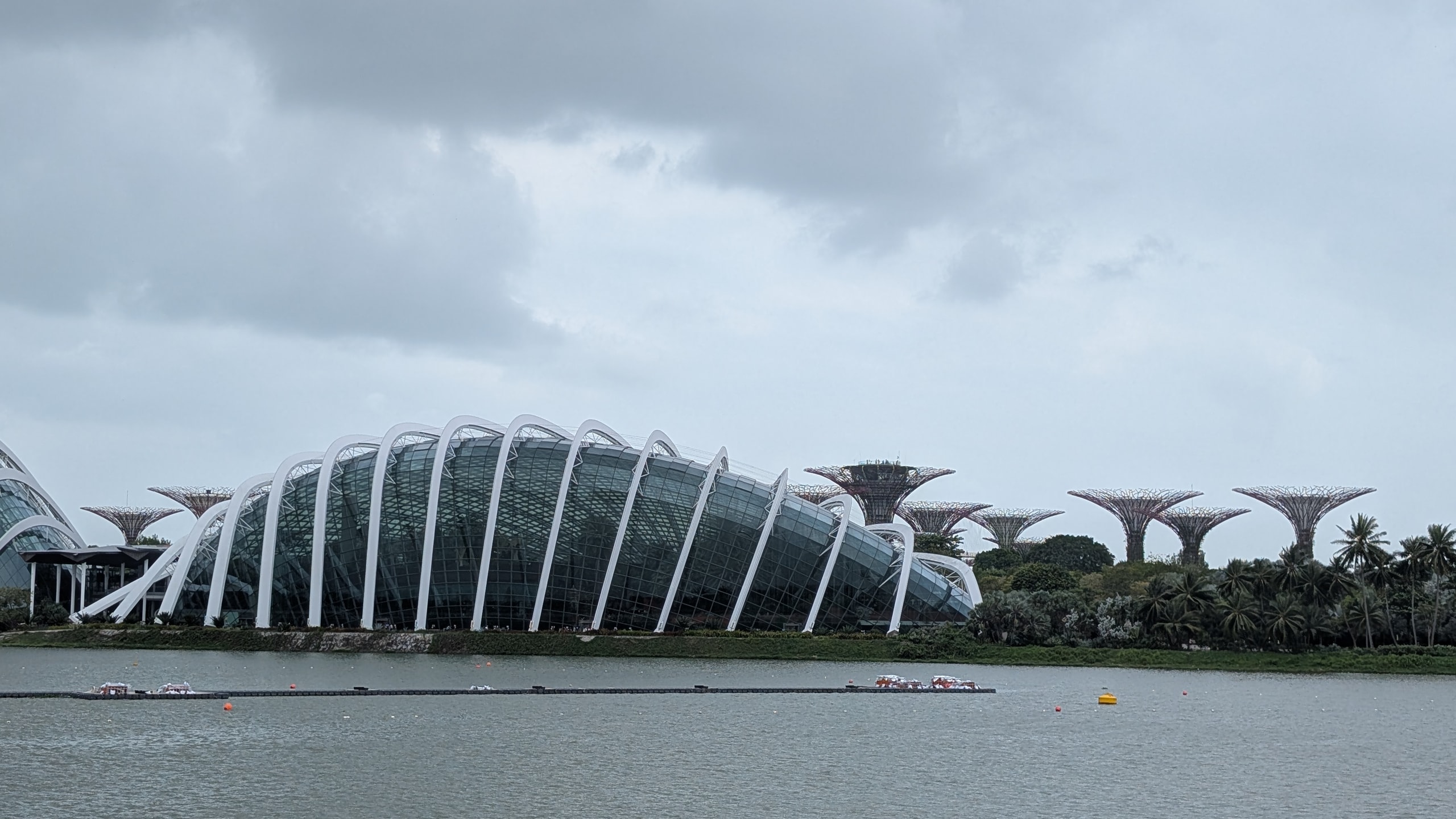
The paid parts are a mixed bag. The OCBC Skyway, a 128-metre walkway between two Supertrees, costs about S$14 ($10), lasts ten minutes, and the queue is usually longer than the walk. Skip it. The Cloud Forest is worth the money: a 35-metre indoor waterfall, a mountain of mist and ferns, and an interior held at 23-25°C. In a city that is 32°C every day, an hour of cold air counts. A combined ticket with the Flower Dome is around S$53 ($40), and the Flower Dome alone is a big Mediterranean greenhouse that only wakes up during a floral display.
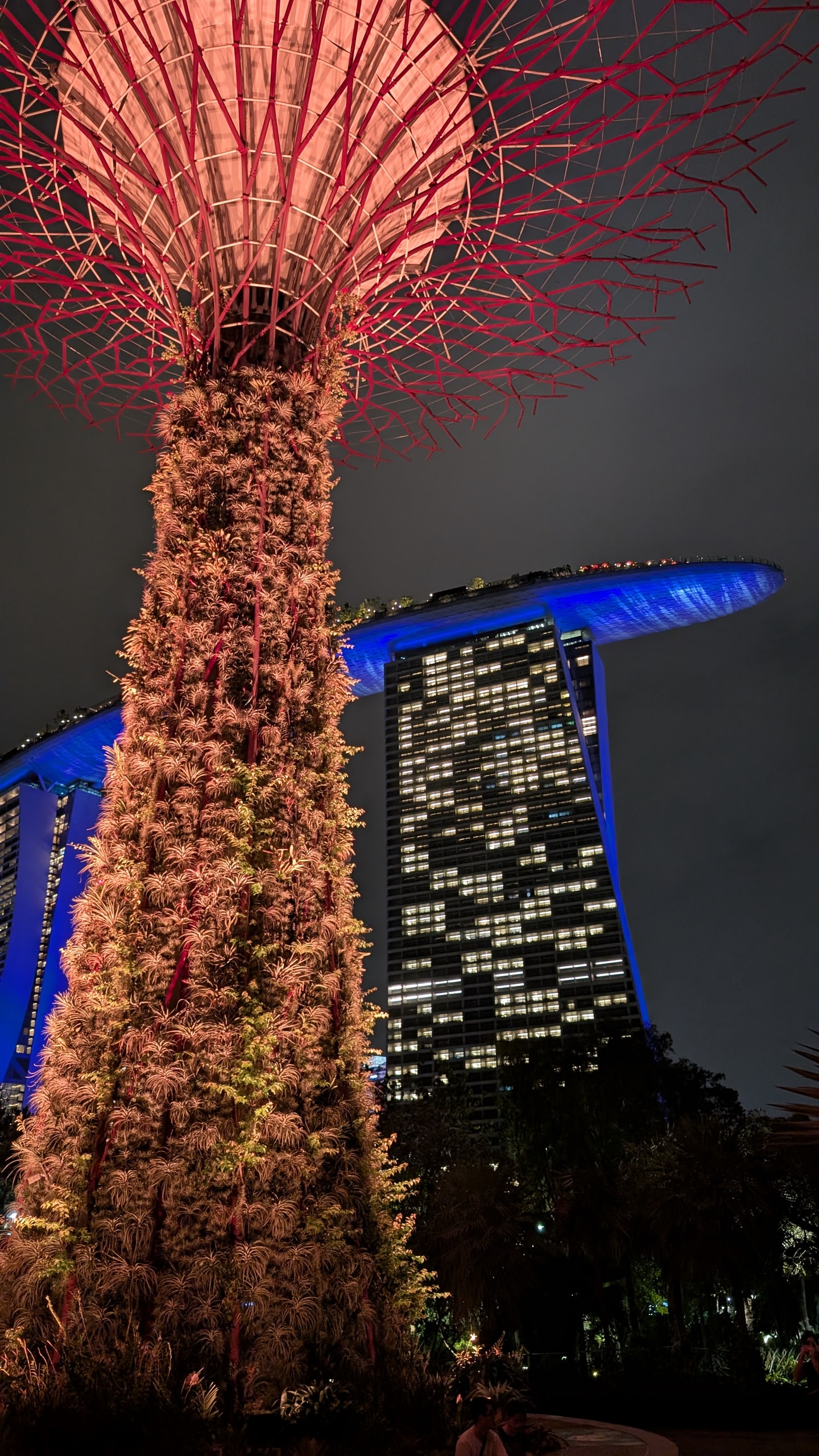
Go at dusk. The trunks are planted with real bromeliads and ferns you can only see from underneath, before the lights come on. Then stay for the show.
Fort Canning and the free half of the centre
Fort Canning is a low hill above the Singapore River that most visitors walk past on the way to a mall. It is free, old by Singapore standards, and the only shade and silence in the centre.
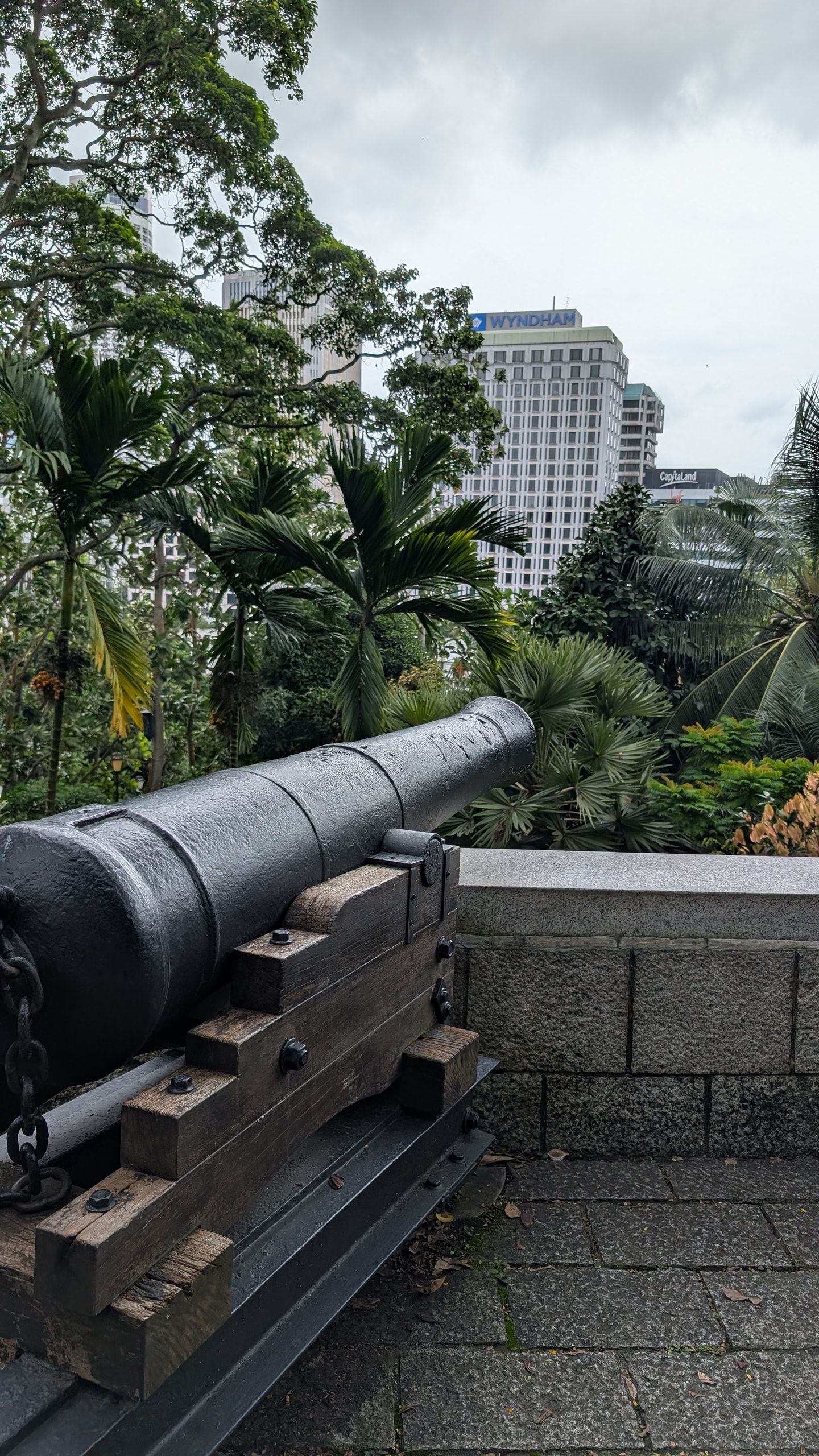
Raffles Garden is a replanting of the 1822 experimental botanic garden, nutmeg and clove below a colonial bungalow and a flagpole. Further along, black nine-pounder cannons sit on the ramparts by Fort Gate, aimed over palm trees at bank towers. The Battlebox, the bunker under the same hill where the British decided to surrender the island in February 1942, runs guided tours for about S$25 ($19). Book ahead; it sells out.
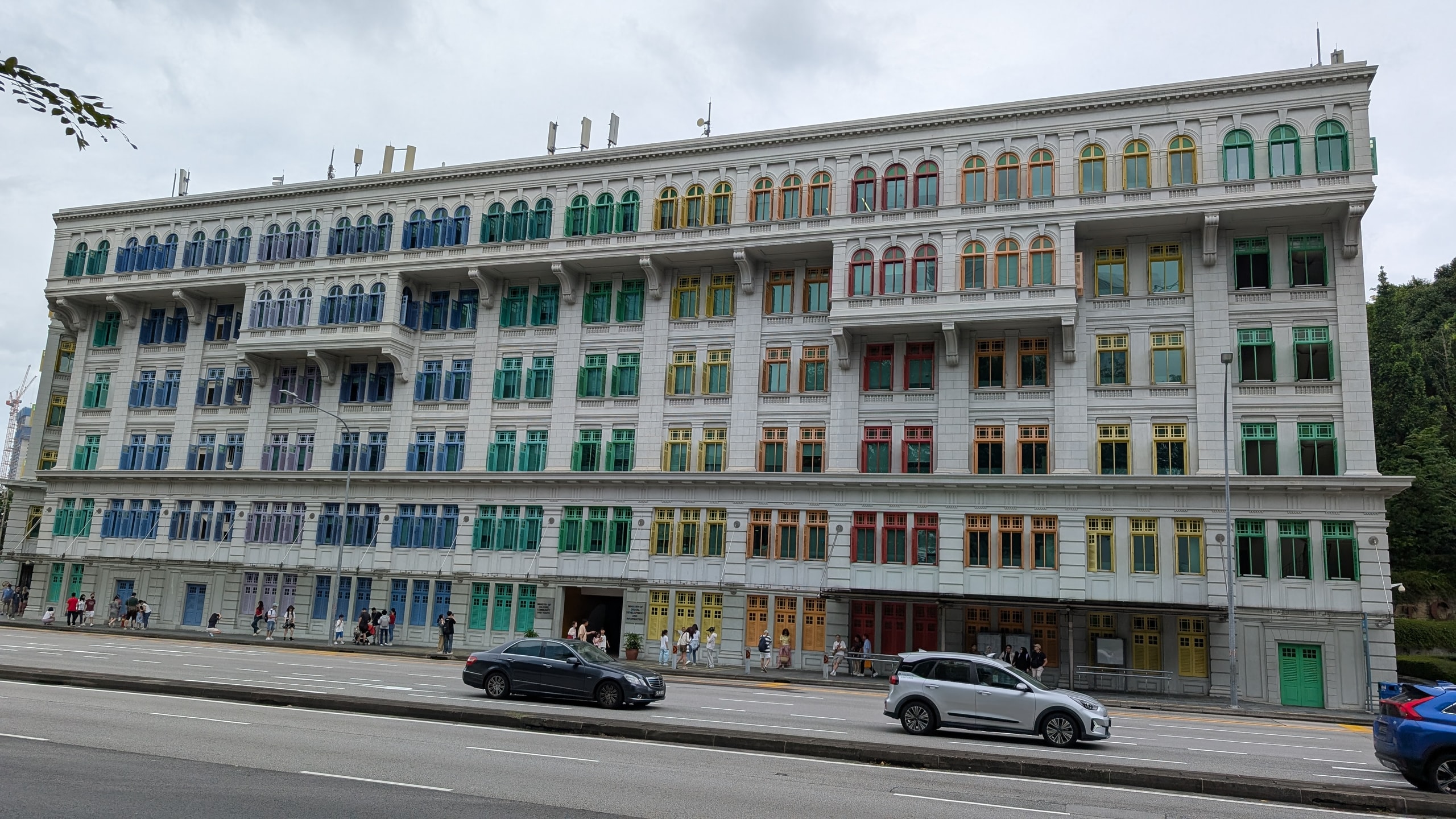
Ten minutes downhill, the Old Hill Street Police Station is the building you will recognise without knowing why: a 1934 colonial block with 927 window shutters painted across the full spectrum. A government ministry works behind them, so there is nothing to do but stand on the pavement and look, which is enough.
Down at the river, Boat Quay and Clarke Quay line both banks. Eat first; the terraces there charge S$20-plus for a beer.
What Singapore actually costs
Beds are the expensive part; everything else is reasonable. A hostel dorm runs S$35-60 ($26-45). A decent three-star double is S$150-220 ($110-165), and four-star hotels sit at S$250-350 ($185-260). Over Chinese New Year and the September Formula 1 weekend, add 30 to 50 percent and book early.
Food splits into two economies. Hawker centres feed you for $3-5. Sit-down restaurants charge S$28-45 ($21-34) for a main plus the "++" you see on menus: 9 percent GST plus a 10 percent service charge, so the bill lands about 20 percent above the printed price. Beer is S$13-16 ($10-12) and cocktails S$22-28 ($16-21), which is where budgets die.
Singapore is expensive to sleep in and cheap to eat in, and most trips get that ratio backwards.
Transport is the bargain. MRT fares are S$1-2.50 ($0.75-1.90) and you tap in with a contactless bank card or a phone, so there is no pass to buy. From Changi the train costs about S$2.50 and takes 50 minutes with a change at Tanah Merah; a Grab is S$25-35 ($19-26) and takes 25. Tap water is drinkable. Nobody tips. One night in a hotel here costs about what three nights cost on Phu Quoc, which shapes how you plan a longer trip.
Sentosa over the holiday: the worst possible week
Sentosa is the resort island off the south coast, fifteen minutes away on the free boardwalk from VivoCity or S$4-6 on the monorail. It holds trucked-in beaches, a casino, an aquarium and Universal Studios Singapore.
Universal is a good compact park and the wrong place to be during Chinese New Year, when it fills with families and the headline rides hit 60 to 90 minute queues by 11 a.m. Adult tickets are around S$83 ($62); an Express pass adds S$50-100. You can still finish it in a day, and the shows carry it. The WaterWorld stunt arena, a stadium of gantries and rusted hulls over blue water, beats most of the rides.
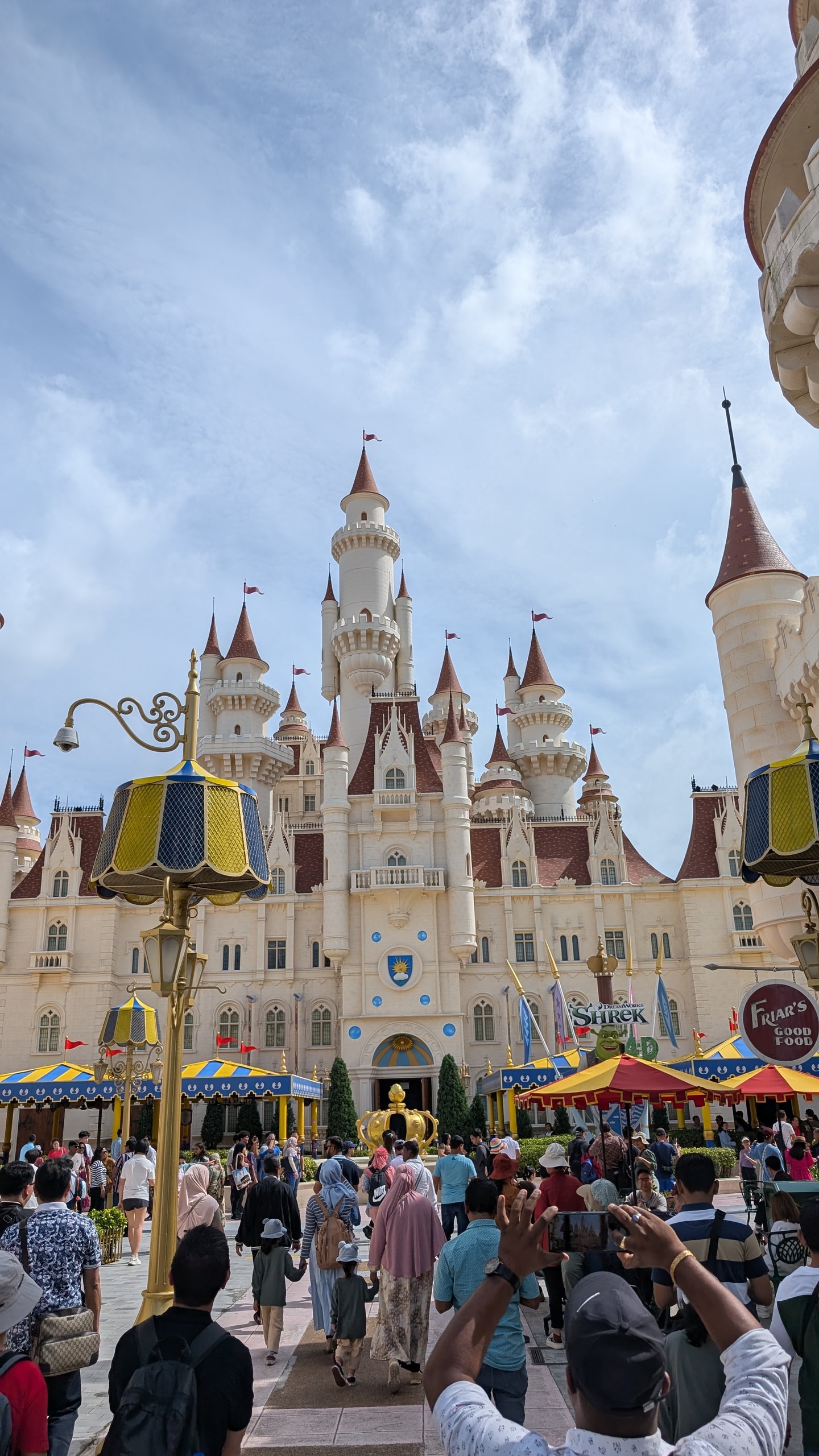
Without children, skip the island and take a bumboat to Pulau Ubin instead. It costs S$4 each way from Changi Point and leaves when twelve people turn up. On the other side: rented bicycles, abandoned granite quarries, wild boar, and one of the last kampong settlements in the country. It stays open through the holiday.
When to come instead
There is no season here in the European sense. It is 31-32°C every day, humidity sits above 80 percent, and it rains hard and briefly most afternoons. February to April is the driest stretch. November to January is the northeast monsoon, when the sky stays grey for days. Some years, haze drifts in from regional fires between June and September.
Three to four days is right. Two is thin, and a week only works if you use the city as a base.
Come for Chinese New Year if you want the lanterns, the temples, the red skyline and a city in a good mood, and accept a rewritten food plan and a pricier room. Avoid it if hawker centres are the reason you booked. The best compromise is the week straight after, when the decorations are still up and the stalls are cooking again.
Leave time for the airport
Changi is the rare airport worth arriving early for. Jewel, attached to Terminal 1 and linked to the others by bridges, is a glass doughnut with a rainforest inside and a 40-metre waterfall down the middle. The Rain Vortex is free to watch and runs on the hour, with light shows after dark. Canopy Park upstairs costs around S$8-10 ($6-8) and is worth it only with kids.
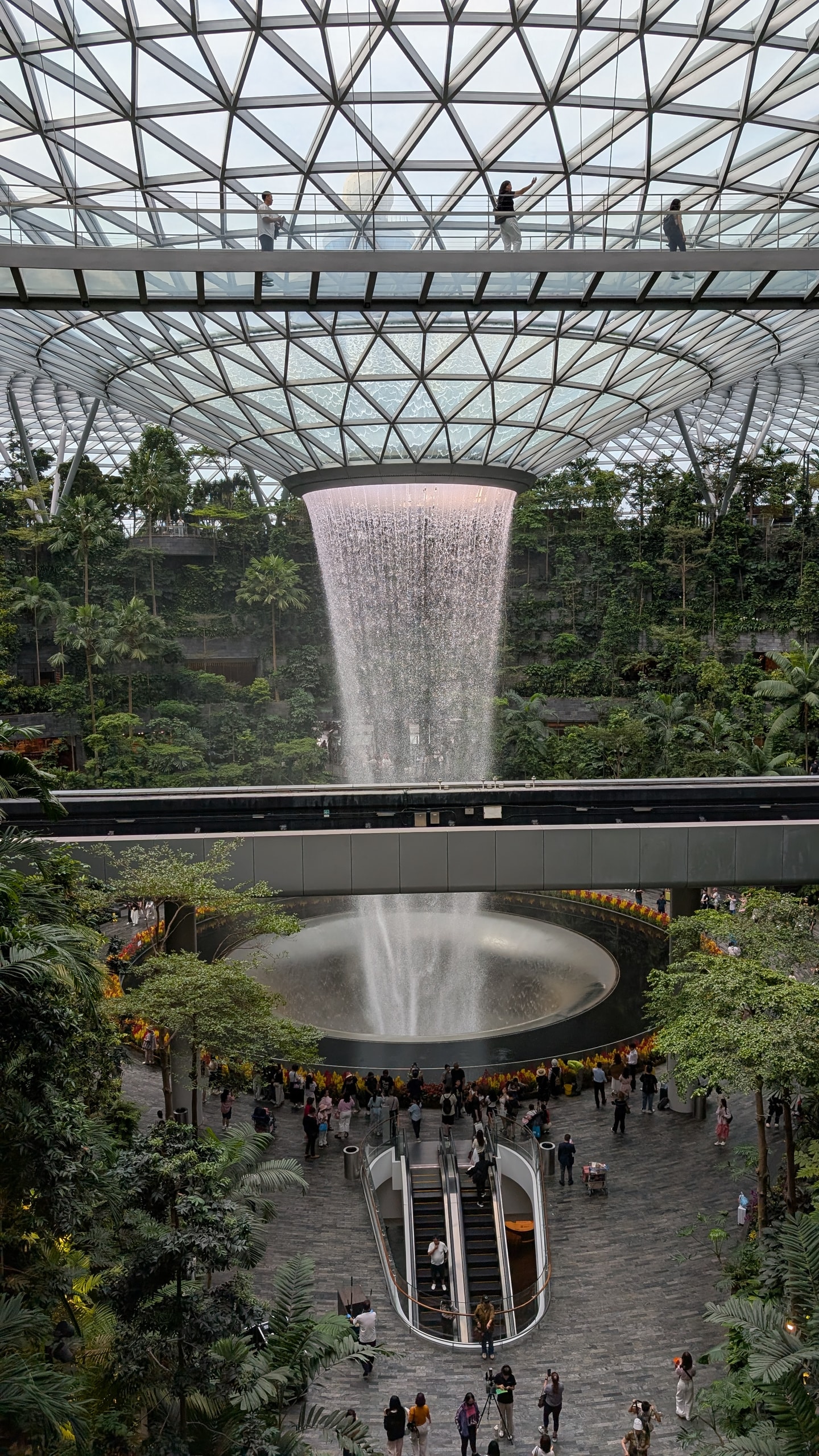
Give it ninety minutes before check-in, or ride out on the MRT on a spare afternoon like locals do. It is a strange thing to say about an airport, but it is the last honest picture of Singapore: engineered to the millimetre, air-conditioned, faintly absurd, and genuinely lovely once you stop resisting it. More city notes live in the destinations archive.