The first useful smell in George Town is usually frying oil. Not perfume, not temple incense - wok heat from a hawker stall before 9 a.m., when the plastic stools are still empty and the cook is already sweating. Penang sells itself as a food trip, and the food earns the reputation. The mistake is treating the island like a tasting menu with a flight attached.
Penang sits off Malaysia’s northwest coast in the Strait of Malacca. The island is small enough to cross in an hour by car. Almost everything worth a first visit lives in George Town, the old port city on the northeast tip - a UNESCO World Heritage site since 2008 for its living mix of Malay, Chinese, Indian, and colonial streetscapes. Shophouses. Clan temples. Mosques. Churches. Street murals on peeling plaster. Heat that does not negotiate.
Give it four days if you can. Two nights only covers a mural selfie and one famous noodle bowl. The place opens up when you walk the same few blocks at different hours and stop treating every attraction as mandatory.
A living port city, not a mural trail
The tourist map is compact: Weld Quay and the Clan Jetties on the water, the Esplanade and Fort Cornwallis at the tip, Armenian Street and Lebuh Acheh for murals and cafés, then a denser Chinese core inland toward Khoo Kongsi and the markets. You can cross the heritage zone on foot in forty minutes. You can also spend four mornings on the same streets and still find a new alley.
People live above the souvenir shops. Scooters cut through pedestrian pockets. Laundry hangs over lanes that appear in guidebooks. That overlap is why the heritage listing still works - the city kept working.
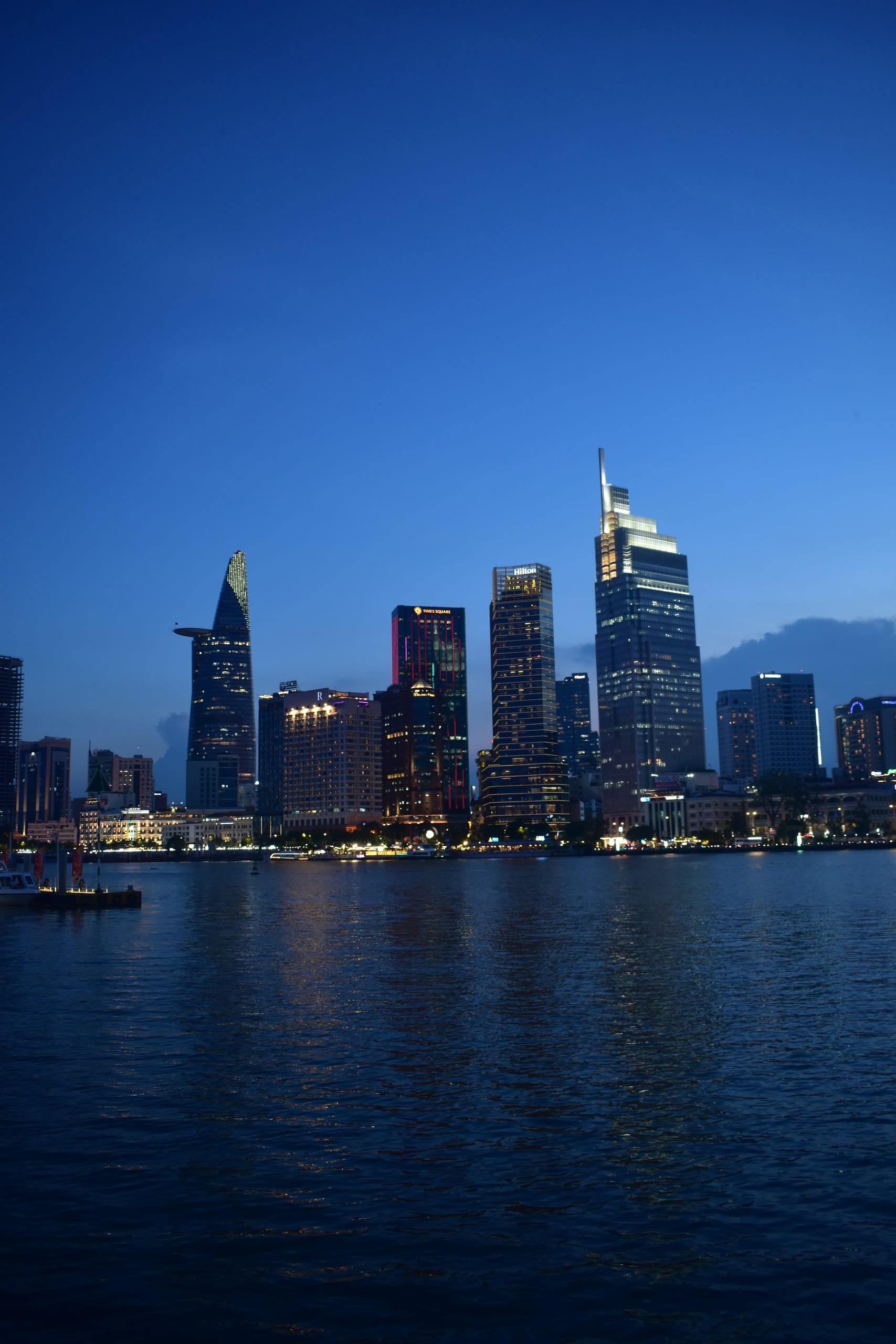
Compared with denser Southeast Asian stops like Saigon, Penang is slower and more walkable. The heat is still real. Plan outdoor walking for early morning and late afternoon; use midday for museums, air-conditioned cafés, or a nap you will not apologize for.
Getting around without wasting a day
Walk the heritage core. Flat, dense, and best understood at street level. A paper map or offline pin list beats hopping Grab between murals two blocks apart.
Grab for heat, hills, and Kek Lok Si. Short hops in town often run RM8-15 ($1.80-3.50). Airport to George Town is roughly RM25-40 ($6-9) depending on traffic and surge. Unmetered curb taxis are the older, worse version of the same trip - use the app. Heat, ride-hailing, and not stuffing a first week are the same instincts as things to know before visiting Vietnam, even though the countries differ.
Penang Hill if you want altitude and cooler air: the funicular from Air Itam runs about RM30-40 ($7-9) return. Pair it with Kek Lok Si the same half-day; they sit in the same part of the island. Skip trying to “do the whole island” - Batu Ferringhi beach resorts and the national park are their own trips, and stuffing them into a short George Town stay usually means rushed food and a tired afternoon.
The waterfront: City Hall, the padang, and Fort Cornwallis
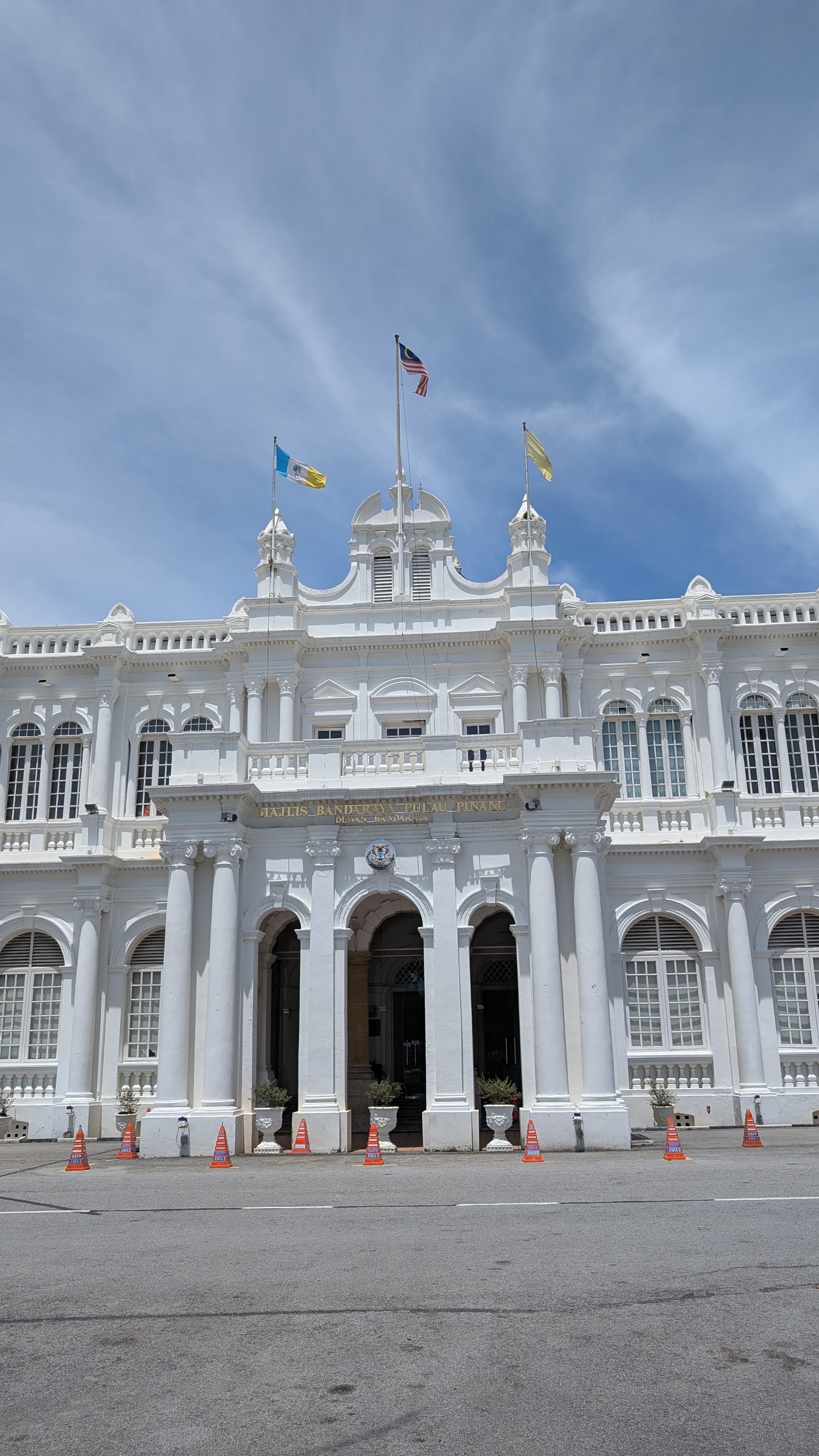
Start at the Esplanade - Padang Kota Lama - where the lawn meets the sea wall. City Hall (Dewan Bandaraya) faces the padang in white neoclassical formality: columns, arches, the Penang Island City Council lettering in gold, Malaysian and Penang flags on the roof. It is a working civic building, not a museum. Ten minutes outside is enough. The light is best in the morning when the facade is clean against a blue sky.
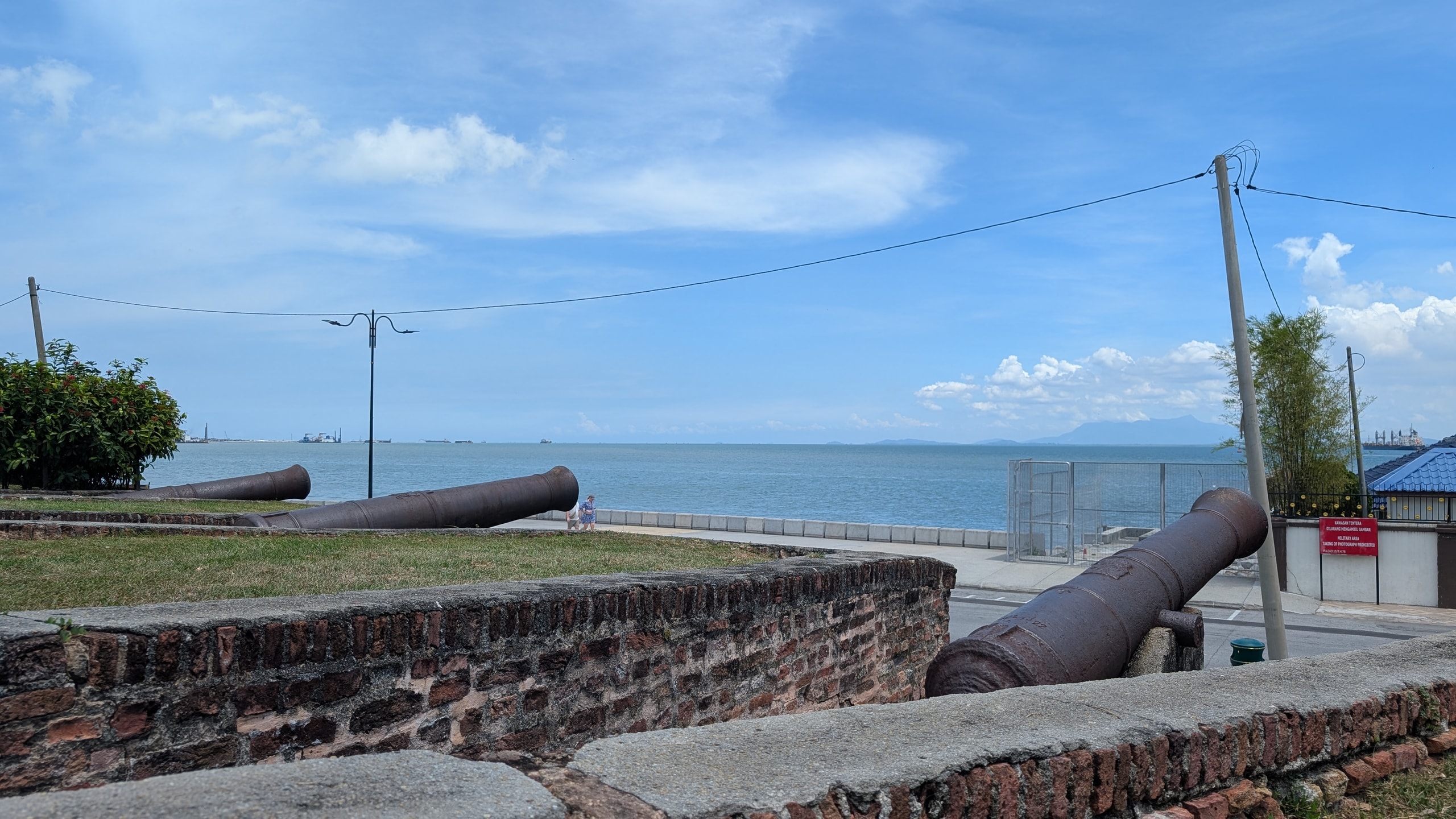
A short walk east puts you at Fort Cornwallis - star-shaped brick walls, grassy ramparts, and black cannons aimed at the strait. Entry is around RM20 ($4.50) for foreign visitors; card payment is often required at the gate. You do not need a long visit. Walk the walls, look at the shipping lane, and notice how close the modern waterfront sits to a fort that once guarded a British trading post. The cannons photograph well; the story is shorter than the ticket queue on a busy weekend.
The waterfront is orientation, not the whole trip. Eat nearby if you are hungry. Then go inland - that is where Penang gets specific.
Khoo Kongsi - the courtyard that earns a ticket
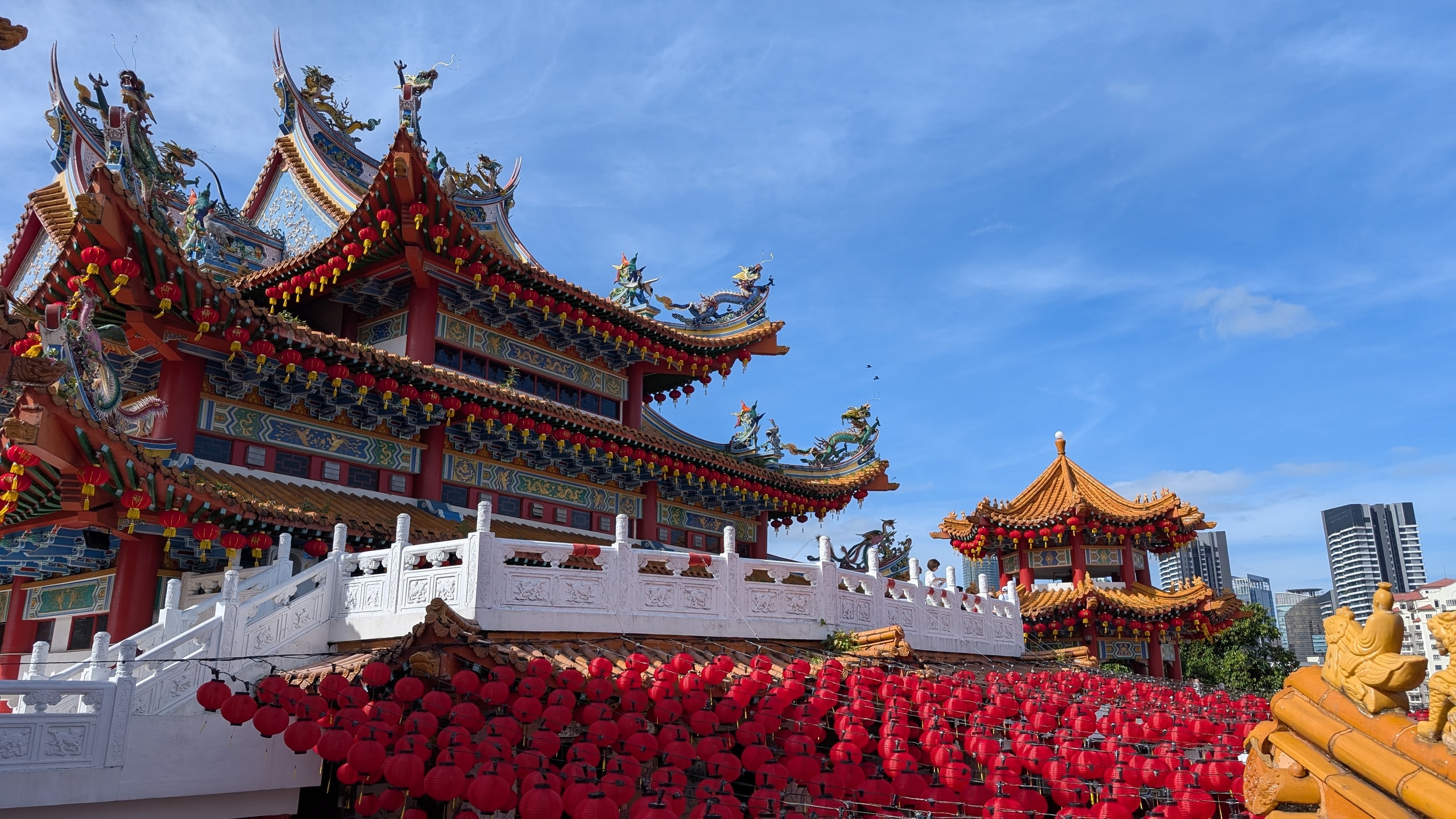
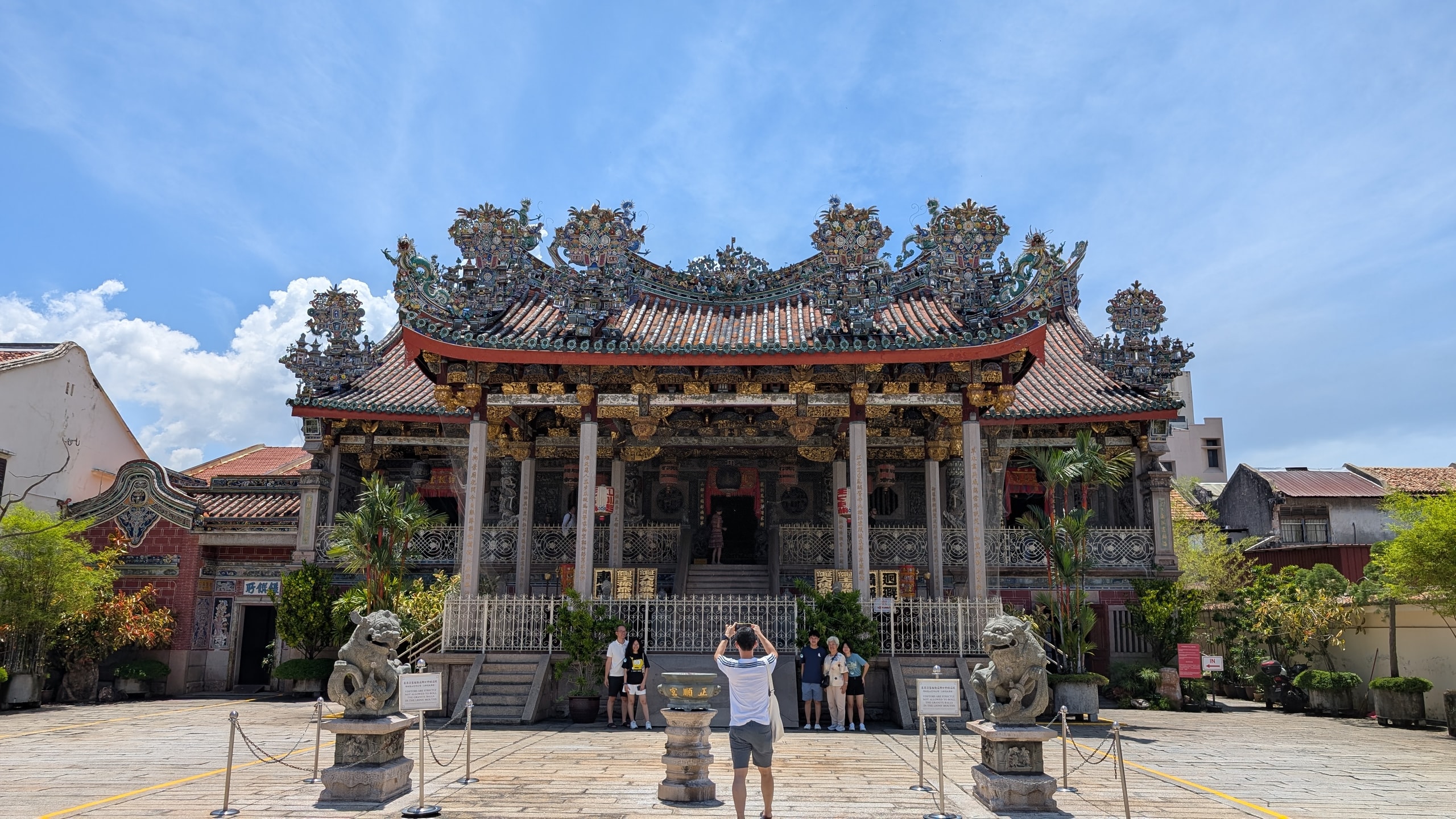
Leong San Tong Khoo Kongsi is a Chinese clan house complex tucked off Cannon Street, behind an unremarkable lane entrance that opens onto a granite courtyard and a temple facade that looks almost too ornate for the quiet around it. Ceramic dragons and deities crowd the roof ridges. Gold woodwork catches hard midday sun. Stone lions flank the approach. Entry runs about RM10-15 ($2.30-3.50).
Go mid-morning on a weekday if you can. Tour groups arrive in pulses; between them the courtyard is almost still. Climb the steps, look up at the chien nien shardwork on the roof, and give the carvings more than a phone snap. This is one of the strongest built spaces on the island - richer detail than most street murals, and far fewer people treating it as a backdrop for a pose.
If you only pay for one heritage interior in George Town, make it this one.
Street art: see a few, then stop hunting
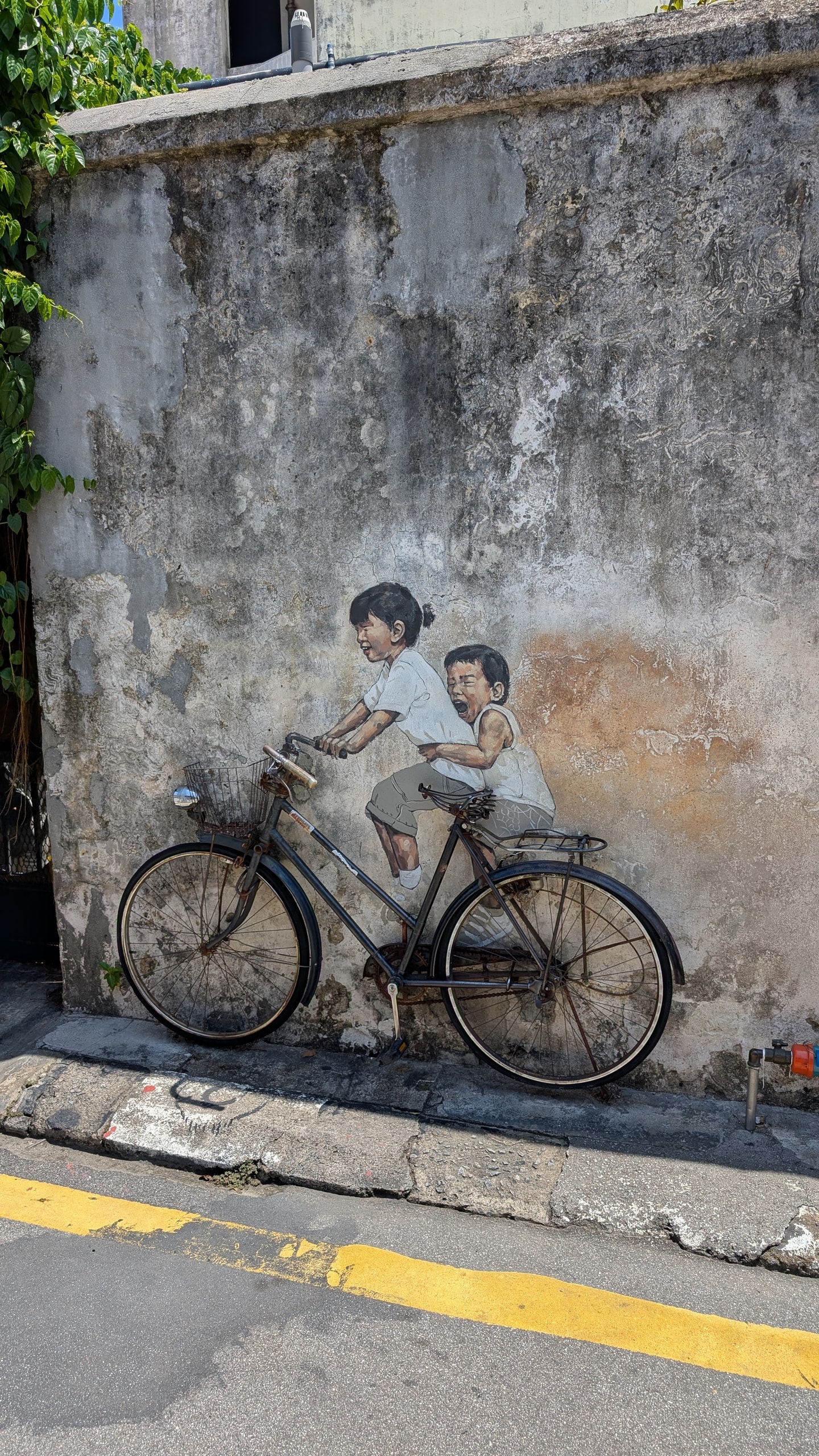
George Town’s murals - especially Ernest Zacharevic’s interactive pieces - pulled a second wave of visitors after the UNESCO listing. The famous ones still work: kids painted onto a real bicycle, a boy on a vintage motorcycle against peeling doors, cats and folklore scenes tucked onto side walls. They are clever. They are also crowded between 10 a.m. and 4 p.m., and a full “street art trail” turns into a scavenger hunt that burns the best walking hours.
Pick three or four pieces near Armenian Street and Ah Quee Street. Go early. Enjoy them. Then walk for food, temples, and shade instead of chasing every pin on a blog map. The walls between the famous murals - cracked plaster, old brick, a shop selling hardware - are as much George Town as the paint.
Kek Lok Si - half a day on the hill
Kek Lok Si in Air Itam is one of Southeast Asia’s largest Buddhist temple complexes, climbing the hillside in layers of courtyards, pavilions, and souvenir stalls. Grounds access is free; expect small fees for the inclined lift and certain upper areas (budget RM10-20 / $2.30-4.50 if you go high). Dress for a temple: covered shoulders and knees, shoes you can slip off.
The complex rewards slow looking. A covered walkway holds a long row of standing golden Buddhas draped in yellow flower garlands, bamboo-style pillars marching into the distance, a moon gate framing the hills and high-rises beyond. Farther up, the bronze Guan Yin statue stands under an octagonal pavilion on dragon-carved stone columns - tall enough that people on the courtyard below look small against the base.
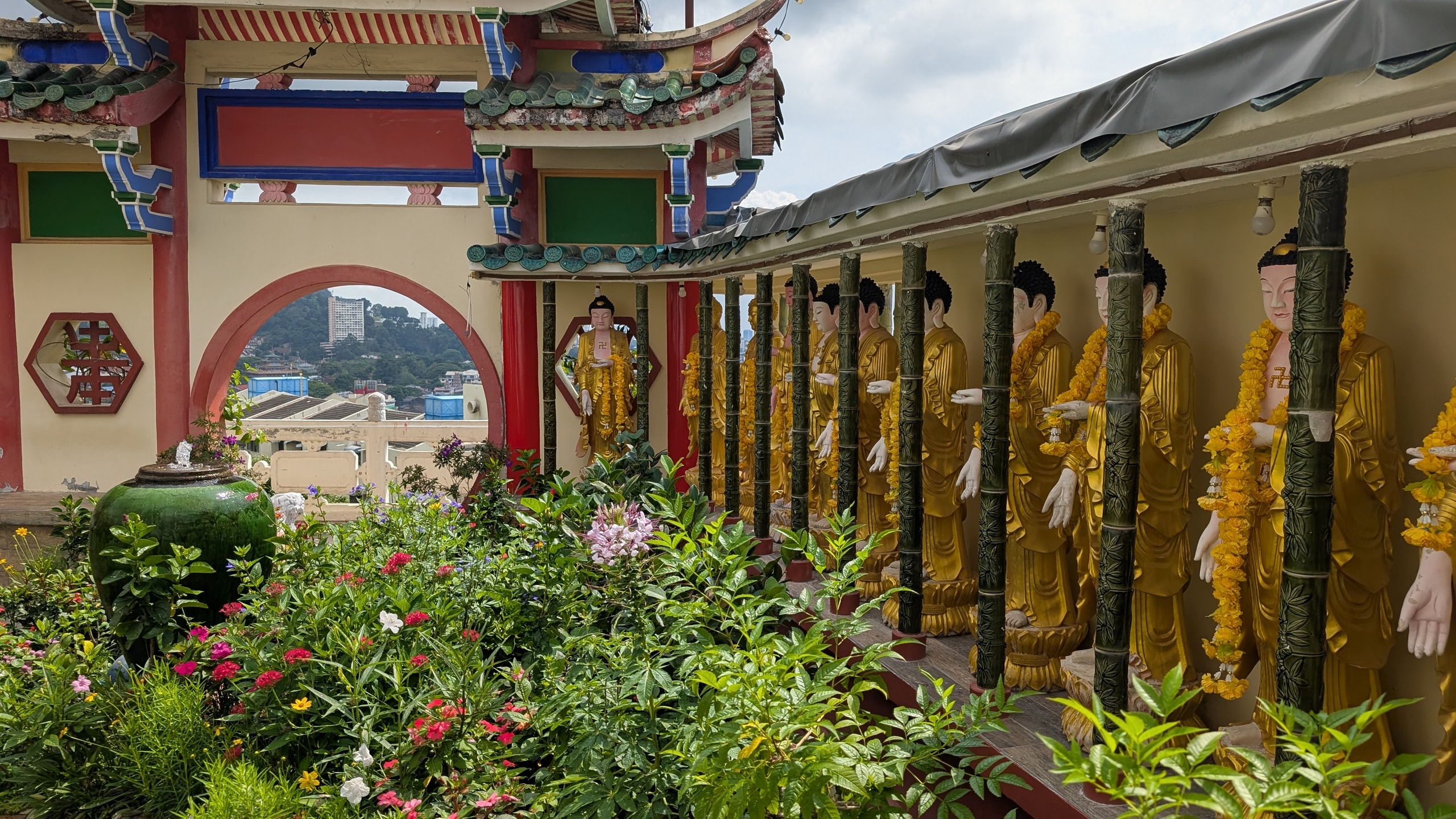
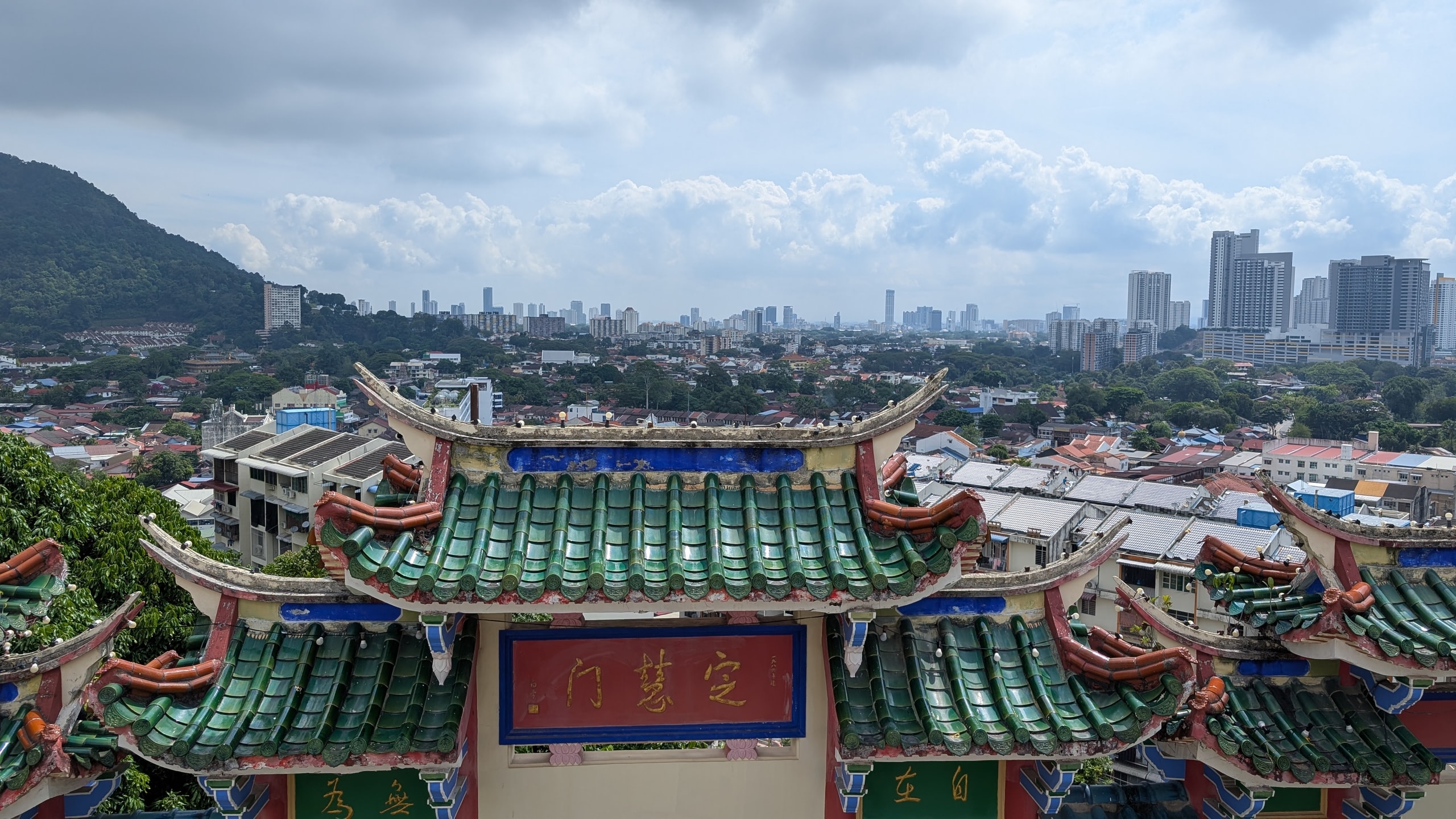
From the upper terraces you see why the site sits where it does: green temple roofs in the foreground, dense low housing, then George Town’s towers and a forested ridge under heavy tropical cloud. The view is the reason the half-day is worth it.
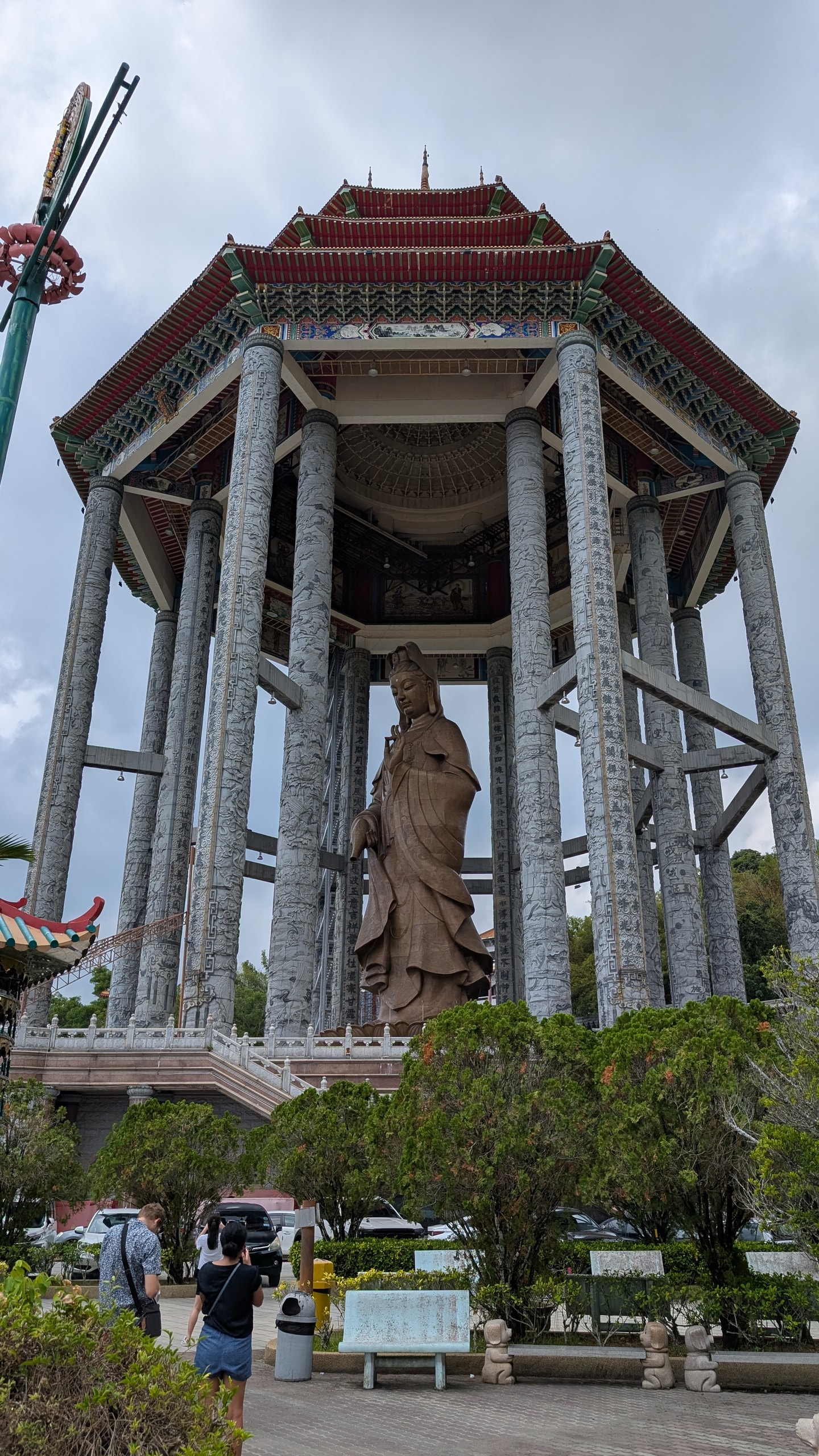
Budget two to three hours including Grab time from George Town. Go in the morning before the heat peaks. Combine with Penang Hill only if energy remains - the funicular queues can eat an afternoon on weekends.
Clan Jetties - a waterfront neighborhood, not a set
On Weld Quay, wooden houses on stilts stretch into the channel in clan-based settlements. Chew Jetty is the one most visitors walk - narrow planks, souvenir stalls, houses over green water, and murals painted onto the siding. One shows a man in a hammock, a woman cleaning fish, a boy mid-jump, fish floating around them - daily life on the jetty, painted onto the siding.
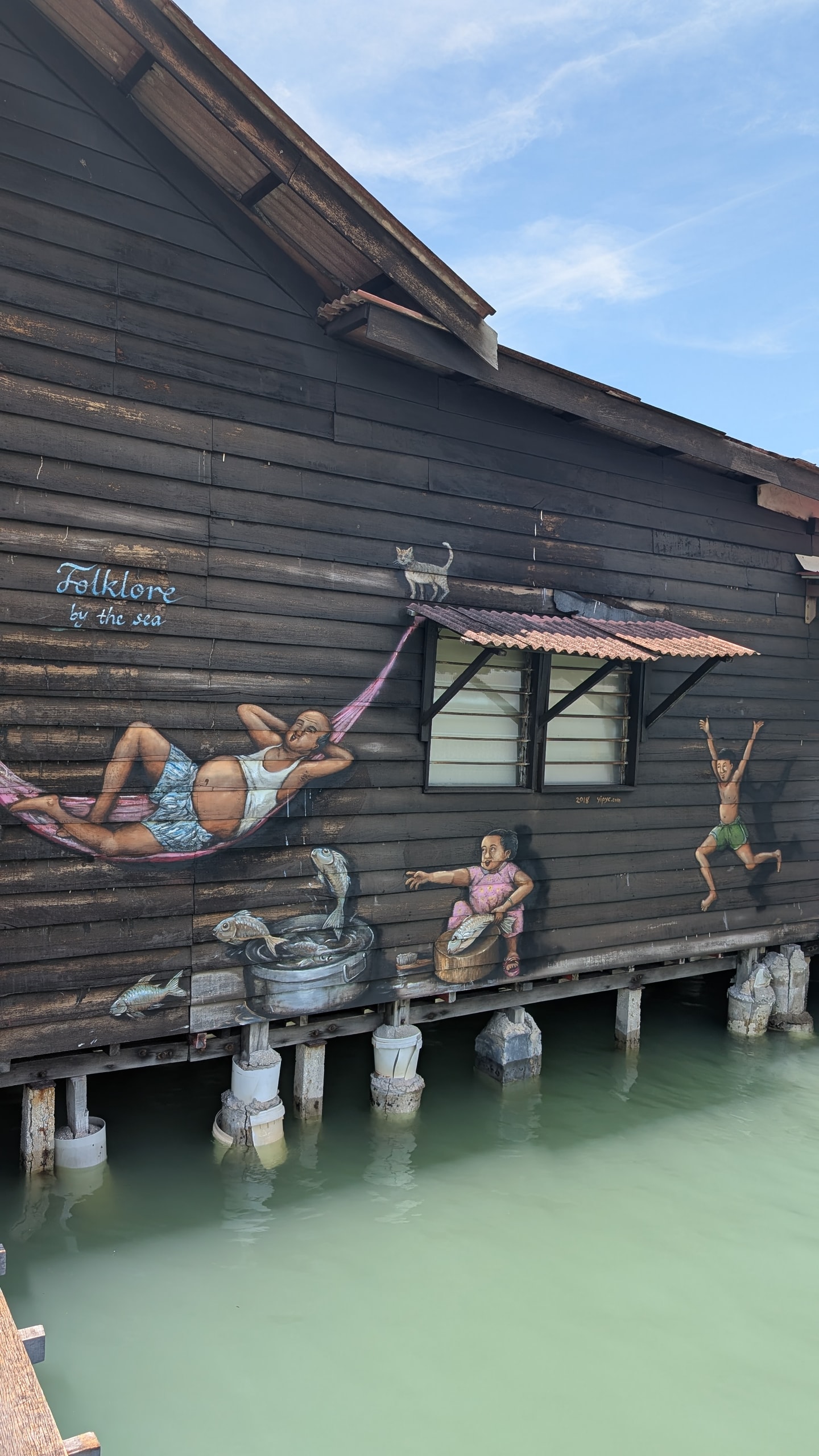
Treat the jetties as a living neighborhood with a tourist path through it. Go late afternoon when the light softens. Stay on the public walkways. A short visit beats a long one - twenty to forty minutes is enough unless you are staying for a meal at the end of the pier.
Eat like the trip depends on it
It does. Penang’s reputation rests on hawker food done with serious technique at prices that still feel unfair in a good way.
What to order (start here):
- Char kway teow - flat rice noodles wok-fried with prawns, egg, bean sprouts, and a hit of dark soy and chili. RM8-14 ($1.80-3.20). Smoky wok hei is the test; a queue of locals is a better signal than English menus.
- Assam laksa - sour-spicy fish-based noodle soup with mint, onion, and a thick prawn paste dollop. RM8-12 ($1.80-2.80). Bright and sharp; not coconut laksa.
- Hokkien mee - prawn-and-pork noodle soup, often with a chili paste you add yourself. RM8-13 ($1.80-3).
- Nasi kandar - rice with curry gravies ladled over fried chicken or fish. Indian-Muslim stalls; lunch crowds are the tip.
- Cendol - shaved ice, green jelly noodles, coconut milk, palm sugar. RM5-8 ($1.20-1.80) when the afternoon heat wins.
Famous names get mentioned for a reason - places like those around Transfer Road, Kimberley Street, and the cluster near Cecil Street market still draw lines - but a busy neighborhood stall with no Instagram lighting often matches them. Sit down. Order one bowl. If it is good, order something else before you leave. Mid-range sit-down meals run RM25-50 ($6-12) a person; hawker meals keep a full day of eating under $15-20 if you stay on stools.
Coffee and tea: local kopi and teh tarik are cheap (RM3-6 / $0.70-1.40). Specialty cafés have arrived in the heritage zone too - useful for air-con and a work hour, less essential than the hawker pass.
One excellent bowl at a plastic table beats three famous names eaten while standing in a photo line.
What to skip (or shrink)
Mural bingo. Collecting every painted wall is a day killer. Three good ones early, then move on.
Island-wide day tours that promise beaches, temples, a batik factory, and lunch in one sweaty loop. You will remember the bus more than the places.
Shopping malls as a centerpiece. Useful in a downpour. Not why you flew here.
Batu Ferringhi as a must on a short stay. Fine for a beach afternoon if you have five-plus days. Easy to skip if George Town and Kek Lok Si already fill the calendar.
Overbuilt “heritage hotels” with weak rooms. Sleep somewhere clean and quiet within walking distance of the old streets; spend the money on food.
When to go, and what it costs
Best window: December through March - drier, slightly clearer skies, still hot. March mornings can sit around 30-32°C (86-90°F) with humidity that soaks a shirt by late morning. April-October brings heavier rain and hazier days; storms pass, but outdoor plans need flexibility. Chinese New Year and major school holidays fill hotels and thicken queues at Khoo Kongsi and the famous stalls - book ahead or accept the wait.
Daily mid-range budget: roughly $45-75 covers a clean George Town hotel, Grab hops, hawker meals, and one paid sight. Heritage guesthouses and small hotels often land $35-60 a night. Upscale boutique stays push $100-180. Street food keeps food costs low; drinks and sit-down dinners are where the bill grows.
Airport: Penang International (PEN) is on the island’s southeast - about 30-45 minutes to George Town by Grab depending on traffic. Direct flights from Kuala Lumpur, Singapore, Bangkok, and other regional hubs are common. Malaysia’s entry rules change; check the current visa exemption or eVisa requirements before you book.
Heat, haze, and the thin food-only trip
Heat and humidity are constant. Sidewalks break without warning. Some mural streets feel like open-air galleries with tour guides speaking over each other. Busy hawker stalls are usually fine; empty tourist rows facing a landmark are often charging for the view of other tourists. Smoke haze from regional burning can dull views in late summer and early autumn some years; check air quality if you are sensitive.
A food-only weekend still feeds you well. It just leaves out the clan courtyard, the temple hill, and the ordinary shophouse streets that make the noodles taste like part of a place.
A four-day shape that works
Four full days is the sweet spot for a first visit focused on George Town:
- Day one - Esplanade, City Hall, Fort Cornwallis, evening hawker run.
- Day two - Khoo Kongsi, Armenian Street murals early, markets and cafés, slow food.
- Day three - Kek Lok Si (and Penang Hill if you still have legs).
- Day four - Clan Jetties, leftover streets, the bowl you meant to try on day one.
Three days works if you cut Penang Hill and keep the mural hunt short. Two days is a taste - fine as a long weekend from Kuala Lumpur or Singapore, thin as the whole Malaysian stop. Other places worth a longer look sit on the destinations page.
Let George Town be a city you walk through between meals: white civic columns on the padang, gold roof dragons in a courtyard, a row of Buddhas on a hill, and the strait a few blocks away when you need the air.