In a Trieste bar, an espresso is a nero and a macchiato is a capo. Served in a small glass, it is a capo in b. Trieste has its own names for most of the coffee menu, and you hear them at every counter in town.
Trieste sits in the far north-east corner of Italy, on a strip of coast under the Karst plateau, 10 km from Slovenia. It was Austrian for over 500 years and the Habsburg empire's main seaport, where much of its coffee came in. It joined Italy only after the First World War. So the centre looks like a piece of Vienna by the sea, and the food is part Italian, part Slovenian, part Austrian.
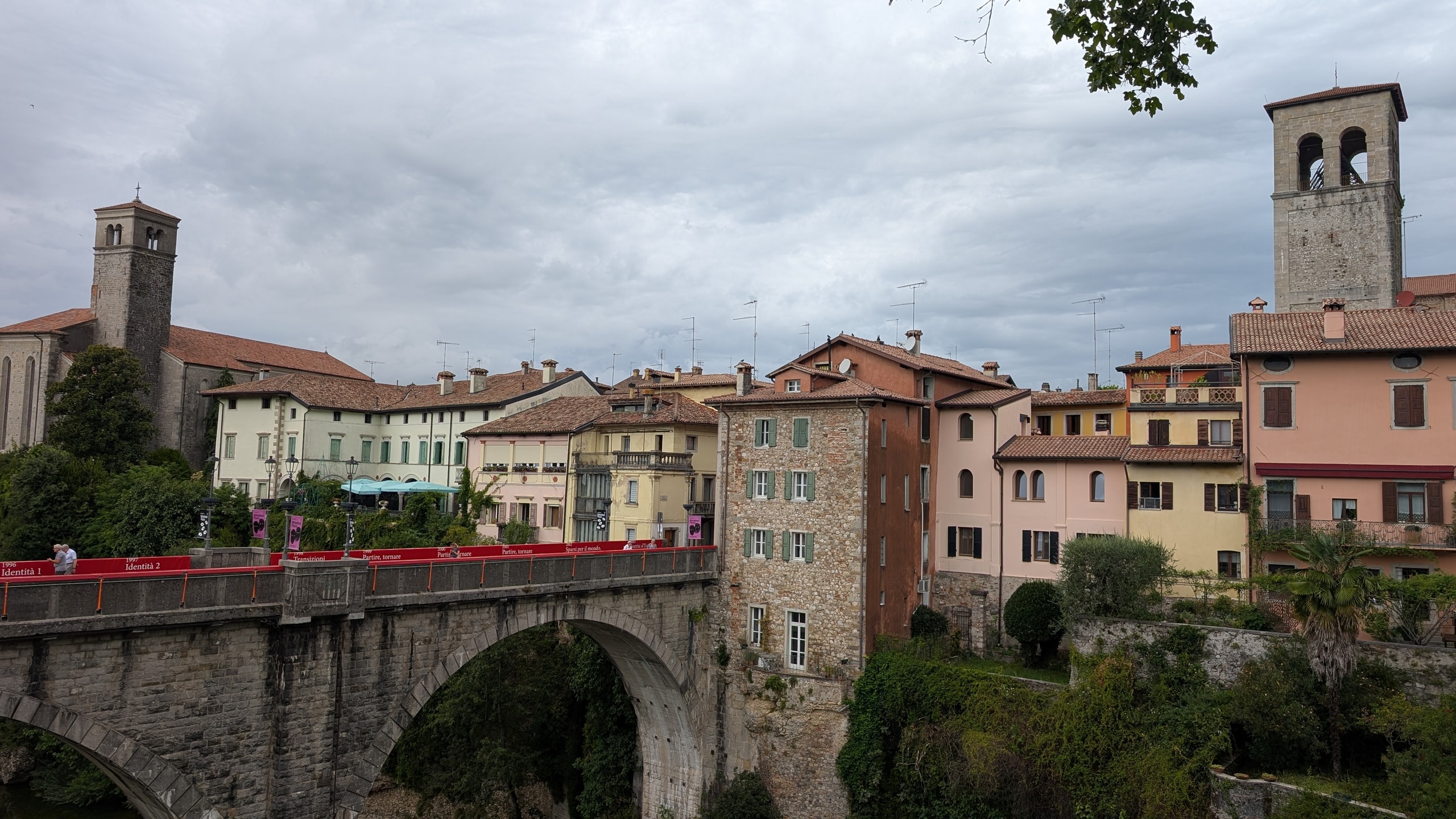
Is Trieste worth visiting? Yes. One day covers the centre, and two nights add the coast and the Karst. There is no big museum to book ahead and no sandy beach. It suits people who like walking, cafés and the sea. Inland, Cividale del Friuli, the Lombard town that named the region, is an hour away by car.
Piazza Unità d'Italia and the Molo Audace
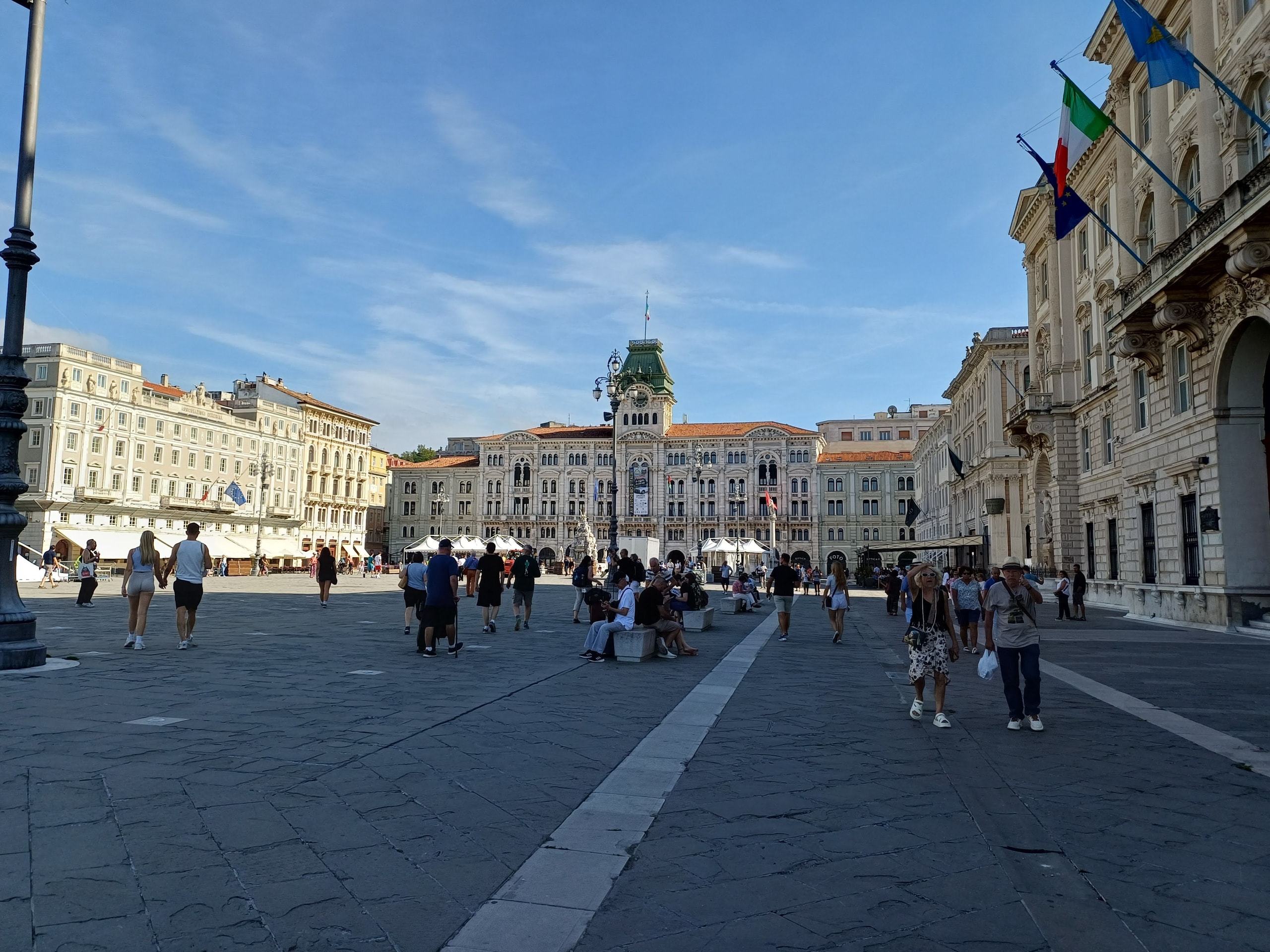
Start at Piazza Unità d'Italia, a paved square with grand buildings on three sides and open sea on the fourth. It is usually called the largest sea-facing square in Europe. The town hall closes the far end under a green-roofed clock tower. Facing it, Caffè degli Specchi has had tables on your left since 1839. Sit there once for the view, then drink your coffee standing at a bar.
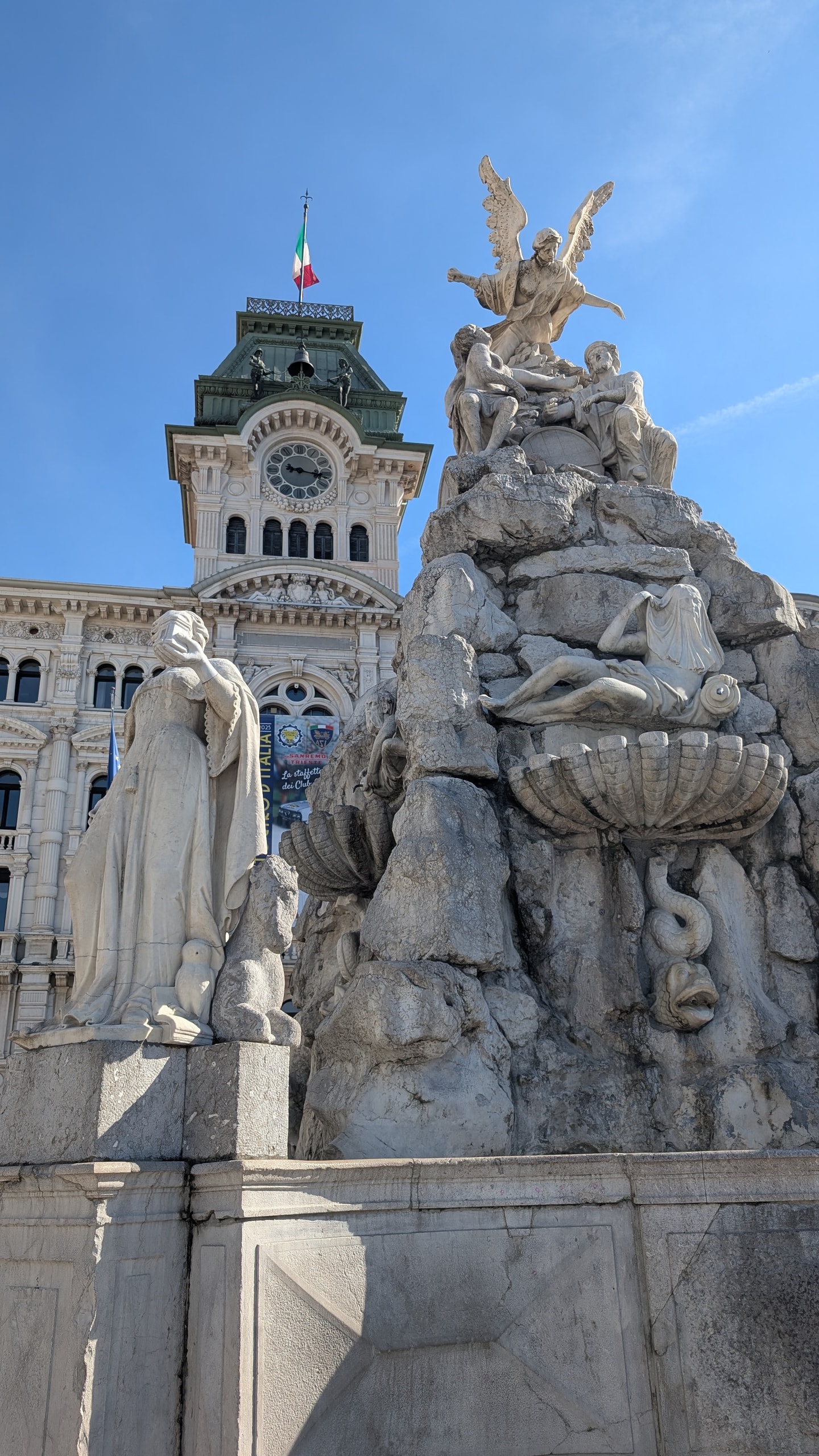
In front of the town hall stands the Fountain of the Four Continents, carved in the 1750s, when Europe, Asia, Africa and America were the only continents Europeans knew. Look up at the tower behind it: two bronze figures, nicknamed Micheze and Jacheze, swing hammers at the bell.
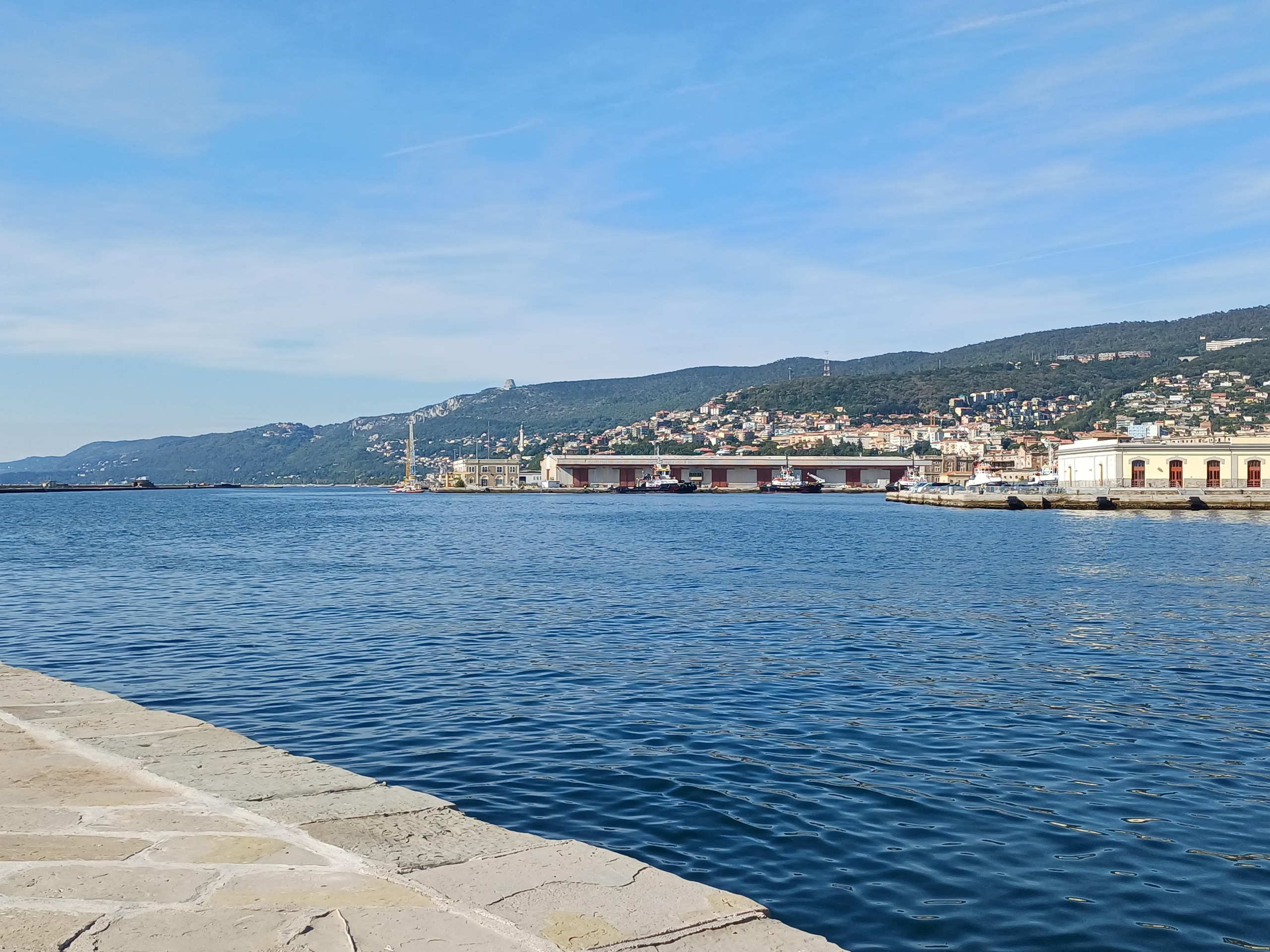
Then walk out along the Molo Audace, the 246 m stone pier beside the square, built in the 1740s on top of a sunken ship. It is free, never closes, and fills with people at sunset.
How to order coffee in Trieste
About a fifth of Italy's coffee imports come through Trieste's port, and illy has roasted here since 1933. A nero at the counter costs about €1.20-1.50 ($1.40-1.75). The words you need:
- Nero - an espresso.
- Capo - an espresso with a little foamed milk. Ask for a cappuccino and this is what you get.
- Capo in b - the same, in a small glass (b for bicchiere).
- Goccia - an espresso with just a drop of milk foam.
- Caffelatte - the big milky cup the rest of Italy calls a cappuccino.
- Deca - decaf. A deca in b is a decaf in a glass.
For an old café, try Caffè San Marco on Via Battisti, open since 1914, with a bookshop inside.
Piazza della Borsa and the Canal Grande
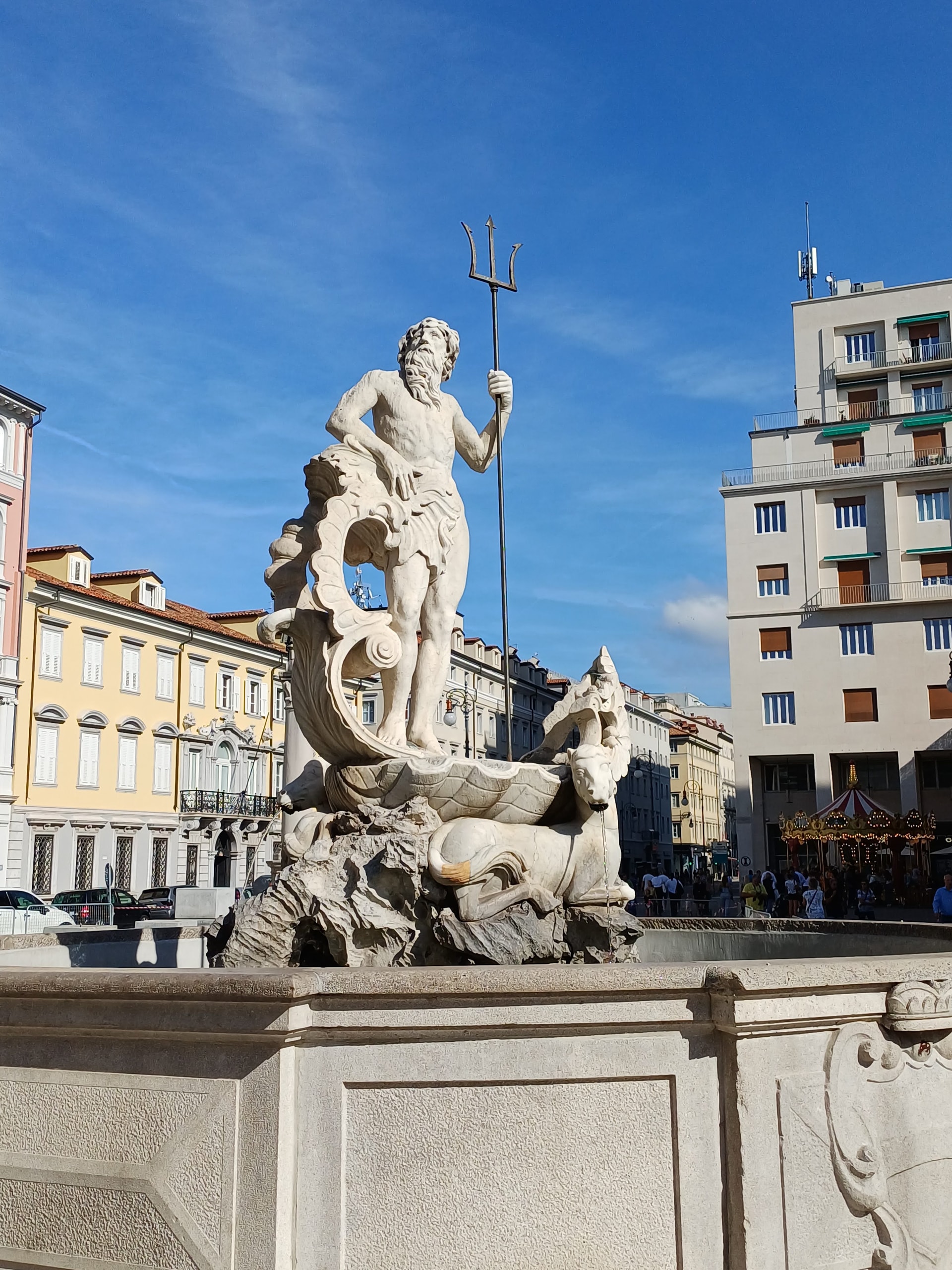
Two minutes away, Piazza della Borsa is named after the columned old stock exchange from 1806. Neptune has stood over its fountain since 1755, apart from the decades he spent in another square.
North of it, the Canal Grande was dug in the 1750s so ships could unload in the middle of town. The blue domes beside it belong to the Serbian Orthodox church of San Spiridione. On the Ponte Rosso, a bronze James Joyce is caught mid-stride. He lived here on and off from 1904 to 1920 and wrote most of Dubliners in Trieste.
Lunch at a buffet: boiled pork and horseradish
Trieste's traditional lunch is the buffet, a bar built around a steaming pot of pork. Buffet da Pepi, open since 1897 a block from the Borsa, is the best known. Ask for the misto and the cuts come sliced with sauerkraut, mustard and freshly grated horseradish (kren). It is plain, salty, filling food, closer to Vienna than to Parma, where the pig becomes prosciutto. Budget around $20-25 with a drink.
Up the coast and onto the Karst
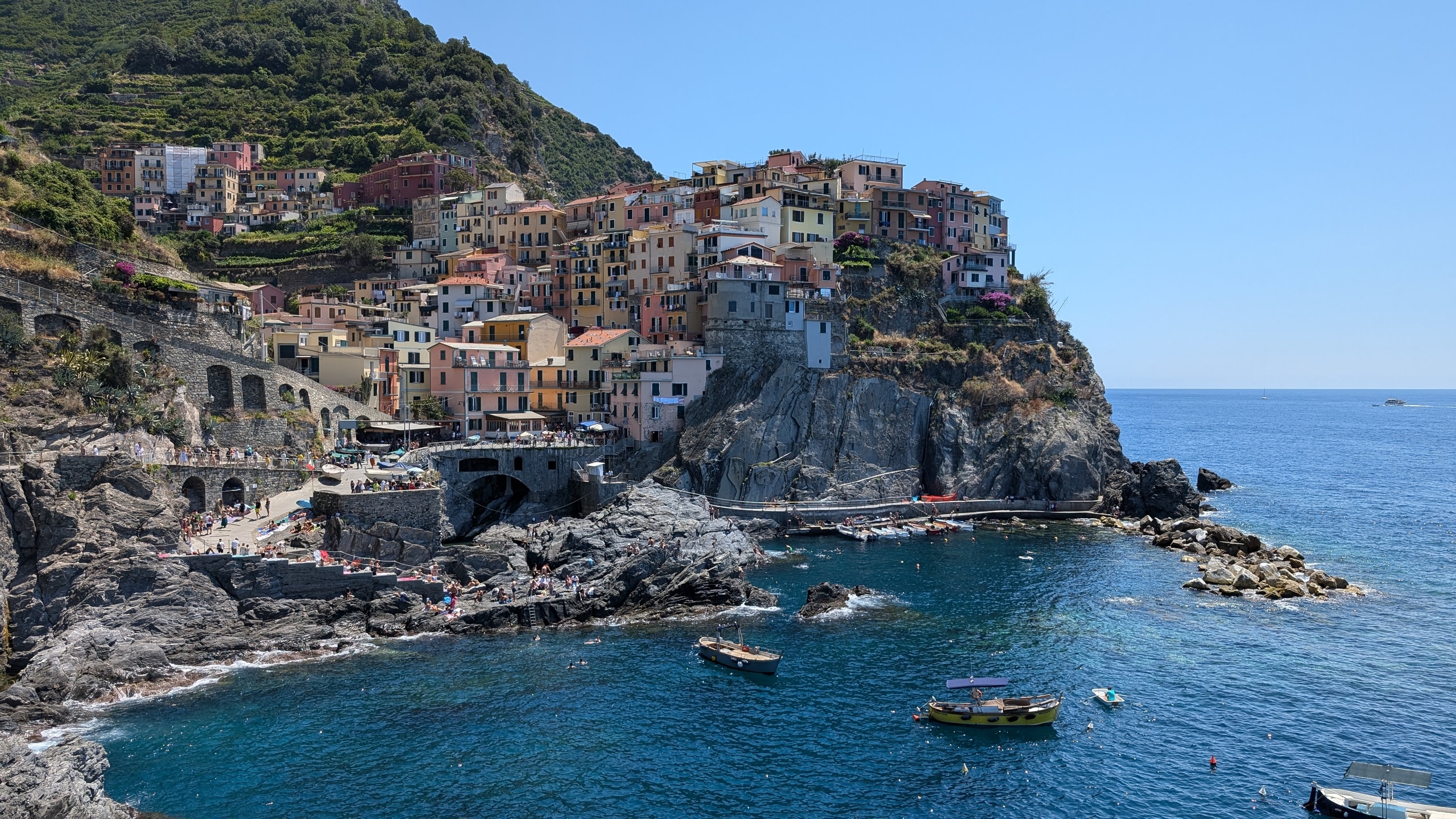
Up the coast road, Barcola is where Trieste goes swimming. There is no sand. People lie on a concrete promenade and on the Topolini, half-moon platforms built out into the sea. It is free and packed on summer weekends. If you want coves, Cinque Terre in summer has them, with far bigger crowds. In town, the Pedocin beach still has a wall down the middle separating men and women. Entry is €1.20 ($1.40).
Bus 6 continues toward Miramare Castle, the white castle Archduke Maximilian built on the water before he left to become Emperor of Mexico. The park is free. The castle costs €17 ($20).
The Opicina tram reopened in July 2026 after years of closures. For now it leaves from Piazza Dalmazia, and a cable pushes it up the steepest part of the 330 m climb. From Opicina, the Napoleonic Path runs about 5 km along the top of the white cliffs toward Prosecco, flat and easy, with the gulf below. A leafy branch tied up at a crossroads marks an osmiza, a farm selling its own wine and ham for a few weeks a year.
Getting there, costs and when to go
Regional trains from Venice take about two hours and cost around $15-20. Ljubljana is about 90 minutes by bus or car, and Snežnik Castle, whose rooms were never emptied, is a similar drive across the border. A double room in the centre runs about $110-180 a night, and most of the sights above are free.
May, June and September are the easy months, with warm sea and long evenings on the pier. The Barcolana regatta, on the second Sunday of October, fills the gulf with around 2,000 sailboats and the hotels with their crews, so book early or pick another week. In winter the bora, a cold north-east wind, can gust past 100 km/h. It clears the sky and empties the streets, but someone is always walking to the end of the Molo Audace.